rifanmuazin
The realm of Search Engine Optimization (SEO) in 2026 is experiencing a profound expansion, not a fundamental transformation, according to a recent survey conducted by Yoast. While traditional search engines like Google and Bing retain their importance, the discipline has broadened significantly to encompass AI-driven discovery, pervasive social platforms, and conversational chatbots. The bedrock principles of clarity, structured data, authority, and relevance remain sacrosanct, yet the channels through which these principles are applied have proliferated. To gauge how industry professionals are navigating this dynamic environment, Yoast surveyed 59 SEO practitioners, revealing an industry in flux, with some trailblazers adapting rapidly while a majority are still grappling with the pace of change.
The survey respondents presented a diverse cross-section of the SEO community, ranging from those with less than a year of experience to seasoned veterans boasting over a decade in the field. This disparity in experience often correlated with differing perspectives on the industry’s trajectory. A critical finding underscores that the most effective SEOs are not merely reacting to the ascendancy of artificial intelligence; rather, they are strategically leveraging AI to fortify established best practices: robust technical foundations, the creation of exceptionally high-quality content, and the meticulous cultivation of genuine online authority. Conversely, a segment of the industry remains ensnared in debates over the very nomenclature of SEO, questioning whether its traditional name adequately reflects its broadened scope. This report delves into the salient insights gleaned from the survey, offering a comprehensive overview of where SEO stands in 2026 and elucidating Yoast’s authoritative position within this evolving dialogue. For a deeper dive into the full findings, including additional questions and expert analyses from Yoast’s principal SEOs, Carolyn Shelby and Alex Moss, a detailed PDF report is available for download.
The Paradigm Shift: From Search Engines to Everywhere Optimization
The landscape of information discovery has undergone a seismic shift, driven primarily by advancements in artificial intelligence and changing user behaviors. Historically, search was largely synonymous with inputting queries into a search engine like Google and sifting through "ten blue links." However, the advent of large language models (LLMs), AI-powered assistants, and the maturation of social media platforms as de facto search tools have fundamentally altered this paradigm. These developments, which gained significant momentum in the early 2020s, have pushed SEO professionals to reconsider the boundaries of their discipline.
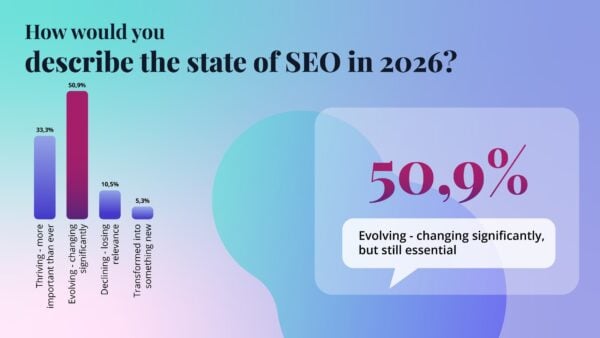
The Yoast survey reveals a predominantly optimistic, albeit cautious, outlook on the future of SEO. A significant 51% of respondents characterize SEO as "evolving," indicating a recognition of ongoing change without perceiving a crisis. Another 33% express a more buoyant view, asserting that SEO is actively "thriving." A smaller, yet notable, 10% believe the discipline is "declining." This nuanced distribution is particularly insightful when correlated with professional experience. Seasoned practitioners, those with over 10 years in the field, were more inclined to describe SEO as thriving. This suggests that veteran SEOs, having witnessed numerous algorithmic shifts and technological advancements over the years, possess a deeper understanding of SEO’s inherent adaptability and resilience. They perceive the current transformations as another cyclical adjustment rather than an existential threat. Conversely, newer entrants to the field may find the rapid proliferation of new platforms and AI capabilities more disorienting, leading to a perception of decline or uncertainty.
Yoast’s Principal SEO, Alex Moss, encapsulates this sentiment, stating, "SEO has always adapted to changes in the SERP, and now it’s adapting again. The traditional SERP is gone, but SEO isn’t." This perspective emphasizes the historical continuity of SEO’s core function – connecting users with relevant information – irrespective of the interface. Carolyn Shelby, another Principal SEO at Yoast, further elaborates: "SEO is evolving, but not because its fundamentals are breaking. The interfaces between users and information are changing. Search is no longer confined to ten blue links, but the need for structured, relevant, trustworthy content hasn’t diminished."
From Yoast’s perspective, SEO is unequivocally here to stay, albeit in an expanded form. While traditional search engines from giants like Google and Bing continue to be primary drivers of web traffic, the burgeoning influence of AI-driven discovery, particularly through LLM-powered assistants, is increasingly shaping user perception and discovery pathways. The strategic imperative for modern SEOs, therefore, is not to choose between these modalities but to master both, ensuring visibility and authority across a hybridized digital landscape. This dual focus is crucial for maintaining relevance and effectiveness in 2026 and beyond.
The Enduring Name: Why ‘SEO’ Persists Amidst Calls for Rebranding
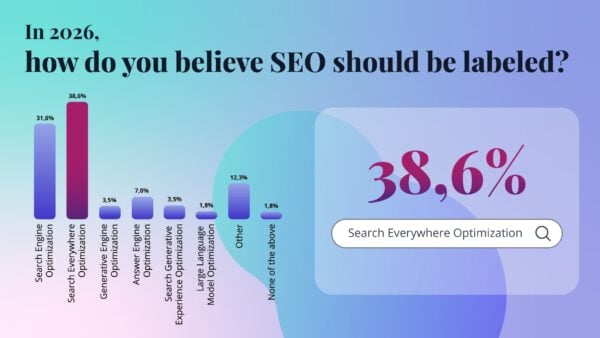
Amidst the significant expansion of the SEO discipline, a pertinent debate has emerged regarding its very name. As search capabilities extend far beyond traditional web engines into social platforms, voice assistants, and AI chatbots, some argue that "Search Engine Optimization" is an anachronism. The Yoast survey revealed considerable support for a name change, with 39% of respondents favoring a relabeling to "Search Everywhere Optimization." This figure even included 41% of veteran SEOs, suggesting a broad recognition of the expanded scope of work. Despite this, only 32% of respondents expressed a desire to retain the original "Search Engine Optimization" moniker.
However, the consensus among Yoast’s leadership leans strongly towards preserving the established name. Alex Moss articulates this position succinctly: "The term ‘SEO’ will stay. The role will widen to include AI and other disciplines, but the name doesn’t need to change." Carolyn Shelby reinforces this, highlighting the practicalities of maintaining a widely recognized term: "The term ‘SEO’ still holds shared meaning, credibility, and market recognition. There’s no strong evidence that rebranding the discipline itself is necessary or beneficial. Responses favoring ‘Search Everywhere Optimization’ reflect where SEO outcomes now surface, not a fundamentally different practice."
Yoast’s official stance is that the term "SEO" is far from broken. While acknowledging the undeniable shifts in the digital ecosystem—including the rise of AI overviews, sophisticated chatbots, and the increasing role of social media platforms in information discovery—the core tenets of SEO remain constant. Professionals must continue to prioritize technical foundations, cultivate high-quality content, engage in brand building, and establish robust authority. The term "Search Everywhere Optimization," while descriptively accurate in capturing the multi-channel nature of modern visibility efforts, does not fundamentally alter the underlying methodology. Instead, it describes the arenas where SEO principles are applied. The name "SEO" retains its efficacy; the imperative lies in clearly articulating how these foundational principles extend and apply to emerging AI and social platforms. This approach avoids potential confusion and leverages the existing industry recognition and credibility associated with the term.
AI and LLM Optimization: A Natural Extension of Good SEO
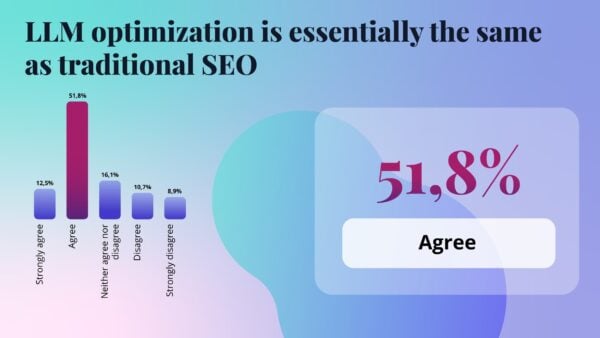
The emergence of Large Language Models (LLMs) and their integration into search and discovery processes has been one of the most transformative developments in recent years. These AI systems, capable of generating coherent text, summarizing information, and answering complex queries, present both new challenges and opportunities for SEO professionals. A significant finding from the Yoast survey indicates that 64% of respondents believe that LLM optimization is essentially the same as traditional SEO. Interestingly, despite this recognition, 59% of SEOs are not actively or specifically optimizing for LLMs. This apparent contradiction suggests a subconscious application of existing best practices to new AI systems.
This phenomenon can be interpreted not as complacency, but as a testament to the inherent efficacy of robust SEO principles. The 9% who strongly disagree with the statement that LLM optimization is the same argue that LLMs prioritize synthesis over traditional rankings, thereby necessitating a focus on structured data and brand mentions. While technically correct, this perspective does not contradict the broader finding. Instead, it reinforces the idea that LLMs reward the same core SEO principles—clarity, relevance, and authority—but with an even greater stringency. LLMs do not typically demand entirely new tactics; rather, they demand a higher standard of execution for existing ones.
Alex Moss highlights this synergy: "If you’re undertaking good SEO, you’re already optimizing well for LLMs. The tactics don’t change—just the audience." Carolyn Shelby further clarifies, "The same practices that make content discoverable and trustworthy for search engines also make it usable for LLMs. The confusion arises when people treat LLMs as a completely separate system. In reality, LLM visibility rewards clarity, relevance, and authority—all long-standing SEO principles."
The Yoast perspective firmly establishes that LLM optimization is not a distinct discipline but an advanced application of existing SEO knowledge tailored for AI systems. The fundamental principles of clarity, structured information, and established authority are paramount. However, the critical distinction lies in the unforgiving nature of AI. These systems are less tolerant of ambiguity, poor organization, or unverified information. Consequently, the bar for content quality, accuracy, and structural integrity is considerably higher. SEOs must ensure their content is not only crawlable and indexable by traditional engines but also digestible, trustworthy, and synthesizable by LLMs, often requiring meticulous attention to semantic structure, factual accuracy, and authoritative sourcing.
Redefining Success: Beyond Traditional Rankings
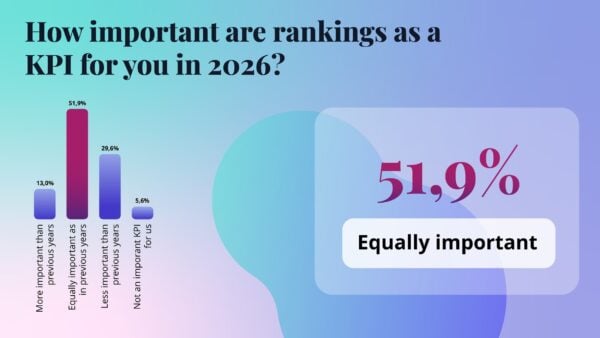
For decades, the paramount metric in SEO has been search engine rankings, with the coveted "number one spot" serving as the ultimate goal. While rankings undeniably still hold significance, their role in measuring overall success is undergoing a critical reevaluation in 2026. The Yoast survey illustrates this evolving perspective: 52% of respondents consider rankings to be "equally important" as before, yet a substantial 30% now deem them "less important." This nuanced shift reflects a growing understanding that visibility no longer automatically equates to traffic or direct user engagement.
The proliferation of AI overviews, rich snippets, featured snippets, and other "zero-click" search results means that users often find answers directly on the search results page without needing to click through to a website. While a high ranking still signals authority to AI systems and influences their selection of information sources, it no longer guarantees a direct visit. This evolving dynamic necessitates a broader definition of success for SEO professionals.
Alex Moss explains the continued, albeit altered, importance of rankings: "Traditional rankings are still important because agents still search the web to ingest information. If you aren’t visible there, it’s less likely an agent will identify and select you into their responses." This underscores that rankings function as a foundational signal for AI, even if the user journey has changed. Carolyn Shelby adds, "Rankings still matter, but they are no longer the end goal. They are a proxy for visibility, not a guarantee of impact." Her statement emphasizes a shift from a click-centric view to a broader understanding of online presence and influence.
The Yoast Perspective advocates for moving beyond an exclusive obsession with achieving the top organic ranking. Instead, SEOs should broaden their focus to encompass overall digital visibility and presence. Key Performance Indicators (KPIs) must evolve to include metrics such as being cited in AI-driven answers, mentions in industry discussions, and broader brand visibility across diverse platforms. "AI visibility" and "citations" are emerging as the new proxies for influence and authority, often superseding raw organic ranking positions. This strategic adjustment means tracking not just where a website appears in traditional search results, but also how its content is being referenced, summarized, and presented by AI systems and across various digital touchpoints.
The Paradox of Organic Traffic and Content Saturation
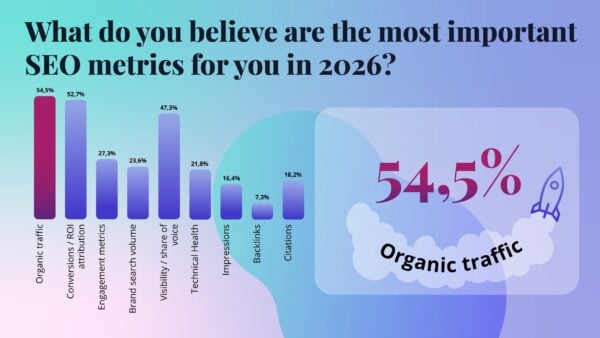
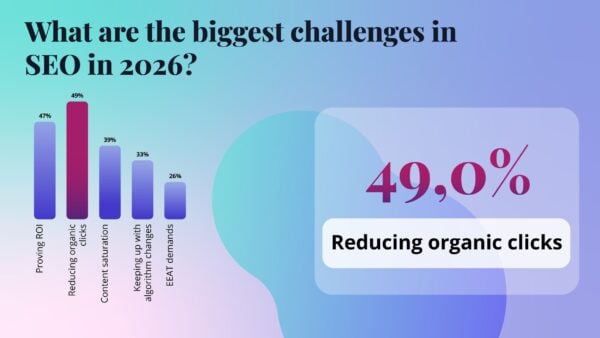
Despite the rise of new discovery channels and the shifting importance of traditional rankings, organic traffic continues to be hailed as the undisputed king among SEO metrics. A resounding 55% of respondents in the Yoast survey identified "organic traffic" as their top metric for success. However, this unwavering focus on organic traffic exists in stark contrast to the industry’s biggest perceived challenge: 49% of SEOs cite "reducing organic clicks" as their primary obstacle. This creates a compelling paradox in the 2026 SEO landscape: traffic is decreasing, yet the value of the remaining traffic may be increasing. The hypothesis is that while overall clicks may decline due to zero-click results and AI summaries, the users who do click through are often those with higher intent, leading to more qualified leads and conversions.
Carolyn Shelby offers a poignant observation on this paradox: "As AI reduces the need for some visits, success looks like being represented correctly rather than merely visited. Visibility in AI overviews doesn’t always drive clicks, but it builds legitimacy. Being included signals that you’re a credible source, even when users don’t click." This highlights a strategic pivot: the goal shifts from sheer volume of traffic to quality of engagement and authoritative representation.
Adding to the complexity, the industry is grappling with an unprecedented wave of content saturation. A significant 39% of SEOs identified "competing with AI-generated content" as their top challenge. This is not merely about poorly written AI content; the more formidable threat arises when AI can produce "good enough" content at an industrial scale, flooding the web with noise and making it increasingly difficult for genuinely valuable content to stand out. Only a negligible 4% of respondents cited a "talent gap" as a primary concern, suggesting that the human expertise exists, but the competitive environment for content is intensifying.
Alex Moss emphasizes the enduring value of human creativity: "AI-generated content is artificial. Humans connect with stories, not regurgitated lists." This suggests that while AI can replicate factual information, it struggles to replicate genuine human experience, emotion, and unique insights. Carolyn Shelby reinforces this, stating, "AI doesn’t change what good content is, but just raises the bar. Mediocrity doesn’t just rank lower; it disappears." This profound statement underscores that in an age of AI abundance, only truly exceptional, authoritative, and human-centric content will succeed. The advice from Yoast is clear: to cut through the noise, businesses must invest in unique, deeply researched, and engaging content that offers distinct value and resonates with human audiences, focusing on quality and differentiation over sheer quantity.
The Blind Spot: The Rise of Social Search
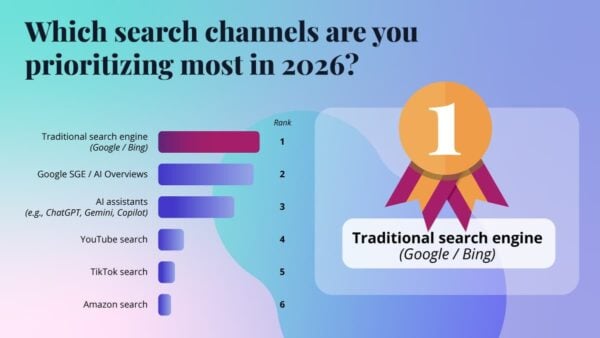
While traditional search engines continue to dominate the SEO landscape, and AI-driven discovery rapidly gains prominence, a significant blind spot persists among many SEO professionals regarding emerging search channels. The Yoast survey revealed that while traditional search engines (Google/Bing) are overwhelmingly prioritized, TikTok search ranked a surprising #5 among prioritized channels, trailing even Amazon. This ranking is indicative of a broader industry oversight, especially considering the rapid growth and influence of social platforms as primary information discovery tools for younger demographics.
Younger generations, in particular, have increasingly turned to platforms like TikTok, Instagram, and YouTube for a wide array of informational needs, moving beyond mere entertainment. These platforms serve as crucial sources for product recommendations, how-to tutorials, news, and even professional B2B advice. This shift in user behavior means that a substantial segment of the audience is bypassing traditional search engines for initial queries, opting for visually rich, community-driven, or personalized content experiences on social media.
The implications for SEO are profound, as these social signals are not isolated from the broader digital ecosystem. Alex Moss highlights this interconnectedness: "Social platforms influence how LLMs perceive freshness and authority. Ignoring them means missing out on signals that AI systems value." Carolyn Shelby concurs, asserting, "You don’t need to rank on TikTok, but you do need to be discoverable there. LLMs scrape social platforms for real-world signals."
The Yoast Perspective clarifies that SEO in 2026 inherently includes social platforms like TikTok. While the goal may not be a traditional "ranking" on these platforms, achieving discoverability is paramount. LLMs are increasingly sophisticated in scraping and interpreting data from social media to assess real-time trends, public sentiment, and emerging authorities. A robust presence on relevant social channels, particularly through high-quality video content or engaging discussions, can significantly boost a brand’s overall authority and influence its representation in AI-generated responses. Therefore, integrating social media strategies into a holistic SEO approach is no longer optional but a strategic imperative to ensure comprehensive digital visibility.
Consensus from Yoast’s Leadership: Expert Insights on the Future of SEO
The trends and data points illuminated by the Yoast survey provide a quantitative snapshot of the SEO landscape in 2026. However, the qualitative insights from Yoast’s principal SEOs, Carolyn Shelby and Alex Moss, offer invaluable wisdom, synthesizing these trends into actionable understanding. Their perspectives underscore a consistent theme: while the tools and interfaces of search may evolve, the foundational principles of SEO remain robust and more critical than ever.
On the contentious debate regarding "Search Everywhere Optimization," both experts advocate for the retention of the "SEO" moniker. Alex Moss reiterates that "The term ‘SEO’ will stay. The role will widen, but the name doesn’t need to change," emphasizing the adaptability of the existing term. Carolyn Shelby adds a practical dimension, noting that "Rebranding risks fragmenting understanding. ‘SEO’ is already well-established outside the industry," highlighting the importance of maintaining industry-wide recognition and clarity.
The future of SEO metrics is another area where their insights provide clear direction. Alex Moss suggests a shift from mere visibility to selection, stating, "As we move from being seen to being selected, visits don’t hold the same value they used to. The business goal should be the most important metric." This reflects a broader trend towards outcome-based measurement. Carolyn Shelby reinforces this, emphasizing the new role of AI visibility: "Visibility in AI overviews doesn’t always drive clicks, but it builds legitimacy. Being included signals that you’re a credible source." This perspective positions AI inclusions as a crucial indicator of authoritative presence.
Regarding the continued relevance of rankings versus broader influence, their views converge on a balanced approach. Alex Moss affirms that "Rankings still matter because agents search the web to ingest information," indicating their foundational role for AI systems. Carolyn Shelby expands on this, stating, "Rankings are a proxy for visibility, not a guarantee of impact. Focus on presence," advocating for a more holistic view of digital footprint beyond mere numerical positions.
Finally, their collective vision for the role of SEOs in 2026 paints a picture of a multifaceted professional. Alex Moss unequivocally states, "100% all three: marketers, brand builders, and SEO specialists. Brand and marketing have become intertwined with SEO as our role expands." Carolyn Shelby echoes this, emphasizing the need for integration: "A blended mindset is essential. SEO can’t operate in isolation from brand, product, or communications." These statements underscore that the modern SEO professional must possess a strategic understanding of marketing, brand development, and communication, integrating these disciplines to achieve comprehensive digital success.
These insights from Yoast’s leadership illuminate the dynamic yet principled future of SEO. The discipline is not merely surviving but thriving through adaptation, requiring practitioners to embrace new technologies and platforms while rigorously upholding the core values of clarity, authority, and relevance. The challenges of content saturation and evolving metrics are real, but they are met with a renewed focus on quality, strategic integration, and a broader definition of online success.
These insights offer a glimpse into the comprehensive analysis provided in the full Yoast SEO report. The complete document delves deeper into the intricacies of these shifts, providing actionable strategies and further expert commentary to help professionals navigate the complexities of the 2026 digital landscape. The report offers detailed guidance on optimizing for various search channels, developing AI-proof content strategies, and redefining success metrics for the modern era.
Sign up and download it right away to gain a competitive edge in this rapidly evolving field.


 Jia Lissa
 Siti Muinah