rifanmuazin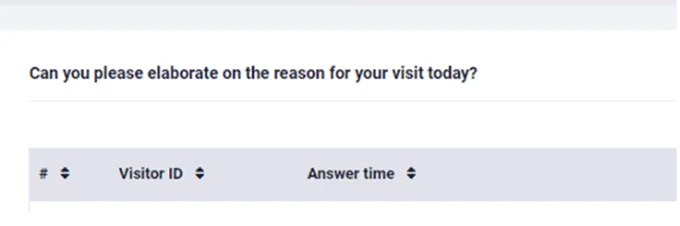
The 2025 Digital Context: From Tracking to Talking
The resurgence of interest in website polls is largely a response to the "Privacy Paradox." While consumers demand greater protection of their personal data, they simultaneously expect highly personalized shopping experiences. With major browsers like Safari and Firefox already blocking third-party cookies and Google’s Privacy Sandbox initiatives fundamentally altering the tracking landscape, businesses can no longer rely solely on passive data harvesting.
In this environment, polls have transitioned from being "noise" to becoming a "mirror" of visitor intent. At Invesp, industry analysts have noted that a single, well-timed inquiry can bridge the gap between high-traffic metrics and stagnant conversion rates. As Khalid Saleh, a prominent figure in the CRO space, notes, the power of polls lies in their ability to provide a few specific data points from a large volume of people. They do not replace deep-seated qualitative research, such as ethnographic studies or long-form interviews, but they serve to sharpen that research by validating assumptions across a broader statistical base.
The Pre-Poll Research Framework: Beyond Brainstorming
Effective polling is not the result of spontaneous brainstorming; it is the culmination of a rigorous research process. Journalistic analysis of successful CRO campaigns suggests that the most effective polls are those launched only after a thorough examination of existing data. To craft questions that yield actionable feedback, practitioners must first engage in heuristic evaluations, analytics assessments, heatmap analysis, and session replay reviews.
For example, if a session replay reveals that users are lingering on a checkout page without clicking the "Complete Purchase" button, a poll should not ask about general satisfaction. Instead, it should target the specific friction point identified in the video data. This evidence-based approach ensures that the poll is not a shot in the dark but a targeted probe designed to confirm a specific hypothesis. If preliminary interviews suggest that customers are hesitant to subscribe because of a recent life change, such as a career shift, a poll can then be deployed to see if this trend holds true for the wider visitor population.
Mapping the Buyer’s Journey: A Chronological Approach to Feedback
A fundamental error in modern digital marketing is "casting a wide net" with polls. To achieve high response rates and meaningful data, marketers must identify which stage of the buyer’s journey a visitor is currently navigating. The five-stage funnel—Awareness, Consideration, Decision, Purchase, and Post-Purchase—requires distinct questioning strategies.
- Awareness Stage: At this initial point of contact, visitors are identifying a problem or opportunity. Polls here should focus on what brought the visitor to the site and what specific pain points they are seeking to resolve.
- Consideration Stage: Users are evaluating different solutions. Feedback at this stage should revolve around the clarity of the information provided and whether the visitor has the resources needed to compare options.
- Decision Stage: The user is ready to select a provider. Questions should focus on barriers to entry, such as pricing clarity, shipping concerns, or trust signals.
- Purchase Stage: This is the critical conversion point. Polls here are often "exit-intent" based, asking what almost stopped the user from completing the transaction.
- Post-Purchase Stage: This stage measures satisfaction and the likelihood of referral. It is the foundation for building long-term brand equity.
To accurately place these polls, platforms like HubSpot recommend using funnel-type dashboards to segment website traffic by behavior. A visitor who lands on a technical blog post is likely in the awareness phase, whereas a visitor on the "Request a Quote" page is firmly in the decision phase. Misaligning the question with the journey stage is a primary cause of user irritation and low-quality data.
A Taxonomy of Data-Driven Poll Questions
To maximize the utility of website feedback, inquiries should be categorized based on the specific insight they are intended to extract. Current industry standards categorize these into six primary types:
1. Motivator Questions
These seek to understand the underlying "why" of a visit. In one case study involving an e-commerce client, session replays showed users scrolling aimlessly without interacting with Call-to-Action (CTA) buttons. By deploying a poll asking for the motive behind the visit, the team discovered that users were looking for a specific type of inspiration that the site’s layout failed to provide. Understanding motivators allows a brand to align its value proposition with actual user intent.
2. Barrier Questions
Barriers are the "Fears, Uncertainties, and Doubts" (FUDs) that prevent conversion. If Google Analytics indicates a high exit rate on a specific funnel page, a barrier poll can ask, "Is there anything preventing you from completing your purchase today?" Common responses often highlight hidden costs, technical glitches, or a lack of specific product information.
3. Hook Questions
Hooks are the persuasive elements that successfully convert a visitor. These are best deployed to returning customers or those who have just completed a purchase. Questions like "What is the one thing you like most about our product?" help identify the unique selling points that resonate most strongly, which can then be amplified in marketing copy.
4. Content Discovery Polls
These are designed to uncover information gaps. If usability testing shows participants struggling to find specific data, a site-wide poll can ask, "Were you able to find the information you were looking for today?" This often reveals that while information may be present, its "findability" or hierarchy is flawed.
5. Satisfaction and Net Promoter Score (NPS)
These questions gauge the emotional health of the customer base. By comparing the feedback of new versus returning visitors, companies can determine if their content meets expectations. A low percentage of returning users coupled with poor satisfaction scores indicates a fundamental disconnect in the brand’s promise versus its delivery.
6. Data Validation Polls
Perhaps the most sophisticated use of polling is the validation of qualitative trends. When a small-scale interview (e.g., 10-15 people) reveals a specific emotional trigger for a purchase, a poll can be used to see if that trigger exists for 10,000 people. This turns a "hunch" into a statistically significant strategy.
Official Responses and Industry Sentiment
The shift toward structured, data-driven polling has been met with approval from both privacy advocates and marketing technologists. Privacy experts argue that because polls are transparent and voluntary, they represent the "gold standard" of ethical data collection. Unlike "shadow tracking," where a user’s movements are recorded without their explicit knowledge, a poll invites the user into a conversation.
Marketing technology firms have responded by integrating AI-driven sentiment analysis into poll software. This allows companies to process thousands of open-ended responses in real-time, categorizing them into "positive," "negative," or "neutral" sentiments and identifying recurring keywords. This automation has removed the manual labor traditionally associated with qualitative data analysis, making it more accessible for small-to-medium enterprises (SMEs).
Broader Impact and Implications for the Future of E-Commerce
The implications of this refined approach to website polling extend beyond simple conversion rate increases. In a broader sense, it represents a move toward "Customer-Centric Digital Architecture." When websites are designed based on the direct feedback of the people using them, the result is a more intuitive, less friction-filled internet.
Furthermore, the data collected through these polls is becoming a primary asset for machine learning models. By feeding zero-party data into personalization engines, brands can create "hyper-personalized" experiences that do not rely on invasive tracking. For instance, if a user indicates in a poll that they are shopping for a "home office upgrade," the website can dynamically adjust its homepage to show ergonomic chairs and desks, rather than general furniture.
Conclusion
The evolution of website polls from annoying interruptions to strategic assets is a testament to the maturing digital economy of 2025. By grounding poll questions in existing behavioral data and timing them to the buyer’s journey, businesses can move past assumptions and engage with the reality of their users’ experiences. While the "how" of polling involves technical implementation and timing, the "what" and the "why" remain rooted in human psychology and the pursuit of genuine value. As third-party data continues to lose its efficacy, the brands that master the art of the direct question will be the ones that thrive in an era of informed and empowered consumers.