
 rifanmuazin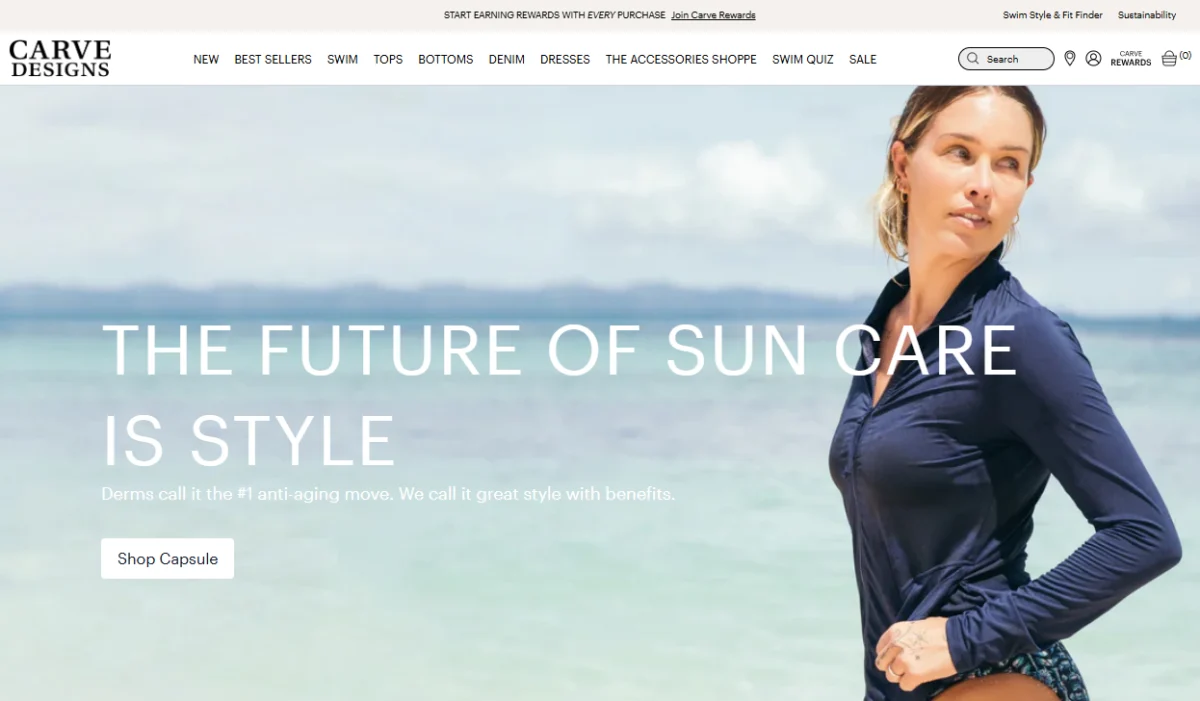
In a strategic move that signals growing concerns among e-commerce businesses about the impact of artificial intelligence on their core performance indicators, sustainable apparel retailer Carve Designs has announced it is "actively blocking traffic from AI agents." Thayer Sylvester, cofounder of Carve Designs, confirmed the company has invested in specialized technology to implement this blockade, though she acknowledged this strategy may evolve as AI capabilities mature and integrate more deeply into the online shopping landscape.
This decision arrives at a pivotal moment for the e-commerce sector, as major technology providers like Shopify and Salesforce are actively forging integrations with advanced large-language models (LLMs), including OpenAI’s ChatGPT. Shopify, for instance, enabled its partner brands to become shoppable directly within ChatGPT in March. Salesforce has similarly piloted programs allowing merchants to connect their product catalogs to ChatGPT, facilitating searchable product discovery. While these platforms are leveraging the same underlying LLM technology, they are crafting distinct user experiences for their respective customer bases.
Carve Designs, a women’s apparel brand recognized for its commitment to sustainability, was acquired by apparel company Charles Komar & Sons in December 2025. This acquisition adds a layer of corporate context to Carve Designs’ operational decisions, potentially influencing its approach to technology adoption and customer engagement strategies.
The Critical Impact on Key Performance Indicators
The primary impetus behind Carve Designs’ decision to block AI agent traffic stems from its adverse effect on the company’s key performance indicators (KPIs), particularly conversion rates. "Mostly it was around conversion," Sylvester explained to Digital Commerce 360. "We use conversion as a KPI to help us think about how well we’re doing and what her [the brand’s customer] experience is like online. And the increase in bot traffic was making it difficult to look at conversion. We felt like it was an important thing to continue to manage. So we are, at this point in time, actively blocking traffic."
Sylvester emphasized that Carve Designs is still in the nascent stages of analyzing the data generated by AI interactions. The anti-bot technology employed by the company operates by identifying patterns characteristic of bot behavior versus those of human users. Once identified, these patterns are categorized, and the traffic is blocked. "We absolutely are seeing that it’s increasing our conversion," Sylvester stated, referring to the immediate, albeit artificial, uplift in conversion metrics.
However, this statistically improved conversion rate is not the kind of engagement Carve Designs seeks. The fundamental issue lies in the nature of AI-driven interactions. AI agents, by their design, shop differently than human consumers. This divergence makes it challenging for Carve Designs to accurately interpret customer journeys, understand purchase motivations, and gather actionable insights that would inform merchandising, marketing, and user experience improvements. The current influx of bot traffic distorts these crucial data points, rendering them less valuable for strategic decision-making.
Navigating the Evolving Landscape of AI Use Cases
Sylvester articulated a vision for the future of AI in e-commerce, suggesting that successful businesses will be those that adeptly integrate AI while meticulously preserving an authentic customer experience. She highlighted the immediate opportunities presented by AI in areas such as customer service and data analysis, noting that Carve Designs is actively leveraging these for enhanced customer site usability. "But over time, I do see that we should be able to do a better job merchandising our website using the AI and creating customized experiences," she added, underscoring a longer-term strategic outlook.
Despite the current challenges, Sylvester expressed optimism about AI’s potential, acknowledging that while "it’s not quite there yet, it’s getting there." She articulated a personal shopping preference that mirrors the ideal AI-driven experience she envisions for her customers: receiving personalized product recommendations without the need for extensive browsing. "I don’t want to have to browse through a site," she said.
Sylvester illustrated this point by referencing the complexity of a typical apparel collection. She noted that within her brand’s spring collection, which might comprise 600 items, only a subset of around 50 might be suitable for a particular customer. Concurrently, another 50 items could resonate with a different consumer. The aspiration is for AI to reach a level of sophistication where it can accurately curate these personalized selections for each individual shopper. "That’s what we’re working on getting to," Sylvester stated. However, she projected that achieving this level of personalized AI-driven merchandising is likely "six months to a year away from even being at all affected."
Broader Implications for the E-commerce Ecosystem
Carve Designs’ stance on blocking AI traffic is not an isolated incident but rather a reflection of a broader debate unfolding within the e-commerce industry. As platforms like Shopify and Salesforce integrate LLMs, they are democratizing access to powerful AI tools. This accessibility, while beneficial for innovation, also brings challenges related to data integrity and authentic customer engagement.
The core tension lies in differentiating between genuine human interaction and automated bot activity. For e-commerce businesses, reliable data on human behavior is paramount for understanding customer intent, optimizing marketing campaigns, and personalizing the shopping experience. Bot traffic, particularly from sophisticated AI agents, can skew metrics, inflate website traffic, and misrepresent conversion rates, making it difficult for businesses to gauge their true performance and customer satisfaction.
The investment in anti-bot technology by companies like Carve Designs signals a growing awareness of the need for robust solutions to manage AI-driven web traffic. This trend could spur further innovation in bot detection and mitigation strategies, as well as in the development of AI platforms that are more transparent about their data collection and user interaction methodologies.
Furthermore, the development of AI integrations by major e-commerce enablers like Shopify and Salesforce suggests a future where AI plays a central role in online shopping. These integrations could revolutionize how consumers discover and purchase products, moving towards more conversational and personalized shopping experiences. However, as Carve Designs’ experience demonstrates, this transition requires careful navigation to ensure that the benefits of AI are realized without compromising the integrity of business operations and customer relationships.
The strategy of blocking AI traffic, while a pragmatic short-term solution for Carve Designs, highlights the complex interplay between technological advancement and business fundamentals. The company’s forward-looking approach, aiming to leverage AI for enhanced merchandising and personalized experiences, indicates a commitment to embracing AI’s potential responsibly. The timeline provided by Sylvester suggests that while the immediate focus is on data integrity, the long-term vision is to harness AI to create a more intuitive and satisfying shopping journey for every customer, distinguishing between the fleeting interactions of bots and the meaningful engagement of human shoppers. This balancing act will likely define the next phase of e-commerce evolution.









