rifanmuazin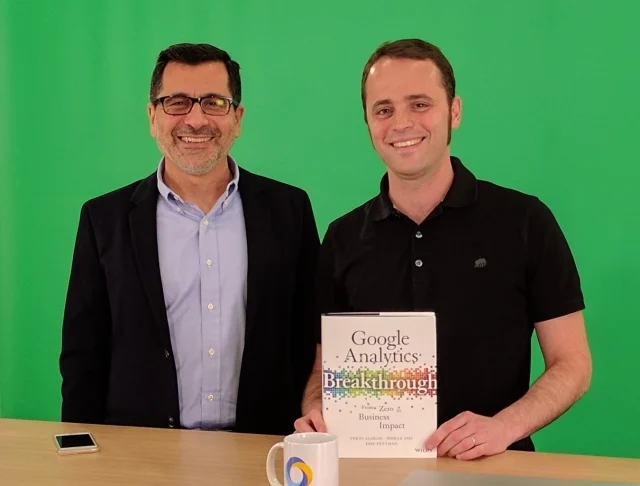
The landscape of digital marketing and data science has undergone a radical transformation over the last decade, shifting from basic traffic monitoring to a sophisticated ecosystem of cross-channel measurement and predictive modeling. In a recent professional exchange, Daniel Waisberg, a prominent figure in the search and analytics space, met with Feras Alhlou, the Co-Founder and Principal Consultant at E-Nor and co-author of the seminal industry text "Google Analytics Breakthrough." Their discussion focused on the necessity of viewing analytics not merely as a technical implementation but as a foundational business process. This perspective is increasingly critical as organizations grapple with a deluge of data originating from mobile, social, and backend systems.
The Paradigm Shift: Analytics as a Core Business Process
The core of the discussion centered on the philosophy that analytics must be integrated into the structural fabric of an organization. According to Alhlou, many enterprises fail to realize the full potential of their data because they treat measurement as a secondary concern rather than a primary driver of strategy. To address this, the E-Nor team utilizes a structured Optimization Framework designed to bridge the gap between raw data collection and actionable business intelligence.
This framework begins with a dual-layered audit. The first layer is technical, ensuring that tracking codes, tag management systems, and data layers are functioning correctly. The second, and perhaps more vital layer, is the business audit. This involves deep engagement with stakeholders to identify Key Performance Indicators (KPIs) that align with overarching corporate goals. By understanding what matters most to the business—whether it is lead generation, e-commerce revenue, or user engagement—analysts can ensure that the data being collected is relevant and high-quality.
The Four Pillars of the E-Nor Optimization Framework
The framework outlined by Alhlou and Waisberg follows a logical progression that moves from foundational stability to advanced competitive advantage.
1. The Audit and Stakeholder Engagement
The process begins by establishing a "source of truth." This requires a comprehensive audit of existing data assets. In the modern era, this includes verifying the integrity of Google Analytics configurations, ensuring GDPR and CCPA compliance, and validating the accuracy of event tracking. Stakeholder engagement ensures that the technical setup reflects the business’s actual needs, preventing the common pitfall of "data for data’s sake."
2. The Reporting Layer
Once the data is verified, the focus shifts to the reporting layer. The objective here is to transform raw numbers into digestible formats. This involves the creation of automated dashboards and customized reports that allow different departments—from marketing to finance—to view the metrics most relevant to their roles. Effective reporting provides a historical view of performance and sets the stage for deeper investigation.
3. Data Analysis and Actionable Insights
Reporting tells an organization what happened; analysis explains why it happened. This phase of the framework involves segmenting data to find patterns and anomalies. Analysts look for "actionable insights"—specific findings that can lead to a change in strategy or budget allocation. For instance, an analysis might reveal that while a specific social media channel drives high traffic, its conversion rate is negligible compared to organic search, prompting a shift in resource distribution.
4. Testing and Personalization
The final and most impactful stage of the framework is the move toward optimization through testing and personalization. By utilizing A/B testing, multivariate testing, and personalized content delivery, businesses can directly influence user behavior. This stage represents the maturity of an analytics program, where data is no longer just observed but is used to actively improve the customer experience and maximize Return on Investment (ROI).
Navigating the Complexity of the Modern Data Ecosystem
The discussion highlighted the increasing complexity of the digital landscape. Historically, marketers dealt with a linear path: a single user on a single desktop device interacting with a limited number of channels. Today, the environment is fragmented across mobile applications, social media platforms, web interfaces, and offline backend data.
Alhlou emphasized that the primary challenge for modern marketers is context. With data being generated everywhere, the ability to synthesize these disparate streams into a unified view of the customer journey is essential. This requires a shift away from siloed data management toward a more holistic "Data Roadmap."
Developing a Strategic Data Roadmap
To navigate this complexity, Alhlou recommends a phased approach to data maturity. This roadmap allows organizations to build their capabilities incrementally, ensuring that each new layer of data adds value rather than confusion.
Phase 1: Owned Property Analytics
The first step in any roadmap is mastering the data an organization owns. This primarily includes web and mobile analytics. By perfecting the tracking of user behavior on their own platforms, companies establish a baseline of understanding regarding their audience’s needs and friction points.
Phase 2: Social and Qualitative Augmentation
Once owned data is stabilized, the next step is to augment these reports with social data and qualitative insights. While quantitative data (the "what") is vital, qualitative data provides the "why." This can include sentiment analysis from social media interactions or direct feedback from user surveys.
Phase 3: Market Research and the Voice of the Customer
The final phase involves broader market research. Alhlou pointed to tools like Google Surveys as a revolutionary development in this field. Previously, large-scale market research was a costly and time-consuming endeavor reserved for major corporations. Modern tools allow businesses of all sizes to run targeted surveys to understand broader market trends and the specific "voice of the customer" (VoC). This information is invaluable for product development and brand positioning.
Chronology of Analytics Evolution: From Hits to Users
The partnership between Alhlou and Waisberg, spanning nearly a decade, mirrors the evolution of the analytics industry itself. Ten years ago, the focus was largely on "hits" and pageviews. As the industry matured, the focus shifted toward "sessions" and eventually to "user-centric" measurement.
This evolution was driven by the rise of mobile technology. As users began switching between phones, tablets, and laptops, traditional cookie-based tracking became insufficient. The industry responded with cross-device tracking and identity resolution. The insights shared by Alhlou reflect this progression, moving the conversation from technical implementation to the strategic application of data to drive business growth.
Market Context and Economic Implications
The methodologies discussed by Alhlou and Waisberg are supported by broader market trends. According to industry reports, the global business intelligence and analytics market is projected to grow significantly as companies seek to gain a competitive edge through data. Organizations that successfully implement optimization frameworks often see a marked improvement in marketing efficiency.
Research indicates that data-driven organizations are three times more likely to report significant improvements in decision-making compared to those that do not rely on data. Furthermore, the shift toward personalization—the fourth pillar of the E-Nor framework—has been shown to increase sales by 10% or more and deliver five to eight times the ROI on marketing spend.
Industry Reactions and Future Outlook
The principles of the E-Nor Optimization Framework are widely recognized by industry leaders as best practices for digital maturity. Analysts at major firms have long advocated for the "Audit-First" approach, noting that decisions made on "dirty data" can be more damaging than decisions made with no data at all.
Looking forward, the integration of Artificial Intelligence (AI) and Machine Learning (ML) into these frameworks is the next logical step. While the discussion between Waisberg and Alhlou focused on the foundational processes, the industry is moving toward automated insights and predictive analytics. However, as Alhlou noted, these advanced technologies still require a solid foundation of clean data and clear business objectives to be effective.
The meeting between these two experts serves as a reminder that despite the rapid advancement of technology, the fundamentals of business strategy remain constant. Success in the digital age requires a disciplined approach to measurement, a commitment to understanding the customer, and a willingness to test and adapt based on evidence.
Conclusion
The collaborative insights provided by Feras Alhlou and Daniel Waisberg underscore the necessity of a structured, business-centric approach to analytics. By following a clear framework—from audit to personalization—and developing a comprehensive data roadmap, organizations can transform their data from an overwhelming burden into a powerful strategic asset. As the digital landscape continues to grow in complexity, the ability to measure what matters most will remain the primary differentiator between market leaders and their competitors. The journey from raw data to actionable insight is a continuous process of refinement, requiring both technical expertise and a deep understanding of organizational goals.