rifanmuazin
The ever-evolving digital advertising landscape demands a strategic approach to campaign management, particularly on platforms like YouTube where user engagement and conversion opportunities are abundant. As Google’s Smart Bidding capabilities continue to mature and become increasingly integral to successful campaign outcomes, advertisers must cultivate a thorough understanding of their nuances to unlock their full potential. This article delves into the intricacies of Smart Bidding on YouTube, offering actionable insights and strategic recommendations for advertisers aiming to optimize their performance, generate sales, leads, and sign-ups, or even boost brand awareness.
At its core, Smart Bidding represents Google’s suite of automated bidding strategies that leverage machine learning to optimize for conversions or conversion value at each auction. For YouTube advertisers, this means moving beyond manual bid adjustments and entrusting algorithms to make real-time decisions based on a vast array of signals. However, the mere awareness of these automated options is only the initial step. The true mastery lies in configuring campaigns to align with these powerful tools, ensuring they are set up for success rather than merely deployed.
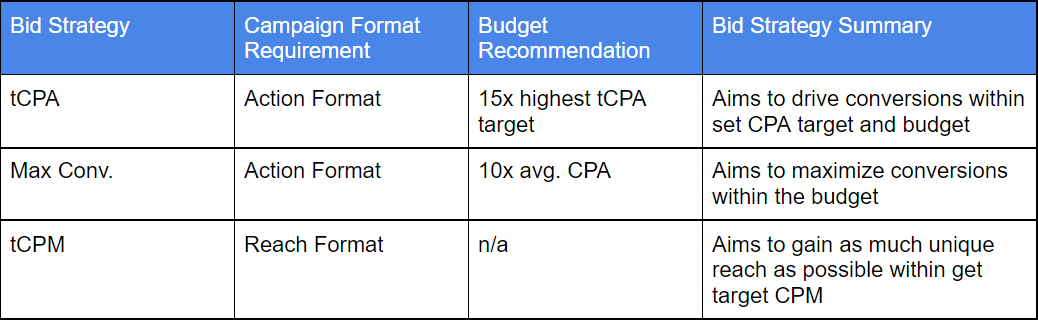
It is crucial to delineate the scope of Smart Bidding’s application on YouTube. The primary focus for driving tangible business outcomes such as sales, leads, or sign-ups is within Action Format campaigns. These campaigns, which typically include Video Action Campaigns, are designed to convert viewers into customers. Within this category, the two prominent Smart Bidding strategies are Target CPA (tCPA) and Maximize Conversions. On the other hand, for campaigns primarily aimed at building brand recognition and reaching a broad audience, such as those utilizing bumper ads, there is a specific option tailored for Reach formats. This distinction is fundamental to selecting the appropriate strategy based on overarching campaign objectives.
Understanding YouTube’s Smart Bidding Arsenal
Before exploring strategic implementation, a clear understanding of the available Smart Bidding options on YouTube is paramount. These strategies are meticulously designed to align with distinct campaign goals:
-
Target CPA (tCPA): This strategy aims to get as many conversions as possible at or below the target cost-per-acquisition you set. It’s ideal for advertisers who have a clear understanding of their desired cost for each conversion and want to maintain a predictable cost structure. The algorithm will adjust bids in real-time to achieve this target, focusing on auctions that are most likely to result in a conversion within the specified CPA.
-
Maximize Conversions: This strategy, as the name suggests, focuses on generating the highest possible number of conversions within your set budget. It doesn’t have a specific CPA target but rather aims to maximize the sheer volume of conversions. This is an excellent starting point for campaigns where establishing a baseline CPA is a priority or when the primary goal is to drive as many leads or sales as possible without a strict cost constraint on each individual conversion.
-
Maximize Conversion Value (for certain campaign types): While not explicitly detailed in the provided snippet for all YouTube formats, this strategy is a significant component of Smart Bidding across Google Ads. It aims to maximize the total conversion value within your budget. This is particularly relevant for e-commerce businesses where different products or services have varying profit margins.
-
Target ROAS (Return on Ad Spend): Similar to tCPA, this strategy allows advertisers to specify a target return on ad spend. It’s highly effective for e-commerce and direct-response advertisers who want to ensure their advertising investment is generating a profitable return.

-
Reach Campaigns with Smart Bidding: For awareness-focused objectives, specific Smart Bidding strategies are available to optimize for reach and frequency, ensuring your message is seen by the right audience efficiently. While the original text alludes to this for bumper ads, the broader principle applies to optimizing for visibility and brand recall.
Strategic Budgeting: The Linchpin of Smart Bidding Success
A critical, yet often overlooked, aspect of leveraging Smart Bidding effectively on YouTube is the alignment of budgets with performance expectations. Google’s recommendations for budget allocation are not arbitrary; they are rooted in the data-driven understanding of how machine learning algorithms function and learn.
Google advises setting budgets that are 10 to 15 times the anticipated cost per conversion (CPA) when utilizing strategies like tCPA or Maximize Conversions. This seemingly substantial recommendation is designed to provide the algorithm with sufficient data and flexibility to operate optimally.
Let’s illustrate this with an example. If an advertiser aims to use tCPA and has an estimated average CPA of $85, Google’s recommendation would necessitate a daily budget of at least $1,275 ($85 x 15). Similarly, if the objective is to use Maximize Conversions with the same estimated CPA, the budget would need to be at least $850 ($85 x 10).
These bid-to-budget ratios might appear daunting, especially for advertisers accustomed to more conservative spending. However, empirical evidence consistently demonstrates their necessity. A budget that is too restrictive can significantly impede the Smart Bidding algorithm’s ability to gather enough data, test various bidding scenarios, and ultimately identify the most efficient paths to conversion. When a campaign is "Limited By Budget" (LBB), it signals that the campaign is performing well but is unable to scale due to financial constraints, directly hindering the Smart Bidding algorithm’s ability to explore its full potential.
The "Max Conversions" to "tCPA" Transition: A Phased Approach
For advertisers embarking on their Smart Bidding journey on YouTube, a strategic phased approach is often the most prudent. It is generally recommended to initially launch campaigns using the "Maximize Conversions" strategy. This allows the algorithm to focus on acquiring as many conversions as possible within the allocated budget, thereby establishing a robust baseline CPA.
Once a stable CPA has been achieved and the campaign has demonstrated consistent performance over a period (typically two to four weeks, allowing for the learning phase to fully mature), advertisers can then consider transitioning to tCPA. This transition allows for greater control over cost efficiency while building upon the data foundation established by the "Maximize Conversions" phase. Swapping strategies too early can disrupt the learning process and lead to unpredictable performance.
A Mini Case Study: The Impact of Budgetary Adjustments
To underscore the importance of adhering to budget recommendations, consider a hypothetical scenario:
Situation: A YouTube campaign utilizing the tCPA bidding strategy is flagged by Google Ads as "Limited By Budget" (LBB). This means the campaign is performing well in terms of conversion rate and efficiency but is restricted from scaling due to budget constraints.

Initial Bid-to-Budget Ratio: The campaign’s budget was set at approximately 10 times the current CPA. While this is a good starting point, it may not be sufficient for optimal performance and growth.
Update: Recognizing the LBB status and the recommendation for a higher budget-to-CPA ratio, the decision was made to increase the budget to 15 times the current CPA.
Results: Following this budgetary adjustment and allowing for the typical two-week learning period associated with strategy changes, the campaign experienced significant improvements. Both the volume of conversions and the overall efficiency of the campaign saw gains. The LBB flag was removed, and the algorithm was able to explore a wider range of bidding opportunities, leading to more consistent and scalable performance. This case study highlights that while initial budget recommendations are important, the ability to scale based on performance is equally critical for unlocking the full power of Smart Bidding.
Beyond Budgets: Additional Considerations for YouTube Smart Bidding
While budget is a critical factor, several other considerations can significantly influence the success of Smart Bidding on YouTube:
-
Conversion Tracking Accuracy: The efficacy of any Smart Bidding strategy hinges entirely on the accuracy and completeness of conversion tracking. Ensure that all desired conversion actions (e.g., purchases, lead form submissions, sign-ups) are meticulously tracked within Google Ads. Inaccurate or incomplete conversion data will lead the algorithm to optimize for the wrong actions, resulting in wasted ad spend. Regularly audit your conversion tracking setup to maintain its integrity.
-
Audience Segmentation and Targeting: While Smart Bidding automates the bidding process, intelligent audience targeting remains a human imperative. Segment your audiences based on demographics, interests, in-market behaviors, and custom intent audiences. This ensures that your ads are shown to users who are most likely to be interested in your products or services. Combining granular audience targeting with Smart Bidding can create a powerful synergy.
-
Creative Quality and Relevance: Even the most sophisticated bidding strategies cannot compensate for poor creative assets. High-quality, engaging, and relevant video ads are crucial for capturing viewer attention and driving conversions. Ensure your ad creatives are tailored to your target audience and clearly communicate your value proposition. A/B test different ad variations to identify what resonates best.
-
Landing Page Experience: The journey doesn’t end with a click. A seamless and user-friendly landing page experience is vital for converting interested viewers into customers. Ensure your landing pages are optimized for mobile, load quickly, and provide a clear call to action that aligns with the ad’s promise.
-
Campaign Structure and Organization: A well-organized campaign structure can simplify management and enhance performance. Group similar audiences, ad creatives, and bidding strategies into distinct ad groups and campaigns. This allows for more targeted analysis and optimization.
-
Understanding the Learning Phase: It’s imperative to acknowledge that all Smart Bidding strategies have a "learning phase." During this period, which typically lasts for a few days to two weeks, the algorithm gathers data and begins to understand campaign performance. Avoid making significant changes to campaign settings (like budget or bidding strategy) during this phase, as it can reset the learning process and lead to volatility. Patience during the learning phase is key.
-
Exclusion Lists: Employ negative keywords and placements to exclude irrelevant searches and websites from your campaigns. This helps to refine targeting and prevent ad spend from being wasted on audiences or content that do not align with your objectives.
-
Data Granularity and Analysis: Regularly monitor key performance indicators (KPIs) beyond just conversions. Analyze metrics such as click-through rates (CTR), view-through rates (VTR), cost per view (CPV), and audience demographics to gain a holistic understanding of campaign performance. This data can inform both bidding adjustments and creative optimizations.
The Broader Impact of Embracing Smart Bidding
The strategic adoption of Smart Bidding on YouTube is not merely about optimizing individual campaigns; it represents a fundamental shift in digital advertising strategy. As machine learning continues to permeate advertising platforms, advertisers who embrace these automated solutions will gain a significant competitive advantage.
For businesses, this translates to:
- Increased Efficiency: By automating the complex task of bid optimization, advertisers can free up valuable time and resources to focus on higher-level strategic thinking, creative development, and market analysis.
- Improved ROI: When implemented correctly, Smart Bidding can lead to a more efficient allocation of ad spend, driving more conversions or conversions of higher value at a lower cost.
- Scalability: Smart Bidding allows campaigns to scale more effectively by continuously seeking out the most valuable opportunities within the defined parameters.
- Data-Driven Decision Making: The insights generated by Smart Bidding algorithms provide a wealth of data that can inform broader marketing strategies and business decisions.
However, it is crucial to approach Smart Bidding with a strategic mindset. It is not a "set it and forget it" solution. Continuous monitoring, analysis, and iterative optimization are essential to ensure that these powerful tools are working effectively towards your business goals. The evolution of YouTube advertising, particularly with the increasing sophistication of Smart Bidding, underscores the imperative for advertisers to remain agile, informed, and strategic in their approach to digital marketing. By understanding and implementing these principles, businesses can unlock new levels of performance and drive sustainable growth on one of the world’s largest video platforms.
For those seeking further guidance or wishing to explore how these strategies can be tailored to their specific business objectives, engaging with experienced digital marketing professionals or the platform’s support resources is highly recommended. The journey of optimizing YouTube campaigns is an ongoing one, marked by continuous learning and adaptation to the ever-evolving digital landscape.