rifanmuazin
The landscape of e-commerce in Africa is undergoing a significant transformation, shifting away from direct-to-consumer models that grapple with high customer acquisition costs and the intricate challenges of residential delivery. Instead, a burgeoning trend sees digital platforms increasingly focusing on empowering the backbone of the continent’s economy: the millions of small, independent physical retailers. This strategic pivot to a Business-to-Business (B2B) distribution model is not merely an adjustment in delivery logistics; it represents a fundamental reimagining of supply chain infrastructure, inventory management, and the provision of vital working capital to a sector that drives approximately 90% of consumer spending in Sub-Saharan Africa.
For years, the allure of the burgeoning African consumer market has attracted significant e-commerce investment, with many platforms initially adopting Western-centric models. However, the reality on the ground presented formidable obstacles. The sheer diversity of urban and peri-urban environments, coupled with often incomplete or non-standardized addressing systems, made last-mile delivery to individual homes an expensive and inefficient undertaking. Furthermore, the cost associated with acquiring and retaining individual customers in a price-sensitive market proved to be a persistent drain on resources. This reality has prompted a crucial re-evaluation, leading many digital innovators to recognize that the most effective path to reaching the African consumer is not by bypassing the established retail network, but by strengthening it.
The Rise of Retail Aggregation: Bridging the Gap
The overwhelming dominance of physical retail – encompassing informal "mom-and-pop" shops, neighborhood kiosks, and bustling market stalls – presents a compelling opportunity for B2B distributors. These outlets are the primary points of transaction for the vast majority of African consumers, who habitually make frequent, small-value purchases in person. By aggregating demand from these numerous small retailers, B2B platforms can achieve economies of scale that were previously unattainable in direct-to-consumer models.
Consider the logistical realities in major African metropolises. Cities like Lagos, Nigeria, are notorious for their crippling traffic congestion. In such an environment, a Business-to-Consumer (B2C) courier, constrained by gridlock, might only be able to complete a handful of deliveries in a single day. In stark contrast, a B2B truck servicing a concentrated cluster of retailers can deliver a significantly larger volume of goods in the same timeframe. This efficiency gain is not merely theoretical; it translates directly into lower operating costs and improved product availability for the end consumer.
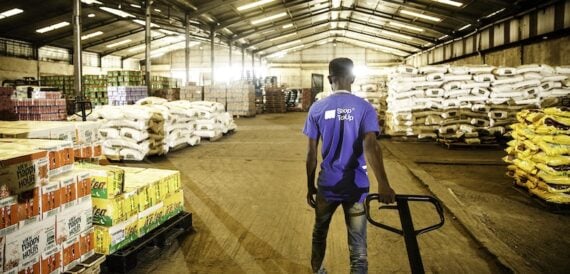
Nigeria-based TradeDepot exemplifies this retail aggregation strategy. The company has developed a sophisticated pre-selling model, meticulously optimizing its fleet’s routes. Each truck departs the warehouse with a pre-determined, high-density itinerary, ensuring that it visits a specific cluster of shops. This approach guarantees maximum delivery efficiency, as trucks are not undertaking speculative journeys but are instead fulfilling pre-arranged orders within a concentrated geographic area. This model effectively transforms the distribution network into a more predictable and efficient logistical pipeline.
Unlocking Working Capital: A Crucial Financial Intervention
Beyond the logistical efficiencies, a significant driver of the B2B e-commerce shift is the ability of these platforms to address a critical unmet need: access to working capital for small retailers. Traditional financial institutions often find it challenging to extend credit to these informal businesses. The lack of formalized accounting practices, inconsistent cash flow reporting, and limited visibility into inventory turnover create a high-risk environment for banks.
B2B distributors, however, are uniquely positioned to overcome these hurdles. Through their regular interactions with retailers – delivering goods and processing orders – they gain unparalleled visibility into daily sales, inventory levels, and cash flow patterns. This granular data, captured with every Stock Keeping Unit (SKU) delivered, provides a robust basis for assessing creditworthiness.
Armed with this data, these distributors can offer tailored inventory credit facilities. This is a game-changer for small retailers who often struggle with unpredictable stockouts and the inability to purchase sufficient inventory to meet demand. Companies like MaxAB and Wasoko, which merged in 2024, have made substantial inroads in this domain. Collectively, they serve over 450,000 African merchants. In Egypt alone, MaxAB-Wasoko’s financial services arm reportedly generates over $180 million in annual turnover, a figure that surpasses the revenue generated by its core e-commerce operations. This remarkable success underscores the profound demand for accessible credit and highlights how the B2B distributor has become the primary channel for both product acquisition and financial support. The reported repayment rates, often exceeding 99%, further validate the effectiveness of this data-driven lending approach.
Enhancing Visibility: A Boon for Brands and Retailers
The transformative impact of B2B distributors extends to providing unprecedented visibility into the retail landscape, benefiting not only the distributors themselves but also the consumer goods brands they serve. Historically, large Fast-Moving Consumer Goods (FMCG) companies would sell their products to wholesale networks, losing granular insight once the goods left their distribution centers. This lack of visibility meant that brands had limited understanding of which products were selling, where they were selling, and at what pace.
Platforms like MaxAB-Wasoko are fundamentally changing this dynamic. By leveraging their digital infrastructure, they provide SKU-level visibility at the point of retail. This means that a brand manager at a company like Unilever or Nestlé can now access real-time data on product performance in individual shops across their network. This newfound transparency allows for much more informed decision-making.
This data empowers brands to:
- Optimize Pricing Strategies: Understanding local demand and competitor pricing in real-time allows for dynamic adjustments that can maximize sales and profitability.
- Improve Inventory Allocation: Brands can shift inventory to regions or specific retailers where demand is highest, minimizing overstocking and stockouts.
- Streamline Marketing Efforts: Targeted marketing campaigns can be developed based on specific product performance in different markets.
- Reduce Intermediary Friction: By gaining direct insight into the retail channel, brands can bypass some of the traditional inefficiencies and markups associated with multiple layers of intermediaries.
This enhanced visibility creates a more responsive and agile supply chain, ultimately benefiting the end consumer through better product availability and potentially more competitive pricing.
A Timeline of Evolution in African E-commerce
The evolution of e-commerce in Africa can be broadly segmented into distinct phases, each building upon the lessons learned from the previous one:
- Early 2010s: The Dawn of Consumer-Focused E-commerce: This period saw the emergence of platforms like Jumia and Konga, primarily focusing on a direct-to-consumer (D2C) model. While ambitious, they encountered the aforementioned challenges of high customer acquisition costs and complex delivery logistics in diverse urban environments. Investment was significant, but profitability remained elusive for many.
- Mid-2010s to Late 2010s: The Rise of Niche Players and Logistics Solutions: Recognizing the limitations of the D2C model, some companies began to focus on specific product categories or sought to build dedicated logistics networks to mitigate delivery challenges. However, the fundamental issue of reaching the mass market through fragmented physical retail persisted.
- Late 2010s to Early 2020s: The Emergence of B2B Distribution Platforms: A paradigm shift began to take hold. Companies like TradeDepot, MaxAB, and Wasoko started to focus on serving the existing retail infrastructure. Their initial offerings often centered on delivery and order management, acting as digital intermediaries for small businesses.
- Early 2020s to Present: B2B as a Comprehensive Supply Chain Solution: The current phase sees B2B distributors expanding their services beyond mere delivery. They are increasingly taking on core supply chain functions, including inventory sourcing from manufacturers, managing warehousing, and, crucially, providing trade credit. This comprehensive approach addresses multiple pain points simultaneously, solidifying their position as essential partners for both retailers and brands. The merger of MaxAB and Wasoko in 2024 signifies a trend towards consolidation and scale within this sector.
Broader Impact and Implications
The strategic shift towards B2B distribution has profound implications for the African economic ecosystem:
- Financial Inclusion: By providing access to credit, these platforms are enabling small retailers to grow their businesses, hire more staff, and improve their livelihoods. This contributes to broader financial inclusion and economic empowerment.
- Formalization of Trade: The data collected by these platforms can help to gradually formalize the informal retail sector, making it more visible and accessible to financial services and government support.
- Strengthened Local Economies: By optimizing supply chains and providing working capital, B2B distributors are helping to make local businesses more competitive and resilient, fostering stronger local economies.
- Enhanced Brand Reach and Efficiency: For global and local brands, this model offers a more efficient and data-driven way to reach a vast and previously hard-to-access consumer base. This can lead to increased sales, reduced waste, and more effective marketing strategies.
- Consumer Benefits: Ultimately, consumers benefit from greater product availability, potentially more consistent quality, and a more efficient retail experience as retailers are better equipped to meet demand.
The journey of African e-commerce is a compelling case study in adaptation and innovation. By understanding and embracing the unique realities of the continent’s retail landscape, B2B distributors are not just building successful businesses; they are actively contributing to the economic development and empowerment of millions across Africa. The future of digital commerce on the continent appears to be less about disrupting the existing retail fabric and more about strategically integrating with and enhancing it, creating a more robust and inclusive marketplace for all.