rifanmuazin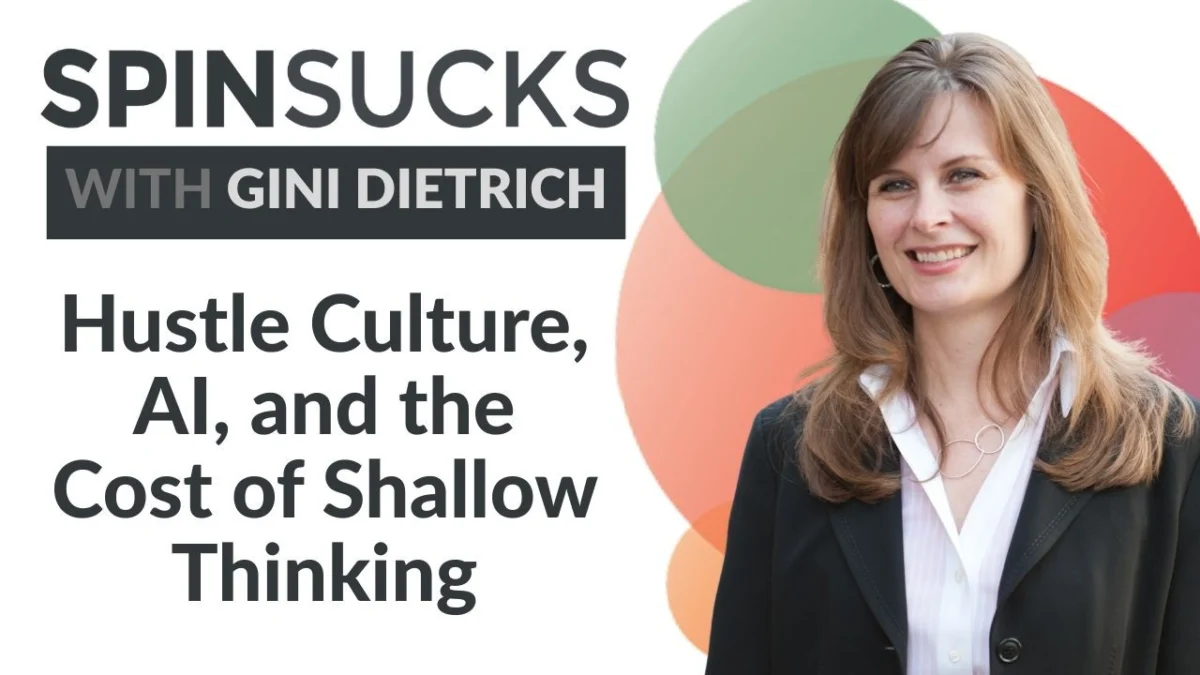
The rise of generative artificial intelligence has introduced a new phenomenon in digital communication: the non-comment comment. These are automated or AI-assisted responses on social media platforms that summarize original posts without offering unique insights, personal opinions, or evidence of human comprehension. While this trend is often blamed on the proliferation of accessible AI tools like ChatGPT and Claude, industry analysts and communication experts suggest that these tools are merely accelerating a pre-existing cultural shift. This shift, rooted in the "hustle culture" of the 2010s, prioritizes the volume of output and the appearance of engagement over deep reflection and original thought. The current landscape of digital interaction reflects a systemic preference for speed and visible activity, creating an environment where the performance of being informed has replaced the actual process of understanding.
The Evolution of Performative Engagement
The transition from meaningful discourse to performative engagement did not occur overnight. It is the result of a multi-decade evolution in workplace expectations and digital social norms. In the early 2000s, the digital revolution promised increased efficiency, but by the 2010s, this efficiency had morphed into a pervasive "always-on" culture. Professional networking platforms, most notably LinkedIn, became arenas for displaying workaholism as a badge of honor.
During this era, the "hustle" became a celebrated personality trait. Success was often measured by the number of hours worked, the speed of email responses, and the sheer volume of content consumed. This environment laid the groundwork for AI integration. When generative AI arrived at scale in late 2022, it found a workforce already conditioned to value "throughput"—the ability to move information from one point to another—over "discernment," or the ability to judge the value and truth of that information.
The "non-comment" is the logical conclusion of this trajectory. When an individual uses AI to summarize a post and post that summary as a comment, they are fulfilling a perceived social and professional requirement to be "active" without investing the cognitive resources required to actually read or process the material. This behavior treats social interaction as a metric to be optimized rather than a human connection to be fostered.
Chronology of the Shift Toward Shallow Thinking
The erosion of deep engagement can be traced through several key technological and cultural milestones:
- The Rise of the Smartphone (2007–2012): The transition to mobile-first consumption introduced the "infinite scroll," encouraging skimming over deep reading.
- The Professionalization of Social Media (2010–2015): Platforms like LinkedIn shifted from digital resumes to content hubs, creating pressure for professionals to maintain a constant "presence."
- The Peak of Hustle Culture (2014–2019): Terms like "rise and grind" became mainstream, and workaholism was rebranded as "ambition." During this time, the "TL;DR" (Too Long; Didn’t Read) became a standard internet staple.
- The Remote Work Surge (2020–2022): The COVID-19 pandemic moved professional life entirely into digital channels, increasing the volume of Slack messages, emails, and digital content, leading to "digital exhaustion."
- The Generative AI Explosion (2022–Present): The release of large language models (LLMs) provided the tools to automate the "performance" of engagement, allowing users to generate summaries, comments, and articles in seconds.
Supporting Data: The Cost of Information Overload
Statistical data supports the idea that we are consuming more while retaining less. According to a study by the University of California, San Diego, the average American consumes approximately 34 gigabytes of information and 100,000 words every day. However, this consumption is increasingly fragmented. Research into "digital amnesia" suggests that when individuals know information is easily retrievable or can be summarized by a tool, they are less likely to commit that information to long-term memory.
In the professional sector, the "Productivity Paradox" highlights a concerning trend: while AI tools have increased the speed at which tasks are completed, overall economic productivity growth in many developed nations remains stagnant. One theory for this is that the time saved by AI is often reinvested into "shallow work"—more emails, more meetings, and more performative social media posts—rather than the "deep work" required for innovation.
Furthermore, the "Performance of Consumption" is visible in the gamification of reading. On platforms like Goodreads, it has become common for users to set annual goals of reading hundreds of books. While impressive in volume, cognitive scientists argue that "speed reading" or consuming summaries (Blinkist style) bypasses the "slow thinking" necessary for empathy, critical analysis, and the synthesis of complex ideas.
Expert Perspectives and Industry Reactions
Communication strategists, including Gini Dietrich, creator of the PESO Model (Paid, Earned, Shared, Owned), have noted that the "watermark" of modern efficiency is the urge to "get through as much of the ocean as possible." Alan Kercinik, a veteran in the communications space, argues that the problem isn’t the AI itself, but the "disease" of treating constant motion as proof of value.
Leaders in the education sector are also witnessing this shift. In a recent case study involving middle-school humanities students, educators found that students initially believed reading a single article was sufficient to form an argument. The "growth moment" for these students came when they were forced to slow down—reading books, watching documentaries, and taking extensive notes over a five-month period. This "friction" in the learning process is what allowed for genuine intellectual development, a sharp contrast to the instant gratification provided by AI summaries.
From a corporate leadership perspective, there is growing concern that rewarding responsiveness over reflection is damaging organizational health. If the employee who replies the fastest is always the one who receives the "gold star," the organization effectively incentivizes "efficient panic" rather than thoughtful strategy.
Broader Impact and the Value of Discernment
The long-term implications of this trend extend beyond annoying social media interactions. When a culture prioritizes speed and volume, the result is "synthetic noise"—a flood of content that sounds authoritative but lacks original insight. This has several critical consequences:
The Erosion of Trust
As audiences become more aware of AI-generated content and performative comments, trust in digital discourse declines. When a reader cannot tell if a comment was written by a human who cared or a machine that summarized, they are likely to disengage entirely.
The Loss of Originality
AI models are trained on existing data, meaning they are inherently derivative. A culture that relies on AI to do its thinking will inevitably move toward "sameness," where opinions and marketing strategies become indistinguishable from one another.
The Premium on Perspective
Paradoxically, as "shallow work" becomes easier and cheaper to produce, "deep work" becomes more valuable. In a world of automated summaries, a unique, well-researched, and deeply felt point of view becomes a significant competitive advantage. For marketers, leaders, and communicators, the ability to provide context and taste—rather than just information—is becoming the primary differentiator.
Practical Steps Toward Deliberate Consumption
To combat the trend of shallow engagement, experts suggest reintroducing "friction" into the consumption and creation processes. This does not mean rejecting AI or efficiency altogether, but rather being more deliberate about where those tools are applied.
- Selective Consumption: Instead of skimming seven articles, read one deeply and take manual notes.
- The Silence Option: If a person has nothing to add to a conversation beyond a summary or simple agreement, silence is often the more professional and "brave" choice.
- Note-Taking and Reflection: Keeping a running log of ideas and allowing a "cool-down" period after consuming complex information can help move insights from short-term to long-term memory.
- Organizational Change: Leaders should audit their internal communications to ensure they are not inadvertently rewarding "speed of response" over "quality of thought."
The current era of AI-driven communication is a crossroads. While the technology offers unprecedented power to process information, it also threatens to automate the very things that make human intellect valuable: judgment, context, and the ability to be changed by an idea. The challenge for the modern professional is not to get through the ocean faster, but to decide which parts of the ocean are actually worth diving into. As the digital landscape becomes increasingly clogged with assembly-line content, the most efficient path to influence may involve the one thing hustle culture has long discouraged: slowing down.