
 rifanmuazin
The landscape of email marketing in 2026 has significantly evolved, moving beyond the initial disruptive waves of generative AI and the immediate scramble to comply with burgeoning privacy regulations. This year marks a definitive shift into an era of refinement, where strategic integration of advanced technologies and a renewed focus on authentic human connection define success. Subscribers, now more discerning and skeptical than ever, possess an uncanny ability to identify overtly AI-generated content. Consequently, striking a delicate yet powerful balance between cutting-edge automation and a genuine human touch has become paramount for brands aiming to sustain and grow their digital engagement. This article delves into the critical tactical shifts necessary to master this evolving environment, from sophisticated lifecycle strategies to the emergence of "intelligent gatekeepers," ensuring email remains a brand’s most potent growth engine.
The Evolution to 2026: A Brief History of Email’s AI Transformation
The journey to the current state of email marketing in 2026 is rooted in a rapid technological and regulatory transformation that began in the early 2020s. From roughly 2023 to 2025, the marketing world witnessed an explosive growth in generative AI capabilities. Initially, this led to a flurry of experimentation, with many marketers deploying AI for basic content generation, subject line drafting, and even rudimentary audience segmentation. The initial excitement was palpable, promising unprecedented efficiency. However, this period also coincided with a global acceleration of data privacy regulations, building on the foundations laid by GDPR in Europe and CCPA in California. New legislation, often fragmented and complex, forced marketers to reconsider their data collection, usage, and personalization practices.
This confluence of AI’s burgeoning power and the tightening grip of privacy laws created a reactive environment. Brands scrambled to adopt AI tools while simultaneously overhauling their data governance. By 2026, the industry has largely digested these initial shocks. The focus has shifted from simply using AI to strategically integrating it, understanding that raw AI output often lacks the nuance and authenticity required to connect with an increasingly sophisticated audience. The "scramble" has given way to "refinement," where the question is no longer if to use AI, but how to use it intelligently to enhance, rather than replace, human-centric marketing efforts.
Redefining Engagement: The Imperative of Hyper-Personalization
In 2026, generic, mass-blast emails are not just ineffective; they are detrimental. To truly connect with subscribers across all marketing touchpoints, messages within email campaigns must be hyper-relevant, impeccably timely, and deeply personalized. This isn’t merely about inserting a subscriber’s first name; it’s about understanding their unique journey, preferences, and needs. Effective personalization now rests on several critical pillars: comprehensive data utilization, predictive analytics, and contextual relevance. Industry reports consistently demonstrate the significant return on investment (ROI) for advanced personalization strategies, with some studies indicating an ROI of 5-8x and a substantial increase in conversion rates for personalized campaigns.

The foundation of this hyper-personalization lies in robust data collection and management. Brands are increasingly leveraging zero-party data—information willingly shared by customers through preference centers, surveys, and interactive content—and first-party data from their own platforms. This proprietary data, combined with advanced analytics, allows marketers to create dynamic content that adapts to individual user behavior, purchase history, and stated preferences. For instance, an email promoting a new product line might dynamically display items most relevant to a user’s past browsing activity, or a seasonal offer could be tailored based on their geographical location and local weather patterns. This granular approach ensures that every message feels bespoke, fostering a stronger sense of connection and trust, which are invaluable commodities in a skeptical marketplace.
Navigating the AI Gatekeepers: Designing for Machine Readability
One of the most profound shifts in 2026 is the dual audience for emails: human subscribers and increasingly sophisticated AI gatekeepers. Tools like Apple Intelligence and Gmail’s Gemini are now standard features, proactively summarizing email content for users even before they open the message. This fundamental change has rendered traditional metrics like open rates increasingly unreliable, as a user might gain all necessary information from an AI summary without ever officially "opening" the email.
This development demands a strategic reorientation for email marketers. The crucial question is no longer solely, "Did my email land and look great?" but rather, "Did the AI accurately surface the right topics and value proposition in its summary?" Marketers must adopt an approach akin to search engine optimization (SEO) for their emails. This involves front-loading email content with relevant keywords and ensuring that the most important value proposition is explicitly clear and easily "scraped" by machine learning algorithms for accurate summarization in the inbox preview. Furthermore, for image-heavy emails, thorough and descriptive alt attributes in image tags are no longer optional but essential for conveying visual information to AI systems. A recent statement from a hypothetical "Google AI spokesperson" emphasized, "Our goal is to provide users with immediate, concise value. Emails designed with clear, structured information naturally perform better in our summarization models." Without tools that offer a preview of how AI will summarize a message, marketers are left guessing. In 2026, victory belongs not just to the most creative writer, but to the marketer who designs their content with both human readers and intelligent machines in mind.
Simplicity as Strategy: The Rise of Minimalist and Structured Email Design
While the myth of humans having an attention span shorter than a goldfish has been debunked (goldfish, in fact, possess excellent memories), the underlying principle holds true: users gravitate towards content that offers the quickest possible value and is easiest to consume. In 2026, this translates into a decisive shift away from giant, text-heavy emails towards leaner, more minimalist, and highly structured designs. These modern aesthetics not only load faster, crucial for mobile-first audiences, but also significantly ease the interpretation and summarization process for AI tools. Data consistently shows that faster loading times and clean layouts correlate with higher engagement rates and lower bounce rates.
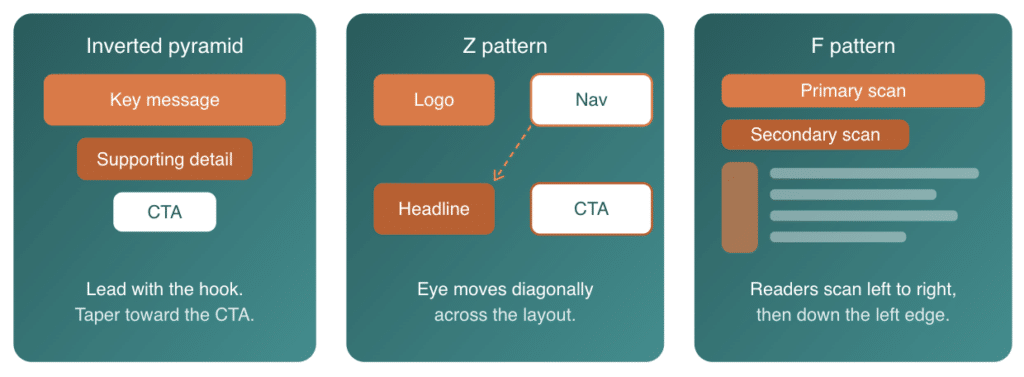
To facilitate effortless reading and machine comprehension, marketers are leveraging established content hierarchy structures. The Inverted Pyramid, which places the most important information at the top; the Z-pattern, guiding the eye across the top, diagonally down, and across the bottom; and the F-pattern, mimicking natural scanning habits, are all widely adopted. Beyond visual flow, proper HTML heading tags (H1 for main section titles, H2 for sub-sections, and so on) are critical. These tags are not merely for visual styling; they act as explicit signals to AI algorithms, indicating the hierarchical importance of information within the email. This structured approach ensures that both human readers seeking quick wins and AI gatekeepers extracting key points can efficiently process the message’s core content.
Unlocking Richer Experiences: The Power of Annotation Schema
Years ago, Gmail introduced support for structured data within emails, utilizing small code snippets in JSON-LD or Microdata format. These annotations provide mailbox providers with richer, machine-readable information about a message’s content, enabling the rendering of special UI elements directly within the inbox. Examples include interactive image carousels, dynamic product listings, or prominent banners displaying discount codes and their expiration dates, particularly for messages landing in the promotions tab. While there is no explicit official confirmation that structured data directly fuels Gmail’s AI summarization process, its inclusion within the message body means it is parsed by AI. At a minimum, structured data offers the AI engine meaningful, organized signals about the content, acting as a clear roadmap for automated interpretation.
In 2026, the adoption of annotation schema remains a competitive advantage. Given that a significant portion of senders still do not fully leverage this capability, implementing it now provides a straightforward method to gain an edge over competitors. A recent analysis by Litmus Live 2026 highlighted that emails utilizing structured data saw a 15% increase in engagement with special UI elements, translating to higher click-through rates and conversions. This indicates that organized data not only enhances the user experience but also implicitly communicates clarity and relevance to AI, potentially improving message deliverability and visibility in an increasingly crowded inbox.
The Email Orchestrator: A New Role in the Age of AI
The role of the email marketer has undergone a fundamental transformation in 2026. Marketers are no longer merely "builders" tasked with the manual creation of emails; they have evolved into "orchestrators." AI now handles much of the heavy lifting: generating code for email templates, drafting subject lines, segmenting audiences with precision, and even interpreting campaign results. This technological shift means that the core value of a human marketer lies in their ability to manage, refine, and strategically direct this AI-generated output.
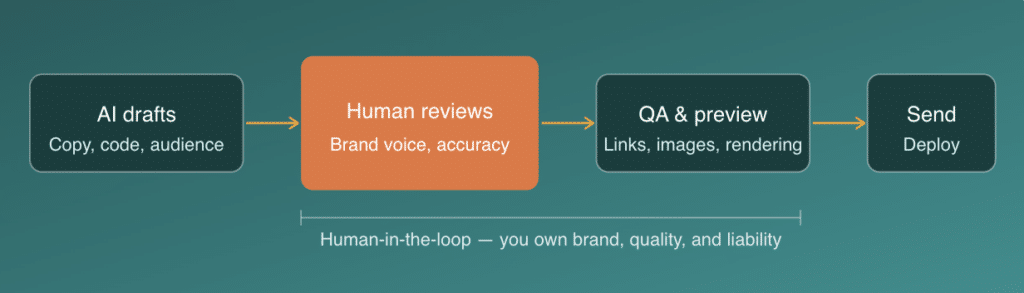
As Drew Price, Co-Founder at JRNY PPL, astutely observes, "We’ve been playing checkers for too long and not enough chess. Looking at things more holistically and diversifying our investments with automation will go a long way. There’s just a bit of a mindset shift that we need to do." This mindset shift positions the marketer as a quality assurance specialist, ensuring that automation does not "hallucinate" incorrect information or deviate from established brand guidelines. A "human-in-the-loop" approach, where AI generates content and humans provide critical oversight and refinement, has proven to yield significantly higher quality output, with studies indicating up to a 40% improvement. The orchestrator’s primary tasks include meticulously reviewing AI-generated content in email rendering previews, flagging necessary adjustments to stakeholders, and diligently checking all links and images for accuracy and functionality. The mantra is clear: delegate labor, but never liability. This evolution demands a new skill set, emphasizing strategic thinking, prompt engineering, data interpretation, and meticulous attention to detail over traditional content creation.
Beyond Basic Copy: Elevating Customer Experience and Expanding AI’s Reach
The initial novelty of AI-generated copy has largely worn off by 2026. The objective is no longer simply to produce content quickly but to strategically deploy AI to profoundly enhance the customer experience, especially as subscribers grow increasingly skeptical of generic, obvious AI content. Examples of AI successfully augmenting the customer experience include:
- Dynamic Content Generation: AI can personalize content modules within an email in real-time, based on a subscriber’s most recent interactions, browsing history, or purchase behavior. This moves beyond basic segmentation to hyper-individualized messaging.
- Predictive Product Recommendations: Leveraging AI to analyze vast datasets, marketers can offer highly accurate product or service recommendations that anticipate a customer’s future needs or desires, significantly boosting conversion rates.
- Hyper-Segmented Journey Mapping: AI can optimize entire customer journeys, dynamically adjusting the sequence, timing, and content of emails based on a subscriber’s real-time engagement and likelihood to convert or churn.
- Sentiment Analysis for Feedback: AI tools can analyze customer responses or feedback provided through email to gauge sentiment, allowing brands to respond more appropriately and proactively address concerns.
It is crucial to remember that even with these advanced capabilities, human editing of AI outputs remains vital to ensure the content feels authentic, resonates with the brand’s unique voice, and avoids the sterile, impersonal tone often associated with unedited AI.
Furthermore, the application of AI extends far beyond written email copy. Marketers are now exploring a broader spectrum of AI capabilities:
- AI-Powered Design Tools: Generating layout and style variants for emails, creating personalized visual assets, or even optimizing image sizes and formats for different devices automatically.
- Predictive Analytics for Send Times: AI algorithms analyze individual subscriber behavior to determine the optimal send time for each user, maximizing open and click-through rates.
- Automated A/B Testing and Optimization: AI can run hundreds of A/B tests simultaneously on various email elements (subject lines, CTAs, layouts), rapidly identifying the most effective combinations and continuously optimizing campaigns.
- Content Summarization and Repurposing: Beyond email clients, AI assists marketers in summarizing long-form content for email newsletters or repurposing email content for other channels efficiently.
- Customer Service Integration: AI-driven chatbots can handle initial customer inquiries directly from email replies, providing instant support and routing complex issues to human agents.
Strategic Investments: Tools, Talent, and Data Mastery
The increasing complexity and strategic importance of email marketing in 2026 underscore the necessity of investing in specialized talent and robust automation tools. Having a dedicated email designer on the team, ideally one equipped with the right tools, is no longer a luxury but a fundamental requirement. Email has solidified its position as a distinct and highly effective marketing medium, consistently delivering one of the highest returns on investment. This justifies specialization.
Beyond specialized personnel, marketing teams must critically evaluate and enhance their automation tools. Cynthia Price, SVP of Marketing at Validity, highlights a persistent challenge: "Data collection and management is not a ‘set it and forget it’ proposition. You’d be surprised how much information subscribers will offer once you prove you’re asking questions to make their lives easier." To address this, tools like Validity’s BriteVerify are essential for validating email addresses at the point of entry, which protects sender reputation by minimizing soft bounces.
To accelerate design and development, leveraging templates, advanced email building tools that drastically cut development time, reusable HTML modules, and AI design tools for generating layout and style variations are indispensable. For addressing lifecycle gaps, leaning heavily on automation is key; a single well-crafted automated email sequence can outperform numerous one-off sends.

Effective data management remains a recurring obstacle, one that will only intensify as demands for deeper personalization grow. Brands must narrow their focus on specific customer segments and the data required to engage them effectively:
- Customers purchasing across multiple categories: Personalize with gift guides or invitations to in-store visits, requiring data on purchase history and category preferences.
- Customers who bought one product but not a second: Tailor product recommendations based on their initial purchase and browsing behavior.
- Superfans (3+ purchases): Engage with requests for reviews, social media shout-outs, or exclusive loyalty programs, necessitating purchase frequency data.
- Prospects browsing in the last 24 hours: Send timely "back in stock" or "get it before it’s gone" alerts, using real-time browsing data.
- Prospects disengaged for 30+ days: Launch targeted re-engagement campaigns, requiring last-engagement timestamps.
- Prospects close to purchase: Deploy abandoned cart or abandoned browsing emails, leveraging behavioral data.
Integrating the email platform with CRM, CDP (Customer Data Platform), analytics tools, and broader marketing automation systems is crucial. This interconnected ecosystem unlocks richer insights, enables more precise personalization, and provides clearer attribution of results. Even without a complex tech stack, simple signup forms, preference centers, and in-email polls can effectively surface valuable zero-party data.
The Ethical and Legal Imperative: Optimizing for Accessibility and Inclusivity
In 2026, optimizing emails for accessibility and inclusivity is no longer merely a best practice; it is a legal requirement under frameworks like the European Accessibility Act and similar legislation globally, including the Americans with Disabilities Act (ADA) in the United States. Beyond legal compliance, it is an ethical imperative and a smart business decision, considering the significant market segment represented by individuals with disabilities.
Key best practices for email accessibility include:
- Clear and Concise Subject Lines: Easily understandable for screen readers and cognitive accessibility.
- Descriptive Alt Text for Images: Providing context for visually impaired users.
- Logical Reading Order: Ensuring content flows coherently for screen readers.
- Sufficient Color Contrast: Meeting WCAG (Web Content Accessibility Guidelines) standards for readability.
- Adequate Font Size and Readability: Avoiding excessively small or complex fonts.
- Clear and Actionable Call-to-Actions (CTAs): Easily identifiable and understandable.
- Language Attribute in HTML: Declaring the email’s primary language for screen readers.
- Keyboard Navigability: Ensuring interactive elements can be accessed without a mouse.
Robust testing before sending is paramount. Relying solely on an Email Service Provider’s (ESP) basic checks is often insufficient. Specialized email testing tools, such as Litmus, offer comprehensive accessibility checks including visual impairment filters, automatic checks for alt text, text justification, table roles, and crucial NVDA screen reader previews. This thorough review process helps maximize the impact of every email by ensuring it reaches and engages the widest possible audience. The emphasis on accessibility was a key theme at Litmus Live 2026, highlighting its central role in modern email strategy.
The Future Outlook: A Human-Centric, Intelligent Email Ecosystem

The roadmap for email marketing in 2026 presents an intriguing blend of efficiency driven by advanced technology and a renewed focus on human connection. As marketers continue to explore and harness the power of tools like automation and AI to work faster and smarter, there is an overarching imperative to humanize messages. This means crafting inspiring, highly personalized emails that resonate deeply with individual subscribers and ensuring that all communications are accessible and inclusive.
The email channel, far from diminishing in importance, continues to evolve as a sophisticated, intelligent ecosystem. Its enduring power as a direct line to customers, coupled with continuous innovation in personalization, AI integration, and accessibility, solidifies its position as an indispensable growth engine for brands worldwide. Success in this new frontier hinges on strategic adaptation, a commitment to quality, and an unwavering focus on the human experience at the heart of every digital interaction.









