rifanmuazin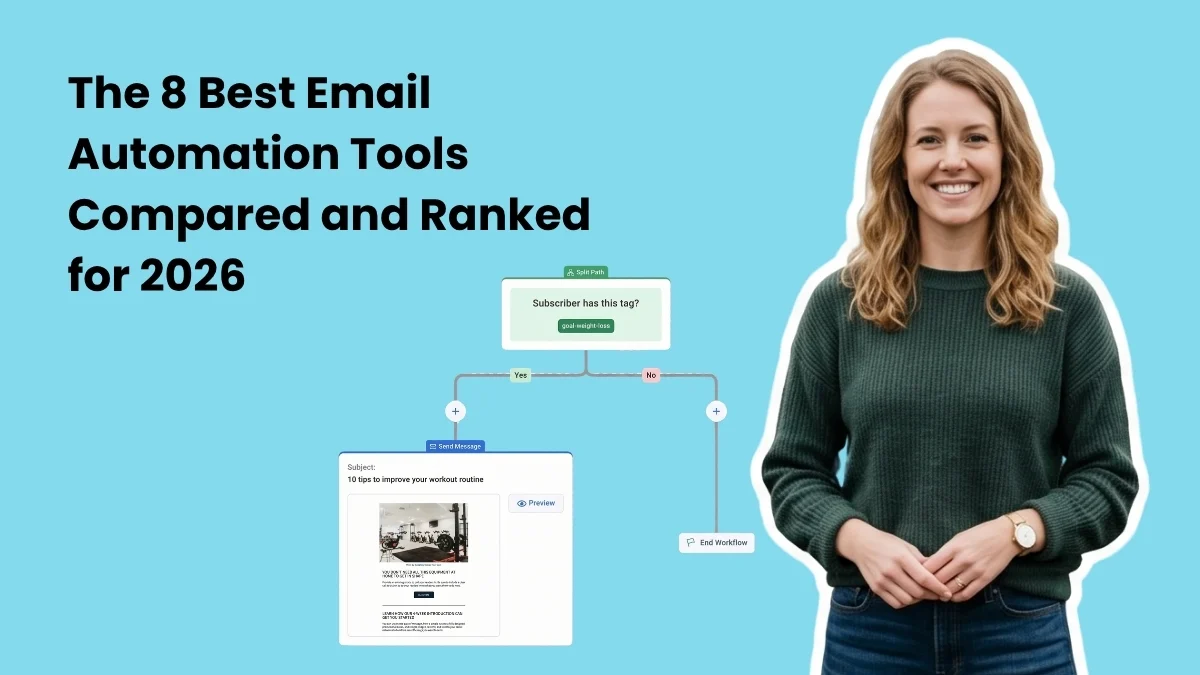
The Evolving Landscape of Email Marketing Automation
Over the past decade, email marketing has transitioned from mass broadcasting to highly personalized, behavior-driven communication. This shift is largely powered by advancements in marketing automation, which allows businesses to deliver timely, relevant messages to individuals based on their interactions, preferences, and stages in the customer lifecycle. The market for marketing automation software is projected to exceed $10 billion by 2027, growing at a compound annual growth rate (CAGR) of over 14% from 2020, signaling its increasing adoption and sophistication. This growth is fueled by the imperative for businesses to scale personalized interactions, optimize resource allocation, and enhance customer lifetime value in an increasingly competitive digital environment.
In 2026, the distinguishing factors for leading platforms include not just robust workflow builders but also advanced AI integration, comprehensive analytics, and seamless integration capabilities with broader marketing and sales ecosystems. The emphasis has shifted from merely sending emails to orchestrating dynamic, multi-channel customer journeys that adapt in real-time.
Key Criteria for Evaluating Email Automation Platforms
Before examining the top contenders, it is crucial to establish the foundational characteristics that define a superior email automation service in the current market. These criteria ensure that platforms offer both immediate utility and long-term scalability for diverse business needs.
-
Essential Automation Features: At its core, an effective platform must provide trigger-based workflows, allowing messages to be sent in response to specific subscriber actions (e.g., sign-ups, purchases, clicks). Behavioral segmentation is paramount, enabling marketers to categorize subscribers based on their engagement patterns, demographic data, and stated interests. A user-friendly drag-and-drop builder is non-negotiable, empowering users to construct complex sequences without requiring specialized coding skills. Beyond basic sequences, features like A/B testing within automation paths, conditional logic, and the ability to branch workflows based on multiple criteria are vital for sophisticated campaigns.
-
AI-Powered Options: The integration of Artificial Intelligence has become a significant differentiator. Leading platforms leverage AI for content generation (e.g., subject lines, email body copy), predictive analytics, and send-time optimization, ensuring emails reach subscribers when they are most likely to engage. AI-driven personalization, dynamic content adaptation, and churn prediction are also emerging as standard, helping marketers achieve hyper-relevance and improve campaign performance metrics such as open rates, click-through rates, and conversions.
-
Integration Capabilities: A truly powerful email automation tool does not operate in a vacuum. Seamless integration with other critical business systems—such as Customer Relationship Management (CRM) platforms, e-commerce stores (e.g., Shopify, WooCommerce), Content Management Systems (CMS), landing page builders, and analytics tools—is essential. This interoperability ensures data flows smoothly, creating a unified customer view and enabling synchronized marketing and sales efforts across the entire tech stack. The absence of key integrations can lead to data silos and hinder comprehensive customer journey mapping.
-
Scalability and Pricing: The ideal platform must offer pricing models that accommodate business growth without imposing prohibitive costs. Understanding whether a platform charges primarily per subscriber, per email volume, or based on feature tiers is critical for budgeting. Flexible plans that allow businesses to upgrade or downgrade as their needs change, coupled with clear visibility into how costs escalate with list size or usage, are hallmarks of a business-friendly provider. Transparent pricing and the ability to scale features alongside business maturity are key considerations for long-term investment.
Deep Dive: Top Email Automation Platforms for 2026
For most small businesses, AWeber emerges as the preeminent email automation tool in 2026, offering a powerful yet intuitive solution for precise subscriber journey control. Its Workflow builder enables dynamic routing of subscribers based on real-time actions such as clicks, opens, and tags. This visual builder also provides immediate performance insights for every step, eliminating the need to navigate away from the design interface.
#1 – AWeber: Best Email Automation for Small Businesses
AWeber’s Workflow builder empowers small businesses with granular control over each phase of the subscriber journey. Its robust tagging system automatically segments subscribers based on engagement (clicks, opens) or specific behaviors, directing them down tailored communication paths. A standout feature is the intelligent adjustment of wait times, optimizing message delivery for each subscriber’s local time zone, a nuanced detail that significantly boosts engagement. The platform also accelerates campaign setup with a library of pre-built templates aligned with common marketing goals, allowing businesses to launch sophisticated automations rapidly.
Standout Automation Features:
- Intuitive Drag-and-Drop Workflow Builder: Simplifies the creation of complex automation sequences.
- Behavioral Tagging: Automatically segments subscribers based on interactions like clicks, opens, and specific actions within emails or on landing pages.
- Time Zone-Aware Scheduling: Optimizes email delivery times for maximum impact regardless of subscriber location.
- AI-Powered Content Generation: Assists with crafting compelling subject lines and email copy, saving significant time.
- Pre-Built Automation Templates: Provides ready-to-use workflows for welcome series, abandoned carts, re-engagement, and more.
- Comprehensive Analytics: Offers detailed insights into workflow performance, open rates, click-through rates, and conversions directly within the builder.
- Automated Subscriber Routing: Directs contacts into different sequences based on their actions, ensuring personalized messaging for buyers, engaged users, or cold leads.
AWeber’s internal research reveals a compelling statistic: small businesses consistently employing automation are twice as likely to report effective email strategies compared to those without. This data underscores the direct correlation between automation adoption and marketing efficacy. Furthermore, its AI capabilities are reported to save small businesses hours weekly by generating optimized subject lines and email copy, allowing them to focus on strategy rather than manual content creation. The platform differentiates itself by offering a professionally built email system, including ready-to-run automations delivered within seven days with minimal client input (approximately 20 minutes).
Pricing Breakdown: AWeber offers a competitive pricing structure, including a robust free plan for up to 500 subscribers, making it accessible for startups. Paid plans start at $15 per month, scaling based on subscriber count, offering unlimited automations and access to advanced features. This tiered approach allows businesses to grow without immediate steep cost increases.
#2 – ActiveCampaign: Most Advanced Automation Builder
For enterprises and businesses demanding the pinnacle of marketing automation sophistication, ActiveCampaign delivers unparalleled capabilities. Its platform is renowned for handling intricate workflows and granular customer journey mapping, extending beyond email to encompass site messaging, SMS, and CRM integration.
Advanced Automation Capabilities:
- Machine Learning (ML) Driven Automation: Optimizes send times and content based on predictive analytics.
- CRM Integration: Seamlessly connects marketing efforts with sales processes, enabling a unified customer view.
- Advanced Segmentation: Allows for highly specific audience targeting based on custom fields, behavior, and external data.
- Split Testing: Facilitates A/B testing across entire automation paths, not just individual emails.
- Goal Tracking: Enables precise measurement of campaign effectiveness against predefined business objectives.
- Conditional Logic and If/Else Branches: Supports the creation of highly personalized, dynamic customer journeys.
- Site and Event Tracking: Captures detailed behavioral data from website visits and specific actions to trigger automations.
ActiveCampaign’s automation builder excels at constructing complex decision trees influenced by a rich tapestry of subscriber behavior, demographic data, and historical engagement. Its deep CRM integration ensures fluid coordination between marketing and sales teams, a critical feature for businesses with longer sales cycles. Industry analysts frequently cite ActiveCampaign as a leader in comprehensive customer experience automation, noting its ability to power hyper-personalized interactions across multiple touchpoints.
Pricing Breakdown: ActiveCampaign’s pricing begins at $15 per month for basic plans, but costs escalate significantly with subscriber growth and feature requirements, potentially exceeding $500 monthly for larger lists requiring advanced CRM and sales automation features. This reflects its enterprise-grade capabilities and sophisticated toolset.
#3 – GetResponse: Email Automation with Integrated Webinars
GetResponse distinguishes itself by seamlessly integrating email automation with robust webinar functionality, making it an ideal choice for businesses that leverage educational content and live events for lead nurturing and conversion.
Webinar-Focused Features:
- Built-in Webinar Platform: Hosts live and on-demand webinars directly within the system.
- Automated Webinar Funnels: Manages registration, reminders, and post-event follow-ups automatically.
- Lead Scoring: Ranks leads based on engagement, including webinar attendance and interaction.
- Integrated Landing Page Builder: Creates conversion-optimized pages for webinar registrations.
- CRM and Sales Automation: Tracks attendee behavior and integrates with sales processes.
- Customizable Forms and Surveys: Collects attendee data and feedback.
- Performance Analytics: Provides insights into webinar engagement and conversion rates.
GetResponse uniquely pairs its email automation prowess with an integrated webinar solution, offering one of the few platforms where event management and automated follow-up can be orchestrated from a single dashboard. This streamlines the process for businesses relying on content marketing and virtual events to build authority and generate leads.
Pricing Breakdown: GetResponse offers a free plan for up to 500 contacts, with paid plans starting at $15.58 per month. Pricing scales with contact list size and the inclusion of advanced features like webinars and marketing automation.
#4 – Kit (formerly ConvertKit): Creator-Focused Automation
Kit, previously known as ConvertKit, is specifically tailored for content creators, bloggers, podcasters, and online educators, with automation designed for audience building and monetization.
Creator-Specific Features:
- Tag-Based Subscriber Management: Replaces traditional lists for flexible segmentation and targeted messaging.
- Visual Automation Builder: Simplifies the creation of subscriber journeys for different content types.
- Landing Pages and Forms: Tools to capture leads and build an audience.
- E-commerce Integrations: Connects with platforms like Shopify for selling digital products.
- Broadcasts and Sequences: Manages one-off emails and automated drip campaigns.
- Paid Newsletter Functionality: Supports direct monetization of content.
- Audience Segmentation by Product Purchase: Allows for specific follow-ups based on buying behavior.
Kit’s strength lies in its blend of simplicity and power. Its tag-based system provides superior flexibility in subscriber management, allowing creators to trigger specific automations based on audience interests, content consumption, or purchasing behavior. This approach is highly effective for creators who need to nurture diverse audience segments with relevant content and product offers.
Pricing Breakdown: Kit offers a free plan for up to 1,000 subscribers with basic features. Paid plans start at $29 per month, scaling with subscriber count and unlocking advanced automation capabilities, custom domains, and premium support.
#5 – MailerLite: Clean Design Meets Robust Automation
MailerLite emphasizes user experience and intuitive design while providing surprisingly sophisticated automation features at highly competitive price points, appealing to small businesses and individuals who value aesthetics and ease of use.
Design-Forward Approach:
- Drag-and-Drop Email Editor: Creates visually appealing emails with ease.
- Automation Workflows: Supports complex sequences with multiple triggers and conditions.
- Landing Page Builder: Offers clean, modern templates for lead capture.
- Pop-up Forms: Integrates customizable pop-up forms for website lead generation.
- A/B Testing: Optimizes email content and subject lines.
- Segmentation and Personalization: Targets messages based on subscriber data and behavior.
- Website Builder: Provides basic website creation tools for a holistic online presence.
Despite its minimalist interface, MailerLite supports intricate automation workflows featuring multiple triggers and conditions. Its automation tools are particularly noteworthy given its attractive pricing, offering significant value for businesses that prioritize both design and functionality without breaking the bank.
Pricing Breakdown: MailerLite provides a free plan for up to 1,000 subscribers and 12,000 emails per month. Paid plans start at $10 per month, increasing with subscriber count and unlocking premium features like unlimited emails, advanced automation, and dedicated support.
#6 – Brevo (formerly SendinBlue): Email Automation with Built-in SMS Marketing
Brevo, previously known as SendinBlue, offers a comprehensive solution that integrates email automation with robust SMS marketing capabilities. This makes it an excellent choice for businesses aiming to engage customers across both email and text message channels from a single, unified platform.
Email and SMS Features:
- Multi-Channel Automation: Orchestrates email, SMS, and chat messages within workflows.
- Shared Inbox: Centralizes customer communications for streamlined support.
- Transactional Email and SMS: Delivers critical notifications and alerts.
- CRM Integration: Manages customer relationships and sales pipelines.
- Landing Page Builder: Creates dedicated pages for lead capture.
- A/B Testing and Analytics: Optimizes campaign performance across channels.
- SMS Marketing Campaigns: Sends promotional and informational text messages.
Brevo’s core strength lies in its seamless integration of email and SMS marketing. Marketers can design workflows that automatically send follow-up text messages if emails go unopened, ensuring critical communications reach the audience through their preferred channel. This omnichannel approach is increasingly vital for businesses seeking to maximize message visibility and response rates.
Pricing Breakdown: Brevo offers a free plan with up to 300 emails per day. Paid plans start at $25 per month, with pricing primarily based on the number of emails sent per month rather than subscriber count, making it cost-effective for businesses with large lists but moderate send volumes. SMS credits are purchased separately.
#7 – Constant Contact: Reliable Automation for Brick-and-Mortar Businesses
Constant Contact caters specifically to brick-and-mortar businesses, offering straightforward email automation combined with event management and local marketing tools. It is a popular choice among physical retailers, restaurants, and service providers who need reliable, easy-to-use tools for local engagement.
Brick-and-Mortar Business Features:
- Event Management Tools: Handles registration, ticketing, and promotions for local events.
- Social Media Integrations: Manages social campaigns alongside email.
- Listing Management: Helps businesses appear accurately across online directories.
- Basic Automation: Offers welcome series, birthday emails, and abandoned cart reminders.
- Website Builder: Provides tools for creating simple business websites.
- Coupon and Offer Management: Creates and tracks promotional discounts.
- CRM Lite: Manages customer contacts and basic interactions.
The platform excels at serving businesses that require fundamental automation without unnecessary complexity. Its integrated event management features automatically handle registration confirmations, reminders, and post-event follow-up surveys, simplifying the logistics for local businesses running promotions or workshops.
Pricing Breakdown: Constant Contact offers a 14-day free trial. Paid plans start at $12 per month, with pricing varying based on contact list size and the inclusion of advanced features. This predictable pricing model is attractive to small businesses with stable growth.
#8 – Omnisend: Omnichannel Retail Automation
Omnisend specializes in e-commerce, offering integrated email, SMS, and push notification automation from a single platform. It is designed to maximize customer lifetime value and recover abandoned sales for online retailers.
Multichannel Capabilities:
- Pre-Built E-commerce Automations: Includes abandoned cart, browse abandonment, and welcome series templates.
- SMS and Push Notifications: Integrates these channels into automated workflows.
- Product Recommender: Dynamically inserts personalized product suggestions into emails.
- Wheel of Fortune and Pop-ups: Tools for lead capture and engagement.
- Advanced Segmentation: Targets customers based on purchase history, browsing behavior, and cart value.
- A/B Testing for Workflows: Optimizes entire customer journeys across channels.
- Deep E-commerce Platform Integrations: Seamlessly connects with Shopify, WooCommerce, Magento, and more.
Omnisend excels at creating cohesive customer experiences across multiple channels, ensuring consistent messaging whether customers receive emails, text messages, or browser push notifications. This unified approach is critical for retailers aiming to reduce cart abandonment and drive repeat purchases.
Pricing Breakdown: Omnisend offers a free plan with up to 500 emails per month and basic features. Paid plans start at $16 per month, scaling with email volume and subscriber count, offering advanced automation and SMS/push notification credits.
Strategic Platform Selection: Matching Tools to Business Needs
Choosing the optimal email automation platform is a strategic decision that profoundly impacts marketing effectiveness and business growth. The diverse offerings in 2026 cater to specific needs and scales of operation.
- For Small Businesses: AWeber remains the top recommendation due to its beginner-friendly automation platform, intuitive design, and AI-powered tools. Its unlimited automations and optional expert setup service provide an unparalleled foundation for newcomers to email marketing, ensuring they can implement sophisticated strategies with minimal technical overhead.
- For Advanced Marketers: ActiveCampaign provides the most sophisticated automation capabilities, justifying its premium price point for businesses with mature marketing strategies. Its machine learning features and complex workflow builder are tailored for intricate, multi-channel customer journeys that demand precision and scalability.
- For E-commerce Businesses: Both AWeber and Omnisend offer specialized features for online retailers. AWeber’s robust segmentation and integration with e-commerce platforms, combined with Omnisend’s dedicated omnichannel capabilities (email, SMS, push notifications), make them excellent choices for stores focused on maximizing customer lifetime value and recovering abandoned sales.
- For Content Creators: Kit’s tag-based system and creator-focused integrations, including paid newsletter functionality and simple e-commerce connections, provide the ideal foundation for building and monetizing audiences through relevant content and digital products.
- For Coaches: AWeber’s seamless Calendly integration automates discovery call confirmations, session reminders, and follow-up sequences. Its tailored email automation for coaches transforms manual client management into efficient, hands-off systems that cultivate stronger client relationships and streamline scheduling.
- For Businesses Needing Specialized Channels: Brevo excels in scenarios requiring integrated SMS follow-ups when emails go unopened, ensuring critical messages bypass crowded inboxes. GetResponse, on the other hand, is the go-to for automating complete webinar funnels, from registration to post-event sequences, making it invaluable for businesses leveraging educational events.
Implementing proven automation strategies is key to success. Reviewing marketing automation workflow examples from successful businesses can provide actionable insights into structuring email campaigns for maximum impact and efficiency.
Future Outlook: The Trajectory of Email Automation
Looking ahead, the email automation landscape is poised for further innovation, primarily driven by advancements in artificial intelligence and the increasing demand for hyper-personalization. Expect deeper integration of predictive analytics, allowing platforms to anticipate customer needs and behaviors with greater accuracy. Omnichannel convergence will continue to strengthen, blurring the lines between email, SMS, push notifications, and even in-app messaging, all orchestrated from a single automation hub. The emphasis will remain on delivering contextual, relevant, and timely communications that enhance the customer experience and drive measurable business outcomes. The role of AI in generating increasingly sophisticated, human-like content and optimizing entire customer journeys will become even more pronounced, making the selection of a forward-thinking platform critical for long-term competitive advantage.
Frequently Asked Questions
What email automations should every small business set up first?
Every small business should prioritize three core automations. First, a welcome series, triggered immediately upon subscription, to introduce new contacts to your brand and set expectations. Second, an abandoned cart sequence (if selling products) to recover potential lost sales by reminding customers of items left in their cart. Third, a re-engagement campaign for subscribers who haven’t opened emails in 90 days, designed to rekindle interest or clean the list. AWeber’s research indicates that small businesses with these consistent automations are twice as likely to report effective email strategies. These foundational sequences provide immediate ROI and build a robust communication framework.
How much do email automation tools cost for a small business?
Most small businesses can find excellent email automation solutions within the $15 to $50 per month range. Many platforms, including AWeber, offer free plans that cover up to 500 subscribers with automation features included, providing an accessible entry point. Paid plans for AWeber start at $15 per month. ActiveCampaign also starts at $15 per month, but its costs can rise quickly with list growth and the need for more advanced features. It’s crucial to understand a platform’s pricing model—whether it’s based on subscriber count, email volume, or feature tiers—to accurately budget for growth.
Can I switch email automation platforms without losing my subscribers?
Absolutely. You can switch email automation platforms without losing your subscribers. The standard process involves exporting your subscriber list as a CSV file from your current platform before cancellation. Most reputable email service providers, including AWeber, offer free migration services that assist in transferring your contacts, existing tags, and even help rebuild automation workflows on the new platform. It’s advisable to plan for a transition period of one to two weeks to ensure all data is accurately migrated and to thoroughly test new sequences before fully going live.
Do I need technical skills to set up email automation?
No, extensive technical skills are not required to set up email automation with modern platforms. Most contemporary solutions, including AWeber, utilize intuitive drag-and-drop workflow builders that require no coding expertise. AWeber’s Workflow builder, for example, allows users to visually map triggers, conditions, and actions, enabling the construction of a complete welcome series in under an hour. While a basic understanding of your customer journey and marketing objectives is beneficial, these platforms are designed for ease of use by marketers, not developers.
What is the typical ROI of email automation?
Email marketing consistently delivers one of the highest returns on investment in digital marketing, with figures often cited between $36 and $42 for every dollar spent. Automation significantly enhances this ROI by enabling hyper-personalization, improved targeting, and efficiency. Automated welcome series can boost engagement by 4x, and abandoned cart sequences can recover up to 15% of lost sales. By reducing manual effort and increasing relevance, automation ensures marketing spend is highly effective, freeing up resources for strategic planning.
How does AI impact email automation?
AI is revolutionizing email automation by enabling capabilities beyond rule-based triggers. AI-powered features include intelligent content generation (e.g., crafting subject lines that resonate with specific segments), predictive analytics for optimal send times and churn risk, and dynamic content personalization that adapts messages based on real-time user behavior. This leads to significantly higher open rates, click-through rates, and conversions by ensuring messages are not just automated but also highly relevant and perfectly timed for each individual subscriber.


 Ammar Sabilarrohman
 Asro
Asro