rifanmuazin
The landscape of Business-to-Business (B2B) marketing is undergoing a seismic shift, moving beyond traditional keyword optimization and search engine rankings to a new paradigm driven by Artificial Intelligence (AI). As buyers increasingly leverage AI tools for research and solution evaluation, the ability of a brand’s content to be understood by these intelligent systems has become paramount. This evolution marks a fundamental change in how B2B companies must approach their digital presence, with failure to adapt potentially leading to invisibility at the crucial early stages of the buyer’s journey.
Historically, B2B marketers have meticulously optimized their content for search engines, focusing on keywords, improving rankings, driving traffic, and mapping out conversion paths. This strategy was designed to ensure that human buyers, employing search queries, could readily discover relevant information. However, the advent and rapid proliferation of AI-powered discovery tools have fundamentally altered the mechanics of how potential customers seek information and evaluate solutions. Buyers are no longer solely typing questions into search bars; they are posing complex inquiries to AI assistants, seeking synthesized answers and recommendations.
The core of this transformation lies in the shift from "search engines" to "answer engines." While traditional Search Engine Optimization (SEO) aimed to make content discoverable by humans, the new imperative is to make that content interpretable by machines. This transition is highlighted by findings from "The 2026 State of B2B AI Visibility," a comprehensive report that indicates a growing trend of buyers delegating research tasks to AI systems. These systems are designed to synthesize information and provide direct answers rather than merely returning a list of links. Consequently, a brand’s visibility is no longer solely determined by its position on a search results page but by its inclusion, or exclusion, from AI-generated responses.
The implications of this shift are profound. A B2B company’s content must not only rank well but must also be understood by AI. This presents a significant challenge, as much of the existing B2B marketing content has been crafted with human readers in mind. It often employs narrative structures, storytelling, and emotional appeals designed to persuade and engage a human audience. While these elements remain important for human connection, AI systems process information differently. They are designed to extract factual data, identify key entities, and understand relationships between concepts.
This divergence in content consumption creates what the AI Visibility report terms a "narrative disconnect." Companies are creating content for human readers, while AI systems are attempting to extract objective facts. This disconnect can lead to several detrimental outcomes for B2B organizations:
- Inaccurate Representation: AI may misinterpret or fail to grasp the nuances of a brand’s offerings, leading to inaccurate summaries or incomplete information being presented to potential buyers.
- Exclusion from Solutions: If an AI cannot clearly understand a brand’s value proposition or its fit for a particular problem, it may simply omit the brand from its generated recommendations, effectively rendering the company invisible.
- Loss of Consideration: Buyers who rely on AI for initial research might bypass companies whose information is not easily digestible by these systems, even if those companies offer superior solutions.
The challenge is exacerbated by the fact that these issues often do not manifest in traditional analytics. Website traffic, bounce rates, and conversion metrics may appear normal, masking the underlying problem of AI-driven invisibility.
The "Authority Trap" and the Erosion of Legacy Advantage
A particularly intriguing finding from the AI Visibility research is the concept of the "authority trap." Historically, well-established brands often benefit from their existing reputation and the sheer volume of their online presence. This can translate into continued inclusion in AI-generated answers, not necessarily due to AI-specific optimization, but because their content was part of the vast datasets used to train these AI models. This creates a false sense of security, a perceived visibility that lacks genuine control.
As AI systems evolve towards more dynamic, real-time retrieval and sophisticated agent-based workflows, this legacy advantage is likely to diminish. The future of AI visibility will depend less on past recognition and more on the present state of a brand’s content and data architecture. What will become critical is whether a company’s content is:
- Structured for Machine Consumption: Content that is logically organized, uses clear headings, and employs structured data formats (like schema markup) is more readily interpretable by AI.
- Factually Rich and Unambiguous: AI thrives on clear, factual information. Content that is precise, avoids jargon where possible, and clearly defines its offerings will perform better.
- Contextually Relevant: AI systems need to understand not just what a company does, but how it fits into the broader market, the problems it solves, and the specific needs of a buyer. Providing rich context is key to differentiation.
This shift underscores a critical point: the immediate and most impactful opportunity in AI for B2B organizations may lie in external visibility rather than solely in internal efficiency gains. While many companies have focused on leveraging AI for internal processes like content generation, workflow automation, and productivity enhancements – all valuable pursuits – the strategic advantage currently resides in ensuring their brand is accurately represented and discoverable by the AI systems that buyers are increasingly relying upon.
Website Architecture: An Unseen Barrier to AI Discovery
Beyond content itself, the very structure and technical implementation of B2B websites can unintentionally create significant barriers for AI systems. Many organizations have meticulously optimized their websites for human conversion, focusing on calls to action like "Contact Sales." However, these same elements can inadvertently create "agent blockades," hindering AI systems from navigating and extracting information effectively.
Common technical issues that impede AI access include:
- Robots.txt Restrictions: Overly restrictive robots.txt files can prevent AI crawlers from accessing crucial parts of a website.
- JavaScript-Heavy Content: While engaging for humans, content that relies heavily on JavaScript rendering can be difficult for AI to parse.
- Dynamic Content Loading: Content that loads dynamically based on user interaction can be missed by AI crawlers that follow a more linear path.
- Login Walls and Paywalls: Requiring logins or subscriptions for access to content can prevent AI from evaluating its value.
- Poorly Structured Navigation: Complex or non-intuitive site navigation can confuse AI agents, preventing them from discovering relevant pages.
The AI Visibility study revealed that while approximately 90% of B2B websites are optimized for human conversion, a significant portion erects these "agent blockades." This creates a novel form of funnel leak, occurring not at the point of conversion or engagement, but at the critical stage of interpretation. If AI cannot access or understand your content, it cannot include your brand in its recommendations, irrespective of the quality of your offerings.
Context: The Differentiating Factor in the AI Era
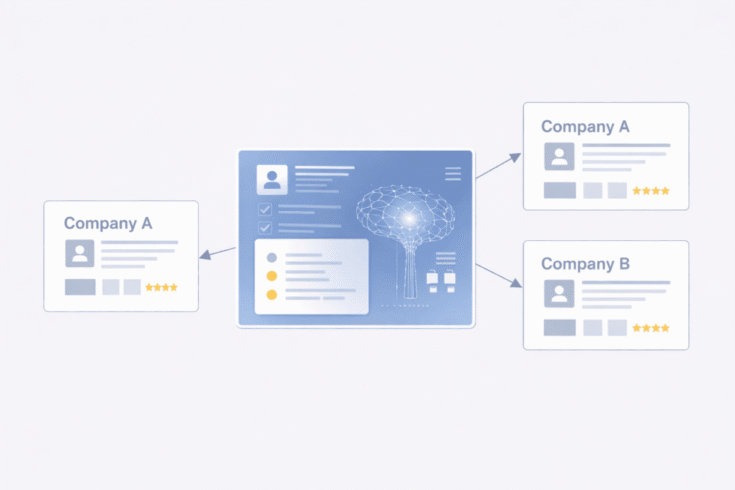
As AI becomes more commoditized, the true differentiator will be the richness and accuracy of the context that a brand can provide. The question is shifting from "Do you have AI?" to "What does your AI truly understand, and how effectively can it act on that knowledge?" This emphasizes the need for a robust data foundation and a composable architecture that can support AI-driven experiences.
Research, such as "The New Martech Stack for the AI Age," highlights that while only a fraction of organizations have AI agents in full production, a significant majority cite poor data quality as a major impediment to AI success. This challenge extends to external visibility. If a company’s systems and content fail to provide clean, usable context, AI will struggle to represent that brand accurately.
The key elements that will separate successful B2B companies in the AI-driven market include:
- Structured and Clean Data: Ensuring that all data points – from product specifications and pricing to customer testimonials and case studies – are accurate, consistent, and formatted in a way that AI can readily ingest.
- Clear Product and Service Definitions: Precisely articulating what a company offers, the problems it solves, and its unique value proposition in a way that AI can easily categorize and match to buyer needs.
- Deep Industry and Use Case Knowledge: Providing AI with a thorough understanding of the specific industries served, the common challenges faced by buyers within those industries, and how the company’s solutions address those challenges.
- Consistent Brand Messaging: Ensuring that the core messaging and value propositions are uniform across all channels and content formats.
Strategic Imperatives for B2B Teams
Navigating this evolving landscape requires a proactive and strategic approach. B2B teams should consider the following actionable steps:
Audit How AI Describes Your Brand
Begin by directly querying AI tools like ChatGPT, Bard, or Claude about your company. Pose questions such as:
- "Explain what [Your Company Name] does in one sentence."
- "What are the primary solutions offered by [Your Company Name]?"
- "Who are the target customers for [Your Company Name]?"
Analyze the responses for accuracy, completeness, and clarity. Look for:
- Misrepresentations or Omissions: Are key aspects of your business missing or inaccurately portrayed?
- Vagueness: Is the description generic, failing to highlight your unique strengths?
- Inconsistencies: Do different AI queries yield conflicting information about your brand?
Make Content More Extractable
Shift content creation strategies to prioritize machine interpretability alongside human readability. This involves:
- Prioritizing Structured Data: Employing schema markup, using clear headings (H1, H2, H3), and organizing content logically with bullet points and concise paragraphs.
- Factual Precision: Focusing on clear, unambiguous statements of fact about products, services, benefits, and capabilities.
- Keyword Integration within Context: Embedding relevant keywords naturally within well-structured, factually rich content rather than keyword stuffing.
Reduce Friction for Machine Access
Ensure that AI agents can freely navigate and access your website’s content. This involves:
- Reviewing Robots.txt: Verify that your robots.txt file is not inadvertently blocking AI crawlers from essential pages.
- Optimizing for JavaScript Rendering: Work with web development teams to ensure that critical content is accessible to AI crawlers even if it uses JavaScript.
- Simplifying Navigation: Streamline website navigation to make it intuitive for both human users and AI agents.
- Evaluating Login Requirements: Consider whether certain valuable content could be made more accessible to AI without compromising business objectives.
Align Messaging Across Channels
AI systems synthesize information from a wide range of sources. Inconsistent messaging across different platforms – your website, social media, press releases, and marketing collateral – will lead to a fragmented and confusing representation of your brand in AI-generated responses. Ensure that your core value propositions, product descriptions, and target audience definitions are aligned everywhere. If your website states one thing and your latest whitepaper states another, AI will struggle to provide a coherent picture.
Treat AI Visibility as a Strategic Function
Recognize that AI visibility is not merely an extension of SEO or content marketing. It sits at the critical intersection of:
- Content Strategy: The creation and structuring of information.
- Data Management: The quality and accessibility of factual data.
- Go-to-Market (GTM) Execution: How your company presents itself to the market.
This requires a coordinated, orchestrated effort rather than isolated optimization tasks. It demands collaboration across marketing, sales, product, and IT departments to ensure a unified and accurate representation of the brand.
The Future of B2B Engagement
The fundamental shift in B2B marketing is the realization that companies are no longer just marketing to buyers; they are also marketing to the systems that buyers rely on to make decisions. These AI systems do not possess human emotions or appreciate narrative flair if they cannot first understand the core facts.
The ultimate test for any B2B organization in this new era is a simple yet profound question: "If an AI had to explain your company in one sentence, would it get it right?" The answer to this question increasingly dictates the version of your brand that potential buyers will encounter first. As AI continues to permeate the buyer’s journey, ensuring AI understandability is no longer an optional enhancement but a critical requirement for sustained visibility and market relevance. For B2B teams beginning to grasp that this is a multifaceted challenge involving coordination, data integrity, and strategic go-to-market execution, seeking expert guidance can be invaluable. Initiatives focused on GTM orchestration can help align messaging, data, and execution, ensuring a clear and compelling presence for both human buyers and the AI systems guiding their decisions.


 Sagoh
Sagoh
 Asep Darmawan