rifanmuazin
Answer engine optimization (AEO) represents a pivotal marketing strategy, meticulously crafted to ensure brands achieve consistent and accurate visibility within the burgeoning ecosystem of AI-driven answer engines, including prominent platforms such as ChatGPT, Perplexity, and Copilot. This emerging discipline is a direct response to a fundamental shift in how users discover information and make decisions online, moving beyond traditional keyword-based search to conversational, AI-synthesized answers.
The Paradigm Shift in Digital Discovery
The landscape of digital discovery has undergone a profound transformation with the rapid proliferation of generative artificial intelligence. For decades, search engine optimization (SEO) dominated digital marketing, focusing on securing top rankings in search results pages that primarily presented lists of links. However, the advent of sophisticated AI models has introduced a new frontier where information is not merely listed but synthesized, summarized, and delivered conversationally. This evolution is underscored by compelling data: according to Adobe Express, a significant 77% of Americans have already leveraged ChatGPT as a search tool, indicating a widespread and accelerating adoption of AI for informational queries. While traditional behemoths like Google maintain a substantial share of the conventional search market, the clear trend is that user discovery is no longer confined to a single, predictable channel.
The core challenge for marketers stems from the inherently different operational mechanics of AI answer engines compared to their traditional search engine counterparts. AI models are probabilistic, meaning their responses are generated dynamically and can vary based on context, prior interactions, and the specific prompt. They do not adhere to fixed rankings or predictable click-through rates in the same way a Google search results page does. This fundamental difference necessitates a radical rethinking of how content performance is measured. Marketers must now pivot to understanding which AEO metrics genuinely reflect a brand’s visibility and influence within these AI-driven discovery environments. Specialized tools, such as HubSpot AEO, are rapidly becoming indispensable, providing teams with the capability to consistently track crucial metrics like brand visibility, share of voice, and citation frequency across various AI platforms.

Distinguishing AEO Metrics from Traditional SEO KPIs
At its core, AEO is about measuring how often, how prominently, and with what degree of accuracy a brand appears within AI-generated responses across large language models (LLMs) and answer engines. Unlike traditional search engines that return a list of links, AI answer engines often synthesize information from multiple sources, paraphrase content, or directly recommend brands—frequently without providing direct links back to the original website. Consequently, AEO metrics are designed to track presence and influence rather than just direct traffic or click-through rates.
SEO Key Performance Indicators (KPIs), in stark contrast, are firmly anchored to quantifiable measures such as organic search rankings, click-through rates (CTR), page-level traffic, bounce rates, and backlink profiles. These metrics are straightforward to measure within a hierarchical list of search results. For instance, an SEO professional measures success by moving a page from position five to position one and observing the corresponding increase in organic clicks and traffic.
While the rise of AEO might lead some to believe SEO is becoming obsolete, industry experts widely assert that SEO remains critically important for digital discovery. SEO ensures content is crawlable, indexable, authoritative, and well-structured—foundational elements that AI engines rely upon to understand and process information. AEO, therefore, does not replace SEO; rather, it extends measurement capabilities into the AI-driven discovery sphere, targeting an additional layer of the customer journey where purchasing decisions and brand evaluations are increasingly being shaped. For leadership teams already tracking comprehensive SEO outcomes and other vital marketing metrics, AEO metrics build upon these foundations, providing an expanded view of a brand’s digital footprint within the evolving landscape of AI-driven decision-making.
Core AEO Metrics for Strategic Advantage (Looking to 2026)

As marketing strategies evolve to meet the demands of AI-driven search, several key AEO metrics are emerging as critical indicators of success. These metrics move beyond traditional link-based measurements to focus on influence and presence within AI-generated narratives.
-
Brand Inclusion Rate in AI-Generated Answers: This foundational metric quantifies the frequency with which a brand is explicitly mentioned, cited, or referenced in AI-generated responses for relevant prompts and topics. It addresses the fundamental question: "Is the brand present when AI engines respond to buyer questions?" Inclusion can manifest through direct brand mentions, paraphrased content attributed to the brand, or even the subtle integration of brand-specific concepts. Establishing a baseline inclusion rate is crucial for any nascent AEO program. An increase over time signifies effective AI search optimization, while a decrease signals a need to re-evaluate content strategy and entity signals. This metric is particularly valuable for early-stage AEO programs and executive-level visibility reporting, providing a clear, high-level indicator of a brand’s penetration into AI knowledge bases. Tools like HubSpot AEO’s Brand Visibility Dashboard enable continuous monitoring of this metric across major AI platforms, offering insights into performance trends.
-
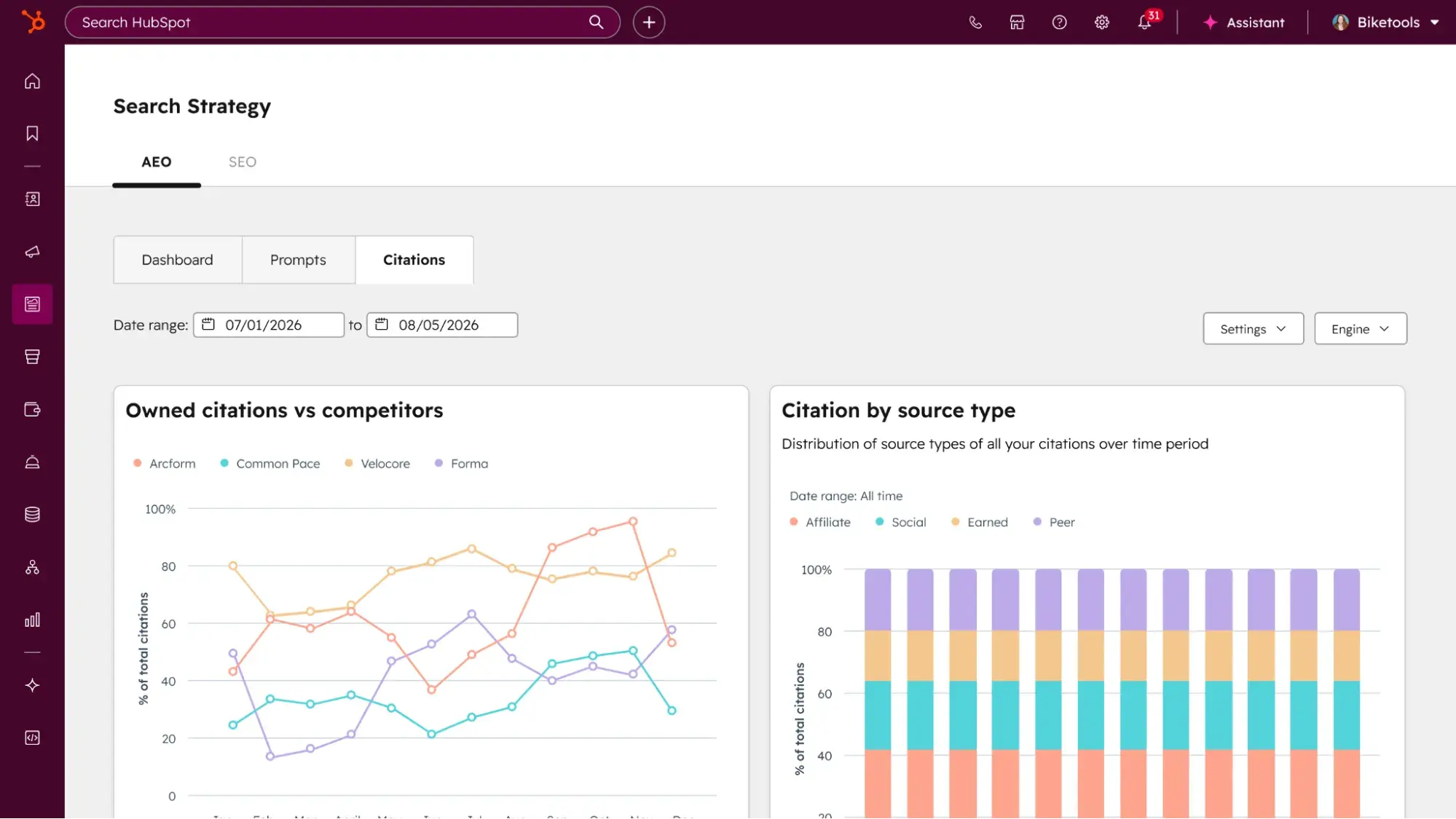
Citation Frequency and Source Attribution: Citation frequency tracks how often a brand’s owned content is explicitly used or cited as an authoritative source in AI-generated answers. This metric answers the question: "How many times did the model say ‘according to X’ or link back to us?" High citation frequency is a strong indicator that an answer engine perceives the brand as a credible and authoritative source on a given topic, a direct reflection of its topical authority. It also reflects the content’s relevance, accuracy, and structured nature. Marketers utilize this metric to identify and prioritize content requiring updates or further optimization to enhance its authority signals. For instance, if a previously cited blog post is no longer visible, a review for freshness, depth, and structured data elements becomes imperative. This metric is invaluable for content strategists and SEO teams focused on building and demonstrating topical authority, aligning closely with principles of E-E-A-T (Experience, Expertise, Authoritativeness, Trustworthiness). HubSpot AEO’s Citation Analysis can pinpoint specific domains, content types, and source channels that AI engines frequently reference, allowing for targeted optimization efforts.
-
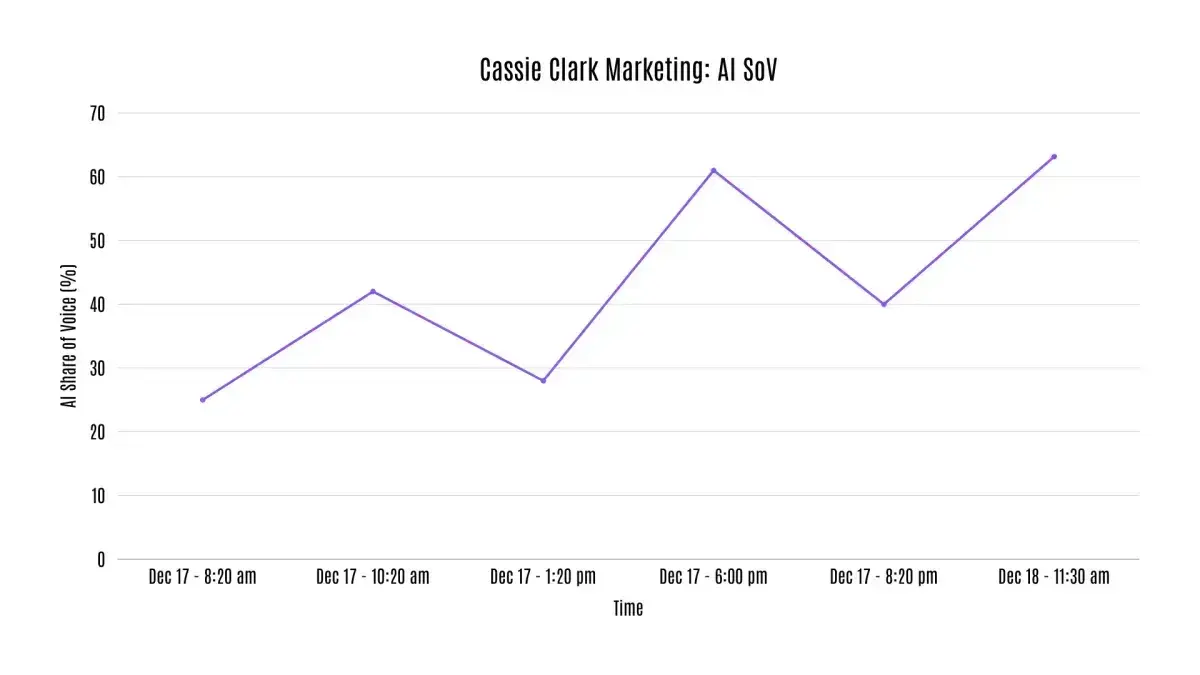
AI Share of Voice (AI SoV): AI Share of Voice measures a brand’s appearance frequency in AI-generated answers relative to its competitors for a defined set of prompts, topics, or buying-stage questions. The calculation is straightforward: (Number of brand citations ÷ Total citations) × 100. This metric provides a competitive context, showing whether a brand is gaining or losing ground within the AI discovery space. Given the probabilistic nature of AI engines, AI SoV is not a static metric; it can be volatile. As demonstrated by a case study from Cassie Clark Marketing, a single content update saw AI SoV for a prompt jump from 25% to 63.16% within 24 hours before settling at an average of 43.25%. This highlights the importance of consistent, long-term measurement to establish a reliable average and identify true visibility trends. AI SoV is particularly useful for competitive benchmarking and executive-level reporting, translating complex AI signals into a clear, comparative view of market presence. HubSpot AEO’s Competitor Analysis feature allows for direct tracking of AI SoV against rivals, revealing where influence is being gained or lost.
-
Answer Prominence and Positioning: This metric evaluates where and how a brand appears within an AI-generated response. It assesses whether the brand is presented as a primary recommendation, a supporting option, or a secondary mention. Unlike a simple search ranking, prominence reflects the "narrative weight" given to a brand. Brands positioned prominently—e.g., at the top of a recommendation list, framed positively with strong descriptors, or referenced repeatedly—exert greater influence on user perception, even in the absence of a direct click. This metric is especially critical for prompts seeking recommendations ("Recommend a…", "What’s the best…"). Evaluating a brand’s position on a recommendation list directly correlates with perceived trust and expertise. Answer prominence is key for competitive analysis and tracking category leadership, offering insights into how AI models perceive and prioritize different brands. HubSpot AEO’s Prompt Tracking allows for granular monitoring of prominence at the individual query level.
-
Sentiment and Framing Within AI Responses: AI engines don’t just list brands; they describe them. Tracking sentiment involves assessing whether AI-generated mentions frame a brand positively, neutrally, or negatively. This requires careful attention to the descriptors, qualifiers, and contextual language used by the AI engine. Misalignment between a brand’s intended positioning and the AI’s interpretation can have significant reputational implications. Marketers can track sentiment by documenting the language used for their brand and competitors, ensuring the AI’s summary aligns with their desired messaging on landing pages and use-case content. This metric is crucial for brand and product marketing alignment, ensuring consistent and favorable brand representation across all digital touchpoints. HubSpot AEO’s Sentiment Analysis feature automates this process, providing a quantitative measure of positive or negative framing, particularly useful for monitoring shifts after product launches or messaging changes.
-
AI-Assisted Engagement Signals: Even when AI engines do not generate direct referral traffic, they often profoundly influence downstream user behaviors. AI-assisted engagement tracks these indirect impacts, including increases in branded organic search queries, direct website traffic, demo requests, and assisted conversions. Users frequently leverage AI tools like ChatGPT or Gemini to research options, then proceed to search for specific brands directly in traditional search engines. This makes branded keyword searches a vital indicator of AI influence. Marketers use tools like Google Search Console and GA4 to review increases in branded searches, correlating them with AEO efforts. Qualitative feedback from prospects ("ChatGPT recommended your brand") provides direct validation of an AEO strategy’s effectiveness. This metric is essential for growth and revenue teams, demonstrating impact beyond immediate clicks and integrating AEO outcomes into broader customer journey analysis. HubSpot’s Content Hub, with its performance monitoring capabilities, helps trace these indirect impacts.
-
Content Reuse and Paraphrase Detection: This advanced metric measures how often AI engines paraphrase, summarize, or directly integrate a brand’s content without explicit direct citation. While challenging to track manually, significant content reuse indicates that a brand’s content is being absorbed into AI-generated knowledge graphs, reflecting deep semantic authority and the strength of its training signals. When an AI model consistently repeats a brand’s content word-for-word in related prompts, it signifies that the brand is building strong entity authority—meaning the AI trusts and internalizes the brand’s information as foundational knowledge. This metric is primarily for advanced AEO programs and often requires a combination of manual monitoring, qualitative analysis, and eventually, more sophisticated paraphrase detection tools. Pairing this with entity-level optimization and structured data is key to improving consistency and reuse in AI-generated answers.
Technological Arsenal for AEO Success
Effective AEO measurement necessitates a suite of tools that can track visibility data and downstream signals holistically. The following platforms offer comprehensive support for scalable AEO KPI tracking and integrate insights into broader content and performance reporting:
-
HubSpot AEO: This dedicated platform is designed to monitor and optimize a brand’s presence across leading answer engines like ChatGPT, Perplexity, and Gemini. It provides direct measurement of core AEO indicators such as brand inclusion, AI share of voice, citation frequency, and prompt-level sentiment. By centralizing these metrics into a unified dashboard, HubSpot AEO eliminates the need for manual probe queries and fragmented visibility signals, enabling teams to track performance trends consistently and link shifts directly to content and strategy updates. This consolidation is particularly beneficial for marketers reporting AEO impact to leadership. HubSpot AEO is available within Marketing Hub Pro and Enterprise or as a standalone tool for $50/month.
-
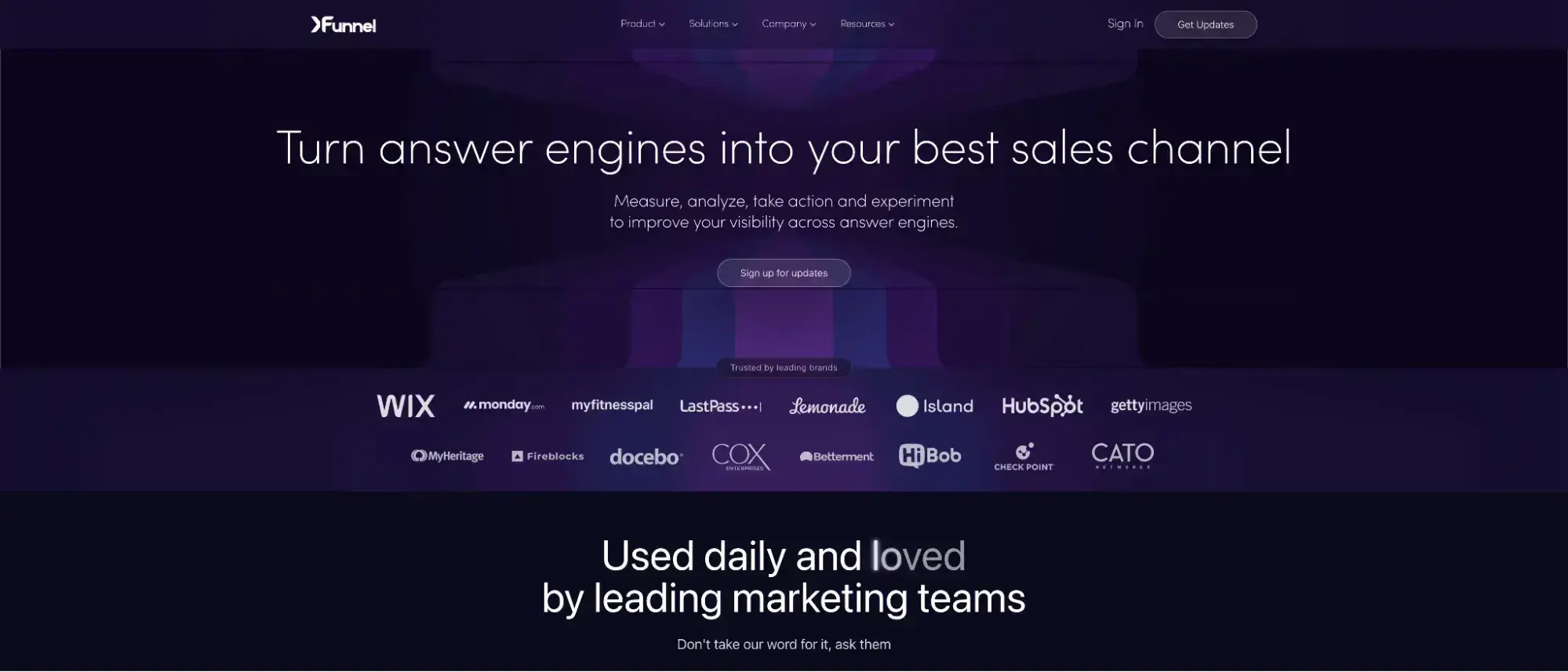
XFunnel: XFunnel offers a specialized platform for measuring AI search visibility, including brand inclusion, citation frequency, and overall AI search performance across multiple AI engines. It allows teams to systematically test how brands surface in AI-generated answers for specific prompts and topics. Recognizing the probabilistic nature of AI responses (where the same prompt can yield different answers across models or sessions), XFunnel facilitates repeated testing across consistent prompt sets, transforming AI visibility from anecdotal observation to measurable data. It also helps validate the recognition and reuse of schema, entity signals, and content structure by AI engines. Pricing is available upon direct contact.
-
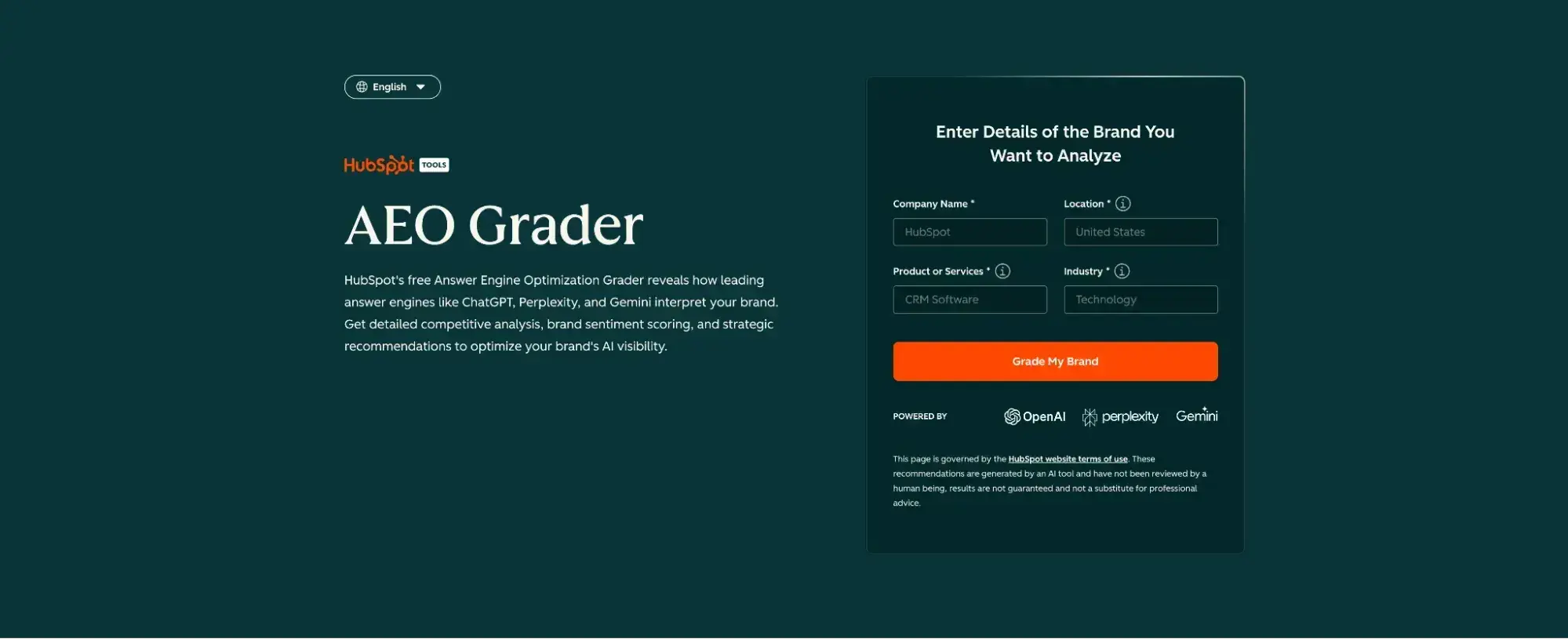
HubSpot AEO Grader: This diagnostic tool evaluates a website’s readiness for answer engine optimization. AEO performance often hinges on technical and structural foundations. The Grader identifies whether essential signals like schema markup, content structure, and accessibility are properly implemented, surfacing gaps that might prevent AI engines from accurately interpreting or reusing content. It serves as an excellent starting point, framing AEO readiness in concrete, actionable terms rather than abstract recommendations.
-
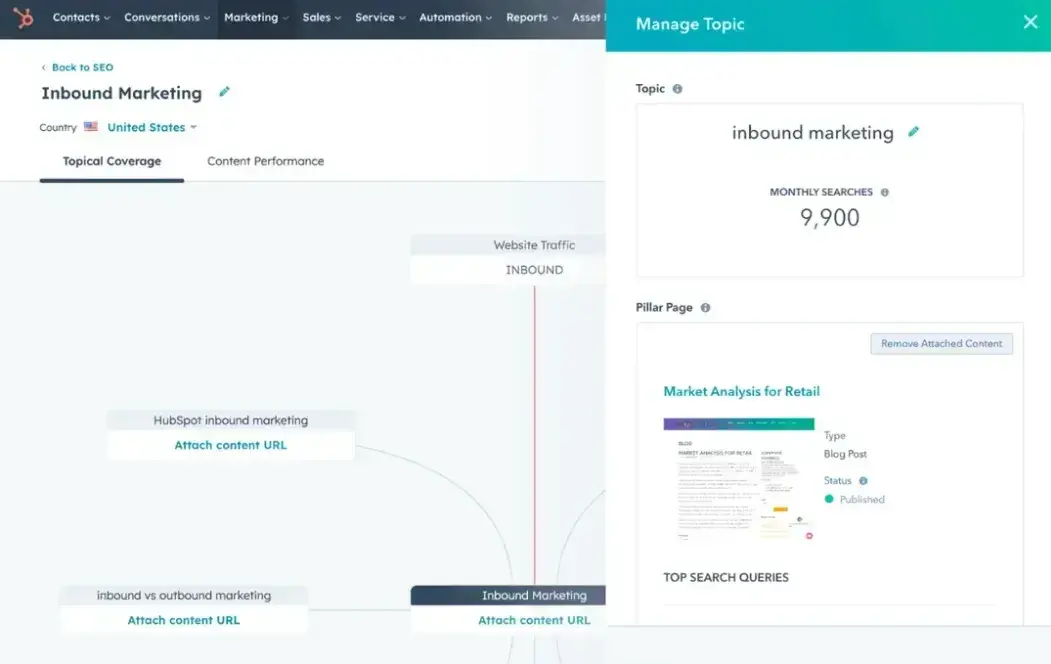
HubSpot’s SEO Marketing Software: Integrated within HubSpot’s Marketing Hub, this software supports content optimization, performance tracking, and technical SEO recommendations. While primarily designed for traditional SEO, its capabilities directly bolster AEO efforts. Structured content guidance, internal linking recommendations, and ongoing performance analysis reinforce the authority and clarity that AI engines depend on. For teams already invested in SEO, this software provides a practical pathway to extend existing workflows into AI measurement without adopting an entirely separate system.
-
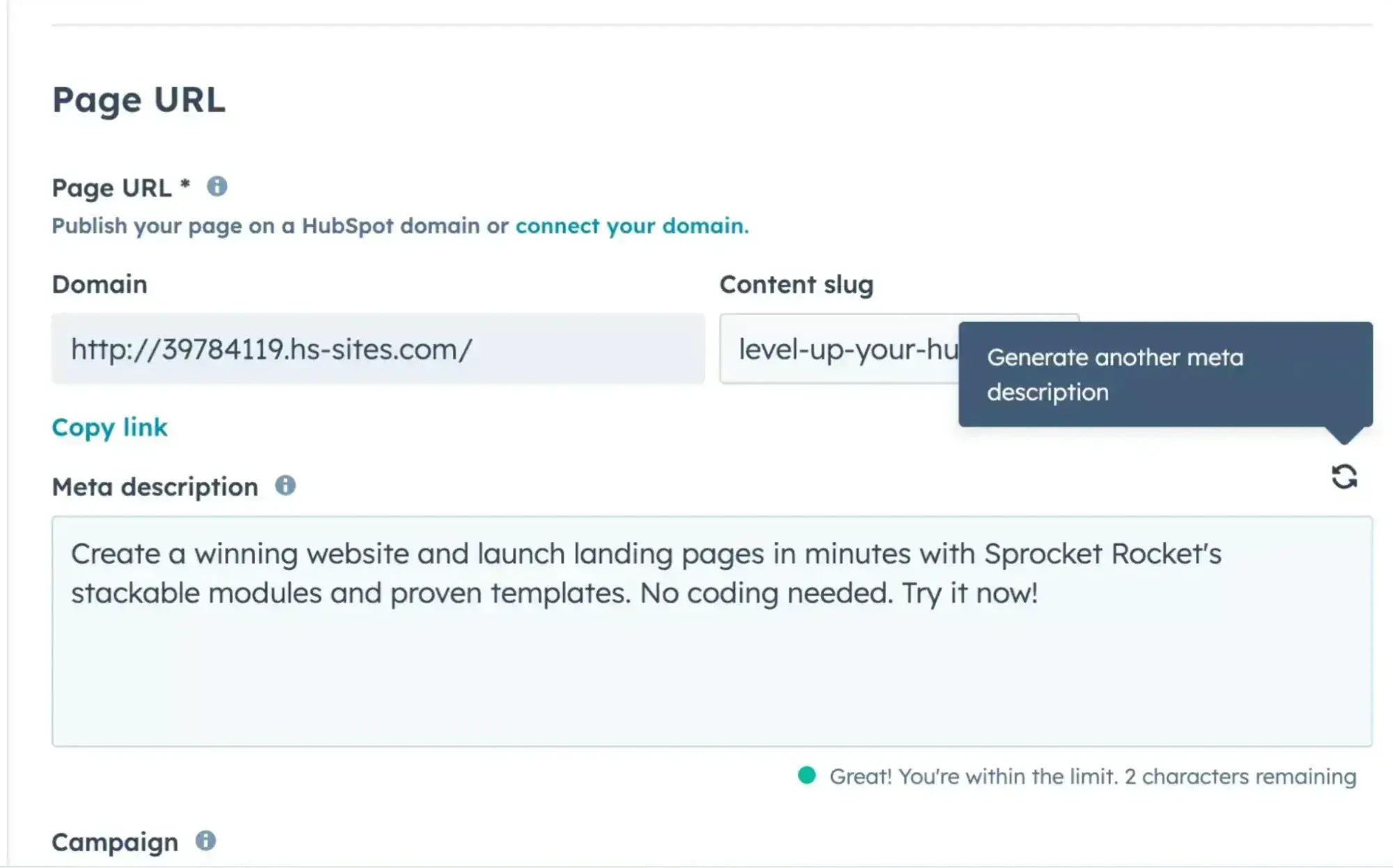
HubSpot’s Content Hub and AI Content Generator: Content Hub, a robust CMS, offers SEO suggestions during content creation, ensuring pages are structured, optimized, and maintainable. AI search visibility is heavily influenced by content structure, not just its textual content. Paired with HubSpot’s AI Content Generator, Content Hub supports schema-ready publishing and structured content workflows, significantly improving how AI engines interpret, categorize, and reuse information. This integration allows for "AEO built-in" content creation, reducing technical debt and fostering consistency as content scales.
-
Google Search Console: As a free analytics tool, Google Search Console provides critical insights into a site’s performance in Google Search, including impressions, clicks, queries, and indexing status. Although it does not directly track AI-generated answers, it is indispensable for measuring the downstream impact of AEO efforts. Increases in branded search queries, impressions, and clicks often follow AI exposure, particularly when users research options in AI tools before searching for a brand by name. Search Console serves as a vital signal check, helping to identify which AI prompts influence real user behavior and connecting AEO work to metrics already familiar to leadership teams.
-
Manual Tracking and Qualitative Review: Despite advancements in automated tools, manual tracking remains a crucial component of AEO. This involves directly reviewing AI-generated answers and documenting patterns that tools might not consistently capture, such as nuanced content reuse, specific paraphrasing styles, and the precise language AI engines use to describe brands. Utilizing spreadsheets to track recurring prompts, brand mentions, reused language, and framing patterns over time provides invaluable qualitative understanding and clarity where automated tooling falls short. This manual approach helps validate whether AEO strategies are genuinely influencing how AI engines describe and recommend a brand.
Crafting Effective AEO Attribution Models
Measuring AEO performance is only valuable if it can be directly linked to tangible business outcomes. Establishing attribution for AEO demands a different mindset than traditional SEO reporting, shifting the focus from direct referrals to how AI-driven discovery influences downstream behavior.
-
Define AEO-Assisted Conversions: The first step is to clearly define which conversion events are plausibly influenced by AI-driven discovery. These are typically not net-new actions but rather signals of an evaluation process already in motion. Examples include increases in branded search queries, direct website visits, higher-intent organic searches (e.g., "brand name + pricing" or "brand name + demo"), and an uptick in demo requests or contact form submissions. In HubSpot, these AEO-assisted conversion events can be defined and reviewed alongside existing lifecycle stages, facilitating the alignment of AI-driven influence with revenue-relevant actions.
-
Segment AI-Influenced Traffic: AI platforms rarely provide clean referral data, making robust segmentation critical. Marketers should employ custom channels, assisted attribution models, or campaign tagging wherever possible to group downstream behaviors that logically follow AI exposure. This might involve creating specific landing pages for content frequently cited by AI, using unique UTM parameters in content likely to be absorbed by AI, or analyzing user journeys for patterns where AI research precedes a direct visit. HubSpot users can create custom channels or views to aggregate AI-influenced traffic, enabling consistent downstream behavior review even in the absence of direct referrer data.
-
Align AEO Metrics with Existing Attribution Models: AEO should complement, not disrupt, existing attribution frameworks. It is imperative to integrate AEO insights into blended or multi-touch attribution models that account for influence earlier in the buyer journey. Relying solely on last-click logic consistently undervalues the significant, often indirect, influence of AI-driven discovery. Models such as linear, time decay, or position-based attribution are better suited to capture the subtle yet powerful role of AI in shaping user perception and guiding purchasing decisions. HubSpot’s attribution reporting supports these multi-touch and blended models, helping account for AI-driven discovery without falling back on last-click bias.
-
Report AEO Alongside SEO and Demand Metrics: AEO metrics are most impactful when reported in conjunction with SEO, demand generation, and pipeline metrics. When positioned as an upstream influence layer, AEO can explain fluctuations in branded demand, improvements in lead quality, or even shorter sales cycles, rather than being treated as a standalone revenue metric. Integrating AEO metrics into comprehensive dashboards within platforms like HubSpot allows teams to contextualize AI visibility alongside established performance indicators that leadership already monitors, fostering a more holistic understanding of marketing impact.
Navigating the Future: AEO Best Practices and Outlook
As the digital landscape continues to evolve, understanding and adapting to AEO is no longer optional but essential for competitive advantage.
-
Update Frequency for AEO Metrics and Content: Most organizations benefit from reviewing AEO metrics monthly to identify shifts in brand inclusion, citation frequency, and share of voice. Quarterly content updates are generally recommended to respond to meaningful trends rather than daily variances. However, in high-volatility sectors such as AI tools, fintech, or healthcare, more frequent prompt testing and content refreshes may be necessary to maintain a competitive edge.
-
Labeling and Tracking AI Referrals: Since direct attribution from AI engines is often elusive, teams should rely on a combination of custom source definitions, assisted-conversion reporting, and thorough analysis of branded or high-intent queries within tools like Google Search Console and GA4. Tracking these integrated signals helps to identify downstream behaviors influenced by AI-driven discovery.
-
Establishing an AEO Visibility Baseline: A practical AEO baseline begins with measuring brand inclusion rate and citation frequency across a defined set of prompts relevant to core use cases and buying-stage questions. From this, an average AI share of voice can be established, and changes in prominence and sentiment can be tracked over time. Consistent inclusion across priority prompts, even at a modest rate, provides sufficient signal to identify optimization opportunities and demonstrate directional progress to leadership.
-
AEO’s Relationship with SEO: AEO does not replace SEO; rather, it complements and builds upon it. SEO establishes the foundational elements of crawlability, structured data, and content authority, all of which AI engines leverage when generating answers. AEO extends measurement beyond traditional rankings and clicks to capture how that authority is interpreted, summarized, and surfaced within AI-driven discovery and evaluation workflows. They are two sides of the same coin, working in synergy for comprehensive digital visibility.
-
Addressing the Absence of Direct Clicks from AEO: A lack of direct clicks should not be misinterpreted as AEO being ineffective. Many AEO outcomes manifest as assisted signals, such as an increase in branded searches, a rise in higher-intent queries, or shortened sales cycles due to pre-purchase AI research. In AI-driven discovery, influence often precedes a user’s website visit, which is why AEO metrics must be evaluated in conjunction with demand and pipeline indicators, not in isolation.
Turning AEO Metrics into Actionable Insight
Answer engine optimization metrics are fundamentally designed to quantify a brand’s visibility and influence within AI-driven discovery environments, where traditional rankings and direct referral paths frequently do not apply. By diligently tracking these sophisticated metrics, marketing teams gain the capacity to report impact far beyond mere rankings and website traffic. Tools like HubSpot AEO, HubSpot’s comprehensive SEO tools, Content Hub, the AEO Grader, and XFunnel are instrumental in making AEO tracking both more accessible and eminently actionable. When these tools are integrated with clear, forward-thinking attribution models, marketers can connect AI visibility directly to tangible business outcomes with significantly greater confidence and consistency, effectively navigating the complexities of the evolving AI-powered digital landscape.