rifanmuazin
The increasing reliance on automated bidding strategies across Google’s advertising ecosystem, particularly within YouTube campaigns, necessitates a deep understanding of their intricacies. Beyond merely identifying available options, advertisers must strategically configure their campaigns to maximize the efficacy of these powerful tools. This article delves into the nuances of YouTube Smart Bidding, offering practical guidance and expert insights to empower advertisers in achieving their conversion goals.
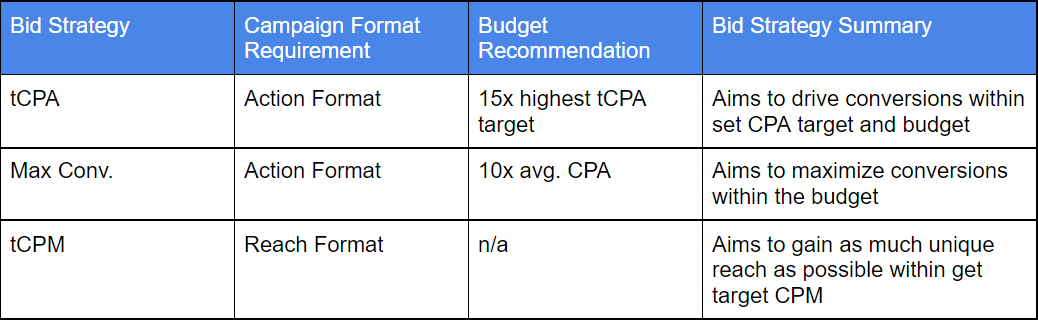
Smart Bidding on YouTube primarily operates within "Action Format" campaigns, such as Video Action Campaigns (VAC), designed to drive tangible business outcomes like sales, leads, or sign-ups. These campaigns leverage algorithms to optimize bids for specific conversion actions. While the primary focus is on performance-driven objectives, there is a specific option available for "Reach Formats," like bumper ads, that are geared towards building brand awareness and broad audience engagement.
Understanding YouTube Smart Bidding Options
Google’s Smart Bidding suite offers a range of automated strategies designed to optimize campaign performance based on defined goals. For YouTube campaigns aiming for conversions, the two most prominent options are:
- Target CPA (tCPA): This strategy allows advertisers to set a desired average cost per acquisition. The system then works to achieve as many conversions as possible at or below this target CPA. This is ideal for advertisers with a clear understanding of their profitable conversion cost and who want to maintain strict cost controls.
- Maximize Conversions: This strategy automatically sets bids to help get the most conversions for your budget. While it doesn’t have a specific CPA target, it aims to drive the highest volume of conversions within the allocated spend. This is often recommended as a starting point for new campaigns or when exploring the potential of a particular audience or creative.
For campaigns prioritizing reach and awareness, such as those employing bumper ads or non-skippable in-stream ads, different optimization goals come into play. While these formats can be integrated with conversion-focused strategies, their primary function is often to maximize impressions or reach within a given budget. The underlying algorithms in these cases are tuned to expose the ad to the largest relevant audience, rather than optimizing for specific downstream actions.

The Crucial Role of Bid-to-Budget Ratios
A critical, yet often overlooked, aspect of successful Smart Bidding implementation on YouTube revolves around the relationship between campaign budgets and the target cost per conversion. Google’s recommendations for setting budgets are quite specific and are designed to provide the algorithms with sufficient flexibility to operate effectively.
Advertisers are generally advised to set their daily budgets at a level that is 10x to 15x the expected cost per conversion (CPA). This substantial buffer is not arbitrary; it serves several vital functions:
- Enabling Algorithmic Learning: Smart Bidding algorithms, particularly those on platforms as dynamic as YouTube, require a consistent flow of data to learn and adapt. A budget that is too restrictive can starve the algorithm of the necessary impressions and conversion signals, hindering its ability to identify high-performing audiences and placements.
- Capturing High-Intent Audiences: Within the vast landscape of YouTube, high-intent users who are likely to convert may appear at various times and in different contexts. A sufficiently large budget allows the system to bid aggressively enough to capture these valuable opportunities when they arise, even if they fall outside of the absolute lowest cost per impression.
- Adapting to Market Fluctuations: The digital advertising landscape is inherently dynamic. Factors like seasonality, competitor activity, and shifts in user behavior can influence ad costs. A robust budget provides a cushion against these fluctuations, preventing the campaign from becoming "Limited by Budget" (LBB) prematurely and allowing it to continue optimizing.
Let’s illustrate this with concrete examples:
- For a tCPA campaign: If an advertiser aims for a CPA of $85, Google’s recommendation suggests a daily budget of at least $850 (10x $85). To ensure maximum flexibility and optimize for growth, an even higher budget of $1,275 (15x $85) would be advisable.
- For a Maximize Conversions campaign: While this strategy aims for the most conversions within a budget, the underlying principle of providing ample room for optimization still applies. If the expected CPA is $85, setting a budget of at least $850 would be a prudent starting point to allow the algorithm to explore and capture a wider range of conversion opportunities.
It is important to acknowledge that these bid-to-budget ratios can sometimes appear to be a significant investment. However, empirical evidence and industry best practices consistently demonstrate their necessity for setting campaigns on a trajectory towards sustained success.
Strategic Sequencing: Maximize Conversions First
A key recommendation for advertisers leveraging Smart Bidding on YouTube is to initially launch campaigns on "Maximize Conversions" before transitioning to "Target CPA." This phased approach is a strategic imperative for establishing a reliable baseline and ensuring optimal performance.

- Establishing a Baseline CPA: When a campaign is first launched, the algorithms have no historical data to draw upon. Running on "Maximize Conversions" allows the system to freely explore various bidding scenarios and identify the actual, achievable CPA for the chosen audience, creative, and targeting parameters. This exploration period is crucial for gathering the data needed to inform a realistic tCPA.
- Avoiding Unrealistic Targets: If an advertiser immediately sets a tCPA that is too aggressive or not data-informed, the algorithm will struggle to meet the target. This can lead to a "Limited by Budget" status, reduced ad delivery, and an inability to gather sufficient conversion data. In essence, an unrealistic tCPA can prematurely stifle campaign growth.
- Data-Driven Optimization: Once a stable CPA has been established through the "Maximize Conversions" phase (typically after a sufficient learning period, often 1-2 weeks), advertisers can then confidently switch to "Target CPA." This allows them to set a more precise and achievable target, leveraging the accumulated data to guide the bidding strategy effectively.
This sequential approach not only improves the likelihood of campaign success but also fosters a more data-driven and efficient advertising process.
Mini Case Study: The Impact of Budget Adjustments
To underscore the importance of adhering to bid-to-budget recommendations, consider the following illustrative case:
Situation: A YouTube campaign was running under a tCPA strategy. However, the campaign was consistently flagged by Google Ads as "Limited by Budget" (LBB). This status indicated that the daily budget was insufficient to allow the algorithm to reach its full potential and achieve the target CPA consistently.
Initial Bid-to-Budget Ratio: The campaign’s budget was set at approximately 10x its current CPA. While this met the minimum recommendation, it was evidently not enough to overcome the specific market conditions or the campaign’s growth potential.
Intervention: Following an analysis of the campaign’s performance and the persistent LBB status, the decision was made to significantly increase the budget. The new budget was set to 15x the current CPA. This substantial increase provided the algorithm with considerably more flexibility and reach.
Results: After implementing the budget increase and allowing for the standard two-week learning period to reset or recalibrate, the campaign experienced notable improvements. Crucially, both growth in conversions and efficiency gains were observed. This suggests that the increased budget enabled the algorithm to:
- Access a broader spectrum of high-intent users.
- Bid more competitively for valuable ad placements.
- Navigate potential fluctuations in auction dynamics without being constrained.
The accompanying visual data (referencing the provided image) would typically illustrate a scenario where, post-budget adjustment, metrics such as total conversions, conversion volume, and potentially even a more stable or improved CPA (after the learning period) demonstrate a positive uplift, while the LBB status is resolved. This case highlights that while the initial recommendation of 10x is a baseline, pushing towards 15x can unlock significant performance improvements, especially when a campaign is showing signs of being budget-constrained.
Broader Considerations for YouTube Smart Bidding
Beyond budget and strategy sequencing, several other factors contribute to the successful deployment of Smart Bidding on YouTube:
- Conversion Tracking Accuracy: The efficacy of any Smart Bidding strategy is fundamentally dependent on the accuracy and completeness of conversion tracking. Ensuring that all relevant conversion actions are properly implemented and measured within Google Ads is paramount. This includes micro-conversions that may signal downstream value, such as video completions or engagement with calls-to-action.
- Audience Segmentation and Targeting: While Smart Bidding automates the bidding process, the underlying audience definitions remain critical. Advertisers should leverage a combination of demographic targeting, interest-based targeting, custom intent audiences, and remarketing lists to provide the algorithm with well-defined pools of potential customers. The more precise the audience, the more effectively the algorithm can optimize.
- Creative Quality and Relevance: YouTube is a visually driven platform. The quality, relevance, and call-to-action clarity of video creatives play an enormous role in driving conversions. Even the most sophisticated bidding algorithms cannot overcome poor creative. Advertisers should continuously test and iterate on their video ad content to ensure it resonates with their target audience and clearly communicates the value proposition.
- Campaign Structure and Granularity: While broader campaigns can be effective, a well-structured campaign with distinct ad groups for different audience segments or creative variations can provide the algorithm with more focused data. This allows for more granular optimization and prevents a single underperforming ad group from negatively impacting the overall campaign’s Smart Bidding performance.
- Exclusion Lists: Proactive use of exclusion lists for irrelevant content, specific channels, or undesirable audiences can prevent wasted ad spend and ensure that the Smart Bidding algorithm is focused on reaching the most valuable prospects. This includes excluding competitor content or placements that are unlikely to yield conversions.
- Continuous Monitoring and Iteration: Smart Bidding is not a "set it and forget it" solution. Regular monitoring of campaign performance, analysis of key metrics, and iterative adjustments to targeting, creatives, and even budget levels are essential for sustained success. The learning period for Smart Bidding can vary, and performance may fluctuate, necessitating ongoing oversight.
Conclusion: A Data-Driven Approach to YouTube Advertising
The evolving landscape of digital advertising places a premium on intelligent automation. For YouTube advertisers, Smart Bidding represents a powerful suite of tools capable of driving significant business results. However, success is not solely about enabling these features; it is about a strategic and informed approach to their implementation.
By understanding the specific mechanics of tCPA and Maximize Conversions, adhering to recommended bid-to-budget ratios, employing a phased rollout strategy, and paying close attention to supporting elements like conversion tracking and creative quality, advertisers can unlock the full potential of YouTube Smart Bidding. As the platform continues to mature and its algorithmic capabilities advance, a data-driven, iterative methodology will remain the cornerstone of achieving exceptional performance and maximizing return on investment. For those seeking further guidance on navigating the complexities of YouTube advertising and optimizing their Smart Bidding strategies, engaging with experienced digital marketing professionals can provide invaluable insights and tailored support.