
 rifanmuazin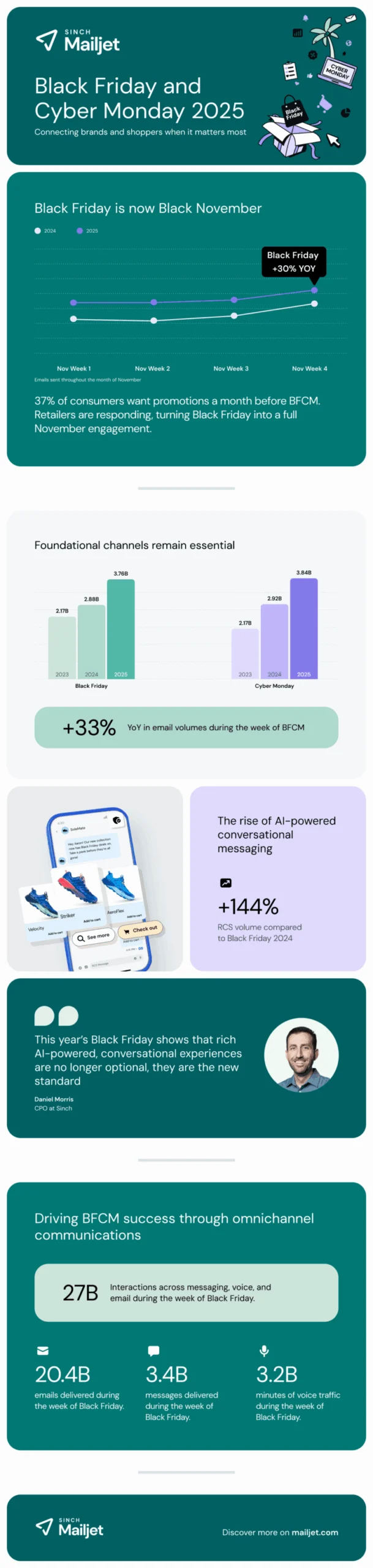
The culmination of the 2025 holiday shopping season saw Black Friday and Cyber Monday (BFCM) cement their status as pivotal economic drivers, with Adobe reporting a staggering $137.4 billion in revenue across November 2025, marking a robust 7.2% year-over-year increase. This surge in consumer spending underscored not only the resilience of the retail sector but also presented an unparalleled "deliverability stress test" for email marketers globally. As brands vied for consumer attention in increasingly crowded digital spaces, the challenge extended beyond merely sending promotional emails; it critically involved ensuring that essential transactional messages, such as order confirmations and shipping updates, reached inboxes instantly and reliably. This period provided a crucial benchmark for the effectiveness of digital communication strategies, prompting a deep dive into whether brands successfully met escalating consumer expectations for timely and accurate information.
The Evolving Landscape of Holiday Retail: A "Black November" Phenomenon
The traditional concept of Black Friday and Cyber Monday as a singular weekend shopping blitz has definitively evolved into a prolonged, month-long retail event, colloquially dubbed "Black November." This shift reflects both changing consumer behaviors and proactive strategies by retailers to extend sales periods, manage inventory, and mitigate peak-day logistical pressures. Historically, Black Friday emerged from the United States, marking the day after Thanksgiving when retail sales traditionally moved "into the black." Cyber Monday, introduced in 2005, capitalized on the rise of e-commerce, encouraging online shopping after the long holiday weekend. Over the past decade, both events have expanded globally, transforming into an international phenomenon that dictates much of the annual retail calendar.
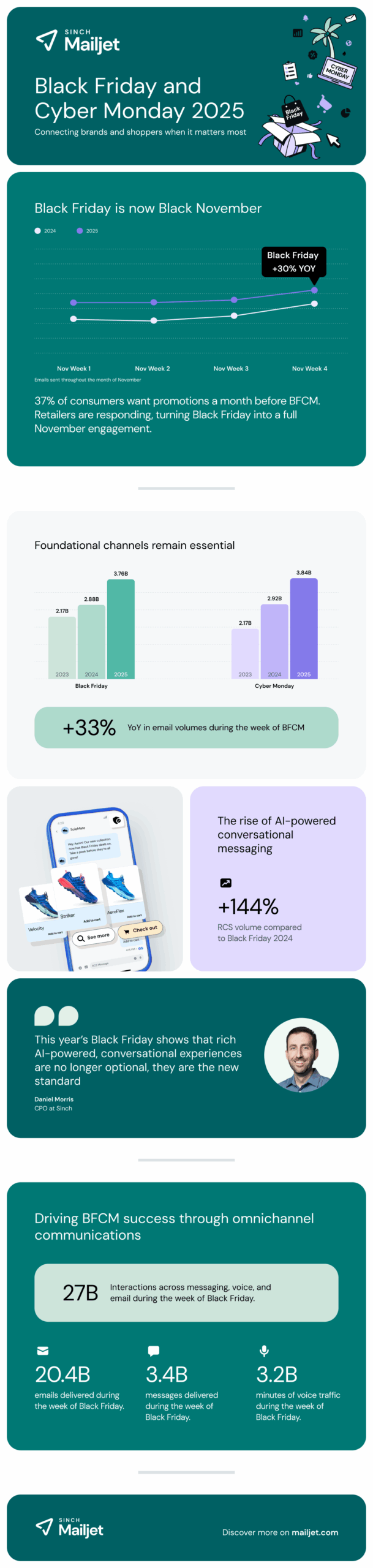
In 2025, this evolution reached new heights. Consumer surveys conducted by Sinch ahead of the holiday period revealed that nearly 46% of shoppers desired promotions at least a full month before Black Friday itself. This clear preference for early engagement signaled a strategic imperative for brands to initiate campaigns much sooner than the traditional Cyber Week. The data unequivocally supports this adaptation: Sinch’s analysis of billions of emails sent through its Mailgun and Mailjet platforms observed a significant 32% year-over-year surge in email volume throughout November. The most pronounced growth in sending activity occurred in the weeks leading up to Cyber Week, demonstrating that brands effectively responded to consumer demand for early-bird deals and staggered promotional cycles. This strategic pivot allowed consumers to spread out their holiday spending, plan purchases more effectively, and avoid the last-minute rush, ultimately contributing to the record-breaking revenue figures reported by Adobe.
Email: The Uncontested Pillar of Holiday Communication
Despite the proliferation of communication channels, email maintained its undisputed dominance as the preferred method for both promotional offers and critical transactional updates during BFCM 2025. Sinch’s comprehensive 2025 pre-holiday consumer survey, which polled 3,180 individuals, underscored this preference: an impressive 56.5% of consumers favored email for Black Friday and Cyber Monday promotions, while an overwhelming 73.9% relied on it for crucial transactional information. This dual role positions email as an indispensable tool, demanding flawless execution from marketers.
The sheer volume of email traffic processed during this period highlights its centrality. Sinch’s email platforms, Mailgun and Mailjet, collectively delivered an astonishing 20.4 billion emails during Cyber Week alone, reflecting the massive scale of promotional campaigns launched by brands. On Black Friday itself, email volumes rose by an impressive 30% year-over-year, indicating a clear alignment between consumer expectations and business strategy. This sustained growth in email sending, particularly during the peak days, necessitated robust and highly scalable email infrastructure to prevent delivery failures and ensure messages reached their intended recipients.
A critical insight from the data debunked the myth of "email fatigue" during the holiday rush. Even amidst an overflowing inbox, average open rates held steady at 13% (excluding bot activity), demonstrating that consumers were not merely overwhelmed but actively seeking out deals and information. This consistent engagement proves that well-targeted, relevant campaigns can effectively cut through the noise, reaffirming email’s power as a direct marketing channel. However, achieving such engagement is contingent upon impeccable email deliverability. Poor sender reputation, incorrect authentication protocols (like SPF, DKIM, DMARC), or inadequate infrastructure can lead to emails being flagged as spam or outright rejected, rendering even the most compelling offers invisible. The 2025 season underscored that successful email marketing during peak periods is not just about crafting compelling content, but fundamentally about ensuring technical excellence in delivery.

The Deliverability Imperative: A Technical Deep Dive
For email marketers, BFCM 2025 served as the ultimate litmus test for their email deliverability strategies. The immense volume of emails sent during this period intensified scrutiny from Internet Service Providers (ISPs) and mailbox providers. At such scale, even minor misconfigurations or reputation issues can have catastrophic consequences, leading to significant portions of legitimate emails failing to reach the inbox.
The challenge of deliverability during peak times is multifaceted:
- Increased Spam Filter Sensitivity: ISPs employ sophisticated algorithms to detect and filter out unwanted email. During periods of high volume, these filters become more aggressive, scrutinizing sender behavior, content, and authentication more rigorously. A sudden spike in sending volume from an unfamiliar IP or domain, or a high complaint rate, can quickly damage a sender’s reputation.
- IP Reputation Management: The reputation of a sender’s IP address and domain is paramount. Shared IP addresses on email service providers (ESPs) require careful management to ensure one sender’s poor practices don’t negatively impact others. Dedicated IPs offer more control but demand constant monitoring and proactive reputation building.
- Sender Authentication: Proper implementation of Sender Policy Framework (SPF), DomainKeys Identified Mail (DKIM), and Domain-based Message Authentication, Reporting, and Conformance (DMARC) is non-negotiable. These protocols verify the sender’s identity, preventing spoofing and ensuring legitimate emails are trusted by receiving servers. Any lapse can lead to immediate rejection or redirection to spam folders.
- Infrastructure Scalability: Handling billions of emails within a short timeframe requires a robust and highly scalable email infrastructure. Providers like Sinch Mailgun and Mailjet invest heavily in distributed systems, load balancing, and real-time monitoring to ensure messages are processed and delivered efficiently, even under extreme load.
- List Hygiene and Segmentation: Maintaining clean email lists by regularly removing inactive or invalid addresses, and segmenting audiences based on engagement and preferences, are crucial. Sending to unengaged recipients or stale lists can lead to higher bounce rates and spam complaints, both detrimental to deliverability.
The implications of poor deliverability during BFCM are substantial. For promotional emails, it translates directly into lost sales opportunities. For transactional messages – order confirmations, shipping updates, password resets – delivery failure can lead to customer frustration, increased support inquiries, and erosion of brand trust. In a period where consumers are highly reliant on these updates, ensuring their timely arrival is paramount to customer satisfaction and loyalty. Industry analysts have consistently highlighted that investment in sophisticated deliverability tools and expertise is no longer an option but a strategic imperative for any brand operating in the digital commerce space.
The Omnichannel Imperative: Orchestrating a Unified Customer Journey
While email remained a cornerstone, BFCM 2025 unequivocally demonstrated that a truly integrated omnichannel strategy is the new standard for effective customer engagement. Sinch’s 2025 consumer survey revealed that nearly 78% of customers expected to hear from brands across multiple channels during major shopping events. This demand for a seamless, consistent experience across various touchpoints pushed brands to orchestrate complex communication flows.
During Black Friday week alone, Sinch powered an astounding 27 billion customer interactions across SMS, MMS, RCS, WhatsApp, email, and voice. This colossal figure underscores the strategic importance of each channel in creating a holistic customer journey:
- SMS for Urgency and Alerts: With 3.4 billion SMS messages delivered globally during the BFCM weekend, this channel proved essential for cutting through the noise with time-sensitive offers, flash sales, and high-priority alerts like delivery notifications. Its high open rates and immediate impact make it invaluable for critical, concise communications.
- Voice for Critical Support: Sinch handled 3.2 billion minutes of voice traffic on Black Friday alone, highlighting the vital role of human conversation for complex or sensitive issues. When stakes are high, customers overwhelmingly turn to the phone for real-time support, service escalations, and intricate inquiries, proving that voice remains indispensable for urgent customer care.
- Rich Messaging (MMS, RCS, WhatsApp): While specific volumes weren’t detailed, these channels increasingly contribute to richer, more interactive customer experiences. MMS allows for images and videos, RCS offers enhanced branding and interactive elements within the native messaging app, and WhatsApp provides a personalized, conversational interface, particularly effective in global markets.
The success of an omnichannel approach lies in its ability to leverage the unique strengths of each channel in concert. For instance, an email might launch a promotional campaign, followed by an SMS alert for a limited-time deal, and a voice call for customer support regarding a complex purchase. This synchronized communication strategy ensures that brands can engage with customers where they prefer, with the right message, at the right time, thereby maximizing conversion rates and enhancing overall customer satisfaction. The insights from 2025 suggest that brands failing to adopt such an integrated approach risk falling behind in a competitive retail environment where customer expectations for seamless interaction are continuously rising.
Looking Ahead: Preparing for BFCM 2026 and Beyond
The insights gleaned from Black Friday and Cyber Monday 2025 offer invaluable lessons for the future of digital commerce and communication strategies. As the holiday season draws to a close, marketers are already turning their attention to 2026, recognizing that consumer expectations will only continue to escalate. The record-breaking revenue and unprecedented communication volumes of 2025 set a new benchmark, underscoring several key takeaways for sustained success:
-
Prioritize Deliverability as a Core Business Function: The "deliverability stress test" of 2025 made it clear that email deliverability is not merely a technical concern but a fundamental aspect of marketing and customer service. Brands must invest in robust email infrastructure, maintain stringent sender reputation management, and adhere to best practices year-round to ensure their messages reach the inbox, especially during peak periods. Partnering with expert email service providers who offer advanced deliverability tools and dedicated support will be crucial.
-
Embrace "Black November" as the New Norm: The shift from a weekend sprint to a month-long engagement marathon requires refined strategic planning. Marketers must develop extended campaign calendars, segment audiences for early-bird offers, and maintain sustained, relevant communication throughout November. This approach not only caters to consumer preferences for early deals but also helps manage operational loads and prevent overwhelming peak-day traffic.
-
Refine the Omnichannel Customer Journey: The success of integrated communication across email, SMS, and voice in 2025 highlights the imperative for a truly synergistic omnichannel strategy. Brands need to map out customer journeys that leverage the unique strengths of each channel, ensuring consistency, personalization, and seamless transitions between touchpoints. This requires advanced analytics to understand customer preferences and optimize message delivery across platforms.
-
Leverage Data and AI for Personalization: The sheer volume of interactions generated during BFCM 2025 provides a wealth of data. Brands that effectively analyze this data, potentially utilizing artificial intelligence and machine learning, will be better positioned to understand consumer behavior, predict purchasing patterns, and deliver highly personalized offers. AI can also play a crucial role in optimizing sending times, subject lines, and content for improved engagement and deliverability.
-
Focus on Customer Experience Beyond the Sale: While sales are paramount, the importance of transactional emails and responsive customer support through voice and messaging cannot be overstated. A positive post-purchase experience, facilitated by timely updates and accessible support, is vital for fostering customer loyalty and repeat business.
BFCM 2025 demonstrated the immense potential of digital commerce when underpinned by sophisticated communication strategies and resilient infrastructure. As the retail landscape continues its rapid evolution, the brands that prioritize seamless, multi-channel customer engagement and unwavering deliverability will be best equipped to thrive in the increasingly competitive years to come. The lessons learned are not just for the holiday season but serve as a blueprint for year-round excellence in digital communication.









