rifanmuazin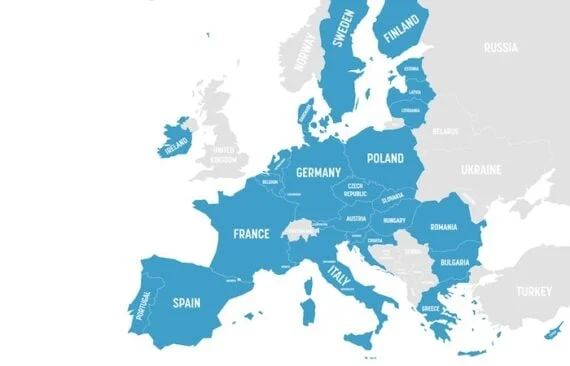
The world of e-commerce, while seemingly borderless for consumers eager to click and buy, is governed by a mosaic of regulations that significantly impact how businesses handle online product returns. A critical divergence exists between the European Union and the United States, with distinct legal frameworks shaping consumer rights and merchant responsibilities. Understanding these differences is paramount for any business operating or planning to expand across these major markets, as a one-size-fits-all approach to returns can lead to compliance issues in the EU or missed opportunities for competitive advantage in the US.
The EU’s Statutory Right of Withdrawal: A Consumer-Centric Approach
In the European Union, distance buying is underpinned by a legally mandated "right of withdrawal." This consumer protection measure, enshrined in EU law and implemented across all member states, grants consumers a statutory period of 14 days following the delivery of an online purchase to cancel their order without needing to provide any justification. This fundamental right is a cornerstone of e-commerce within the EU, fostering consumer confidence and a predictable transactional environment.
However, this broad right is not absolute. Certain categories of goods are excluded from this standard withdrawal right, primarily to address practical limitations and specific consumer interests. These exceptions typically include personalized items that have been made to the consumer’s specifications, perishable goods that are likely to degrade quickly, and sealed products that have been unsealed after delivery and are not suitable for return for health protection or hygiene reasons. For instance, custom-engraved jewelry or freshly baked goods ordered online would generally fall outside the standard 14-day cancellation window once delivered.
The implications of this legally embedded right are far-reaching. It creates a baseline expectation for consumers across the EU, simplifying their understanding of their rights regardless of the specific country they are purchasing from. For businesses, it translates into a predictable, albeit significant, operational cost layer, particularly for product categories that experience high return volumes.
The US Approach: Retailer Discretion and Market Dynamics
In stark contrast to the EU’s unified statutory framework, the United States operates without a federal law dictating online return policies. Instead, retailers in the US are largely free to establish their own return policies, which can vary dramatically from one merchant to another and across different product categories. This decentralized approach is heavily influenced by competitive pressures, consumer expectations, and the specific nature of the goods being sold.
This flexibility allows US businesses to tailor their return strategies to their unique business models and target demographics. Some retailers may offer highly generous return policies, including free return shipping and extended return windows, as a means to attract customers and differentiate themselves in a crowded marketplace. Others may adopt more restrictive policies, potentially involving restocking fees or shorter return periods, especially for certain types of products where returns are more costly or prone to abuse.
The absence of a federal mandate means that consumers in the US must carefully review the individual return policies of each retailer before making a purchase. While this can lead to a more dynamic and competitive retail landscape, it also means that consumer rights regarding returns are not uniform.
Quantifying the Return Phenomenon: Volume and Economic Impact
The volume of returned goods in online retail is a significant economic factor in both regions, though the reporting and estimation methods can differ. In the United States, the National Retail Federation (NRF) provided an estimate in October 2025 indicating that approximately 19.3% of all online sales were expected to be returned during that year. This figure highlights the substantial logistical and financial burden associated with managing returns in the US e-commerce sector.
Across the Atlantic, Statista reported that in 2024, EU customers returned around 7% of their total e-commerce revenue. While this percentage appears lower than the US figure, it masks considerable national variations within the EU. Germany, for example, stands out with a notably high return rate, where Statista data indicated that 55% of online buyers returned at least one product purchased online. This disparity underscores the importance of understanding country-specific consumer behavior and regulatory nuances within the broader EU market.
The legally mandated withdrawal right in the EU, particularly in categories prone to high return rates, contributes to a predictable but substantial cost for businesses. This is a direct consequence of the regulatory environment, which prioritizes consumer protection. In the US, conversely, merchants possess a theoretical ability to limit their exposure to return-related costs by setting more stringent policy parameters.
Refund Timelines and Financial Flows
A critical aspect of return policies concerns the timeline for issuing refunds. Under the EU’s Consumer Rights Directive, businesses are obligated to process refunds within 14 days of receiving notification of a consumer’s withdrawal. However, a nuanced provision allows merchants to temporarily withhold the refund until they have either received the returned goods or the consumer has provided verifiable proof that the items have been dispatched. This safeguard helps mitigate the risk of fraudulent returns. Refunds must also be processed using the same payment method that the consumer originally used for the purchase, ensuring a consistent financial transaction.
This 14-day deadline can exert considerable pressure on the cash flow of businesses, especially those that experience a high volume of returns. Efficient processing and prompt reimbursement are essential to maintain customer satisfaction and adhere to legal requirements.

In the United States, the absence of a federal requirement means that refund timelines are determined by individual retailers. While most US merchants aim to process refunds within a few business days to align with customer expectations and industry best practices, there is no overarching legal obligation to do so. Payment networks, which facilitate transactions and dispute resolution, also do not impose a universal timeframe for refund settlements. This allows US businesses to align their refund processes with their internal operational capabilities and customer service strategies.
The Cost of Shipping: Who Bears the Burden?
The responsibility for return shipping costs is another key differentiator between the EU and the US. In the European Union, consumers are generally expected to cover the cost of returning an item, provided that this condition is clearly communicated to them before the purchase is finalized. This disclosure requirement is crucial; failure to adequately inform consumers can shift the responsibility for return shipping costs back to the merchant. It is important to note that while consumers may bear the return shipping cost, EU merchants are still obligated to reimburse the original delivery cost of the order.
Furthermore, EU merchants have the right to reduce the amount of a refund if the returned product’s value has diminished due to unnecessary handling or use by the consumer beyond what is necessary to establish the nature, characteristics, and functioning of the goods. This addresses situations where items are returned in a condition that makes them unsaleable as new.
In the US, retailers enjoy greater flexibility regarding return shipping. They can choose to absorb these costs as a competitive incentive, offering free returns to enhance customer convenience and encourage purchases. Alternatively, they can require customers to pay for return shipping. Similarly, US businesses can opt to implement restocking fees or deductions for returned items, or choose not to. Amazon, for instance, has set a precedent by offering free return shipping on many items, a move that has influenced competitive dynamics within the US market.
Despite these fundamental legal distinctions, competitive pressures in both regions often lead to convergent outcomes. The desire to attract and retain customers can drive US retailers to offer more consumer-friendly return shipping policies, mirroring practices that are becoming standard in the EU. Conversely, clear communication of return conditions remains paramount for EU merchants to avoid unforeseen costs.
Beyond Shipping: The Holistic Cost of Returns
It is crucial to recognize that the financial impact of returns extends far beyond the cost of shipping. In both the EU and the US, businesses incur a range of expenses associated with reverse logistics. These include the costs of inspecting returned items to verify their condition, repackaging products that can be resold, restocking inventory, and, in cases where items cannot be resold as new, potential markdowns to clear excess or slightly damaged stock. These ancillary costs contribute significantly to the overall financial burden of managing returns.
Strategic Planning for Cross-Border E-commerce
For businesses operating or seeking to expand into both the European Union and the United States, developing distinct return strategies is not merely advisable but essential. Attempting to implement a single, global return policy can lead to either non-compliance with stringent EU regulations or unnecessary operational costs in the US market.
In the European Union, the strategic priority for merchants should be transparency and compliance. This involves:
- Clear Disclosure: Ensuring that the right of withdrawal, consumer responsibilities for return shipping (if applicable), and refund timelines are explicitly and prominently communicated to consumers before they complete their purchase. This should be integrated into product pages, checkout processes, and order confirmation emails.
- Documentation and Workflow Management: Maintaining up-to-date documentation of return policies and establishing efficient internal workflows to process returns and issue refunds within the statutory 14-day window. This requires robust inventory management and customer service systems.
- Adherence to Refund Requirements: Strictly adhering to the requirement to reimburse original delivery costs and processing refunds via the original payment method.
In the United States, the strategic focus shifts towards optimization and competitive positioning. This entails:
- Benchmarking: Regularly comparing return policies against industry averages and competitor offerings within specific product categories. This helps in understanding market expectations and identifying opportunities for differentiation.
- Data Analysis: Tracking key metrics such as return generosity (e.g., free shipping, extended windows) against conversion rates and overall sales performance. This data-driven approach allows businesses to assess the trade-offs between customer acquisition and return-related costs.
- Cost Modeling: Integrating the projected costs of returns into pricing strategies and financial forecasts. This ensures that the economic impact of returns is accounted for in the overall profitability of e-commerce operations.
Broader Implications and Future Trends
The differing approaches to online returns between the EU and the US highlight fundamental differences in regulatory philosophy and market development. The EU’s consumer-centric model, while creating predictable costs for businesses, fosters a high level of trust and confidence among online shoppers. This can contribute to a more stable and mature e-commerce ecosystem.
The US model, with its emphasis on retailer discretion and market competition, allows for greater innovation and flexibility. However, it also places a greater onus on consumers to be informed and diligent. The potential for highly generous return policies in the US can, paradoxically, lead to increased return rates, particularly in categories where consumers are inclined to order multiple variations of a product with the intention of keeping only a select few. This phenomenon, often referred to as "bracketing," can inflate return volumes and associated costs for US retailers.
Looking ahead, both regions may see continued evolution in return policies. In the EU, there might be ongoing discussions about further refining the exceptions to the right of withdrawal or addressing the environmental impact of high return volumes. In the US, increasing consumer awareness and the growing prominence of e-commerce may lead to calls for greater standardization or clearer guidelines, though a move towards a fully statutory system like the EU’s appears unlikely in the near term.
Ultimately, merchants who proactively model and strategize around the costs and complexities of returns, rather than treating them as an afterthought, will be better positioned to navigate the challenges and capitalize on the opportunities presented by these distinct regulatory and market environments. Successful cross-border e-commerce hinges on a deep understanding of these nuanced policy landscapes and the development of agile, region-specific operational strategies.