rifanmuazin
YouTube’s Product Shelf, also known as YouTube Shopping or the channel store tab, is revolutionizing how creators monetize their content by enabling them to directly showcase and sell merchandise and products to their audience without leaving the platform. This integrated shopping experience, appearing below videos, within live streams, and on a dedicated channel tab, offers viewers a seamless purchasing journey. However, the efficacy of this feature hinges on connecting with a compatible e-commerce platform, and not all services claiming YouTube support are created equal. This comprehensive analysis, based on extensive testing of supported platforms, aims to guide creators through the intricate landscape of YouTube Shopping integrations, evaluating their setup, product approval processes, and day-to-day management.
The core functionality of the YouTube Product Shelf relies on creators linking their supported e-commerce platforms through YouTube Studio. This connection facilitates the synchronization of product catalogs, making them visible and purchasable directly on YouTube. The article rigorously examined platforms that integrate natively via YouTube Studio, alongside broader e-commerce solutions that leverage the Google Merchant Center pipeline. Platforms not featured on this list have either lost official support, require complex workarounds, or are restricted to specific regional markets, limiting their utility for a global creator base.
Quick List: Best YouTube Product Shelf Platforms
- Shopify: The most robust and scalable option, ideal for creators building a comprehensive e-commerce brand.
- Spring (Teespring): A long-standing, creator-friendly platform offering a simple, zero-cost entry into merch sales.
- Spreadshop: A free print-on-demand solution with fast US-based production and performance-based bonuses.
- Wix: A viable option for existing Wix users looking to integrate their website and YouTube presence.
- Shopline: A strong contender for creators targeting audiences in APAC and EMEA regions, offering localized support.
- TeePublic: A marketplace model that provides passive income with minimal creator management.
Top Platforms Overview
| Platform | Why It Stands Out for YouTube Shelf | Ideal For |
|---|---|---|
| Shopify | Official YouTube Shopping partner; direct catalog sync via YouTube Studio; scalable e-commerce infrastructure; advanced analytics; embedded checkout for US merchants. | Channels building a brand/store beyond merch who want maximum control, apps, and multi-channel ecommerce. |
| Spreadshop | Supported YouTube Shopping platform; easy print-on-demand setup; free store; no inventory management; fast US-based production; performance bonuses for increased volume. | Creators who want a simple, free POD merch solution with direct YouTube Shopping integration and fast fulfillment. |
| Shopline | Official global YouTube Shopping partner; direct connection via YouTube Studio; strong localization for APAC/EMEA markets; supports multi-channel social commerce. | Creators in APAC/EMEA who want a modern ecommerce platform tightly integrated with YouTube Shopping and strong regional support. |
| TeePublic | Listed as a supported YouTube Shopping platform; marketplace model eliminates store management; passive income generation with zero operational overhead. | Creators who want passive merch income without running a storefront, ideal as a secondary sales channel. |
| Wix | Supported YouTube Shopping platform; integrates with Google Merchant Center; ideal for existing Wix users; manages website, blog, and store from a single dashboard. | Creators who already use Wix for their website and want to add YouTube Shopping functionality seamlessly. |
| Spring | Long-time YouTube merch partner; direct YouTube Shopping support; easy POD setup with no upfront cost; social-first commerce tools; sales data integrated into YouTube Analytics. | Creators who want a simple, proven merch workflow with minimal tech overhead and direct integration for social platforms. |
Understanding the YouTube Product Shelf Mechanism
The YouTube Product Shelf is an integrated shopping feature designed to streamline the discovery and purchase of creator merchandise. When a creator successfully connects a compatible e-commerce platform through YouTube Studio, their product catalog becomes accessible across various YouTube touchpoints. These include a dedicated store tab on their channel page, a prominent product shelf directly beneath individual video uploads, interactive product tags within Shorts, and customizable product cards during live stream broadcasts.
Crucially, creators do not manually upload product listings to YouTube. Instead, the chosen e-commerce platform synchronizes the creator’s product catalog with Google Merchant Center. This intermediary service then feeds the product information into YouTube’s shopping ecosystem. When a viewer expresses interest in a product, typically by tapping on a tag or a listed item, they are directed to the creator’s online store to finalize the purchase. In a significant development for U.S.-based Shopify merchants, YouTube Shopping now supports embedded checkout, allowing viewers to complete transactions without ever leaving the YouTube interface, thereby minimizing potential abandonment points in the sales funnel.
The product shelf itself has a dynamic capacity, displaying up to 12 products at any given time. By default, YouTube’s algorithms curate the product display order based on factors such as recency of addition, overall popularity, and current stock availability. However, creators retain granular control, with the ability to manually select and arrange up to 12 products. This customization can be applied universally across their entire channel or tailored for specific videos, allowing for strategic promotion of particular items or collections.
Eligibility Requirements for YouTube Shopping
Before delving into platform selection, creators must ensure their YouTube channel meets the eligibility criteria for YouTube Shopping. The core requirements include:
- YouTube Partner Program Membership: The channel must be accepted into the YouTube Partner Program (YPP).
- Subscriber Threshold: A minimum of 1,000 subscribers is generally required, though Official Artist Channels are exempt from this specific number.
- Audience Setting: The channel’s content cannot be designated as "Made for Kids."
- Monetization Compliance: The channel must not have a significant history of violating monetization policies.
- Community Guideline Compliance: The channel must not have any active Community Guideline strikes, particularly related to hate speech.
Meeting these foundational requirements, however, does not automatically guarantee product inclusion. Each product submitted for display undergoes a rigorous review process. This evaluation assesses compliance with both YouTube’s stringent content policies and Google Merchant Center’s product listing standards. Products that feature insufficient image resolution, fall into restricted categories, or are classified as digital goods may be rejected, even if the creator’s channel fully satisfies all eligibility prerequisites. This multilayered approval process ensures a consistent and safe shopping experience for viewers.
1. Shopify: The Comprehensive E-commerce Powerhouse
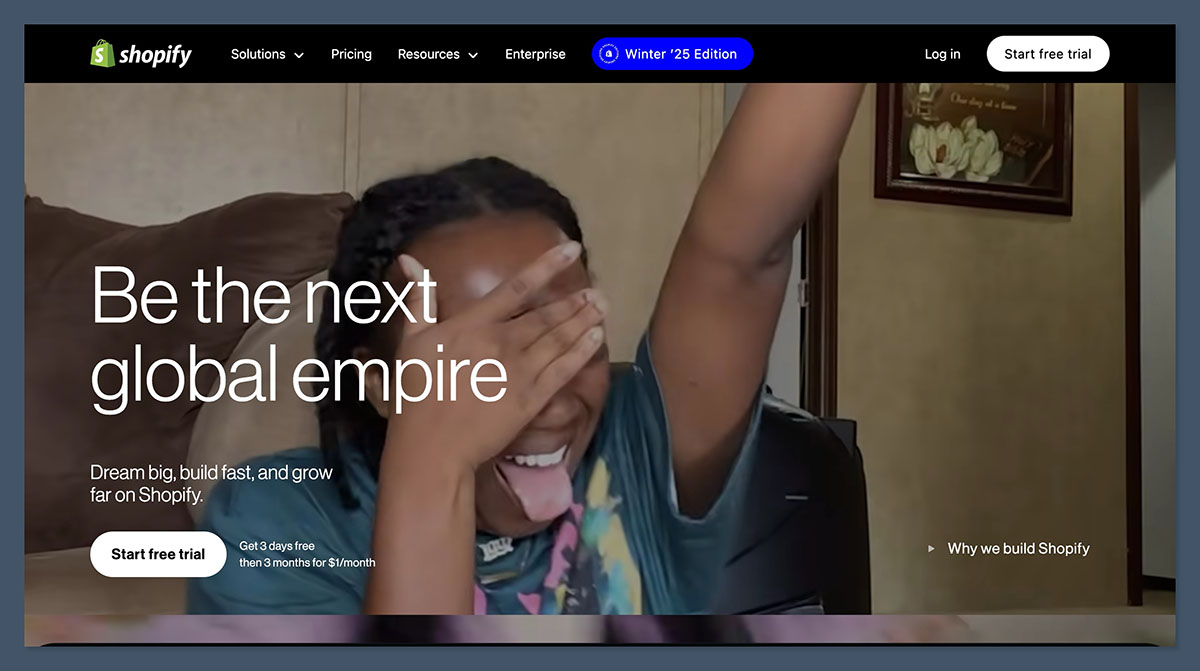
Shopify stands as YouTube’s preeminent shopping partner, offering unparalleled integration and advanced functionalities. For creators aiming to build a robust brand and expand their e-commerce operations beyond simple merchandise, Shopify provides an all-encompassing solution. The direct integration through the "Google & YouTube" app within the Shopify admin allows for effortless catalog synchronization with YouTube Studio. Creators can manage product tagging, analytics, and order fulfillment directly from their YouTube dashboard, a testament to the platform’s deep collaboration with YouTube.
The true strength of Shopify lies in its extensive ecosystem and scalability. Beyond the YouTube integration, creators gain access to a fully-featured e-commerce store with thousands of applications for enhanced marketing, customer relationship management, and operational efficiency. Features like advanced inventory management, discount code generation, abandoned cart recovery, detailed customer profiles, and integrated email marketing empower creators to cultivate deeper customer relationships and optimize sales strategies. For creators looking to sell a diverse range of products, including digital goods, subscriptions, or physical inventory, Shopify’s infrastructure is unmatched.
A significant advantage for U.S.-based Shopify merchants is the implementation of embedded checkout within YouTube. This feature eliminates the need for viewers to leave YouTube to complete a purchase, drastically reducing friction and potentially boosting conversion rates. This functionality requires the use of Shopify Payments and the submission of support contact details through the Google Merchant Center account.
However, Shopify’s comprehensive nature comes with a notable cost. The Basic plan begins at $39 per month (or $29 per month with annual billing), and many stores find themselves investing an additional $50 to $100 per month on third-party apps to access features like customer reviews, advanced email marketing, and upsell functionalities, which are not included by default. Furthermore, if Shopify Payments are not utilized, a 2% transaction fee on the Basic plan can further increase expenses.
What we like about Shopify:
- Seamless, official YouTube Shopping integration.
- Direct access to sales and order data within YouTube Analytics.
- Highly scalable and robust e-commerce infrastructure.
- Extensive app marketplace for customization and growth.
- Embedded checkout for U.S. customers enhances user experience.
What we don’t like about Shopify:
- Higher monthly subscription costs compared to other platforms.
- Additional app costs can significantly increase overall expenditure.
- Transaction fees apply if not using Shopify Payments.
Best for: Channels building a standalone brand or store beyond basic merch. Ideal for creators who want maximum control over their catalog, pricing, customer data, and multi-channel selling (Amazon, Instagram, TikTok, and YouTube from one dashboard).
2. Wix: Integrating E-commerce into a Digital Presence
Wix, a widely recognized website builder, also offers a supported YouTube Shopping integration, making it a logical choice for creators who already utilize the platform for their online presence. The connection is established through Google Merchant Center, enabling the synchronization of a Wix e-commerce store’s product catalog with YouTube. This integrated approach allows creators to manage their website, blog, online store, and YouTube Shopping presence from a single, unified dashboard.
While Wix provides a solid foundation for e-commerce, its features are generally less specialized for creator merchandise compared to platforms like Shopify or Spring. Creators can manage products, track orders, implement discount codes, and access basic analytics. The drag-and-drop editor facilitates accessible storefront design, and pre-designed templates cater to online retail needs. However, Wix’s app ecosystem is not as extensive as Shopify’s, its multi-channel selling capabilities are less robust, and advanced automation features are more limited.
For creators starting from scratch with the sole intention of selling merchandise on YouTube, Wix may not be the most direct or efficient option. Platforms like Shopify or even Spring offer more streamlined workflows and creator-centric tools specifically designed for merchandise integration.
What we like about Wix:
- Unified dashboard for website, blog, and e-commerce management.
- User-friendly drag-and-drop website builder.
- Cost-effective entry point for basic e-commerce needs.
- Official YouTube Shopping platform support.
What we don’t like about Wix:
- Less specialized creator merchandise features compared to dedicated platforms.
- Limited app ecosystem and advanced automation capabilities.
- Less robust multi-channel selling power.
Best for: Creators who already have a Wix website and want to add YouTube Shopping without migrating to a different platform. Not the best starting point if you are building from scratch.
3. Spreadshop: Free Print-on-Demand with Performance Incentives
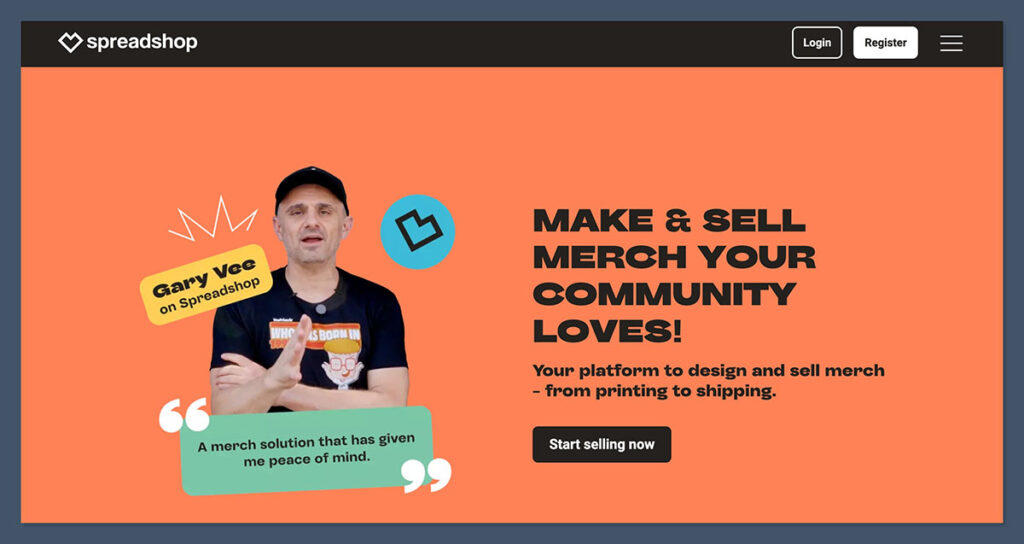
Spreadshop emerges as a compelling free print-on-demand (POD) platform, boasting official YouTube Shopping support and the valuable inclusion of sales data within YouTube Studio analytics. As part of the Spreadshirt family, a long-standing entity in the custom apparel industry, Spreadshop benefits from over two decades of experience. A key differentiator is its rapid U.S.-based production, with orders typically printed and dispatched within 48 hours, offering a speed advantage over platforms relying on distributed global print networks.
The platform operates on a straightforward margin-based model. Each product has a base cost, and creators set their desired profit margin on top of that. Spreadshop further incentivizes volume sales through performance-based bonuses that reduce the base cost as more units are sold, thereby enhancing profitability over time. For instance, a standard men’s t-shirt might start at approximately $13.99, but with monthly sales exceeding 50 units, the base cost drops to $12.98, and at 250 units, it further reduces to $12.37.
With a catalog featuring over 300 items and an intuitive drag-and-drop design tool, Spreadshop is accessible even for creators with no prior design experience. The platform also provides built-in social sharing tools that generate ready-to-use mockup images optimized for major social media platforms like Instagram, Facebook, Twitter, and Pinterest, simplifying cross-platform merchandise promotion.

However, Spreadshop’s limitations lie in its storefront customization options and the absence of a customer database. Creators cannot directly collect email addresses for marketing campaigns, implement retargeting strategies, or build direct relationships with their buyers. Analytics are primarily confined to sales and payout figures; traffic insights necessitate manual setup of Google Analytics or Facebook Pixel tracking through the Spreadshop backend.
What we like about Spreadshop:
- Free to use with no monthly fees.
- Fast, U.S.-based production and fulfillment.
- Performance bonuses improve margins at higher sales volumes.
- Easy-to-use design tool and social sharing features.
- Direct YouTube Shopping integration and analytics support.
What we don’t like about Spreadshop:
- Limited storefront customization options.
- No direct customer data collection for email marketing or retargeting.
- Basic analytics require manual integration for deeper insights.
Best for: Creators who want a simple, free merch store connected to YouTube Shopping with fast US-based production and improving margins as volume grows.
4. Shopline: Empowering Creators in Emerging Markets
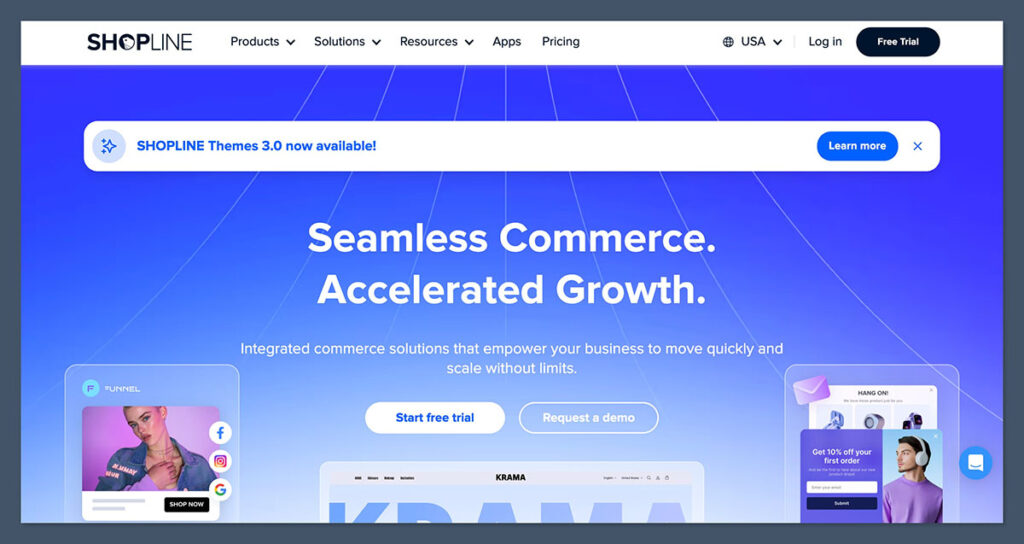
Shopline is officially recognized as a YouTube Shopping platform, seamlessly integrating with YouTube Studio’s shopping features. Functioning as a comprehensive e-commerce platform, it shares similarities with Shopify but possesses a stronger foothold in Asian and emerging markets. For creators whose audience is predominantly located in the Asia-Pacific (APAC) or Europe, Middle East, and Africa (EMEA) regions, Shopline offers significant advantages. These include localized payment gateways, multi-language support, and region-specific logistics integrations that are often less optimized on Western-centric platforms.
The integration process mirrors that of other supported platforms. Creators connect their Shopline store within YouTube Studio’s Shopping tab, allowing their product catalog to sync via Google Merchant Center. This enables product tagging within YouTube content. Shopline also facilitates social commerce across multiple channels, meaning a single product catalog can be distributed to YouTube, Facebook, Instagram, and TikTok simultaneously.
While Shopline is a robust platform, its visibility among Western creators is less pronounced. Consequently, the availability of community resources, third-party tutorials, and a third-party app ecosystem is thinner compared to established players like Shopify. If a creator’s primary audience is in North America or Europe and they don’t have specific regional requirements, Shopify typically presents a more readily supported and feature-rich alternative.
What we like about Shopline:
- Official YouTube Shopping integration.
- Strong localization features for APAC and EMEA markets.
- Comprehensive e-commerce platform capabilities.
- Supports multi-channel social commerce distribution.
What we don’t like about Shopline:
- Less extensive app ecosystem and community resources for Western creators.
- May have a steeper learning curve for those unfamiliar with its interface.
Best for: Creators and merchants in APAC or EMEA regions who want a modern, full-featured ecommerce platform with direct YouTube Shopping integration and strong localization support.
5. TeePublic: Passive Income Through a Marketplace Model
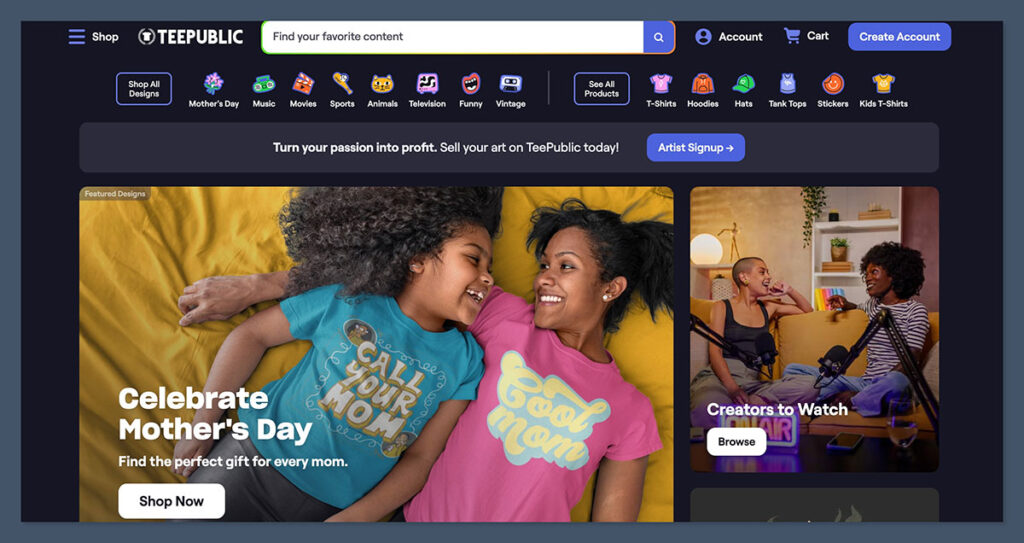
TeePublic appears on YouTube’s official list of supported shopping platforms and operates distinctively as a marketplace rather than a standalone store builder. This model significantly simplifies the process for creators: they upload their designs, and TeePublic manages the entire operational side, including the storefront, production, shipping, and customer service. Creators then earn a royalty on each sale.
The primary benefit of TeePublic for YouTube creators is its minimal operational requirement. Creators are freed from the burdens of managing an online store, setting shipping rates, or handling customer inquiries. However, this convenience comes at the cost of limited control over branding, pricing strategies, and the overall customer experience. Products are displayed alongside a vast array of designs from numerous other creators, and TeePublic frequently runs site-wide sales that can impact per-unit earnings.
TeePublic is best utilized as a supplementary sales channel. For creators who already have a primary merchandise platform, such as Shopify, connecting TeePublic to their YouTube channel offers an avenue for additional passive exposure without demanding extra management effort.
What we like about TeePublic:
- Zero operational effort required from the creator.
- Passive income generation through royalties.
- Marketplace model with a wide audience reach.
- Official YouTube Shopping platform support.
What we don’t like about TeePublic:
- Very limited control over branding and pricing.
- Creator earnings can be impacted by site-wide sales.
- Products are displayed alongside a vast number of other creators.
Best for: Creators who want passive merch income through YouTube Shopping without running any storefront. Works best as a secondary channel alongside a primary merch platform.
6. Spring (Teespring): A Proven Creator Merchandise Solution
Spring, formerly known as Teespring, remains a leading and highly recognized platform for creator merchandise, boasting a long-standing partnership with YouTube. Its direct integration with YouTube Shopping is a key advantage, and it is one of the few platforms that seamlessly feeds sales data directly into YouTube Analytics. The setup process is remarkably straightforward: creators connect their Spring account to YouTube via YouTube Studio, select the products they wish to feature, and their merchandise shelf becomes live.
The platform employs a simple pricing structure: Spring charges a base cost for each item, and creators have the freedom to set any retail price above this base, with the difference constituting their profit. This model eliminates monthly fees, subscription tiers, and upfront costs, making it an accessible entry point for many creators. Spring assumes full responsibility for production, shipping, and customer service.
Beyond YouTube, Spring offers integrations with other popular creator platforms like Twitch, TikTok, Streamlabs, and Linktree, positioning it as a capable multi-platform solution for social-first creators. While the storefront offers some degree of customization, it is generally more limited than what is provided by comprehensive e-commerce platforms like Shopify.
The primary drawbacks of Spring include potential inconsistencies in product quality, higher base costs that can compress profit margins, and a lack of advanced e-commerce features. The platform does not offer abandoned cart recovery, nor does it provide creators with direct control over a customer database. Analytics are typically confined to basic sales reporting, and shipping costs can sometimes be unexpectedly high due to items being dispatched from various fulfillment centers.
What we like about Spring:
- Direct and seamless integration with YouTube Shopping.
- Sales data available directly in YouTube Analytics.
- Zero upfront costs, monthly fees, or subscription tiers.
- Handles all aspects of production, shipping, and customer service.
- Integrations with other key creator platforms.
What we don’t like about Spring:
- Potential for product quality inconsistencies.
- Higher base costs can impact profit margins.
- Limited advanced e-commerce features like abandoned cart recovery.
- Lack of direct customer data ownership.
Best for: Creators who want a simple, proven merch workflow with minimal tech overhead and direct integration for social platforms.
How We Evaluated These Platforms
The evaluation of these YouTube Product Shelf platforms was conducted through a rigorous testing methodology designed to assess their performance across critical areas relevant to creators. Each platform was subjected to a detailed examination, weighted according to its impact on a creator’s ability to successfully integrate and manage merchandise sales on YouTube.
| Testing Area | What We Evaluate | Weight |
|---|---|---|
| YouTube Integration | Official listing in YouTube Studio, quality of product sync, visibility of approval/rejection status, and YouTube Analytics support. | 30% |
| Setup & Ease of Use | Time from account creation to live products, number of steps, documentation quality, and required technical knowledge. | 20% |
| Pricing & Margins | Monthly fees, product base costs, transaction fees, payment processing rates, and realistic profit margins. | 20% |
| Product Quality & Catalog | Range of products, print quality consistency, fulfillment speed, and shipping cost transparency. | 15% |
| Creator Features | Memberships, digital products, multi-platform integrations, storefront customization, and customer data ownership. | 15% |
This structured approach ensured that the final recommendations are based on objective performance metrics and practical creator needs, providing a reliable guide for navigating the YouTube Shopping landscape.
Key Takeaways for Creators
- Strategic Platform Choice: The "best" platform is highly dependent on individual creator goals, audience demographics, and existing infrastructure.
- Beyond Merch: For creators looking to build a comprehensive e-commerce brand, Shopify offers unparalleled scalability and control.
- Low-Barrier Entry: Spring and Spreadshop provide excellent, low-cost options for creators focused primarily on merchandise and seeking ease of use.
- Regional Considerations: Shopline is a vital option for creators targeting specific international markets.
- Passive Income: TeePublic is ideal for those seeking a hands-off approach to merchandise sales.
- Eligibility is Key: Creators must meet YouTube’s YPP, subscriber, and policy requirements before product integration is possible.
- Product Review Process: Be prepared for an approval process for each product, ensuring compliance with YouTube and Google policies.
The Broader Impact on Creator Economy
The integration of robust shopping features directly into platforms like YouTube signifies a monumental shift in the creator economy. Historically, creators relied on external links and third-party platforms to monetize their merchandise, often leading to a fragmented user experience and lost sales opportunities. The Product Shelf streamlines this process, transforming passive viewers into active consumers within the platform’s ecosystem. This not only enhances revenue potential for creators but also deepens audience engagement by providing tangible ways for fans to support their favorite content creators.
The rise of integrated shopping also democratizes e-commerce for a wider range of creators. Platforms like Spring and Spreadshop lower the barrier to entry significantly, allowing individuals with limited capital or technical expertise to establish merchandise lines. This fosters a more diverse and vibrant creator economy, where the ability to produce compelling content is directly linked to the ability to build a sustainable business. As e-commerce integrations become more sophisticated, we can expect to see further innovation in creator monetization strategies, potentially blurring the lines between content consumption and commerce even further. The data generated from these integrated shopping experiences also provides creators with invaluable insights into audience preferences, enabling them to tailor their merchandise and content more effectively.
Frequently Asked Questions
How many subscribers do I need for the YouTube Product Shelf?
You need at least 1,000 subscribers and must be in the YouTube Partner Program. Official Artist Channels are exempt from the subscriber threshold. Your channel also cannot be set as Made for Kids and must not have any active hate speech Community Guideline strikes.
Does YouTube take a commission on Product Shelf sales?
No. YouTube does not take a percentage of your merchandise sales. All transactions, fees, and payouts are handled entirely by the connected platform (Shopify, Spring, etc.). YouTube’s role is to display the products; the commerce side is between you and your chosen platform.
Can I connect more than one store to my YouTube channel?
Yes. YouTube allows you to connect multiple stores from supported platforms simultaneously. You can manage which products appear from each store through the Shopping tab in YouTube Studio.
Why are my products not showing on my YouTube channel?
Products must pass review against both YouTube’s content policies and Google Merchant Center’s product listing standards. Common rejection reasons include images that are too small, restricted product categories, missing product data, and shipping region mismatches.
Can I use Printful or Printify for the YouTube Product Shelf?
Not directly. Printful and Printify are fulfillment providers, not platforms listed in YouTube’s supported shopping platforms. However, you can connect Printful or Printify to a Shopify store, and then connect that Shopify store to YouTube Shopping. The products flow through Shopify’s catalog sync to YouTube via Google Merchant Center.