Nana Wu
The landscape of digital advertising is undergoing a profound transformation with the advent of Artificial Intelligence (AI) in Pay-Per-Click (PPC) campaign management. While AI-powered tools, often colloquially referred to as "Claudits" due to the popularity of platforms like Claude and ChatGPT, offer the promise of democratizing campaign oversight, their current implementation often falls short of delivering actionable, accurate insights. This burgeoning trend, while empowering for clients and non-expert managers seeking to understand campaign performance, is fraught with challenges that require careful navigation to extract genuine value.
The core appeal of AI-driven PPC audits lies in their potential to level the playing field. For clients or line managers who may not possess deep, hands-on experience in PPC, these tools offer a pathway to scrutinize campaign performance and hold account managers accountable. The ability to query campaign effectiveness without years of specialized knowledge is a significant draw, promising greater transparency and a more informed understanding of advertising spend. However, the current reality is that many of these AI audits are producing results that are, at best, inconsistent and, at worst, misleading.
The Genesis of the "Claudit" Phenomenon
The surge in AI PPC audits can be traced to several converging factors. The rapid advancements in natural language processing and large language models (LLMs) have made sophisticated AI accessible to a wider audience. Simultaneously, the increasing complexity of digital advertising platforms, with their myriad settings and constant updates, has created a demand for efficient auditing mechanisms. Businesses are under pressure to demonstrate clear ROI on their marketing investments, and the allure of an AI that can provide rapid, cost-effective analysis is undeniable. This trend began to gain significant traction in late 2023 and has rapidly accelerated throughout 2024, with numerous marketing technology companies and independent consultants experimenting with and launching AI-driven audit services.
The Pitfalls of Uncontextualized AI Audits
The primary challenges encountered with current AI PPC audits stem from fundamental limitations in how these systems process information and their inherent biases.
Missing Business Context: The Blind Spot of AI
A significant weakness of AI audits is their inability to grasp the nuanced business context that informs strategic decisions in PPC management. Well-executed campaigns are often the result of deliberate choices, informed by a deep understanding of the business’s unique objectives, target audience, competitive landscape, and brand positioning. These decisions might manifest in unconventional naming conventions, specific campaign structures, or carefully considered bidding strategies that, to an AI lacking this background, may appear suboptimal or erroneous.
For example, a business might intentionally limit targeting to a highly specific demographic or geographic area to prioritize quality leads over sheer volume, aligning with a long-term customer acquisition strategy. An AI, fed only raw campaign data, might flag this as a missed opportunity for expansion, failing to recognize the strategic intent. This lack of qualitative understanding can lead to the AI questioning and flagging deliberate, well-reasoned choices as mistakes, thereby undermining the expertise of the human account manager. The absence of this contextual layer means the AI is essentially operating with incomplete information, leading to potentially flawed recommendations.
The Google Best Practice Bias: A Vendor’s Advantage
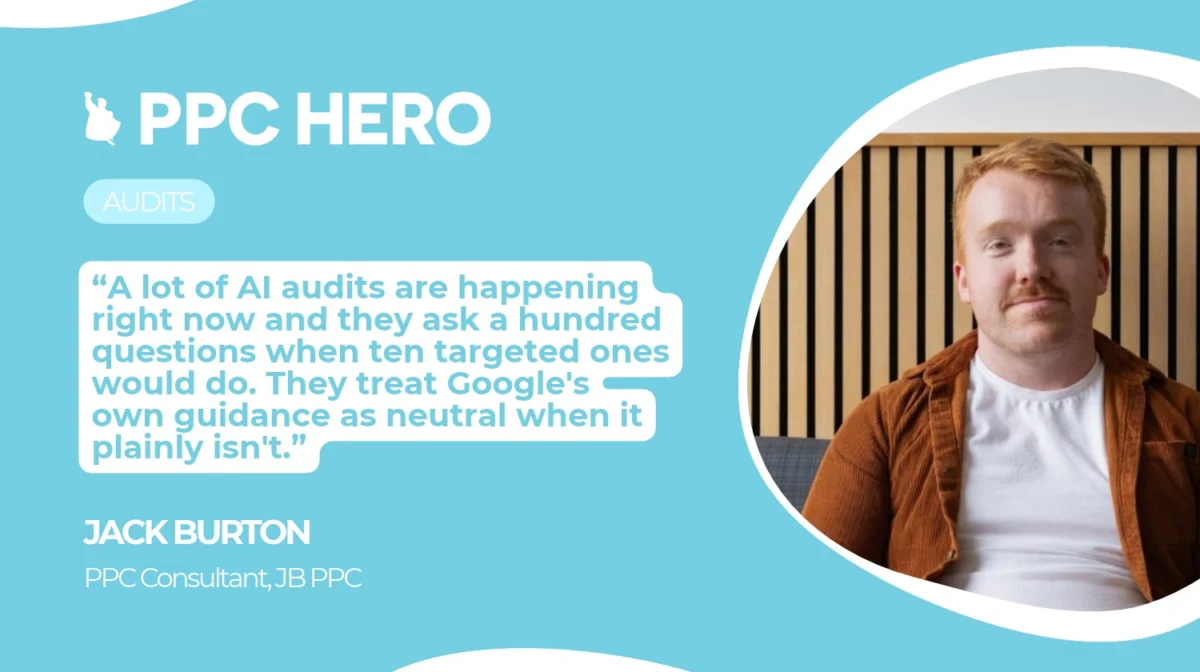
A critical concern for any user of AI PPC audits is the inherent bias towards Google’s "best practices." Many AI models, when trained on publicly available data, inevitably ingest a significant amount of information originating from Google itself. This can lead to a situation where the AI’s recommendations subtly, or overtly, echo Google’s own sales pitch. Google’s definition of "best practice" often prioritizes increased ad spend, broader targeting, and fewer restrictions – strategies that, while potentially beneficial for Google’s revenue, may not always align with an advertiser’s specific goals or profitability.
True PPC expertise is cultivated through years of experience, experimentation, and a deep understanding of fundamental advertising principles. Experienced professionals learn to critically evaluate Google’s recommendations, understanding when to adopt them and, crucially, when to push back based on their own empirical evidence and strategic judgment. An AI that uncritically parrots Google’s guidance risks reinforcing a vendor-centric approach rather than an advertiser-centric one. This bias can lead to audits that inadvertently steer businesses towards spending more money on the platform without a proportional increase in return on investment.
Death by a Thousand Tiny Details: Drowning in Trivialities
Many AI-generated audits tend to produce an overwhelming volume of findings, often focusing on a multitude of minor issues that have negligible impact on overall campaign performance. While it is important to address all aspects of a campaign, an audit that gives equal weight to a trivial setting change and a significant strategic oversight can be counterproductive.
Consider the example of location-targeting settings. While precision in targeting is important, subtle adjustments to these settings, when already broadly correct, often yield minimal performance improvements. An AI might identify dozens of such minor points, burying the truly impactful recommendations under a deluge of inconsequential suggestions. In contrast, a thorough review of the search term report can uncover substantial savings. For instance, identifying and adding negative keywords can prevent wasted ad spend on irrelevant searches, potentially saving a significant percentage of a budget. An audit that fails to differentiate the impact of these findings leaves the advertiser struggling to prioritize, chasing minuscule gains while overlooking substantial opportunities for optimization.
Paralysis by Analysis: The Noise of Indecision
The nature of PPC strategy is inherently subjective, involving a constant balancing act. For example, narrowing targeting can increase relevance but reduce reach, while broadening targeting can increase reach but potentially dilute relevance. Both approaches can be defensible depending on the campaign’s objectives and the business’s goals. An AI that endlessly queries whether targeting could be "broader" or "narrower" without offering a decisive, contextually informed recommendation can lead to "paralysis by analysis."
Clients engage PPC specialists not just for their technical skills but for their judgment and strategic decision-making. When an AI audit merely rehashes every possible tweak without offering a clear direction or a reasoned conclusion, it fails to provide the strategic guidance that clients are paying for. Instead, it creates an environment of perpetual indecision, where every strategic choice is subject to endless, often unproductive, digital scrutiny.

The Path to Effective AI PPC Audits
To unlock the true potential of AI in PPC audits, a fundamental shift in approach is required. The focus must move from simply generating reports to facilitating informed, strategic decision-making.
Prioritizing Contextual Interviews: The Human Element First
The most effective AI audits begin not with the data, but with the people involved. The initial step should involve comprehensive interviews with key stakeholders: the client or manager commissioning the audit, and the individual currently managing the PPC account. These conversations should aim to establish a clear understanding of the overarching business objectives, current challenges, unique selling propositions (USPs), and the business’s perspective on its customer base.
By gathering this qualitative data upfront, the AI can then be equipped with the necessary context to differentiate between genuine errors and deliberate strategic decisions. This human-centric approach ensures that the AI’s analysis is grounded in the reality of the business, leading to more relevant and actionable recommendations. For instance, if a business is launching a new product and intentionally using broader keywords to test market interest, an AI armed with this knowledge would not flag it as a mistake but as a strategic test.
Overcoming Google’s Influence: Leveraging Real-World Data
Addressing the Google best practice bias requires AI systems to move beyond solely relying on platform-generated guidance. With internet access, AI models can now tap into a vast repository of real-world case studies, industry analyses, and expert discussions found on platforms like LinkedIn and specialized marketing blogs.
Any recommendation made by an AI audit should be substantiated by evidence beyond generic "best practice" assertions. It should be able to cite specific examples, case studies, or documented performance improvements that support its suggestions. This approach shifts the AI’s role from a passive regurgitator of Google’s marketing materials to an active synthesizer of industry knowledge, enabling it to offer more objective and evidence-based insights. The focus should be on demonstrable results, not just adherence to a vendor’s guidelines.
Tiering Findings by Impact: Focusing on What Matters
To combat the "death by a thousand tiny details" syndrome, AI audits must be programmed to prioritize findings based on their expected impact. Implementing a tiered system—categorizing recommendations by their potential effect (e.g., 10%+ improvement, 5-9% improvement, 1-4% improvement, and under 1% improvement)—can significantly enhance the audit’s utility.
This tiered approach allows stakeholders to immediately identify the most crucial areas for improvement. The impactful search term report finding, for example, would clearly be placed in the top tier, while a minor location-targeting adjustment would reside in the bottom tier. This also provides a valuable diagnostic tool, as the number and magnitude of high-impact findings can serve as an indicator of how well-managed the account has been historically. A well-run account might yield fewer significant findings, while an underperforming one would present more opportunities for substantial improvement.
Targeting Common, High-Impact Issues: Precision Over Breadth
Effective AI audits should focus on identifying common, yet often overlooked, issues that have a demonstrable impact on campaign performance. This includes analyzing search term reports for broad match and phrase match inefficiency, identifying instances where Performance Max (PMax) campaigns may be cannibalizing existing, well-performing budgets rather than generating incremental value, or determining if non-brand campaigns are inadvertently benefiting from branded search queries without adding unique value.
These are specific, verifiable problems that directly affect budget allocation and ROI. By concentrating on these high-impact areas, AI audits can deliver concrete, actionable insights that lead to tangible improvements, rather than contributing to the noise of analysis. This targeted approach ensures that the AI’s efforts are directed towards areas where optimization will yield the most significant returns.
Empowering Account Managers: The Right to Push Back
For PPC specialists on the front lines, the rise of AI audits presents a unique challenge. The instinct when presented with a lengthy, AI-generated report—especially from a client or manager—is to address every point. However, experienced professionals understand that not all recommendations are created equal.
Account managers should be empowered to critically evaluate AI-generated audits and communicate which findings hold the most strategic value. A professional response might involve acknowledging the client’s desire for reassurance while clearly articulating which specific areas offer the most significant potential for improvement. For example, a manager might state, "I understand the desire for comprehensive review, but many of these points are minor. I recommend we focus our immediate efforts on these five key areas, which I believe will yield the most substantial strategic gains." This demonstrates expertise, manages expectations, and guides the client towards productive action. The ability to discern valuable insights from noise is a core component of a PPC specialist’s value proposition.
Conclusion: Towards a Trusted AI Partnership
The current wave of AI PPC audits, while nascent, holds immense promise. However, the path forward requires a more sophisticated and context-aware approach. By prioritizing human context, critically evaluating sources of "best practice," tiering findings by impact, and focusing on high-yield areas, AI audits can transcend their current limitations.
When implemented thoughtfully, with a clear understanding of their strengths and weaknesses, AI audits can evolve from a source of confusion into a powerful tool for transparency and optimization. They can become a genuine "second pair of eyes" on an account, fostering trust and collaboration between specialists and clients, and ultimately driving more effective and efficient advertising outcomes. The journey from a "Claudit" to a truly valuable AI auditing partner is ongoing, but the potential rewards for businesses willing to navigate this evolving landscape are significant.


 Ali Ikhwan
 Azzam Bilal Chamdy