Ammar Sabilarrohman
For decades, marketing professionals have grappled with a pervasive challenge: an abundance of data fragmented across disparate systems. The prevailing issue is rarely a scarcity of information, but rather its dispersion across essential platforms such as Email Service Providers (ESPs), Customer Relationship Management (CRM) systems, and specialized deliverability tools. Marketers often find themselves in the unenviable position of manually attempting to coalesce these disparate data streams, a task that is not only tedious and time-consuming but also prone to error and significant mental strain. This operational friction creates critical blind spots within email marketing programs, not from a lack of available data, but from the inability to forge meaningful connections between isolated datasets.
A recent study, "The State of CRM Data Report 2026," highlighted the gravity of this issue, revealing that a staggering 32.7 percent of marketing teams dedicate six or more hours each week to the arduous tasks of fixing, reconciling, or double-checking CRM data. This significant allocation of resources represents a substantial drain on productivity and efficiency, diverting valuable time from strategic initiatives and creative endeavors towards mundane, repetitive data management. The cumulative effect of these lost hours translates into millions of dollars in wasted operational costs across the industry annually, hindering agility and responsiveness in an increasingly competitive digital landscape. Beyond the financial implications, this constant data wrangling can lead to delayed campaign launches, inaccurate segmentation, suboptimal personalization, and, ultimately, diminished return on investment (ROI) for marketing efforts. The quest for a unified, actionable view of customer data has long been the holy grail for marketing departments, promising to unlock deeper insights and more effective engagement strategies.
The Genesis of Data Fragmentation and Its Enterprise Impact
The problem of data silos is deeply rooted in the evolutionary trajectory of marketing technology. As businesses adopted specialized tools for various functions—email automation, customer relationship management, analytics, advertising, and more—each solution often came with its own data architecture and storage mechanisms. While each tool excelled in its niche, the interoperability between them often lagged, creating digital chasms where crucial information should flow seamlessly. This technological balkanization means that a customer’s journey, from initial interaction to conversion and retention, is often recorded in fragmented chapters across different systems. An ESP might hold detailed engagement metrics for email campaigns, while the CRM tracks sales interactions and customer service history, and a deliverability tool monitors inbox placement and sender reputation. Without a robust mechanism to connect these dots, marketers are left with an incomplete mosaic, unable to discern comprehensive patterns or predict future behavior with accuracy.
The implications extend far beyond mere inconvenience. In an enterprise environment, data fragmentation can lead to:
- Inconsistent Customer Experiences: If different departments or tools hold conflicting or incomplete customer information, it’s impossible to deliver a truly unified and personalized experience.
- Inefficient Resource Allocation: Teams spend excessive time on data reconciliation instead of strategic planning, content creation, or performance optimization.
- Delayed Insights and Decision-Making: Critical business decisions are often postponed or based on partial data, leading to missed opportunities or suboptimal outcomes.
- Compliance Risks: Managing data privacy and regulatory compliance (like GDPR or CCPA) becomes exponentially more complex when customer data is scattered and lacks a single source of truth.
- Stifled Innovation: The inability to easily access and analyze holistic data hinders experimentation and the development of innovative marketing strategies.
This persistent challenge underscores the urgent need for solutions that can bridge these data gaps, transforming scattered information into actionable intelligence.
Introducing the Engage MCP Connector: A Paradigm Shift
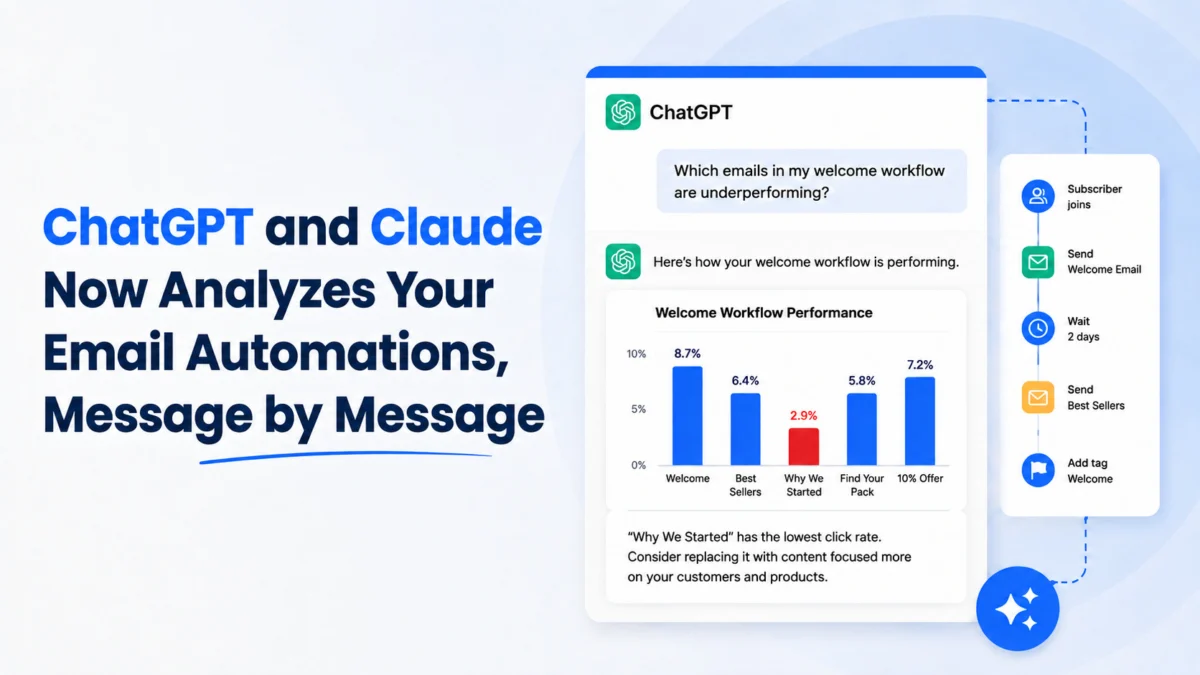
In a significant stride towards resolving these long-standing data integration woes, Validity has unveiled a groundbreaking advancement with its October 2026 release: the Validity Engage Model Context Protocol (MCP) connector. This innovative development empowers Validity Engage to establish direct connections with a wide array of Artificial Intelligence (AI) solutions, including popular platforms such as Claude, ChatGPT, Codex, and Cursor. In essence, the MCP connector acts as a universal translator, enabling Engage’s powerful intelligence to seamlessly integrate and operate within the AI environments where marketers are increasingly conducting their daily work. This means that instead of navigating complex dashboards or exporting unwieldy reports, the rich insights provided by Engage are now accessible directly alongside other connected data within a marketer’s preferred AI workspace.
The introduction of the MCP connector marks a pivotal moment in the evolution of marketing technology. It acknowledges the growing reliance on AI as a co-pilot for marketers, offering a solution that not only simplifies data access but also enriches the AI’s understanding with specialized, high-quality email intelligence. This integration is designed to dismantle the barriers that have historically prevented AI tools from accessing the full spectrum of an organization’s marketing data, thereby unlocking their full potential.
The "Ask, Don’t Dig" Revolution in Practice
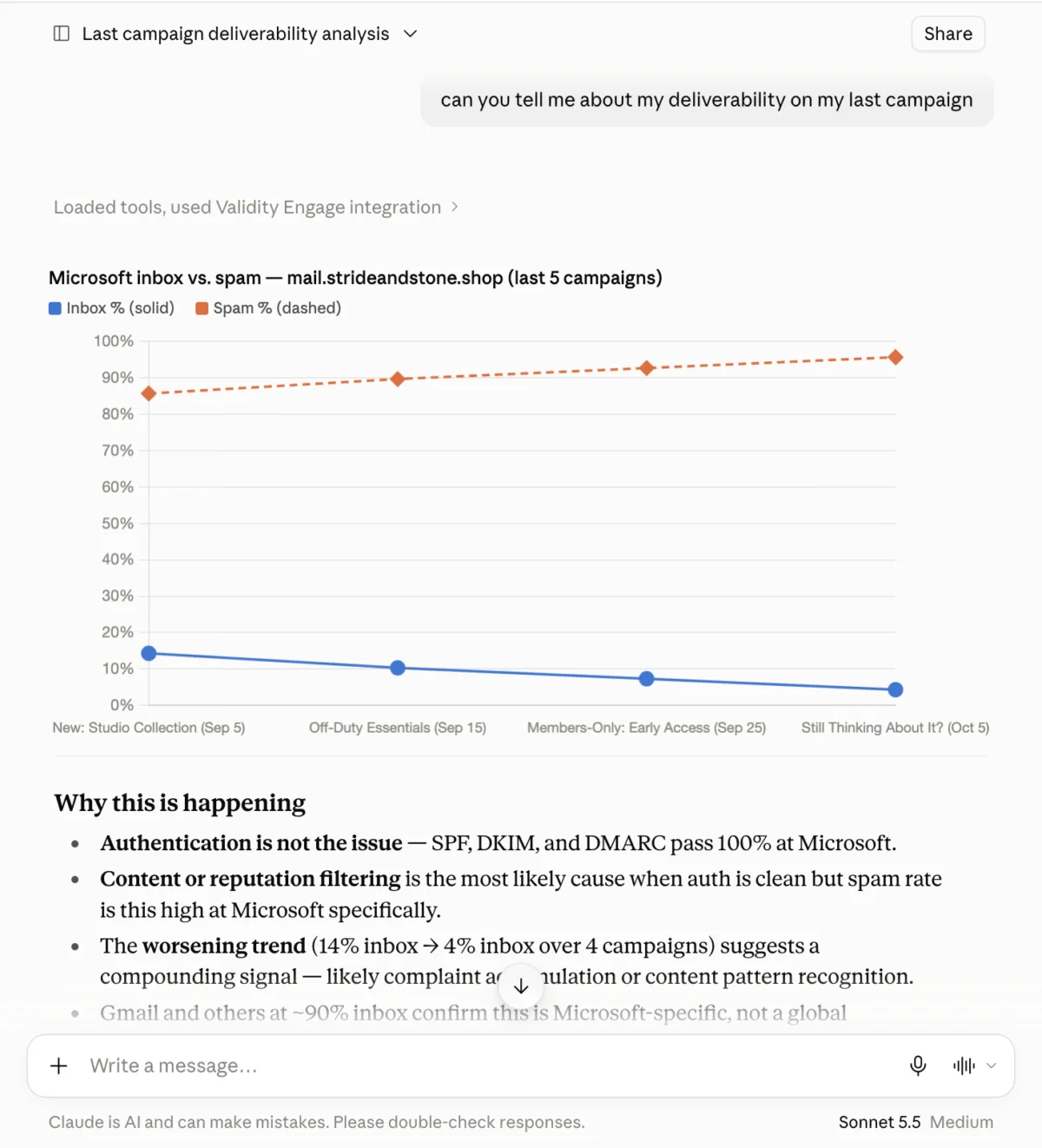
The core philosophy behind the Engage MCP connector is to transform data interaction from a laborious "digging" exercise into an intuitive "asking" process. Imagine a scenario where, instead of exporting a report from an ESP, opening a spreadsheet, and manually cross-referencing it with CRM data and deliverability metrics, a marketer can simply pose a question to their AI assistant, which is now augmented by Engage. The possibilities for immediate, contextual insights are vast:
- "What was our sender reputation score for the last quarter across all major mailbox providers, and how does it compare to the previous quarter?" Engage, via the MCP connector, can feed this proprietary data directly to the AI, providing an immediate, consolidated answer.
- "Identify segments of our audience showing declining engagement rates in the last 30 days and suggest potential reasons based on historical campaign performance and industry trends." The AI, informed by Engage’s vast dataset, can pinpoint problematic segments and offer data-driven hypotheses.
- "Compare the deliverability of our promotional emails versus transactional emails over the past month, highlighting any significant discrepancies by domain." This critical insight, often buried in separate deliverability reports, becomes instantly retrievable.
- "How does our unsubscribe rate for our latest newsletter compare to industry benchmarks for similar sectors, and what common factors contribute to higher unsubscribe rates?" Engage’s intelligence network provides the contextual benchmarks that generic AI models lack.
- "Provide a summary of our top-performing email subject lines from Q3, cross-referenced with conversion data from our CRM." This multi-source data query becomes effortless.
This "ask, don’t dig" approach drastically reduces the time spent on data retrieval and analysis, freeing up marketing teams to focus on strategic planning, creative execution, and campaign optimization. Furthermore, Engage’s intelligence can be seamlessly integrated into team communication platforms like Slack. This means sharing vital information and insights with colleagues becomes as simple as asking a question in a group chat, eliminating the need for complex setups, data exports, or lengthy email explanations. The democratization of data insights empowers every team member with the information they need, when they need it, fostering a more collaborative and data-driven culture.
Answers Forged from Billions of Data Points: The Validity Intelligence Network Advantage

The efficacy of any AI-driven insight is inextricably linked to the quality and depth of the data underpinning it. This is where Validity Engage truly distinguishes itself. Every answer generated through the Engage MCP connector is not merely a generic AI estimation but is meticulously informed by the Validity Intelligence Network. This unparalleled network represents over 25 years of proprietary email data, meticulously collected through exclusive partnerships with leading mailbox providers, sophisticated email filtering companies, and prominent security organizations worldwide.
Unlike standard AI models that might rely on publicly available data or generalized internet knowledge, the Validity Intelligence Network provides a "real signal." This proprietary data offers an unmatched contextual layer, enabling Engage to see and understand what an organization’s internal data alone never could. It means that when an AI asks about sender reputation, deliverability trends, or engagement benchmarks, it receives insights that are not speculative but grounded in a vast, specialized, and continuously updated reservoir of real-world email ecosystem dynamics. This deep, specialized intelligence bolsters the context around a marketer’s favorite AI workspace, transforming generic AI into an industry-specific expert.
The sheer scale and exclusivity of the Validity Intelligence Network offer a profound competitive advantage. It comprises:
- Global Reach: Data from millions of sending domains and billions of email interactions across diverse geographical regions.
- Proprietary Algorithms: Advanced analytics and machine learning models developed over decades to identify patterns, anomalies, and trends specific to email deliverability and engagement.
- Direct Feeds: Real-time data streams from the front lines of email delivery—mailbox providers—offering an unprecedented view into inbox placement decisions.
- Historical Depth: A quarter-century of data allows for robust trend analysis, seasonal adjustments, and the identification of long-term shifts in email behavior and infrastructure.
This comprehensive data foundation ensures that the insights provided by Engage are not just accurate but also deeply contextualized, offering predictive capabilities and strategic guidance that would be impossible with fragmented internal data or generalized AI models.
Addressing Blind Spots: From Reactive to Proactive Insight
Every enterprise-scale email program, regardless of its sophistication, inevitably develops blind spots. This is not a criticism but an inherent challenge of managing complex operations with vast amounts of data. The critical differentiator lies not in whether these blind spots exist, but in when and how they are discovered. Traditionally, such issues might surface weeks or months later in a monthly performance report, by which time significant damage—in terms of deliverability, engagement, or revenue—may have already occurred.
The Engage MCP connector fundamentally shifts this paradigm, enabling marketers to catch these blind spots "ASAP." By providing real-time access to integrated data and external intelligence through intuitive AI queries, marketers can identify emerging issues proactively. A sudden dip in sender reputation for a specific domain, an unexpected spike in spam complaints, or a change in engagement patterns can be detected and investigated almost instantaneously. This agility allows for swift corrective action, minimizing negative impacts and preserving the health and effectiveness of the email program.
Broader Impact and Strategic Implications
The introduction of the Validity Engage MCP connector has far-reaching implications for the marketing industry:
- Enhanced Marketing Efficiency: By automating data aggregation and analysis, marketing teams can reclaim hundreds of hours per month, reallocating resources to more strategic and creative endeavors.
- Superior Decision-Making: Access to holistic, real-time insights—combining internal data with Validity’s proprietary intelligence—empowers marketers to make more informed, data-driven decisions that directly impact campaign performance and business outcomes.
- Optimized Email Deliverability and ROI: Proactive identification and resolution of deliverability issues safeguard sender reputation, ensuring emails reach the inbox and drive higher engagement and conversions, thereby maximizing ROI from email marketing efforts.
- Democratization of Data: The "ask, don’t dig" approach makes complex data insights accessible to a broader range of team members, fostering a culture of data literacy and empowerment without requiring specialized technical skills.
- Future-Proofing Marketing Operations: As AI continues to evolve, the ability to seamlessly integrate specialized intelligence like Validity Engage’s into leading AI platforms positions organizations to adapt quickly and leverage the latest technological advancements.
- Competitive Advantage: Businesses that adopt such integrated solutions will gain a significant edge, moving faster, understanding their audience better, and executing more effectively than competitors still wrestling with fragmented data.
"We recognized a fundamental disconnect between the vast amounts of data marketers possess and their ability to extract actionable insights efficiently, especially with the rise of AI," stated Mark Smith, CEO of Validity. "The Engage MCP connector is our answer to this challenge. It’s about empowering marketers to spend less time on data logistics and more time on strategy and creativity, by bringing our unparalleled email intelligence directly into their everyday AI workflows. This is not just an integration; it’s a strategic partnership between specialized data and artificial intelligence, designed to illuminate blind spots and drive unprecedented program performance."
Early adopters have already lauded the transformative impact. "Before Engage’s MCP connector, analyzing our email program performance felt like piecing together a jigsaw puzzle with half the pieces missing and the other half scattered across different rooms," commented Sarah Jenkins, Head of Digital Marketing at a global e-commerce firm. "Now, I can simply ask Claude a question about our sender reputation or segment engagement, and get a comprehensive answer informed by both our internal CRM data and Validity’s industry-leading intelligence. It’s like having an expert consultant on call 24/7, with zero setup time. This has drastically improved our responsiveness and the quality of our campaign optimizations."
The power of Validity Engage lies in its ability to remove the pervasive data silos that plague modern organizations, offering a seamless, intuitive, and highly intelligent "teammate" with virtually no technical setup required. This transformative capability redefines how marketing teams interact with their data, enabling a shift from reactive problem-solving to proactive strategic management.
Ready to experience this paradigm shift in marketing data intelligence? [Get started with Validity Engage.]


 Dwi Wanna
 Basiran