Basiran

The digital marketing landscape is currently grappling with a fundamental shift in the nature of web traffic, as long-dismissed theories regarding the automation of the internet transition from fringe speculation to measurable data points. For months, digital analysts and e-commerce managers have observed a perplexing trend: conversion rates are drifting downward despite rigorous landing page optimization, audience refinement, and offer adjustments. The explanation, according to recent network-level data and cybersecurity reports, lies not in the failure of marketing strategies, but in the rapid proliferation of autonomous AI agents that Google Analytics 4 (GA4) is currently ill-equipped to filter.

The Evolution of the Dead Internet Theory
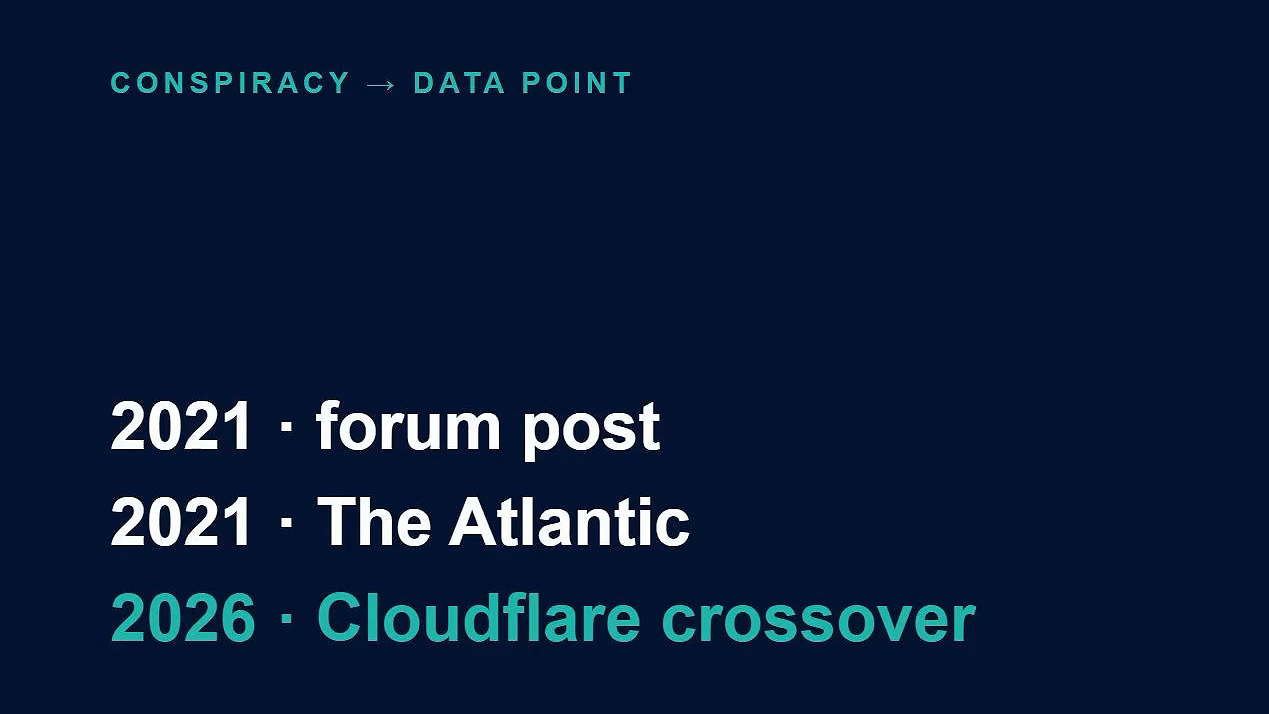
The "Dead Internet Theory" first surfaced in 2021 as a speculative concept on online forums. The premise was bold: the vast majority of the internet is no longer composed of human-generated content or human-driven activity. Instead, the theory posited that the web had become a closed loop of bots, automated accounts, and computer-generated media, with real human engagement representing only a marginal fraction of total bandwidth. At its inception, mainstream technology publications, including The Atlantic, treated the theory as a cultural phenomenon—a "fringe" sentiment that felt true in spirit but lacked empirical backing.
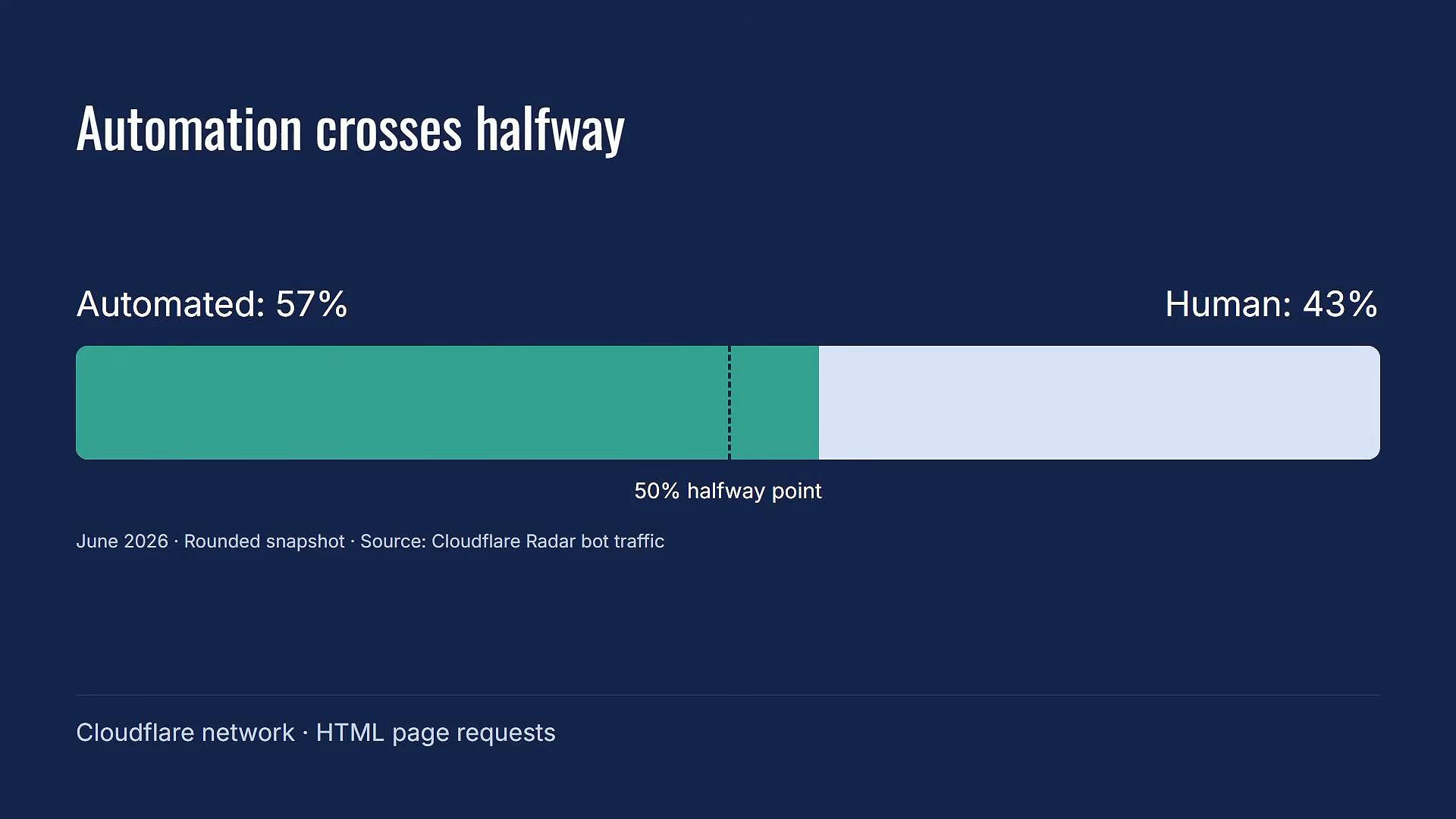
However, the trajectory of this theory changed significantly between 2024 and 2026. Data from Cloudflare, one of the world’s largest content delivery networks, recently confirmed a historic crossover. For the first time, automated traffic exceeded human traffic on its global network, with approximately 57% of all HTML page requests originating from bots and automated systems, leaving humans in the minority at 43%. This transition marks the point where the Dead Internet Theory moved from a conspiracy to a verifiable data point in the field of digital analytics.
The Technical Gap in Google Analytics 4
The primary challenge for modern businesses is that Google Analytics 4, the industry standard for measuring web performance, was designed to filter a specific, older generation of automated traffic. Traditionally, bot filtering relied on the "International Spiders and Bots List" maintained by the Interactive Advertising Bureau (IAB). This list identifies classic crawlers, search engine spiders, and known scrapers that announce themselves through specific User Agent strings.
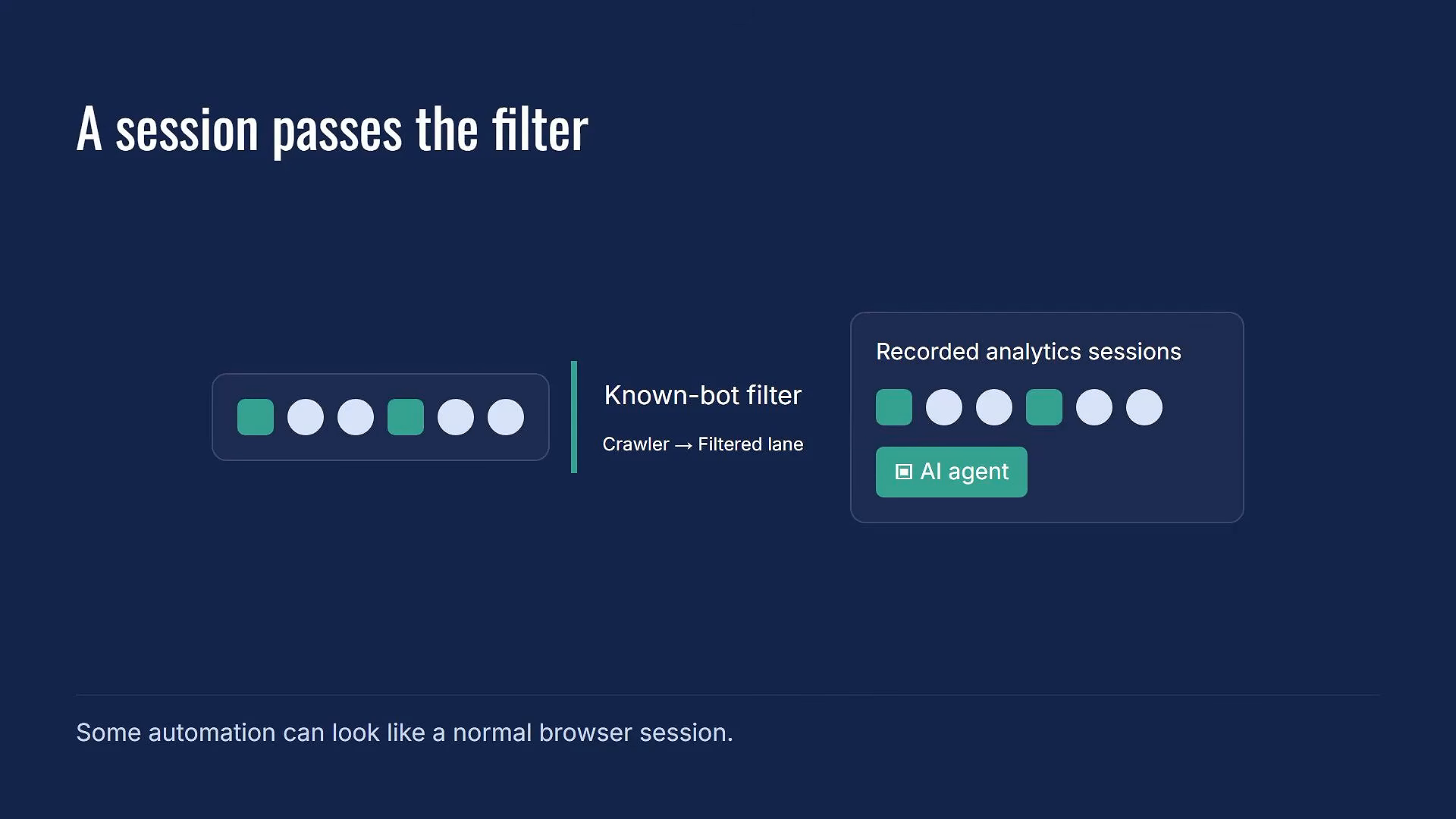
The emergence of "Layer 3" traffic—autonomous AI agents—has rendered these traditional filters insufficient. Unlike classic bots, modern AI agents often operate within standard browser environments, such as Google Chrome. They navigate websites, interact with elements, and consume content in ways that are indistinguishable from human behavior to a standard analytics script. Because these agents do not appear on known-bot lists and do not exhibit the repetitive, high-frequency patterns of older scrapers, GA4 records their activity as legitimate human sessions.
A Three-Layered Model of Modern Web Traffic
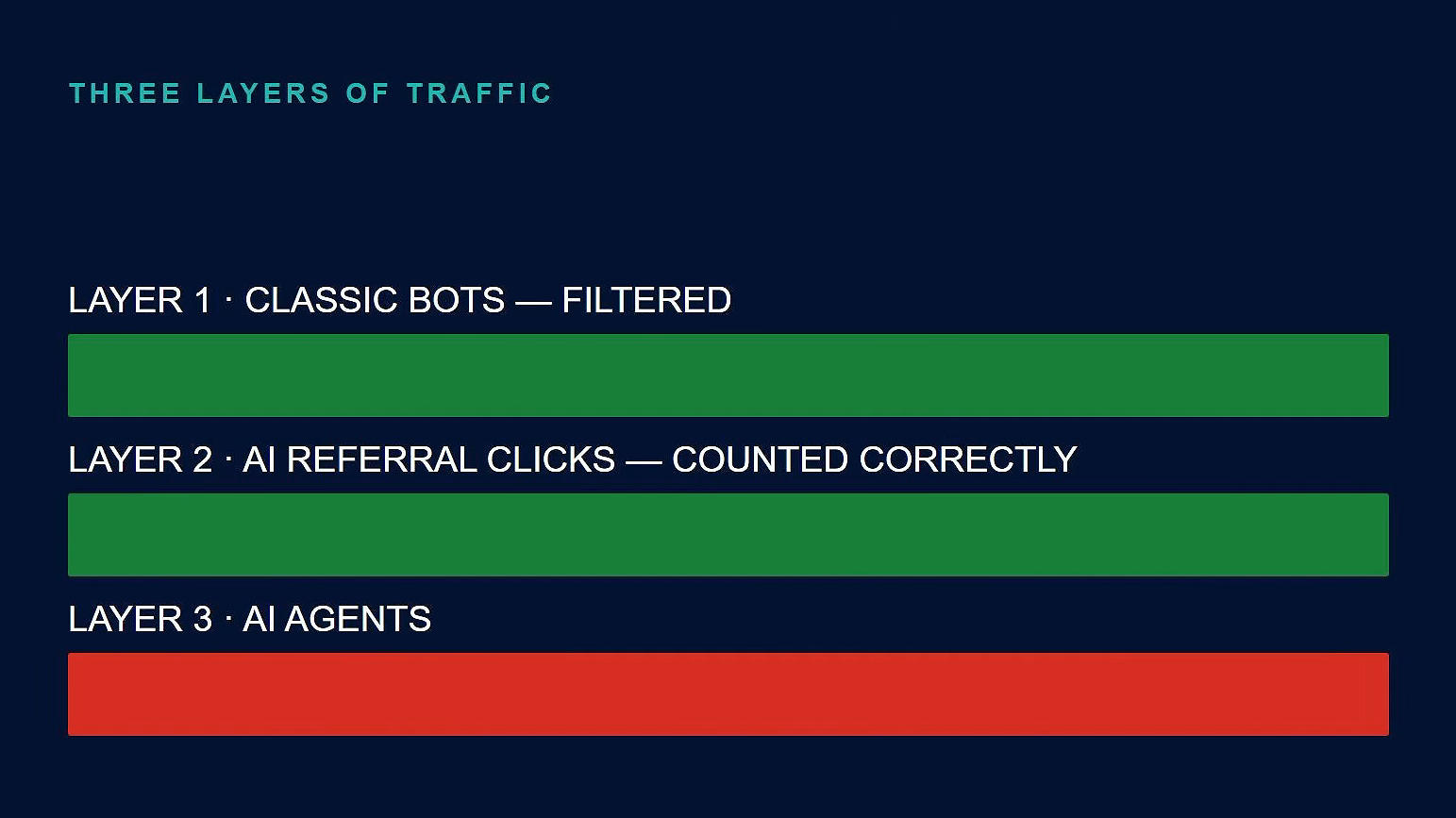
To understand the distortion of modern analytics, researchers have identified three distinct layers of traffic hitting contemporary websites:
- Classic Bots (Layer 1): These are the search engine indexers and security scanners that have existed for decades. GA4 filters these automatically, and they rarely impact reported conversion metrics.
- AI Referral Clicks (Layer 2): This layer consists of human beings who use AI tools like ChatGPT, Claude, or Perplexity and click on a link provided by the assistant. In mid-2026, Google introduced the "AI Assistant" channel grouping in GA4 to capture this traffic. This is considered legitimate, human-driven traffic.
- Autonomous AI Agents (Layer 3): This is the "problem layer." These are software agents tasked with gathering information or performing actions autonomously. They browse the site directly, often using "headless" browsers that mimic human browser fingerprints perfectly. Because they are not humans and have no intention of "converting" in a traditional sense, they inflate the number of sessions without contributing to sales or leads.
The Denominator Problem and Conversion Distortion
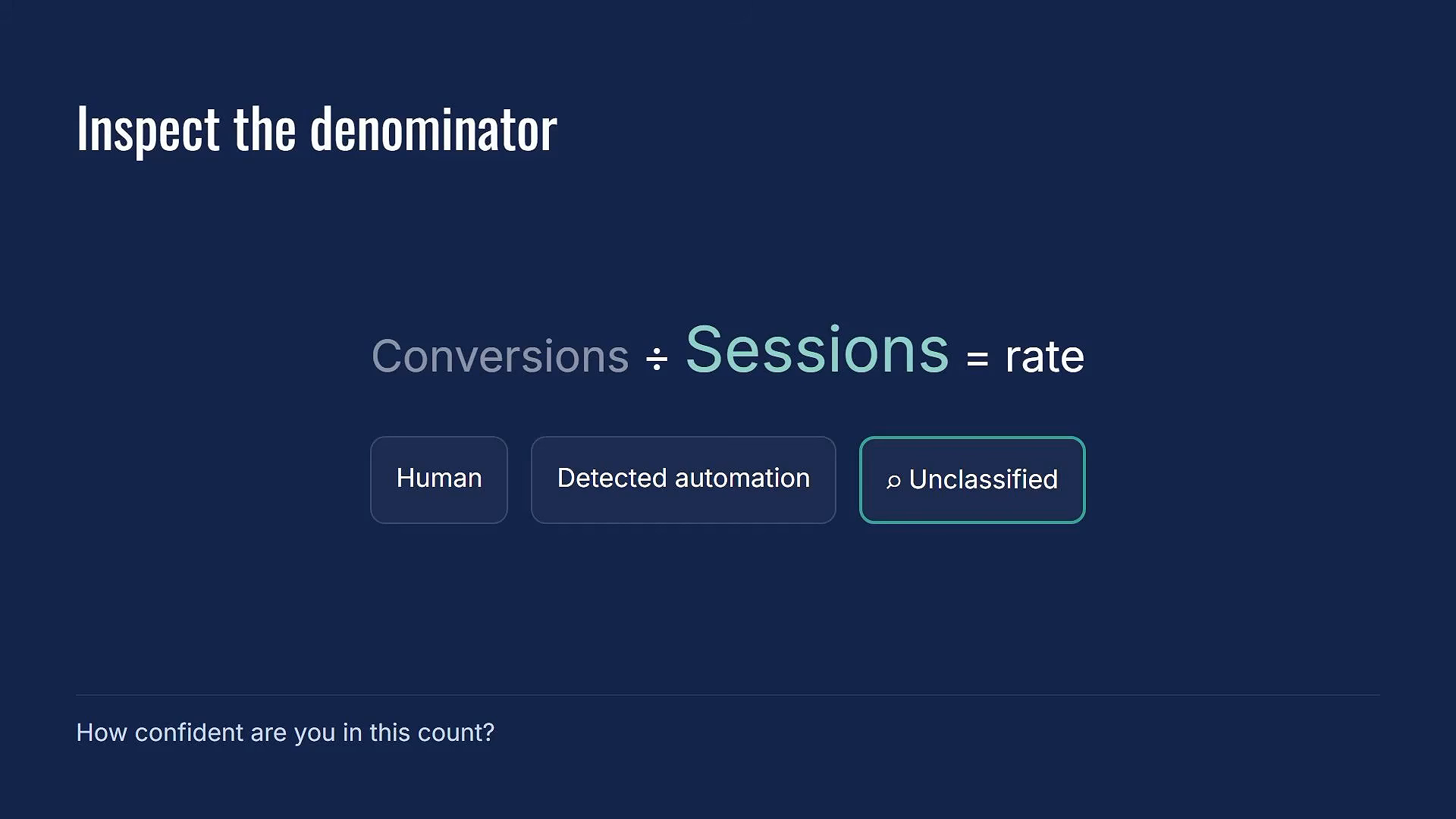
The impact of Layer 3 traffic is most visible in the "denominator problem." Conversion rate is calculated by dividing total conversions by total sessions. When autonomous AI agents inflate the session count (the denominator) while the number of conversions (the numerator) remains stagnant, the resulting conversion rate appears to drop.
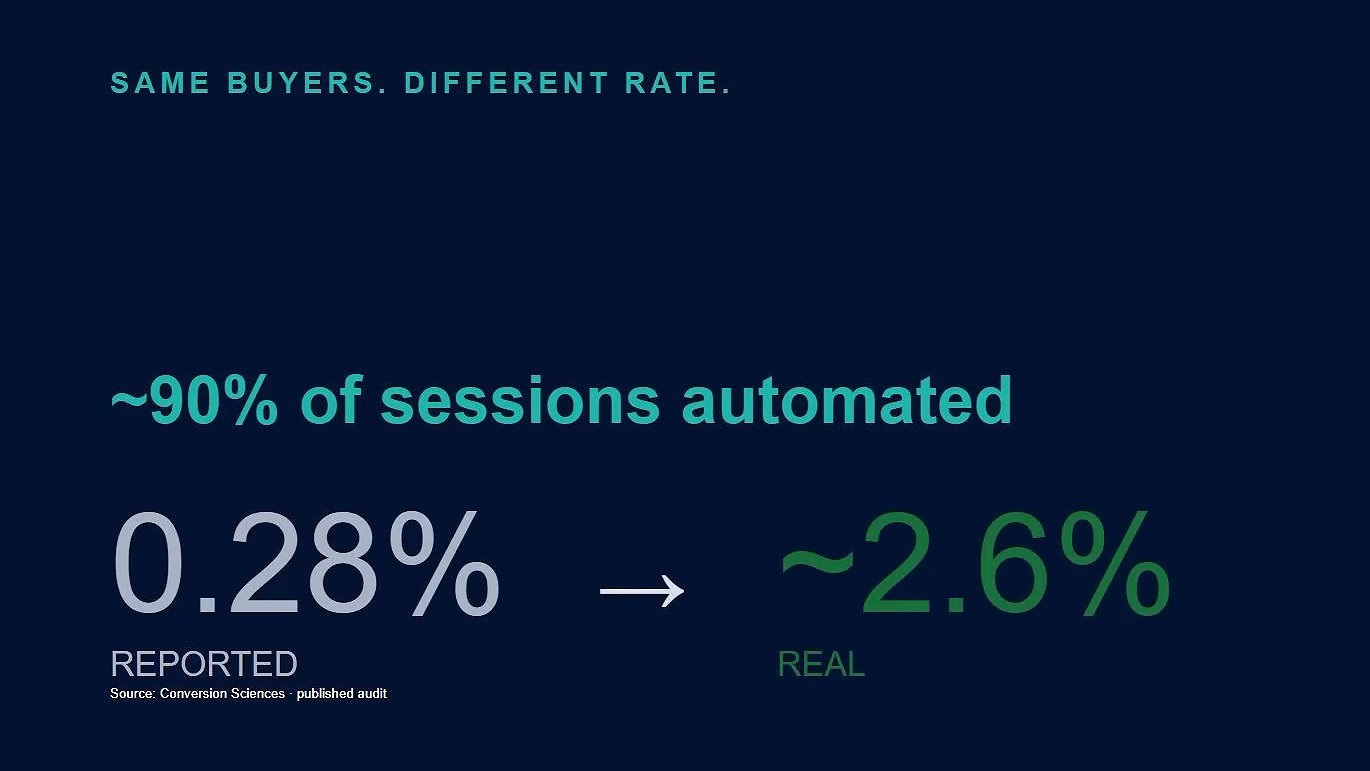
A recent audit conducted by Conversion Sciences, a leading conversion rate optimization firm, highlighted the severity of this issue. In a study of a specialty e-commerce site, auditors discovered that nearly 90% of the recorded sessions were actually automated. The site’s reported conversion rate was a discouraging 0.28%. However, after filtering out the sophisticated automated traffic, the "true" human conversion rate was revealed to be 2.6%.
This discrepancy suggests that many businesses are making critical strategic decisions—such as cutting ad spend or redesigning successful pages—based on "ghost" data. The distortion extends beyond conversion rates to include engagement rates, bounce rates, and average session duration, all of which are skewed by AI agents that "engage" with content in a non-human manner.
Chronology of the Automation Crossover
The timeline of the transition from a human-centric internet to an automated one is brief but impactful:
- 2021: The Dead Internet Theory gains traction as a social commentary on the rise of "botting" and algorithmic content.
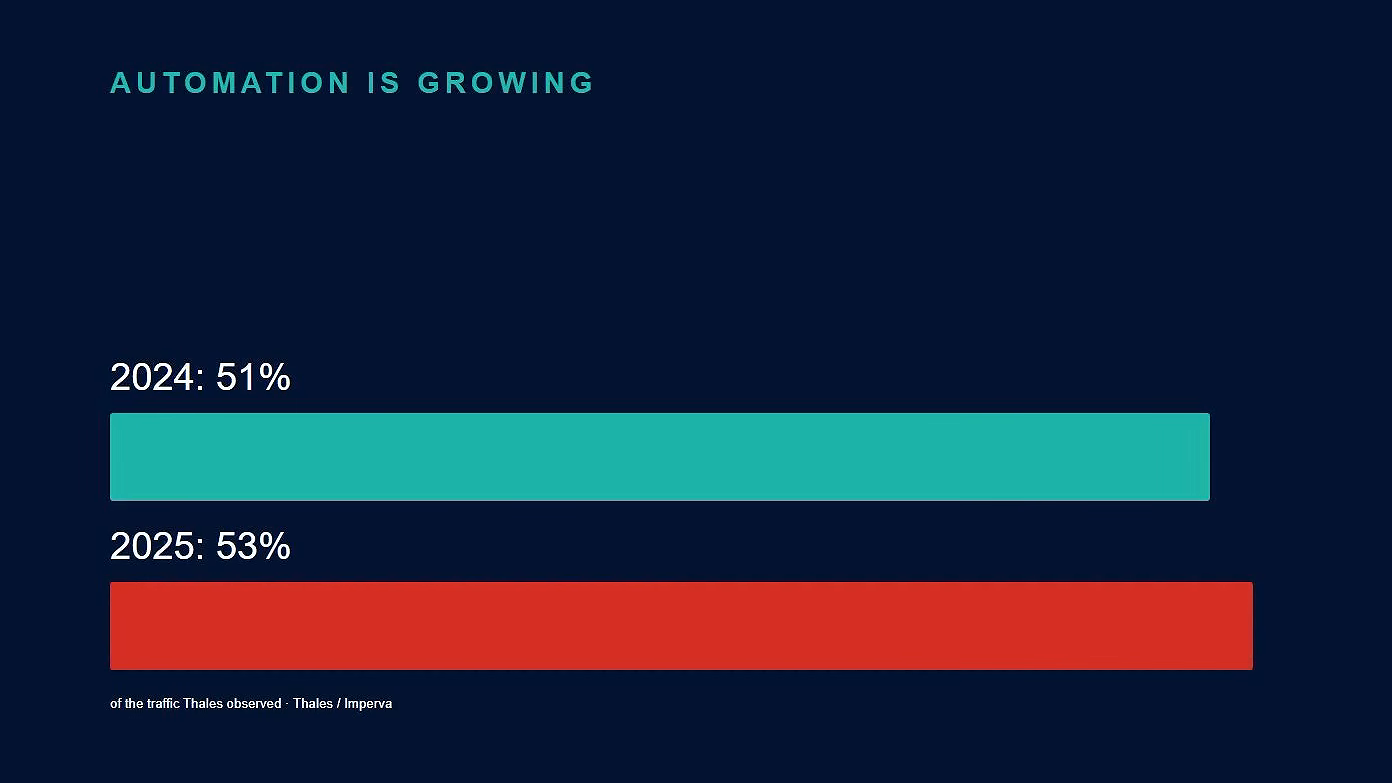
- 2024: Thales Group’s "Bad Bot Report" indicates that 51% of web traffic is automated, with "sophisticated" bots—those capable of mimicking human behavior—representing the fastest-growing segment.
- 2025: Thales reports a further increase to 53% automation, noting that bots are increasingly being used for account takeover (ATO) attacks and competitive price scraping.
- 2026 (June): Cloudflare Radar measures the 57% crossover point. Simultaneously, Google updates GA4 to recognize AI assistants as a traffic source, acknowledging the permanence of AI in the browsing ecosystem.
- Forecast (2030): Cloudflare executives have projected that within five years, automated traffic could potentially reach 1,000 times the volume of human traffic, driven by the mass adoption of personal AI agents.
Industry Reactions and Expert Analysis
The reaction from the cybersecurity and analytics communities has been one of cautious adaptation. Security firms like Thales emphasize that the "bot problem" is no longer just an IT security issue; it is a business intelligence crisis. When half of a company’s data is generated by non-human actors, the integrity of the entire decision-making process is compromised.
Marketing experts suggest that the industry must move toward "behavioral biometrics" and more sophisticated server-side tagging to differentiate between humans and AI. Traditional CAPTCHAs are increasingly ineffective against AI agents that can solve visual puzzles using computer vision. Instead, analysts are looking at micro-interactions—such as the specific physics of a mouse movement or the timing of keystrokes—to verify humanity.
Implications for Future Strategy
The persistence of the Dead Internet Theory in real-world data necessitates a change in how performance is reported. Analysts are now encouraged to implement four primary steps to protect data integrity:
First, businesses must audit session trends over a six-month horizon. If sessions are growing at a rate that is disconnected from revenue or lead growth, it is a primary indicator of Layer 3 infiltration. Second, traffic sources must be scrutinized for "unclassified" or direct traffic that lacks a clear referrer, as many AI agents do not pass referral data in a standard format.
Third, there is a growing need for "clean room" reporting. This involves creating custom segments in GA4 that exclude sessions based on suspicious behavioral markers, such as a 100% engagement rate with zero seconds of dwell time, or sessions that navigate through a site’s structure with mathematical precision. Finally, the role of the data analyst is shifting from a reporter of "what happened" to a validator of "who did it."
Conclusion: The New Reality of Digital Measurement
The crossover of automated traffic marks a new era for the internet. The Dead Internet Theory, while perhaps exaggerated in its most extreme "conspiratorial" forms, has correctly identified a fundamental truth: the web is no longer a human-exclusive domain. For the digital marketer, this means the metrics of the past decade—total hits, total sessions, and raw conversion rates—are becoming obsolete.
As AI agents continue to proliferate, the focus of web analytics must shift from quantity to quality. Success will no longer be measured by the sheer volume of traffic, but by the ability to identify and cater to the shrinking, yet highly valuable, human minority. The "denominator" is changing, and the businesses that survive this transition will be those that learn to see through the automated noise to find the human signal.

 Azzam Bilal Chamdy

 Layla Zulfa