Asro
The traditional production cycle for a product catalog, often spanning a laborious six weeks, is increasingly becoming a relic of the past, failing to meet the dynamic demands of today’s B2B e-commerce landscape. This extended timeframe, once considered standard, now frequently results in catalogs that are obsolete the moment they reach a customer’s hands. The true cost, however, lies not just in the wasted production time but in the missed sales opportunities and the operational inefficiencies that plague businesses clinging to manual catalog creation processes. A deep dive into enterprise catalog programs reveals two persistent pressures: ever-expanding product ranges and constantly fluctuating prices, forces that show no signs of abating.
The extended six-week production cycle is not a reflection of complex writing or content creation. Instead, it is largely consumed by the painstaking manual process of placing individual products onto pages and the subsequent, disruptive reformatting that occurs every time a price or product detail changes. This manual labor is compounded by a fundamental flaw: product information is rarely centralized. Instead, it is fragmented across disparate systems – a spreadsheet here, an order management system there, and crucial updates lost in email threads. The same product data is then painstakingly re-entered into a catalog, a specification sheet, and a price list, creating a cascade of potential errors where updating one document does not automatically update the others.
The output of this arduous process is a static digital file that begins to lose its relevance immediately upon distribution. Businesses lack the ability to track who has accessed the catalog, leading to uncertainty about engagement. Orders, when they do arrive, often come via email, requiring manual re-entry of product codes into order systems, introducing further delays and potential inaccuracies. The circulation of outdated catalog versions is a common and costly problem, with teams sometimes discovering and using files that are two or three years old for customer quotations. The hidden expenses of this outdated approach are significant: the valuable editions that never see the light of day due to prohibitive production times, the lost sales from customers referencing outdated pricing, and the inability to trace the origin of orders, hindering valuable sales analysis.
The Shift to Dynamic, Data-Driven Catalogs
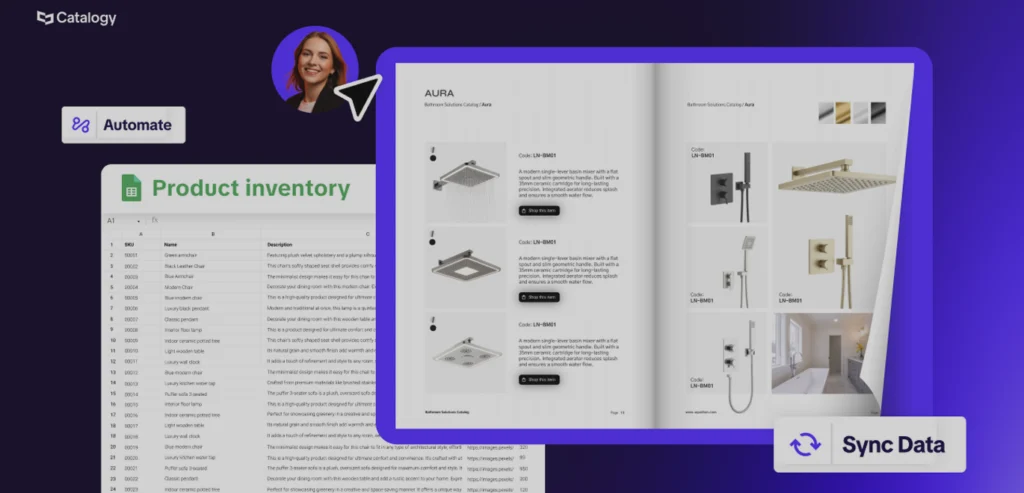
The solution to this pervasive problem lies in a fundamental shift from static document creation to dynamic, data-driven catalog generation. This transformation begins with a template, not as a document to be copied and modified, but as a flexible page design. This design incorporates designated areas for product images, names, codes, descriptions, and prices, coupled with sophisticated rules that allow pages to automatically reflow as product ranges expand. Once this template is established, every product can seamlessly integrate into it.
The crucial next step involves connecting this dynamic template to the existing product data sources. This can range from simple spreadsheets to more robust product information management (PIM) systems or enterprise resource planning (ERP) solutions. When a price update occurs, it is made once in the source data. A simple synchronization process then automatically refreshes every catalog generated from that data feed, ensuring consistency and accuracy across all versions. This automated workflow fundamentally alters the catalog creation and distribution process, leading to four key improvements:
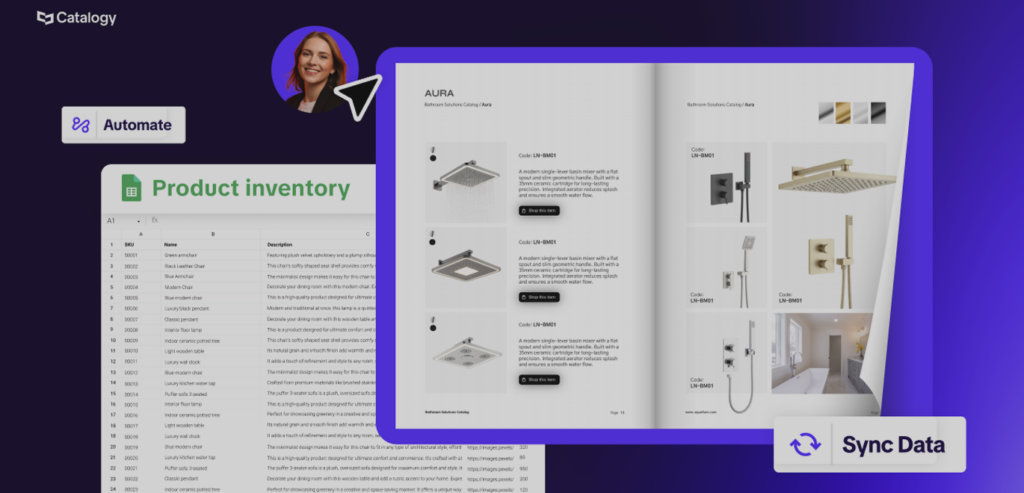
- Elimination of Manual Layout and Reformatting: The time-consuming task of manually arranging products on pages and adjusting layouts for every change is eliminated. The system automatically formats and positions products according to the predefined template and rules.
- Real-Time Data Synchronization: Product information, including pricing, descriptions, and availability, is pulled directly from the master data source. Any updates made to this source are reflected instantaneously in the catalog.
- Enhanced Trackability and Analytics: Digital catalogs generated through these platforms offer robust analytics. Businesses can track views, downloads, time spent on pages, and even product interactions, providing invaluable insights into customer behavior and product interest.
- Significant Reduction in Production Time and Cost: The automation drastically cuts down the time and resources required for catalog production, freeing up teams to focus on more strategic initiatives.
Personalized Catalogs: The Next Frontier in B2B Engagement
The challenge of "15 customers holding 15 outdated versions" is not solved by simply creating one perfect, up-to-date catalog for everyone. Instead, the most effective solution is the creation of 15 (or more) dynamic, perpetually current catalogs, each tailored to the specific needs of an individual customer. This is achieved through personalized catalog generation.
Sales representatives can leverage the master product feed as a starting point. By filtering this comprehensive feed based on a particular customer’s purchasing history, preferences, or industry, sales reps can curate a selection of relevant products. The system then generates a branded catalog in minutes, complete with the customer’s own logo, and distributes it as a single, shareable link. This process bypasses the need for designers or extensive marketing team involvement. Crucially, as prices change, these personalized catalogs automatically refresh, while the curated product selection for each customer remains precisely as the sales rep intended. This level of personalization not only enhances customer experience but also streamlines the sales process, making it more efficient and impactful.
Case Studies: Automation Across Diverse Industries
The transformative impact of adopting digital catalog automation is evident across various industries. Analysis of companies transitioning from manual to automated catalog production reveals a dramatic shift in publishing frequency and lead times. Historically, businesses working with manual processes reported an average of six weeks per catalog edition, publishing only three to four times annually. In stark contrast, companies leveraging data-driven catalog generation platforms now ship new editions in under a week and publish between 12 to 16 catalogs per year.
Hardware and Tools Distributor in Latin America: This distributor, managing an inventory of over 10,000 stock-keeping units (SKUs), previously relied on a manually crafted 181-page catalog. The transition to an automated system has resulted in the generation of 48 dynamic catalogs, each covering specific product sets totaling 3,957 SKUs. These catalogs are not only consistently up-to-date but are actively generating revenue.
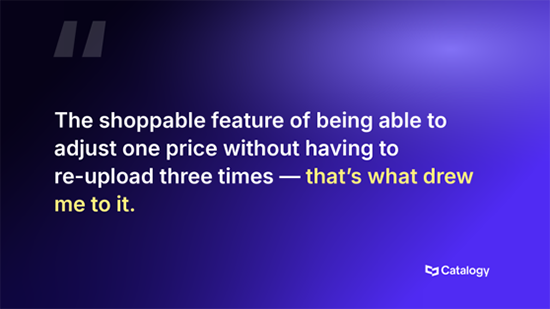
Wholesale Importer of Scandinavian Home Goods (Minnesota): A five-person operation supplying hundreds of U.S. retailers faced constant challenges with price fluctuations in their 1,500-SKU product range, necessitating a full catalog rebuild every few weeks. The owner highlighted the "shoppable feature of being able to adjust one price without having to re-upload three times" as the primary driver for adopting a new solution. This capability significantly reduced the operational burden and ensured pricing accuracy for their retail partners.
Australian Pottery Wholesaler: This company previously spent five to ten days per supplier manually rebuilding hundreds of catalog pages, often receiving supplier information in PDF format. By implementing a design-driven automated generation process, the production time for 900 products has been reduced to under 24 hours, streamlining their supplier information management.
International Distributor (20 Countries): In one specific market where a catalog program was previously non-existent, this distributor managed a trade platform featuring 4,000 to 5,000 products across 19 brands. The implementation of automated catalog generation has led to the creation of 32 dynamic catalogs, updated monthly without any manual page editing, according to the e-merchandising specialist. This has provided a consistent and up-to-date product offering across a diverse international presence.
These examples underscore a pivotal change: the focus has shifted from the time it takes to build a catalog to the number of orders it generates and the ability to track those orders effectively.
The Broader Implications: From Static Document to Sales Channel
The inertia of maintaining a six-week production cycle is often rooted in the perceived normalcy of existing processes. Many teams operate with product data housed in spreadsheets or legacy order systems, accustomed to the limitations of what that data can achieve. However, the modern business imperative is no longer about the duration of catalog construction but about its direct contribution to revenue and sales visibility.
The implications of this transition are far-reaching. Businesses that embrace dynamic catalog creation gain a competitive edge by offering a superior customer experience characterized by accuracy, personalization, and ease of access. The ability to provide real-time pricing and product information reduces customer friction and builds trust. Furthermore, the rich analytics provided by digital catalogs offer unprecedented insights into customer preferences and purchasing behavior, enabling more targeted marketing efforts and sales strategies.
The evolution of the product catalog from a static marketing collateral to an interactive sales channel is a critical development for businesses looking to thrive in the digital economy. Companies that fail to adapt risk being left behind, struggling with outdated information, inefficient processes, and missed revenue opportunities. The future of B2B commerce lies in agile, data-driven solutions that empower sales teams and delight customers with relevant, up-to-date product information, seamlessly integrated into the online buying journey.
About the Author
Bogdan Mile, Chief Product Officer at Flipsnack, brings 14 years of experience in digital publishing, with a specialized focus on enterprise solutions. He leads Catalogy, Flipsnack’s brand dedicated to product catalog solutions. Since joining Flipsnack in 2018, Mile has worked directly with catalog, merchandising, and sales operations teams, mapping their internal processes and developing automation to replace manual workflows. He is a recognized expert in optimizing catalog production and ordering systems for B2B businesses. He can be connected with on LinkedIn.


 Nana Wu