Evan Lee Salim

The dynamic world of social media marketing presents businesses with a critical choice: whether to invest in organic content strategies, paid advertising, or, more commonly, a sophisticated blend of both. Understanding the fundamental differences, benefits, and drawbacks of organic and paid social media is paramount for crafting effective digital campaigns that drive brand growth, foster engagement, and deliver measurable returns. This distinction lies at the heart of contemporary digital marketing, influencing budget allocation, content creation, and audience interaction across platforms.
Defining the Pillars of Social Media Engagement
Organic social media refers to any free content a person or brand publishes on social platforms to connect with their audience. This encompasses a wide array of formats, including short-form videos like Reels and TikToks, ephemeral Stories, community replies, LinkedIn updates, and long-form YouTube videos. The hallmark of organic content is its unpaid nature; it relies on algorithmic distribution and user engagement to gain visibility, without direct financial promotion.
Key activities within an organic social media strategy typically include:

- Creating and sharing diverse content types (images, videos, text posts).
- Engaging directly with followers through comments, messages, and polls.
- Participating in relevant community discussions and trending topics.
- Sharing user-generated content and advocating for customer voices.
- Optimizing profiles and content for search and discoverability within platforms.
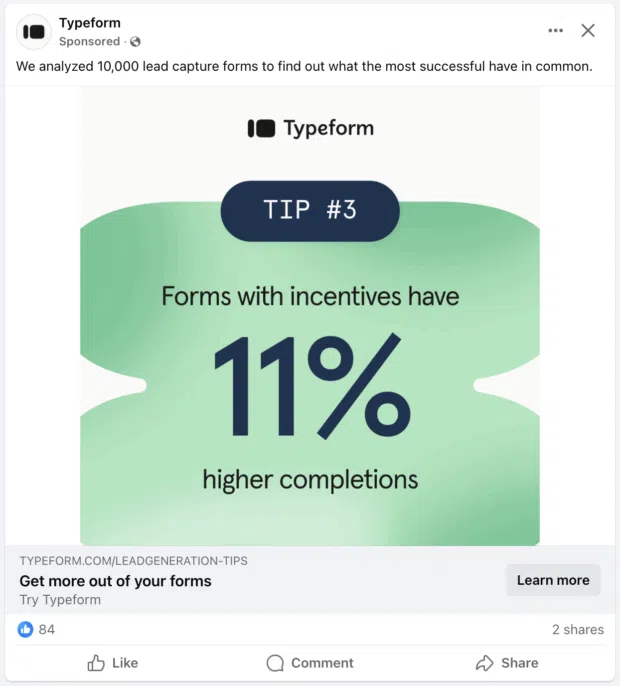
Conversely, paid social media involves content that a brand pays to promote. This category includes boosted posts, feed and Stories advertisements, sponsored content collaborations, and paid influencer partnerships. Unlike organic reach, which is governed by complex and often opaque algorithms, paid reach is directly purchased. Brands dictate the budget, target audience, and frequency of ad appearance, ensuring their message reaches specific demographics and psychographics.
Examples of paid social media activities include:
- Running targeted ad campaigns for specific products or services.
- Boosting high-performing organic posts to extend their reach.
- Collaborating with influencers for sponsored content.
- Implementing retargeting campaigns to re-engage previous website visitors.
- Utilizing lead generation forms integrated into social ads.
The Evolution of Social Media Marketing
The landscape of social media marketing has undergone a significant transformation since the early 2010s. Initially, platforms like Facebook and Twitter offered relatively uninhibited organic reach, allowing brands to connect with large portions of their follower base without substantial investment. Content quality and relevance were key drivers of visibility. However, as social media platforms matured and became increasingly saturated with brand content, their business models evolved. Algorithms were introduced and refined to prioritize user experience and, crucially, to monetize platform usage through advertising.
This shift has led to a gradual decline in organic reach, making it more challenging for brands to connect with their entire audience without some form of paid promotion. The year 2016 marked a pivotal point when Facebook, for instance, openly acknowledged the diminishing organic reach for Pages, effectively signaling a necessity for brands to consider paid options to maintain visibility. This trend has since permeated almost all major social platforms, pushing marketers towards a hybrid strategy where organic content builds foundational relationships and paid content amplifies reach and accelerates specific objectives. EMARKETER’s December 2025 forecast anticipates US social media ad spending to grow by 15.6% in 2026, reaching $124.88 billion, with a global projection of US$338.75 billion in the same year, underscoring the growing reliance on paid channels.

The Strategic Advantages of Organic Social Media
Organic social media, despite its declining reach, remains the cornerstone of a robust digital marketing strategy, primarily serving to build authentic relationships and long-term brand equity.
Fostering Trust and Authority
Organic content cultivates trust by offering value without the overt pressure of a sales pitch. It allows brands to:
- Share valuable insights, educational content, or entertainment.
- Showcase company culture and behind-the-scenes glimpses.
- Demonstrate expertise and thought leadership.
- Tell compelling brand stories that resonate emotionally.
As Peter Murphy Lewis, Fractional CMO at Strategic Pete, aptly states, "Organic is where your voice, values, and vibe come through. It’s where your audience says, ‘I like how this brand thinks.’ It creates that layer of trust." This consistent, non-promotional presence helps transform a brand from a mere transaction into a trusted entity, encouraging repeat engagement and loyalty.
Cost-Effective Presence and Compounding Returns
One of the most appealing aspects of organic social media is its minimal direct cost. Any individual or business can establish a social media presence and begin posting using readily available free tools, without upfront advertising expenditure. While it demands significant time and consistent effort, the payoff is cumulative. Organic content can:

- Generate inbound traffic to a website or other digital assets.
- Improve search engine visibility through social signals.
- Provide valuable market research through audience interactions.
- Create an evergreen content library that continues to attract engagement over time.
Brian Futral, Founder and Head of Content at The Marketing Heaven, highlights this long-term value, noting, "Organic social isn’t just cheap, it’s sticky. That’s the long game. When audiences see a brand consistently showing up on their terms, with a real voice, and without an aggressive CTA, it builds something money can’t buy: emotional residue." This "emotional residue" is the foundation of brand advocacy and lasting customer relationships.
Supporting Community Engagement and Loyalty
Organic channels excel at building an engaged and loyal community. Through direct interactions such as comments, replies, and direct messages, brands can:
- Address customer inquiries and provide support.
- Gather feedback and understand audience preferences.
- Create a sense of belonging among followers.
- Celebrate customer successes and user-generated content.
Shanté Gorman, Founder at Sugarpunch Marketing, observes, "I’ve found that nothing beats organic social for building real connections with your audience. There’s something special about the trust and loyalty that develops when people engage with content that isn’t obviously promotional." These authentic interactions are vital for nurturing a community that can evolve into brand advocates.
The Inherent Challenges of Organic Social Media
Despite its foundational importance, organic social media faces significant hurdles that necessitate a balanced approach with paid strategies.
Protracted Growth Trajectories
Organic social media is inherently slow to scale. It demands unwavering consistency, repetitive value delivery, and a long-term commitment to audience cultivation. Results manifest gradually rather than instantaneously. Futral explains, "Organic growth takes forever to gain momentum. You can post five times a week, craft perfect captions, ride trends, even sprinkle memes, and still, reach crawls at a snail’s pace." This slow burn requires patience and a sustained effort, but the cumulative effect eventually accelerates growth.
Algorithmic Limitations and Diminished Reach
A major constraint of organic social media is the limited reach imposed by platform algorithms. Most social networks prioritize paid content and personal connections, meaning organic posts often reach only a small fraction of a brand’s existing followers. This results in:
- A lower overall impression count for posts.
- Reduced visibility even to loyal followers.
- Increased difficulty in reaching new audiences purely organically.
- A need for exceptionally engaging content to break through the algorithmic noise.
This reality can be frustrating for marketers, yet it is an intrinsic aspect of how these platforms operate. This is precisely where paid social media can act as a force multiplier, boosting well-performing organic content to achieve the reach it merits.
The Potent Advantages of Paid Social Media
Paid social media serves as a powerful accelerator for marketing objectives, offering immediate reach, precision targeting, and quantifiable results that organic efforts often cannot achieve alone.
Advanced Audience Targeting Capabilities
Paid social media provides brands with unparalleled control over who sees their content. Advertisers can precisely target audiences based on:
- Demographics: Age, gender, income, education.
- Geography: Specific countries, regions, cities, or even local neighborhoods.
- Interests: Hobbies, lifestyle choices, pages followed.
- Behaviors: Past purchase history, online activity, device usage.
- Custom Audiences: Uploading customer lists or targeting lookalike audiences.
Moreover, retargeting ads allow businesses to re-engage potential customers who have previously interacted with their website or content, moving them further down the sales funnel. Gorman emphasizes, "The targeting capabilities of paid social are honestly why we use it so much. We could reach 35-year-old dog owners in Seattle who like camping and have recently bought outdoor gear. This level of precision helps ensure you’re not wasting resources on people who aren’t interested in what you offer."
Clear and Immediate Return on Investment (ROI)
Unlike the often intangible benefits of organic growth, paid advertising campaigns are explicitly designed for rapid, measurable results. Performance metrics for individual ads are meticulously tracked, providing clear data on:
- Cost per click (CPC).
- Cost per mille/thousand impressions (CPM).
- Click-through rate (CTR).
- Cost per acquisition (CPA).
- Return on ad spend (ROAS).
- Direct conversions and attributed revenue.
This granular data allows marketers to optimize campaigns in real-time, allocating budget to the most effective ads and platforms. For example, while 84% of US adults use YouTube, only half use Instagram, highlighting the importance of platform-specific ROI analysis.

Robust Tracking and Analytics
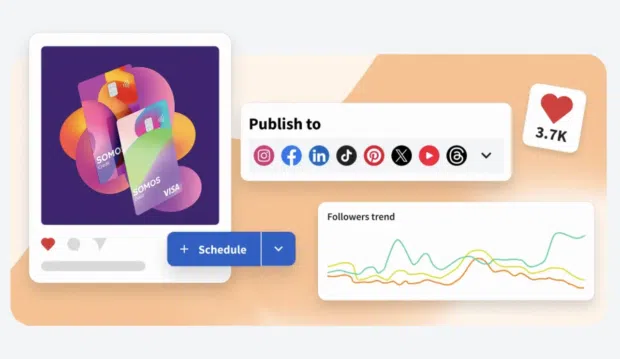
All major social media platforms offer comprehensive advertising dashboards and analytics tools. Meta Business Suite for Facebook and Instagram, X Ads and Analytics for Twitter, LinkedIn Ads and Analytics, and TikTok Ads Manager provide native reporting. For an integrated view, third-party tools like Hootsuite’s Perch consolidate paid social media efforts across multiple platforms into a single dashboard, offering detailed, actionable reports and streamlined data management. This ease of tracking enables continuous improvement and data-driven decision-making.
The Challenges and Considerations of Paid Social Media
While powerful, paid social media is not without its complexities and potential pitfalls, requiring strategic oversight and continuous optimization.
Potential for High Costs
Paid social media can become expensive very quickly if not managed judiciously. The cost is influenced by factors such as audience size, competition for ad space, ad quality, and campaign objectives. To mitigate escalating costs, businesses must:
- Strategically allocate ad spend based on performance data.
- Continuously monitor campaign metrics to identify underperforming ads.
- Optimize bidding strategies to maximize efficiency.
Without careful management, advertising budgets can be depleted without achieving desired outcomes.
Continuous Optimization Requirements
Paid social media is far from a "set it and forget it" endeavor. Effective campaigns demand ongoing maintenance and optimization, including:
- A/B testing of ad creatives, copy, and calls to action.
- Regular adjustments to targeting parameters.
- Monitoring and responding to competitor activities.
- Refreshing ad content to prevent audience fatigue.
- Analyzing performance data to identify trends and areas for improvement.
This continuous optimization often necessitates a dedicated team member or a specialized social media team, adding to the overall expense.
The Phenomenon of Ad Fatigue
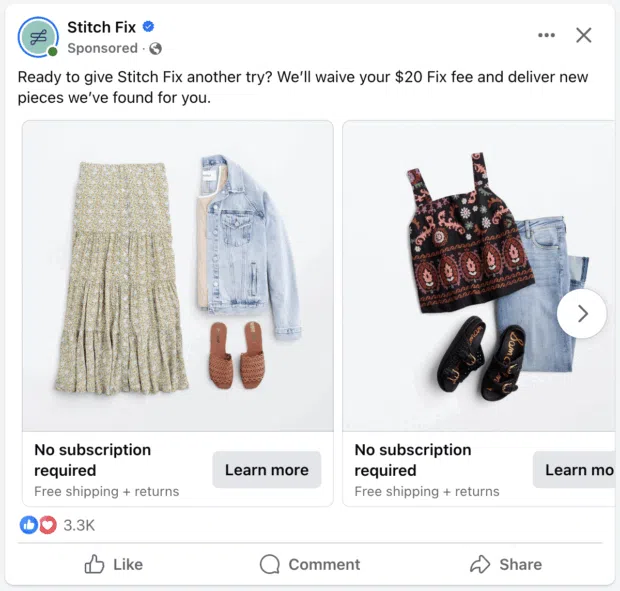
A significant challenge in the crowded digital landscape is ad fatigue, where audiences become desensitized or even annoyed by repeated exposure to advertisements. As social media’s share of time spent with media is expected to peak in 2026, while ad spending continues to climb, the imbalance grows. Gorman observes, "I’ve noticed that as soon as people get a whiff that something is an ad, they tune out immediately. The dreaded ‘sponsored’ label can be a kiss of death for engagement." To combat ad fatigue, brands must constantly innovate their ad creatives, diversify their messaging, and ensure their ads provide genuine value or entertainment.
Organic vs. Paid: A Strategic Comparison
The core distinction between organic and paid social media lies in their primary objectives, reach mechanisms, and cost structures. Organic strategies build long-term trust and foster community with existing audiences, while paid strategies buy immediate, scalable reach and measurable results.
| Category | Organic Social Media | Paid Social Media |
|---|---|---|
| Goal | Building relationships, brand trust, community | Driving brand awareness, traffic, leads, conversions |
| Best Used For | Sparking engagement, showcasing personality, customer care | Boosting top posts, promoting launches, reaching new audiences |
| Reach | Limited to followers, algorithm-dependent | Scales with budget and targeting |
| Cost | Free (requires time/effort for content creation) | Requires ongoing ad budget |
| Audience | Existing followers, their networks | Precise targeting by demographics, behavior, interests |
| Timeline to Results | Weeks to months of consistent posting | Immediate once campaign goes live |
| Content Lifespan | Can earn engagement long after publishing | Tied to campaign duration and budget |
| Measurement | Engagement, follower growth, comments, shares, organic traffic | CPC, CPM, CTR, CPA, ROAS, conversions, attributed revenue |
This comparison highlights that organic and paid social media are not mutually exclusive; rather, they are complementary components of a holistic digital strategy.
Crafting a Unified Social Media Strategy
The most effective approach integrates organic and paid social media, leveraging each for its inherent strengths. Lead with organic to establish a foundation, then introduce paid efforts to amplify reach, accelerate growth, or target specific audiences with precision.
Utilize organic social media when the objective is to:
- Build a loyal community and foster genuine relationships.
- Establish brand voice, personality, and values.
- Gather audience insights and feedback.
- Generate user-generated content and social proof.
- Provide customer service and support.
- Create evergreen content that offers long-term value.
- Test content themes and formats before investing in paid promotion.
Employ paid social media when the objective is to:
- Rapidly increase brand awareness and reach new audiences.
- Drive immediate traffic to a website or landing page.
- Generate leads or direct sales.
- Promote specific products, services, or events.
- Retarget existing customers or website visitors.
- Compensate for declining organic reach on critical posts.
- Test marketing messages and creatives at scale.
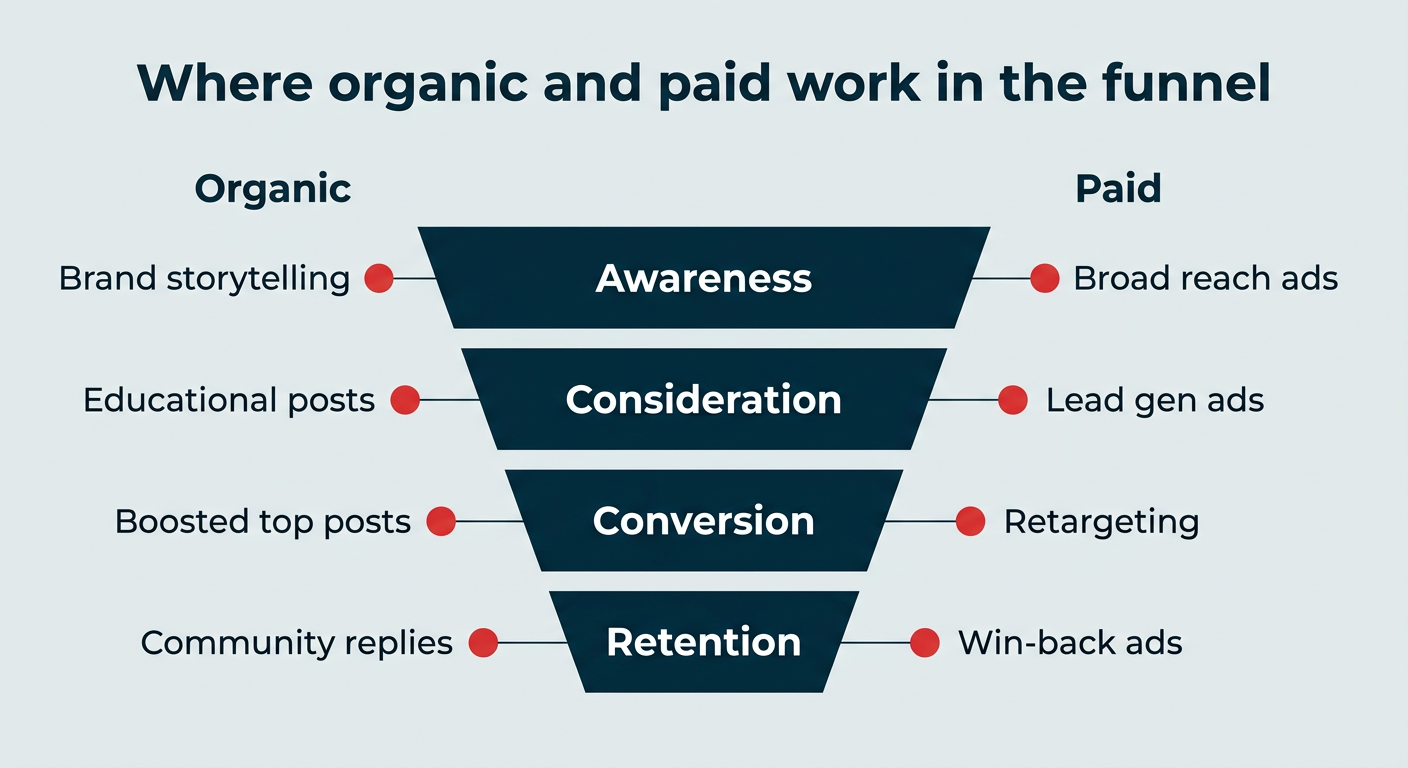
Conceptually, organic content excels at the top and middle of the marketing funnel, building awareness and nurturing consideration. Paid content, while adaptable across all stages, proves most impactful at the bottom of the funnel, driving conversion and retargeting efforts.
Six Expert Tips for Combining Organic and Paid Social Media
Integrating organic and paid strategies effectively requires a deliberate, data-driven approach. Experts advocate for a hybrid model where organic insights inform and enhance paid campaigns.
1. Boost Your Top Organic Posts
This is a low-risk, high-reward tactic. Identify organic posts that already resonate strongly with your audience (high engagement, shares, saves, profile views, or even unexpected conversions) and allocate a small ad budget to boost them. As Gorman notes, "It’s like getting the best of both worlds – content that feels natural and authentic to the platform but with the targeting muscle of paid promotion." This approach leverages proven content, extending its reach to a wider, yet relevant, audience. Tools like Perch by Hootsuite allow for automated boosting based on custom performance triggers, such as a post receiving 100 shares.
2. Leverage Organic Insights for Paid Targeting
Organic performance data serves as an invaluable testing ground for paid strategies. Murphy Lewis advises, "We always test content themes on LinkedIn or Instagram Reels first. If a post gets traction organically, it becomes the blueprint for our paid campaigns." If a new content format, visual style, or messaging theme performs exceptionally well organically, these insights can directly inform the creative and targeting choices for paid ads, significantly reducing guesswork and increasing efficiency. Kris Flank, CEO of LunarLinks, concurs, stating, "Utilize paid to enhance what’s already building momentum organically… you’ll be investing in content that people have already indicated that they’ll be interested in."
3. Implement A/B Testing Across Channels
Before committing significant budget, conduct A/B tests on both organic and paid content. For paid campaigns, platforms offer robust testing capabilities for ad variations. For organic posts, manual split tests can be tracked using unique UTM parameters in links. Testing elements can include:
- Headlines and ad copy variations.
- Different image or video creatives.
- Calls to action (CTAs).
- Audience segments.
- Landing page experiences.
This iterative testing process refines content and targeting, leading to more memorable ads for the audience and more cost-effective campaigns for the brand.
4. Develop a Full-Scale Integrated Strategy
Rather than viewing organic and paid as separate silos, integrate them under a singular, overarching social media strategy. This means:
- Maintaining a consistent brand voice and visual identity across all content.
- Ensuring content supports broader business objectives, whether organic or paid.
- Creating a cohesive narrative that guides the audience through the marketing funnel.
- Coordinating content calendars to maximize impact and prevent overlap.
Jason Pack, CRO at Freedom Debt Relief, succinctly puts it: "Paid and organic work best hand-in-hand. You should run ads to drive sales and use organic content to build trust, engagement, and long-term loyalty."
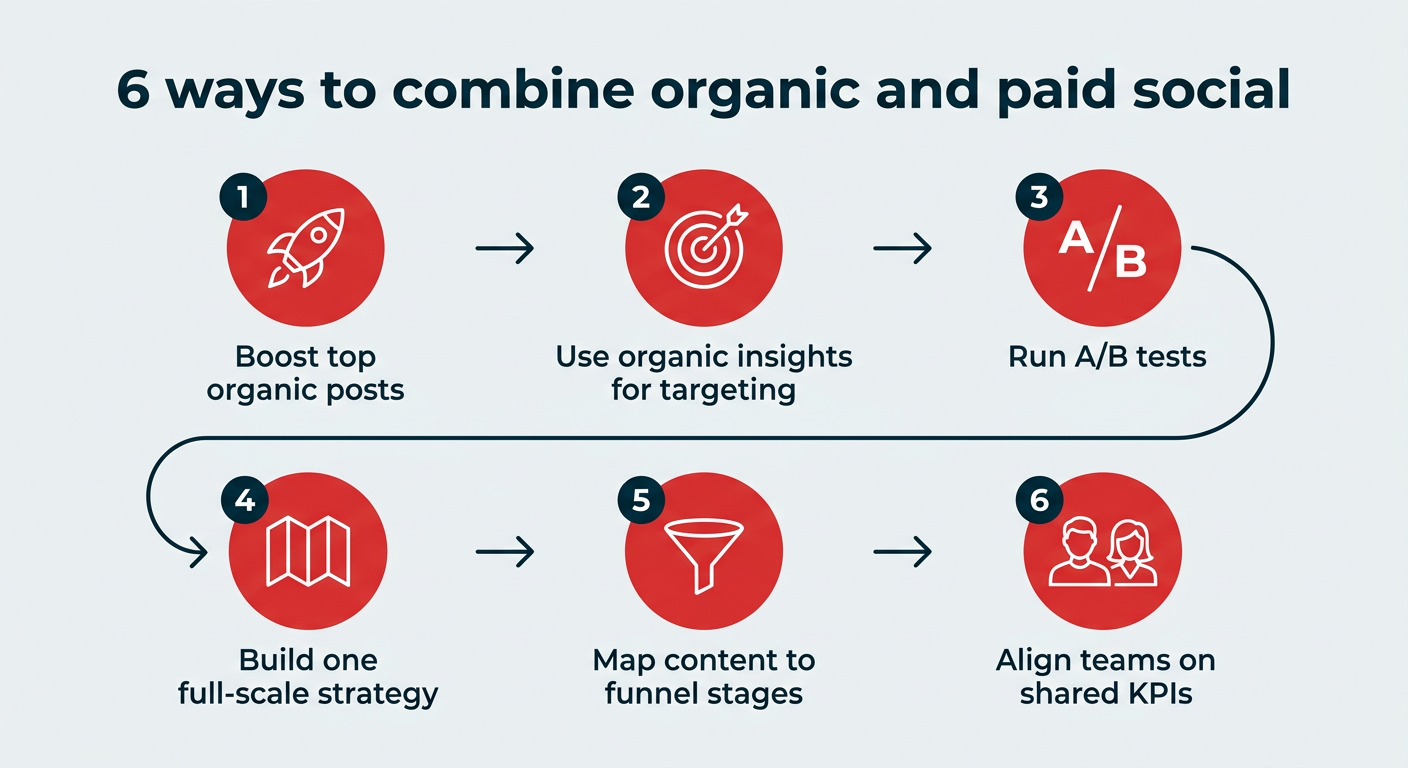
5. Map Content to Funnel Stages
Assigning specific content types to distinct stages of the marketing funnel prevents redundancy and optimizes each channel’s contribution.
- Awareness (Top of Funnel): Organic thought leadership, engaging videos, informational blog posts, and paid reach campaigns.
- Consideration (Middle of Funnel): Organic product demos, customer testimonials, educational webinars, and paid traffic/engagement campaigns.
- Conversion (Bottom of Funnel): Organic promotions, user-generated reviews, and paid direct response ads, retargeting campaigns.
- Retention/Loyalty (Post-Conversion): Organic community building, exclusive content, customer support, and paid loyalty programs.
This mapping helps identify content gaps and ensures that both organic and paid efforts are working harmoniously towards progression through the customer journey.
6. Align Teams on Shared Key Performance Indicators (KPIs)
Often, organic and paid social media functions reside within different teams, leading to disparate goals and metrics. To foster synergy, establish shared KPIs that unify both teams towards common business outcomes. Relevant shared KPIs include:
- Total social-attributed conversions.
- Blended cost per acquisition (CPA) or cost per result.
- Overall brand sentiment and reputation.
- Audience growth and quality across all channels.
- Customer lifetime value (CLV) influenced by social channels.
Regular, scheduled reviews of these blended metrics—even short monthly check-ins—are crucial. Shared numbers create transparency and discourage optimizing in ways that inadvertently undermine the other team’s efforts.
Measuring Success Across Integrated Campaigns
Measuring organic and paid social media together involves aligning metrics with each channel’s specific role and then aggregating these into a comprehensive view of business impact. Reporting them separately risks losing sight of the synergistic effects.
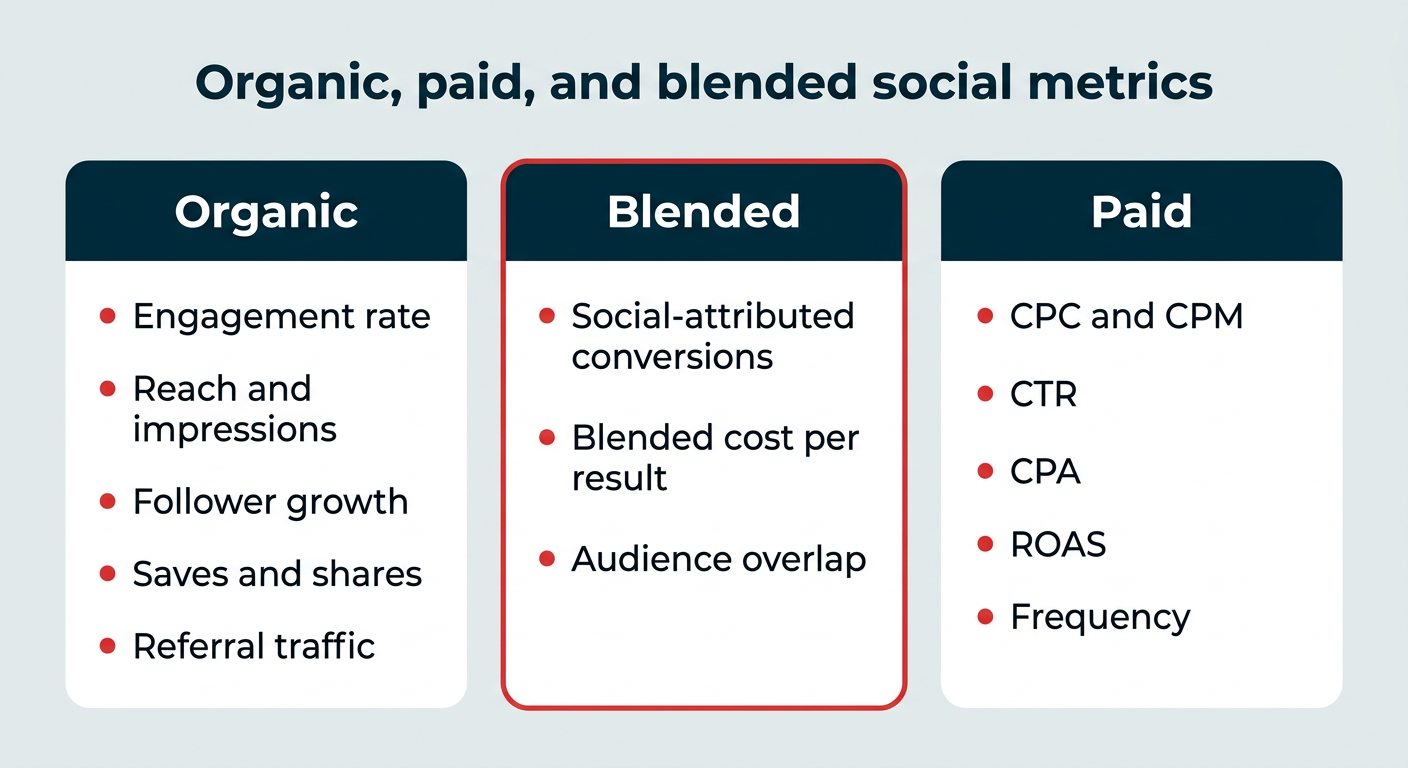
Core Organic Metrics to Track:
- Reach and impressions (unpaid).
- Engagement rate (likes, comments, shares, saves).
- Follower growth and audience demographics.
- Website traffic from organic social.
- Brand mentions and sentiment.
- Video views and completion rates.
Core Paid Metrics to Track:
- Reach and impressions (paid).
- Click-through rate (CTR).
- Cost per click (CPC) and Cost per mille (CPM).
- Conversions (leads, sales, app installs).
- Cost per acquisition (CPA).
- Return on ad spend (ROAS).
- Attributed revenue.
Blended Metrics for Holistic Measurement:
- Total social-attributed conversions: The combined number of conversions driven by both organic and paid efforts.
- Blended cost per result: The average cost to achieve a desired action across both paid and organic channels.
- Audience overlap: The percentage of your follower base that also sees your ads, indicating efficiency or redundancy.
- Total website traffic from social: Overall traffic driven by all social channels.
- Customer lifetime value (CLV) by social source: Understanding the long-term value of customers acquired through different social strategies.
The most effective approach is to view organic and paid performance side-by-side in a single report, covering the same date range and tied to identical business goals. This integrated view reveals crucial patterns, such as an organic post quietly driving cost-effective conversions or a paid campaign successfully scaling reach without moving revenue.
Managing Integrated Social Media with Hootsuite
Successfully managing a hybrid organic and paid social media strategy can be complex, especially across multiple platforms. Tools designed for integrated workflows, like Perch by Hootsuite, streamline these efforts, offering a unified platform for comprehensive management.
A Unified Advertising Dashboard
Perch consolidates all advertising tasks—publishing, managing, analyzing, boosting, and reporting—into one connected workflow. This eliminates the inefficiency of toggling between disparate platform interfaces, providing a holistic view of campaign performance.
Cross-Channel Publishing and Planning
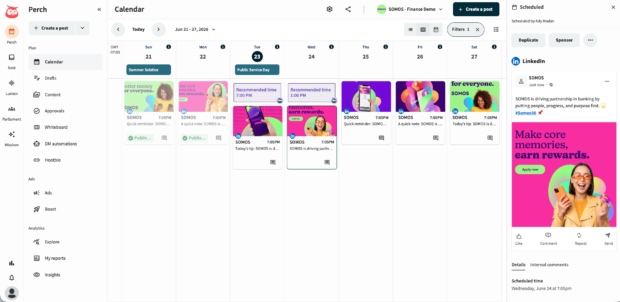
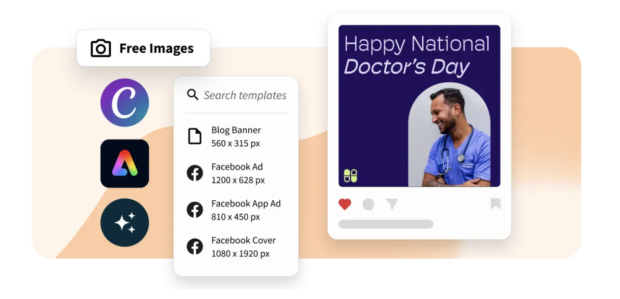
Perch enables users to craft and schedule both organic and paid posts simultaneously for platforms like LinkedIn, Facebook, and Instagram, all from a single calendar. This integrated planning ensures consistent messaging and coordinated campaigns. Its Composer feature, with built-in Canva and Adobe Express integrations, facilitates seamless visual creation and editing directly within the platform.
Hyper-Targeted Organic Boosting
Given the declining organic reach, boosting posts has become a crucial strategy. Perch’s boosting feature allows users to extend the reach of high-performing organic content beyond their immediate followers. Users can define campaign goals, precisely target audiences based on demographics, location, and interests, set budgets, and determine promotion durations. This ensures ad spend is optimized by reaching the most relevant audience segments on Facebook, Instagram, and LinkedIn.
Side-by-Side Analytics and Reporting
Perch provides a critical advantage by allowing users to review both organic and paid content performance side-by-side. This integrated analytics view offers invaluable insights into what strategies are working, enabling marketers to optimize both paid and organic efforts based on real-time data. Automated, in-depth reports can be scheduled for delivery, freeing up strategic planning time.
AI-Powered Insights and Answers
Within Hootsuite Social OS, Lumen surfaces essential listening and audience insights, guiding both organic and paid strategies. From identifying trending conversations for organic engagement to pinpointing themes worthy of paid promotion, Lumen provides actionable intelligence. Furthermore, Wisdom allows users to pose performance-related questions in natural language, quickly revealing the "why" behind results without the need for extensive report generation.
Conclusion: The Synergy of Organic and Paid
Neither organic nor paid social media is inherently superior; their effectiveness is maximized when used in concert. Organic efforts build the foundational trust, community, and brand affinity that make paid campaigns more effective, while paid strategies provide the necessary reach, speed, and precision to achieve immediate business objectives. The future of social media marketing lies in this sophisticated integration, demanding marketers who can navigate algorithms, understand audience psychology, and leverage technology to create compelling, data-driven campaigns. By embracing a blended approach, businesses can cultivate lasting customer relationships while simultaneously driving measurable growth in an increasingly competitive digital landscape.


 Nila Kartika Wati

 Jia Lissa