Siti Muinah
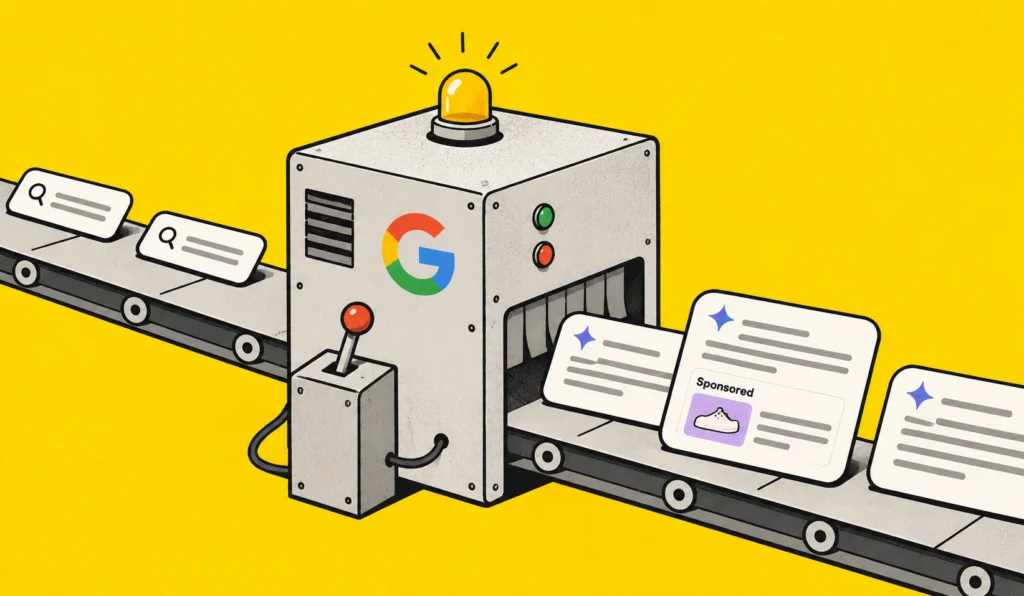
The digital advertising landscape is undergoing a seismic shift as Google integrates artificial intelligence more deeply into its core search experience. The introduction of advertising within AI Overviews and the nascent AI Mode represents a pivotal moment, not merely in ad placement, but in the fundamental evolution of how brands connect with consumers through paid search. This transition necessitates a proactive and strategic adaptation from advertisers, moving beyond traditional Pay-Per-Click (PPC) methodologies to embrace AI-powered capabilities and robust data strategies.
The move towards conversational, AI-driven search has been a discernible trend for several years, with platforms increasingly prioritizing user experience and natural language understanding. However, Google’s latest developments significantly amplify the urgency for advertisers to refine their PPC strategies. As Google assumes a greater role in autonomously matching advertisements to evolving search queries, advertisers must recalibrate their focus, enhance their utilization of AI-driven campaign functionalities, strengthen the data inputs that fuel Google’s automation, and master the controls required to steer campaign performance effectively.
The Evolving Search Journey: From Keywords to Conversations
Historically, the search engine marketing paradigm was relatively straightforward. Users would input specific keywords, and search engines like Google would present a list of organic and paid results. Advertisers competed for visibility by meticulously crafting keyword lists, setting bids, and ensuring ad relevance. This linear approach, while effective for a time, is rapidly becoming antiquated.
The advent of AI Overviews and AI Mode is transforming the search journey into a dynamic, conversational experience. Users can now pose more complex, nuanced questions, solicit recommendations, compare products side-by-side, and refine their queries through iterative follow-up dialogues. This represents a significant departure from the concise, transactional searches of the past.
According to Google’s own data, searches conducted within AI Mode are, on average, three times longer than traditional searches. This metric underscores a profound shift towards more exploratory, intent-rich user interactions. These longer queries often reveal deeper levels of user intent, encompassing research, comparison, and problem-solving stages of the customer journey that were previously more challenging to capture with keyword-centric approaches.
Google’s commitment to AI-powered search is unwavering, and the integration of advertising into these advanced experiences is accelerating. The United States has been at the vanguard of this evolution, with advertisements beginning to appear in AI Overviews in October 2024 and AI Mode advertising following suit in May 2025. This rollout has since expanded, with Google announcing the integration in Australia, Canada, India, Kenya, Malaysia, New Zealand, Nigeria, Pakistan, the Philippines, and Singapore. Further expansion into Brazil, Mexico, and the United Kingdom is slated for Q4 2026, signaling a global commitment to this new advertising paradigm.
For advertisers, these changes have profound implications for how they identify and capture relevant search demand. As search queries become longer, more varied, and more conversational, an over-reliance on rigidly defined keywords risks overlooking valuable opportunities to connect with users who are expressing relevant intent in novel ways. Google’s increasingly sophisticated AI-powered matching capabilities are therefore becoming indispensable tools for advertisers seeking to respond to this broader spectrum of search behavior.
Rethinking the PPC Playbook: Embracing Automation and Broad Match
The traditional PPC playbook, heavily reliant on manual Cost-Per-Click (CPC) adjustments, granular campaign segmentation, and an overemphasis on exact and phrase match keywords, is no longer sufficient. While these tactics historically offered a sense of granular control, they can inadvertently limit reach and hinder campaigns from adapting to emerging search intent. As Google’s matching algorithms become more intelligent, overly restrictive campaign structures can prevent advertisers from discovering relevant opportunities that lie beyond their pre-defined keyword lists.
Consequently, a strategic pivot towards embracing broader match types and AI-driven campaign management tools is imperative. Broad match, when implemented correctly, enables advertisers to reach relevant searches that extend beyond their explicitly targeted keywords, capturing intent that might otherwise be missed. AI Max for Search builds upon this by incorporating advanced AI-powered search term matching, dynamic text customization, and intelligent landing page selection, further enhancing relevance and performance. Performance Max campaigns represent the apex of this automation, extending campaign reach across all of Google’s advertising channels. This holistic approach aims to connect with customers at various stages of their lifecycle across the entire Google network, from search and display to YouTube and Gmail.
This is not to suggest a complete abandonment of existing keyword strategies or manual campaign controls. Exact and phrase match keywords retain their value, particularly in scenarios where advertisers require absolute precision or are managing highly specific brand terms. The critical imperative, however, lies in understanding where current campaign structures may be inadvertently restricting performance and identifying opportunities where AI-powered capabilities can unlock incremental gains that contribute to meaningful business outcomes. This requires a nuanced approach, balancing the precision of traditional methods with the expansive reach and intelligent matching offered by Google’s evolving AI tools.
Data Quality: The Cornerstone of AI-Driven Success
A crucial caveat underpins the effectiveness of any AI-driven advertising strategy: automation is only as good as the information it receives. As Google assumes a greater responsibility for identifying audiences, understanding intent, and optimizing creative elements, the quality and comprehensiveness of advertiser data become paramount. Advertisers must ensure that Google’s systems are optimizing towards outcomes that genuinely align with their business objectives.
Achieving this requires a rigorous focus on fundamental data hygiene and strategic data utilization. This includes:
- Accurate Conversion Tracking: Ensuring that all valuable customer actions (purchases, form submissions, calls, etc.) are accurately tracked and attributed. This provides the essential feedback loop for Google’s algorithms to learn and optimize.
- High-Quality Audience Signals: Leveraging first-party data, CRM insights, and customer match lists to provide Google with rich signals about your most valuable customer segments. This helps AI identify and reach users with similar characteristics and higher purchase propensity.
- Robust Website Analytics: Maintaining detailed website analytics to understand user behavior, identify friction points, and inform landing page optimization strategies. This data complements search query information, offering a more complete picture of user journeys.
- Clear Business Objectives: Explicitly defining and prioritizing key performance indicators (KPIs) that directly map to business goals. This ensures that AI optimization is aligned with what truly drives revenue and profitability, rather than vanity metrics.
Advertisers who invest in establishing these foundational data practices will be significantly better positioned to harness the full potential of AI-driven automation and achieve sustainable, meaningful results. Without clean, relevant data, AI tools operate in a vacuum, leading to misallocation of budget and missed opportunities.
Strategic AI Adoption: Navigating Controls and Safeguards
The rapid advancement of AI tools, such as AI Max, presents a significant opportunity for advertisers. However, simply enabling these features without a well-defined strategy is unlikely to yield optimal results. Advertisers must possess a clear understanding of the available controls and establish appropriate safeguards, particularly when operating within sensitive or regulated industries.
Google provides a range of mechanisms to guide AI-driven automation while protecting campaign performance and brand integrity. These include:
- Text Restrictions and URL Exclusions: Allowing advertisers to specify disallowed text in ads or exclude specific URLs from appearing in search results, ensuring brand messaging remains consistent and appropriate.
- Negative Keywords: A fundamental tool that continues to be vital, enabling advertisers to prevent their ads from showing for irrelevant search queries. This is crucial for refining audience targeting and optimizing spend.
- Brand Controls: Specific features that allow advertisers to maintain control over their brand terms, ensuring that their own branded searches are served by their campaigns and not inadvertently captured by competitors or less relevant ads.
- Audience Exclusion: The ability to exclude specific audience segments that may not be a good fit for certain campaigns or products, further refining targeting precision.
A comprehensive guide on launching AI Max without compromising brand safety, developed by experts in the field, emphasizes the practical steps advertisers should consider before, during, and after implementation. This includes thorough research into AI Max’s capabilities, defining clear campaign objectives, setting appropriate budgets, and establishing robust monitoring protocols.
PPC: A History of Adaptation and Evolution
The current transformation in paid search is not an anomaly; it is a continuation of PPC’s inherent nature. Paid search has always been a dynamic discipline, characterized by continuous evolution and an unwavering requirement for advertisers to adapt. From the gradual shift away from Single Keyword Ad Groups (SKAGs) to the sunsetting of Broad Match Modifier (BMM), through to the development of Modern Search campaigns and the widespread adoption of AI-powered bidding strategies, each major change has necessitated a re-evaluation of established strategies, a challenge to conventional working methods, and an embrace of new technological capabilities.
The ongoing move towards AI-powered search is precisely this kind of evolutionary leap. User behavior continues to evolve, driven by advancements in technology and changing expectations. Google’s technological infrastructure is also in constant flux, with AI at its core. Consequently, advertising strategies must evolve in lockstep to remain effective.
For advertisers who have not yet begun to explore these new frontiers, the time to act is now. Testing AI-powered capabilities, rigorously analyzing their impact, and identifying where they can unlock incremental performance gains is essential. The advertisers who will be best positioned to thrive in this new landscape will be those who can skillfully integrate Google’s evolving AI capabilities with a strong foundation of data, clear commercial objectives, and the discerning judgment to know when and how to best leverage automation. The search landscape is not merely changing; it is fundamentally transforming. The effectiveness of any PPC strategy will depend on its ability to move in tandem with these seismic shifts.

 Ali Ikhwan