Lina Hope
The adage that those who fail to learn from history are doomed to repeat it rings particularly true in the dynamic world of email marketing. Each year, the high-stakes holiday sale season, spearheaded by pivotal events like Black Friday, offers a crucible of lessons that invariably shape the tactical approaches and strategic planning for the subsequent year. This cyclical process, if properly leveraged, promises an ongoing trajectory of improved performance, enhanced inbox placement rates, and ultimately, robust revenue generation. As the 2026 holiday sale season rapidly approaches, industry analysts at Validity have delved into the comprehensive data captured by their Validity Intelligence Network (VIN) from 2025 to dissect key inbox placement rate (IPR) trends, assess their potential recurrence, and articulate adaptable strategies for senders across all sectors to maximize their seasonal outreach.
The Critical Window: Analyzing 2025 Trends and the Opening of the "Danger Zone"
Validity’s exhaustive 2025 data analysis illuminated several intriguing trends, some of which notably diverged from long-established conventional wisdom in email marketing. The sheer volume of email traffic during the final quarter of the year, particularly around the Black Friday and Cyber Monday period, consistently creates what experts term a "danger window." This period is characterized by an unprecedented surge in sending volume, which, if not managed meticulously, can trigger severe deliverability issues.
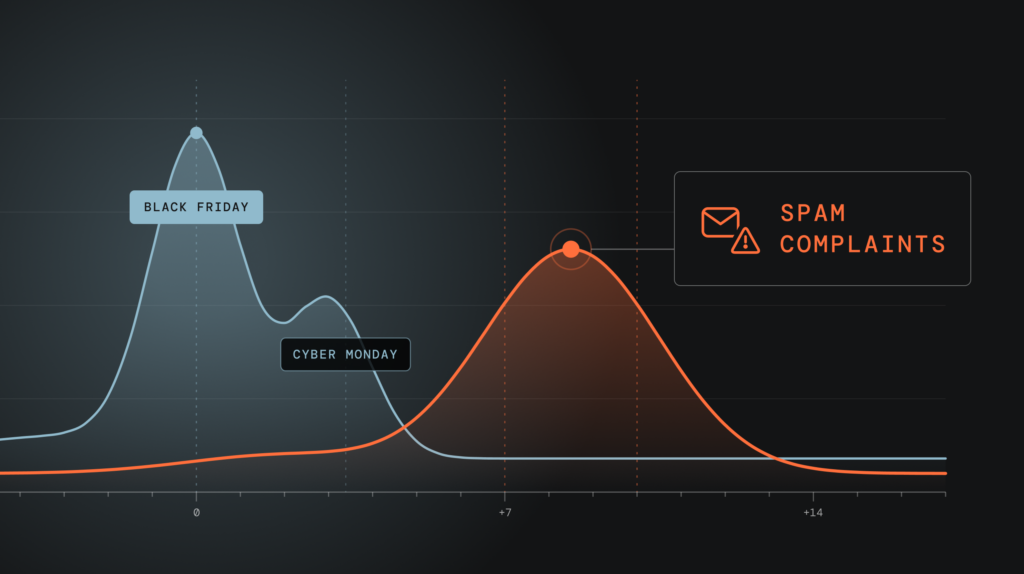
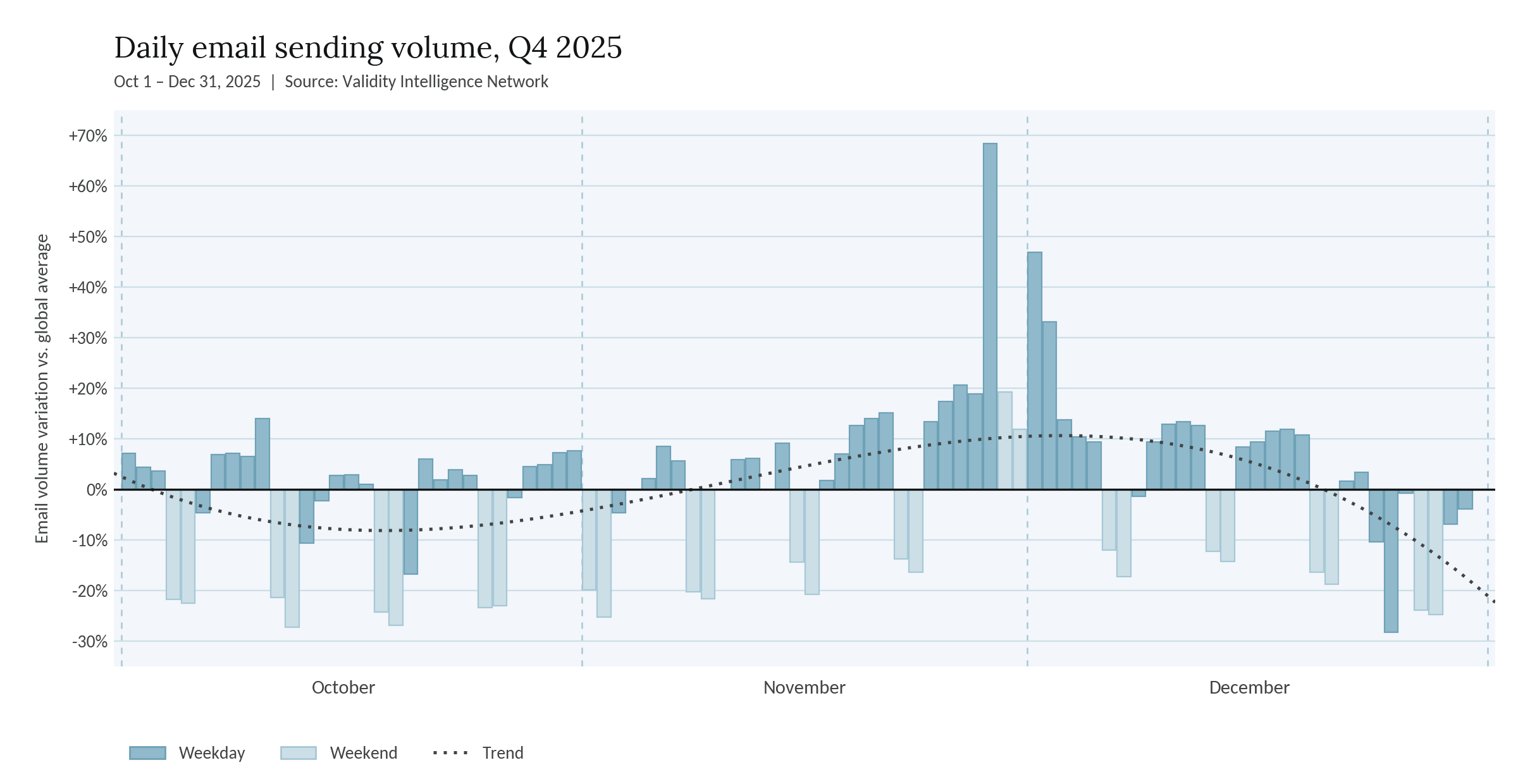
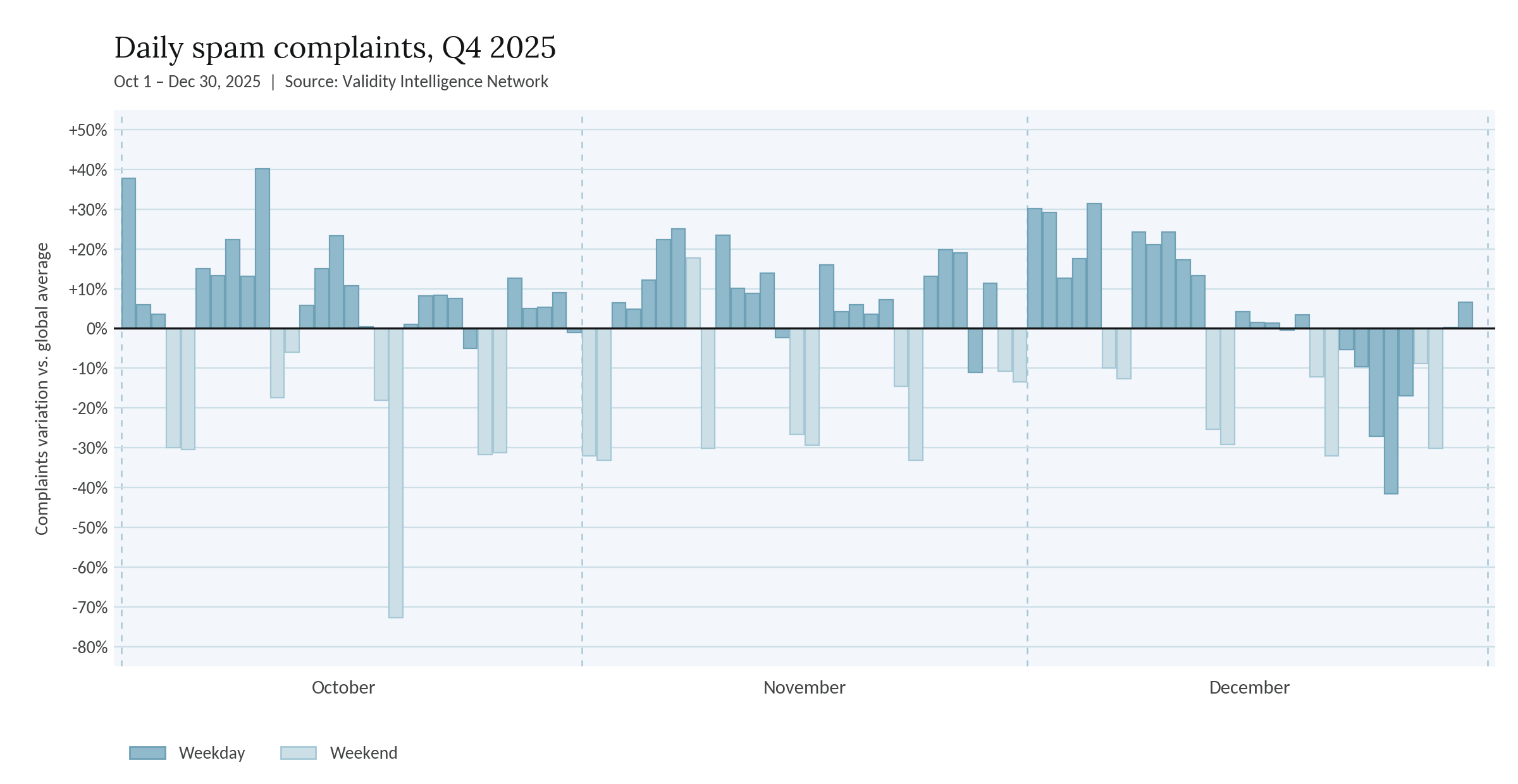
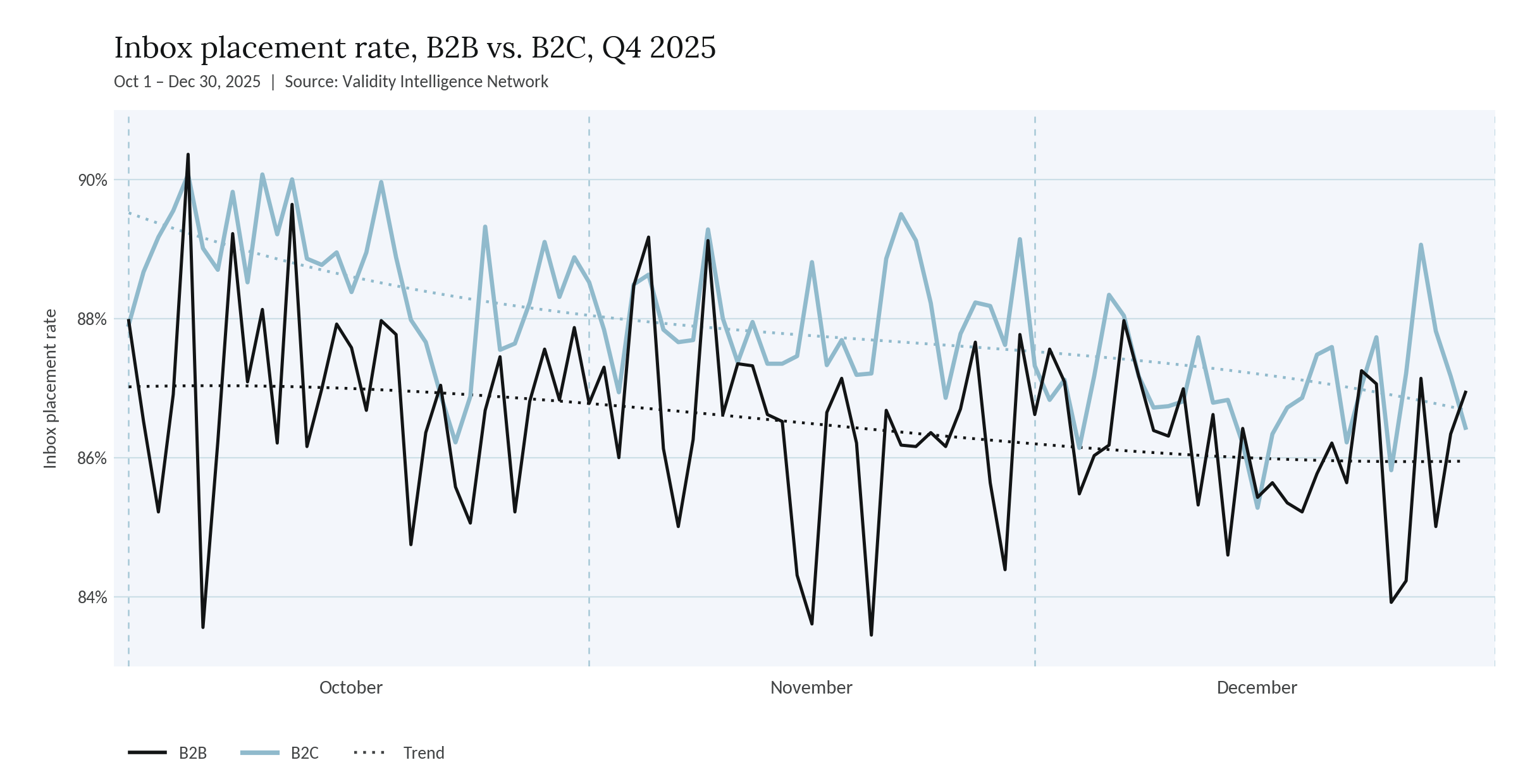
Data from Q4 2025, specifically visualized through the VIN, showed a dramatic spike in sending volume commencing in early November and peaking sharply on Black Friday. While this surge is expected, the accompanying metrics revealed a more nuanced picture. Spam complaints, for instance, typically show a direct correlation with increased volume. In 2025, complaints began a steady climb in the weeks leading up to Black Friday, escalating significantly during the peak sales week. This suggests that while marketers were eager to capitalize on consumer spending, many pushed the boundaries of recipient tolerance, leading to a higher incidence of users marking emails as spam. The average spam complaint rate, which hovered around 0.15% in early November, surged to nearly 0.25% by Black Friday, a 66% increase that sent clear warning signals to mailbox providers.
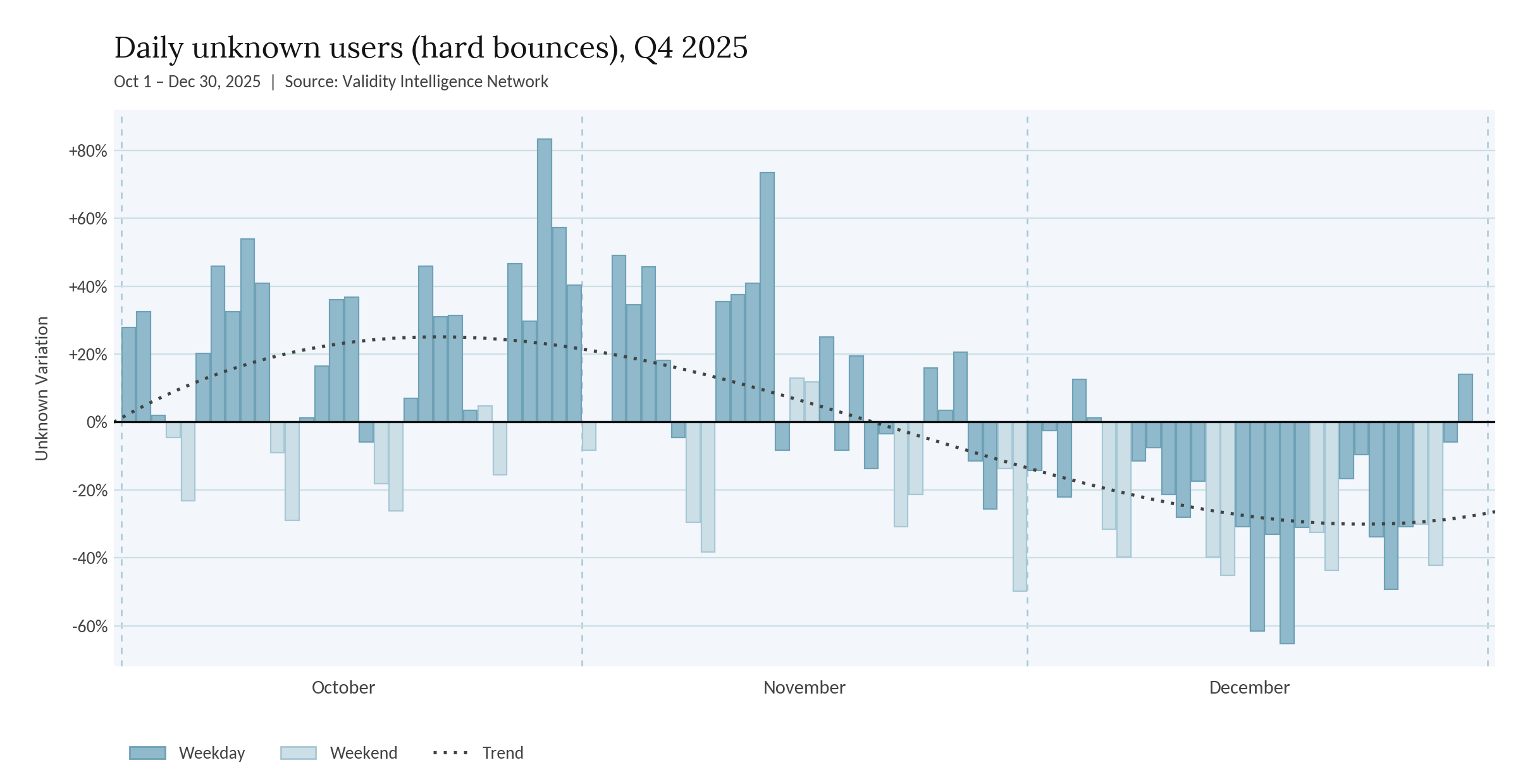
Furthermore, the data on "unknown users" or bounces painted a stark picture of list hygiene challenges. Despite the holiday rush, many senders appeared to neglect fundamental list maintenance. The rate of emails sent to unknown users saw a modest but consistent increase throughout Q4 2025, rising from an average of 0.8% to 1.1% during the peak week. This indicates that while marketers were adding new subscribers, they were not adequately cleaning their existing lists, leading to unnecessary bounces that negatively impact sender reputation.
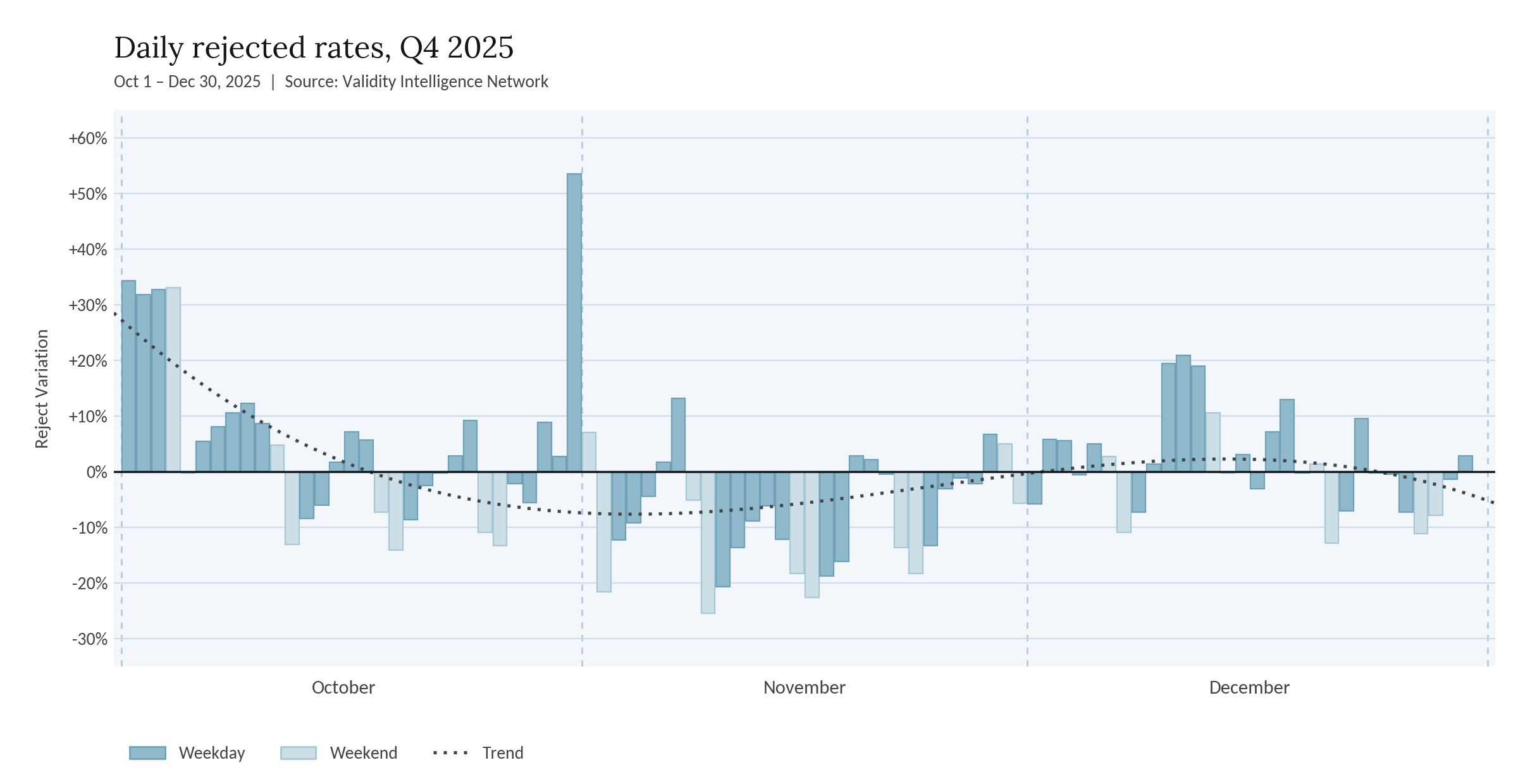
Perhaps most critically, the "rejected" email rate also saw an uptick. These are emails outright refused by mailbox providers due to suspected spam characteristics, poor sender reputation, or policy violations. In Q4 2025, rejected rates edged up from a baseline of 0.5% to approximately 0.7% during the holiday surge. This 40% increase in rejections underscores the heightened scrutiny applied by mailbox providers during periods of elevated email traffic, effectively punishing senders who failed to uphold best practices. The cumulative effect of these metrics—increased sending volume, higher spam complaints, elevated unknown user rates, and more rejections—contributed directly to a noticeable dip in overall inbox placement rates for many senders during the peak holiday season.
Forecasting 2026: New Challenges and Shifting Dynamics
While historical data provides invaluable insights, there are no guarantees that 2026 will be a mere repetition of 2025. The email marketing landscape is in a constant state of evolution, and significant changes introduced recently by major mailbox providers could fundamentally alter this year’s outcomes. Notably, new sender requirements rolled out by industry giants like Google and Yahoo in early 2026 have introduced stricter authentication protocols (DMARC, SPF, DKIM), lower spam complaint thresholds, and easier unsubscribe mechanisms. These changes are designed to combat unsolicited email and enhance user experience, but they also present a heightened challenge for marketers.
The year-to-date (YTD) data for Gmail inbox placement in 2026, as observed through the Validity Intelligence Network, already indicates a tighter environment. Average Gmail IPRs have shown a slight but consistent decline compared to the same period in 2025, dropping from an average of 92% to 90.5%. This pre-holiday trend suggests that senders are already operating under more stringent conditions, meaning any aggressive or poorly managed sending practices during the holiday season could lead to even more severe penalties than in previous years. Mailbox providers are increasingly prioritizing sender reputation and engagement signals, making it imperative for marketers to adopt a proactive and disciplined approach. The implication is clear: senders cannot afford to wait for problems to arise; they must actively manage their reputation and adhere to best practices from the outset.
B2B vs. B2C: A Divergent Holiday Path
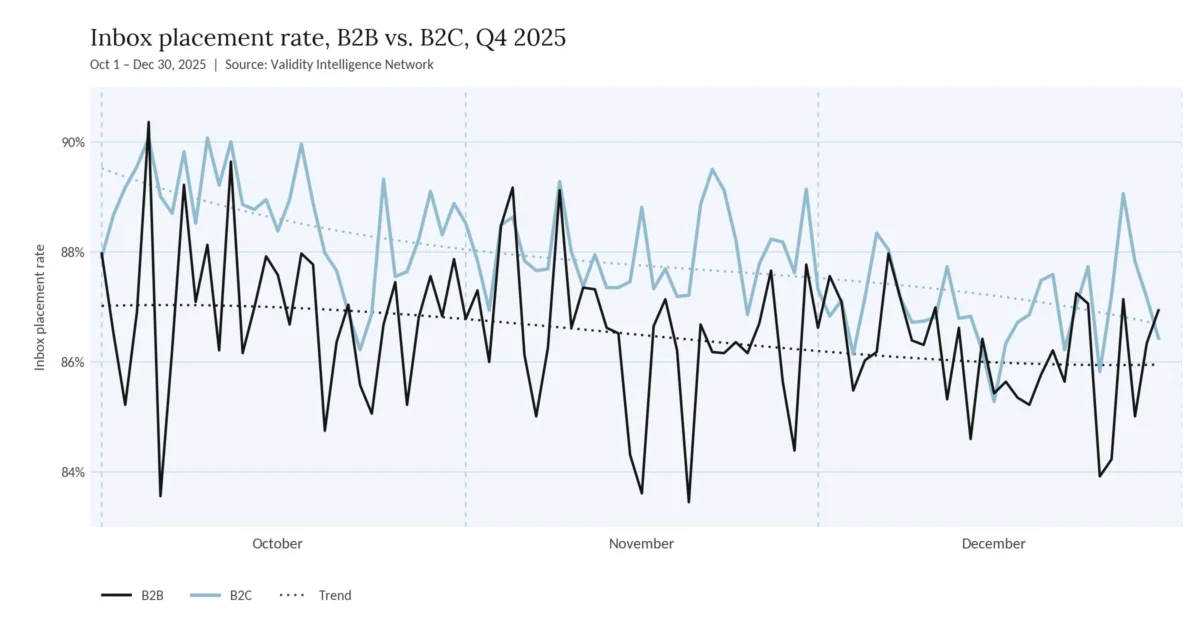
Historically, deliverability challenges for Business-to-Consumer (B2C) and Business-to-Business (B2B) senders often diverged significantly. However, in recent years, this gap has narrowed considerably. The convergence is largely due to the widespread adoption of major email platforms like Office 365 and Google Workspace within the B2B sphere, whose underlying placement and filtering infrastructures share many similarities with B2C environments. The primary additional hurdle for B2B senders remains the corporate spam filters, such as Proofpoint or Mimecast, which often apply an extra layer of scrutiny.
Despite this convergence, a critical difference emerged during the 2025 holiday period. While B2C inbox placement rates generally experienced a modest rise of approximately three percent on Black Friday itself, reflecting effective campaign execution and heightened consumer engagement, B2B placement suffered a noticeable decline of seven percent. This disparity highlights a significant "holiday readiness" gap. B2C senders, accustomed to the intense competition and increased volume of the holiday season, are typically more adept at the reputation management tactics required to maintain deliverability. They often employ sophisticated segmentation, personalization, and engagement strategies that resonate with consumers, leading to positive engagement signals that mailbox providers favor.
Conversely, many B2B senders, whose product or service offerings may not naturally align with the consumer-driven frenzy of Black Friday, often struggle to adapt their strategies. Some might engage in "panic sending" or try to force holiday-themed promotions that feel out of place for their audience, resulting in lower engagement, higher complaints, and consequently, poorer deliverability. For B2B marketers, the lesson is twofold: first, critically evaluate whether Black Friday is truly a relevant sales period for your offerings. If not, consider focusing on other, more appropriate times. Second, if participating, learn from B2C best practices in terms of list hygiene, engagement, and clear value proposition. As explored in Validity’s recent "State of Email Tactics" conversation with Peloton, many holiday sending tips, though originating from B2C, are highly applicable to B2B contexts, emphasizing the importance of relevance and recipient value.
The Lasting Penalty for "Panic Sending": Quantifying the Cost of Aggression
The temptation to aggressively ramp up email volume and frequency during high-stakes periods like Black Friday is strong, but the consequences can be long-lasting. In previous years, senders who succumbed to "panic sending" were often penalized with a degraded sender reputation and persistently lower deliverability well into the new year. While the overall decline in deliverability across the board in late 2025 made this specific effect harder to isolate, Validity’s deeper analysis revealed a clear correlation.
For high-frequency, high-volume Black Friday senders, the inbox placement decline post-holiday was almost three times greater than for their more disciplined counterparts. Specifically, aggressive senders experienced a daily inbox placement decline of 0.019 percent, compared to just 0.007 percent for those who maintained a more controlled sending strategy. While these figures appear small in absolute terms, their cumulative effect over a year is substantial. Less disciplined senders faced an additional 4.6 percent loss in inbox placement annually (a total decline of 6.9 percent versus 2.6 percent for controlled senders).
For revenue leaders, these seemingly minor dips carry a significant price tag. Assuming an average revenue generation of five cents per email, that additional 4.6 percent loss in inbox placement translates to a cost of $2,300 per one million emails sent by the end of the year. This demonstrates that short-term gains from aggressive sending can be severely eroded by long-term damage to deliverability and, consequently, revenue. The strategic implication is clear: sustained deliverability is a long-term asset that requires consistent nurturing, not a disposable resource to be exploited during peak seasons.
Further research by Validity has highlighted a crucial factor in maintaining robust IPRs: adherence to new-generation privacy laws, such as GDPR. Email programs that prioritize stronger consent mechanisms, greater transparency in data usage, and broader recipient choice consistently achieve better inbox placement. These practices align perfectly with what modern mailbox providers expect from responsible senders, effectively future-proofing deliverability against evolving standards and increasing scrutiny. Implementing these robust privacy-centric tactics is no longer optional but a strategic imperative for all marketers.
Strategic Imperatives for Marketers: Lessons from the Validity Intelligence Network
Understanding the intricate data patterns from previous years is not merely an academic exercise; it provides a profound competitive advantage for building a resilient and effective email marketing strategy. The Validity Intelligence Network’s insights from 2025 and 2026 YTD data point to several critical areas where senders must focus to ensure successful delivery and engagement during the high-stakes holiday season:
- Prioritize List Hygiene and Data Quality: Regularly clean email lists to remove inactive subscribers, hard bounces, and unknown users. Implementing a consistent re-engagement strategy for dormant subscribers can also prevent negative engagement signals. A well-maintained list reduces sending to uninterested recipients, thereby lowering spam complaints and bounce rates.
- Segment and Personalize with Precision: Generic, mass emails are increasingly ineffective. Leverage customer data to create highly segmented audiences and deliver personalized content. This not only improves engagement rates but also signals to mailbox providers that the sender values recipient relevance. Dynamic content and tailored offers can significantly boost open and click-through rates.
- Strengthen Authentication Protocols: With new requirements from Google and Yahoo, DMARC, SPF, and DKIM are no longer optional. Ensure all sending domains are properly authenticated to prove legitimate sender identity and prevent spoofing, which is a major red flag for mailbox providers. Consistent authentication builds trust and improves deliverability.
- Monitor Engagement Metrics Closely: Pay meticulous attention to open rates, click-through rates, and, crucially, complaint rates. Low engagement or high complaints are immediate indicators of deliverability issues. Implement feedback loops to quickly identify and address problems. Actively track unsubscribes to understand content relevance and adjust strategies accordingly.
- Manage Sending Volume and Frequency Strategically: Avoid sudden, drastic increases in sending volume or frequency, especially during peak times. Gradually warm up IP addresses and domains if planning a significant ramp-up. Prioritize sending to your most engaged subscribers first. "Less is more" often applies when it comes to maintaining sender reputation.
- Optimize Content for Deliverability and Engagement: Ensure email content is relevant, engaging, and free of spam triggers (e.g., excessive exclamation points, all caps, suspicious links). Use clear calls to action and responsive design for optimal viewing across devices. A/B test subject lines and content to identify what resonates best with your audience.
- Embrace Privacy-First Principles: Align email programs with modern privacy regulations like GDPR. Strong consent, transparent data practices, and easy unsubscribe options not only build trust with subscribers but also signal responsible sending practices to mailbox providers, leading to better IPRs.
- Proactive Deliverability Monitoring: Implement tools and processes for continuous monitoring of deliverability performance. This includes tracking inbox placement across major mailbox providers, monitoring blocklists, and identifying any sudden dips in reputation. Early detection allows for swift corrective action.
Technological Solutions and Future-Proofing Email Programs
Navigating this intricate landscape of strategy recommendations might seem overwhelming, especially for marketing teams already stretched thin during peak seasons. This is where advanced email deliverability platforms become indispensable partners. Validity Engage, for instance, offers a comprehensive suite of tools designed to automate much of the "heavy lifting" associated with maintaining optimal deliverability.
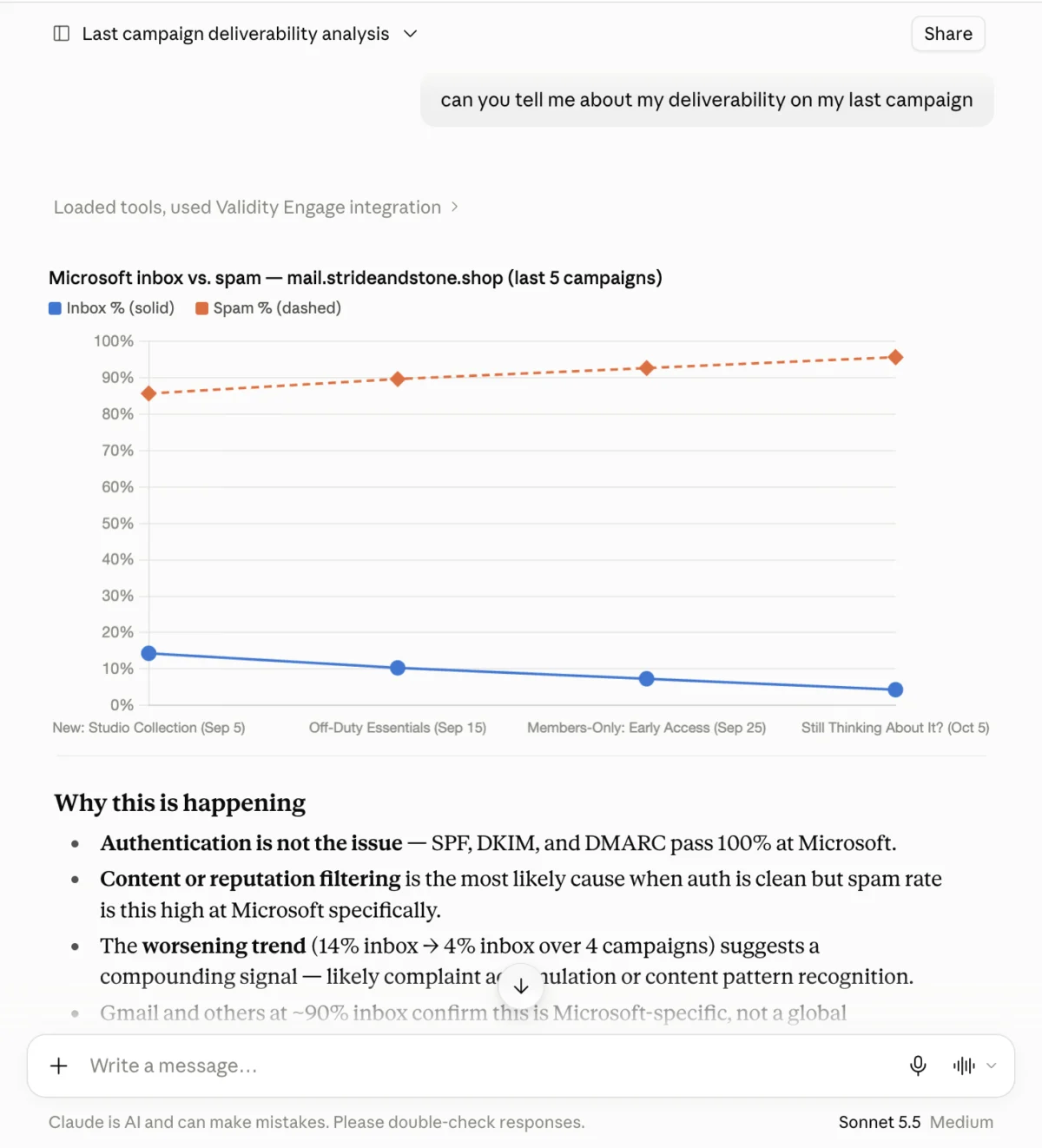
Engage provides automated pre-send checks covering critical aspects such as data quality, email verification (ensuring emails are sent to valid addresses), and rendering (how emails appear across various clients and devices). Crucially, it also offers continuous monitoring of deliverability across every send. This proactive approach ensures that potential problems are identified and flagged before they even reach subscribers, safeguarding sender reputation and, critically, preserving peak season revenue. By catching issues like increased spam complaints or blocklist placements in real-time, Engage allows marketers to react swiftly, preventing minor hiccups from escalating into significant deliverability crises.
In an increasingly competitive and scrutinized email environment, investing in such platforms is not just about efficiency; it’s about future-proofing an email program. With the stakes higher than ever, and mailbox providers continuously refining their filtering algorithms, relying solely on manual oversight is a gamble. Validity Engage helps marketers build resilience, ensuring their messages consistently reach the inbox, engage their audience, and contribute directly to their bottom line.
To learn more about the extensive capabilities of Validity Engage and how it can transform your email marketing strategy, further resources are available on Validity’s platform overview. The lessons of 2025 serve as a powerful reminder: in email marketing, as in life, vigilance, adaptability, and a commitment to best practices are the cornerstones of enduring success. For the 2026 holiday season, these principles will be more crucial than ever.

 Neng Nana
 Ali Ikhwan