Lina Irawan

The dynamic world of digital advertising, particularly on Meta’s expansive ecosystem encompassing Facebook, Instagram, Messenger, and WhatsApp, demands sophisticated tools for effective campaign management. In 2026, the utility of specialized Facebook ad tools has never been more critical, serving as indispensable platforms for creating, managing, optimizing, reporting on, and scaling advertising initiatives. These solutions range from Meta’s native offerings, such as Ads Manager and the Ad Library, to a robust array of third-party applications that integrate via Meta’s API, extending capabilities beyond the standard toolkit.
The Evolving Landscape of Digital Advertising and Meta’s AI Imperative

The increased reliance on these tools in 2026 stems from several profound shifts within the digital advertising sphere. Firstly, ad delivery has become increasingly automated, with Meta making significant strides in artificial intelligence. The company’s end-to-end AI campaigns achieved an impressive $60 billion annual run rate in 2025, underscoring a strategic pivot towards intelligent automation. This shift means that marketers are no longer just manually tweaking campaigns but are increasingly tasked with guiding and optimizing powerful AI systems. Meta has reported that campaigns leveraging its generative AI features have seen, on average, an 11% higher click-through rate, a compelling statistic that reinforces the trajectory towards AI-driven advertising.
Secondly, the global privacy landscape has undergone significant changes, making accurate measurement and audience targeting more challenging. Regulations like GDPR, CCPA, and Apple’s App Tracking Transparency (ATT) framework (introduced with iOS 14.5) have reshaped how data is collected and utilized, compelling advertisers to seek tools that can navigate these complexities while maintaining campaign efficacy. This environment necessitates platforms that offer enhanced attribution models, privacy-compliant audience building, and robust reporting to demonstrate return on investment amidst data limitations.
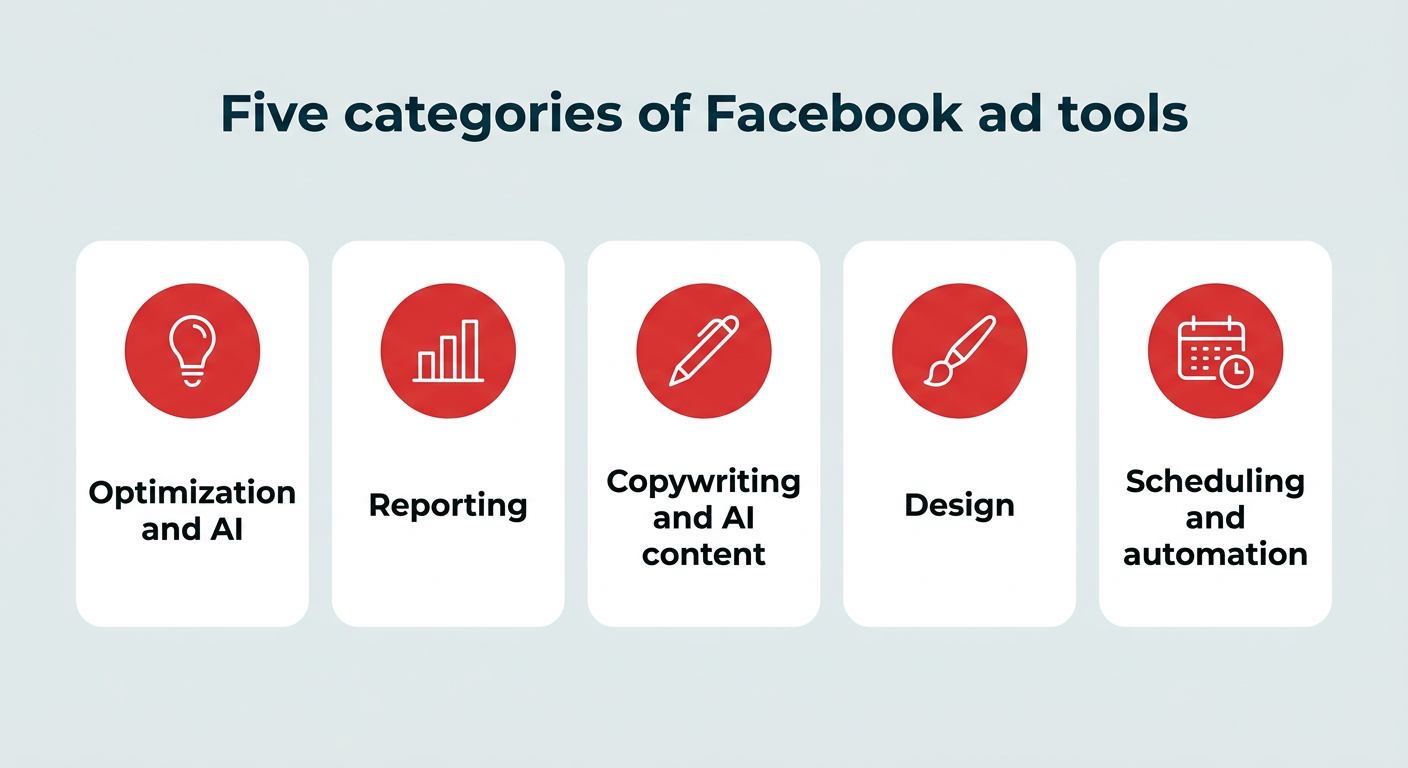
Finally, most marketing teams today operate across multiple digital networks, leading to a fragmented view of campaign performance and increased operational overhead. Facebook ad tools, particularly those offering cross-platform integration, help consolidate workflows and reporting, enabling teams to maintain pace with evolving demands without necessarily expanding headcount. These tools are generally categorized into optimization and AI, reporting, copywriting and AI content, design, and scheduling and automation, each addressing specific facets of the advertising lifecycle.

Strategic Selection: Choosing the Right Facebook Ad Tool
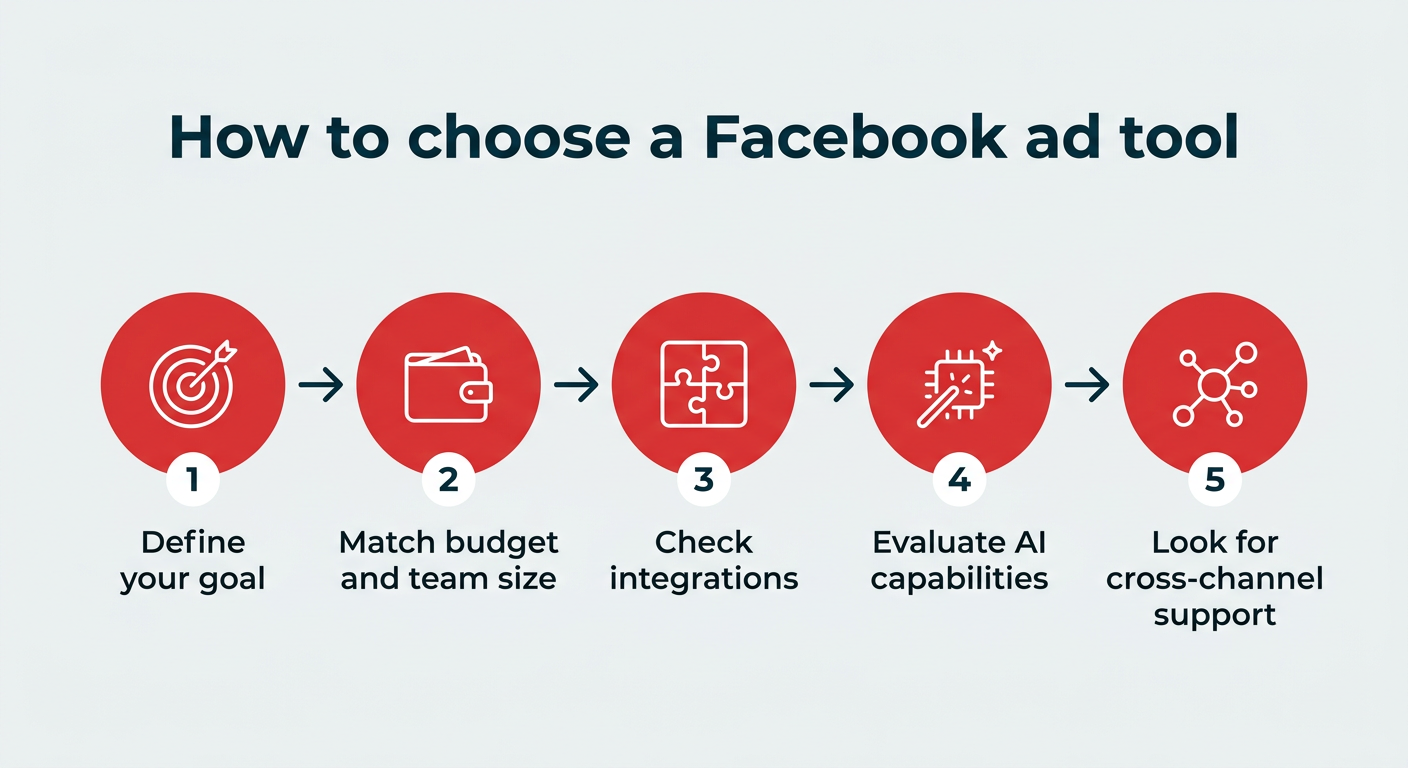
The proliferation of advertising tools can lead to feature overlap and unnecessary expenditure if not approached strategically. Marketing teams are advised to begin by clearly defining the problem they aim to solve rather than simply compiling a list of desired features. A structured approach involves considering several key criteria: identifying the core challenge, assessing integration capabilities with existing tech stacks, evaluating scalability for future growth, understanding the level of data granularity offered, and comparing pricing models against budget constraints. A crucial practical filter is to prioritize tools that reduce the number of open tabs and disparate systems, advocating for consolidation over fragmentation.
Native Powerhouses: Meta Ads Manager and Advantage+
At the foundation of Facebook advertising lies Meta Ads Manager, the official platform for creating, managing, and analyzing ad performance across Facebook, Instagram, Messenger, and WhatsApp. It is the indispensable hub for all advertisers, regardless of the scale of their operations. Integral to Ads Manager is Meta’s Advantage+ suite, a collection of AI-powered tools designed to streamline and enhance campaign performance.
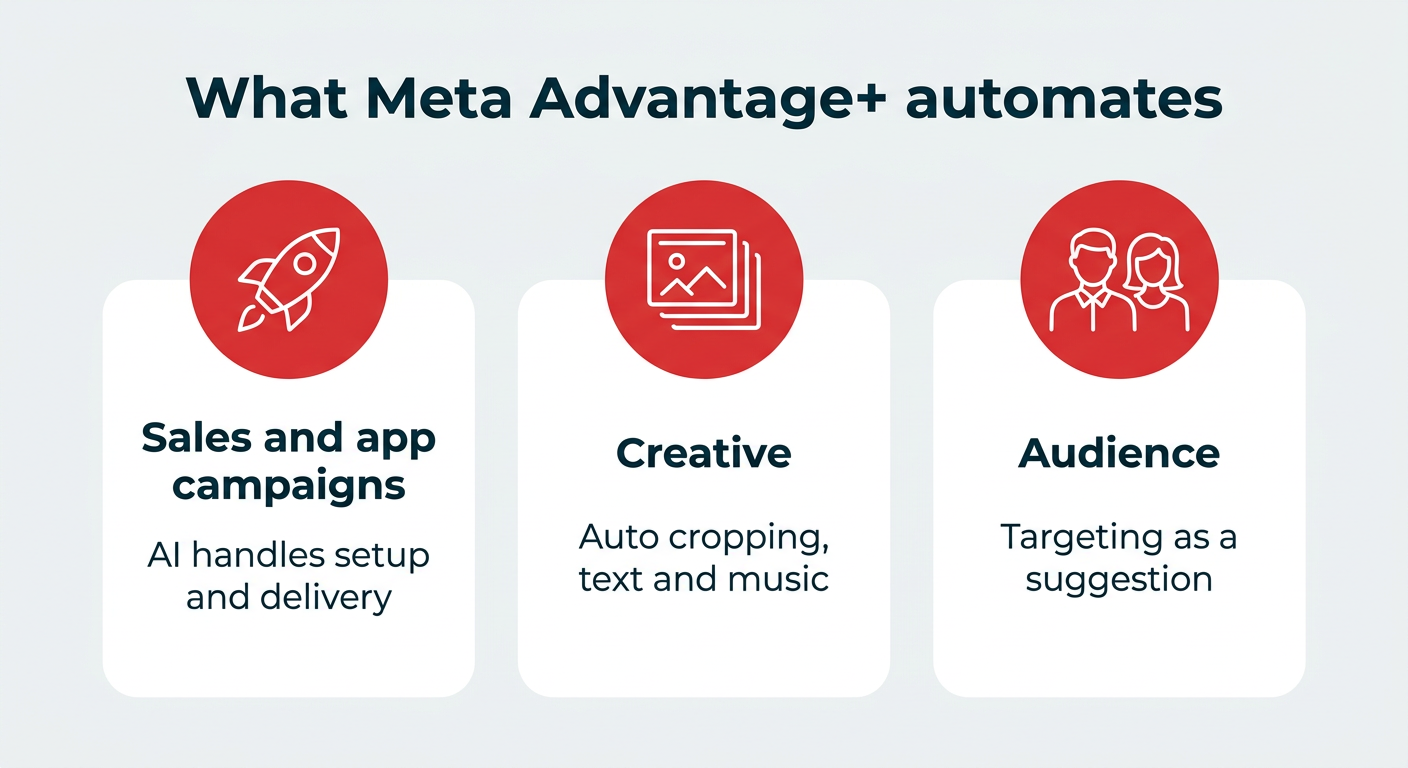
Advantage+ campaigns for sales and app promotion empower Meta’s AI to handle the majority of setup and delivery decisions, leveraging machine learning to identify optimal audiences and placements. Advantage+ creative automatically applies enhancements such as intelligent cropping, text variations, and music overlays to assets, while Advantage+ audience utilizes targeting inputs as flexible suggestions rather than rigid limits, allowing the AI to expand delivery to high-performing segments. These features have become the default starting point for many advertisers, signifying a major shift towards automated optimization.
Key features of Meta Ads Manager and Advantage+ include centralized campaign creation and management, real-time performance tracking, audience targeting based on extensive demographic and behavioral data, budget and bid management, and the powerful Advantage+ AI suite for automated optimization. For any entity running ads on Meta platforms, understanding and utilizing these native tools is foundational.
Third-Party Innovators: Extending Capabilities and Integration
While Meta Ads Manager provides essential functionality, third-party tools offer specialized features, cross-platform integration, and enhanced automation that can significantly amplify advertising efforts.
Optimization and AI Tools
These tools leverage artificial intelligence to identify opportunities for campaign improvement, providing recommendations or automating adjustments.
-
Madgicx: This platform is a powerful AI tool for comprehensive optimization, from refining ad targeting using first-party data to boosting overall ad performance. Its core strength lies in analyzing an advertiser’s Facebook ad account and instantly suggesting specific, actionable improvements. Madgicx excels in automated bidding strategies, predictive analytics, and granular audience segmentation, catering to organizations focused on maximizing return on ad spend.
-
Customers.ai: Focused on retargeting, Customers.ai uses AI to identify website visitors, allowing advertisers to build "warmer" audiences for Meta campaigns. Its identity resolution capabilities aim to be privacy-compliant, though advertisers must verify its data handling practices against regional privacy regulations. This tool is particularly valuable for experienced advertisers looking to improve conversion rates through highly targeted retargeting efforts.

-
AdCreative.ai: Designed for high-volume creative production, AdCreative.ai generates diverse ad visuals and copy from brand assets. Crucially, it scores each variation based on predicted performance before any ad spend, enabling marketers to prioritize the most effective creative. This tool is a boon for performance marketers and e-commerce teams requiring a constant supply of fresh, on-brand ad assets without extensive design resources.
Comprehensive Management Platforms
For marketers managing both paid and organic social media efforts, integrated platforms offer a unified workspace.

- Hootsuite Social OS: Hootsuite stands out by offering a holistic approach to social media management, integrating paid and organic strategies across Facebook, Instagram, LinkedIn, and X. Its advertising tools allow for campaign creation, management, optimization, and measurement within a single dashboard. Features like Perch facilitate unified content scheduling and publishing, while Hootsuite Analytics provides accurate social media ROI across all profiles. The platform’s ability to schedule organic posts at personalized optimal times, combined with robust ad management, enables rapid campaign adjustments and insightful reporting, simplifying complex social media operations for managers and executives alike.
Reporting and Analytics Tools
Accurate and consolidated reporting is vital for understanding campaign performance and justifying ad spend.
-
TapClicks: This tool is ideal for brands tracking analytics from diverse sources, such as Facebook ad performance, website analytics, and CRM data. TapClicks streamlines reporting into custom dashboards, allowing users to monitor key performance indicators (KPIs) across all touchpoints. Its ability to integrate data from numerous marketing channels far beyond social media makes it a powerful solution for agencies and large organizations seeking a unified view of their marketing ecosystem.

-
Funnel: Specializing in flexible cross-platform data modeling, Funnel connects and normalizes data from various sources, making it easier to identify trends and assess campaign performance across channels. Its strength lies in its ability to reconcile mismatched field names from different platforms, providing a clean and consistent data set for analysis. This is particularly beneficial for organizations requiring deep, customizable insights from complex, multi-platform data.
Copywriting and AI Content Tools
These tools aid in brainstorming, drafting, and repurposing content, accelerating the creation of effective ad copy.

-
Wisdom by Hootsuite: Integrated into the Hootsuite Social OS, Wisdom is an AI layer specifically designed for social content creation. It helps write Facebook ads and organic posts from scratch or based on existing content, drawing on Hootsuite’s extensive social media expertise. Beyond copy generation, Wisdom assists in trend discovery and identifies top-performing organic posts for repurposing into ads, making it a powerful asset for social media managers.
-
ChatGPT: As a leading generative AI tool, ChatGPT offers broad utility for Facebook advertisers. It can brainstorm ad ideas, generate diverse copy variations, and repurpose content quickly. Its flexible, conversational interface makes it an excellent resource for rapid drafting and ideation, allowing marketers to test multiple messaging approaches efficiently.
Design Tools

Maintaining brand consistency and producing high-quality visuals are crucial for effective ads.
-
Facebook Ad Library: This free, searchable database allows advertisers to view all ads currently running on Meta platforms, including historical data for social issue and election ads. It’s an invaluable resource for competitive research, identifying industry trends, and gathering inspiration for new campaigns. Users can search by country, category, or brand name, gaining insights into competitors’ strategies.
-
Canva: A ubiquitous design tool, Canva makes creating Facebook ad visuals accessible to users of all skill levels. Its extensive library of templates, combined with collaborative online workspaces, ensures brand consistency. Canva’s "Magic Studio" AI features, including image generation from text prompts, background removal, and "Magic Resize" for adapting designs to various placement sizes, further enhance its utility for ad creative production. With 260 million monthly users in 2025, Canva remains a cornerstone for visual content creation.

-
Smartly.io: Built for enterprise and high-spend advertisers, Smartly.io is a creative automation platform that enables dynamic creative optimization, automated testing, and templated production at scale. It allows one core creative concept to be adapted into hundreds of localized or audience-specific variations without manual intervention, crucial for large-scale international campaigns.
Scheduling and Automation Tools
These tools streamline campaign execution, ensuring ads reach the right audience at optimal times and automating repetitive tasks.

-
RevealBot: This platform specializes in rule-based campaign automation, allowing advertisers to set up precise conditions for starting, pausing, or adjusting campaigns. For instance, an ad campaign could be configured to activate only when the weather in a specific area reaches a certain temperature. RevealBot also supports bulk ad uploads and scheduling, providing granular control over ad management workflows.
-
Adzooma: Adzooma offers multi-network campaign management, consolidating control over Facebook, Google, and Microsoft Ads in one interface. Its key differentiator lies in "opportunity alerts" that flag specific changes for optimization. Users can also set automation rules to adjust budgets or pause underperforming campaigns across networks, reducing the need to log into multiple platforms daily.
The Future of Facebook Advertising: AI, Integration, and the Evolving Marketer Role

The trajectory for Facebook advertising tools points towards deeper AI integration and greater platform consolidation. As Meta continues to enhance its Advantage+ suite, marketers’ roles will shift from manual optimization to strategic oversight, focusing on defining objectives, interpreting AI-driven insights, and providing high-quality creative inputs. The emphasis will increasingly be on understanding how to effectively communicate with and leverage these intelligent systems.
The need for integrated solutions that bridge the gap between paid and organic social media efforts will also intensify. Platforms like Hootsuite Social OS exemplify this trend by offering a unified view of cross-channel reporting, reducing data silos, and providing a clearer answer to the critical question of social media ROI. This holistic approach ensures that advertising campaigns are not isolated endeavors but integral components of a broader social media strategy.
In conclusion, the landscape of Facebook ad tools in 2026 is defined by sophistication, automation, and integration. While Meta’s native tools provide the essential framework, a diverse ecosystem of third-party solutions offers specialized capabilities that address specific marketing challenges. Strategic tool selection, driven by a clear understanding of business problems and a commitment to integrated workflows, will be paramount for advertisers seeking to maximize their impact in this increasingly complex and AI-driven environment. The ultimate goal is to empower marketing teams to achieve greater efficiency, deeper insights, and superior results, transforming their social media spend into tangible business growth.

 Evan Lee Salim

 Sagoh