Asep Darmawan
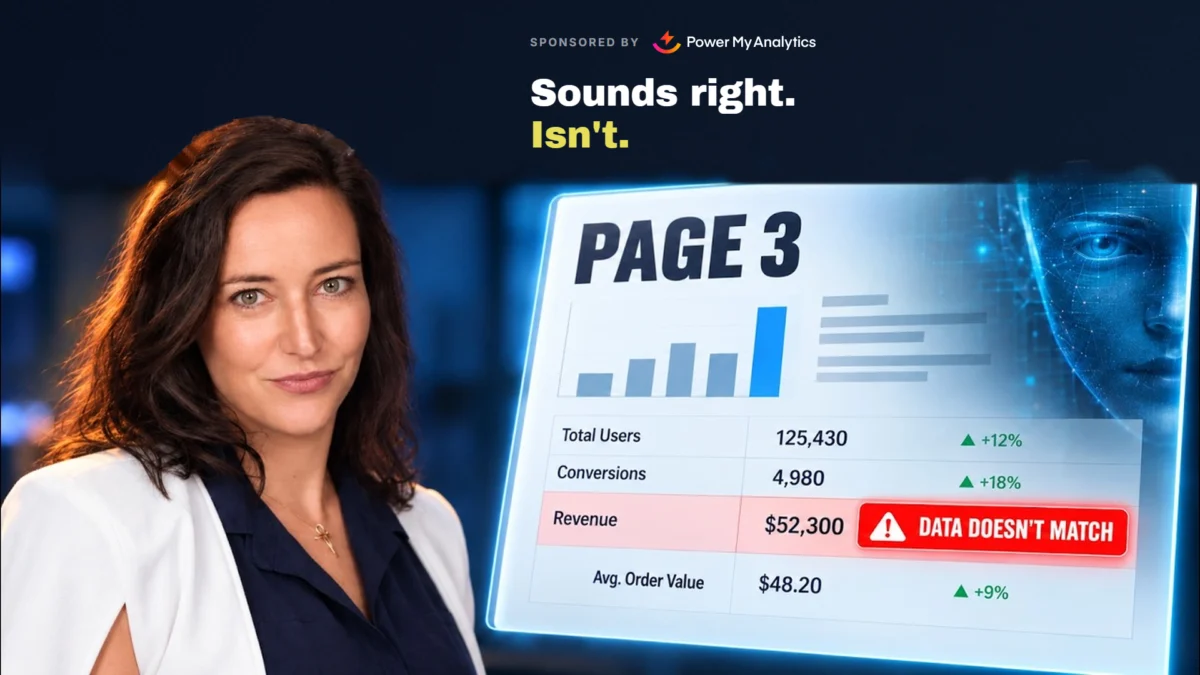
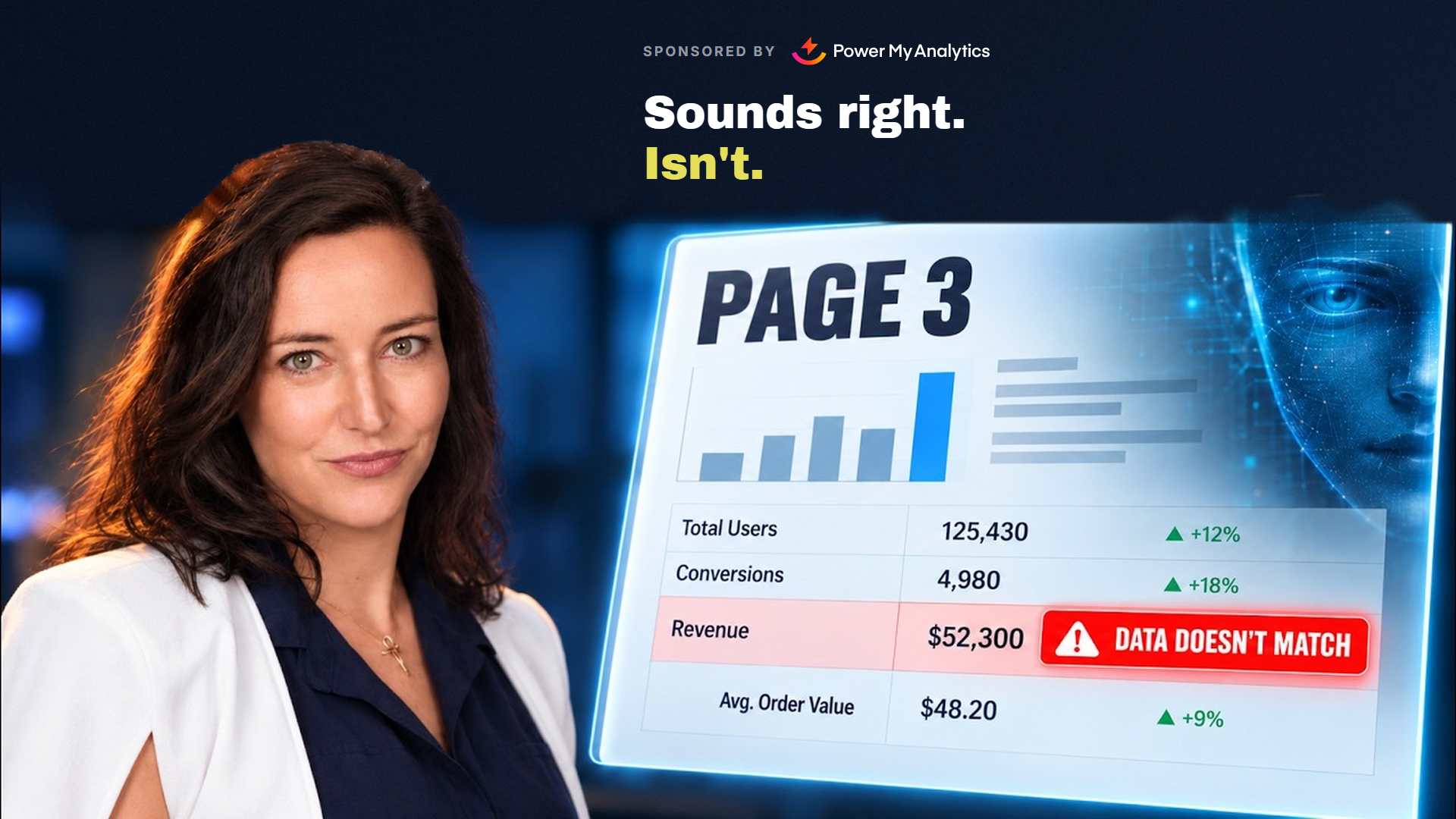
The rapid integration of generative artificial intelligence into the marketing technology stack has created a paradoxical challenge for digital analysts: while AI tools like ChatGPT and Claude provide highly confident responses to complex data queries, those answers are frequently built on a foundation of fragmented information. During a recent MeasureU Lunch & Learn session, Antoinette “Tony” Scott, Head of Sales and Marketing at Power My Analytics, addressed this growing "confidence gap" in AI-driven marketing. The central thesis of the presentation argued that AI is not failing due to a lack of processing power, but rather because it is being asked to navigate complex business landscapes using only a fraction of the necessary data—a phenomenon Scott compares to navigating a cross-country trip with only the middle page of a MapQuest printout.
The Fragmentation of Modern Marketing Data
The current state of digital marketing relies on a multi-platform ecosystem where data is siloed within various dashboards, including Google Analytics 4 (GA4), Facebook Ads, LinkedIn Campaign Manager, and internal Customer Relationship Management (CRM) systems. Each of these platforms provides a "fragment of the middle," offering specific metrics that lack a unified origin or destination. According to Scott, this creates the "1998 MapQuest Problem" for modern AI. In the late 1990s, travelers often relied on printed directions; losing the first or last pages left the driver with a list of turns but no context of where they started or where they were going.
In 2024, the marketing equivalent involves handing an AI tool a specific dashboard—such as a Facebook Ads report—and asking it to make high-level strategic decisions. The AI may see an increase in cost-per-click (CPC) and suggest pausing a campaign, unaware that the campaign’s primary objective is long-term brand awareness rather than immediate conversion. Without the "first and last pages" of the business strategy, the AI hallucinates a coherent narrative based on incomplete metrics.
From Data Lakes to Data Swamps: The Need for Governance
A significant portion of the session focused on the structural requirements of AI. Industry experts have long touted the "data lake" as the solution to fragmented reporting, yet Scott warned that a data lake without strict governance quickly devolves into a "data swamp." In a data swamp, information is dumped without labels, hierarchy, or standardized naming conventions.
AI models operate as agnostic processors; they treat every data point with equal weight unless instructed otherwise. For instance, an AI might not distinguish between a "revenue" metric in Google Ads (which might track gross sales) and a "revenue" metric in a CRM (which might track net profit after returns). When asked which campaign was most "efficient," the AI will provide a definitive numerical answer, but that answer may be fundamentally flawed because the AI lacks the hierarchy to prioritize profit over raw sales volume.
To rectify this, Scott identified three pillars that AI requires to function as a strategic partner rather than a simple calculator:
- Clean, Consistent Data: Standardized naming conventions across all platforms are essential. If a campaign is named "Summer_24_Promo" in one system and "S24-Brand-Video" in another, AI cannot reliably bridge the gap.
- Structure and Hierarchy: Analysts must define which metrics carry the most weight. Primary conversion metrics must be distinguished from secondary engagement metrics to prevent the AI from optimizing for the wrong goals.
- Business Context: This involves encoding brand-specific knowledge—such as seasonal benchmarks, target audience behaviors, and internal profit margins—directly into the data structure.
The Role of the Ontology Layer in AI Readiness
The most technical aspect of the discussion involved the introduction of the "ontology layer." In information science, an ontology is a formal way of representing properties and relationships between different entities. In the context of marketing data, an ontology layer acts as a translator that encodes business logic into the data stream before it reaches the AI.

Power My Analytics is currently developing tools to facilitate this layer, focusing on three practical implementations:
Brand Name Mapping: For agencies managing dozens of clients, AI often struggles to differentiate between accounts linked to a single master email. An ontology layer allows analysts to map specific account IDs to brand names, ensuring that when an AI is asked about "Client A," it does not inadvertently include data from "Client B."
Budget Pacing and Timelines: AI tools generally lack an inherent understanding of a company’s fiscal calendar or specific campaign flight dates. By providing a timeline-based ontology, analysts can enable AI to provide real-time alerts when a campaign is over-pacing or under-pacing relative to a pre-defined budget.
Campaign Goal Contextualization: This addresses the "wrong goal" problem. By tagging campaigns with their specific objectives—awareness, consideration, or conversion—the AI is instructed to evaluate performance based on relevant KPIs. An awareness campaign with low conversions would be flagged as a success if its impression count and reach are high, rather than being dismissed as a failure by a conversion-focused AI.

Chronology of the Analytics Evolution
The transition to AI-ready data represents the third major era in digital marketing analytics:
- The Spreadsheet Era (Pre-2010): Data was manually exported and aggregated in Excel. Context was held entirely in the analyst’s head.
- The Dashboard Era (2010–2022): Tools like Google Data Studio (now Looker Studio) and Power BI allowed for automated visualization. Data was centralized, but interpretation still required heavy human intervention.
- The AI Integration Era (2023–Present): With the rise of Large Language Models (LLMs), the industry is moving toward natural language querying of data. This era necessitates the "ontology layer" to prevent the widespread dissemination of confident but incorrect AI insights.
Case Study: The Profitability Paradox
Morgan Jones, CEO of Power My Analytics, contributed a significant example of why business context is vital. During a pricing analysis for a specific product, an AI model initially suggested that a recent price increase was a failure because unit sales had decreased. From a purely mathematical standpoint, the AI saw a negative trend in volume.
However, once Jones provided the "ontology" of cost of goods sold (COGS) and profit margins, the AI’s conclusion reversed. It realized that while unit sales were lower, the increased margin per unit resulted in higher total profit. With this context, the AI shifted from recommending a price cut to suggesting further price testing to find the ceiling of profitability. This shift from "volume-centric" to "profit-centric" analysis is only possible when the human analyst provides the underlying business logic.
The Future of the Marketing Analyst
Despite fears that AI will render data analysts obsolete, the consensus from the session was that the role is becoming more critical. As AI takes over the "driving" of data analysis—performing the calculations and generating the reports—the analyst’s role shifts to "building the road."

"Someone has to map every road, every turn, and every speed limit for a GPS to work," Scott noted. In the same vein, analysts are now responsible for the architectural work of data governance. The demand for professionals who understand data hierarchy and business strategy is expected to outpace the demand for those who merely know how to pull reports. The "road builders" of the AI era are those who can translate nebulous business goals into structured data that an LLM can accurately interpret.
Broader Impact and Industry Implications
The implications of this shift are significant for the broader marketing industry. As AI tools gain "write access" to advertising platforms—allowing them to not only report on campaigns but also to pause ads or adjust budgets autonomously—the risk of operating without an ontology layer becomes existential. An AI without context could inadvertently shut down a brand’s most important long-term strategic initiative because it didn’t meet a short-term, incorrectly identified KPI.
Furthermore, the transition to GA4 has exacerbated these issues. GA4’s event-based tracking model offers more flexibility but requires more manual setup of custom dimensions to capture business context. Many organizations have migrated to GA4 without fully utilizing these features, leading to a "data gap" that AI tools are now struggling to fill.
The industry is currently in a race to build the infrastructure necessary to support reliable AI analysis. For agencies and internal marketing teams, the immediate priority is no longer just collecting data, but rather "cleaning the swamp" and establishing the rules of engagement for the AI tools that will eventually manage their multi-million dollar budgets. Success in the next five years of digital marketing will likely be defined not by who has the most advanced AI, but by who has the most structured and contextually rich data for that AI to process.

 Muslim