Suro Senen
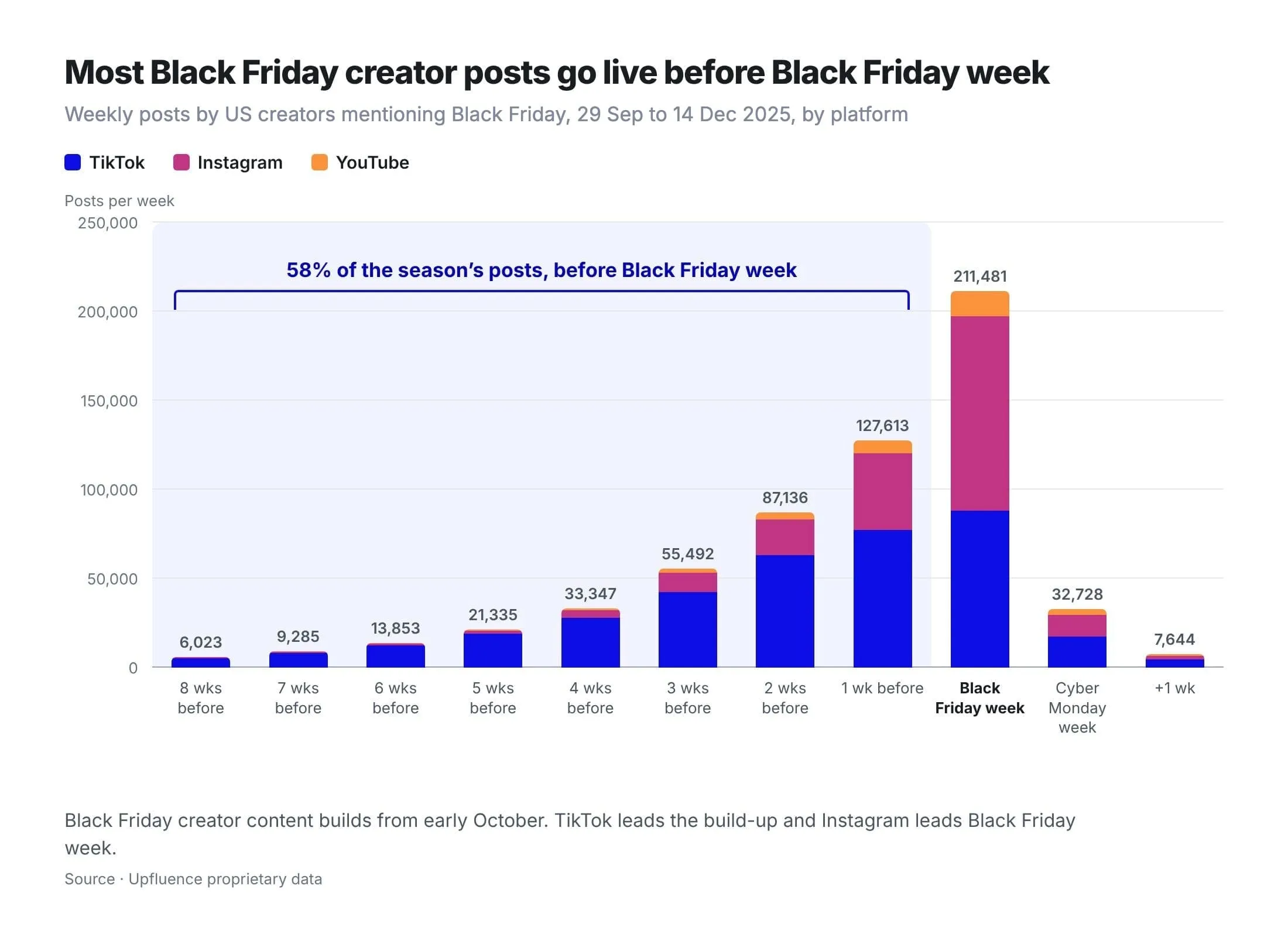
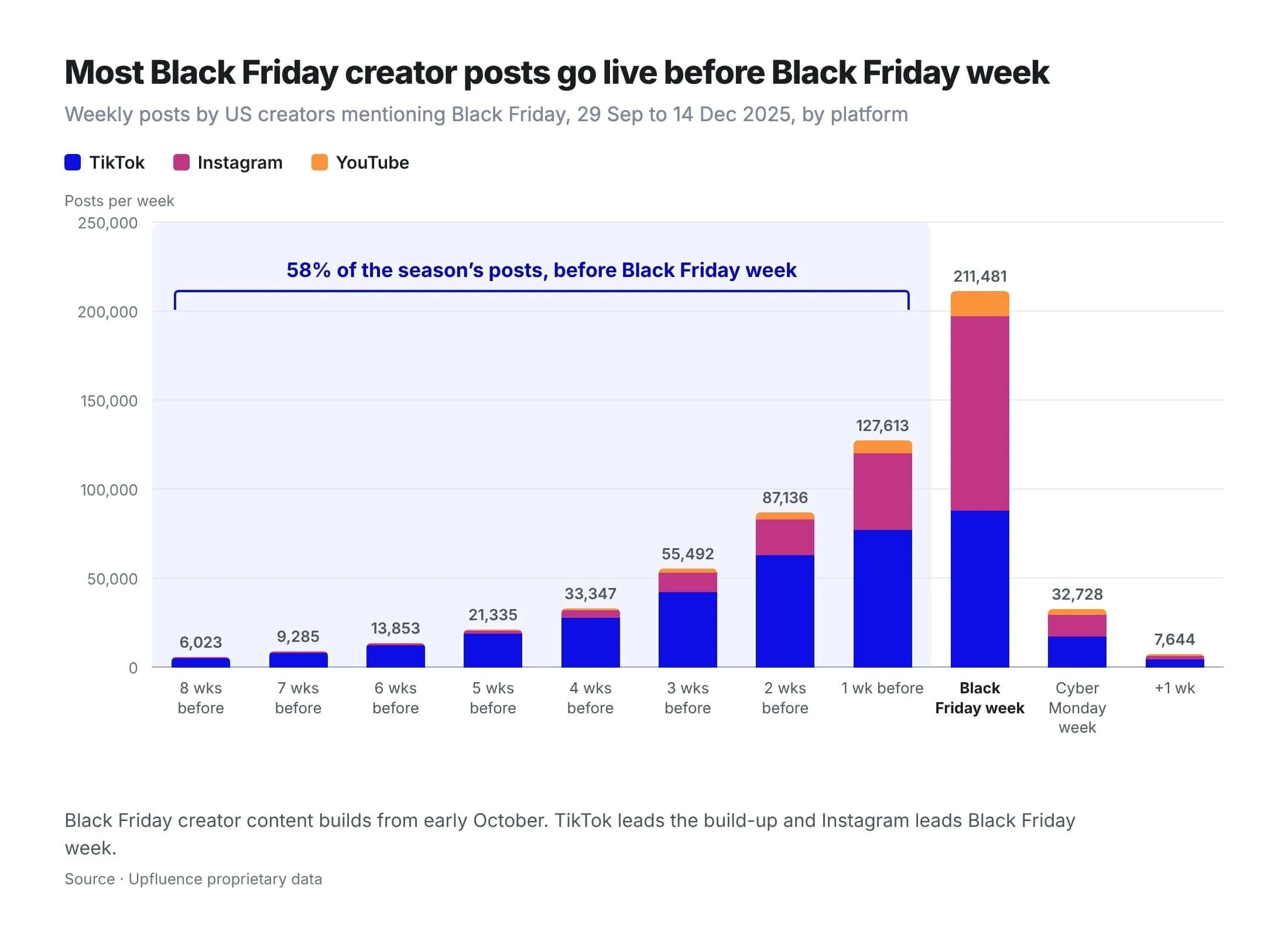
The landscape of holiday retail has undergone a fundamental shift, moving away from a single day of doorbuster deals toward a month-long, creator-driven digital ecosystem. According to a comprehensive analysis of 606,000 Black Friday posts by U.S. creators during the previous season, the primary challenge facing modern brands is no longer just the depth of the discount, but the precision of their timing. Data reveals that 58% of creator-led Black Friday content now goes live before the actual week of the event, suggesting that brands initiating their campaigns in late November are entering the conversation after the majority of consumer purchasing decisions have already been influenced.
This evolution comes as online spending continues to shatter previous records. Adobe Analytics reported that U.S. shoppers spent $11.8 billion online on Black Friday in 2025, a significant increase from $10.8 billion the year prior. Shopify merchants alone accounted for $14.6 billion in sales over the Black Friday through Cyber Monday (BFCM) weekend, marking a 27% increase over 2024. For more than 94,000 of these merchants, the period represented their highest-grossing sales day in corporate history. As the stakes for the Q4 corridor escalate, the role of creators—influencers who provide social proof and curated recommendations—has become the central pillar of the modern marketing mix.
The Chronology of a Successful Creator Campaign
The traditional marketing calendar has been pulled forward by nearly six weeks. To remain competitive, brands are now advised to build their strategies backward from the November 27 Black Friday date, beginning their efforts in early October. The analysis of creator behavior indicates a steep build-up in content production starting in mid-October. Between the second week of October and the week of Black Friday, the volume of weekly posts mentioning the event grew by approximately 23 times.
A strategic timeline for 2026 suggests the following milestones for retail brands:
October 1 – October 15: The Selection Phase. During this window, brands must shortlist creators and finalize their promotional offers. This period is critical for shipping physical products to creators to ensure they have ample time for filming and production.
October 19 – November 1: The Briefing and Teaser Phase. Creators are briefed on specific messaging and provided with unique tracking links and discount codes. Initial "teaser" content typically begins on TikTok during this phase to build anticipation.
November 2 – November 22: The Conversion Build-up. This three-week window is the most active for "early access" content. Historical data shows that 45% of all Black Friday creator posts are published during these three weeks. Content during this time focuses on reviews, gift guides, and early-bird discount codes.
November 23 – November 29: Black Friday Week. The focus shifts to high-urgency platforms. Instagram Reels and Stories become the dominant formats, utilizing countdown stickers and "last chance" reminders.
November 30 – December 2: Cyber Monday Conclusion. This serves as the final follow-up period, focusing on "last-chance" deals and clearing remaining inventory.
Platform-Specific Dynamics and Consumer Behavior
The study of 1.2 million creator posts worldwide highlights that social media platforms do not move in unison. Each platform serves a distinct purpose in the consumer journey, and brands that fail to differentiate their content by platform often see diminished returns.
TikTok has emerged as the primary engine for early-season discovery. Last season, TikTok accounted for 84% to 90% of all Black Friday-related creator posts in October. The platform’s algorithmic nature allows for rapid "viral" discovery of new products, making it ideal for the early build-up phase. Conversely, Instagram is the platform of choice for the final conversion push. While it starts the season slowly, Instagram eventually carries 52% of all creator posts during Black Friday week itself, driven by the high engagement of its Stories and Reels formats.
YouTube remains the preferred destination for high-ticket items and considered purchases. While it accounts for a smaller percentage of total posts (approximately 6%), its content offers longevity and depth. Shoppers looking to research expensive electronics or luxury goods turn to YouTube for long-form reviews. Data shows that YouTube engagement remains remarkably steady, with Black Friday content performing nearly as well as standard editorial content (3.2% vs. 3.3% engagement per view), a rarity in a season often plagued by "ad fatigue."
Category Trends and the Saturated Market
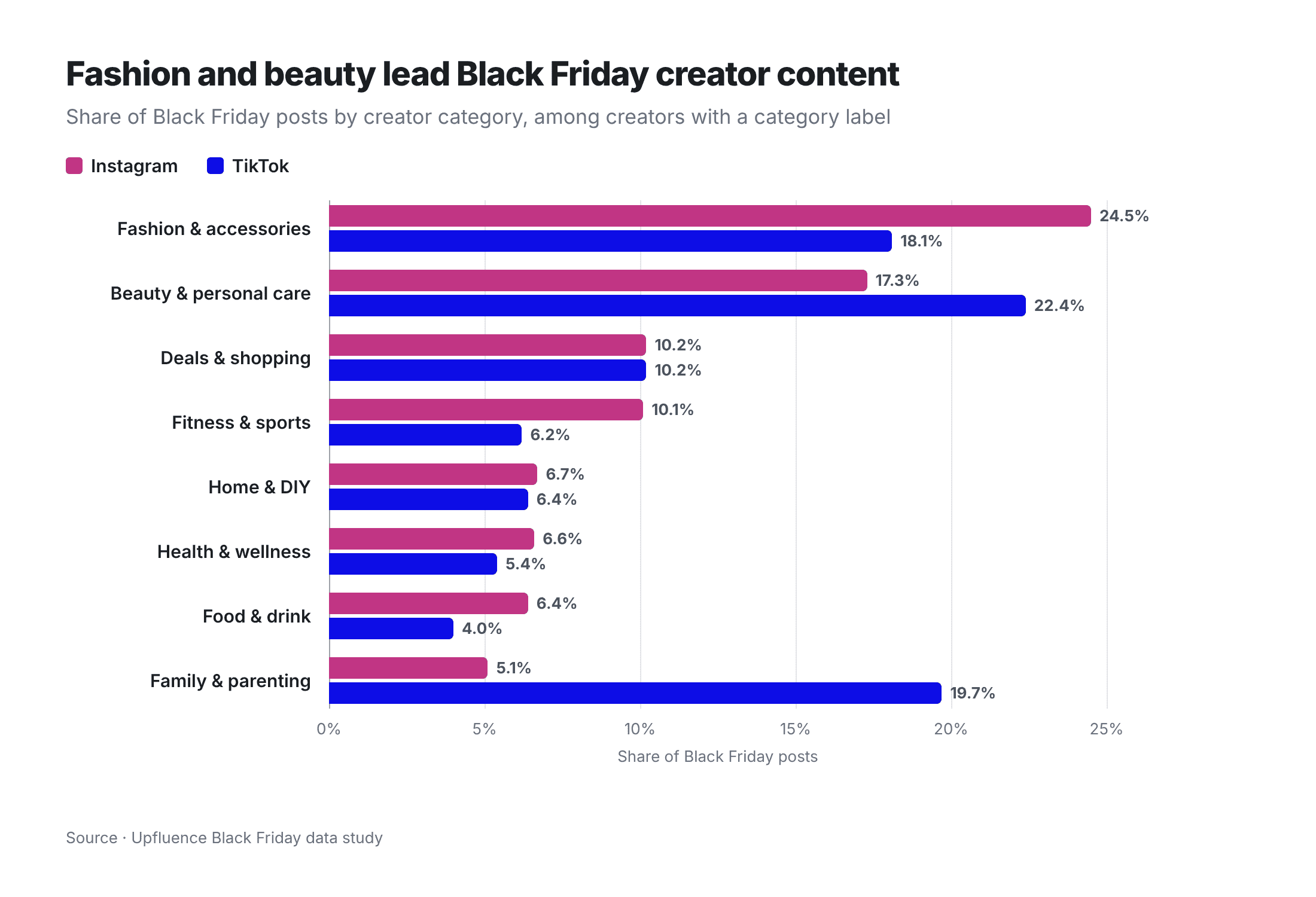
Fashion and beauty continue to dominate the creator landscape. On Instagram, fashion and accessories creators were responsible for 24.5% of Black Friday posts, followed by beauty at 17.3%. TikTok showed an even stronger leaning toward beauty (22.4%) and family/parenting content (19.7%).
For brands in these high-saturation categories, the competition for consumer attention is fierce. Analysts suggest that beauty and fashion brands must book creators earlier than other sectors to avoid being priced out or lost in the noise. Conversely, brands in "quieter" categories like food, fitness, or home improvement face significantly less competition. In these sectors, only 1% to 2% of creator posts typically mention Black Friday, providing a unique opportunity for brands to capture a larger share of voice with relatively lower investment.
The Micro-Influencer Advantage in Reach and Engagement
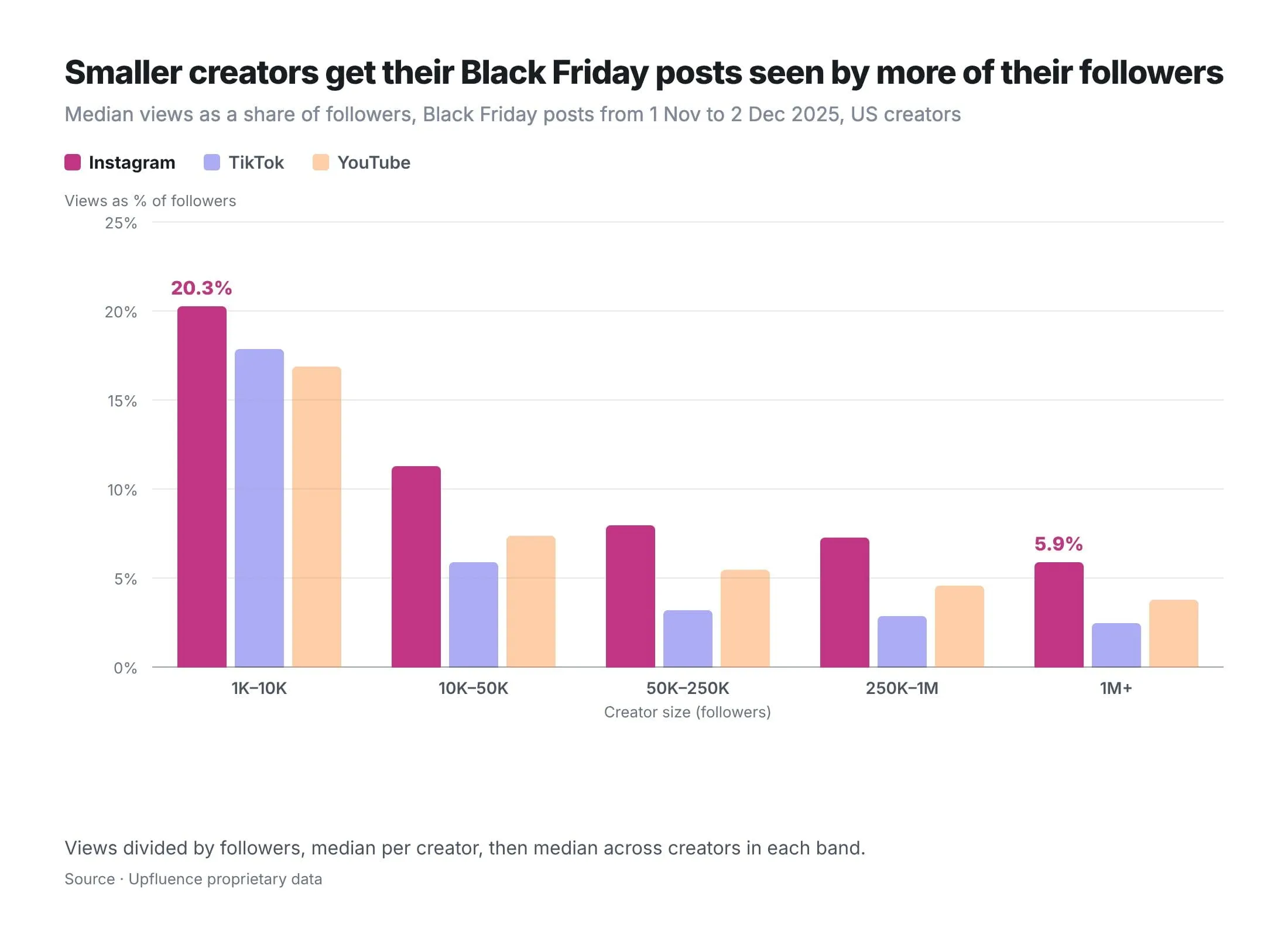
One of the most significant findings in the recent data analysis is the inverse relationship between follower count and reach during the holiday season. While brands are often tempted to partner with "mega-influencers" (those with over 1 million followers), the data suggests that smaller creators offer superior efficiency during high-noise periods.
On Instagram, Black Friday posts from creators with 1,000 to 10,000 followers achieved views equal to a median of 20% of their follower count. In contrast, creators with over 1 million followers saw their reach drop to just 6% of their audience. Similar trends were observed on TikTok (18% reach for small accounts vs. 2.5% for large ones) and YouTube (17% vs. 4%).
This phenomenon is attributed to the "niche authority" held by smaller creators. Their audiences tend to be more loyal and engaged, viewing the creator’s recommendations as peer-to-peer advice rather than traditional advertising. During the chaotic Black Friday week, these smaller, more intimate communities provide a sanctuary of trusted information for shoppers overwhelmed by mass-market messaging.
Content Formats That Drive ROI
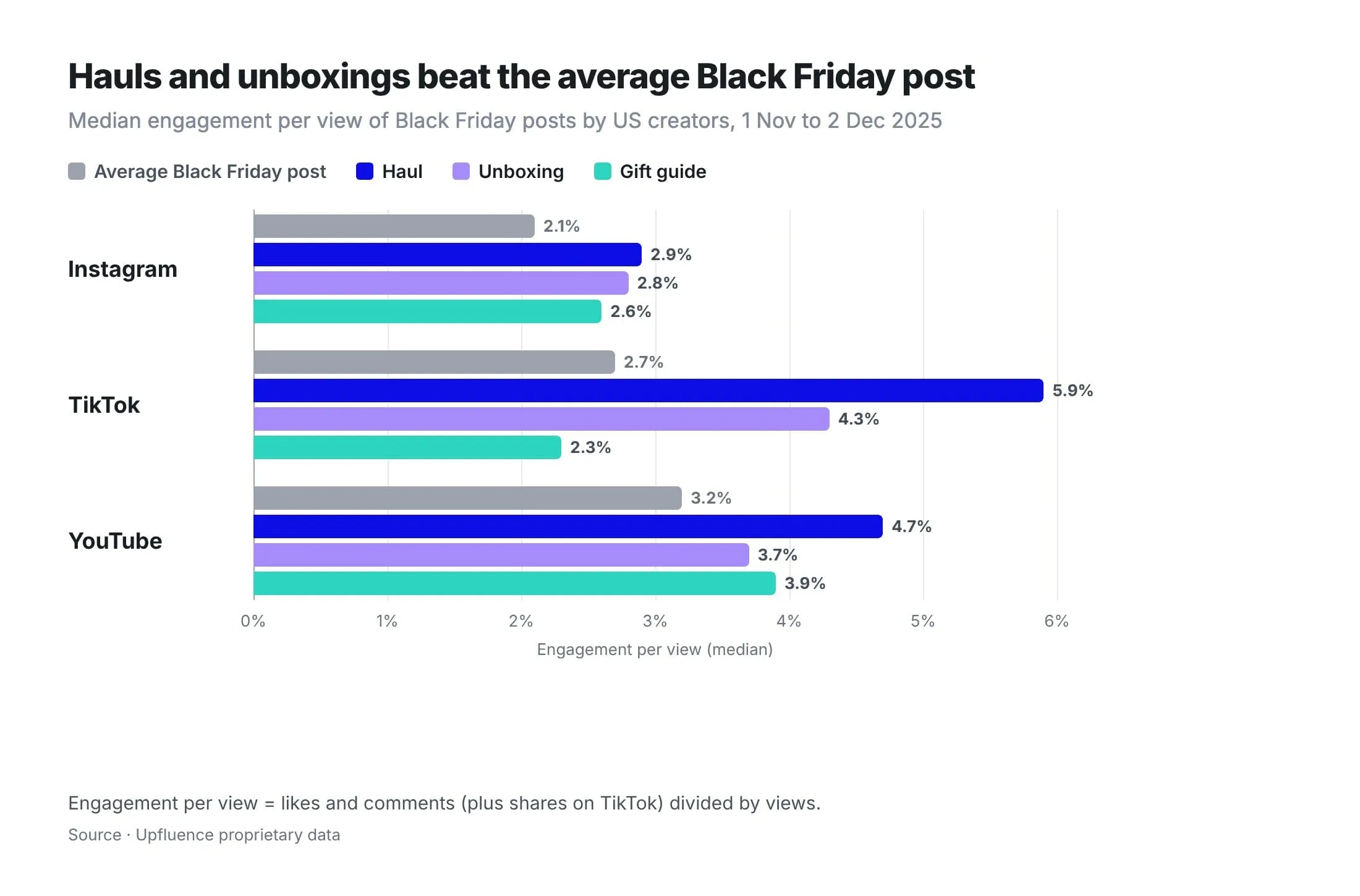
Not all creator content is created equal. The analysis indicates that "bare" deal announcements—posts that simply state a price and a discount—actually perform worse than a creator’s average post. On Instagram, the median engagement for Black Friday posts was 2.1%, compared to 2.8% for standard content. On TikTok, the drop was more dramatic: 2.7% for Black Friday posts versus 6.3% for usual content.
To combat this "promotional dip," successful brands are utilizing specific formats that integrate the discount into an entertaining or educational narrative. Three formats stood out as high performers last season:
- Unboxings and First-Look Reviews: These posts allow viewers to experience the product vicariously. They earned 4.3% engagement on TikTok, significantly higher than the 2.7% average for general Black Friday posts.
- Hauls and Try-ons: Particularly effective in the fashion sector, hauls earned 5.9% engagement on TikTok. Viewers value seeing how clothes fit on a variety of body types and hearing honest commentary on fabric quality.
- Gift Lists: Curated guides such as "Top 5 Gifts Under $50" serve as a utility for busy shoppers. These posts beat engagement averages on both Instagram (2.6%) and YouTube (3.9%), positioning the brand as a solution to the consumer’s holiday stress.
Analytical Implications and the Shift to Performance Tracking
The move toward creator-led marketing represents a broader shift in the retail industry from "brand awareness" to "performance marketing." In previous years, influencer campaigns were often viewed as "top-of-funnel" activities with difficult-to-measure returns. However, the integration of unique promo codes and affiliate links has transformed these partnerships into highly trackable sales channels.
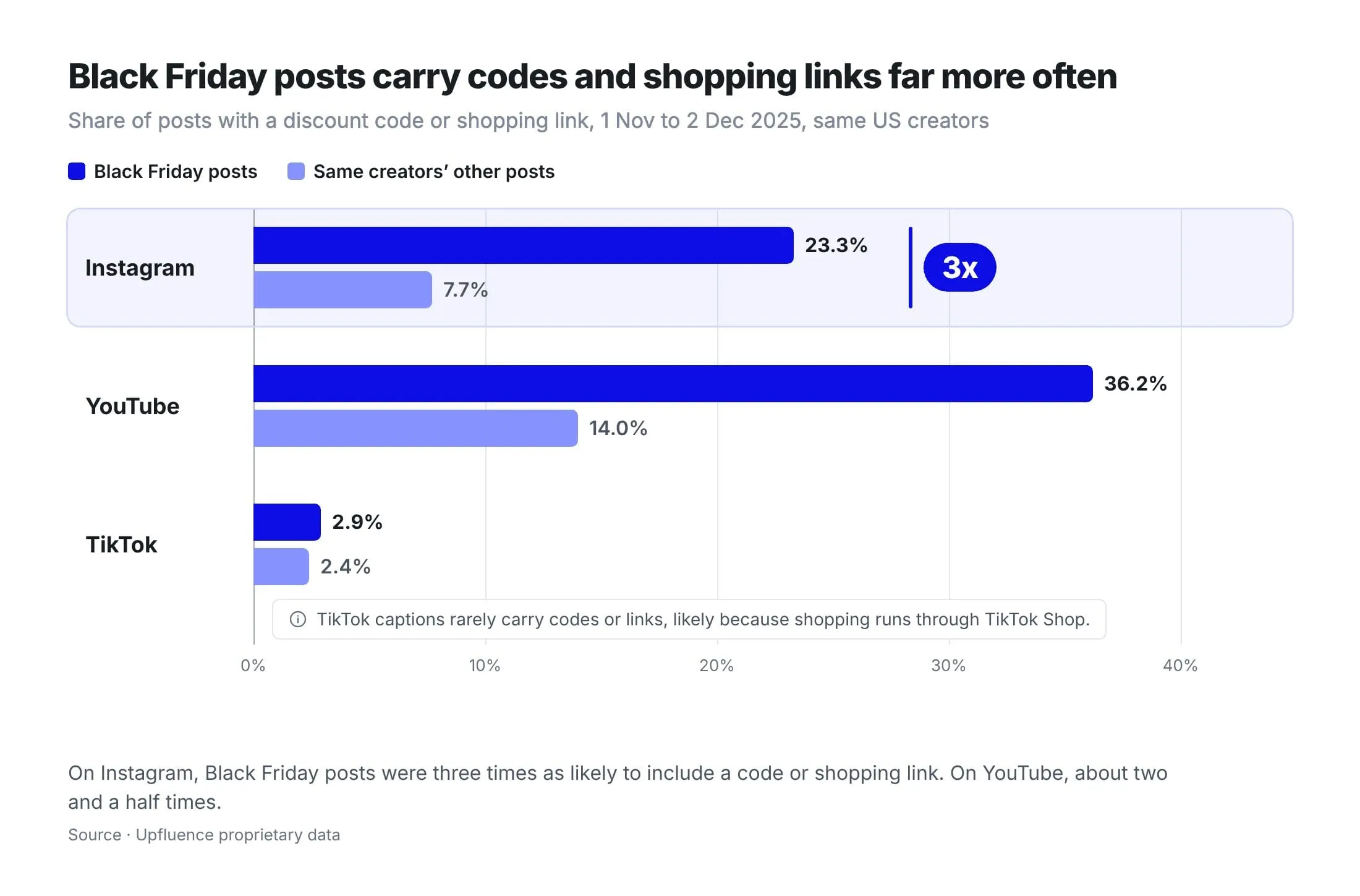
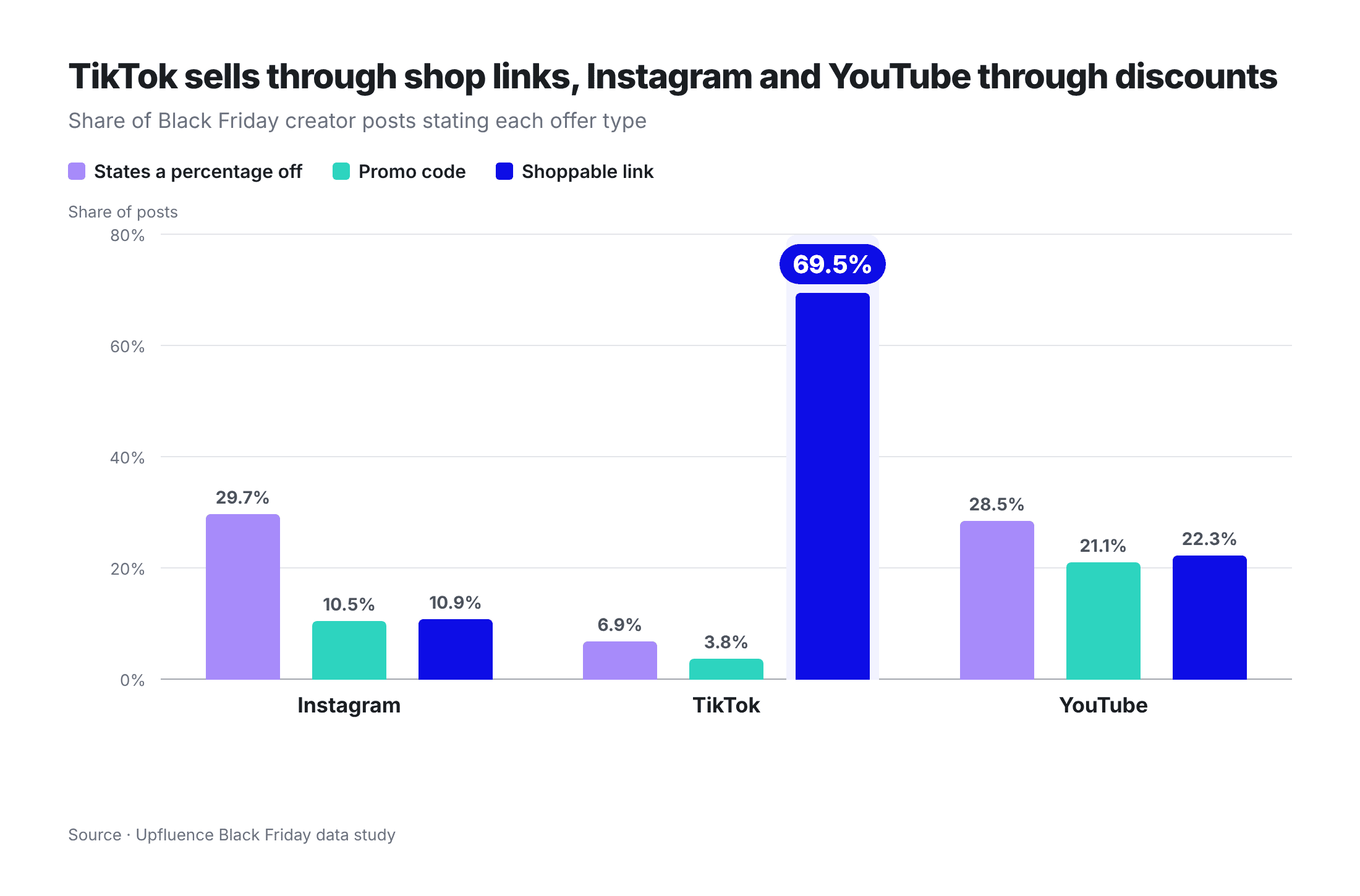
Last November, 23% of Instagram Black Friday posts by U.S. creators included a specific discount code or "link in bio" shopping cue, compared to only 8% of their non-holiday posts. This indicates that creators themselves are becoming more comfortable with performance-based compensation models. By providing each creator with a unique code, brands can monitor real-time sales and adjust their budgets mid-campaign, funneling more resources toward the creators who are driving the highest conversion rates.
Conclusion: The New Standard for Holiday Retail
The data from the 2025 season makes it clear: Black Friday is no longer a sprint; it is a marathon that begins in October. For brands to succeed in 2026, they must move beyond the "one-day deal" mindset and embrace a sophisticated, creator-centric strategy that prioritizes early engagement, platform-specific content, and micro-influencer partnerships.
As digital noise reaches its annual peak, the creators who can cut through the clutter are those who offer more than just a discount code—they offer authenticity, curation, and trust. For the modern consumer, these are the most valuable commodities of all. Brands that recognize this shift and plan their creator collaborations with data-driven precision will be the ones setting new sales records when the final Cyber Monday tallies are counted.


 Lina Hope

 Evan Lee Salim