Siti Muinah
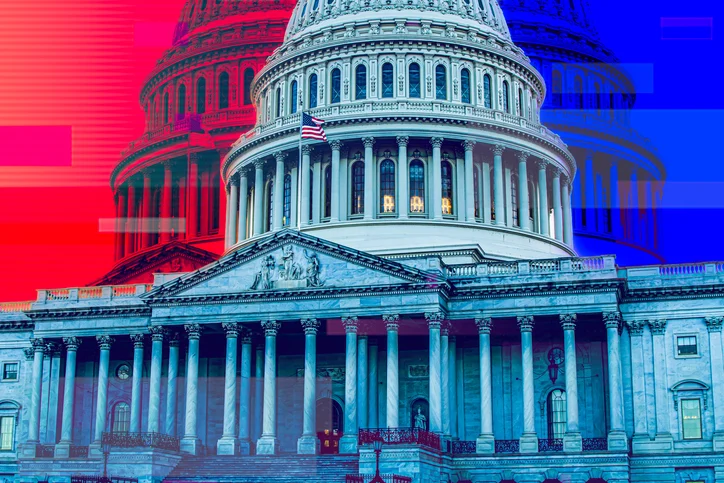
The United States political landscape has undergone a significant transformation following the 2026 midterm elections, as the Democratic Party successfully secured control of both the House of Representatives and the Senate. While these majorities are substantial, they fall short of being filibuster-proof or veto-proof, creating a complex legislative environment where businesses must navigate a new era of oversight and policy shifts. The "Blue Wave" was propelled by a campaign platform centered on three primary pillars: economic affordability, the implementation of stringent guardrails for artificial intelligence (AI) development, and heightened accountability for both corporate entities and political figures. As the dust settles on the election results, the American business community is now bracing for a period of transition characterized by increased regulatory scrutiny and a shift in legislative priorities.
The Legislative Shift and Corporate Accountability
The Democratic victory signals a departure from the deregulatory environment that characterized much of the previous administration’s second term. The new congressional leadership has indicated that its primary focus will be addressing the cost-of-living crisis that has dominated public discourse. This includes potential legislation aimed at price gouging, healthcare costs, and housing affordability. However, the path to implementation is fraught with challenges. While Congress holds the "power of the purse" and the authority to draft regulations, substantive legislative change requires the signature of the President.
In the current divided government scenario, analysts suggest that the most immediate impact of the Democratic takeover will be felt through the power of oversight. Congressional committees, now chaired by Democrats, possess the authority to launch investigations, issue subpoenas, and hold high-profile public hearings. These tools are often used to shape public opinion and pressure corporations into changing their practices without the immediate need for new laws.
One of the most significant shifts in leadership is the appointment of Senator Elizabeth Warren of Massachusetts as the Chair of the Senate Banking Committee. Senator Warren has long been a vocal critic of Wall Street and the broader financial services industry. Her agenda is expected to be aggressive, with early signals suggesting that her committee will target private equity firms, the cryptocurrency industry, and the burgeoning sector of prediction markets. For Wall Street, this transition represents a "nightmare scenario" as the committee moves from a posture of cooperation to one of rigorous investigation.
Navigating Executive vs. Legislative Authority
Despite the Democratic gains in Congress, the executive branch retains significant control over key economic levers. Analysts from Morgan Stanley have noted that much of the policy uncertainty in recent years has stemmed from executive actions rather than legislative ones. This dynamic is expected to persist. President Trump’s second-term policies regarding international trade, tariffs, and geopolitical strategy—including the ongoing tensions in the Middle East—are largely shielded from direct congressional interference.
"We think policy uncertainty since the beginning of President Trump’s second term has been tied to executive, not legislative, action," Morgan Stanley analysts stated in a recent report. They emphasized that policies regarding deregulation, export controls, and tariffs are likely to remain in place, as the President can exercise broad authority in these areas under existing trade laws and national security mandates. Consequently, businesses must prepare for a "dual-track" reality: a legislative branch focused on domestic regulation and corporate oversight, and an executive branch continuing its path of protectionist trade policies and geopolitical maneuvering.
The Growing Backlash Against Big Tech
A defining feature of the 2026 midterms was the bipartisan skepticism toward the technology sector. While the Democratic platform was particularly vocal, the sentiment echoed across the political aisle. Public anxiety regarding the rapid advancement of artificial intelligence, the environmental impact of massive data centers, and the perceived "loss of control" over personal data and job security fueled a populist message that resonated with voters.
Representative Ro Khanna (D-Calif.) highlighted this sentiment, noting that the election was a reflection of deep-seated anxiety over the future of the American dream. "I think that this is definitely about the loss of control that people have," Khanna stated. "There’s deep anxiety, not just over the cost of living, but about whether people can have an aspiration in America again."
The tech industry, which had notably sought to build bridges with the Trump administration during his second term, now faces a hostile Congress. Investigations are expected to focus on several key areas:
- AI Guardrails: Examining the safety, ethics, and displacement risks associated with generative AI.
- Social Media Impact: Investigating the mental health effects of platforms on children and adolescents.
- Market Dominance: Continued scrutiny of antitrust issues and the influence of the "billionaire class" on democratic processes.
For tech companies, the message from the electorate is clear: innovation will no longer be given a "free pass" if it is perceived to come at the expense of social stability or environmental health.
Strategic Communication in a Volatile Political Climate
For public relations professionals and corporate leaders, the shift in political power necessitates a careful recalibration of messaging. Experts warn against "pendulum swinging"—the tendency for brands to abruptly change their public stances on social issues like Diversity, Equity, and Inclusion (DEI) or environmental sustainability based on which party is in power. Such moves can be perceived as opportunistic or insincere by both politicians and the public.
Instead, the recommended strategy is a "return to fundamentals." Organizations are encouraged to align their messaging with the core concerns expressed by the electorate: affordability, ethical business practices, and responsible innovation. If a company has previously leaned heavily into specific political or social narratives, the current moment calls for a gradual and thoughtful pivot toward broader, more inclusive values that emphasize value and reliability.
The election results serve as a direct expression of public sentiment. Companies that demonstrate they are listening—not just to the politicians in Washington, but to the people who voted for them—will be better positioned to weather the coming regulatory storm. This involves backing up communication with tangible actions, such as transparent AI policies and demonstrable commitments to consumer affordability.
The Decline of Independent Digital Media: The Case of Salon
As the political landscape shifts, the media industry continues to face its own existential crisis. The recent announcement that Salon, a pioneer in digital journalism for 31 years, will shutter its operations serves as a stark reminder of the volatility of the modern publishing model. In a farewell letter to readers, the site cited the "profoundly changed" business realities of independent journalism as the reason for its closure.
The demise of Salon is part of a broader trend where digital-only outlets are struggling to survive. Several factors have contributed to this decline:
- Social Media Deprioritization: Platforms like Meta and X (formerly Twitter) have significantly reduced the visibility of news links in favor of native content.
- The Rise of AEO: As Search Engine Optimization (SEO) gives way to Answer Engine Optimization (AEO), where AI-driven search engines provide direct answers rather than links to articles, traffic to news sites has plummeted.
- Advertising Consolidation: A vast majority of digital ad spend continues to be captured by a handful of tech giants, leaving independent publishers with dwindling revenue streams.
The loss of legacy digital voices like Salon complicates the public relations landscape, as there are fewer reputable outlets for long-form analysis and investigative reporting.
Unexpected Marketing Wins: The "Elizabeth Holmes Effect"
In a rare moment of lighthearted news within the corporate sector, a small snack brand has found itself at the center of a cultural phenomenon. The release of the docudrama You Can See Everything, which explores the life of convicted Theranos founder Elizabeth Holmes, has inadvertently turned "Think Jerky" into a household name. Holmes, currently serving her sentence in a federal prison, was depicted as a frequent consumer of the brand’s turkey honey sriracha jerky.
The impact on the Austin-based company was immediate. Sales of the specific flavor jumped by 345%, generating an unexpected $25,000 in additional revenue for the small business. For a company with only four full-time employees, this "lightning in a bottle" moment presents both an opportunity and a logistical challenge.
Founder Ricky Hirsch is attempting to capitalize on the surge sustainably. Rather than engaging in aggressive or exploitative marketing, Hirsch is reaching out to the brand’s existing retail partners—specialty stores and hotel gift shops—to share the story and offer tickets to the film. This case study highlights the unpredictable nature of modern brand visibility, where a connection to a high-profile true crime story can provide a marketing boost that traditional advertising cannot buy.
Future Implications and the Road to 2028
The results of the midterms and the subsequent "Blue Wave" are not merely a temporary shift in power but a precursor to the 2028 presidential cycle. The Democratic Party’s success in leveraging anti-tech sentiment and economic anxiety provides a roadmap for their future national messaging. While the party has yet to coalesce around a single unified policy for AI or corporate regulation, the general themes of the 2026 campaign are expected to intensify.
For the American economy, the next two years will likely be defined by a series of high-stakes negotiations between a Democratic Congress and a Republican President. Issues such as the debt ceiling, tax reform, and trade agreements will require bipartisan cooperation that has been elusive in recent years. Businesses must remain agile, monitoring both the legislative maneuvers in the Capitol and the executive orders originating from the White House.
Ultimately, the 2026 midterms have reaffirmed that the American public is seeking a sense of stability and agency in an era of rapid technological and economic change. Whether through the regulation of "Big Tech" or the pursuit of affordable living, the mandate for the newly elected Congress is to provide a sense of security to a wary electorate. For corporations and PR professionals, the path forward involves a commitment to transparency, ethical operations, and a deep understanding of the public’s evolving expectations.


 Nana

 Nana Wu