Evan Lee Salim
The global Software-as-a-Service (SaaS) sector has entered a mature phase where sustainable growth and high retention rates have superseded the "growth at all costs" mentality of previous decades. In this hyper-competitive environment, the ability to interpret data—ranging from subscription revenue and churn rates to granular product usage and marketing attribution—has become the primary differentiator between market leaders and failing enterprises. Modern SaaS analytics tools serve as the central nervous system of a subscription business, providing the visibility required to determine if a product is achieving market fit, if marketing spend is generating a positive return, and whether the customer experience is driving long-term loyalty.

The contemporary SaaS analytics ecosystem is generally divided into four distinct functional areas: revenue and financial health, product usage and behavioral analysis, website and marketing conversion, and centralized reporting dashboards. Because no single platform currently excels at all four functions simultaneously, the majority of high-performing SaaS teams now employ a multi-tool strategy to gain a 360-degree view of their operations. As of 2026, the integration of artificial intelligence and predictive modeling has further refined these tools, allowing companies to anticipate churn before it occurs and identify expansion opportunities within their existing user base.
The Evolution of SaaS Metric Tracking: A Brief Chronology
The methodology for tracking SaaS success has evolved significantly over the last twenty years. In the early 2010s, companies primarily relied on basic web analytics and internal database queries to monitor growth. By 2015, the rise of "Product-Led Growth" (PLG) necessitated tools that could track individual user actions within an application, leading to the prominence of event-based tracking platforms.
The 2020-2022 period saw a massive consolidation in the industry, most notably with Paddle’s acquisition of ProfitWell, signaling a shift toward integrated financial and billing ecosystems. By 2024, the industry moved toward "Autocapture" technology and AI-driven attribution, where tools began automatically identifying every click and touchpoint without manual developer intervention. Entering 2026, the focus has shifted toward privacy-compliant tracking and "Revenue Operations" (RevOps) alignment, where data is no longer siloed within marketing or engineering but is shared across the entire organization to drive Net Revenue Retention (NRR).
Leading Financial and Revenue Analytics Platforms
For a subscription business, the most critical metrics are those tied directly to the bank account. These tools connect to billing systems like Stripe, Paddle, or Recurly to provide real-time insights into the health of the business.

1. ProfitWell Metrics by Paddle
Acquired by Paddle, ProfitWell remains a cornerstone of the SaaS industry by offering its core metrics platform for free. It provides a highly accurate view of Monthly Recurring Revenue (MRR), Annual Recurring Revenue (ARR), and churn. Industry data suggests that companies using ProfitWell’s advanced algorithms for churn recognition can identify revenue leakage up to 20% more effectively than those using manual spreadsheets.
2. Baremetrics
Specifically engineered for transparency, Baremetrics offers deep insights into subscription revenue with a focus on benchmarking. Its unique "Benchmark" feature allows SaaS founders to compare their growth and churn rates against other companies in the same revenue bracket. This comparative data is vital for startups seeking to understand if their performance is meeting industry standards.

3. ChartMogul
ChartMogul excels in its ability to consolidate data from multiple billing systems into a single source of truth. As companies scale and adopt various payment gateways for different regions, ChartMogul’s ability to clean and normalize that data becomes essential. It also features a built-in CRM, allowing teams to link financial data directly to specific customer profiles.
4. Churn Buster
While most tools report on churn, Churn Buster focuses on active recovery. It specializes in mitigating "involuntary churn"—revenue lost due to failed credit card payments or expired billing details. Market analysis indicates that involuntary churn can account for up to 40% of a SaaS company’s total cancellations; Churn Buster automates the recovery process, directly impacting the bottom line.

Product Analytics and User Behavior Tools
Once a customer is acquired, the focus shifts to how they use the software. Product analytics tools track the "digital body language" of users to improve feature adoption and retention.
5. Amplitude
Amplitude has positioned itself as the enterprise standard for product-led growth. Its platform allows teams to perform complex cohort analysis and A/B testing at scale. By tracking "activation events"—the specific actions that lead a user to find value in a product—Amplitude helps teams focus their development efforts on the features that actually drive revenue.

6. Mixpanel
Known for its powerful funnel analysis, Mixpanel allows teams to see exactly where users drop off in the onboarding process. In 2026, Mixpanel’s usage-based pricing and free tier for up to one million monthly events make it a favorite for growing teams that need sophisticated event tracking without the enterprise price tag.
7. Pendo
Pendo combines product analytics with in-app communication. It allows companies to see which features are being ignored and then deploy in-app guides or "walkthroughs" to educate users in real-time. This dual approach of "measure and act" is a key component of modern customer success strategies.

8. Heap
Heap’s primary advantage is "autocapture." Unlike other tools that require developers to manually tag every button and link, Heap captures every interaction from the moment it is installed. This allows product managers to look back at historical data for questions they hadn’t even thought to ask yet.
9. Userpilot
Userpilot focuses on the onboarding experience. By analyzing usage data, it allows non-technical team members to build personalized onboarding flows that trigger based on user behavior, significantly improving trial-to-paid conversion rates.

10. Fullstory
Fullstory provides "behavioral data" through session replays. It allows teams to watch a video-like reconstruction of a user’s journey, highlighting "rage clicks" or moments of friction. This qualitative data is essential for UX designers looking to solve technical bugs or confusing interface elements.
Marketing, Conversion, and Attribution Platforms
The "top of the funnel" requires tools that can link marketing spend to actual customer acquisition.

11. Crazy Egg
Crazy Egg bridges the gap between traditional web analytics and behavioral tracking. Through heatmaps, scroll maps, and snapshots, it shows exactly how visitors interact with pricing pages and landing pages. For many SaaS companies, the pricing page is the biggest point of failure; Crazy Egg provides the visual evidence needed to optimize these high-stakes pages.
12. Google Analytics (GA4)
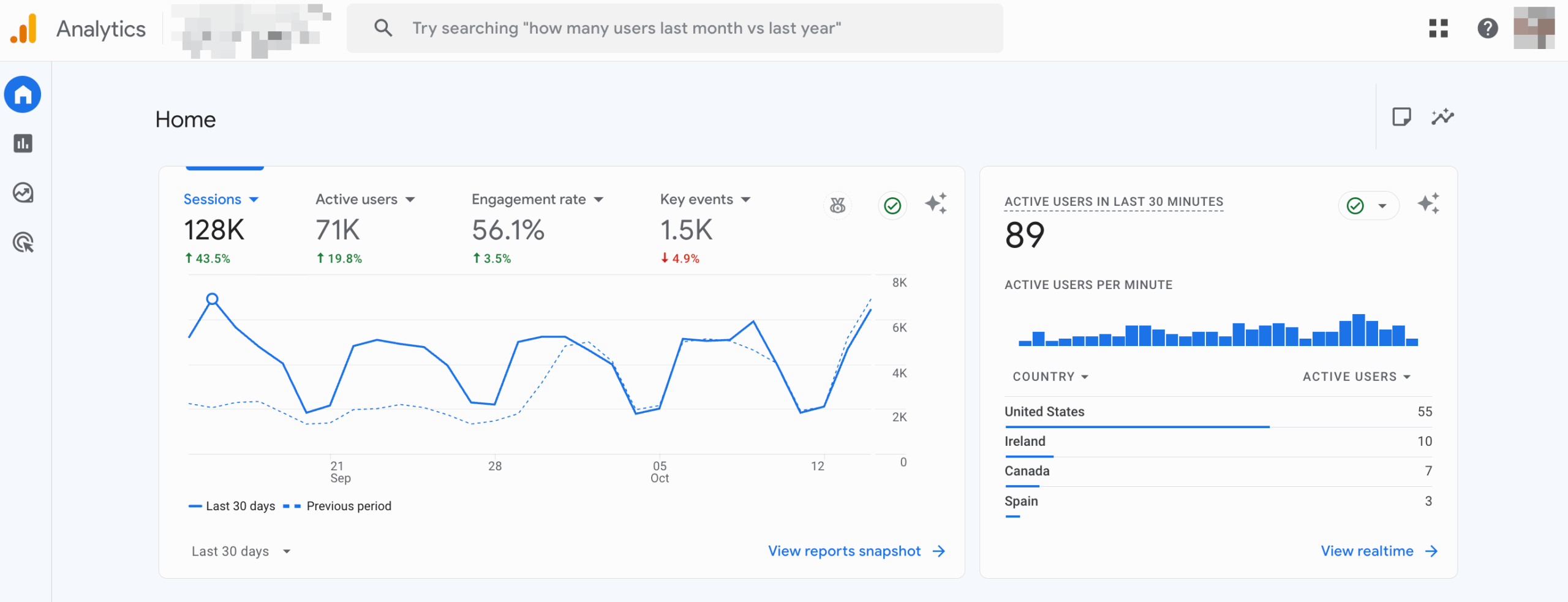
GA4 is the industry standard for tracking traffic sources and attribution. Since the full retirement of Universal Analytics, GA4 has integrated stronger cross-device tracking and predictive insights, making it indispensable for understanding the journey from an initial ad click to a final signup.

13. HockeyStack
HockeyStack represents the new wave of AI-driven attribution. It connects marketing touchpoints across LinkedIn, Google Ads, and email to the actual revenue generated in the CRM. This "multi-touch attribution" is critical for B2B SaaS companies with long sales cycles and multiple decision-makers.
14. Woopra
Woopra is unique in its end-to-end focus. It tracks the customer journey from the first website visit through the sales process and into long-term product usage. This unified profile allows for highly personalized marketing automation based on real-time product actions.

15. Quantcast
Quantcast provides deep audience insights, helping SaaS marketing teams understand the demographics and interests of their website visitors. This data is used to refine ad targeting and ensure that marketing messages resonate with the intended persona.
Centralized Reporting and Visualization Dashboards
For executives and investors, the ability to see all Key Performance Indicators (KPIs) in one place is paramount.

16. Cyfe
Cyfe is an all-in-one dashboard tool that uses pre-built widgets to pull data from social media, marketing, and financial tools. Its simplicity allows even small teams to have a "command center" view of their business in minutes.
17. Klipfolio
Klipfolio offers a more robust, customizable reporting solution. It connects to over 100 data sources and allows for the creation of complex, live dashboards. It is frequently used by agencies to report performance to SaaS clients or by internal teams to keep stakeholders informed.

18. Coupler.io
Coupler.io focuses on data automation. It exports data from various SaaS tools into destinations like Google Sheets, Excel, or BigQuery. This is essential for teams that prefer to build custom models or reports using their own internal logic.
19. Qrvey
Qrvey is an embedded analytics platform. It allows SaaS companies to build analytics dashboards into their own products, offering "Data-as-a-Service" to their customers. This adds significant value to the end-user and can serve as a powerful retention tool.

Supporting Data and Industry Implications
Recent market reports from 2025 indicate that the average SaaS company now utilizes an average of 12 different tools to manage their data. However, the "data silo" problem remains a significant hurdle. When financial data in Baremetrics does not align with usage data in Amplitude, executive decision-making is compromised.
Furthermore, the implementation of stricter privacy laws globally (such as the updated GDPR and various US state laws) has forced analytics providers to move toward "server-side" tracking and first-party data collection. Companies that fail to adapt to these privacy-first standards risk not only legal repercussions but also a significant loss in data accuracy as browsers continue to block third-party cookies.

Summary of Impact
The selection of a SaaS analytics stack is no longer a peripheral concern for IT departments; it is a strategic mandate for the C-suite. As capital markets continue to reward efficiency over raw growth, the tools listed above provide the transparency needed to optimize the "SaaS Magic Number" (a measure of sales and marketing efficiency) and ensure long-term viability.
For early-stage startups, the recommendation remains to start with high-value, low-cost options: ProfitWell for revenue tracking, Google Analytics for traffic, and Crazy Egg for conversion optimization. As the organization matures and the volume of data increases, the transition to more specialized tools like Amplitude or HockeyStack becomes necessary to maintain a competitive edge. In the current era of software, the company with the best data—and the ability to act on it—is the company that wins.

 Muslim