Iffa Jayyana

The sophisticated ecosystem of Facebook ad tools has become an indispensable component for marketers navigating the increasingly complex digital advertising landscape of 2026. These software platforms, whether native to Meta or developed by third parties, are critical for creating, managing, optimizing, reporting on, and scaling advertising campaigns across Facebook, Instagram, Messenger, and WhatsApp. Their importance has surged dramatically in recent years, driven by Meta’s aggressive push towards AI-powered automation, stricter global privacy regulations, and the ubiquitous need for brands to execute cohesive multi-channel marketing strategies without escalating headcount.

The Evolving Digital Advertising Imperative
Digital advertising, particularly on Meta’s vast network, has undergone a profound transformation. In 2025, Meta reported that its end-to-end AI campaigns achieved an impressive $60 billion annual run rate, signaling a clear shift towards automated ad delivery. This automation, exemplified by Meta’s Advantage+ suite, offloads many campaign management decisions to sophisticated algorithms, requiring advertisers to adapt their strategies from manual optimization to strategic oversight. Concurrently, evolving privacy rules, notably those stemming from Apple’s App Tracking Transparency (ATT) framework and similar global regulations, have made precise measurement and audience targeting more challenging. In this environment, where ad delivery is largely automated and data signals are fragmented, advanced tools provide the necessary capabilities to maintain efficiency, accuracy, and competitive edge. Industry analysts project that global digital ad spending will continue its upward trajectory, potentially exceeding $800 billion by 2026, with a significant portion allocated to social media platforms like Meta, underscoring the high stakes involved in effective ad management.

A Brief Chronology of Meta’s Advertising Evolution
Meta’s journey in advertising began with simple banner ads in the mid-2000s, evolving rapidly as the platform’s user base exploded. The introduction of the Facebook Ads Manager in the late 2000s marked a pivotal moment, providing businesses with a self-serve platform for campaign creation and management. Over the next decade, Facebook diversified its ad formats, integrating video, carousel ads, and eventually acquiring Instagram, extending its advertising reach. The mid-2010s saw the rise of sophisticated targeting options, leveraging user data to deliver highly personalized ads. However, the late 2010s and early 2020s introduced significant challenges: data privacy concerns led to stricter regulations (like GDPR and CCPA), and platform-level changes (like iOS 14.5’s ATT) impacted tracking capabilities. Meta responded by investing heavily in AI and machine learning, culminating in the Advantage+ suite, designed to optimize campaigns in a privacy-preserving manner by relying less on individual user data and more on aggregate signals and predictive analytics. This historical arc highlights a continuous adaptation to technological advancements and regulatory pressures, placing the current suite of ad tools at the forefront of modern marketing.
Categorizing the Modern Ad Tool Landscape
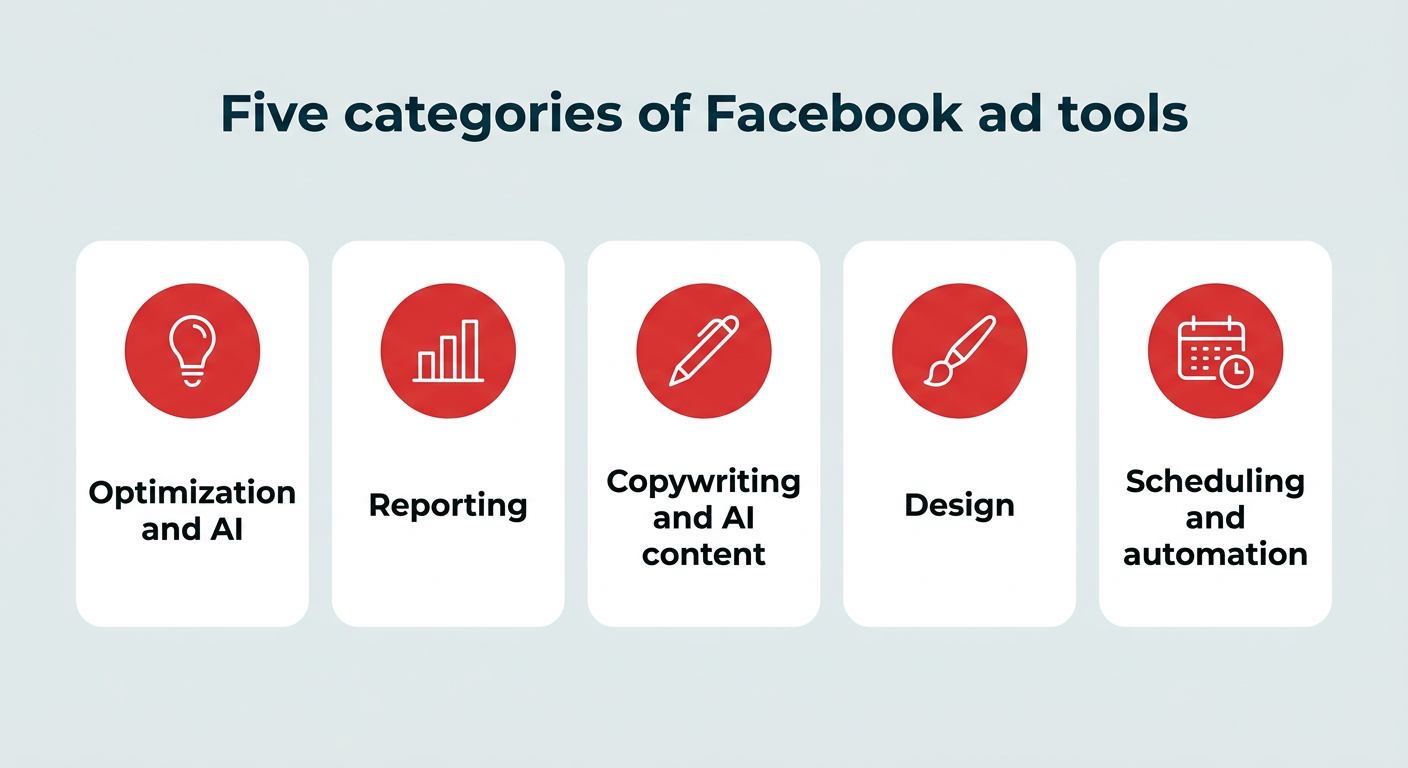
The array of Facebook ad tools available today can be broadly categorized by their primary function, offering solutions for every facet of campaign management:
- Campaign Optimization & AI: Tools that leverage artificial intelligence to identify performance opportunities, automate adjustments, and enhance targeting.
- Analytics & Reporting: Platforms designed to consolidate data from various sources, provide comprehensive insights, and generate customizable reports.
- Creative & Copy Generation: Solutions for producing high-volume, on-brand ad visuals and compelling text, often utilizing generative AI.
- Scheduling & Automation: Tools that streamline campaign launch, pausing, budgeting, and other repetitive tasks through rule-based automation.
- Competitive Intelligence: Resources for monitoring competitor strategies and market trends.
While many foundational tools are free, advertisers often invest in third-party platforms to augment Meta’s native capabilities, especially when managing multiple ad accounts, integrating data across diverse marketing channels, or requiring advanced automation.
Choosing the Right Tools: A Strategic Imperative
Selecting the appropriate Facebook ad tools is not merely about feature lists; it’s about addressing specific business challenges. Marketers are advised to:
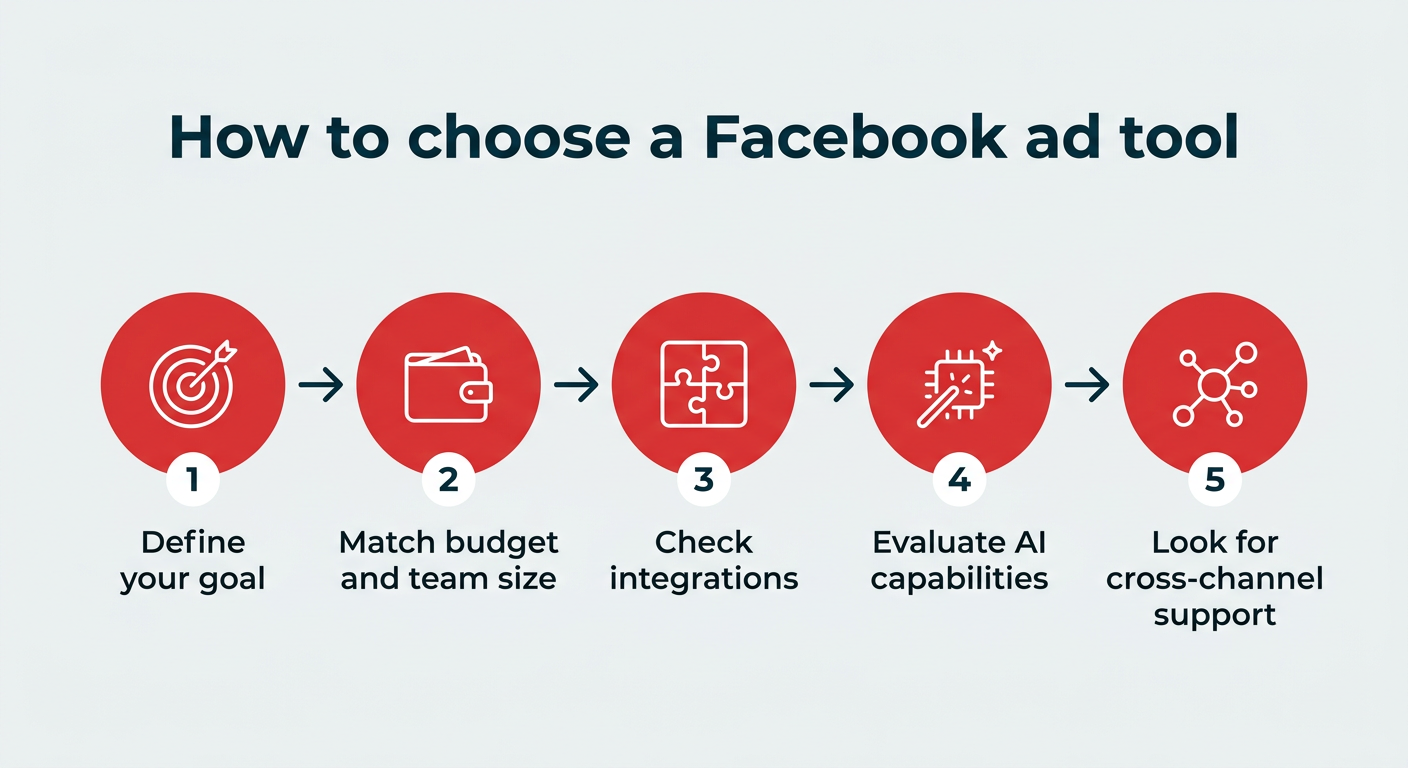
- Define the Problem: Clearly articulate the specific pain point or inefficiency the tool aims to solve (e.g., "Our creative output is too slow," or "We can’t get a unified view of cross-channel ROI").
- Assess Integration Needs: Determine how well the tool integrates with existing systems and other platforms.
- Evaluate Scalability: Consider if the tool can grow with the business and handle increasing ad spend or campaign complexity.
- Prioritize User Experience: A tool’s effectiveness is often tied to how easily a team can adopt and utilize it.
- Review Data Privacy & Compliance: Ensure the tool adheres to relevant data protection standards, especially for identity resolution features.
Ultimately, the goal is consolidation where possible, reducing the number of disparate tabs and platforms teams must manage, thereby enhancing efficiency and minimizing operational friction.

Key Tools in Focus: A Deeper Dive
Several tools stand out in the current environment, each offering distinct advantages:

1. Meta Ads Manager (and Advantage+): The Foundational Hub
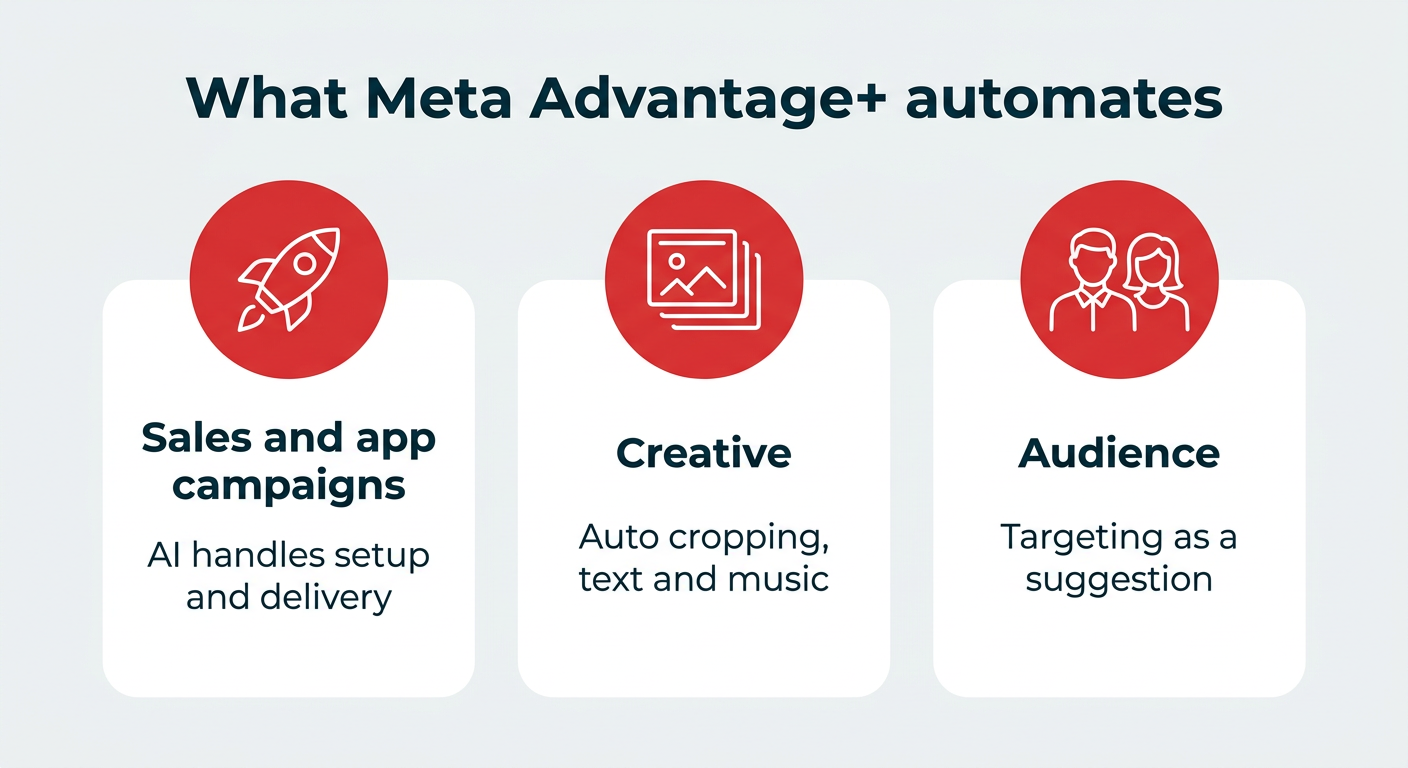
As Meta’s official platform, Ads Manager remains the cornerstone for anyone running campaigns on Facebook, Instagram, Messenger, and WhatsApp. Its significance has been amplified by the Advantage+ suite, Meta’s end-to-end AI solution. Advantage+ campaigns automate most setup and delivery decisions, from audience expansion to creative enhancements like automatic cropping and text variations. Meta reported that campaigns leveraging its generative AI features saw an average of 11% higher click-through rates, underscoring the efficacy of its automated optimization. For advertisers, understanding Advantage+ is paramount, as it represents Meta’s vision for the future of its ad platform – less manual intervention, more AI-driven performance.
2. Hootsuite Social OS: Unifying Paid and Organic
Hootsuite Social OS distinguishes itself by integrating paid and organic social media management into a single, connected system. This platform allows marketers to create, manage, optimize, and measure ads across Meta’s platforms, LinkedIn, and X, alongside their organic content. The ability to view paid and organic performance holistically in Hootsuite Analytics provides a crucial advantage for measuring accurate social media ROI, a common challenge for many businesses. Features like personalized best-time-to-publish for organic posts and integrated social listening (Lumen) and AI content creation (Wisdom) mean a cohesive strategy can be executed and analyzed from one dashboard, a significant time-saver for social media managers.

3. Madgicx: Precision Performance Optimization
Madgicx is a powerful AI-driven tool focused on granular performance optimization. It analyzes existing Facebook ad accounts to provide actionable recommendations, optimizing everything from targeting to budget allocation. Its AI capabilities help advertisers identify underperforming assets or audiences and suggest precise adjustments, allowing for a level of performance tuning that can be challenging to achieve manually, particularly for high-volume advertisers. This tool is particularly valuable for organizations looking to squeeze maximum efficiency out of their ad spend.
4. Customers.ai: Advanced Retargeting with Identity Resolution
In an era of diminishing third-party cookies, Customers.ai offers a solution for building retargeting audiences by identifying website visitors. Leveraging AI, it aims to sync "warmer" audiences into Meta’s ad platform, allowing for more targeted and potentially higher-converting retargeting campaigns. Its positioning as a privacy-compliant identity resolution platform addresses a critical need, though advertisers must meticulously verify its consent and data handling practices against regional privacy regulations.

5. AdCreative.ai: Scaling Creative Production with AI
AdCreative.ai tackles one of the biggest bottlenecks in modern advertising: the constant demand for fresh, high-performing creative. This tool generates ad visuals and copy from brand assets and then scores each variation based on predicted performance before any ad spend is committed. This predictive analytics capability allows marketers to prioritize the most promising creative, reducing waste and accelerating the testing process, a crucial advantage for performance marketers and e-commerce teams requiring high-volume asset production.
6. TapClicks & Funnel: Mastering Cross-Platform Reporting
For businesses running campaigns across numerous channels beyond Meta, tools like TapClicks and Funnel are invaluable. TapClicks offers a comprehensive marketing reporting platform, consolidating data from various sources (social, web analytics, sales data) into customizable dashboards, enabling full-scale tracking and branded report generation. Funnel similarly excels in flexible cross-platform data modeling, normalizing disparate field names and data structures from different sources to provide insightful, unified analytics. These tools address the growing need for a single source of truth for marketing performance, moving beyond siloed channel reports.

7. Wisdom by Hootsuite & ChatGPT: AI for Ad Copy and Brainstorming
The demand for efficient content creation has made AI copywriting tools essential. Wisdom, integrated within Hootsuite Social OS, leverages AI to draft Facebook ads and organic posts, either from scratch or by repurposing existing content. Its unique advantage lies in drawing from Hootsuite’s extensive social media expertise to generate content tailored for social platforms. ChatGPT, as a general-purpose generative AI, remains a popular choice for brainstorming ideas, generating copy variations, and quickly producing testable ad text, offering unparalleled flexibility for rapid content iteration.
8. Facebook Ad Library & Canva: Competitive Insight and Creative Agility
The Facebook Ad Library remains an indispensable free resource for competitive research, allowing marketers to view active and past ads run by any page. This transparency offers critical insights into competitor strategies, creative trends, and messaging. Canva, a ubiquitous design tool, has significantly enhanced its capabilities with Magic Studio AI features, enabling users to generate images from text prompts, remove backgrounds, and, crucially, use Magic Resize to adapt one ad design across all Facebook and Instagram placement sizes with a few clicks. With 260 million monthly users, Canva continues to empower teams to produce high-quality, on-brand creative efficiently.

Strategic Implications and Future Outlook
The proliferation and sophistication of Facebook ad tools signify a pivotal moment for digital advertising. The strategic implications for advertisers are profound:

- Balancing Automation and Oversight: The rise of Meta’s Advantage+ requires advertisers to shift from micro-managing campaigns to strategic oversight, focusing on high-level objectives and creative quality while AI handles execution.
- Data Expertise is Key: Despite automation, the ability to interpret performance data, understand attribution models in a privacy-constrained world, and feed insights back into AI systems is more critical than ever.
- Integrated Strategies: The clear trend towards tools that unify paid and organic social media, alongside other marketing channels, underscores the need for integrated strategies rather than siloed efforts.
- Creative Volume and Quality: AI-powered creative tools address the insatiable demand for fresh, high-performing ad creatives, making continuous testing and iteration a standard practice.
- Agility and Adaptability: The rapid pace of change in privacy regulations and platform features necessitates tools that enable quick adaptation and provide robust data for informed decision-making.
While these tools offer immense advantages, advertisers must also remain vigilant about data privacy compliance, potential vendor lock-in, and the continuous learning curve associated with new technologies. The selection of the right tools is no longer a luxury but a fundamental strategic decision that dictates an organization’s ability to compete effectively in the dynamic digital advertising landscape of 2026 and beyond.
The ultimate benefit of strategically adopting these advanced tools is a clearer, more unified understanding of marketing ROI, streamlined workflows, and the agility to adapt to an ever-changing digital environment, ensuring that every ad dollar contributes meaningfully to business growth.


 Ali Ikhwan
 Layla Zulfa