Ammar Sabilarrohman

The digital economy has reached a level of saturation where simply driving traffic to a website is no longer sufficient for sustainable growth. As acquisition costs continue to rise across major advertising platforms, businesses are increasingly pivoting toward Conversion Rate Optimization (CRO) to maximize the value of existing visitors. At the center of this strategic shift are heatmap tools—sophisticated software solutions that record and visualize user interactions, providing a graphical representation of where users click, scroll, and linger. By translating raw data into intuitive color-coded maps, these tools allow stakeholders to identify friction points, optimize user experience (UX), and ultimately drive higher revenue.

The Evolution of Behavioral Analytics
The history of heatmap technology in web development has evolved from basic click-tracking scripts to comprehensive "Digital Experience Intelligence" (DXI) platforms. In the early 2000s, webmasters relied almost exclusively on quantitative data from tools like Google Analytics, which could identify what was happening—such as a high bounce rate on a checkout page—but failed to explain why. The emergence of heatmapping bridged this gap, offering a qualitative layer to data analysis.
Today, the market is characterized by a high degree of specialization. While some platforms focus on the accessibility needs of small businesses and bloggers, others have integrated artificial intelligence to serve enterprise-level organizations in highly regulated sectors like finance and healthcare. The recent consolidation in the industry, most notably the acquisition of Hotjar by Contentsquare in 2021, signals a move toward unified platforms that combine behavioral heatmaps with deep-tier product analytics.

Strategic Analysis of Leading Heatmap Platforms
The current marketplace offers a diverse array of tools tailored to specific business objectives. Selecting the appropriate platform requires an understanding of the technical nuances and pricing structures that define the industry leaders.
Crazy Egg: The Integrated CRO Suite
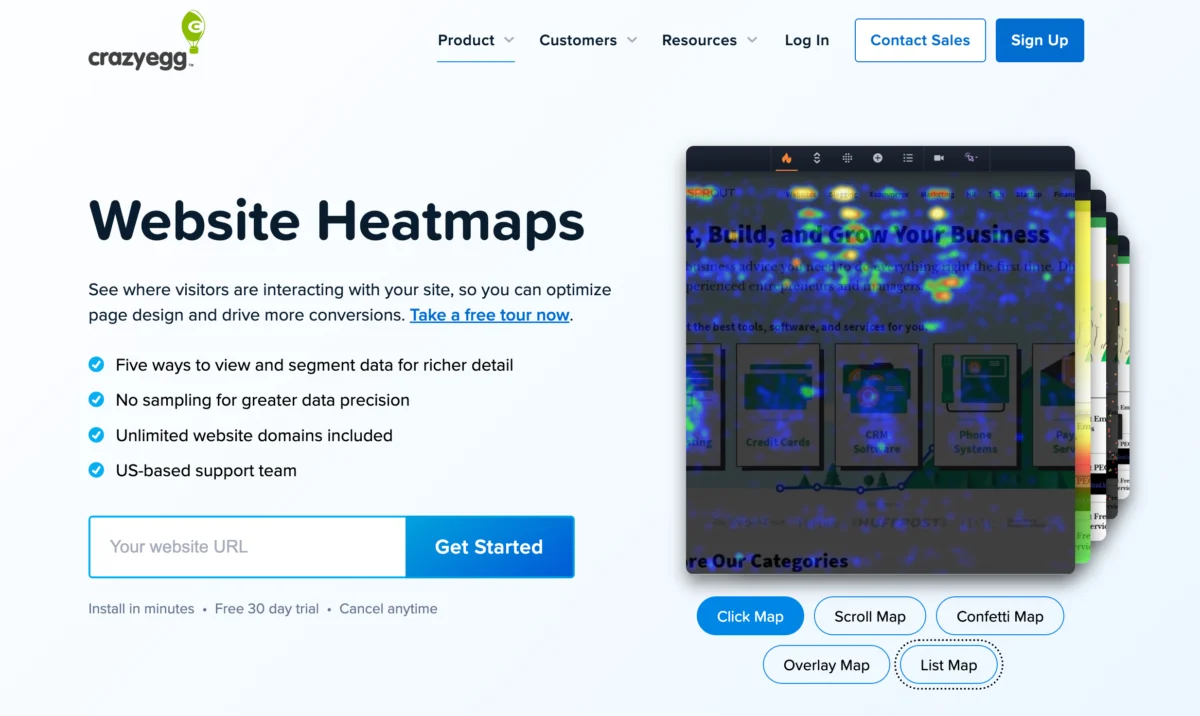
Crazy Egg remains a dominant force in the market by positioning itself as more than a visualization tool. It integrates five distinct heatmap views—click, scroll, confetti, overlay, and list—with a built-in A/B testing module. This integration allows marketing teams to move directly from insight to action. For instance, if a scroll map reveals that 70% of users drop off before reaching a "Buy Now" button, Crazy Egg enables the user to launch a test moving that button higher on the page without requiring a separate software subscription.

Microsoft Clarity: The Disruptive Free Entry
Microsoft Clarity has fundamentally altered the competitive landscape by offering unlimited heatmaps and session recordings at no cost. This "freemium" model is unique because it lacks the traffic caps typically found in the entry-level tiers of competitors. However, industry analysts note that the "cost" of Clarity is essentially data-sharing; Microsoft utilizes the anonymized behavioral data to train its machine learning models and improve its Bing search algorithms. For organizations with strict third-party data-sharing policies, this may be a point of contention, despite the tool’s robust GDPR and CCPA compliance.
Hotjar and Contentsquare: The Enterprise Standard
Following their merger, Hotjar and Contentsquare have bifurcated their focus. Hotjar remains the go-to for mid-market companies seeking user feedback through surveys and polls alongside heatmaps. Contentsquare, conversely, serves the enterprise tier, offering advanced features like "Zone-Based Heatmaps," which quantify the revenue value of every individual element on a page. This allows major retailers to see exactly how many dollars in sales a specific hero image or promotional banner generated.

Mouseflow and Fullstory: Precision and Friction Detection
Mouseflow has carved out a niche through its "friction score" technology. Rather than requiring analysts to watch thousands of hours of session replays, Mouseflow’s algorithms automatically flag sessions where users exhibit "rage clicking" or "broken navigation." Fullstory offers a similar level of technical depth, marketed as a product analytics tool. It is particularly favored by SaaS (Software as a Service) companies that need to track complex user journeys across dynamic, single-page applications.
Technical Implementation and Performance Metrics
A primary concern for Chief Technology Officers (CTOs) when deploying behavioral tracking is the potential impact on site performance. Historically, heavy JavaScript snippets could slow down page load times, negatively affecting Core Web Vitals and SEO rankings.

Modern heatmap tools have largely mitigated this through asynchronous loading. This ensures that the tracking script loads only after the primary content of the page has been rendered, preventing any perceived lag for the user. Furthermore, the industry has shifted toward "DOM (Document Object Model) Capture" technology. Instead of recording a video of the user’s screen—which is data-intensive—these tools record the changes in the website’s code during a session and "reconstruct" the session on the tool’s dashboard. This method significantly reduces the bandwidth required and improves data privacy by allowing sensitive information to be masked at the source.
The Regulatory Landscape: Privacy and Data Ethics
As global data privacy regulations like the GDPR (Europe) and CCPA (California) become more stringent, heatmap providers have had to overhaul their data collection methods. The industry standard now includes:

- PII Masking: Automatically obscuring Personally Identifiable Information, such as names, credit card numbers, and addresses, before the data ever leaves the user’s browser.
- First-Party Data Collection: Moving away from third-party cookies to ensure that tracking remains functional in a "cookieless" future.
- Consent Management: Integrating with Consent Management Platforms (CMPs) to ensure that behavioral tracking only occurs after a user has opted in.
Data from privacy advocacy groups suggests that users are more likely to trust brands that are transparent about their use of behavioral analytics. Consequently, many top-tier tools now provide detailed Data Processing Agreements (DPAs) to help businesses remain compliant with international law.
Comparative Data: Choosing the Right Tool
The following table summarizes the key metrics for the top seven contenders in the behavioral analytics space:

| Tool | Primary Strength | Starting Price | Retention Period |
|---|---|---|---|
| Crazy Egg | Comprehensive CRO & A/B Testing | $29/mo | Up to 24 Months |
| Microsoft Clarity | No-cost, unlimited tracking | Free | 30 Days (Standard) |
| Hotjar | User Feedback & Surveys | ~$49/mo | 12 Months (Growth) |
| Mouseflow | Friction Scoring & Form Analytics | €25/mo | 1–12 Months |
| Lucky Orange | Live Chat & Ecommerce Integration | $32/mo | 60 Days |
| Fullstory | Product Analytics for SaaS | Quote-based | 12 Months |
| Glassbox | Compliance for Regulated Industries | Quote-based | Custom |
Broader Industry Impact and Future Outlook
The proliferation of heatmap tools is democratizing data science. In the past, only large corporations with dedicated data science teams could perform deep-dive behavioral analysis. Now, a solo entrepreneur can install a snippet and, within hours, have a visual representation of their customer’s journey.
Looking forward, the integration of Artificial Intelligence is expected to be the next frontier. We are already seeing the emergence of "Predictive Heatmaps," which use eye-tracking databases and AI to predict where users will look at a design before it is even published. This proactive approach to UX design could significantly reduce the time and cost associated with traditional A/B testing.

Furthermore, as the "Internet of Things" (IoT) expands, we may see the expansion of heatmapping into physical spaces (using computer vision) and more complex AR/VR environments. For now, however, the focus remains on the web and mobile applications, where the battle for user attention is most fierce.
Conclusion for Stakeholders
For businesses looking to implement or switch heatmap providers, the decision should be driven by the specific "next step" in their optimization workflow. If the goal is simply to identify where users are clicking, free tools like Microsoft Clarity offer an unbeatable value proposition. However, for organizations that view behavioral data as a foundational element of their revenue growth strategy, investing in a tool like Crazy Egg or Contentsquare—which bridges the gap between visualization and experimentation—is often the more profitable long-term choice. As the digital landscape continues to evolve, the ability to see the world through the user’s eyes will remain a critical competitive advantage.

 Raul Delapena Setiawan
 Ali Ikhwan