The digital communication landscape has undergone a profound transformation, moving beyond simple email blasts to sophisticated, integrated platforms that manage customer relationships, automate marketing workflows, and ensure reliable transactional messaging. In this evolving ecosystem, businesses face a critical choice between specialized tools and all-in-one solutions. This article delves into a detailed comparison of Brevo and SendGrid, two prominent players, dissecting their core functionalities, pricing structures, and strategic orientations to provide clarity for businesses navigating their email communication needs.
Core Distinction: Marketing Agility vs. Developer Power
At its heart, the fundamental difference between Brevo and SendGrid lies in their foundational design and target audience. Brevo, formerly known as Sendinblue, is unequivocally marketing-first, offering a comprehensive suite of tools built around customer relationship management (CRM) capabilities. It’s designed for marketers and small marketing teams, particularly those in e-commerce, who seek an integrated platform for managing both marketing and transactional emails within a single, user-friendly interface. Its robust CRM toolkit, encompassing companies, deals, and pipelines, positions it as a holistic solution for nurturing customer journeys.
Conversely, SendGrid, a Twilio company, is transactional-first, engineered with developers and product teams in mind. Its strength lies in high-volume, highly reliable email delivery via its powerful Email API and SMTP relay. While it does offer "Marketing Campaigns" as a separate, add-on service, its primary architecture and most compelling features are geared towards programmatic email sending, making it the preferred choice for applications, SaaS platforms, and enterprises requiring robust, scalable transactional email infrastructure. The expectation with SendGrid is that users possess technical acumen or have dedicated development resources for integration.
A Deep Dive into Platform Genesis and Evolution
Understanding the historical trajectory of both platforms provides crucial context for their current offerings. Brevo’s journey began as Sendinblue, a French company that quickly gained traction for its all-in-one digital marketing platform. Its rebranding to Brevo marked a strategic pivot to emphasize its broader capabilities beyond just email, encompassing SMS, chat, and CRM functionalities. This evolution reflects a market trend towards consolidated marketing platforms that simplify omnichannel engagement for businesses, particularly those with less technical expertise. Brevo’s continued development has focused on enhancing its drag-and-drop editors, automation workflows, and CRM features, making it highly accessible for non-technical users.
SendGrid, founded in 2009, established itself early on as a leader in cloud-based email delivery, particularly for transactional emails. Its acquisition by communications giant Twilio in 2019 further solidified its position as a developer-centric service. Twilio’s vast ecosystem of communication APIs (SMS, voice, video) naturally aligned with SendGrid’s API-first approach, reinforcing its specialization in scalable and reliable email infrastructure. A significant recent change highlights this focus: in May 2025, SendGrid retired its Free Email API and Free Marketing plan, shifting entirely to paid plans, albeit with a 60-day trial. This move signals a strategic emphasis on professional, high-volume users who are prepared to invest in a premium, developer-grade service. While the transition may impact smaller users or those accustomed to a free tier, it underscores SendGrid’s commitment to enterprise-level reliability and performance.
Cost-Benefit Analysis: Pricing Structures Unpacked
Pricing models often dictate accessibility and suitability for different business scales. Brevo’s pricing is based on monthly email volume, with contact caps per tier, and importantly, it supports both marketing and transactional emails within all its plans via API or SMTP. This unified approach simplifies cost management for businesses that require both types of communication. For instance, a Starter plan at $56/month allows for 50,000 emails, which includes both marketing campaigns and transactional alerts.
SendGrid, however, operates with a bifurcated pricing model. Its Marketing Campaigns are priced based on the number of stored contacts, with monthly send caps. Its Email API, dedicated to transactional emails, is priced purely on monthly send volume. This separation means businesses requiring both marketing and transactional capabilities often need two distinct plans, potentially leading to higher cumulative costs or more complex budget allocation.
For transactional emails, SendGrid often presents a more economical option at various volumes. A 50,000-email plan costs $19.95/month on SendGrid’s Email API, significantly less than Brevo’s $56/month Starter plan for the same volume. Even at higher volumes, SendGrid’s Email API remains competitive, only being surpassed by Brevo at the 500,000 monthly email tier ($499 vs. $429, respectively, for comparable plans).

However, for marketing emails, Brevo’s volume-based pricing often proves more cost-effective. Storing 50,000 contacts on SendGrid’s Basic plan costs $120/month, whereas Brevo’s Starter plan, allowing 50,000 emails, costs $56/month and includes contact storage up to 100,000. This stark difference highlights Brevo’s advantage for businesses prioritizing marketing campaigns and looking for an integrated solution without incurring separate contact-based charges.
Regarding free plans, only Brevo continues to offer one, allowing 100,000 contacts and 300 emails/day, with access to both marketing and transactional features. This makes Brevo an attractive entry point for startups and small businesses testing the waters. SendGrid’s decision to discontinue its free plan in May 2025 means new users must commit to a paid plan after a 60-day trial, reflecting its focus on established businesses with predictable email volumes.
User Experience and Feature Set: A Marketer’s Perspective
The usability and breadth of features directly impact a team’s efficiency and ability to execute campaigns.
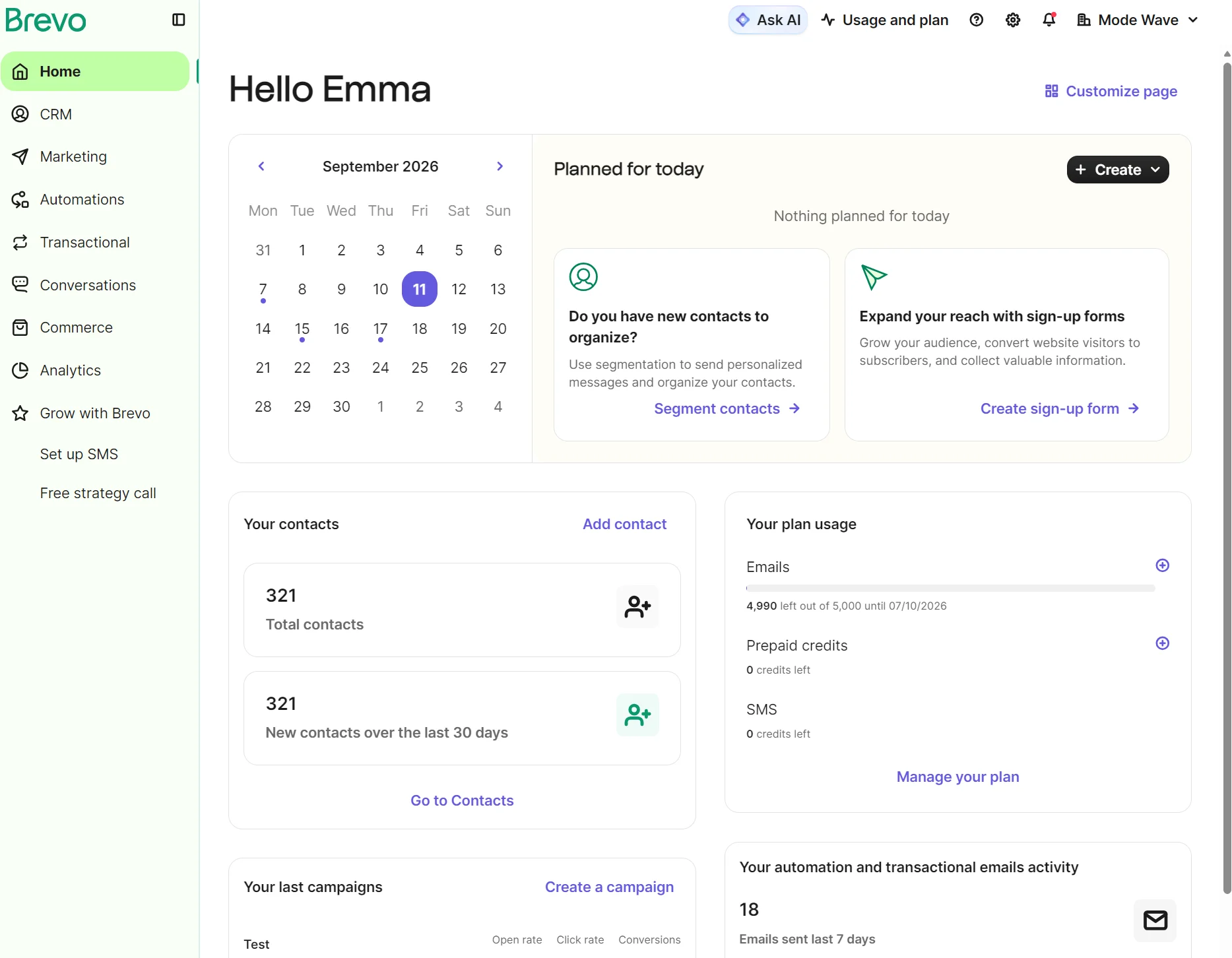
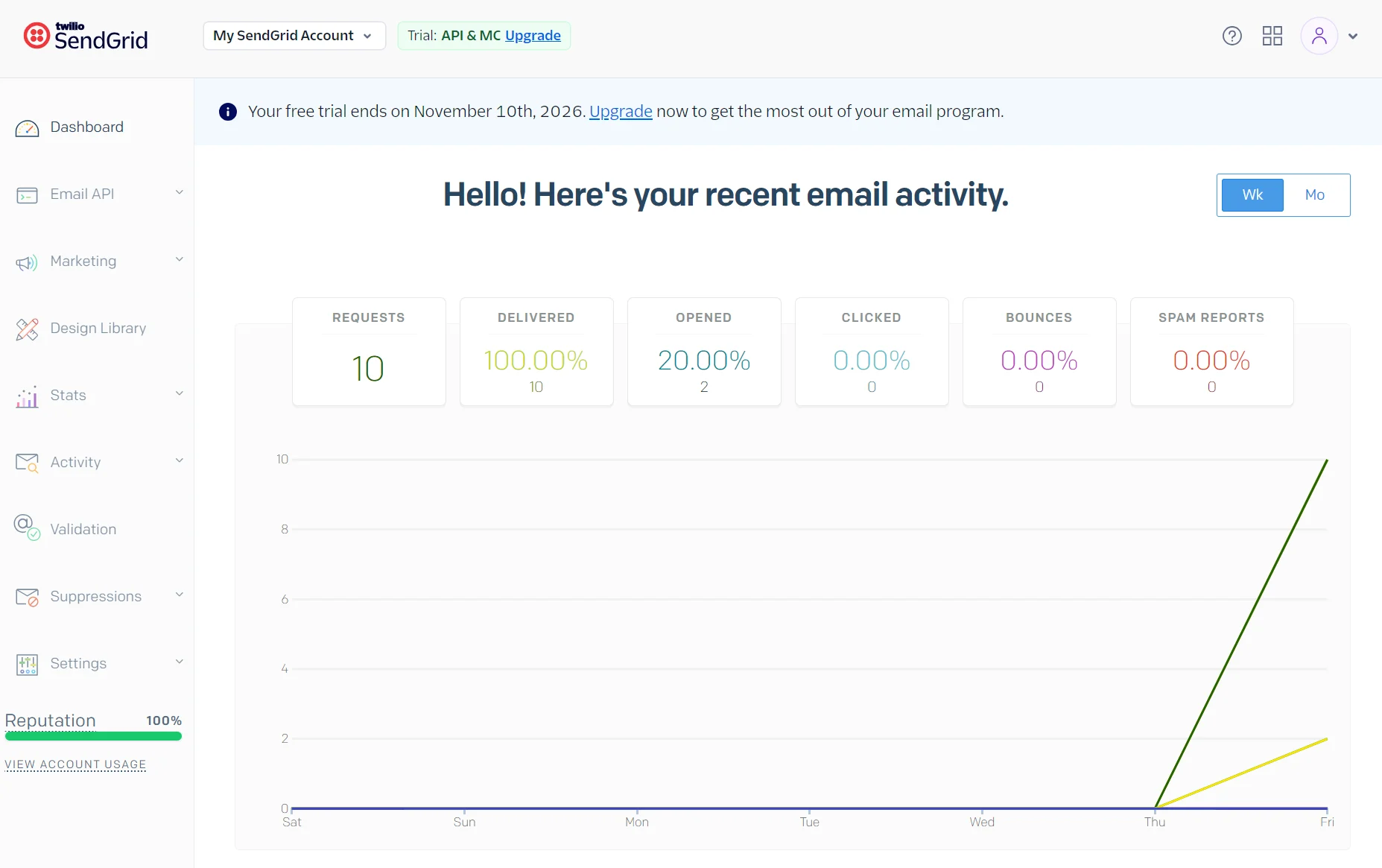
Ease of Use: Brevo excels in this category, offering an intuitive, marketer-friendly interface. Its Home dashboard provides a comprehensive overview with widgets for calendars, contacts, plan usage, campaigns, automation, and transactional emails, minimizing the need for extensive navigation. This design philosophy caters to users who prefer a visual, guided experience without deep technical dives. SendGrid’s dashboard, while functional, is more focused on email activity metrics and "Important Next Steps," with menu items that occasionally assume technical knowledge, such as "Parse webhook." Its design inherently leans towards developers who are comfortable with a more technical lexicon.
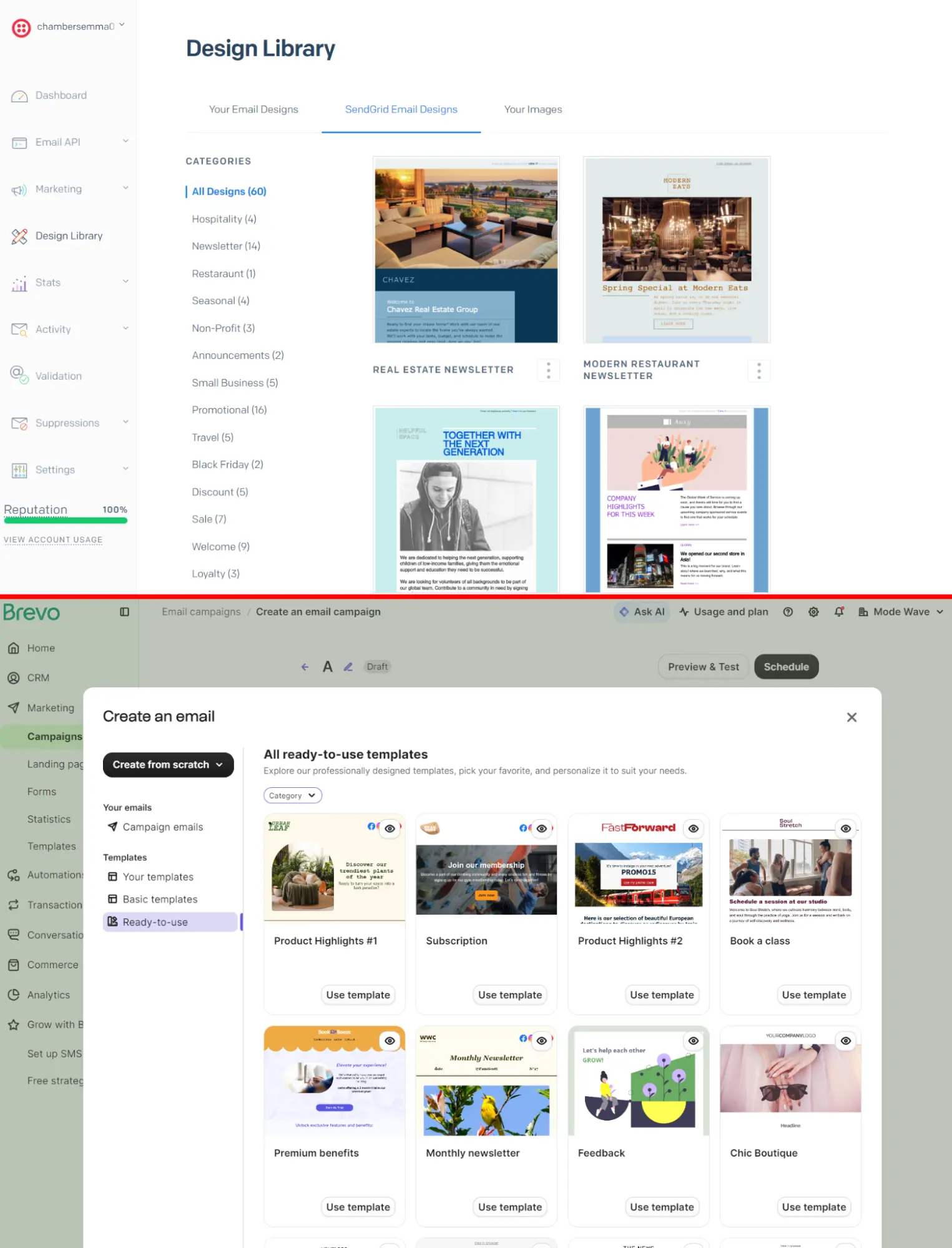
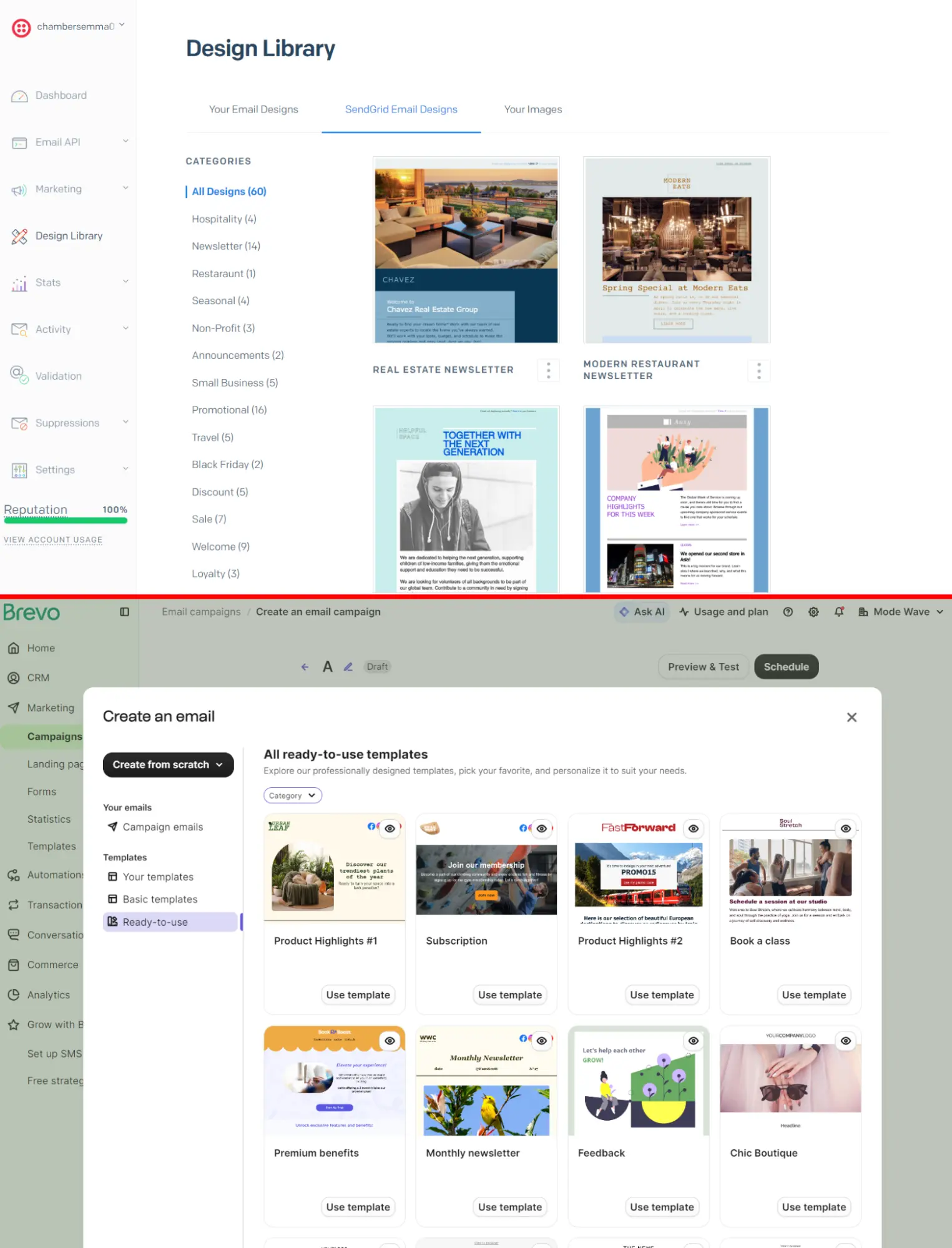
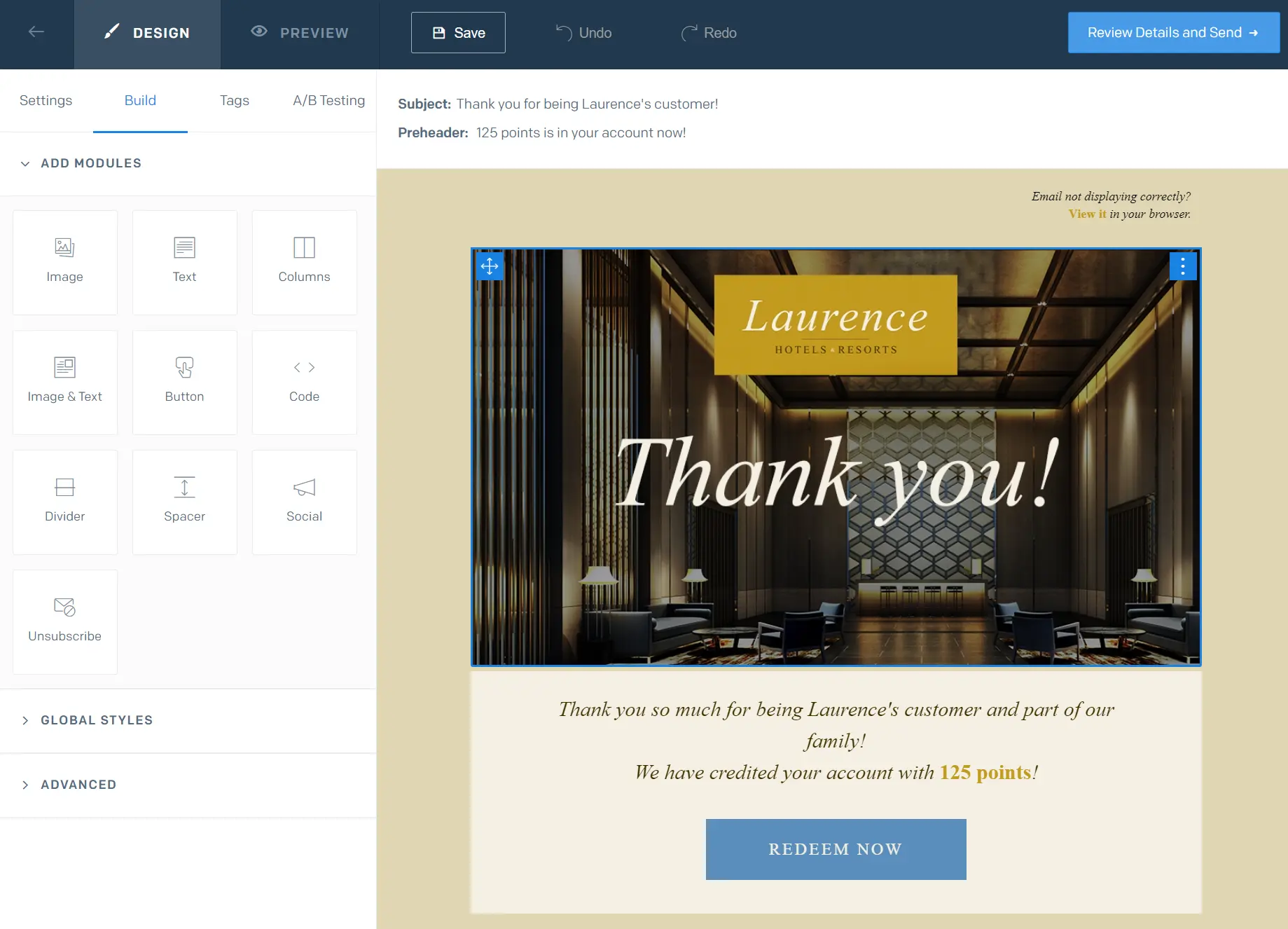
Email Editor & Templates: Brevo’s drag-and-drop editor is designed for speed and versatility, featuring dedicated product blocks (supporting up to nine products) and dynamic content blocks that integrate with custom data feeds, crucial for e-commerce. It also provides pre-built "Sections" for common layouts and a "Brand Assets" feature that automatically applies logos and colors, streamlining design. While SendGrid offers a larger library of 60 pre-built templates, its editor provides fewer specialized blocks (9 basic elements) and lacks Brevo’s dynamic e-commerce specific features. SendGrid does, however, offer more advanced HTML controls, including options to edit HTML Head, import/export HTML, catering to users who require fine-grained design control or want to integrate custom code. SendGrid also includes A/B testing directly within the editor, whereas Brevo requires selecting it as a campaign type during setup.
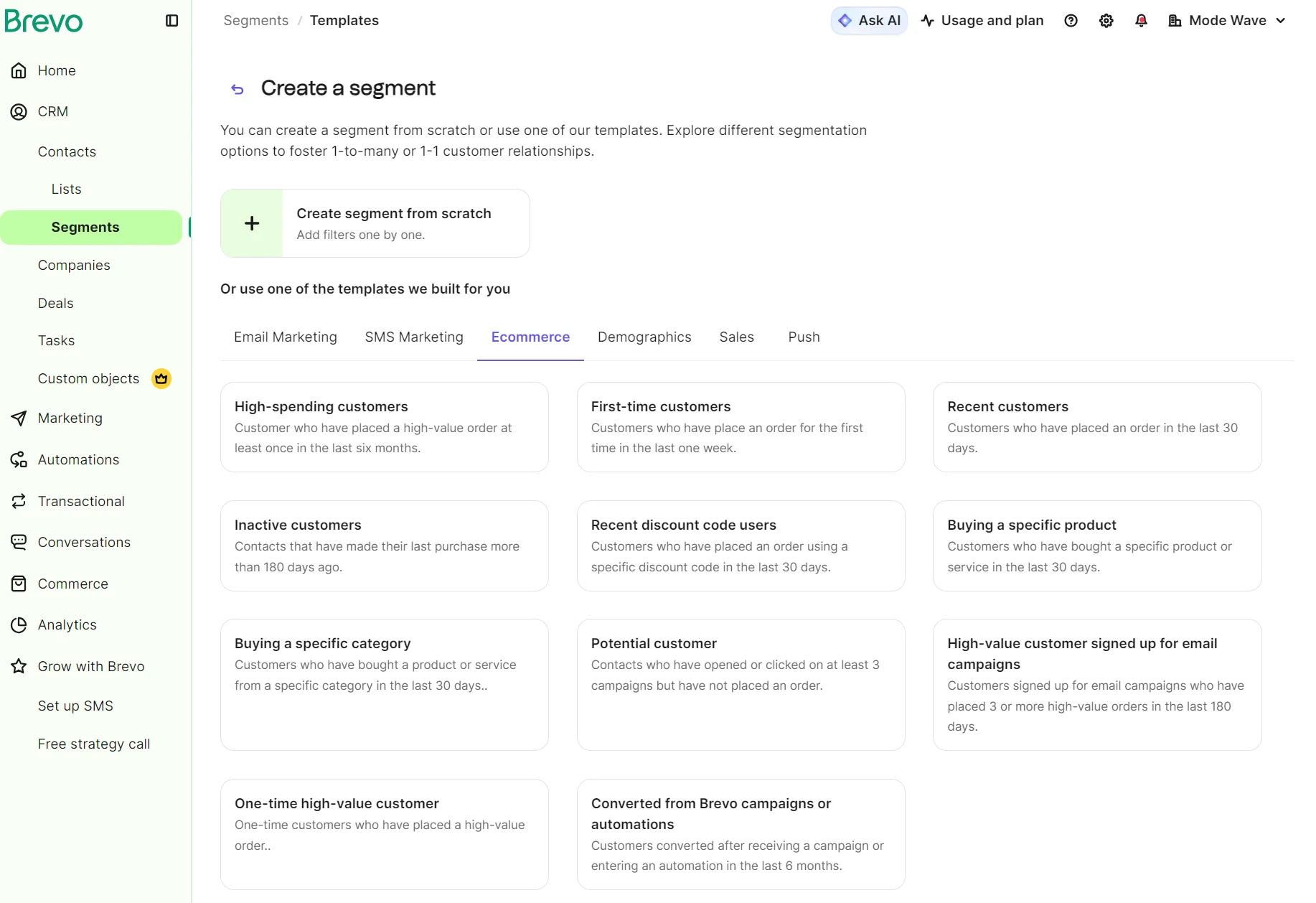
Segmentation & CRM: Brevo offers a significant advantage with its integrated CRM, which tracks contacts, companies, deals, and tasks. Its segmentation capabilities are robust, with over 20 pre-built segments for email, SMS, and push notifications, including 11 e-commerce specific segments for high-spending or recent customers. This allows for highly granular targeting based on user behavior on the site and purchase history. SendGrid’s segmentation is more basic, relying on contact fields and email engagement (e.g., last clicked/opened) and lacking native behavioral triggers or e-commerce filters. While purchase data can be integrated via API, it requires developer intervention, making it less accessible for marketers seeking immediate, code-free segmentation.
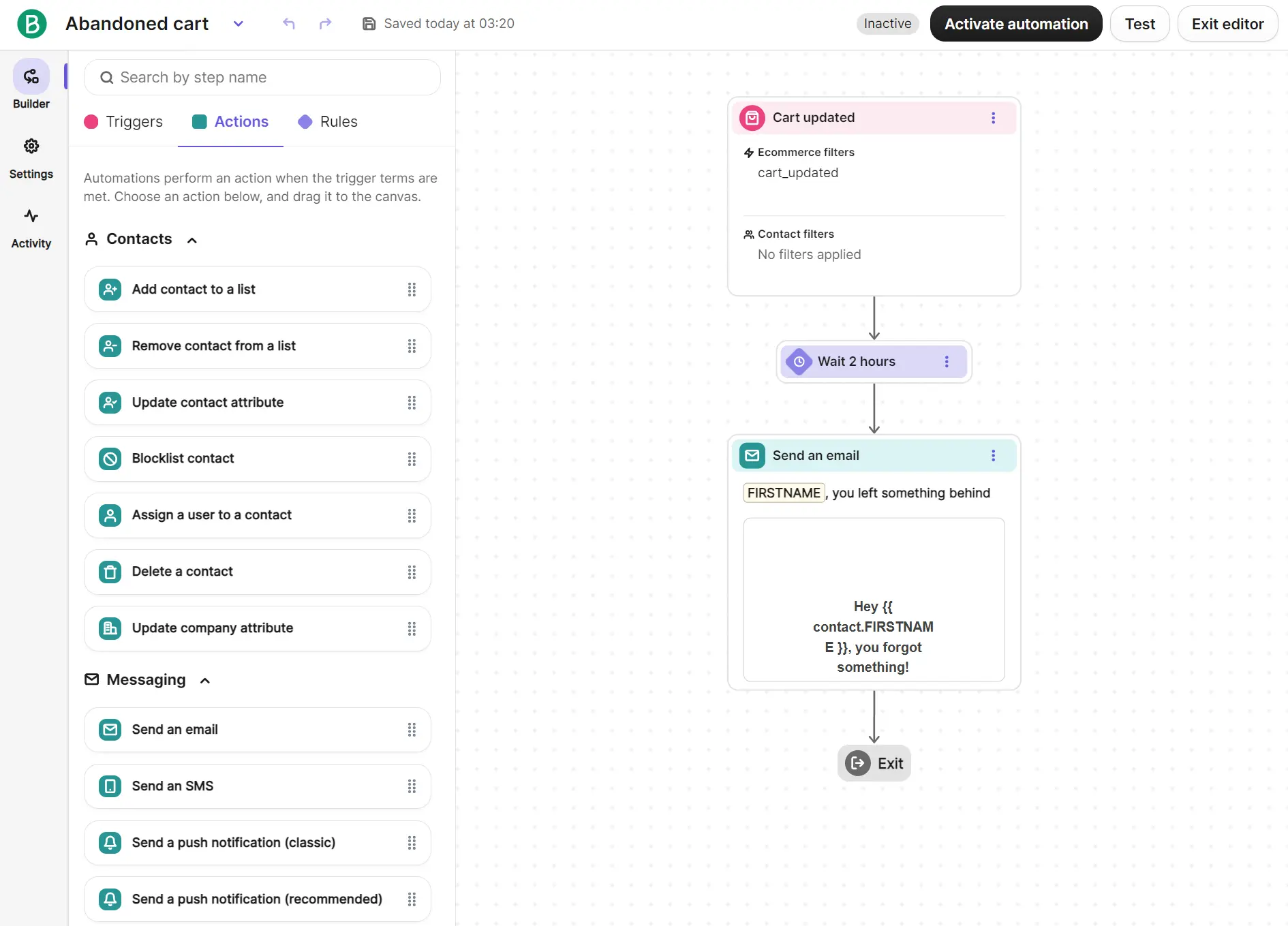
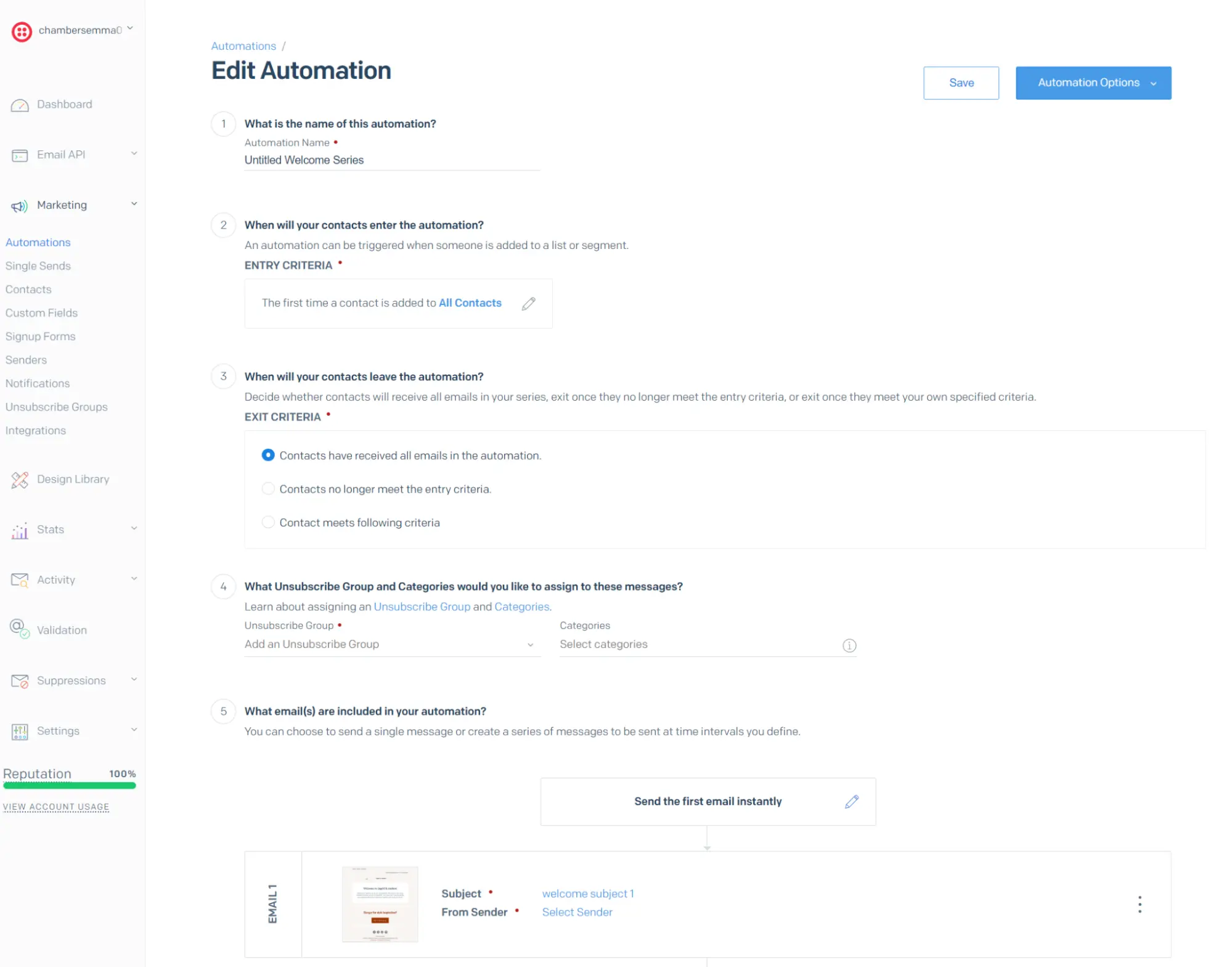
Email Automation: Brevo stands out with its comprehensive automation library, featuring 15 email and four SMS templates for common marketing scenarios like abandoned carts, welcome series, and product follow-ups. Its visual drag-and-drop builder supports multi-channel automations (SMS, push notifications) and allows for A/B split testing within a single flow, enabling optimization of customer journeys. Triggers are extensive, covering contacts, forms, email engagement, e-commerce, website visits, and custom events. SendGrid’s automation builder is more linear and form-based, offering only a single welcome email template and the option to build custom ones. It lacks native abandoned cart or stock triggers, requiring external systems to detect events and call SendGrid’s API. For developers, however, SendGrid’s Email API and SMTP relay are the true automation engines, allowing for highly customized and complex triggered emails to be built within their applications.
The Engine Room: Deliverability, Analytics, and Integrations
Beyond the user-facing features, the underlying infrastructure for email delivery, performance tracking, and ecosystem compatibility is paramount.
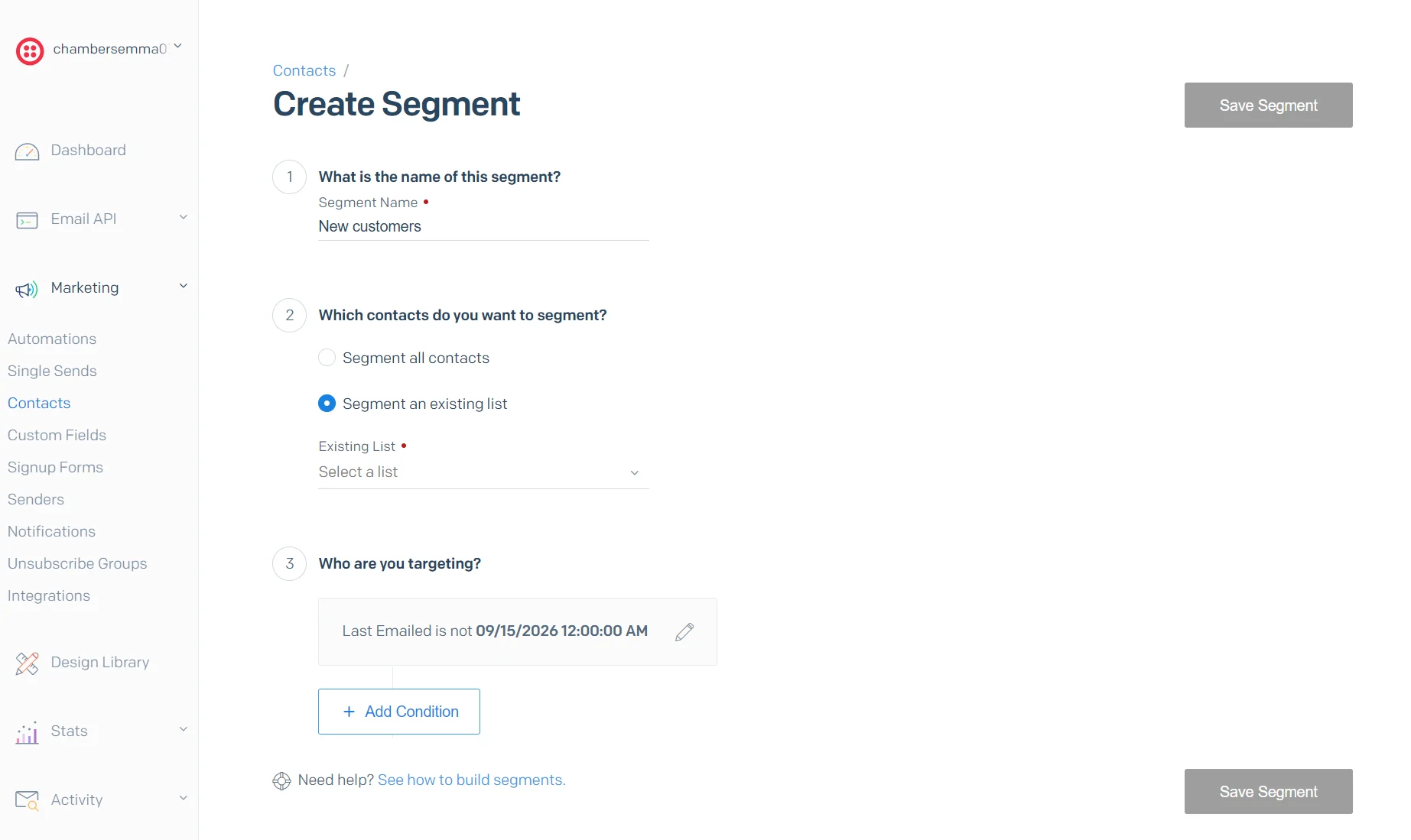
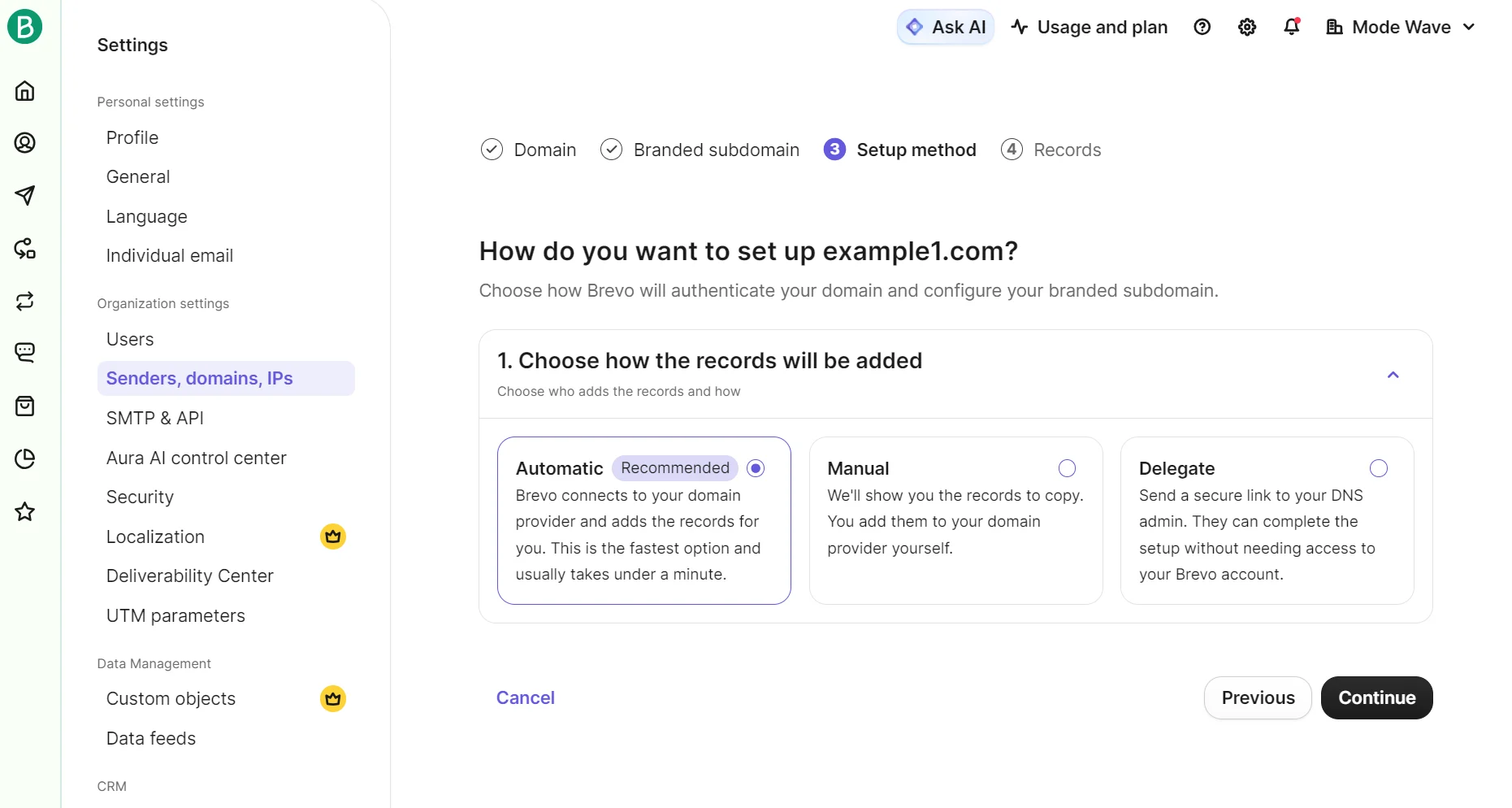
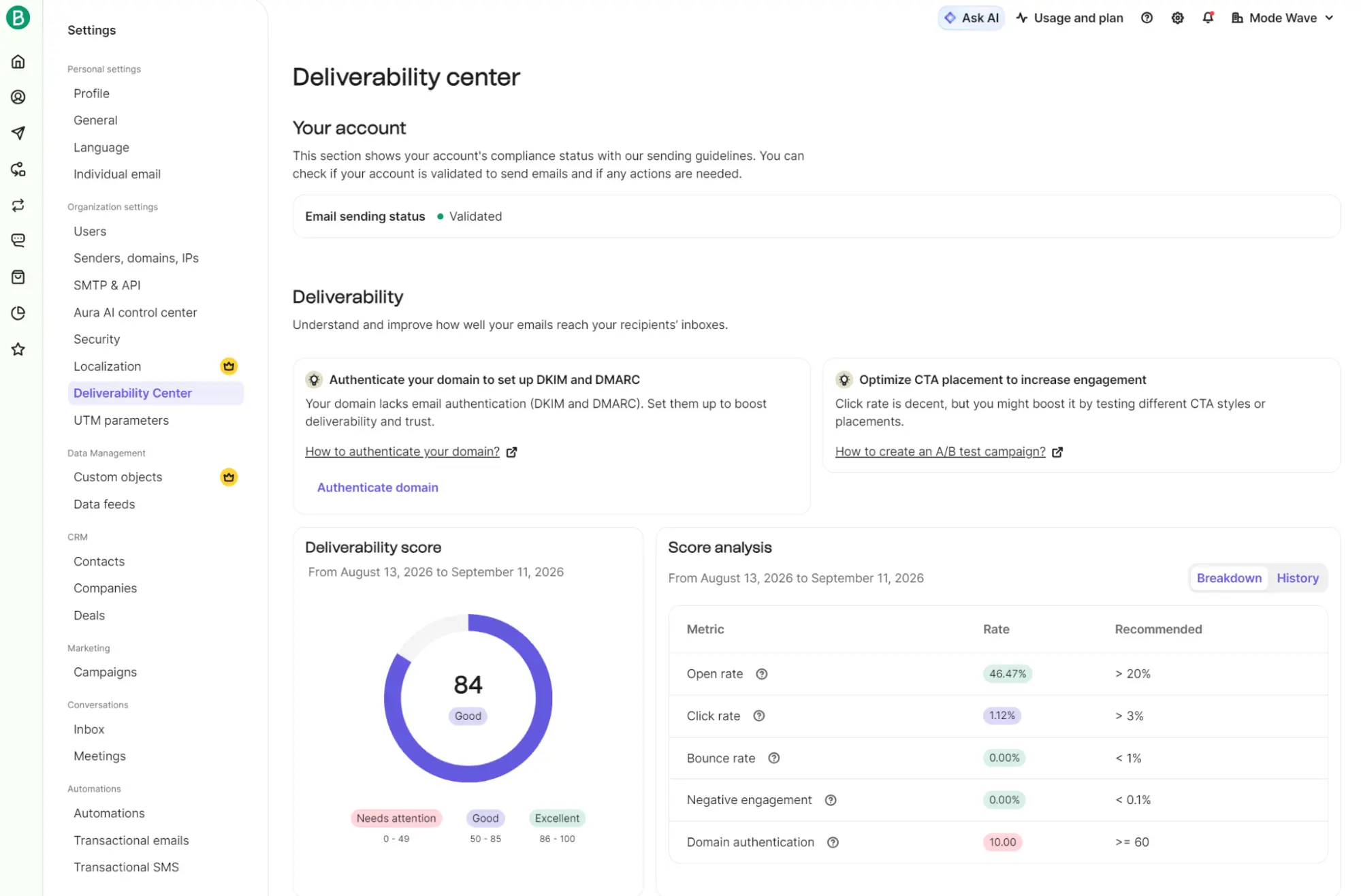
Email Deliverability: Both platforms claim an impressive 99% deliverability rate, a critical metric for any email service. Brevo simplifies domain authentication with an "Automatic" option that logs into the domain provider and adds/verifies necessary records (DKIM, DMARC, Brevo code), along with a "Delegate" option for DNS admins. Its "Deliverability Center" provides a unique, color-coded deliverability score and analytics, offering marketers an easy way to monitor inbox performance. SendGrid, while also offering an "Automated Security" feature for DNS records (CNAMEs for branded URLs, SPF, DKIM), provides more granular "Deliverability Insights" dashboards. These visualize processed, delivered, bounced & blocked, and unique open rates, breaking down performance across various mailbox providers. While SendGrid lacks a consolidated deliverability score, its detailed reports are invaluable for technical users troubleshooting delivery issues. Dedicated IP addresses, crucial for high-volume senders to maintain sender reputation, are an add-on for Brevo’s Professional plan and included in SendGrid’s Pro plan.
Analytics & Reporting: SendGrid edges out Brevo in the depth of its reporting for campaigns and transactional emails, particularly for developers. Its "Statistics Overview" dashboard offers 14 selectable filters and top categories, allowing for highly detailed analysis of email performance. Separate dashboards for "Deliverability Insights," "Global Stats," and "Geographical" data provide comprehensive views for identifying trends and areas for improvement. An "Expert Insights" paid add-on, coupled with human consulting, is available for SendGrid Pro and Premier accounts, offering in-depth funnel analysis. Brevo, while providing basic statistics (opens, clicks, replies, unsubscribes) across all plans, truly shines in e-commerce reporting. Its "Commerce" report displays revenue, new/returning customer orders, popular products, and a live feed, alongside a "Retention Dashboard" for lifetime value (CLV) analysis. Brevo supports both last-touch (default) and linear (Professional plans) attribution models, allowing marketers to better understand the revenue impact of their campaigns.
Integrations & APIs: Brevo is a clear winner for native integrations, boasting over 140 apps that seamlessly connect with CRM, sales, e-commerce, and other marketing tools. This rich ecosystem of off-the-shelf connections is vital for businesses that rely on a diverse tech stack but lack extensive development resources. SendGrid, on the other hand, embodies an API-first philosophy. Its Marketing Campaigns catalog has only one native integration (Twilio Segment), expecting all other connections to be built via its robust REST API and SMTP relay. It provides seven official software development kits (SDKs) for popular languages like PHP, Python, Node.js, Ruby, Go, Java, and C#, mirroring Brevo’s SDK offerings. The key difference is that Brevo’s single API handles transactional email, SMS, WhatsApp, contacts, e-commerce data, and custom events, offering a unified programmatic interface for its entire platform. SendGrid’s API is primarily email-focused, with SMS and WhatsApp handled by other separate Twilio products. This makes SendGrid ideal for developers who want maximum control and flexibility to build custom integrations.
Support and Documentation: Guiding Users and Developers
Customer support and documentation are crucial for user success. SendGrid provides superior customer support with 24/7 tickets and live chat available across all paid plans. It also offers phone callbacks for Pro accounts. Its AI chat assistant provides instantaneous answers and can escalate to live agents or callbacks. Critically, SendGrid’s documentation is renowned for its depth, clarity, and developer-first orientation, which is essential for its target audience.
Brevo offers email support via internal tickets in all plans, with phone support reserved for Professional plans. While its support team is generally responsive (tickets often resolved within 16 hours), it lacks live chat. Brevo’s documentation is largely marketer-focused, providing clear guidance on features and usage, with API documentation housed on a separate subdomain (developers.brevo.com) for technical users. The inclusion of "Available in" banners on its documentation pages helps users understand plan-specific feature access.
Strategic Choices: Who Benefits Most?
The choice between Brevo and SendGrid ultimately depends on a business’s specific needs, technical capabilities, and strategic priorities.
Choose Brevo if:
- You are an e-commerce business or a small to medium-sized marketing team seeking an all-in-one platform for marketing, transactional emails, SMS, and CRM.
- You prioritize ease of use, drag-and-drop editors, and pre-built templates for quick campaign creation.
- You need advanced segmentation based on e-commerce behavior and a comprehensive view of customer journeys.
- You value integrated marketing automation with A/B testing capabilities within workflows.
- You prefer a single, predictable pricing model for all your email needs.
- You require extensive native integrations with a wide array of business applications.
Choose SendGrid if:
- You are a developer, a product team, or a large enterprise that requires a highly scalable and reliable infrastructure for sending transactional emails (e.g., notifications, password resets, account alerts).
- You have in-house development resources and prefer to integrate email services via a robust API, building custom triggers and automations within your application.
- You prioritize granular deliverability insights and deep technical reporting.
- You require 24/7 technical support, including live chat, to address potential delivery issues quickly.
- You are comfortable managing marketing campaigns and transactional emails as separate, though complementary, services.
Exploring Alternatives: The Omnisend Proposition
For businesses, particularly in e-commerce, seeking an alternative that combines the best of both worlds with a strong e-commerce focus, Omnisend presents a compelling option. Omnisend’s "e-commerce-first" approach to omnichannel marketing integrates email and SMS into single, powerful workflows. It allows for advanced customer segmentation, including AI-driven analysis of Recency, Frequency, and Monetary Value (RFM), to create customer lifecycle maps and drive retention strategies. With over 30 pre-built automations, including browse abandonment, cart abandonment, and post-purchase follow-ups, Omnisend is designed to turn one-time buyers into repeat customers and maximize customer lifetime value (CLV).
Omnisend offers competitive pricing, with Pro plans starting at $59/month for 2,500 contacts and providing unlimited monthly emails. Its robust feature set and dedicated e-commerce focus make it a strong contender for businesses looking to streamline their marketing automation and boost sales effectively. For those contemplating Brevo or SendGrid, Omnisend provides a unique blend of marketer-friendly tools and powerful e-commerce integrations, potentially offering a more tailored solution for online retail success.