For many enterprise technology brands, securing a coveted spot within Gartner’s Magic Quadrant or Forrester’s Wave reports represents a pinnacle of third-party validation. This analyst recognition serves as a crucial credibility marker, helping potential buyers navigate crowded market landscapes and providing buying committees with an independent, authoritative source for vendor evaluation. However, a growing challenge looms: the very proof points that B2B brands invest heavily in earning may be becoming less visible precisely where many buyers are now seeking information – AI-powered answer engines.
Recent analysis by OtterlyAI has shed light on this emerging disconnect. In a 24-hour period, the firm examined over a million unique URLs cited across prominent AI platforms, including ChatGPT, Google AI Overviews, Perplexity, Gemini, and Microsoft Copilot. When isolating citations originating from the primary websites of ten major analyst firms, a striking pattern emerged. While Gartner dominated analyst-site citations, accounting for 81.7% of the total, the vast majority (96%) pointed to its "Reviews" product. Gated research documents, often the cornerstone of analyst reports, constituted less than 1% of these citations. Instead, Gartner’s "Reviews – Market" comparison pages generated a substantial 78.8% of Gartner’s citations within the AI landscape. This indicates that while the brand name carries weight, the specific content being surfaced and consumed by AI models is often less about deep-dive strategic reports and more about comparative user reviews.
This disparity raises a critical question for B2B brands: Is the significant investment in earning analyst recognition translating into commensurate visibility where modern buyers are actively discovering solutions? The data suggests a potential lost opportunity, highlighting a divergence between the prestige of analyst reports and the practical visibility sought in today’s AI-driven discovery environment. To fully capitalize on their market positioning, brands may need to bridge the gap between analyst accolades and AI-driven discoverability.
AI’s Ascendance in B2B Buyer Shortlisting
The shift in buyer behavior is profound and accelerating. A survey conducted earlier this year by G2, encompassing 1,076 B2B software buyers and decision-makers, revealed that 51% now initiate their research with an AI chatbot more frequently than with Google, a significant jump from 29% the previous year. G2’s findings further indicated that AI chatbots are emerging as the leading influence on buyer shortlists. Alarmingly for vendors not optimizing for AI visibility, 69% of buyers reported selecting a different vendor than initially planned due to a chatbot recommendation. This potent statistic underscores the imperative for B2B brands to prioritize their presence within these AI-driven information ecosystems.
Further reinforcing this trend, Forrester’s "2026 Business Buying Research," based on insights from nearly 18,000 global business buyers, found that a remarkable 94% are actively incorporating AI into their buying processes. While AI is instrumental in the initial discovery phase, buyers continue to validate information through traditional channels such as peers, product experts, and industry analysts. This dual reliance on AI for discovery and human networks for validation emphasizes the need for an integrated strategy. Forrester’s research also highlighted the complexity of modern B2B buying cycles, with an average decision involving 13 internal stakeholders and nine external participants, underscoring the need for a multi-faceted approach to influence.
The core challenge for B2B brands, particularly those investing in analyst relations, lies in extending the authority derived from analyst recognition into the digital spaces where buyers and AI systems are actively gathering information. While explicit guidelines from analyst firms like Gartner and Forrester govern how brands can reference their inclusion in reports, the underlying authority of these recognitions can still be amplified through trusted third-party voices and indirect pathways.
OtterlyAI’s analysis revealed that many major AI crawlers, including GPTBot and Google-Extended, are blocked from directly accessing Gartner’s analyst domain. Despite these restrictions, Gartner’s dominance in analyst-site citations suggests that its authority signals are propagating through existing search indexes, previously indexed content, and a chain of third-party citations. In essence, the credibility signals necessary for analyst recognition to surface in AI searches are often traveling through intermediaries.
For instance, the same OtterlyAI study found that only a minuscule 0.7% of Omdia-related citations originated directly from Omdia’s analyst domain. The overwhelming 99.3% of citations were channeled through affiliated trade publications, with TechTarget being a significant conduit. This dynamic presents a compelling opportunity for B2B influencer marketing and content integration. The Magic Quadrant may represent the "prestige asset," but executive interviews, industry expert articles, creator videos, podcast discussions, customer testimonials, and earned media stories are the "accessible assets" that drive and amplify conversations around it. The ultimate objective is to transform analyst recognition into a comprehensive trust system that positions a brand as a credible answer across all buyer touchpoints.
From Analyst Recognition to a Holistic B2B Influence System
For years, B2B influencer marketing has often been treated as a tactical layer – identifying influential individuals, collaborating on campaigns, and measuring reach. However, the opportunity surrounding analyst recognition demands a more strategic, integrated approach. B2B influencer marketing, executive thought leadership, content marketing, earned media, search engine optimization, and analyst relations can coalesce to create a singular, powerful market narrative. This integrated strategy is particularly vital today, as different voices resonate with diverse members of complex buying committees.
To build an effective B2B influence system that amplifies analyst recognition, a structured approach is essential:
1. Identifying Key Influencers Through Buyer-Centric Analysis
The selection of influencers should transcend superficial metrics and commence with a deep understanding of the target buying committee. Brands must ask: Who needs to understand our analyst recognition? Who influences their decision-making process? Which roles are crucial as users, recommenders, evaluators, and economic buyers? This granular approach is critical because audience size can be misleading. An influencer with a vast following of individual practitioners might be ideal for driving adoption, but an expert with a more targeted network of VPs, CROs, CIOs, or RevOps leaders may be far more valuable for establishing category credibility and securing shortlist consideration.
At TopRank Marketing, the evaluation of B2B influencers prioritizes relevance, resonance, and reach, alongside values alignment, brand affinity, and topic/content matching. For analyst-driven programs, role relevance becomes paramount. This necessitates looking beyond simple follower counts to assess a broader spectrum of characteristics, including:
- Audience Alignment: Does their audience comprise the specific roles and seniority levels within the target buying committees?
- Expertise and Credibility: Do they possess genuine knowledge and a recognized standing within the relevant industry or technology domain?
- Content Quality and Engagement: Do they consistently produce high-quality, engaging content that resonates with their audience?
- Communication Style: Is their tone and approach authentic and aligned with the brand’s desired messaging?
- Values Alignment: Do their personal and professional values align with those of the brand?
- Brand Affinity: Do they have a demonstrated understanding or positive disposition towards the brand or its industry?
- Past Performance: Have they demonstrated success in similar advocacy or amplification efforts?
Addressing these multifaceted criteria is a significant challenge for many B2B brands. Research from Ascend2 indicates that 48% of B2B marketers struggle with identifying, qualifying, and connecting with ideal influencers, making it the most frequently cited hurdle in B2B influencer marketing efforts. The most effective influencer for amplifying analyst recognition is not necessarily the most popular, but rather the individual whose credibility most meaningfully intersects with the target buyers.
2. Differentiating Roles for a Diverse Influence Portfolio
An effective B2B influence program designed to optimize the visibility of analyst recognition should comprise a portfolio of credible voices, each with a distinct purpose but working in concert. Different individuals bring unique forms of authority:
- Category Interpreters: These experts articulate market shifts, define the category’s significance, and guide buyers on emerging trends. Their role is to provide insightful market interpretation.
- Practitioner Validators: Drawing from direct experience, practitioners illuminate the realities of implementation, potential pitfalls, and critical capabilities when theory meets practice. Their role is to offer proof through lived experience.
- Executive Peers: Former senior executives (CROs, CIOs, CMOs, operations leaders) can engage decision-makers who may be less accessible to practitioner creators. They understand organizational complexities, investment considerations, business risks, and the nuances of achieving consensus within a buying group. Their role is to ensure decision-level relevance.
- Educators and Creators: Certain experts excel at simplifying complex topics through engaging content formats such as LinkedIn posts, videos, newsletters, and podcasts. Their role is to enhance accessibility.
- Industry Media and Publisher Voices: Editors, journalists, and podcasters provide independent market context and generate earned visibility beyond the brand’s direct sphere of influence. Their role is to offer objective market perspective.
These individuals are not intended to serve as an unofficial sales force for analyst reports. Their value lies in their unique perspectives. Instead of simply asking influencers to state, "Brand X was named a Leader," the most impactful activations involve posing meaningful questions for them to explore and respond to. Examples include: "What fundamental shifts are occurring in this market that buyers need to understand?" or "What practical advice can you offer buyers navigating this evolving category?" By providing such prompts, analyst recognition can become the catalyst for robust and insightful market conversations.
3. Integrating External Influencers with Executive Thought Leadership
A truly robust B2B influence program transcends siloed campaigns. It involves the synergistic integration of executive and influencer voices. This integration goes beyond coordinating marketing tactics; it brings together senior leadership and external experts. Potential integration formats include:
- Co-authored Articles: An executive and an influencer collaborate on an article exploring a specific market trend, with the analyst recognition providing context.
- Joint Webinars or Podcasts: Executives and influencers participate in live or recorded discussions, offering diverse perspectives on industry developments.
- Q&A Sessions: Executives and influencers engage in direct question-and-answer sessions with their respective audiences, facilitated by a moderator.
- Social Media Takeovers: Influencers temporarily manage a company’s social media channels, sharing their insights and perspectives.
- Executive Interviews with Influencers: A senior executive interviews a key influencer about market dynamics and their strategic implications.
These collaborations can manifest in various formats, including short-form video, video podcasts, LinkedIn Live sessions, and text-based content. The resulting output is richer than a traditional sponsored post, as each participant contributes a distinct form of authority. Furthermore, successful influencer content can be amplified through paid "Thought Leader Ad" investments for extended visibility. These integrated initiatives offer significant benefits, including content repurposing. A single, impactful executive-influencer conversation can be transformed into:
- A series of social media posts.
- A blog post or article.
- A short video clip.
- A segment for a podcast.
- Key takeaways for an internal newsletter.
- Material for sales enablement.
The B2B Influencer Marketing Report by TopRank Marketing reveals that 95% of B2B marketers involve influencers in content creation to some extent. Marketers most satisfied with their influencer programs are more than three times as likely to engage influencers heavily in co-creation. Analyst recognition can create the opportune moment, but the ensuing market conversation, fueled by integrated voices, generates the valuable content.
4. Cultivating a "Best Answer" Content Ecosystem Around Analyst Recognition
To elevate influencer marketing beyond mere social amplification, understanding the "Best Answer Marketing" (BAM) framework is crucial. This approach is built upon six interconnected pillars: Data Informed, Integrated Strategy, Trust System, Experiential Content, Multi-Channel Discovery, and Unified Analytics. Together, they empower B2B brands to create credible, valuable content experiences that achieve visibility across all buyer touchpoints.
When applied to analyst recognition, the BAM process unfolds as follows:
- Data Informed: Begin with comprehensive audience research to identify the questions buyers are asking about the category. Analyze CRM data, search behavior, sales conversations, and social discussions to understand buyer concerns. Use analyst recognition as one signal to inform the answers to these critical questions.
- Integrated Strategy: Forge a unified narrative that connects analyst relations, influencer marketing, executive thought leadership, content marketing, social media, search engine optimization, public relations, paid media, and demand generation. The goal is not for all voices to repeat identical messaging, but for their unique perspectives to converge towards a shared buyer understanding, creating genuine impact.
- Trust System: Building trust is paramount for brand success. This is achieved by layering multiple sources of credibility around the topics a brand aims to be the definitive answer for. These sources include:
- Analyst Reports: Providing authoritative market positioning.
- Executive Thought Leadership: Demonstrating industry vision and strategic insight.
- Influencer Validation: Leveraging trusted voices within the community.
- Customer Success Stories: Offering real-world proof of value.
- Third-Party Reviews: Providing unbiased user feedback.
- Earned Media Coverage: Garnering independent journalistic validation.
Each of these credibility signals contributes a distinct dimension to the overall narrative.
- Experiential Content: Credible content only achieves its full potential when it is consumed. This necessitates transforming insights into formats that capture audience attention, including experiential formats such as:
- Interactive tools and calculators.
- Virtual or in-person events.
- Immersive video experiences.
- Gamified learning modules.
A Magic Quadrant announcement might generate initial attention, but content developed around the broader category conversation can deliver sustained value, especially when it offers an engaging and shareable experience.
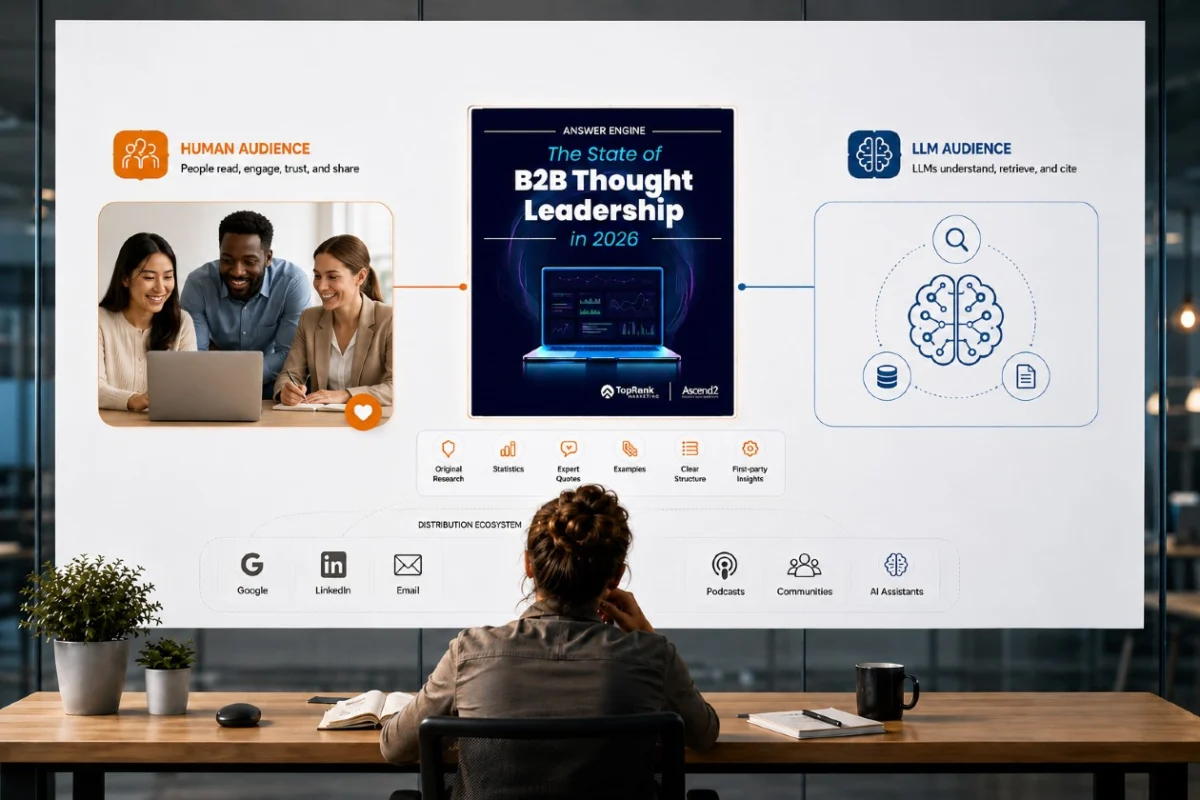
- Multi-Channel Discovery: Credible content’s impact is diminished if it remains undiscovered. In today’s fragmented discovery landscape, gaining visibility within AI models and search engines requires more than basic SEO tactics. Meaningful discovery necessitates publishing and activating content where buyers actively research and are influenced, including platforms like LinkedIn, YouTube, industry publications, newsletters, podcasts, communities, Google, and AI answer engines.
Recent research indicates that 32% of professionals now utilize Generative AI tools like ChatGPT and Perplexity to discover thought leadership content, a figure anticipated to rise further. B2B brand visibility must now be meticulously designed to align with audience behaviors – searching, scrolling, watching, listening, and prompting. This underscores the fundamental connection between B2B influencer marketing and AI visibility as integral components of a cohesive system.
5. Empowering B2B Creators Within Defined Compliance Frameworks
Analyst recognition also brings compliance considerations. Gartner and Forrester maintain detailed policies governing the use of their terminology, quotations, and promotional language. Gartner, for instance, permits terms like "Named," "Positioned," and "Recognized" but restricts stack-ranking language and claims implying direct endorsement. Similarly, Forrester has specific rules for Wave references, citations, placement claims, and licensed content.
Consequently, the objective is not to transform influencers into scripted spokespeople. Instead, compliance should be intrinsically designed into the program. This involves providing creators with approved public source materials that clearly delineate permissible analyst-related language. It also entails educating them on licensing restrictions for graphics or materials and establishing an efficient review process for factual claims, including adherence to FTC disclosure requirements. Within these established guardrails, influencers can then leverage their expertise authentically, resonating with their audiences. B2B brands engage influencers to tap into the unique expertise and perspective that earned them their following. The brand’s role is to create a framework where accuracy and genuine perspective can coexist harmoniously.
6. Harnessing Earned Media to Expand the Trust Network
Influencers are a vital component of a B2B brand’s credibility ecosystem, but earned media plays a crucial role in extending that narrative through trusted sources. Analysis by Muck Rack of over 25 million links surfaced by ChatGPT, Claude, and Gemini revealed that earned media constituted 84% of citations, far surpassing paid or advertorial content (0.3%). Further research by Meltwater and LinkedIn on 9.5 million AI citations across six platforms indicated that user-generated platforms like LinkedIn, Reddit, and YouTube accounted for 47.5% of citations, with company websites making up 18.7%. Notably, within LinkedIn citations, 75% originated from individual members, with Company Pages contributing 25%.
This data highlights a shift in the role of owned media. Authority is amplified when it appears across a network of credible sources. Citations are the currency for LLMs and AI-powered search engines. Driving citations is a collective endeavor involving:
- Public Relations: Securing media coverage in reputable outlets.
- Analyst Relations: Building relationships with industry analysts.
- Influencer Marketing: Collaborating with credible voices.
- Content Marketing: Producing valuable and shareable content.
- Social Media Engagement: Fostering community and dialogue.
- Customer Advocacy: Encouraging positive testimonials and reviews.
Collectively, these efforts provide buyers with more avenues for discovery and more reasons to trust the information they find, while also generating the citations that AI models use to identify preferred answers.
7. Measuring B2B Influence from Brand Awareness to Demand Generation
A persistent weakness in many influencer marketing programs is measurement. While impressions and engagement are indicative of reach and interaction, they do not tell the complete business story. The TopRank Marketing B2B Influencer Marketing Report found that 47% of marketers identify measuring and reporting results as a significant challenge. Advanced programs are more than twice as likely as less mature ones to use Share of Voice and MQL/SQL metrics for performance evaluation.
For an analyst recognition program, measurement should bifurcate into brand outcomes and demand outcomes.
- Brand and Influence Signals: Track metrics such as:
- Share of Voice (SOV) within relevant conversations.
- Sentiment analysis of discussions.
- Brand mentions and attributable impressions.
- Website traffic and referral sources from influencer content.
- Engagement rates on influencer-amplified content.
- Growth in follower counts and community engagement.
- Attribution to specific influencers for content consumption.
- Demand Signals: Connect these activities to tangible business results:
- Lead generation and Marketing Qualified Leads (MQLs).
- Sales Qualified Leads (SQLs).
- Pipeline contribution.
- Customer acquisition cost (CAC).
- Revenue impact and customer lifetime value (CLV).
Each B2B influencer should have trackable URLs and campaign identifiers. Wherever possible, influencer activity should be integrated with web analytics, CRM data, paid media, and sales outcomes. Crucially, these disparate data points must be synthesized into a unified view. Within the Best Answer Marketing framework, Unified Analytics provides the feedback loop connecting visibility, engagement, and conversion data, enabling B2B marketers to discern which stories, experts, channels, and experiences are truly contributing to business objectives. This consolidated perspective transforms measurement from a simple campaign report into actionable intelligence for future strategic decisions.
The Integrated B2B Influence Program in Practice
TopRank Marketing has extensive experience developing and executing B2B influencer programs for enterprise brands, including work with industry leaders such as Adobe, Dell, SAP, LinkedIn, and Sprinklr. A prime example is Sprinklr’s "Socialverse" program. TopRank collaborated with prominent industry influencers like Jay Baer, Ann Handley, Mari Smith, and Paul Roetzer, alongside Sprinklr’s internal experts and customers, to produce a documentary-style masterclass. This initiative integrated influencer content, social media amplification, paid promotion, and an event experience under a cohesive narrative.
The campaign resulted in over 5,000 global event registrations. Organic and paid messages reached more than 23.4 million individuals, generating nearly 100,000 engagements. The program surpassed benchmarks for accounts reached and MQLs, contributed to new annual recurring revenue, and garnered a Content Marketing Award for Best Use of Influencer Marketing. A Magic Quadrant placement can undoubtedly create a significant moment for a B2B brand. However, influencer marketing can transform that singular moment into a dynamic ecosystem of trusted voices, valuable content, executive visibility, and multi-channel discovery that continues to deliver value long after the initial announcement.
Auditing the Gap: Prestige Versus Visibility
For B2B brands that have earned analyst recognition, it is imperative to assess how far that authority truly travels. Identify 25 to 50 high-intent questions that buyers frequently ask about the category. This includes prompts related to:
- Market trends and evolution.
- Key capabilities and functionalities.
- Vendor comparisons and competitive landscapes.
- Implementation best practices and challenges.
- Future industry outlooks.
Input these questions into the AI platforms your target audience utilizes and meticulously document which companies appear and which sources are cited. Subsequently, classify these sources by type: analyst research, user reviews, company-generated content, influencer content, executive insights, earned media coverage, community discussions, and other third-party contributions. This audit will allow for a direct comparison of your credibility investments against your actual visibility.
Such an audit may reveal that a significant asset – analyst recognition – is not reaching its full potential for visibility. This is not a reason to diminish investment in analyst relations, but rather a compelling impetus to ensure that earned authority works harder and smarter. The prestige of a Magic Quadrant placement provides a foundational moment, but a robust "Best Answer" influence system transforms that prestige into trusted, discoverable visibility wherever buyers are actively seeking solutions.