The practice of forecasting the long-term financial impact of digital experiments has emerged as one of the most debated topics within the Conversion Rate Optimization (CRO) and growth marketing sectors. While the mathematical promise of an A/B test—such as a 10% lift in conversion—offers a clear directional signal, the translation of that signal into actual monthly revenue remains a complex challenge for data scientists and marketing executives alike. The central point of contention lies in the inherent uncertainty of whether a controlled experimental environment can accurately predict the behavior of a dynamic, multi-variable marketplace over an extended period.

The Statistical Foundation of Revenue Projections
The skepticism surrounding revenue forecasting often stems from the disconnect between experimental "lifts" and bottom-line growth. It is a common observation in the industry that a series of winning tests, each claiming a 5% to 10% improvement, rarely results in a cumulative revenue increase that reflects the sum of those parts. To address this, practitioners are increasingly turning to more robust statistical frameworks to prove causality rather than mere correlation.
The gold standard for proving that a specific change caused a specific financial outcome remains the randomized controlled trial, or A/B test. By isolating a single variable and comparing it against a control group, businesses can mitigate the "noise" of external factors. This method is preferred over pre-post comparisons, which are frequently skewed by external variables such as shifts in advertising spend, seasonal fluctuations, or changes in the competitive landscape. For instance, if a website’s performance drops by 10% due to an economic downturn, but a new feature implemented via an A/B test provides a 10% lift, the net result appears flat on a standard revenue chart. Without the controlled experiment, the optimization team might incorrectly conclude that their change had no impact, when in fact it prevented a significant loss.

To maintain credibility with executive leadership, CRO programs must adhere to strict statistical parameters. This includes ensuring experiments are adequately powered to detect meaningful differences and utilizing appropriate significance levels to minimize the risk of "false positives." A forecast is only as reliable as the data fed into it; therefore, the quality of the individual experiment results is the primary determinant of the forecast’s ultimate utility.
The Chronology of an Experiment and its Revenue Lifecycle
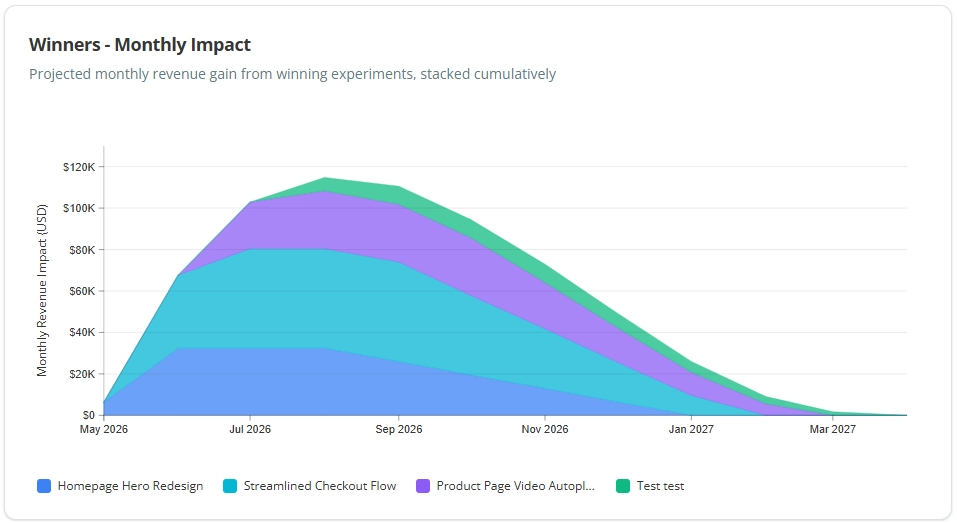
The lifecycle of a digital experiment extends far beyond the moment a "winner" is declared. Understanding the timeline of revenue impact is essential for accurate modeling. This lifecycle typically follows a specific progression:
- The Testing Phase: A period of randomized data collection where the variant and control are run simultaneously.
- The Implementation Gap: The time elapsed between the conclusion of the test and the permanent deployment of the winning variant to the full audience.
- The Full Rollout: The point at which 100% of the targeted traffic is exposed to the change.
- The Decay Phase: A period where the initial lift may begin to normalize or diminish due to the "novelty effect" or changing market conditions.
Industry experts suggest that the "novelty effect"—where users respond positively to a change simply because it is new—can often inflate short-term results. Over time, as the change becomes the new baseline, the incremental lift may settle. Consequently, a realistic revenue model must account for this decline rather than assuming a permanent, static increase in performance.
Implementing a Conservative Forecasting Model
To counter the often-inflated claims of case studies—which may simply multiply a test’s percentage lift by annual revenue—sophisticated organizations are adopting conservative "haircut" models. This approach acknowledges that the laboratory-like conditions of an A/B test do not always translate perfectly to the real world.
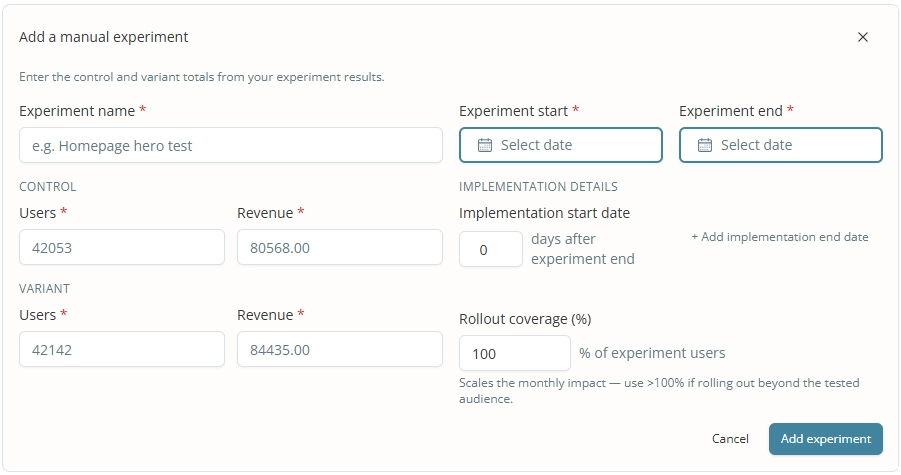
A conservative model typically incorporates three critical adjustments. First, a "haircut" or discount factor is applied to the raw lift. For example, a 10% reduction in the reported lift can account for potential statistical regression. Second, the model must account for "Rollout Coverage." If a test was conducted only on a specific landing page that accounts for 20% of site traffic, the total revenue impact must be scaled accordingly. Third, the model should include a temporal decay factor. A common standard involves holding the impact steady for a brief period (e.g., four months) and then gradually reducing the projected contribution (e.g., by 20% per month) until it reaches zero.
This conservative approach serves a dual purpose: it provides a more realistic financial outlook for the company and protects the CRO team’s reputation. By under-promising and over-delivering, optimization teams can build long-term trust with Chief Financial Officers and other stakeholders who are naturally skeptical of marketing projections.
The Role of Specialized Analytics and Automation
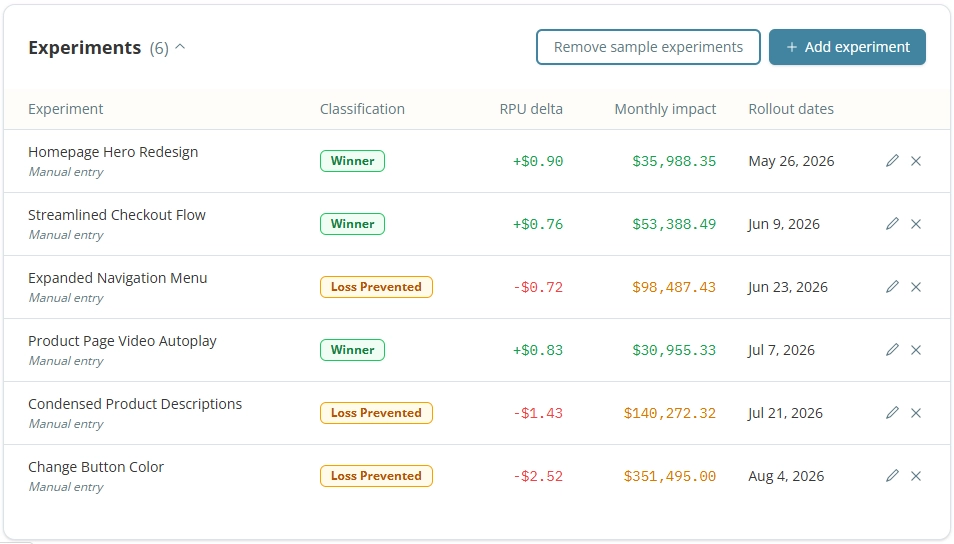
As the complexity of these models grows, the reliance on manual spreadsheets has become a bottleneck for many growth teams. The emergence of specialized experimentation analytics tools, such as Katsed, reflects a broader industry trend toward the automation of revenue impact reporting. These tools allow teams to input raw experiment data—users, revenue per user (RPU), and dates—to generate cumulative revenue charts automatically.
One significant feature of modern reporting tools is the ability to distinguish between "Winners" and "Loss Prevented" experiments. A "Loss Prevented" scenario occurs when a proposed change is tested and found to perform worse than the current version. By identifying these losing variants before they are fully implemented, the CRO team provides measurable value by protecting existing revenue streams. This "defensive" value is often overlooked in traditional reporting but is a vital component of a program’s overall Return on Investment (ROI).

Broader Business Implications and Stakeholder Management
For many practitioners, the hesitation to forecast revenue stems from a fear of being "wrong." However, in a corporate environment, the purpose of a revenue projection is not to act as a crystal ball but to function as a decision-making model. Executives are accustomed to working with estimates and projections in every other department, from sales to supply chain management.
When presenting these figures to the executive level, the focus should remain on the transparency of the assumptions. By clearly stating the discount rates, the decay period, and the coverage areas, the CRO team shifts the conversation from "Is this number 100% accurate?" to "Is this model a reasonable representation of our impact?" This shift is crucial for maintaining the program’s visibility and securing continued budget and resources.
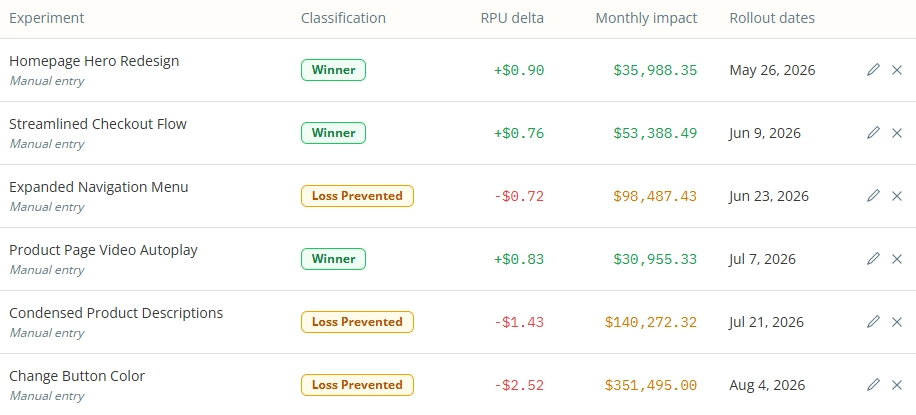
Furthermore, tying revenue impact to ROI allows the program to be viewed as a profit center rather than a cost center. To calculate a true ROI, organizations must weigh the projected revenue gains against the total investment in the program. This investment includes the cost of A/B testing platforms, the salaries of the experimentation team, and the "opportunity cost" of engineering time used to implement changes.
Conclusion: The Future of Experimentation-Led Growth
The shift toward rigorous revenue forecasting represents a maturing of the CRO industry. As digital markets become more competitive and customer acquisition costs continue to rise, the ability to quantify the exact value of every website change becomes a competitive necessity.
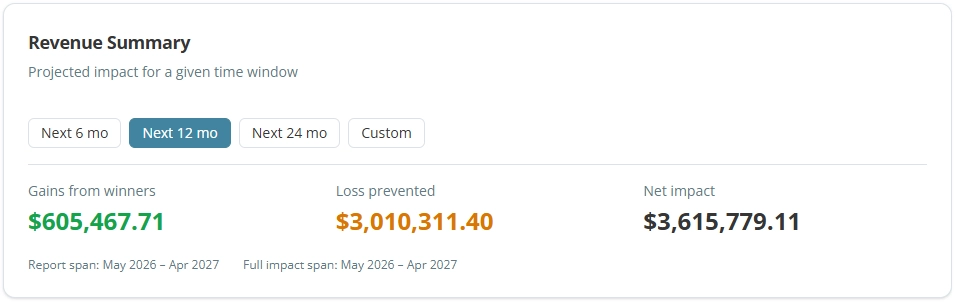
While forecasting will never be an exact science, the integration of robust statistical methods, conservative modeling, and automated reporting tools provides a clear path forward. By treating revenue impact as a dynamic model rather than a static percentage, businesses can better navigate the complexities of user behavior and market volatility. Ultimately, the goal of revenue forecasting is to provide a standardized language that connects the technical rigors of data science with the financial goals of the modern enterprise. Through this alignment, optimization teams can demonstrate their true value as drivers of sustainable, evidence-based growth.