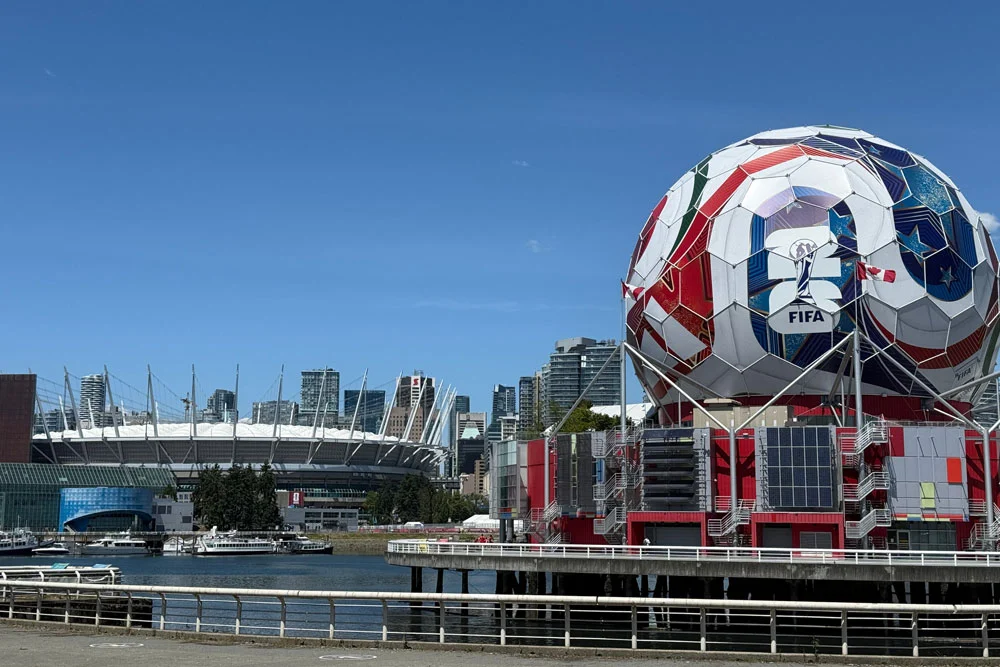
The 2026 FIFA World Cup, hosted across the United States, Canada, and Mexico, has transitioned from a mere sporting event into a profound case study for global business strategy, particularly within the digital and affiliate marketing sectors. As the tournament progresses through its later stages, the dramatic shifts on the pitch—characterized by the fall of traditional giants and the rise of unexpected contenders—have provided a unique lens through which to view the evolution of performance-based marketing. Observers and industry experts are increasingly noting that the dynamics required to succeed in a 48-team international tournament are strikingly similar to those required to manage a high-growth affiliate program in an increasingly volatile digital economy.
The 2026 FIFA World Cup: A Contextual Overview
The 2026 iteration of the FIFA World Cup is historic for several reasons. It is the first tournament to feature an expanded format of 48 teams, up from the traditional 32, and the first to be hosted by three nations simultaneously. This expansion has fundamentally altered the competitive landscape, allowing nations that previously struggled to qualify to compete on the world stage. This shift has resulted in a tournament defined by unpredictability, where the traditional "footballing hierarchy" has been challenged by agile, well-prepared underdogs.
From a commercial perspective, the tournament is expected to generate record-breaking revenue, with FIFA projecting figures exceeding $11 billion for the 2023-2026 cycle. A significant portion of this growth is driven by digital engagement and partnership marketing, placing the tournament at the intersection of global sport and high-stakes performance marketing. For professionals in the affiliate marketing space—an industry currently valued at over $17 billion globally—the parallels are impossible to ignore.
The Chronology of the 2026 Tournament and Strategic Inflection Points
The tournament’s timeline has been marked by several key events that mirror the "boom and bust" cycles of digital marketing campaigns.
- The Qualification Phase: The failure of Italy, a four-time champion, to qualify for the 2026 tournament sent shockwaves through the sporting world. For marketers, this serves as a reminder that past performance is no guarantee of future placement. Even the most established brands can lose their "market share" if they fail to adapt to new qualification standards or competitive pressures.
- The Group Stage Upsets: The early stages of the tournament saw debutants like Curaçao holding Ecuador to a 0-0 draw. These moments demonstrated that with the right defensive "infrastructure" and tactical discipline, smaller players can neutralize the advantages of larger, better-funded opponents.
- The Round of 16 and Quarterfinals: The elimination of Brazil by Norway and the Netherlands by Morocco highlighted a critical shift in the global game. Success is no longer strictly about individual flair but about collective execution and the ability to exploit specific market—or tactical—inefficiencies.
Parallel One: The Necessity of Strategic Teamwork and Diversification
In both world-class soccer and affiliate marketing, the reliance on a single "superstar" is a high-risk strategy that frequently leads to failure. The 2026 World Cup provided clear evidence of this during the matches involving Croatia and Portugal. Despite the individual brilliance of veterans like Luka Modrić and Cristiano Ronaldo, their respective teams were unable to overcome opponents who operated with superior collective cohesion.
In the realm of affiliate marketing, this translates directly to the structure of an affiliate program. Many brands make the mistake of relying on one or two "mega-affiliates" or "super-affiliates" (often large coupon or loyalty sites) to drive the vast majority of their revenue. While these partners are valuable, an over-reliance on them creates a single point of failure.
Data Insight: The Risk of Concentration
Industry data suggests that affiliate programs with a "heavy tail"—where more than 70% of revenue comes from fewer than 5% of partners—experience 40% higher volatility in monthly earnings compared to diversified programs. To mitigate this, successful affiliate managers are now adopting a "squad-based" approach, diversifying their partner base across various marketing channels, including:
- Content Creators and Niche Bloggers: Providing top-of-funnel awareness.
- Influencers: Driving social proof and brand engagement.
- Review Sites: Offering mid-funnel validation.
- Technology Partners: Enhancing the user experience and conversion rates.
Just as a soccer team requires a balance of defenders, midfielders, and strikers, a robust affiliate program requires a mix of partner types to protect brand integrity and ensure a steady flow of high-quality referrals.
Parallel Two: The Rise of the Underdog and Market Disruption
The 2026 World Cup has been the "Year of the Underdog." One of the most startling examples occurred in the Round of 16, where Egypt led the defending champions, Argentina, for the majority of the match after scoring two early goals. This phenomenon—where a supposedly "smaller" entity challenges an established power—is a frequent occurrence in the business world, particularly within the affiliate marketing sector.
A prominent historical example cited by industry analysts is the launch of the Nectar Sleep affiliate program in 2017. At the time, the "mattress-in-a-box" market was dominated by established giants like Casper and Purple. Nectar Sleep entered as an underdog in a saturated market. However, by leveraging a sophisticated affiliate strategy and focusing on aggressive, performance-based partnerships, the program became the top-ranked program on the ShareASale network within just over a year, surpassing 5,000 other brands, including household names like Wayfair and Reebok.
Analysis of Underdog Dynamics
Underdogs succeed because they are often more agile and willing to take calculated risks that incumbents avoid. In the 2026 World Cup, teams like Norway and Morocco utilized advanced data analytics to identify and exploit the tactical weaknesses of their more famous opponents. Similarly, "underdog" brands in affiliate marketing often use superior commission structures, better creative assets, and more personalized affiliate management to lure high-quality partners away from legacy brands.
Parallel Three: The Danger of Complacency and the Need for Evolution
The absence of Italy from the 2026 World Cup and the early exits of the Netherlands and Brazil serve as a stark warning against resting on one’s laurels. In soccer, tactical innovations like "Gegenpressing" or high-intensity interval defending can quickly render traditional playing styles obsolete.
The affiliate marketing landscape is equally dynamic. The industry is currently facing significant shifts, including:
- The Depreciation of Third-Party Cookies: Forcing a move toward first-party data and server-to-server tracking.
- The Rise of AI-Driven Content: Changing how SEO-focused affiliates generate traffic.
- Regulatory Changes: Increased scrutiny from the FTC and other global bodies regarding disclosure and consumer privacy.
Affiliate programs that operated successfully five years ago using basic banner ads and simple last-click attribution models are now finding themselves "unqualified" for the modern market. Education and continuous optimization are no longer optional; they are requirements for survival.
Broader Impact and Industry Implications
The intersection of these sports lessons and business strategies suggests a broader trend toward "Performance-Based Thinking" in all areas of enterprise. The 2026 World Cup has shown that the gap between the elite and the emerging is closing, thanks to the democratization of data and the global nature of talent.
Official Responses and Market Sentiment
While FIFA officials have praised the "competitive balance" of the 2026 tournament, marketing executives are taking a more analytical approach. During recent industry conferences, such as Affiliate Summit, the sentiment has shifted toward "sustainable growth."
"The 2026 World Cup is a mirror for our industry," noted one senior affiliate agency director. "You see Brazil go out because they relied on the ‘old way’ of playing, while Norway advanced because they embraced a modern, data-centric approach. We see the same thing in our programs. Brands that don’t innovate their affiliate mix are being replaced by smaller, hungrier startups that understand the current digital climate."
Future Outlook
As the 2026 World Cup moves toward its final match, the lessons for affiliate marketers remain clear. The "championship" in business is won by those who:
- Build Cohesive Teams: Move beyond individual stars to create a diversified ecosystem of partners.
- Respect Every Competitor: Acknowledge that underdogs are often the greatest source of disruption and innovation.
- Embrace Change: Continuously educate themselves and adapt their strategies to meet the technical and regulatory challenges of the day.
The 2026 FIFA World Cup will eventually conclude, and a new champion will be crowned. However, for the affiliate marketing industry, the tournament has provided a permanent blueprint for strategic success: talent is the starting point, but teamwork, agility, and constant evolution are the factors that ultimately secure the win. The goal is not just to participate in the "championship" of the market, but to build a program resilient enough to qualify and compete year after year, regardless of how the rules of the game may change.