The digital marketing landscape is increasingly specialized, with platforms evolving to meet the distinct needs of various user groups. Among the leading contenders in email marketing and customer engagement, ConvertKit (now officially known as Kit) and Brevo stand out, each carving a niche for itself. ConvertKit positions itself as the go-to solution for content creators such as influencers, bloggers, and digital entrepreneurs who prioritize monetizing and marketing their content. In contrast, Brevo targets established businesses, offering a comprehensive suite designed to manage extensive contact lists, streamline sales pipelines, and provide robust customer relationship management (CRM) functionalities. This article delves into a detailed comparison of these two platforms, examining their pricing structures, automation capabilities, marketing tools, contact management, monetization features, and overall use cases, offering a comprehensive analysis for potential users.
Core Distinctions and Strategic Positioning
At a glance, the fundamental difference between ConvertKit and Brevo lies in their core philosophy and target audience. ConvertKit champions the creator economy, providing tools that empower individuals to build, engage, and monetize their audience directly. Its feature set reflects this, focusing on email broadcasts, landing pages, and direct monetization channels for digital products and subscriptions. Brevo, conversely, embraces a broader business-centric approach, integrating marketing automation with sales and CRM functionalities to support end-to-end customer journeys, particularly for product and service-based businesses. This divergence profoundly impacts their pricing models, feature availability, and overall user experience.
ConvertKit’s pricing scales directly with the number of contacts, offering unlimited email sends across all its plans. This model is often favored by creators who might send frequent emails but have a relatively stable or slowly growing audience. Brevo, on the other hand, prices primarily based on monthly email volume, allowing for a significantly larger contact storage capacity even on its free and lower-tier paid plans. This structure benefits businesses with vast contact databases but potentially lower per-contact email frequency, or those who need flexible sending limits. Furthermore, only ConvertKit offers integrated tools for content monetization, allowing creators to sell digital products, paid newsletters, and subscriptions directly within the platform. Conversely, Brevo distinguishes itself with a built-in CRM, a critical component for businesses managing complex sales cycles and requiring a unified view of customer interactions across sales and marketing.
Pricing Models: A Deep Dive into Cost-Effectiveness
The financial implications of choosing between ConvertKit and Brevo are substantial, driven by their differing pricing models. ConvertKit’s contact-based pricing means that as a creator’s audience grows, their monthly subscription cost increases linearly. For example, while a creator with 1,000 contacts might find ConvertKit’s $33/month Creator plan (as of September 2026) reasonable, reaching 20,000 contacts escalates the cost to $158/month. The appeal here is the unlimited email broadcasts, providing predictability for high-frequency senders.
Brevo employs a monthly email volume pricing model, which can be significantly more cost-effective for businesses with large contact lists but moderate email sending needs. Its Starter plan, at $32/month, offers storage for up to 500,000 contacts and 20,000 emails per month. This means a business with 10,000 or even 20,000 contacts would pay the same $32/month, provided they stay within the 20,000 email send limit. This contrasts sharply with ConvertKit, where 10,000 contacts would cost $116/month and 20,000 contacts $158/month on the Creator plan. For businesses tackling massive lists, Brevo’s model offers clear financial advantages, potentially saving hundreds or thousands of dollars monthly at higher contact tiers.
The free plans also reflect these philosophies. ConvertKit Free offers unlimited email broadcasts but caps contact storage at 10,000. This is generous for burgeoning creators focused on email engagement. Brevo Free, however, provides a staggering 100,000 contact storage but limits daily email sends to 300 (approximately 9,000/month). For a business needing to maintain a large database and send occasional, targeted campaigns, Brevo’s free tier presents a compelling entry point. The caveat for Brevo is that exceeding email limits requires purchasing additional credits or upgrading, while ConvertKit’s cost increases solely with contact growth.
Automation and Workflow Capabilities: Tailored for Different Journeys
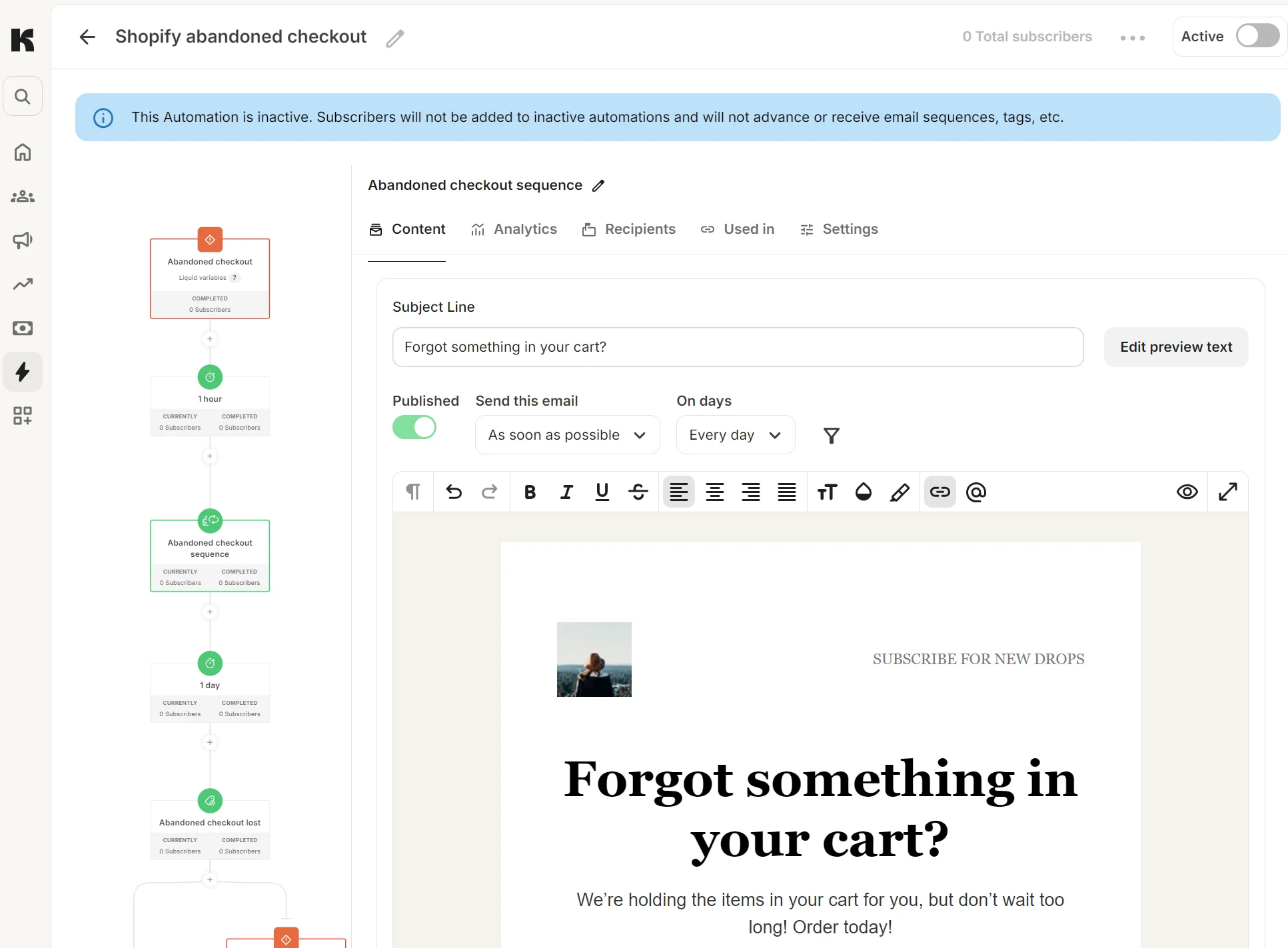
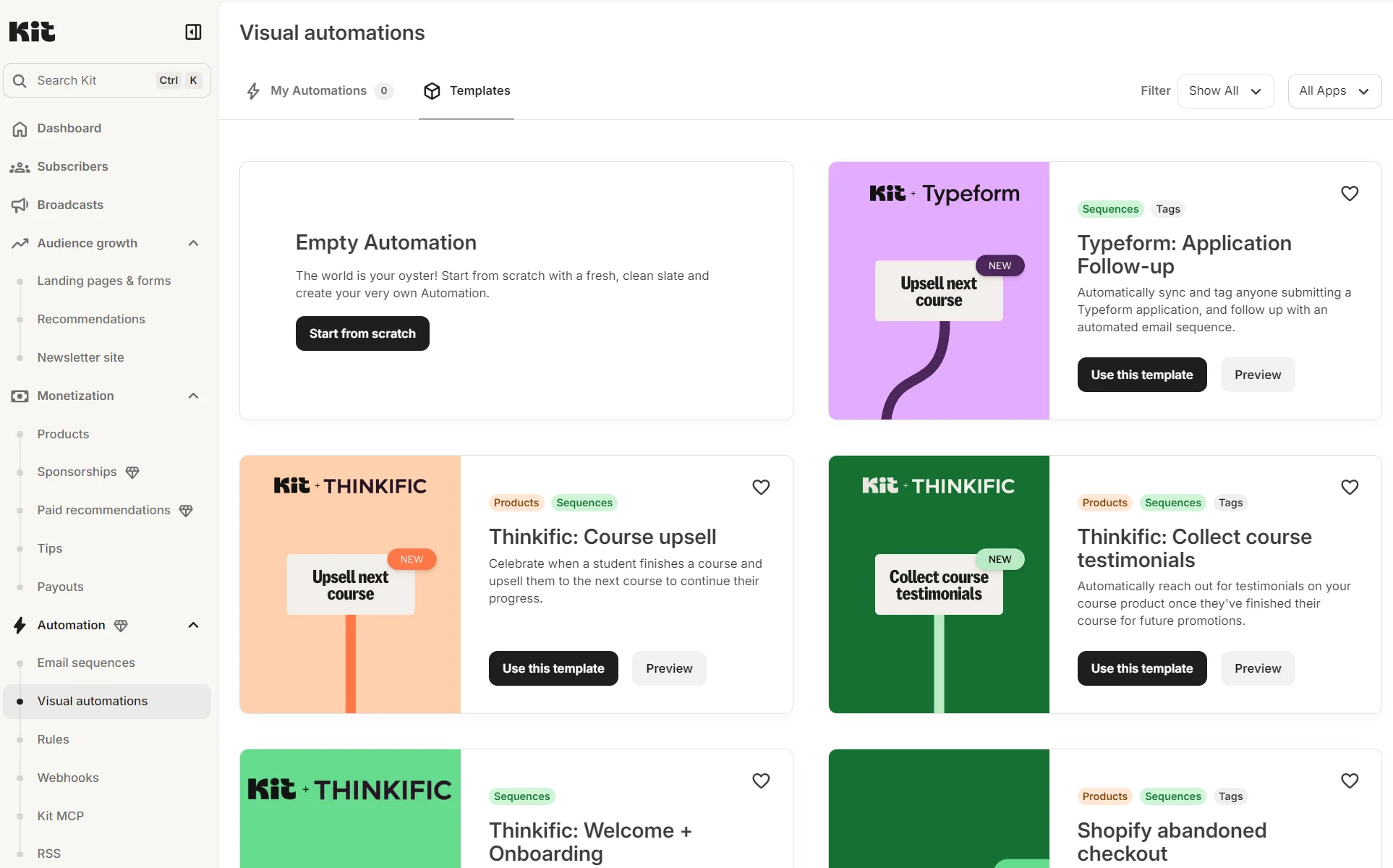
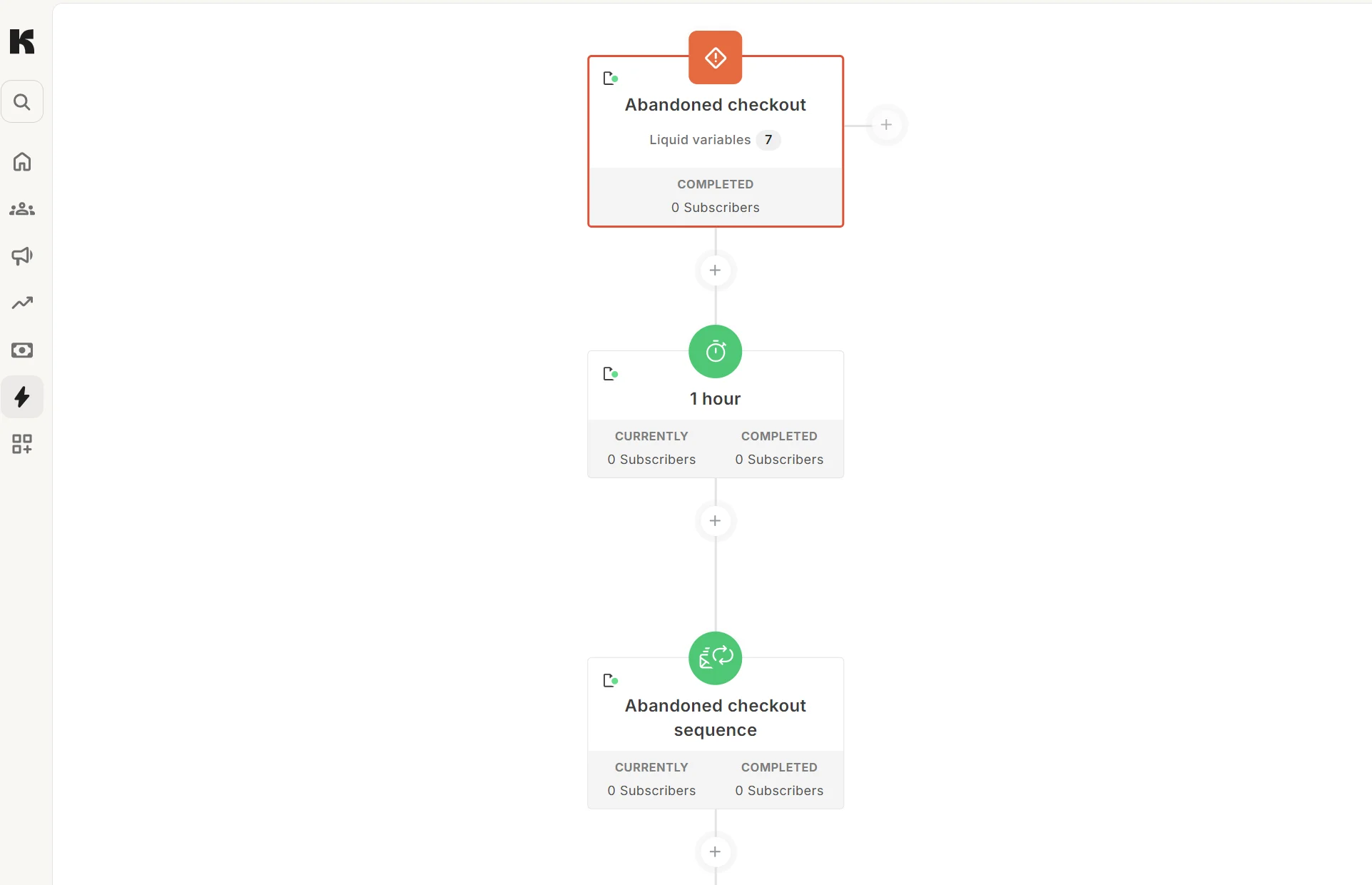
Both platforms offer robust automation features, but their design and template libraries cater to their respective audiences. ConvertKit’s "visual automations" boast a library of over 60 pre-built templates. While this number is impressive, many templates are tied to specific app integrations like Shopify, Thinkific, Calendly, or Typeform, reflecting its creator-centric ecosystem. The visual builder is highly intuitive, allowing users to define entry points, delays, and sequences with ease. A standout feature is the side-loading email editor, which allows users to amend email designs directly within the automation builder, significantly speeding up workflow by eliminating the need to navigate to separate tabs. Triggers primarily revolve around audience actions such as joining a form, adding a tag, custom field updates, or product purchases, aligning with typical creator engagement funnels.
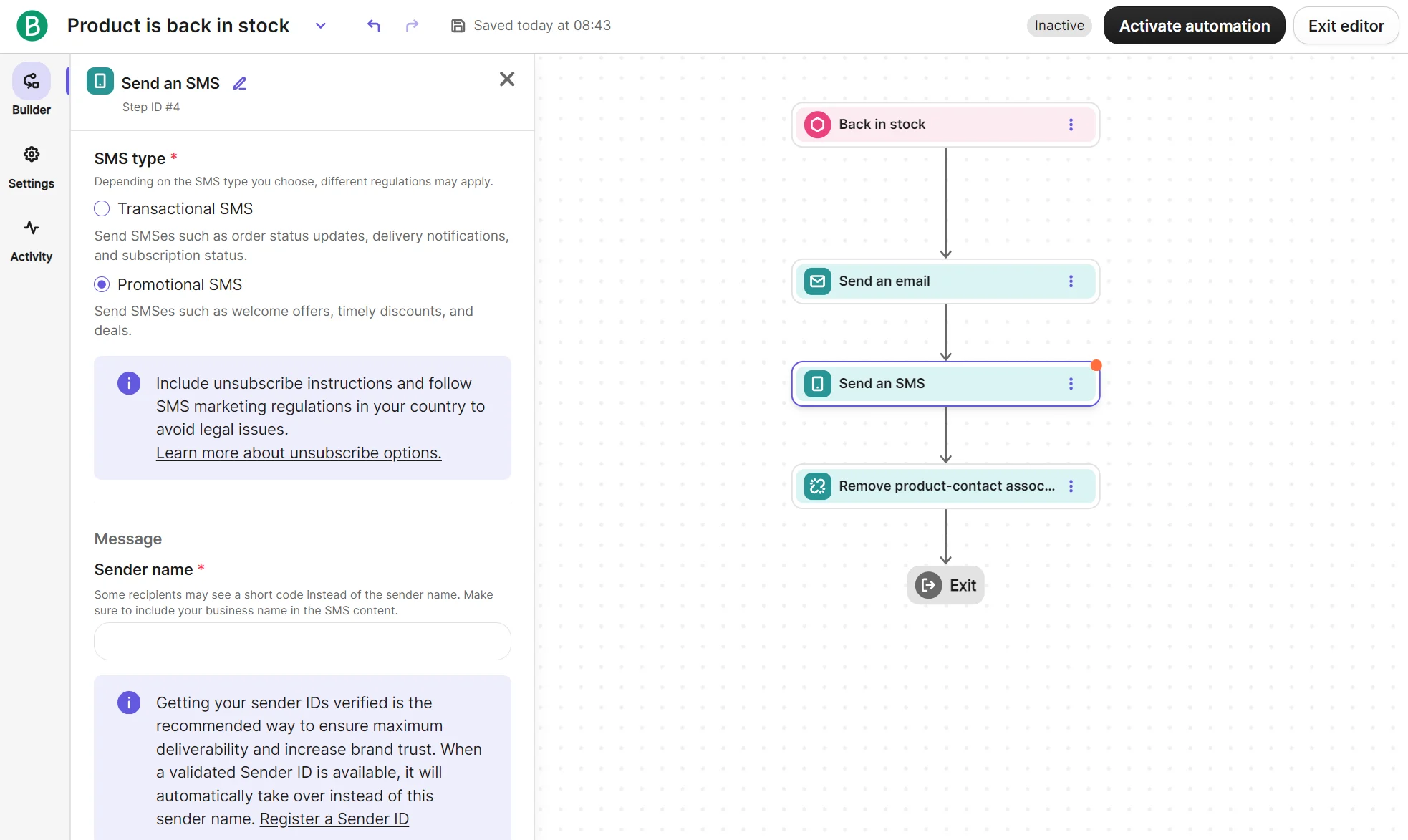
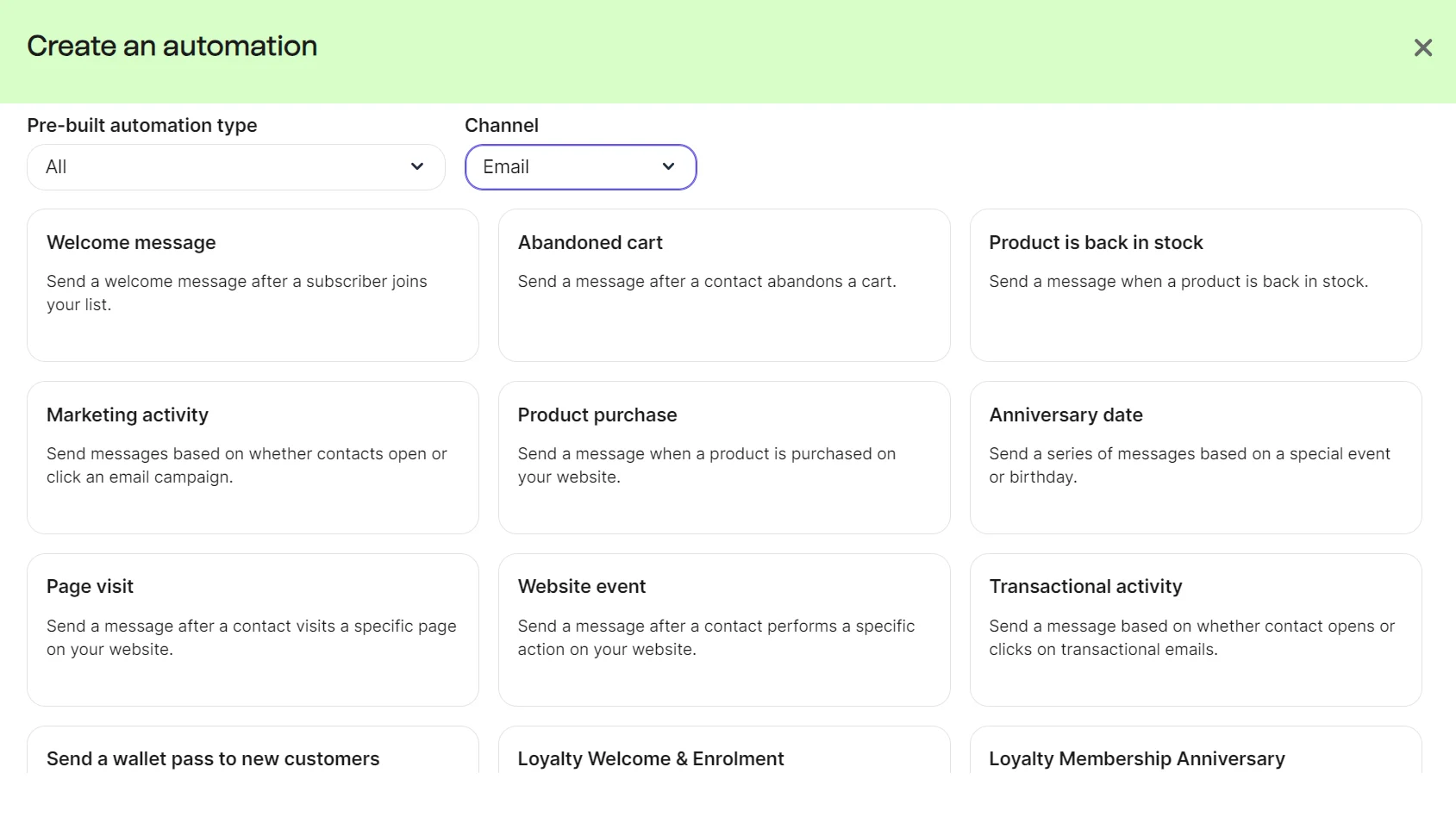
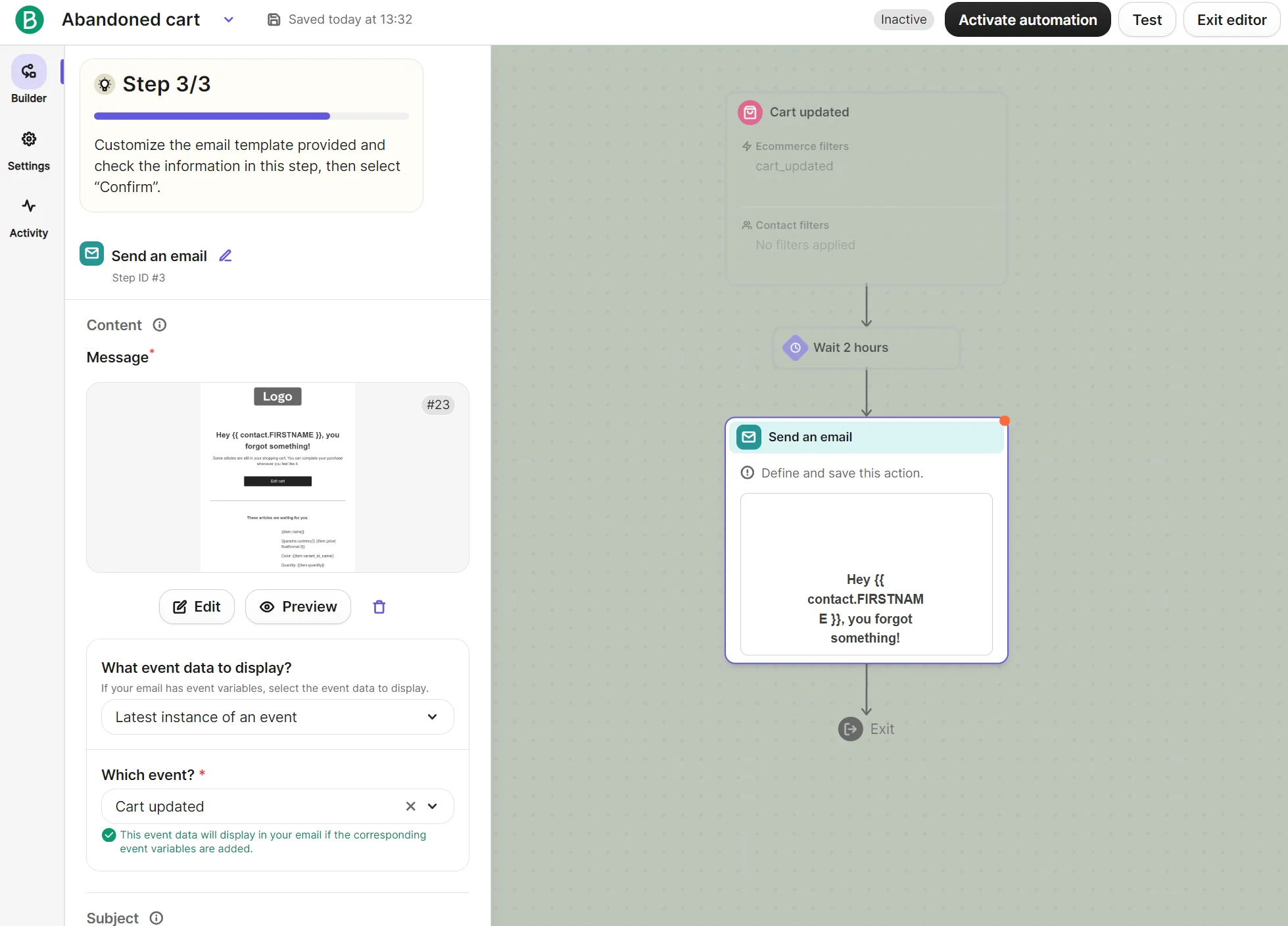
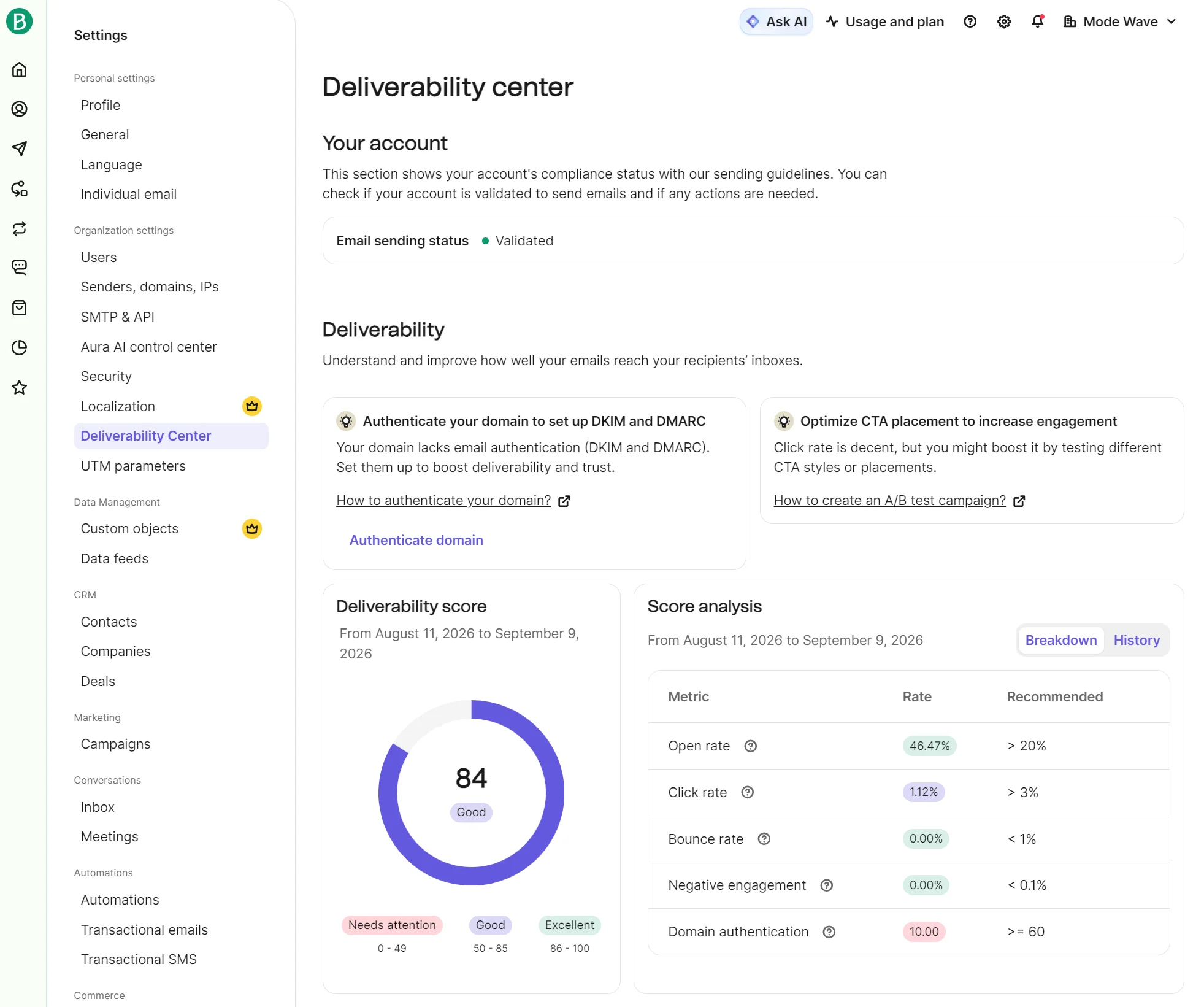
Brevo’s automation library is smaller, with about 15 email and 4 SMS templates, predominantly focused on e-commerce scenarios like abandoned carts, welcome sequences, back-in-stock alerts, and anniversary messages. Its triggers are more expansive for e-commerce, covering orders, deals, and payments. A unique feature in Brevo is the ability to percentage-split a flow, allowing for A/B testing of different automation paths, a powerful tool for optimizing conversion rates. Brevo also leverages its Aura AI agent to assist in building automations from natural language prompts, providing guided creation for beginners. The automation builder offers a structured, three-step workflow, which guides new users efficiently through the setup process. While less visually integrated than ConvertKit’s side-loading editor, Brevo’s guided approach ensures a smooth setup, particularly for e-commerce and transactional flows.
CRM and Contact Management: Sales vs. Audience Focus
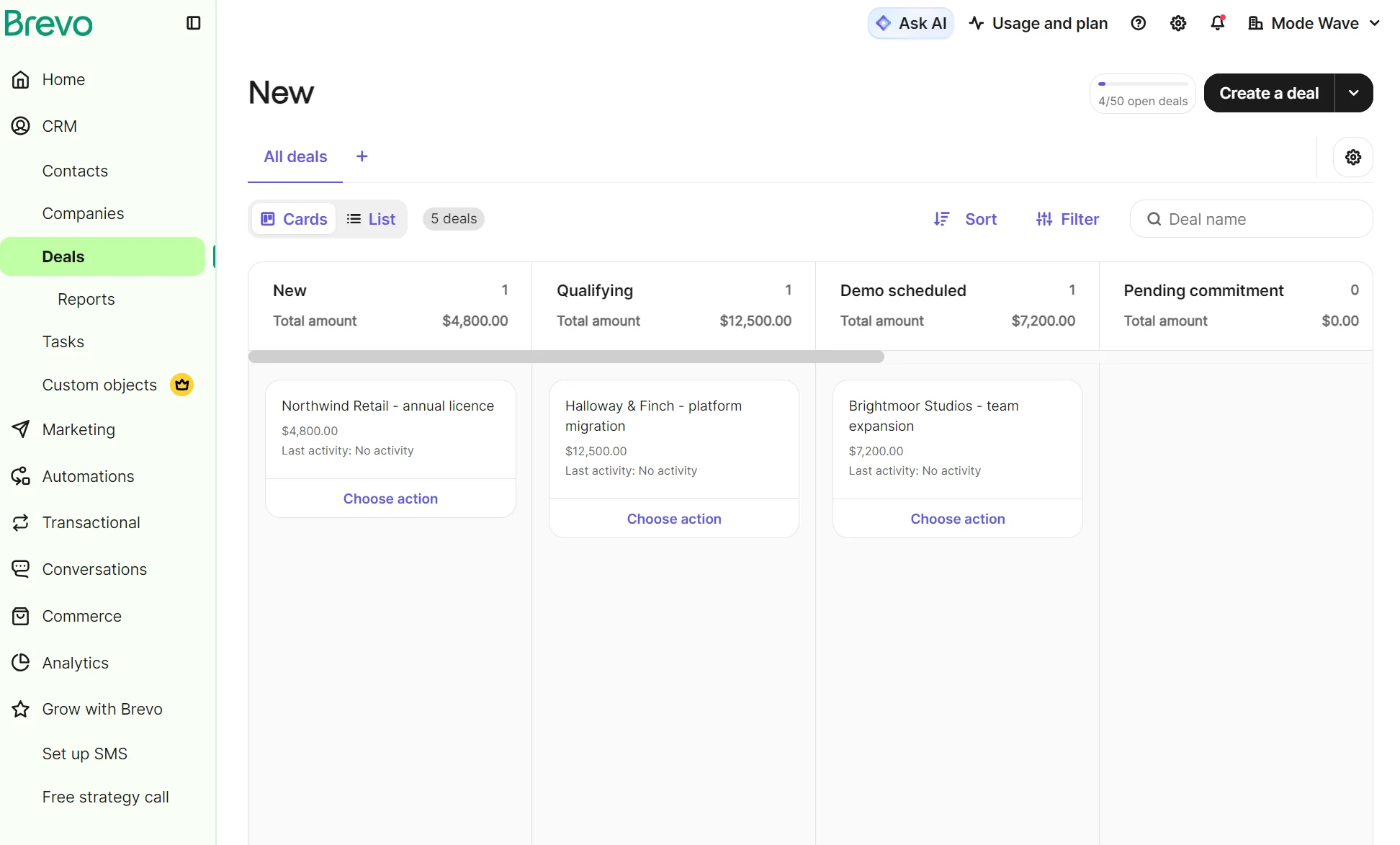
This is where the distinction between the two platforms becomes most apparent. Brevo offers a comprehensive, built-in CRM, a non-negotiable for businesses managing sales pipelines and customer relationships. All Brevo plans include "Sales Free," offering capabilities like managing 50 open deals, automated meeting scheduling, and basic revenue reporting. Upgrading to Sales Essentials or Sales Advanced unlocks unlimited deals, sales workflows, task navigators, AI contact enrichment, VoIP, multiple currencies, and outreach sequences. The "Deals dashboard" provides a visual pipeline, tracking new, qualifying, won, and lost customers, complete with contact details, deal value, and last activity. This robust CRM functionality allows businesses to centralize customer data, track interactions, and manage sales processes efficiently, crucial for driving revenue and fostering long-term customer relationships.
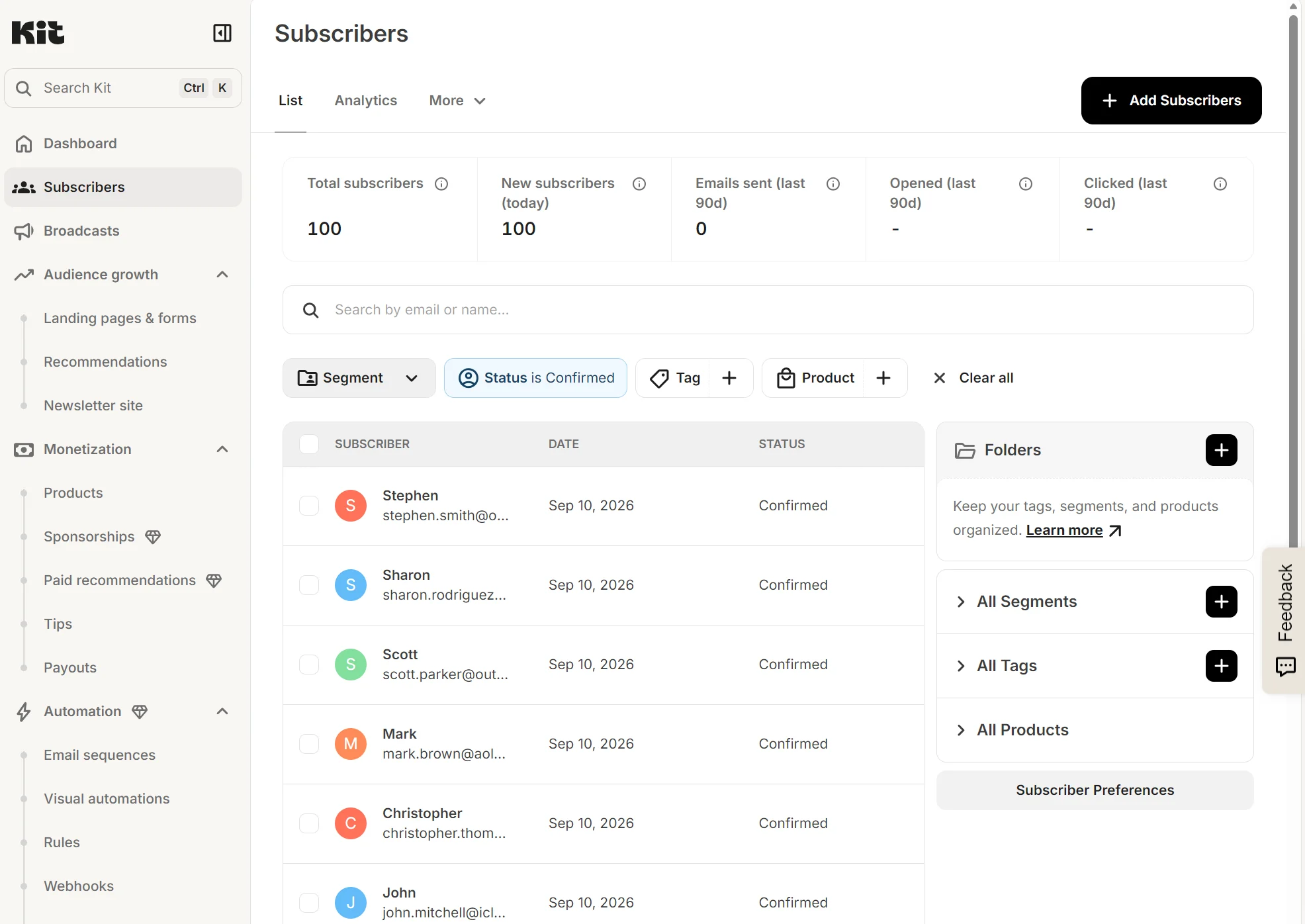
ConvertKit, by contrast, does not offer a CRM. Its focus remains on audience management. Users can view subscribers in a dashboard, filter data associated with their profiles, and segment them based on tags, forms, and custom fields. While effective for organizing an audience and personalizing email campaigns, it lacks the pipeline management, deal tracking, and sales-specific features found in Brevo’s CRM. For content creators whose primary "sale" might be a one-off digital product or a subscription, the advanced functionalities of a CRM are often superfluous. However, for any business with a traditional sales cycle involving leads, opportunities, and negotiations, ConvertKit’s capabilities would prove insufficient without significant reliance on external CRM tools.
Multichannel Marketing & Integrations: Breadth vs. Depth
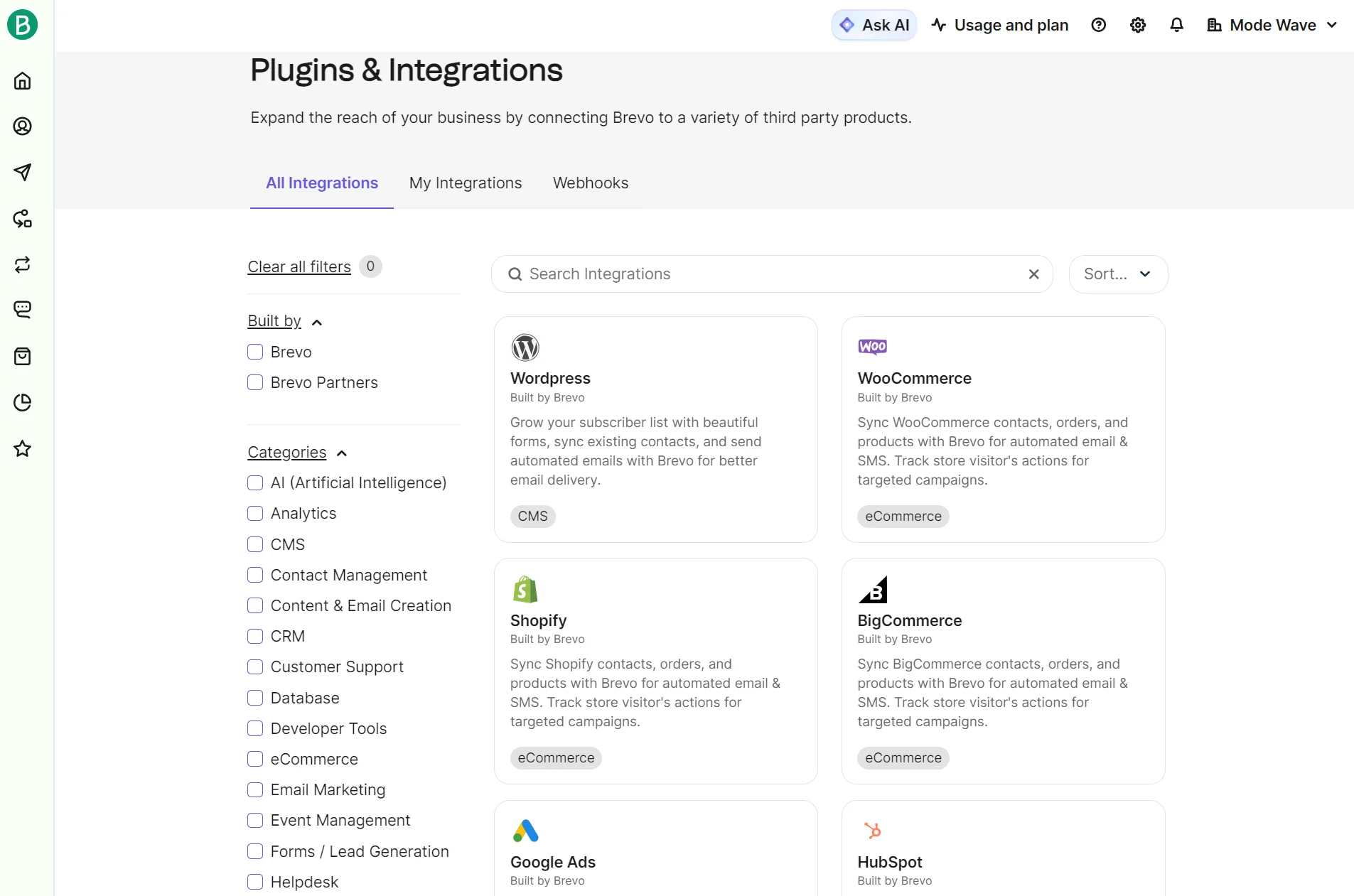
Modern marketing demands a multichannel approach, and the platforms differ significantly in their native support. Brevo is a clear leader in this domain, offering native support for Email, SMS, and MMS across all plans. Furthermore, its Professional plans extend to web push notifications, mobile push notifications, and WhatsApp messaging. This comprehensive suite allows businesses to reach customers across their preferred channels, creating a truly integrated communication strategy. Brevo’s SMS coverage spans over 180 countries, underscoring its global applicability for businesses. Its integration ecosystem is broad, with over 140 integrations covering e-commerce (Shopify, WooCommerce), analytics, and notably, other CRMs like HubSpot, Zoho, and Salesforce – reinforcing its business-centric design.
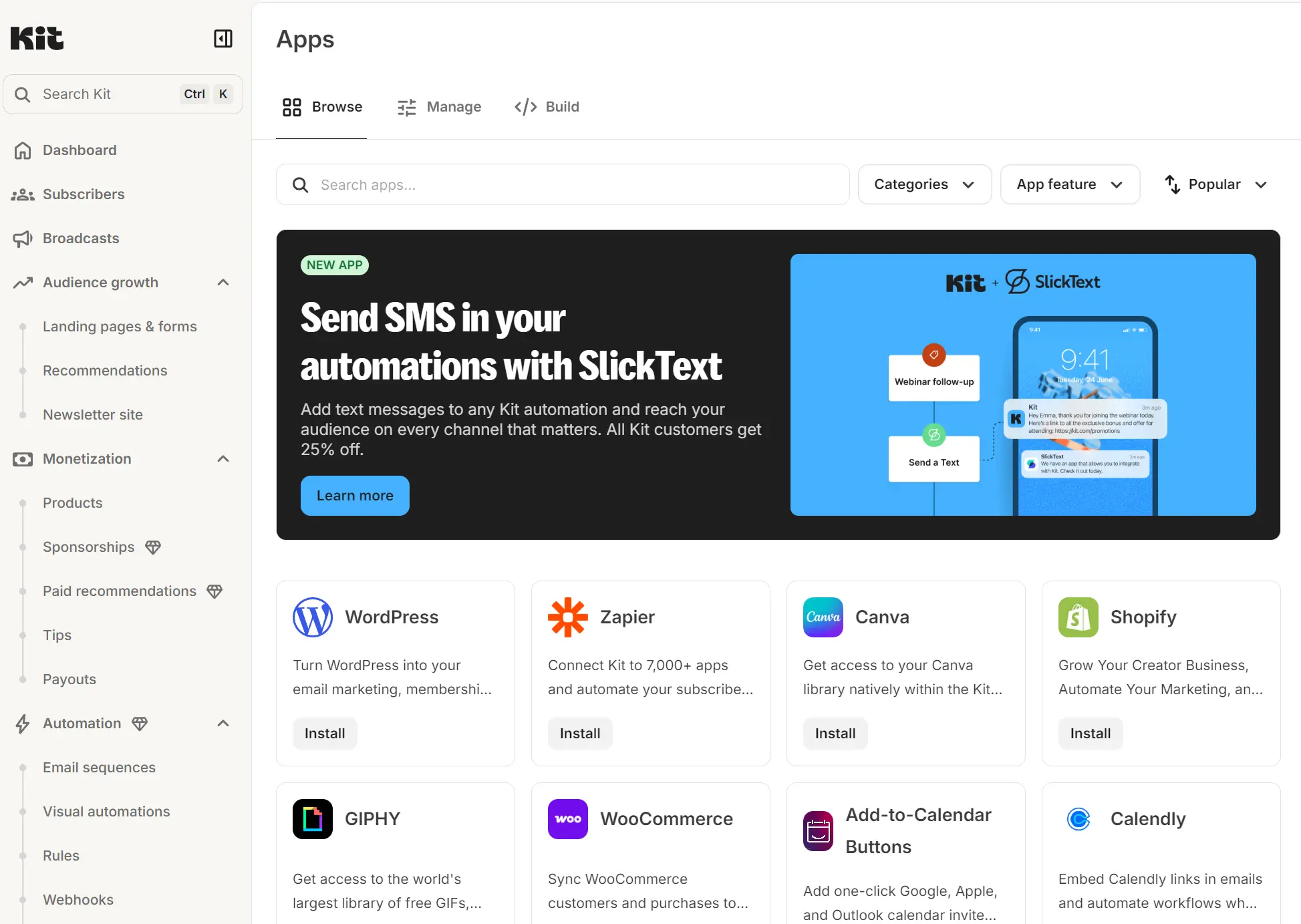
ConvertKit’s multichannel capabilities are more limited, primarily focusing on email as its native channel. While it advertises SMS marketing from its Creator plan, this functionality is not native; it requires an integration with a third-party service like SlickText, which necessitates a separate paid subscription. This reliance on an external tool not only adds cost but also limits SMS support to the United States and Canada. ConvertKit’s integration library, while over 100, leans towards tools relevant to content creators, such as GIPHY, TeachKit, and various e-learning platforms. While both platforms integrate with Zapier, expanding their connectivity to thousands of apps, Brevo’s native multichannel support and broader business integrations offer a more cohesive solution for comprehensive marketing strategies.
Content Monetization: ConvertKit’s Unique Edge
For content creators, ConvertKit’s integrated monetization tools are a significant differentiator. Brevo offers no native content monetization features. ConvertKit, however, provides creators with the ability to sell digital products, paid newsletters, and recurring subscriptions directly through the platform. It also facilitates virtual tip jars and, on its Creator and Pro plans, enables paid recommendations and newsletter sponsorships. This empowers creators to build sustainable businesses by directly monetizing their audience and content without needing to integrate separate e-commerce or payment processing solutions for these specific offerings. The product builder in ConvertKit is streamlined, allowing users to set up an e-learning course or digital product in a matter of minutes, complete with customizable checkout, confirmation, and receipt pages.
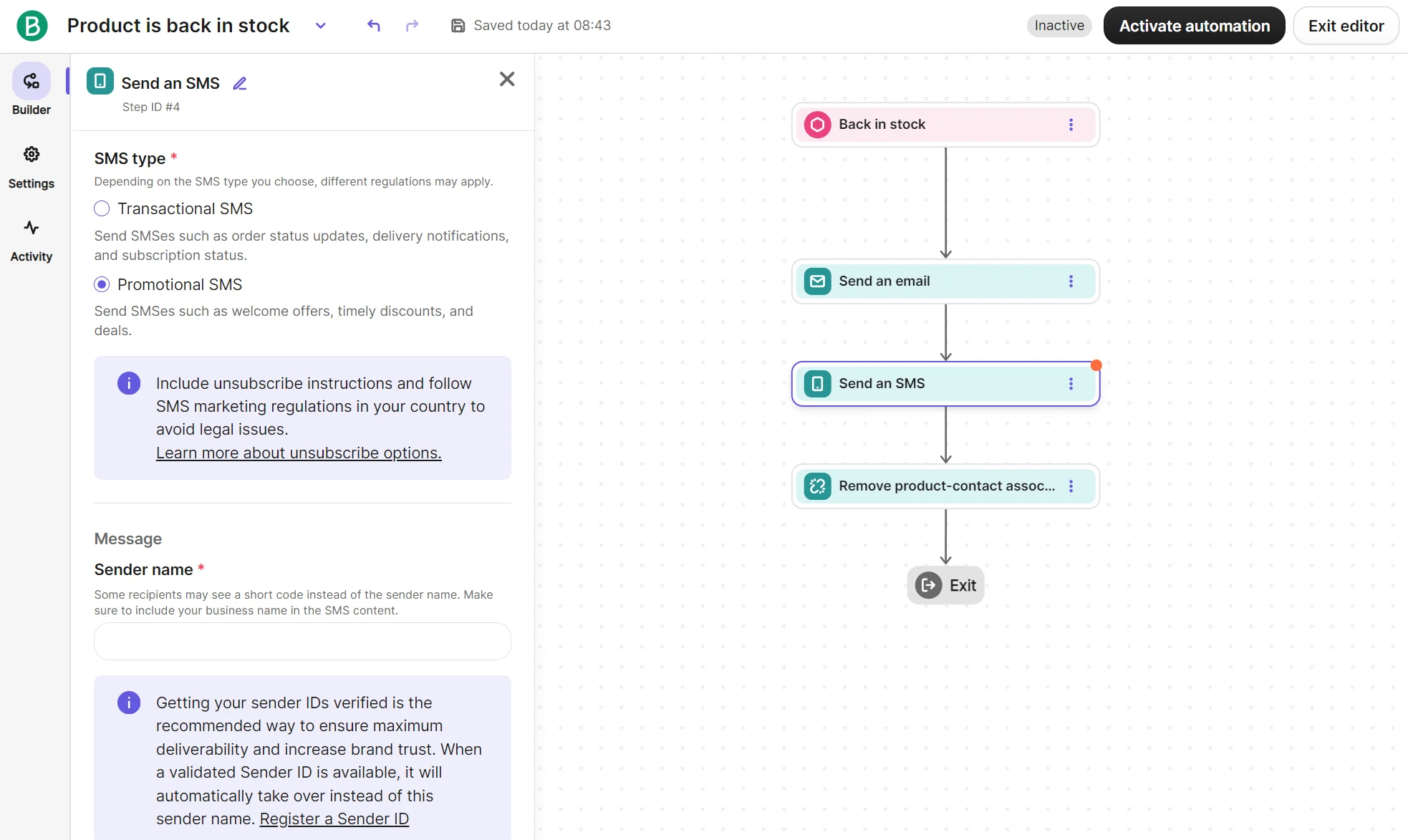
It is important to note the associated fees: a base ConvertKit plan cost, plus a 3.5% + $0.30 transaction fee per sale, and a 23.5% fee for Paid Recommendations. While these fees exist, the convenience and integration of these monetization features within the marketing platform itself are invaluable for creators, simplifying their tech stack and workflow.
Email Deliverability and Reporting: Ensuring Messages Land
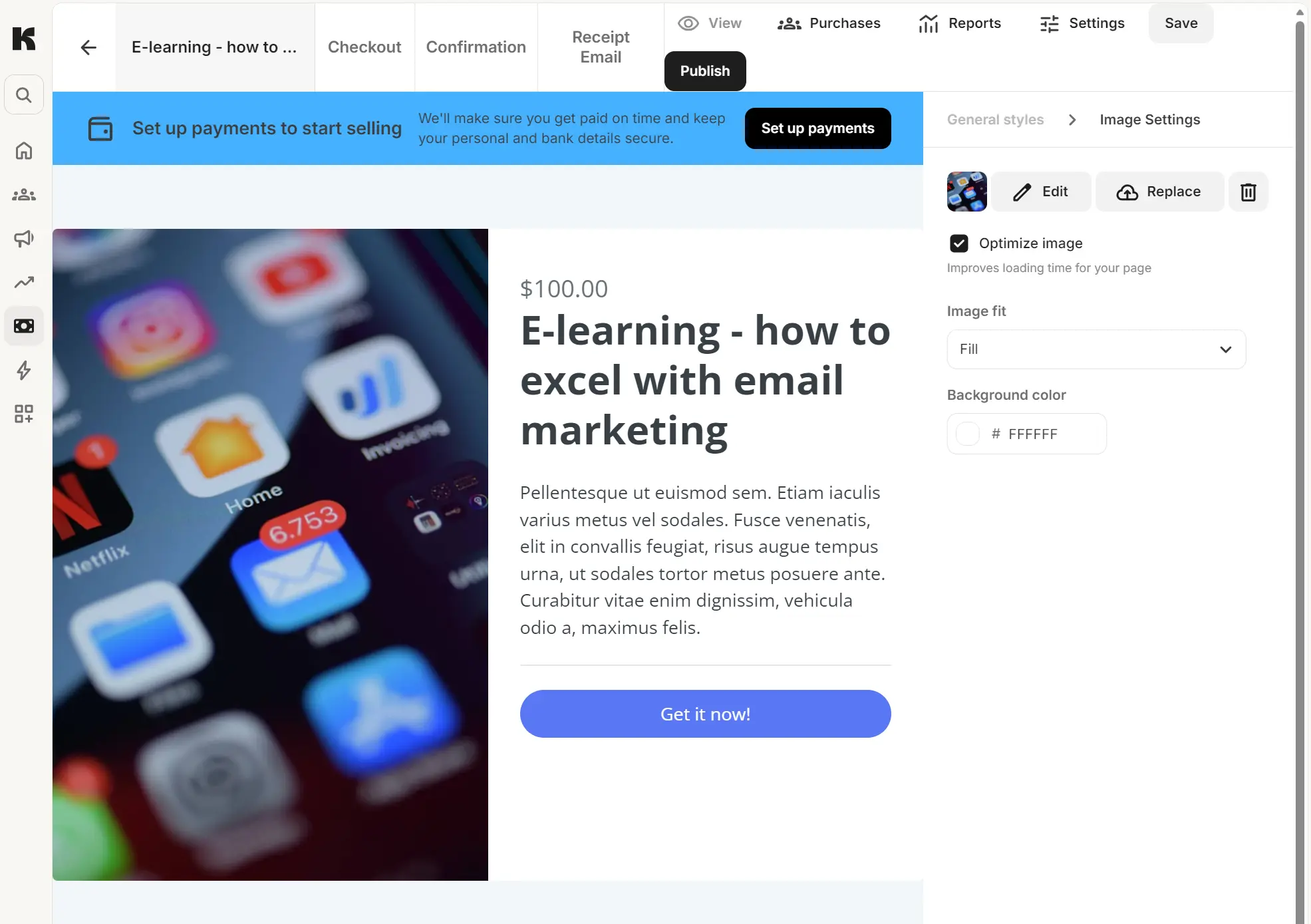
Effective email marketing hinges on deliverability – the ability for emails to actually reach the inbox. Both ConvertKit and Brevo understand this criticality and provide infrastructure for domain authentication. Brevo claims a 99% delivery rate for transactional emails and offers a "Deliverability Center" available in all plans. This feature scores deliverability based on open rates, click rates, bounces, and other metrics, providing actionable insights to maintain sender reputation. Professional plans also include pre-built analytics dashboards specifically for deliverability, offering an overarching view of delivery rates for all sent emails. This proactive, data-driven approach to deliverability monitoring is a strong suit for Brevo, allowing businesses to quickly identify and address potential issues.
ConvertKit claims a 99.8% delivery rate. Its approach to deliverability monitoring is more granular at lower tiers. Free and Creator plans offer subscriber-level statuses (bounced, blocked, complained) within the "List" menu, which is useful for troubleshooting individual problematic addresses. However, a dedicated, comprehensive deliverability report is only available on the Pro plan, where users can monitor open and click rate trends, and filter by Email Service Provider (ESP) or subscriber segment to diagnose engagement declines. While both platforms provide the necessary tools for good deliverability, Brevo’s integrated Deliverability Center offers a more accessible and holistic overview for all plan tiers.
User Experience and Daily Workflow: Practical Application
In practice, the daily workflows on ConvertKit and Brevo reveal their distinct design philosophies.
ConvertKit’s Workflow:
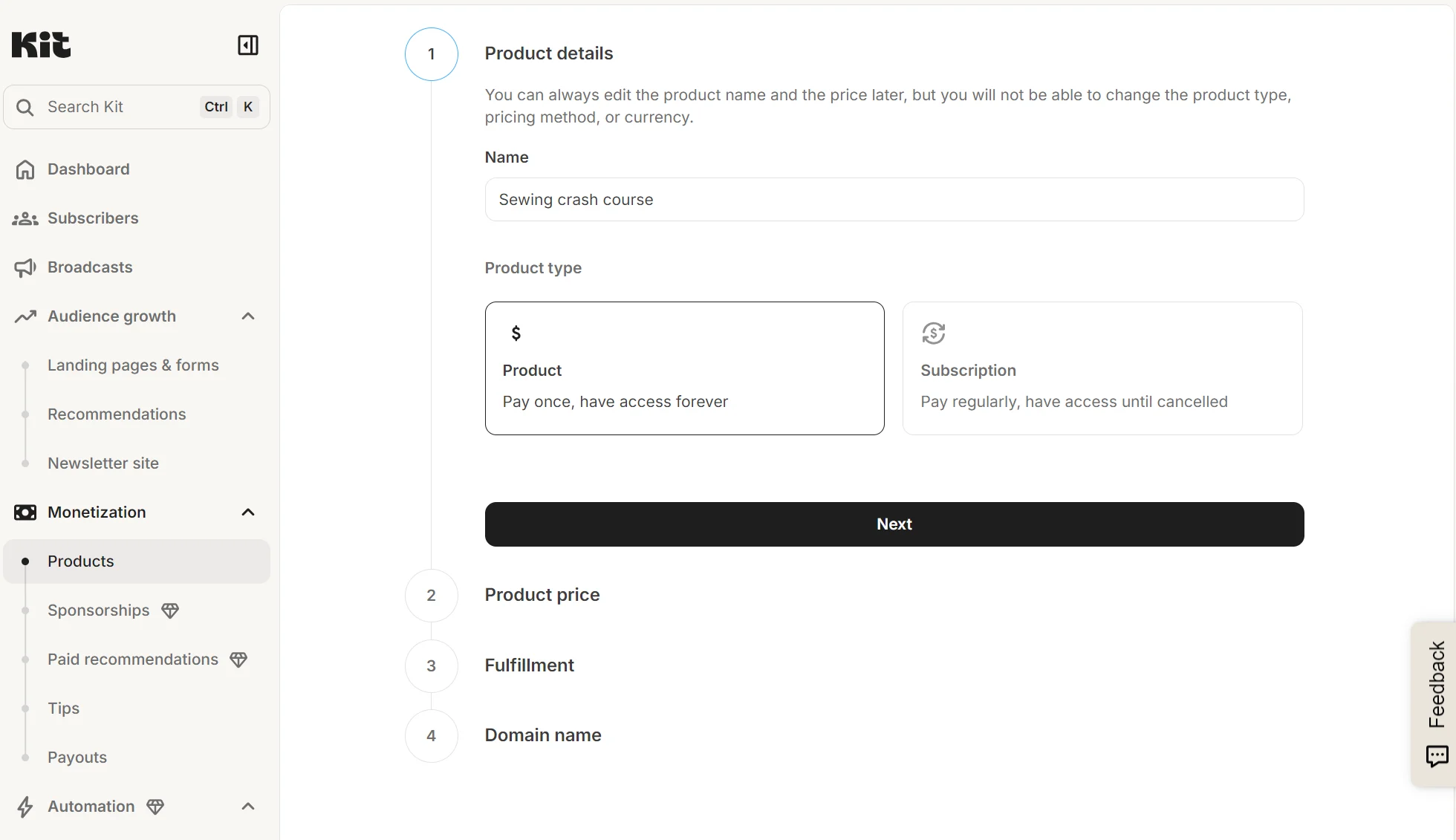
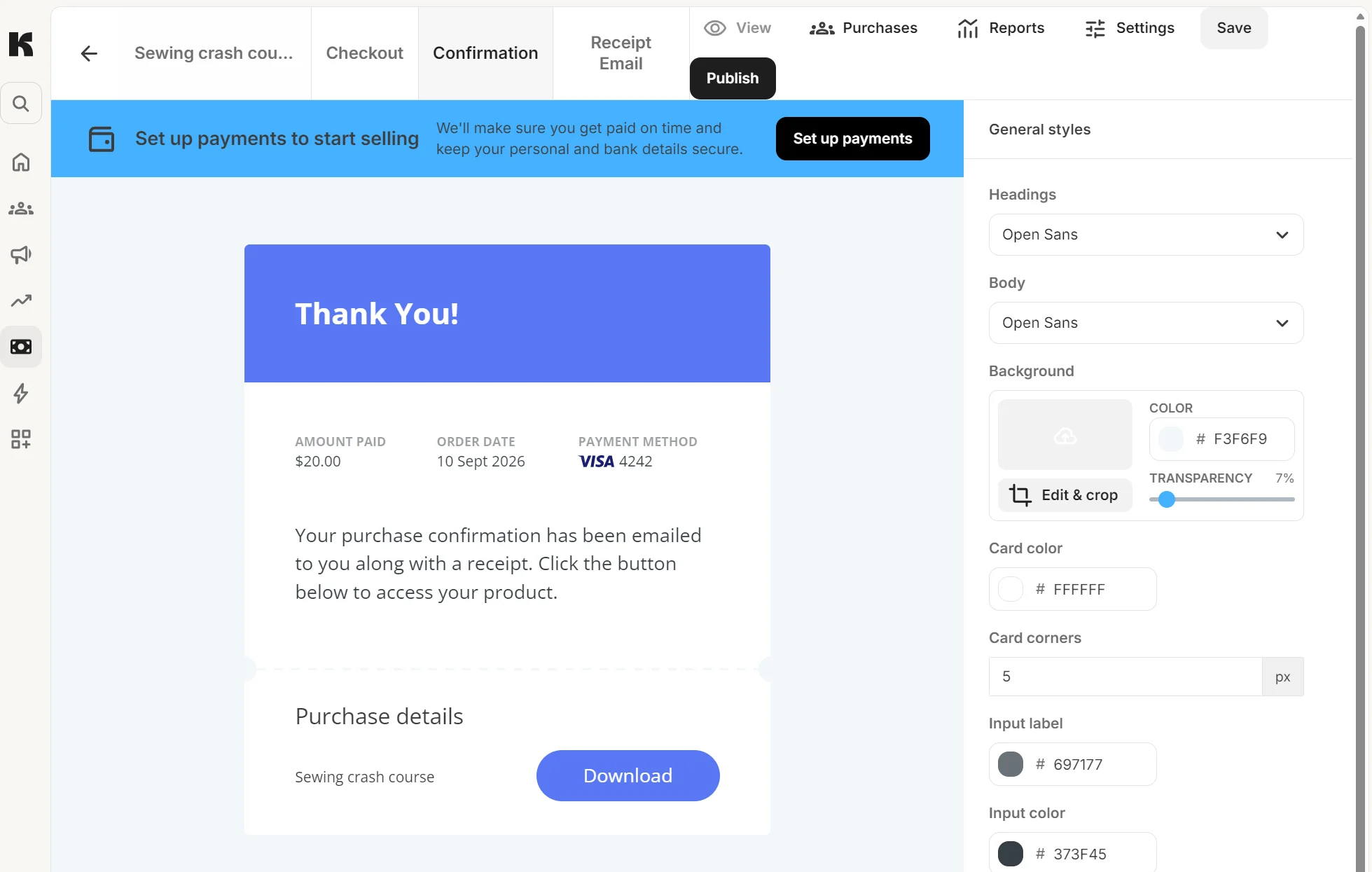
- Product Builds: Building a digital product is a quick, four-step process, taking less than two minutes to set up basic information and a domain. The product page editor is comprehensive, allowing customization of checkout, confirmation, and receipt emails from a single interface.
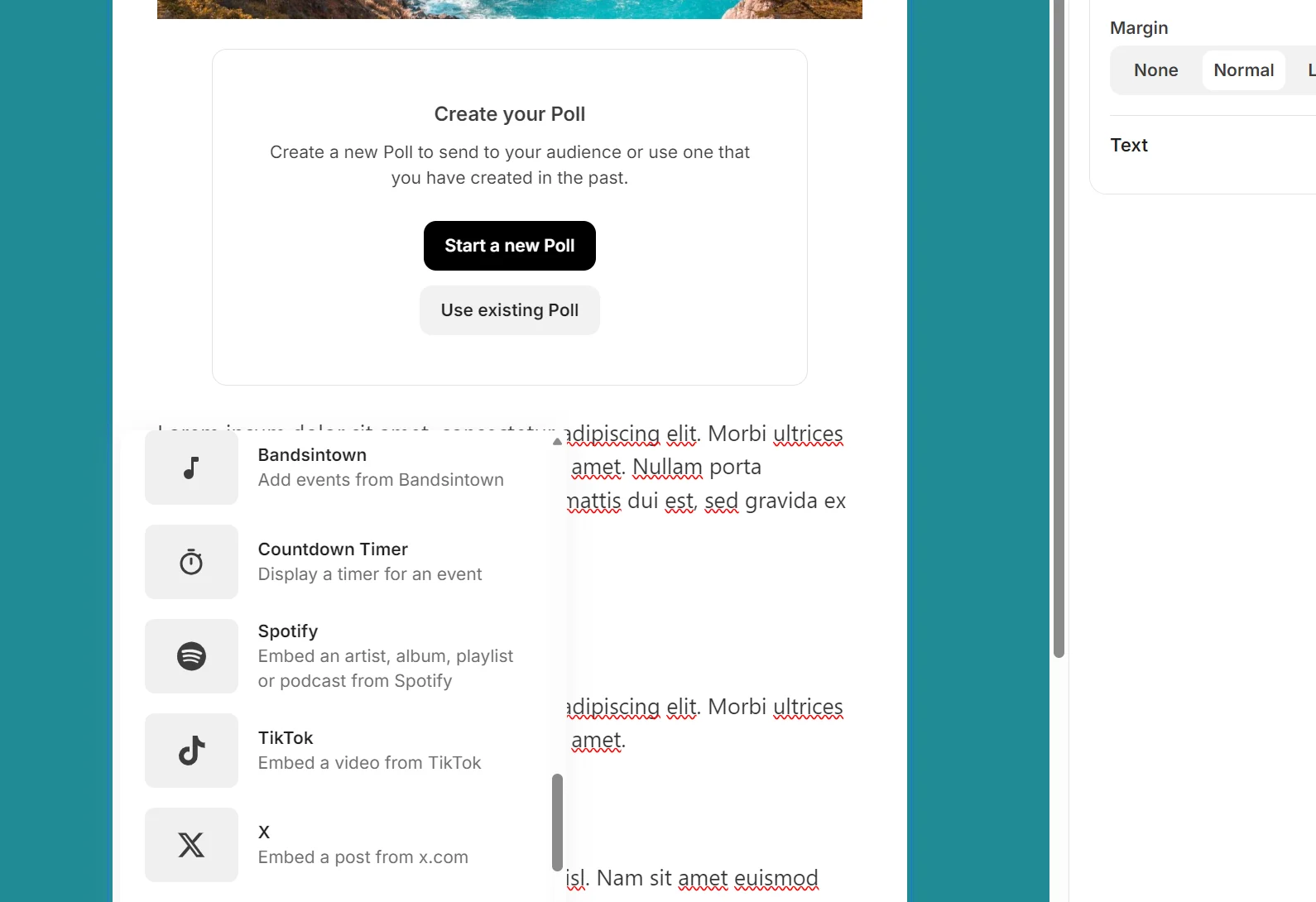
- Email Broadcasts: Creating emails is simplified by pre-built templates within a drag-and-drop editor. Unique blocks like native countdown timers, polls, and direct Spotify embeds cater specifically to creative content and engagement. The "Save as template" feature streamlines future campaigns.
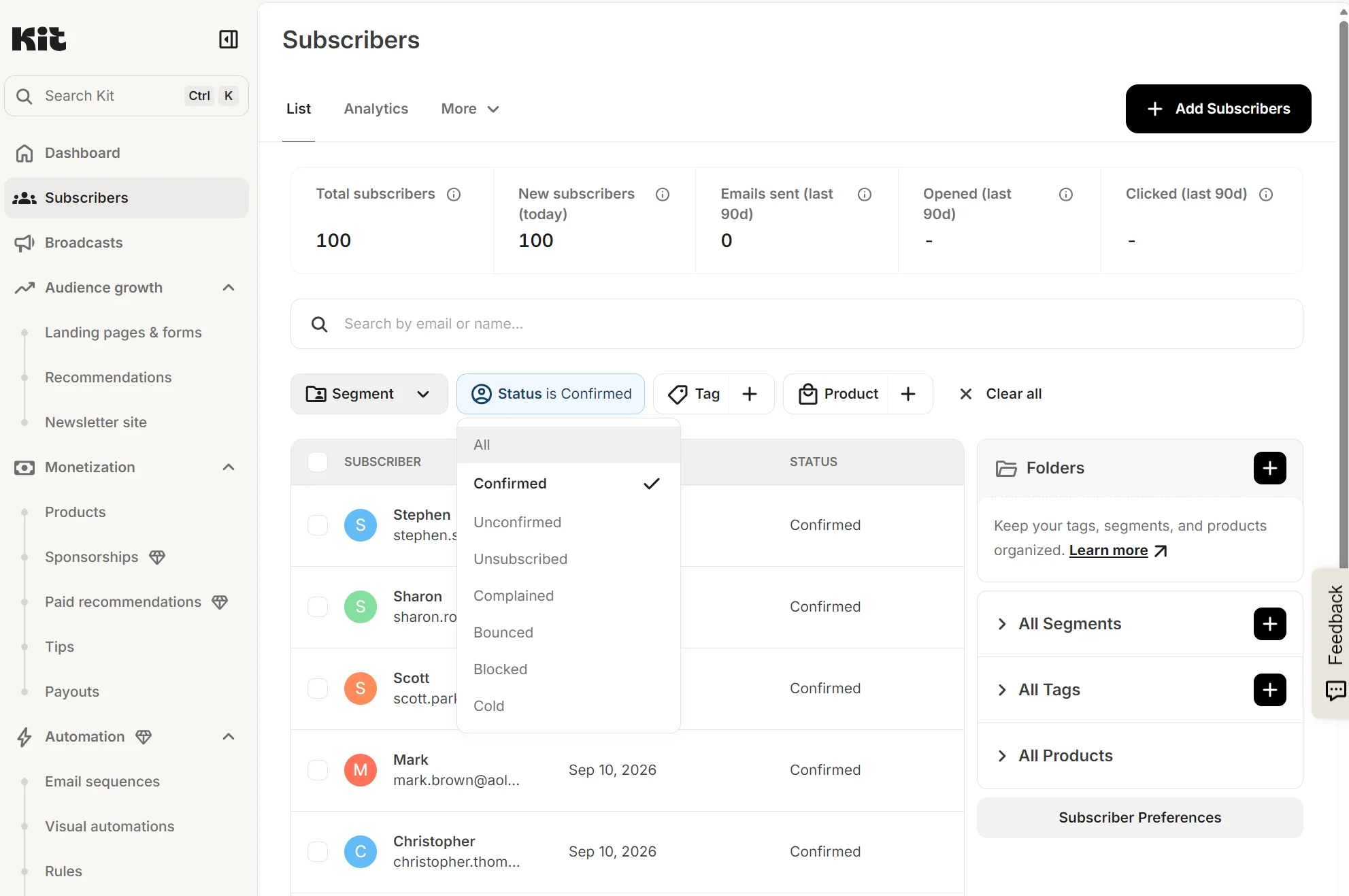
- Segment Creation: Segments are built manually in the Subscribers dashboard by adding filters such as "Subscribed to" or "Within a country or region." While effective, it lacks the visual feedback of showing eligible subscribers during the build process, which Brevo offers.
- Automation Management: The "Visual Automations" dashboard provides an intuitive, image-based view of all flows, with color-coded alerts for issues. Clicking an image directly loads the canvas for editing, maintaining a seamless workflow.
Brevo’s Workflow:
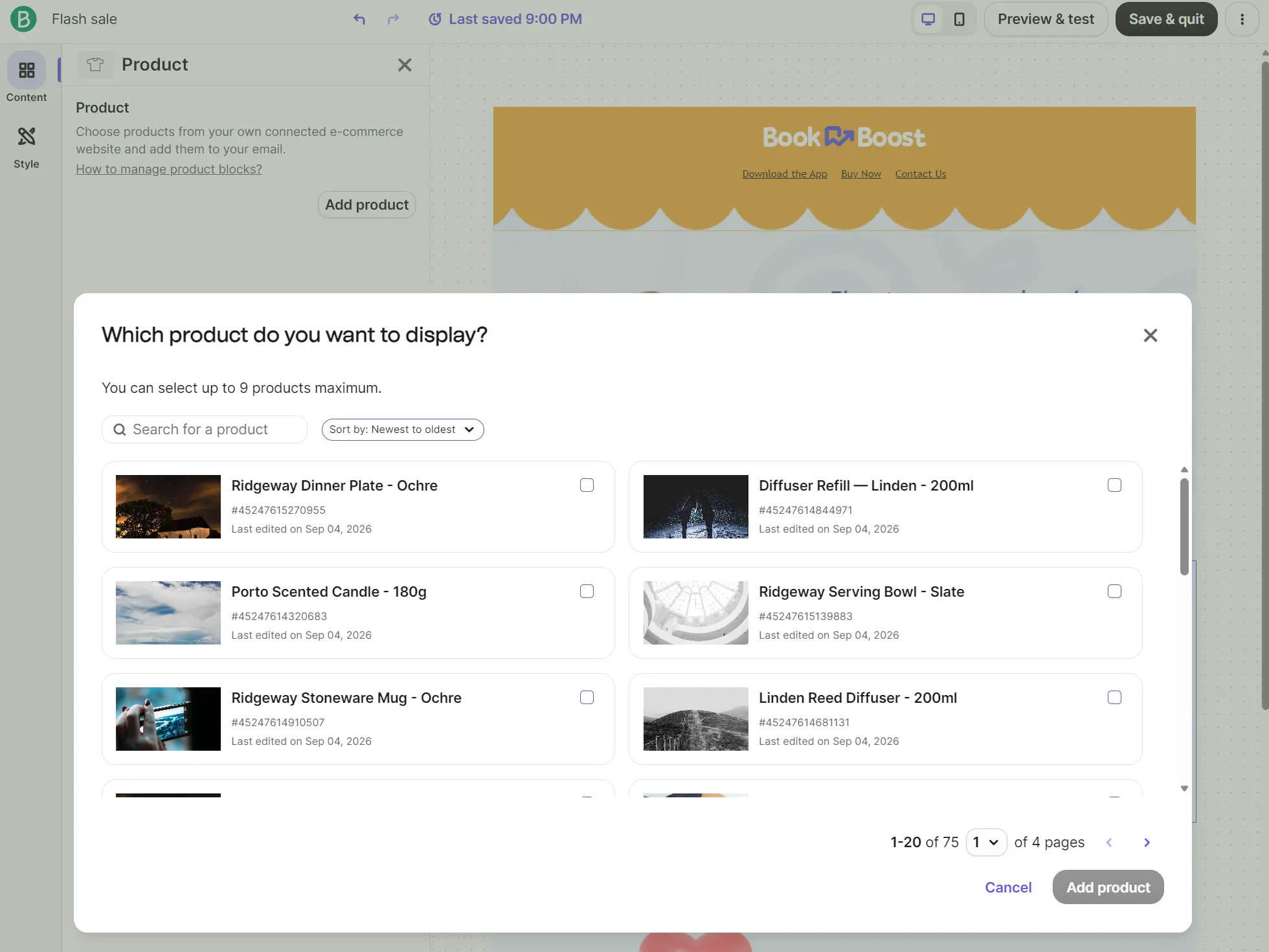
- Email Campaigns: Emails can be standalone or part of A/B tests. The four-step campaign creation process is straightforward, with pre-built templates for design. The product block dynamically pulls products from connected e-commerce stores, simplifying product promotion in emails.
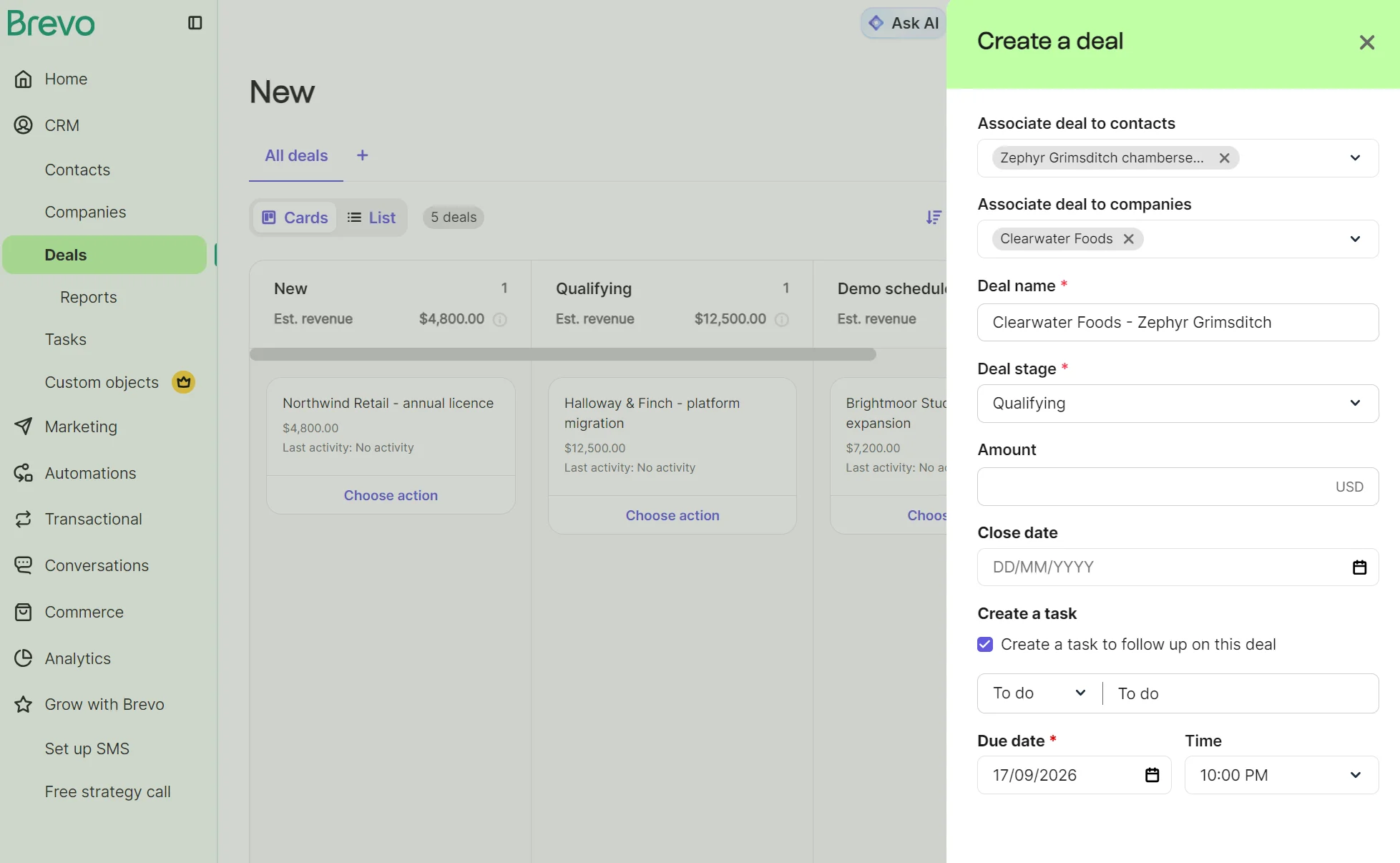
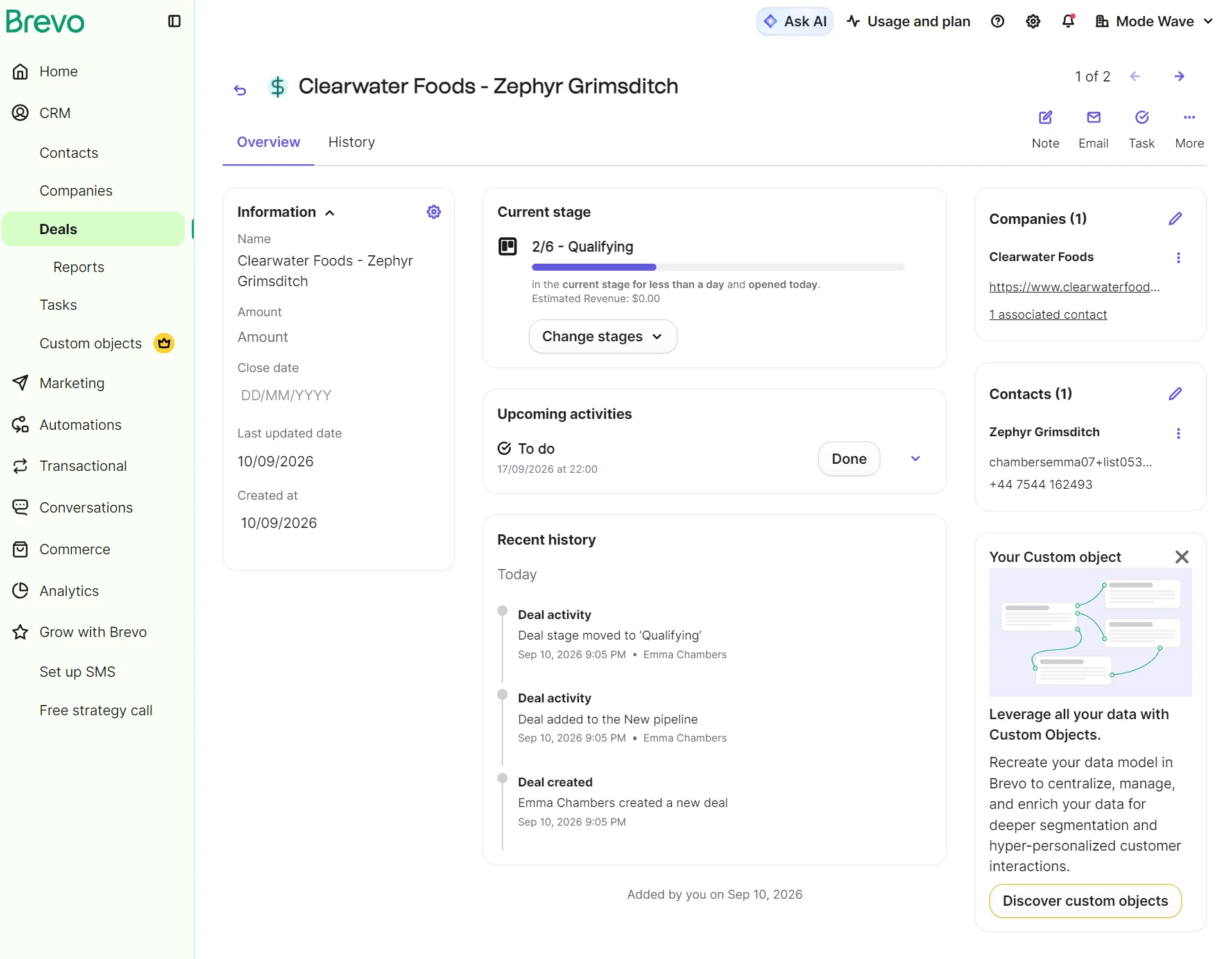
- CRM Interaction: Daily use for sales teams revolves around the CRM. Adding a new deal allows for simultaneous task creation, and tasks are visible directly on deal cards, ensuring due dates are not missed. Contact profiles within deals offer a complete history of interactions and upcoming activities.
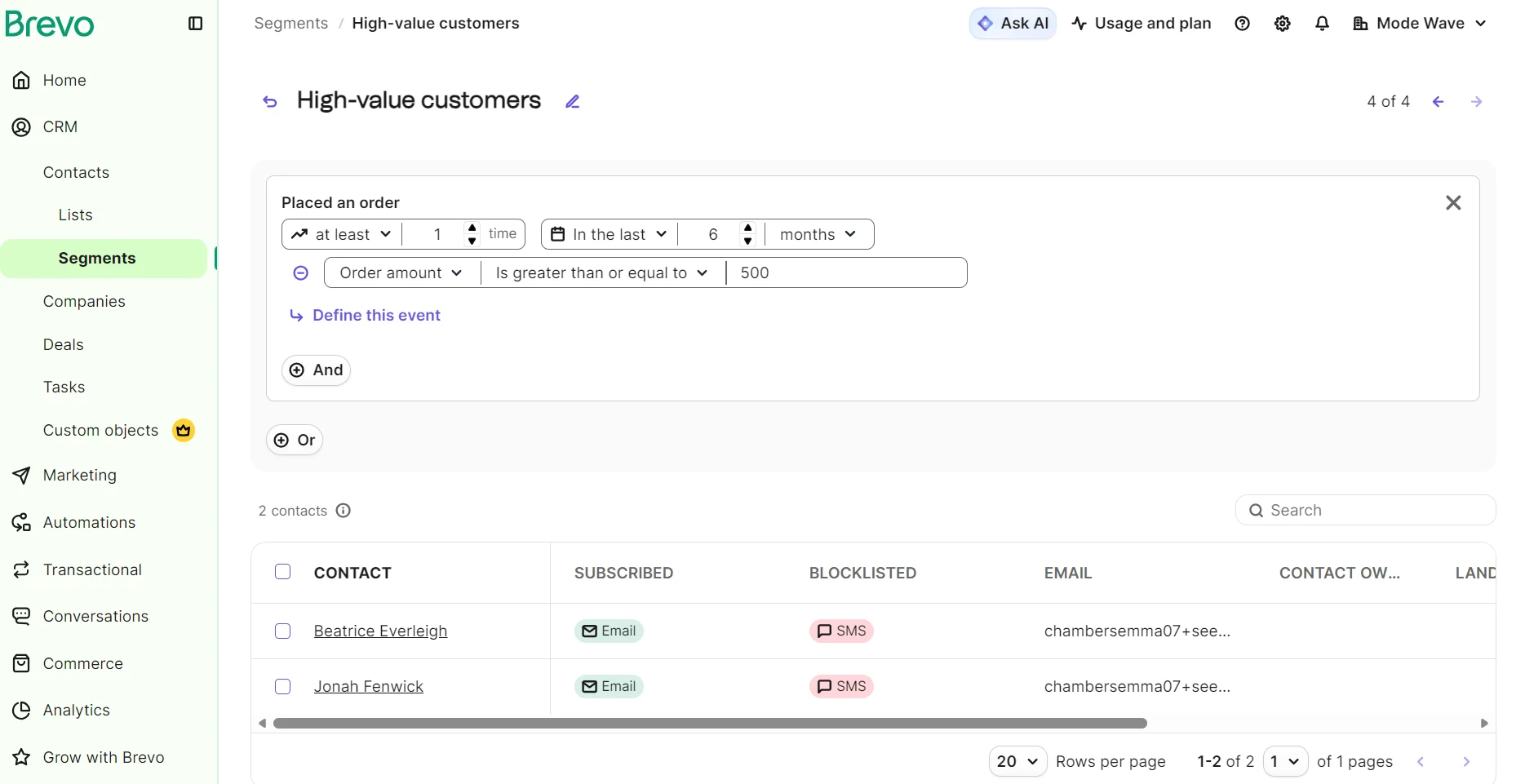
- Segment Creation: Users navigate to CRM > Segments to create new segments. Brevo offers a template library for common segments with preconfigured events and allows for complex AND/OR logic. Crucially, it displays all eligible contacts during the segment build, providing immediate feedback on the audience size.
- Automation Management: Brevo’s "Workflows" dashboard lists automations with performance metrics (active now, started, finished, suspended). While not as visually rich as ConvertKit’s, it offers quick controls (pause, deactivate, activate icons) and allows direct editing by clicking the automation name.
User Sentiment and Market Perception
User reviews across platforms like G2 and Trustpilot generally show positive sentiment for both ConvertKit and Brevo, with both platforms typically scoring above 4 out of 5 stars. However, the specific points of praise and criticism highlight their intended audiences.
Brevo users frequently commend its ease of use, particularly for setting up transactional emails and scheduling campaigns. Many appreciate its quick setup process and the generous free email limits for starter plans, as noted by users on G2. This indicates that Brevo successfully delivers on its promise of an accessible, business-friendly platform. However, negative reviews often point to limitations in more advanced features, particularly concerning automation complexity and design flexibility. Users sometimes find themselves relying on workarounds for intricate segmentation or highly customized email designs, suggesting that while easy to use, it may not offer the deepest customization for highly specialized marketing needs.
ConvertKit users consistently praise its ease of use, particularly for embedding forms and building emails. Its intuitive interface and visual automation builder are frequently highlighted as strengths, enabling creators to quickly set up marketing funnels. This aligns with its goal of simplifying complex marketing for individuals who may not have extensive technical backgrounds. The most common complaint against ConvertKit revolves around its pricing structure. Users report that costs can quickly become prohibitive as their contact list grows, leading to frustrations. Some users also voice concerns about "extractive business practices" related to automatic account upgrades and difficulties in downgrading plans, suggesting a potential area for ConvertKit to improve its customer experience around subscription management.
In summary, Brevo’s complaints often concern feature depth for highly advanced users, while ConvertKit’s relate more to cost scalability as a creator’s audience expands.
Strategic Recommendations: Which Platform for Whom?
Choosing between ConvertKit and Brevo ultimately depends on specific business needs and long-term goals.
- For Businesses with Large Lists and Budget-Conscious Email Sending: Brevo is the superior choice. Its pricing model, based on monthly email volume rather than contact count, makes it significantly more economical for managing extensive contact databases. The ability to store 100,000 contacts on the free plan or 500,000 for just $32/month is unparalleled by ConvertKit.
- For Content Creators and Digital Entrepreneurs Focused on Monetization: ConvertKit is the clear winner. Brevo lacks any native content monetization features. ConvertKit’s integrated tools for selling digital products, paid newsletters, subscriptions, and earning through recommendations and sponsorships are invaluable for the creator economy, providing an all-in-one platform for audience engagement and revenue generation.
- For E-commerce Businesses (Shopify, WooCommerce): Brevo offers more robust and native e-commerce automation scenarios, including back-in-stock alerts, and deeper trigger integration with orders and payments. Its multichannel capabilities (SMS, web push) further enhance customer engagement throughout the e-commerce journey.
- For Businesses with Complex Sales Cycles Requiring CRM: Brevo is the only viable option between the two. Its integrated CRM, with deal pipelines, sales workflows, and contact enrichment, is essential for managing leads, tracking opportunities, and streamlining sales processes. ConvertKit’s audience management features are not designed for this level of sales functionality.
- For Users Sending Frequent, Unlimited Emails to a Stable List: ConvertKit offers unlimited email broadcasts across all its plans, providing predictability and freedom for creators who rely heavily on consistent email communication without worrying about per-email costs.
Is There a Better Alternative? Introducing Omnisend for E-commerce
While ConvertKit and Brevo excel in their respective domains, e-commerce businesses often seek a platform that unifies marketing efforts across multiple channels with a strong sales focus, without the limitations of either. Omnisend emerges as a compelling alternative, specifically designed for e-commerce marketers aiming to maximize revenue and customer retention through an omnichannel approach.
Omnisend natively supports email, SMS, and web push notifications within a single automation flow, allowing for truly integrated customer journeys. This unified approach eliminates the need for multiple integrations and subscriptions to achieve multichannel reach. Its features are deeply integrated with e-commerce platforms like Shopify and WooCommerce, offering comprehensive solutions for cart recovery, product recommendations, back-in-stock alerts, and pop-ups across all plans.
A key differentiator for Omnisend is its advanced AI capabilities. All plans include a customer breakdown with AI-driven lifecycle stage maps and recommended retention tactics. Its "Reports AI" feature (available in paid plans) can summarize performance, extract specific statistics, and break down data by individual workflow, offering enterprise-level insights without manual effort. This level of analytical depth and proactive recommendations positions Omnisend as a powerful tool for optimizing e-commerce marketing strategies.
Omnisend’s pricing model is contact-based but offers flexibility. For instance, the Standard plan starts at $16/month for 500 contacts and 6,000 emails, while the Pro plan, at $59/month for 2,500 contacts, provides unlimited emails and SMS credits. This blend of contact-based pricing with generous email allowances and integrated SMS makes it a highly competitive option for growing e-commerce businesses.
A notable success story is MUSS, an e-commerce brand that experienced significant improvements after migrating to Omnisend from another popular email platform. MUSS saw a 41% year-over-year increase in open rates and a 13% rise in revenue per recipient, demonstrating Omnisend’s effectiveness in improving deliverability and driving tangible results for e-commerce businesses.
In conclusion, while ConvertKit and Brevo serve their target markets effectively, Omnisend presents a robust, purpose-built solution for e-commerce, offering a powerful blend of omnichannel marketing, AI-driven insights, and a focus on revenue and retention that can bridge the gaps left by the more specialized offerings of ConvertKit and Brevo. The choice between these platforms ultimately hinges on a precise evaluation of a business’s or creator’s unique needs, growth trajectory, and budget.