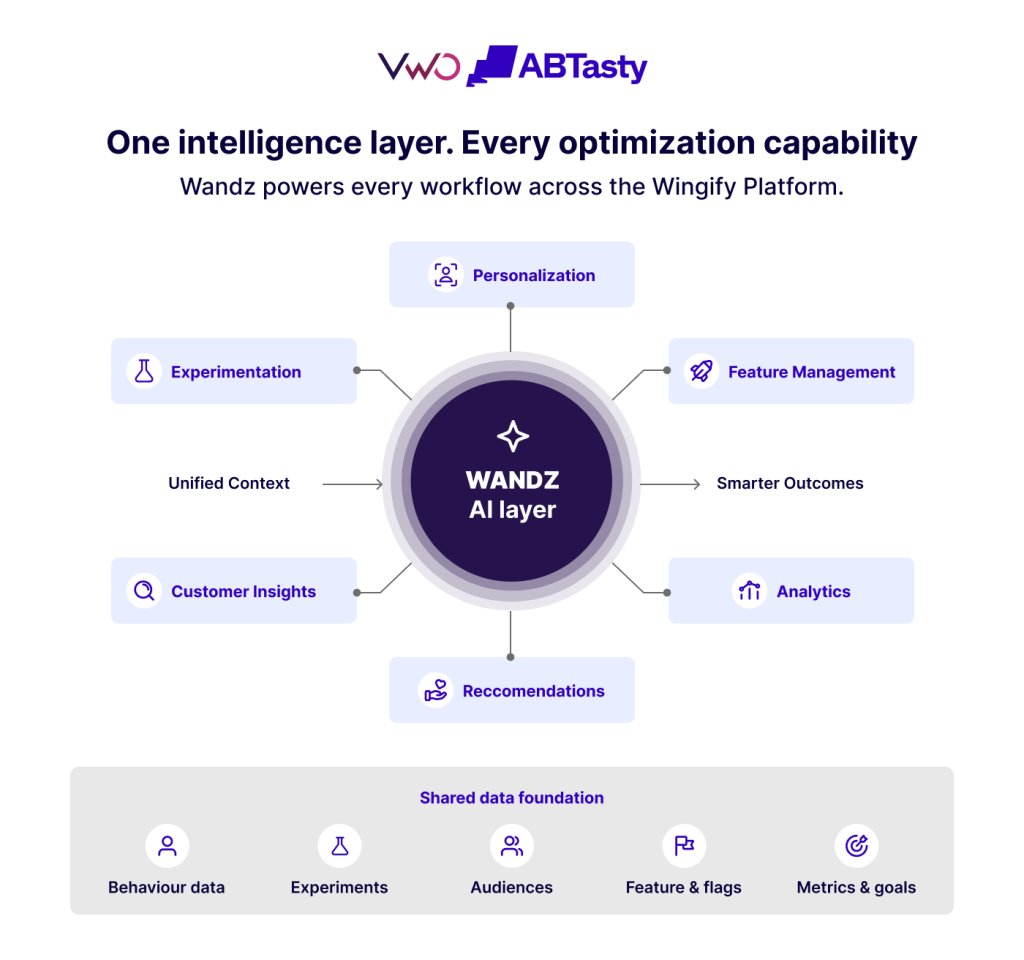
The global software company Wingify has officially introduced Wingz, a sophisticated, embedded artificial intelligence layer designed to serve as the central intelligence engine for its comprehensive suite of digital optimization tools. By integrating directly into experimentation, personalization, feature management, commerce, and customer insight workflows, Wingz represents a significant evolution in how enterprises approach conversion rate optimization (CRO) and user experience design. Unlike general-purpose AI models that operate in isolation, Wingz is natively woven into the fabric of both the VWO and AB Tasty platforms, granting it immediate access to live experimental data, audience segments, behavioral metrics, and historical performance without the need for manual data exports or external context-setting.
The launch of Wingz marks a pivotal moment in the convergence of two industry leaders. Following the strategic alignment of VWO and AB Tasty under the Wingify umbrella, the company has moved to unify its previous AI offerings—specifically VWO’s Copilot and AB Tasty’s Evi assistant—into a single, cohesive intelligence layer. This integration ensures that teams across an organization can leverage a consistent AI capability, regardless of which specific product within the Wingify ecosystem they are utilizing. The primary objective of this unified layer is to eliminate the friction inherent in modern data analysis, where professionals often spend more time preparing data for AI processing than they do acting on the resulting insights.
The Strategic Evolution of Digital Optimization
To understand the significance of Wingz, one must look at the historical trajectory of the digital experimentation market. For over a decade, platforms like VWO and AB Tasty have empowered brands to test hypotheses through A/B testing and multivariate analysis. However, as the volume of consumer data has exploded, the bottleneck has shifted from the ability to run tests to the ability to derive meaningful, actionable insights from those tests.
Traditionally, an optimization workflow involved a fragmented process: an analyst would identify a drop in conversion, export raw data into a spreadsheet, perform a manual analysis, and then use a separate tool like ChatGPT or Claude to brainstorm solutions. This "round-trip" process created significant latency and increased the risk of data misinterpretation due to a lack of specific context. Wingz is engineered to collapse this cycle. By living inside the platform where the data is generated, Wingz starts several steps ahead of any general-purpose AI. It understands the specific nuances of a running experiment, the exact composition of a traffic segment, and the subtle friction points captured in session recordings.
Breaking the Context Barrier: Wingz vs. General-Purpose AI
The industry has seen a surge in the use of large language models (LLMs) for marketing and product development. While tools such as Gemini and ChatGPT are proficient at drafting copy or summarizing generic documents, they falter in specialized optimization environments because they lack real-time access to proprietary data streams.
A general AI tool does not know that a specific A/B test has been running for six days with a 95% confidence level but a negative trend in the checkout funnel. It does not know that a particular audience segment consists of returning mobile users from a specific geographic region who have viewed a specific promotion. To get a useful answer from a general AI, a user must manually feed it these details—a process that is not only time-consuming but also poses potential security and data privacy risks for enterprise-level organizations.
Wingz resolves this by operating as an "agentic" layer. It does not merely wait for a prompt; it is built to analyze, recommend, and execute. Because it is connected to the live environment, it can suggest a new experiment variation, build the target audience segment, and even configure the traffic distribution rules directly within the interface. This shift from "AI as a consultant" to "AI as an agent" is what Wingify identifies as the future of the optimization industry.
A Unified Intelligence Layer Across Five Critical Pillars
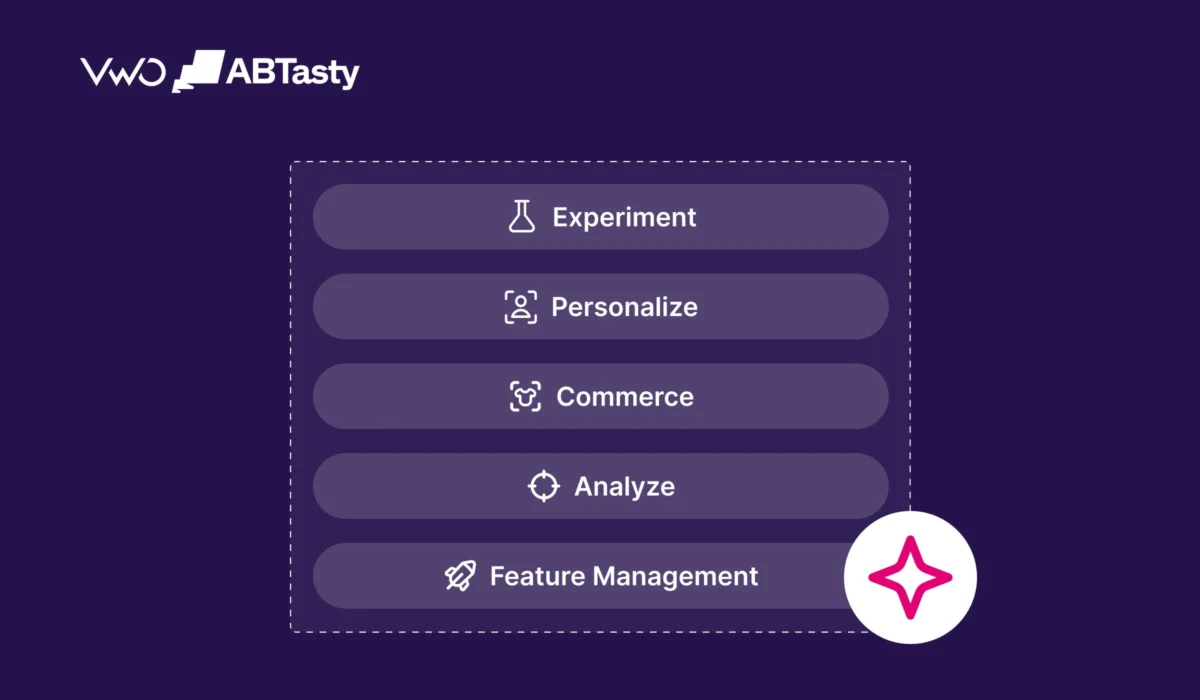
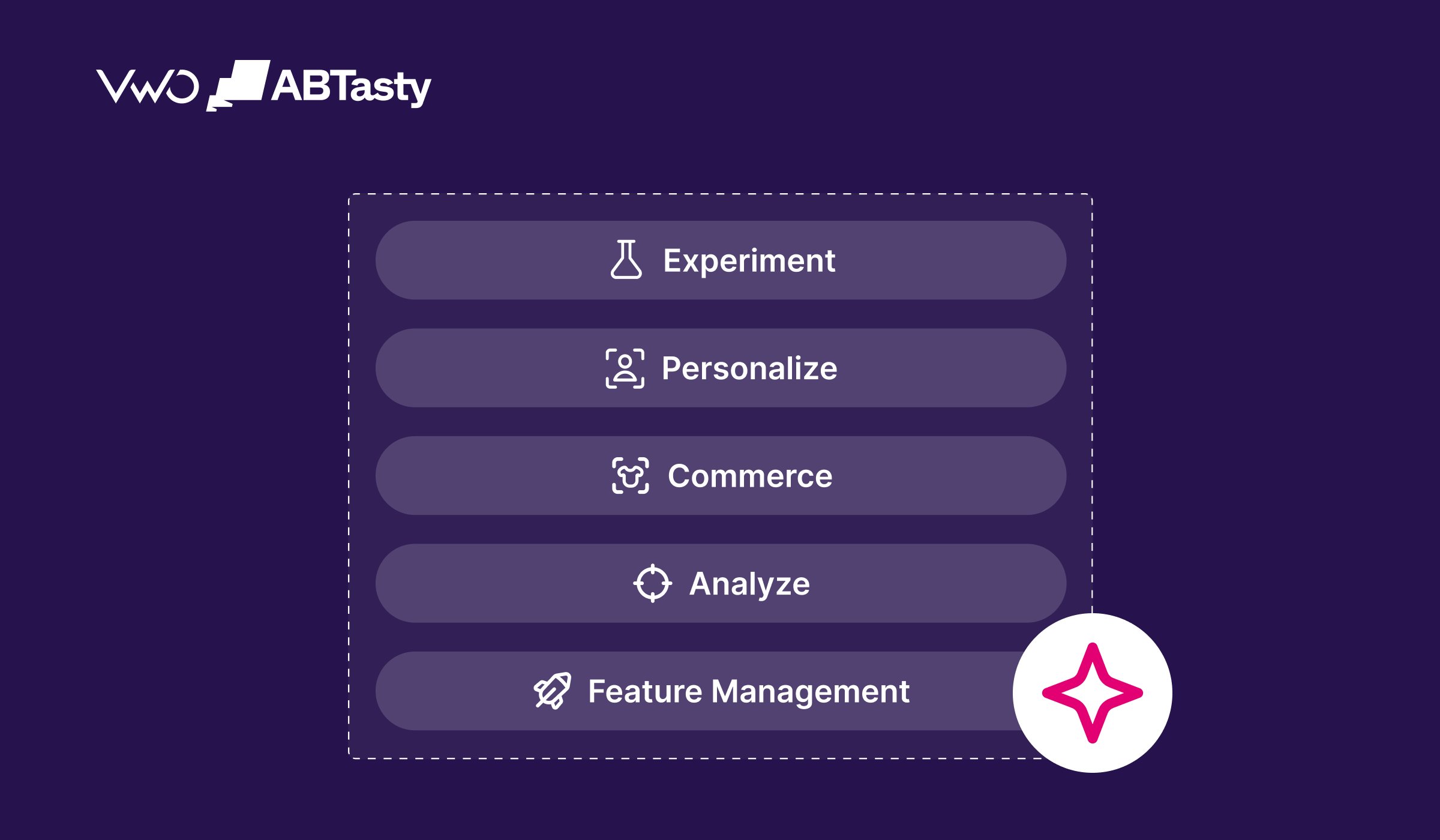
Wingz is architected to support the entire lifecycle of digital product management and marketing through five primary functional areas:
1. Experimentation and Hypothesis Generation
In the experimentation phase, Wingz moves beyond simple suggestions. It analyzes existing performance data to generate hypotheses that are grounded in reality rather than intuition. It can draft an entire experiment end-to-end, defining variations based on user behavior, selecting the most relevant primary and secondary metrics, and suggesting the optimal audience split. Before a test goes live, Wingz acts as a quality assurance layer, reviewing the configuration to flag potential issues that might lead to data pollution or skewed results.
2. Advanced Personalization and Segmentation
Personalization has long been the "holy grail" of digital marketing, yet many teams struggle with the manual effort required to identify high-value segments. Wingz automates the identification of behavioral patterns. By scanning visitor data, it can pinpoint specific cohorts that are underperforming or showing high intent. It then suggests experience variations tailored to those specific groups, effectively compressing a weeks-long analytical cycle into a matter of minutes.
3. Intelligent Feature Management
For engineering and product teams, feature flags and rollouts carry inherent risks. Wingz provides a safety net by reviewing rollout configurations before they are deployed. It checks targeting rules and traffic allocations to ensure they align with the intended strategy. During a rollout, Wingz monitors live signals, providing real-time recommendations on whether to accelerate a release, pause it due to unforeseen anomalies, or trigger a "kill switch" to protect the user experience.
4. Deep Customer Insights
Qualitative research—such as reviewing heatmaps and watching session recordings—is notoriously labor-intensive. Wingz performs the initial heavy lifting by identifying friction patterns across thousands of sessions. It flags specific recordings that demonstrate user hesitation or errors, allowing researchers to focus their attention on the most impactful data points. By connecting insights across multiple sources (surveys, heatmaps, and recordings), Wingz provides a holistic view of the user journey that informs the next round of testing.
5. Natural Language Analytics
On the reporting side, Wingz democratizes data access. Non-technical stakeholders can ask questions about performance in plain English—such as "Why did mobile conversion drop yesterday?"—and receive a summarized answer that accounts for all variables. This reduces the burden on data analysts to create custom reports for every business inquiry, allowing them to focus on higher-level strategic initiatives.
Security, Governance, and Human-in-the-Loop Design
As AI takes a more active role in production environments, the question of safety and accountability becomes paramount. Wingify has emphasized that Wingz is built with rigorous enterprise-grade guardrails. The system follows a "human-in-the-loop" philosophy, meaning that while the AI can build, configure, and recommend, it does not ship changes without explicit human approval.
All AI-assisted actions are governed by the suite’s existing role-based access controls (RBAC) and are fully recorded in audit logs. For enterprise teams, this transparency is crucial for compliance and quality control. The AI does not replace the judgment of a product manager or a marketer; rather, it handles the mechanical execution of their strategy, ensuring that every step is visible and editable.
Market Implications and the Future of MarTech
Industry analysts suggest that the launch of Wingz reflects a broader trend in the MarTech (Marketing Technology) space: the transition from "point solutions" to "intelligent ecosystems." By embedding AI directly into the workflow, Wingify is positioning itself against larger competitors by offering a level of integrated intelligence that is difficult to achieve with a collection of disparate tools.
The efficiency gains promised by Wingz are significant. For growth teams, the ability to launch more tests with higher accuracy leads to a faster "velocity of learning," which is directly correlated with long-term revenue growth. For engineers, the reduction in manual configuration risk leads to more stable deployments. For e-commerce leaders, the ability to react in real-time to shifting consumer behaviors can be the difference between a successful campaign and a missed opportunity.
Chronology of Innovation: From Copilot to Wingz
The development of Wingz is the culmination of several years of R&D within both VWO and AB Tasty.
- Early Phase: Both companies launched initial AI assistants (Copilot and Evi) focused on copy generation and basic data summarization.
- The Merger: Following the union of the companies under Wingify, engineering teams began the process of mapping the data structures of both platforms to create a shared "context engine."
- The Beta Period: Select enterprise clients were granted early access to integrated AI features to refine the agentic capabilities and ensure the recommendations were accurate across different industries, from retail to financial services.
- The Launch: The official unveiling of Wingz represents the final transition to a unified, suite-wide intelligence layer.
Conclusion: A New Standard for Optimization
Wingz is more than just a chatbot or a feature; it is a fundamental shift in the architecture of the Wingify suite. By prioritizing context and native integration, Wingify is addressing the primary pain point of the modern digital professional: data fragmentation. As the digital landscape becomes increasingly competitive, the organizations that can move from data to insight to action with the least amount of friction will be the ones that succeed.
For product managers, marketers, and engineers, Wingz offers a glimpse into a future where the tools they use are as intelligent as the strategies they devise. By handling the "drudge work" of data triage and configuration, Wingz allows human teams to return to what they do best: creative problem-solving and strategic decision-making. The era of manual data exporting and fragmented AI prompts is ending, replaced by a seamless, embedded intelligence that knows your data as well as you do.