Microsoft Bing is currently conducting tests on an advanced implementation of product and shopping-related filters, strategically placed on the left sidebar of its search results pages. This development marks a significant step towards aligning Bing’s user interface for product-centric queries more closely with the established and highly functional design observed in Google’s "all" search tab. The initiative, initially brought to light by search industry observer Sachin Patel via posts on X and Search Engine Watch, indicates a concerted effort by Microsoft to enhance the e-commerce capabilities and user experience within its search engine.
Background: The Evolving Landscape of E-commerce Search
The evolution of search engines from mere information retrieval tools to sophisticated shopping assistants has been a defining trend in digital commerce over the past two decades. Early search engines primarily indexed web pages, providing links relevant to keywords. However, as e-commerce gained prominence, users increasingly turned to search engines not just for information about products but to find, compare, and ultimately purchase them. This shift necessitated a fundamental redesign of how product-related queries are handled.
Google, with its dominant market share, has been at the forefront of this evolution, introducing features like Google Shopping (formerly Froogle), product carousels, rich snippets, and, crucially, comprehensive filtering options on its search results pages. These filters—spanning categories like price range, brand, customer reviews, product specifications, and availability—empower users to quickly narrow down vast search results to find exactly what they need, significantly streamlining the online shopping journey. The absence of comparable robust filtering mechanisms has often been cited as a user experience gap for alternative search engines, particularly when competing in the lucrative e-commerce sector.
Microsoft Bing, while a distant second in global search market share, has consistently invested in refining its search experience, particularly in areas where it can differentiate itself or catch up to competitors. Its integration of AI-powered features, rich visual search, and now, these advanced shopping filters, underscores a strategic push to capture a larger segment of the search market, especially those high-intent users engaged in product discovery and purchasing.
Details of Bing’s Enhanced Shopping Filter Test
The current testing phase reveals a significantly more detailed and user-friendly filtering interface compared to Bing’s previous attempts. While Bing did experiment with "product refinements on the left side" as early as January 2023, those iterations were generally more rudimentary, offering fewer granular options. The new interface, as depicted in the shared screenshots and GIF, presents a robust array of filtering categories that directly mimic the functionalities expected by modern online shoppers.
Based on observations from the shared media, these filters appear to encompass a broad spectrum of criteria essential for e-commerce navigation. Users searching for specific products—such as electronics, apparel, home goods, or other consumer items—are likely to encounter options including:
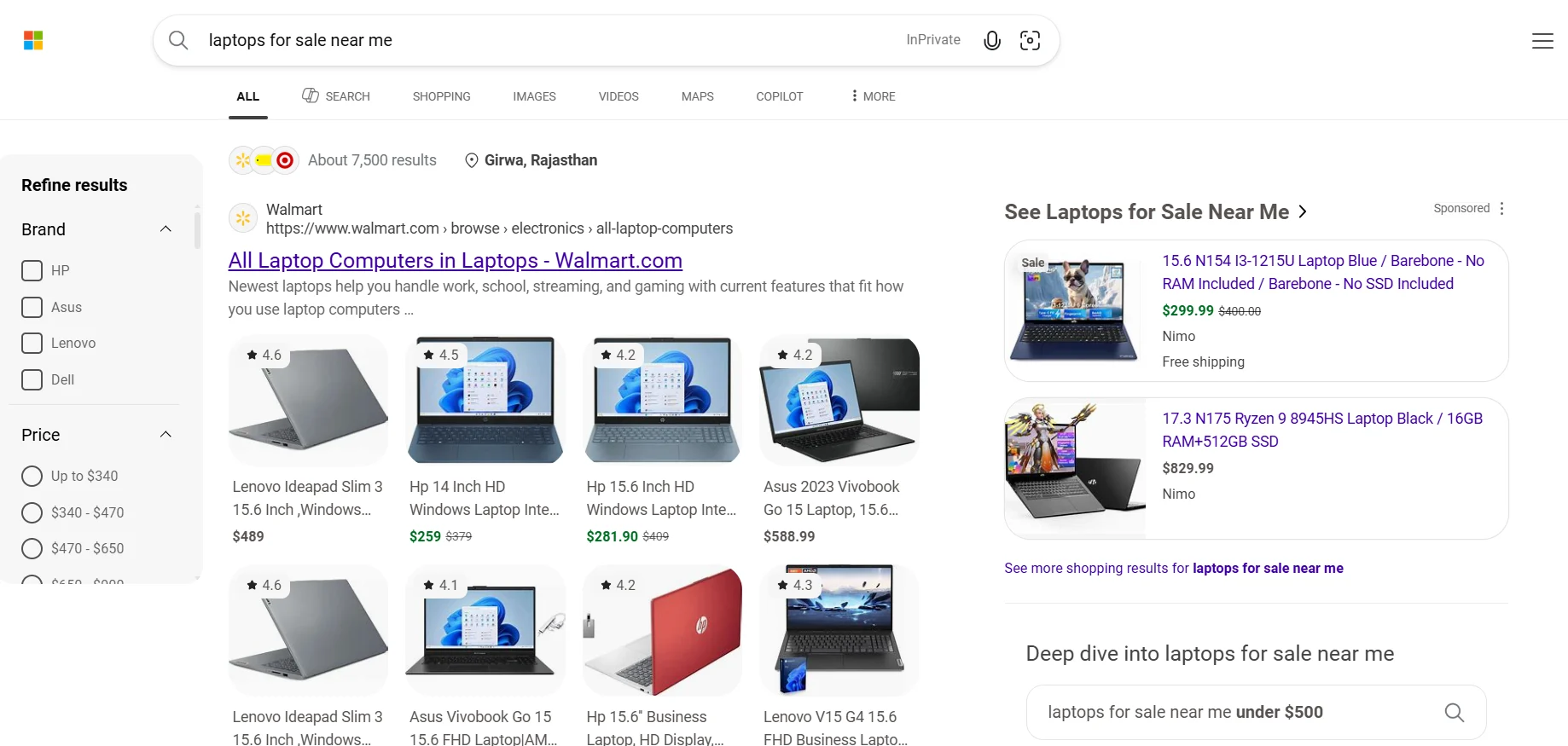
- Price Range: Allowing users to specify minimum and maximum price points, or select from predefined ranges.
- Brand: A critical filter for consumers loyal to specific manufacturers or seeking products from reputable companies.
- Customer Reviews/Ratings: Enabling users to sort or filter by average star ratings, ensuring they see highly-rated products first.
- Product Category/Subcategory: Refining results within broader categories, e.g., "laptops" within "electronics."
- Availability: Distinguishing between in-stock items, pre-order options, or items from local stores.
- Specific Features/Specifications: For technical products, this could include attributes like screen size, processor type, memory, or color.
- Shipping Options: Potentially allowing filters for free shipping, express shipping, or international shipping.
- Seller/Store: For marketplaces, filtering by specific retailers.
This comprehensive suite of filters drastically improves the navigability of Bing’s search results for shopping queries. Instead of sifting through dozens or hundreds of broadly relevant results, users can quickly hone in on products that meet their exact specifications, saving time and reducing friction in the purchasing process. This enhanced user experience is crucial for encouraging repeat usage and building user loyalty, particularly in a competitive landscape where efficiency and relevance are paramount.
Chronology of Bing’s E-commerce and UI Development
Microsoft’s journey in integrating e-commerce features into Bing has been iterative, reflecting broader trends in search and online retail:
- Early 2010s: Bing (and its predecessor MSN Search) made initial forays into product search, often through separate "Shopping" verticals. These were typically basic listings, often aggregating data from various retailers. The focus was primarily on keyword matching rather than sophisticated refinement.
- Mid-2010s: As the search experience became more visual and interactive, Bing began to integrate product results directly into its main Search Engine Results Pages (SERPs) through features like image carousels and product information boxes. However, the filtering capabilities remained rudimentary, often limited to basic categories or price sorting.
- Late 2010s – Early 2020s: With the rise of AI and machine learning, Bing enhanced its product understanding capabilities. This led to more relevant product suggestions, visually richer displays, and the introduction of comparison tools. Attempts at left-sidebar refinements were made, but they lacked the depth and granularity seen in competitors like Google. This period also saw increased emphasis on local shopping results and integration with Microsoft’s broader services ecosystem.
- January 2023: Bing explicitly tested "product refinements on the left side." While a step in the right direction, reports indicated these filters were less detailed than those offered by leading e-commerce platforms or Google. They served as a precursor, demonstrating Microsoft’s ongoing commitment to improving the shopping experience.
- Current Test (May/June 2024): The observed advanced left-sidebar shopping filters represent a significant leap forward. Their comprehensiveness and "Google-like" appearance suggest a mature and well-thought-out design, likely informed by extensive user testing and competitive analysis. This current iteration aims to provide a robust, intuitive, and efficient filtering experience that directly competes with market leaders.
This chronological progression highlights a strategic, sustained effort by Microsoft to evolve Bing into a more powerful and user-centric platform for e-commerce discovery, moving beyond basic search to offer a truly refined shopping journey.
Supporting Data and Market Context
The timing of Bing’s advanced filter test is highly relevant given the continued robust growth of the global e-commerce market. According to Statista, global e-commerce sales reached approximately $6.3 trillion in 2023 and are projected to grow to over $8 trillion by 2027. A significant portion of these online purchases originate from search engine queries. Studies consistently show that a substantial percentage of online shoppers—often upwards of 60%—begin their product search on a general search engine rather than directly on a retailer’s website or marketplace like Amazon.
For Bing, which currently holds a modest global search market share (typically ranging from 3-9% depending on the region and measurement firm, compared to Google’s dominant 80-90%+), enhancing its e-commerce capabilities is not just about incremental improvement; it’s a strategic imperative. Each percentage point gain in market share translates into billions of additional search queries, which in turn drives increased advertising revenue, particularly from Product Listing Ads (PLAs) and other shopping-related advertisements.
User behavior data also strongly supports the need for advanced filtering. A survey by Baymard Institute indicated that 64% of users want more product filtering options, and the lack of good filtering is a common source of frustration during online shopping. For complex product categories, the ability to quickly apply multiple filters (e.g., price, brand, features) can reduce decision fatigue and increase conversion rates. By providing these tools, Bing aims to make its platform more sticky for high-intent shoppers, potentially attracting users who might otherwise default to Google for their purchasing needs.
Moreover, the monetization aspect cannot be overlooked. Better filtering leads to more refined search queries, which are often indicative of higher purchase intent. This makes the ad inventory surrounding these filtered results more valuable to advertisers, allowing Bing to command higher ad rates and increase its overall advertising revenue. This move aligns with Microsoft’s broader strategy to diversify its revenue streams and strengthen its position in the digital advertising ecosystem.
Strategic Implications for Microsoft Bing
This advanced filtering test carries significant strategic implications for Microsoft Bing on multiple fronts:
- Heightened Competition with Google: By adopting a "Google-like" interface and functionality, Bing directly challenges Google in a domain where Google has historically excelled. This move signals Microsoft’s intent to compete more aggressively for e-commerce search traffic, which is highly lucrative due to its strong commercial intent. It aims to reduce the perceived feature gap between the two search giants for shopping queries.
- Enhanced User Experience and Retention: A superior shopping experience is a powerful differentiator. If Bing can consistently deliver more relevant, quickly refined, and ultimately satisfying product search results, it can attract and retain users who might otherwise abandon Bing for Google or Amazon when shopping. This could be particularly impactful for younger demographics who prioritize efficiency and personalized results.
- Leveraging AI for Product Discovery: While the current filters are UI-based, their underlying infrastructure will undoubtedly benefit from Bing’s ongoing investments in Artificial Intelligence. AI can power more intelligent filtering suggestions, understand natural language queries for complex product specifications, and personalize filter options based on user history and preferences. This positions Bing as a more "intelligent" shopping assistant.
- Impact on SEO and SEM for Merchants: For e-commerce businesses, the rollout of such detailed filters means that optimizing product data feeds (e.g., product titles, descriptions, attributes) becomes even more critical. Products must be accurately categorized and tagged with all relevant specifications to appear in filtered results. This will likely lead to renewed focus on structured data and product feed management for SEOs and SEMs looking to maximize visibility on Bing. Merchants who fail to provide comprehensive and accurate product data risk being excluded from highly refined search results.
- Broader Microsoft Ecosystem Integration: This enhancement can be seen as part of a larger strategy to integrate Bing more deeply into the Microsoft ecosystem. Imagine a scenario where shopping lists created in Microsoft To Do could be instantly searched on Bing with relevant filters applied, or where product recommendations from Microsoft Edge’s shopping features seamlessly link to Bing’s refined search results. This cross-platform synergy can create a more cohesive and compelling user journey.
Potential Reactions and Industry Outlook
The user community is likely to react positively to the availability of more robust shopping filters on Bing. Consumers consistently seek efficiency and relevance in their online shopping journeys, and detailed filtering options directly address these needs. Initial feedback from users who have encountered the test interface has been largely favorable, highlighting the utility of such features.
Within the search engine optimization (SEO) and search engine marketing (SEM) communities, this development will undoubtedly spark discussions. SEO professionals will need to adapt their strategies to ensure client products are optimally discoverable through these new filters. This includes a renewed emphasis on product schema markup, accurate categorization, and comprehensive attribute data within product feeds. For SEMs, the enhanced targeting capabilities implied by these filters could lead to more effective ad campaigns and better return on ad spend (ROAS) on Bing Ads.
Looking ahead, this test suggests that Microsoft is not content with Bing merely being a generic search alternative. Instead, it is actively working to position Bing as a highly capable, AI-powered platform for specific high-value use cases, with e-commerce being a prime example. Future developments could include even deeper integrations with retailer inventories, augmented reality (AR) features for product visualization, and more personalized shopping assistants driven by Bing’s Copilot AI.
In conclusion, Bing’s testing of advanced shopping filters on its left sidebar is more than just a minor UI tweak; it represents a significant strategic maneuver in the ongoing battle for search engine dominance, particularly in the lucrative e-commerce sector. By mirroring and potentially enhancing features popularized by Google, Microsoft aims to provide a more competitive, efficient, and user-friendly product discovery experience. This initiative underscores Bing’s commitment to continuous innovation and its ambition to carve out a larger, more impactful role in how consumers find and purchase products online.