The Strategic Evolution of Social Media Management
A social media team is fundamentally responsible for conceptualizing, creating, publishing, and meticulously managing a brand’s multifaceted presence across various social media channels. What began for many organizations as a single individual "doing social" has matured into a complex discipline requiring diverse skill sets. The rapid pace of technological innovation, particularly with the integration of Artificial Intelligence (AI) into content creation and analytics, further reshapes these teams, emphasizing strategic oversight and high-value creative output over rote execution.
In earlier iterations, a small business might assign social media duties to one or two generalists. Today, even modest operations recognize the benefit of specialized expertise. Larger enterprises, operating across multiple brands or geographies, demand a sophisticated, multi-tiered approach, often involving dedicated specialists for each critical function. The choice between in-house talent, outsourced freelancers, or agency partnerships is often a dynamic decision, influenced by budget constraints, the specific needs of campaigns, and the organizational maturity of the social media program itself. Startups frequently initiate with a lone social media manager who juggles both strategic planning and day-to-day execution, progressively adding specialists as content volume, channel complexity, and compliance requirements scale. The advent of AI tools for drafting, content tagging, and performance reporting has indeed altered the traditional headcount equation, enabling smaller teams to achieve greater output, thereby shifting the focus from sheer numbers to the precise combination of skills truly indispensable in-house.
Core Functions of a Modern Social Media Team

The responsibilities of a contemporary social media team extend far beyond simply posting updates. They encompass a broad spectrum of activities, from daily content dissemination to the formulation of long-term strategic blueprints. Key functions include:
- Content Planning and Creation: Developing diverse content formats tailored for specific platforms, including graphics, videos, captions, and interactive elements.
- Audience Engagement: Responding to comments, messages, and mentions, fostering community, and managing customer inquiries.
- Campaign Management: Designing, launching, and optimizing social media campaigns, both organic and paid, aligned with broader marketing objectives.
- Performance Monitoring and Analytics: Tracking key metrics, generating reports, and deriving actionable insights to inform future strategy.
- Trend Spotting and Innovation: Staying abreast of emerging social media trends, platform updates, and technological advancements (like new AI capabilities) to maintain a competitive edge.
- Crisis Management: Developing protocols and executing responses to manage reputational risks and address negative sentiment effectively.
Beyond mere execution, a high-performing social team meticulously links its activities to tangible business goals, whether these are enhancing brand awareness, providing robust customer support, or driving direct sales conversions. At the enterprise level, the scope often expands to include strategic functions that provide vital intelligence to other departments, such as market research, competitive analysis, and identifying potential revenue streams or customer pain points. This dual role—handling daily operations while simultaneously feeding critical data and insights back into the wider business—underscores the strategic value of a well-integrated social media function.
Strategic Organizational Structures for Social Media Teams
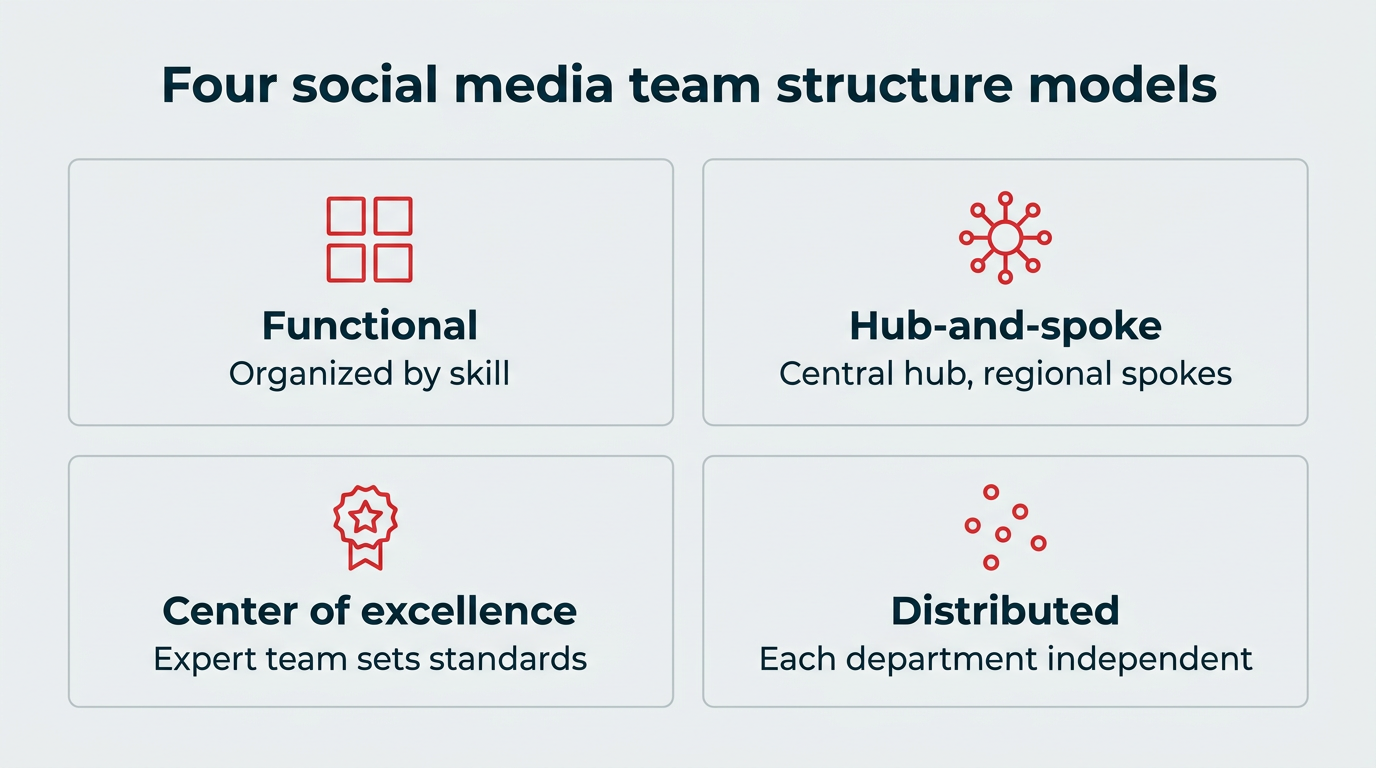
The organizational structure of a social media team significantly influences strategic alignment, content velocity, and brand consistency across diverse markets and platforms. Four common models dominate the industry:
-
Functional Structure: In this model, the team is segmented by specialized skills, with distinct individuals or sub-teams owning content creation, community management, analytics, and paid social. This structure is particularly effective for mid-sized organizations managing a single brand, fostering deep expertise within each vertical. However, a potential drawback is the risk of silos, necessitating strong leadership to ensure cohesive strategy across functions.

-
Hub-and-Spoke Structure: Ideal for multi-brand or multi-regional enterprises, this model positions a central "hub" team to dictate overarching strategy, brand voice, and content standards. Regional or business-unit "spokes" then adapt and execute content locally, ensuring both global consistency and local relevance. The primary challenge here lies in coordination; without robust shared calendars, standardized approval workflows, and clear guardrails, local teams may inadvertently deviate from central guidelines.
-
Center of Excellence (CoE): This model is common in highly decentralized organizations where social media engagement is a pervasive responsibility across multiple departments (e.g., HR, PR, customer care). A small, expert CoE team establishes standards, develops playbooks, and provides essential tools and training for social media practitioners embedded throughout the organization. While highly scalable, this approach demands rigorous governance to prevent brand fragmentation and ensure consistent messaging.
-
Distributed Structure: In this least centralized model, various departments manage their social media presence independently, lacking a central social team. While offering maximum speed and autonomy, this approach carries the highest risk for brand inconsistency, compliance breaches, and fragmented customer experiences. Most growing organizations eventually transition from a purely distributed model to a more governed hub-and-spoke or CoE framework.
The optimal structure is not universal but should align with the organization’s culture, size, and strategic objectives, prioritizing efficiency and reduced friction over a seemingly impressive but impractical org chart.
Key Social Media Team Roles and Salary Expectations
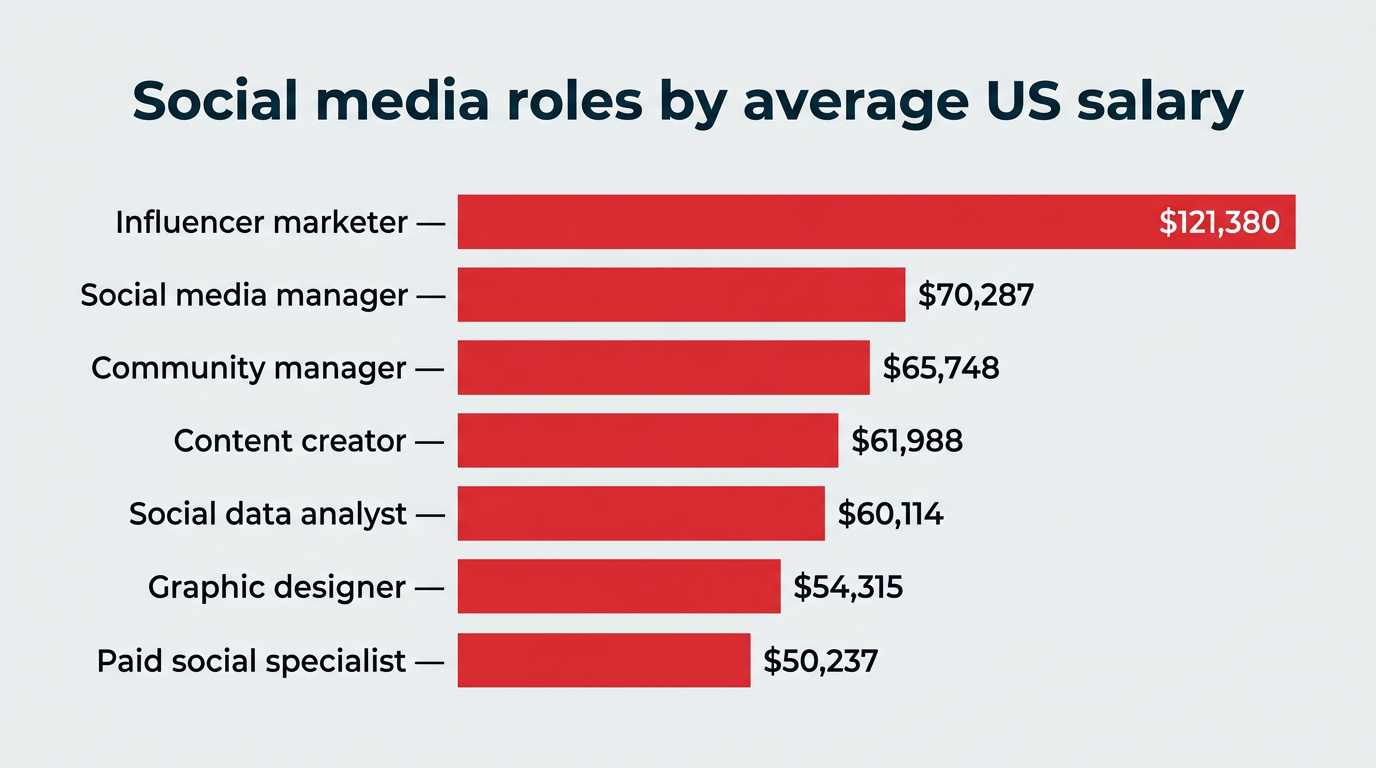
Building a high-performing social media team necessitates a clear understanding of the roles required to execute a comprehensive strategy. The following eight roles represent the core components of a robust social media operation, along with their typical skills, tools, and average US salary expectations as of late 2026:
-
Social Media Strategist: This role defines the overarching direction of the social program, aligning it with broader business objectives, setting Key Performance Indicators (KPIs), and advising on channel investment. They report results to senior leadership. On smaller teams, this function may merge with the Social Media Manager role.
- Skills: Strategic planning, market research, competitive analysis, data interpretation, communication, leadership.
- Tools: Hootsuite, Sprout Social, Brandwatch, Google Analytics, market research platforms.
- Reports to: Marketing Director or CMO.
- Average Salary: Varies significantly by market and experience, often six figures.
-
Social Media Manager: The operational core of the team, this generalist role translates strategy into day-to-day execution. They oversee content calendars, scheduling, campaign launches, and often manage smaller teams.
- Skills: Platform expertise, content planning, project management, copywriting, basic analytics, community guidelines enforcement, crisis communication readiness. As Hootsuite’s former Social & Influencer Marketing Strategist, Eileen Kwok, emphasized, "curiosity, tenacity, and creativity" are crucial for navigating the overwhelming demands of the role.
- Tools: Hootsuite, Buffer, Later, Canva, Google Workspace.
- Reports to: Marketing Director or CMO.
- Average Salary: $70,287.
-
Content Creator: Focused on producing all visual and textual assets for social channels, from short-form videos (TikToks, Reels) and static graphics to compelling captions and stories. They are the engine driving content output and must possess a deep understanding of the brand voice and target audience.
- Skills: Graphic design, video editing, photography, copywriting, storytelling, trend awareness, platform-specific content optimization.
- Tools: Adobe Creative Suite (Photoshop, Premiere Pro), Canva, CapCut, Figma.
- Reports to: Social Media Manager.
- Average Salary: $61,988.
-
Community Manager: The direct voice of the brand, responsible for engaging with the audience, responding to comments and direct messages, and fostering deeper relationships within brand-specific communities (e.g., Facebook Groups, Slack channels). They often manage the social inbox to ensure timely responses.
- Skills: Exceptional written communication, customer service, empathy, conflict resolution, brand voice adherence, crisis de-escalation.
- Tools: Hootsuite Inbox, Sprout Social, CRM systems, community platforms.
- Reports to: Social Media Manager.
- Average Salary: $65,748.
-
Paid Social Media Specialist: Manages all aspects of social advertising, a market projected to exceed $338 billion globally in 2026. This highly analytical role involves in-depth audience targeting, ad creative optimization, budget management, and continuous A/B testing to maximize ROI. They collaborate closely with content creators for high-performing ad creatives.
- Skills: Ad platform expertise (Meta Ads Manager, Google Ads, TikTok Ads), budget management, A/B testing, audience segmentation, conversion tracking, analytics, persuasive copywriting.
- Tools: Native ad platforms, Google Analytics, Hootsuite Ads, tracking pixels.
- Reports to: Social Media Manager, Marketing Director, or CMO.
- Average Salary: $50,237.
-
Social Data Analyst: Translates raw social media performance data into actionable business insights. This role tracks key metrics, builds comprehensive reports, and presents findings to inform strategic decision-making, freeing other team members to focus on execution.
- Skills: Data visualization, statistical analysis, SQL (often), reporting, critical thinking, understanding of social media metrics (engagement rate, reach, conversions).
- Tools: Hootsuite Analytics, Google Analytics, Tableau, Microsoft Excel, custom dashboards.
- Reports to: Social Media Manager.
- Average Salary: $60,114.
-
Graphic Designer: Creates high-quality visual assets that align with brand identity, including campaign graphics, infographics, and visual elements for various platforms. This role is crucial for maintaining a consistent and professional visual brand presence, working in tandem with content creators.
- Skills: Brand identity, typography, color theory, layout design, visual storytelling, software proficiency (Adobe Creative Suite).
- Tools: Adobe Photoshop, Illustrator, InDesign, Figma, Sketch.
- Reports to: Social Media Manager or Paid Ads Specialist.
- Average Salary: $54,315.
-
Influencer Marketer: Manages brand influencer partnerships and campaigns, from identifying suitable creators to full campaign execution and performance analysis. With US influencer spending exceeding $10 billion, this specialized role is increasingly vital for scaling authentic brand reach.
- Skills: Negotiation, relationship building, project management, outreach, contract management, campaign strategy, ROI measurement.
- Tools: Influencer platforms (e.g., Upfluence, Grin), CRM, project management software.
- Reports to: Social Media Manager, Marketing Director, or CMO.
- Average Salary: $121,380.
Building a Social Media Team: A Phased Strategic Approach
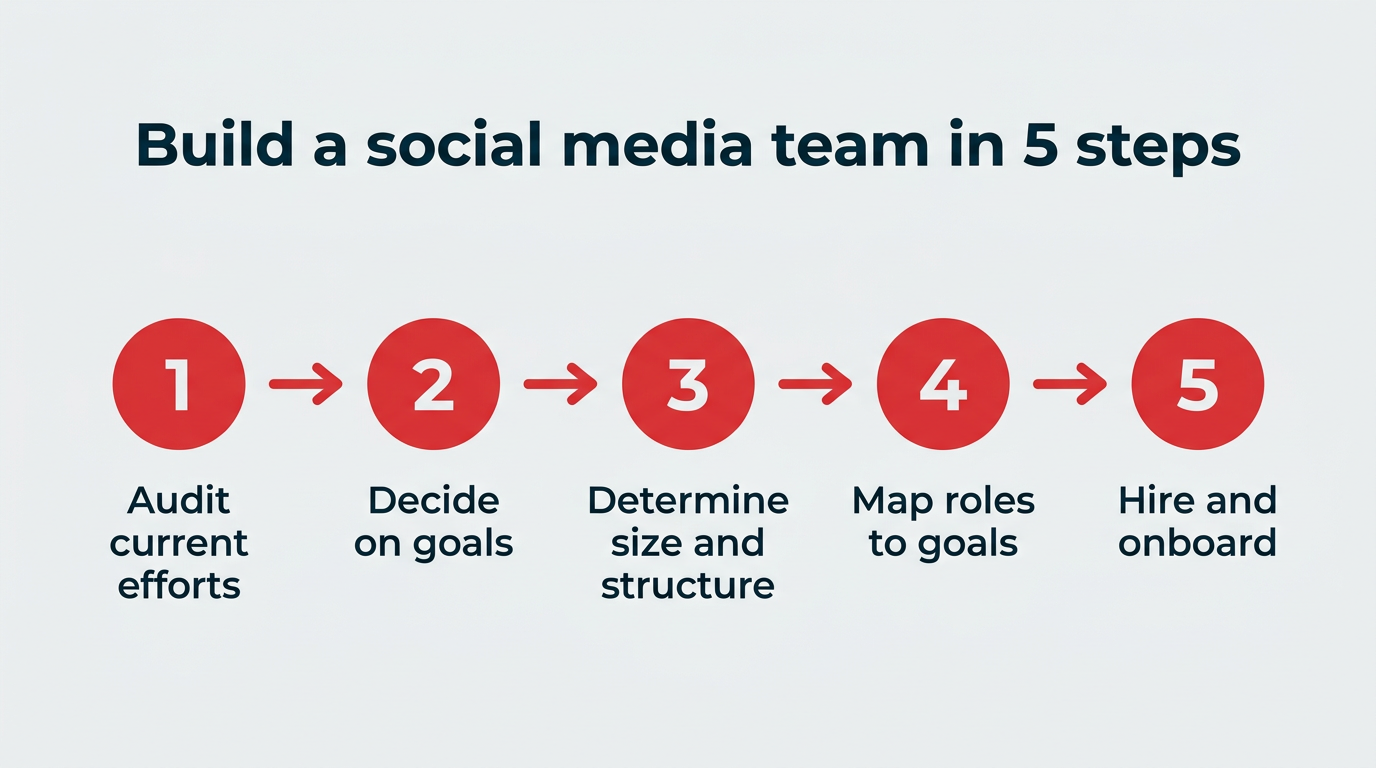
Establishing or expanding a social media team is a strategic endeavor that requires a phased, deliberate approach:
-
Comprehensive Social Media Audit: Before any hiring decisions, a thorough audit of current social media efforts is essential. This involves analyzing existing content performance, identifying resonant themes, assessing underperforming channels, and evaluating competitor strategies. Crucially, a detailed budget assessment must accompany this, clarifying available resources for new hires versus outsourcing options. This initial phase defines the "gaps" that the new team members will fill.
-
Define Clear Social Media Goals: Specific, measurable, achievable, relevant, and time-bound (SMART) goals are the bedrock of team development. Whether the objective is community building, lead generation, brand reputation management, or direct sales, these goals will dictate the priority of specific roles. As Eileen Kwok advises, "Set your expectations and get really clear on what you are looking for… get clear on the goals you want to achieve and work backwards." This clarity prevents the common pitfall of seeking a "one-size-fits-all unicorn."
-
Determine Team Size and Structure: Based on the audit and defined goals, decide on the appropriate team size and organizational structure (functional, hub-and-spoke, CoE). A small startup might begin with a social media manager and a content creator, while a mid-market brand might expand to include a community manager and a paid specialist. Enterprise-level operations with multiple brands or regions typically require a dedicated strategist, multiple content creators, community managers, paid specialists, data analysts, influencer managers, and designers, possibly augmented by regional owners. The guiding principle is to balance ambition with available resources, prioritizing effectiveness over sheer size.
-
Map Roles to Specific Goals: Once the team size and structure are determined, meticulously map specific roles and their responsibilities to the overarching social media goals. For instance, increased brand awareness might be primarily driven by a Social Media Manager focusing on strategy and content creation, while improved customer experience is the domain of the Community Manager. This mapping ensures every role has a clear contribution to the broader objectives, enabling prioritized hiring based on immediate needs and budget.

-
Strategic Hiring and Onboarding: Craft precise job descriptions reflecting the mapped skills and responsibilities. During the hiring process, prioritize candidates who demonstrate not only technical skills but also a strong cultural fit, a track record of past performance, and an eagerness to learn. Incorporating a short, paid test project (e.g., drafting a mini content strategy or sample posts) can provide invaluable insight into a candidate’s practical application of skills. Once hired, a comprehensive onboarding process is crucial, providing access to brand guidelines, social media policies, content calendars, and performance dashboards. This initial investment in clear documentation and training empowers new team members and fosters consistency.
Making the Case for Team Expansion
Securing approval for additional social media hires often hinges on effectively articulating the connection between social performance and core business outcomes. Leadership typically responds positively to clear demonstrations of how increased headcount can directly contribute to revenue growth, mitigate reputational risk, or enhance brand equity. This requires presenting data-driven arguments, highlighting current resource constraints, forecasting the impact of new roles on specific KPIs, and outlining the potential ROI of expanding the team.
The Transformative Impact of AI on Social Media Teams
AI is not merely automating tasks but fundamentally reshaping the nature of social media roles. By 2026, leading teams leverage AI to automate "work about work"—such as drafting initial content, generating tag suggestions, or compiling basic reports—thereby freeing human talent to focus on high-value activities like strategic planning, creative ideation, and nuanced community engagement.
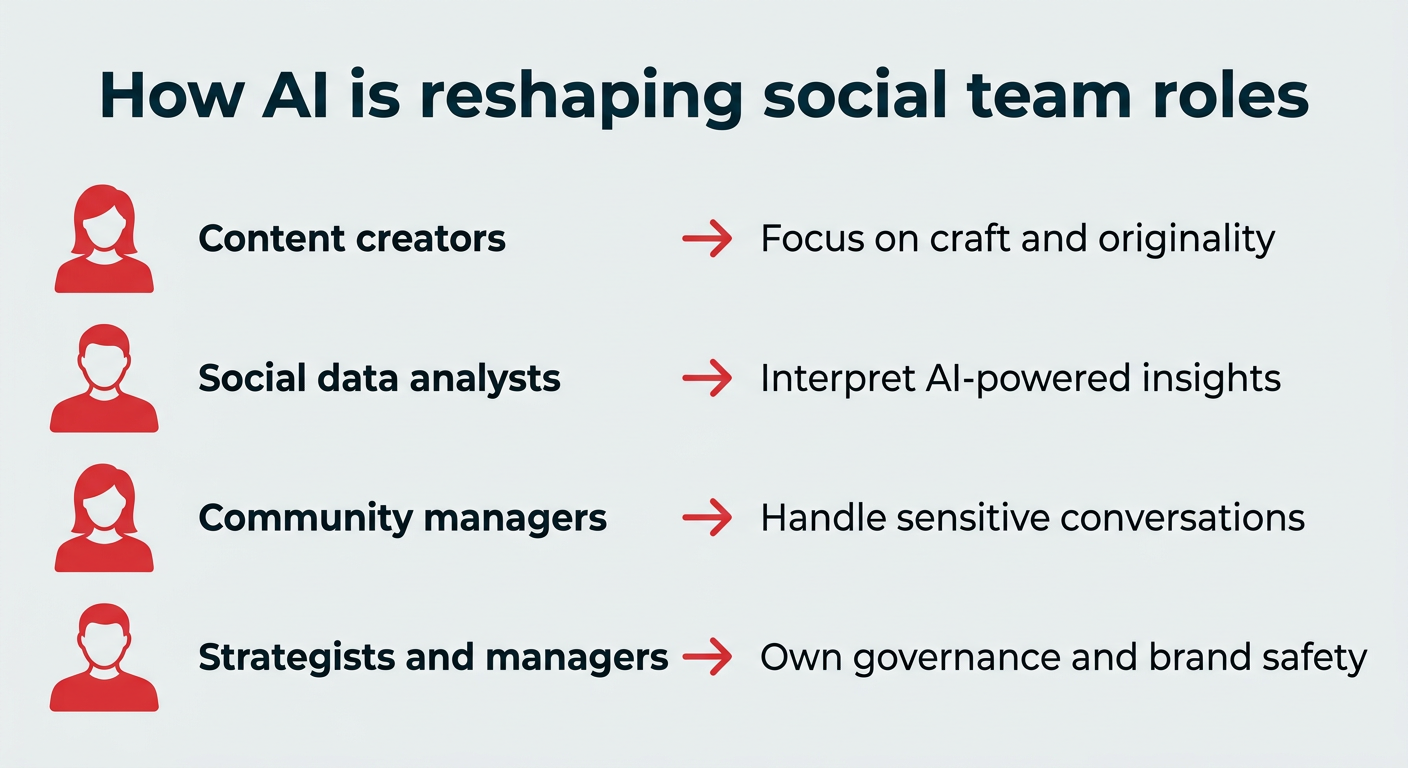
- Social Media Managers: Shift from manual scheduling to AI-driven content optimization and prompt engineering for content generation.
- Content Creators: Utilize AI for initial drafts, ideation, and rapid prototyping, allowing them to refine and humanize content.
- Data Analysts: Move beyond basic data extraction to sophisticated predictive analytics and pattern recognition facilitated by AI.
- Community Managers: Employ AI for sentiment analysis and automated response suggestions, enabling them to focus on complex or sensitive interactions.
- Paid Social Specialists: Leverage AI for advanced audience segmentation, dynamic ad creative generation, and real-time bid optimization.
This shift necessitates a new skill mix, including proficiency in prompt engineering, confident data interpretation, and the ability to establish ethical guardrails for AI usage. While AI enables smaller teams to cover more ground, strategic and governance roles become even more critical to ensure quality, compliance, and consistent brand voice.
Essential Tools and Workflows for Team Collaboration
A high-performing social media team relies on a unified tech stack that minimizes coordination overhead and provides a single source of truth for all social activities. Key tools and workflows include:
- Social Media Management Platform: A centralized dashboard for scheduling posts, monitoring mentions, engaging with audiences, and accessing analytics (e.g., Hootsuite, Sprout Social).
- Shared Content Calendar: Ensures visibility across the team, facilitates planning, and streamlines approval processes.
- Unified Social Inbox: Consolidates all incoming messages and comments from various platforms, allowing for efficient community management and customer service.
- Analytics and Reporting Tools: Provide comprehensive data on performance, audience insights, and campaign effectiveness.
- Brand Guidelines and Playbooks: Documented standards for voice, tone, visual identity, and crisis response ensure consistency.
- Collaboration and Project Management Tools: Facilitate communication and task management within the team and with cross-functional partners.
For teams operating at enterprise scale, robust permissions and approval workflows within the chosen platform are indispensable for maintaining governance and compliance as publishing volumes increase. The ultimate goal of this integrated approach is to reduce handoffs, clarify ownership, and provide a singular, authoritative view of all social media operations and their performance.
Building and scaling a social media team in 2026 demands strategic foresight, a deep understanding of evolving roles, and a commitment to leveraging technology like AI for efficiency and impact. By meticulously auditing needs, defining clear goals, establishing appropriate structures, and investing in the right talent and tools, organizations can transform their social media presence into a powerful engine for business growth and brand loyalty.