The landscape of email marketing is undergoing a profound transformation, compelling brands to fundamentally reconsider their approach to subscriber engagement and data management. A key prediction for email in 2026 underscored a significant shift towards more brands proactively promoting their preference centers through dedicated communications. This foresight is rooted in an undeniable truth: subscribers increasingly demand granular control over the frequency and relevance of brand communications. When email messages resonate with individual interests and preferences, engagement metrics such as open rates and click-through rates demonstrably improve, fostering a healthier, more valuable relationship between brand and consumer.
The Evolving Landscape of Email Engagement: A Chronology of Change
The current urgency surrounding preference centers is not an isolated phenomenon but rather the culmination of several critical developments in the digital marketing ecosystem. Historically, email marketing often prioritized broad reach and mass communication, with less emphasis on individual subscriber control beyond a simple "unsubscribe" link. However, a series of legislative and technological shifts have progressively empowered consumers and redefined best practices for brands.
The initial tremors of this shift became palpable around 2018 with the implementation of the General Data Protection Regulation (GDPR) in Europe, followed by similar privacy laws like the California Consumer Privacy Act (CCPA) in the United States. These regulations mandated greater transparency and control for users regarding their personal data, pushing marketers to be more conscientious about consent and data handling.
A more direct catalyst for the current focus on email engagement arrived in September 2021 with Apple’s introduction of Mail Privacy Protection (MPP) as part of iOS 15. MPP effectively masked subscribers’ IP addresses and pre-loaded email content, making traditional open rate tracking unreliable. This development forced email marketers to pivot away from relying on third-party data and aggregate metrics, instead emphasizing the collection of zero-party data—information voluntarily and proactively shared by customers. This shift meant brands had to ask subscribers what they wanted, rather than inferring it from their behavior.
Further accelerating this trend were significant policy changes from major mailbox providers (MBPs) like Gmail and Yahoo. Starting in early 2024, these providers began implementing stricter sender requirements, including mandatory one-click unsubscribe options and enhanced spam complaint thresholds. These changes were designed to give users unprecedented ease in opting out of unwanted communications, directly impacting unsubscribe rates. Research from Mailerlite, for instance, indicated a dramatic increase, with year-on-year unsubscribe rates more than doubling from 2024 to 2025. This surge was largely attributed to the frictionless unsubscribe processes mandated by these MBP changes.
Concurrently, the rapid advancements in Artificial Intelligence (AI) are reshaping how MBPs filter and categorize emails. AI algorithms are becoming increasingly sophisticated at identifying irrelevant content, spam, and messages that users are likely to ignore or mark as junk. This means that email relevance, driven by subscriber preferences, is no longer just a "nice-to-have" but a fundamental requirement for inbox deliverability and sustained engagement. Messages that feel irrelevant are now at a higher risk of being filtered out before they even reach the primary inbox, or worse, being flagged as spam.
The Imperative for Preference Centers: Data and Strategic Advantages
The confluence of these factors—subscriber demand for control, privacy regulations, MBP policy shifts, and AI advancements—has elevated the preference center from a mere compliance tool to a strategic asset. The primary drivers for opt-outs and spam complaints consistently revolve around "too many emails" and "messages not relevant." Yet, a significant portion of these subscribers would prefer to adjust their email frequency or content categories rather than severing ties with a brand entirely, if only given an easily accessible mechanism to do so.
The payoff for robust preference center usage is not merely theoretical; it is empirically proven. Single Grain published compelling research involving an e-commerce client that implemented a tiered preference center. This strategic move delivered a remarkable 189% increase in email engagement, alongside a substantial 76% decrease in unsubscribes. These figures underscore the profound impact that empowering subscribers can have on the health and profitability of an email program. Similarly, Oracle’s findings demonstrated that senders who incorporated a "snooze" option into their email preference centers saw unsubscribes drop by an average of 82%. This highlights the value of temporary opt-out options for subscribers who might be overwhelmed by seasonal campaigns but wish to remain connected to the brand.
Despite this compelling evidence, a pervasive problem persists: many brands continue to relegate their preference center links to minuscule text within email footers, severely limiting organic discovery. Discussions with industry practitioners reveal a consensus that low usage rates are not indicative of a lack of subscriber interest, but rather a profound lack of awareness regarding the preference center’s existence and functionality. This disconnect represents a significant missed opportunity, particularly as zero-party data becomes the gold standard for personalized marketing.
Strategic Approaches to Elevating Preference Center Usage
To effectively combat rising unsubscribe rates and foster deeper subscriber relationships, email senders must adopt a far more intentional and proactive approach to promoting their preference centers. This involves integrating preference center promotion across the entire subscriber journey, leveraging various touchpoints and communication strategies.
1. General Promotion: Building Baseline Awareness
Even the simplest message dedicated to raising awareness of the preference center and clearly indicating its location can yield positive results. Brands like Chanel have exemplified this by keeping their messaging straightforward, explaining how subscribers can utilize the tool to tailor marketing communications to align with their specific interests. This initial step serves to educate the subscriber base about an often-overlooked feature.
2. Welcome Email and Onboarding Series: Capitalizing on Peak Engagement
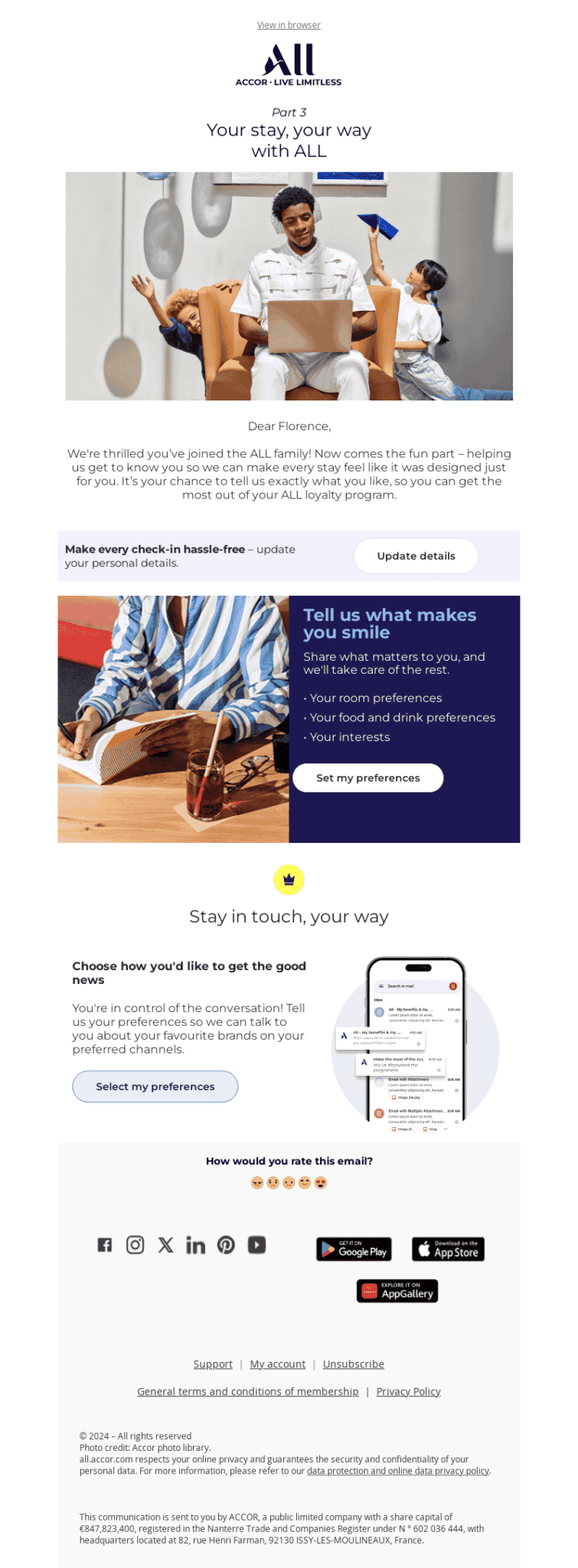
The welcome email, and by extension, a comprehensive onboarding series, represents prime real estate for preference center promotion. New subscribers are typically at their highest point of engagement and most receptive to shaping their relationship with a brand. Mizuno masterfully employs a clever subject line that resonates with its athletic audience, encouraging them to "be part of the first team," implying a choice in their communication preferences. Similarly, Accor Hotels integrates preference setting into its onboarding for new loyalty members, sending a message focused on improving future experiences through customized communication channels. This proactive approach sets the tone for a relationship built on mutual respect and relevance.
3. Progressive Profiling: Gradual Data Enrichment
The strategy of progressive profiling circumvents the friction often associated with requesting too much information at once. Instead, brands build customer profiles incrementally, starting with fundamental data points and gradually enriching them over time through periodic check-ins. The key is to prioritize data points that are most critical for immediate relevance. Skyscanner, for example, wisely prioritizes a customer’s preferred airport as a foundational piece of data, as it is a direct pathway to highly relevant travel offers. Similarly, collecting a subscriber’s date of birth provides a natural occasion for a personalized birthday surprise, while also yielding valuable insights into age, life stage, and potential buying power.
4. Make It Interactive: Gamification for Engagement
Gamification has proven to be a powerful driver of engagement across various digital touchpoints, and it can be effectively applied to preference capture. Oceania Cruises exemplifies this by inviting subscribers to "Choose which destination interests you most," accompanied by a running counter showcasing the most popular options. This interactive approach not only captures valuable customer insights through each poll response but also transforms a potentially mundane task into an engaging experience.
5. Explain the Benefits: The "What’s In It For Me?" Factor
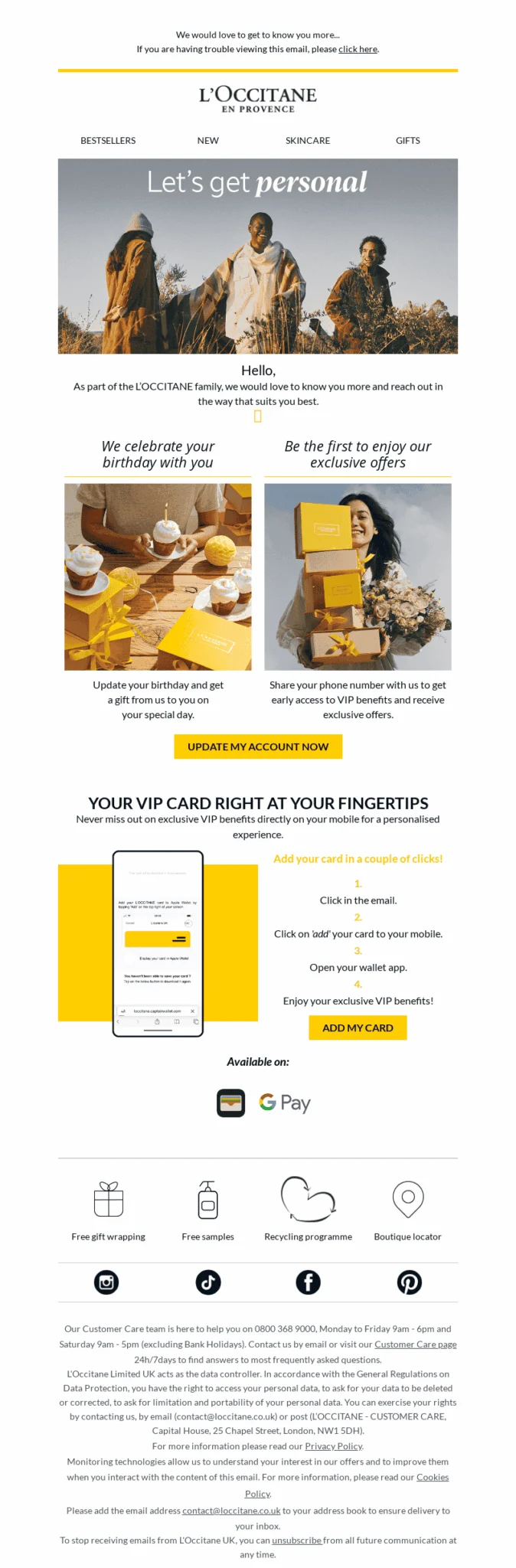
Subscribers are more likely to engage with preference centers when they clearly understand the personal benefits. L’Occitane, for instance, explicitly articulates the advantages of updating preferences, such as early access to exclusive offers and a birthday gift. They also offer diverse communication channels, including text, post, or WhatsApp, enhancing the perception of choice and personalization. Clearly outlining these tangible benefits motivates subscribers to take action.
6. Provide an Incentive: Harder Proof of Value
While "soft" benefits like early access are appealing, some subscribers require more concrete incentives to share their data. Recognizing the inherent value of their personal information, these subscribers expect something in return. A discount or a small monetary reward serves as an effective incentive, as it directly benefits the subscriber and often leads to a purchase, creating a win-win scenario for both parties.
7. Opt Out from Special Events: Sensitivity and Control
A growing trend involves emails inviting subscribers to opt out of emotionally sensitive dates, such as Valentine’s Day, Mother’s Day, or Father’s Day. While well-intentioned, the proliferation of such emails can inadvertently amplify the very sensitivity they aim to mitigate. A more effective and less intrusive approach is to integrate these as one-time, permanent options within the preference center. Brands are also becoming more granular, with Interflora offering anniversary options, Bloom & Wild allowing subscribers to mute Grandparent’s Day promotions, and Hotel Chocolat enabling customers to suppress alcohol-related offers. This demonstrates a deep understanding of customer needs and sensitivities.
8. Holiday Season: Temporary Snooze for Retention
Critical revenue periods like Black Friday and Cyber Monday can overwhelm inboxes. Many subscribers would prefer a temporary opt-out (a "snooze") rather than a permanent unsubscribe. The Oracle research demonstrating an 82% reduction in unsubscribes with a snooze option highlights its immense value. Brands like Bvlgari have successfully implemented this, allowing subscribers to manage their holiday communication flow. Alternatively, the period leading up to major sales events can be utilized for a "relevance check." Spoonflower smartly frames this with the CTA "Curate My Content," appealing to subscribers who wish to avoid a "cluttered inbox."
9. Increased Visibility: Pre-headers and Content Blocks
Beyond dedicated campaigns, every email should contribute to promoting the preference center. Two tactical enhancements stand out for increased visibility:
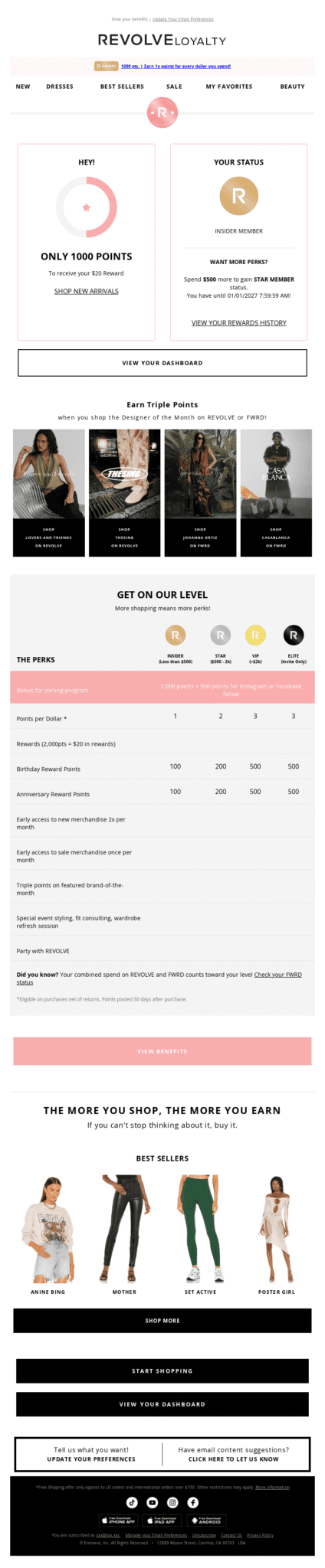
- Pre-headers: Just as email marketers have long recommended including unsubscribe links in pre-headers for transparency and to reduce spam complaints, the same logic applies to preference centers. This prominent placement builds trust and signals a brand’s commitment to subscriber control. REVOLVE, for example, effectively uses this space.
- Dedicated Content Blocks: Integrating a consistent content block within regular emails ensures that the preference center message is continuously reinforced, rather than relying solely on standalone campaigns. Bloom & Wild excels at this, providing subscribers with an easy way to opt out of multiple events at once, making the process frictionless.
10. Re-engagement: A Last-Ditch Effort for Retention
Preference centers play a crucial role in win-back campaigns, serving as a final opportunity to retain disengaged subscribers before they unsubscribe permanently. CVS Pharmacy effectively employs this strategy by restating the benefits of continued subscription, soliciting feedback, and concluding with a clear, commitment-oriented call to action: "Yes, I still want emails." This approach provides an alternative to outright departure, giving subscribers a chance to redefine their relationship with the brand.
Measuring Success and Future Outlook

The ultimate test of a preference center’s efficacy lies in its ability to demonstrate a clear link between usage and enhanced email marketing engagement. If subscribers who actively utilize the preference center exhibit superior metrics—higher click-through rates, greater lifetime value, and increased spending—then a strong business case emerges for continued investment in and optimization of the email program. These personalization engines are not merely tools for compliance; they are powerful conversation starters that unlock invaluable zero-party data, forming the bedrock of truly personalized and effective communication strategies.
As AI continues to shape the future of inbox management and consumer expectations for personalized experiences grow, brands that proactively embrace and promote robust preference centers will be best positioned to navigate this evolving landscape. They will foster deeper trust, cultivate stronger relationships, and ultimately drive superior commercial outcomes in an increasingly competitive digital environment. The era of generic, mass-sent emails is definitively over; the future belongs to tailored, subscriber-centric communication.