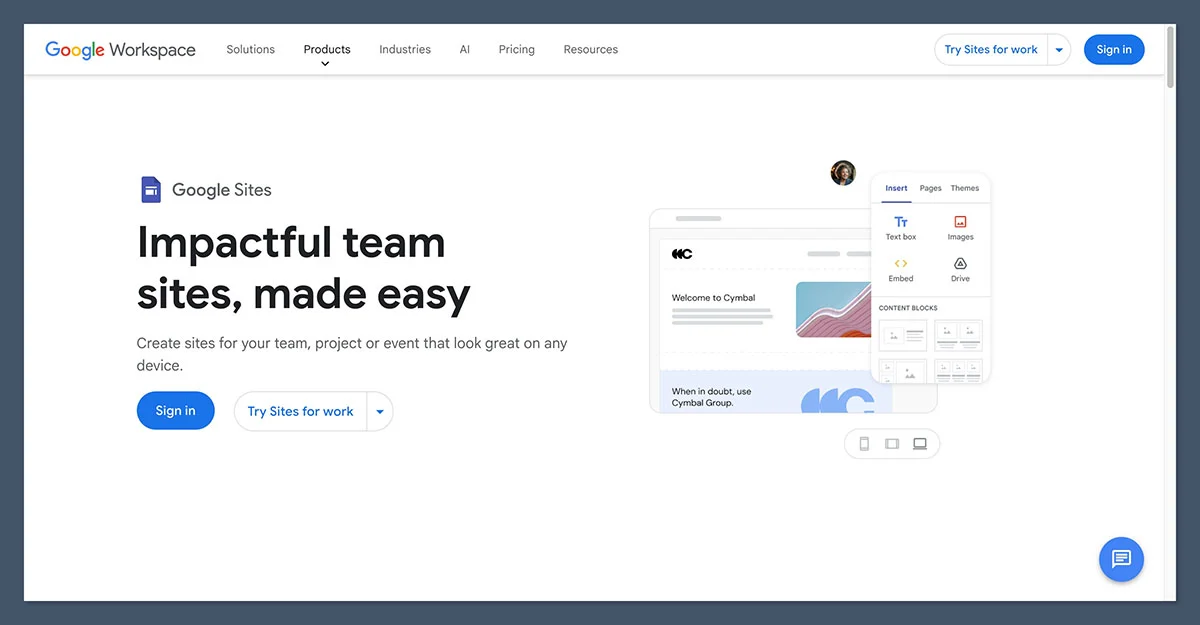
While both Shopify and Google Sites offer individuals and businesses the ability to construct a web presence, their fundamental purposes and capabilities diverge significantly, rendering a direct comparison often misleading. Following extensive hands-on testing of numerous website builders and e-commerce platforms, a clear distinction emerges: Shopify stands as the undisputed leader for online sales, while Google Sites is best suited for free, basic informational websites without e-commerce functionality. This in-depth analysis will scrutinize the nuances of Shopify and Google Sites, evaluating them across critical parameters such as pricing, sales features, design flexibility, search engine optimization (SEO), and user support, while also identifying the niche scenarios where Google Sites may indeed present a pragmatic choice.
Key Takeaways
- E-commerce Dominance: Shopify is purpose-built for online selling, offering a comprehensive suite of tools for product management, checkout, payments, and inventory.
- Cost-Effectiveness vs. Functionality: Google Sites is free, making it attractive for basic needs, but its lack of e-commerce features means it cannot compete with Shopify for revenue generation.
- Design and Customization: Shopify provides professional themes and extensive customization options, enabling brand differentiation, whereas Google Sites offers limited, generic templates.
- Marketing and SEO Capabilities: Shopify equips users with robust marketing and SEO tools essential for online visibility, a feature largely absent in Google Sites.
- User Experience Trade-offs: Google Sites excels in simplicity, ideal for quick informational pages, while Shopify’s complexity is a direct result of its powerful e-commerce functionality.
Quick Comparison: Shopify vs. Google Sites
To provide a clear overview, here is a side-by-side comparison of Shopify and Google Sites:
| Aspect | Shopify | Google Sites |
|---|---|---|
| Core Purpose | Full e-commerce platform for selling products and services | Simple site builder for informational and internal sites |
| Pricing | $29 to $299/month (billed annually) | Free; custom domain via Google Workspace from $7/user/month |
| E-commerce | Native catalog, cart, checkout, payments, inventory | None; external embeds or links only |
| Apps & Integrations | 12,000+ apps, multichannel selling via Google, YouTube, social | Google Workspace embeds only (Docs, Sheets, Forms, Calendar) |
| Design | Professional theme store, code access via Liquid, HTML, CSS | A handful of basic templates, limited customization |
| SEO | Editable meta tags, blogging, structured data, app support | Basic meta settings, weak blogging, no schema control |
| Support | 24/7 live chat plus extensive documentation | Help docs and community forums only |
| Best For | Online stores, DTC brands, multichannel sellers | Intranets, classrooms, project hubs, basic info sites |
1. Best for Pricing: Google Sites
When evaluating the cost of a website builder, Google Sites emerges as the undisputed champion, primarily due to its entirely free offering. Users can leverage the platform and its hosting services without any upfront or recurring charges, eliminating the need to navigate through various pricing tiers or contend with transaction fees. This makes it an exceptionally accessible option for individuals or organizations with stringent budget constraints.
The only potential expenditure arises when a custom domain name is desired, typically costing between $10 to $20 annually. Furthermore, for enhanced professional features such as business-grade email and administrative controls, a Google Workspace subscription becomes necessary. The entry-level Google Workspace Business Starter plan is priced at $7 per user per month when committed to an annual contract, or $8.40 per user per month for flexible billing.
In stark contrast, Shopify operates as a paid platform from its inception. Its core subscription plans range from $29 to $299 per month when billed annually. Beyond these, Shopify also offers a $5 per month Starter plan, ideal for individuals looking to sell via social media links, and Shopify Plus, a premium solution for enterprise-level businesses, starting at approximately $2,300 per month. Prospective users can explore Shopify’s capabilities through a three-day free trial, and attractive introductory offers, such as the first three months for $1 per month on annual plans, are frequently available.
While Google Sites undeniably presents a more budget-friendly option, it is crucial to acknowledge the fundamental difference in functionality. The comparison is akin to juxtaposing the cost of a tool designed for sales with one that lacks such capabilities entirely. For any website intended to generate revenue, Shopify’s monthly investment is directly correlated with its robust e-commerce infrastructure, encompassing checkout processes, payment gateways, inventory management, and order fulfillment – features that Google Sites, regardless of cost, does not possess.
The Verdict on Pricing: Google Sites wins unequivocally on cost, offering free builder and hosting. However, this affordability comes with a significant caveat: it cannot facilitate sales. Shopify, while incurring a monthly fee, provides the essential tools for e-commerce transactions.
2. Best for Selling Online: Shopify
The core distinction between Shopify and Google Sites lies in their e-commerce capabilities, a category where Shopify’s superiority is not merely significant, but absolute. Shopify is meticulously engineered as a comprehensive e-commerce platform, while Google Sites possesses no native functionality for online sales.
Sales Features
Shopify provides a robust suite of tools designed to streamline the online selling process. This includes full catalog management, allowing for product variants, detailed inventory tracking across multiple locations, support for digital products, subscription options, the creation of discount codes, and an abandoned cart recovery feature, all available on its core plans. Furthermore, Shopify Magic, an integrated AI tool, assists in generating product descriptions and marketing copy directly within the user dashboard.
Google Sites, conversely, offers none of these e-commerce specific features. There is no integrated shopping cart, no checkout process, and no product catalog management. During testing, the closest approximation to an online store involved creating product pages with images and descriptive text, then linking out to external payment processors or embedding third-party buy buttons. Ironically, a common workaround for users attempting to sell via Google Sites is to embed Shopify’s own buy buttons, a testament to Shopify’s established dominance in this domain.
Payment Options
Shopify supports an extensive network of over 100 payment providers, including popular options like PayPal, Apple Pay, and Google Pay. Additionally, users can opt for Shopify Payments, the platform’s native gateway. With Shopify Payments, online card transaction rates begin at 2.9% + 30¢ on the Basic plan, with these rates decreasing on higher tiers. Utilizing Shopify Payments also eliminates the additional transaction fees that Shopify imposes when third-party payment gateways are employed.
Google Sites has no inherent payment processing capabilities. Any financial transaction initiated through a Google Sites page must be completed on an entirely separate platform.
App Market
Shopify boasts an expansive app store featuring over 12,000 third-party integrations. These applications cover a vast spectrum of e-commerce needs, from dropshipping and print-on-demand services to sophisticated upsell tools, customer review functionalities, and shipping automation solutions. While some of the most powerful apps may incur their own monthly fees, necessitating budget considerations, the sheer breadth of available functionality is unparalleled in the market.
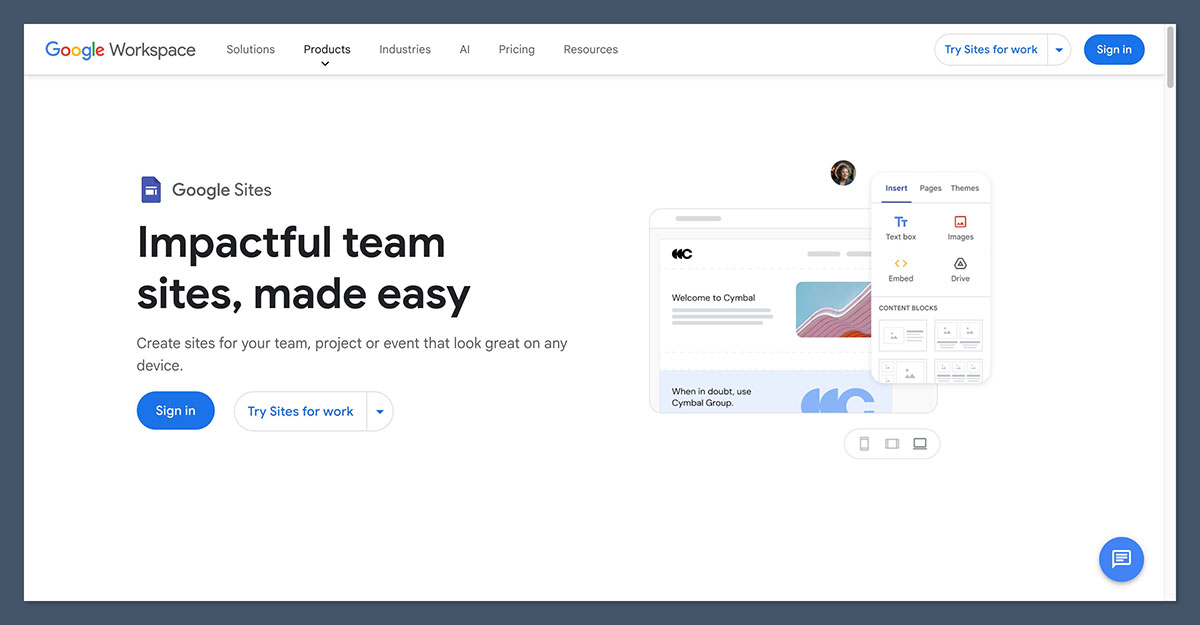
Google Sites lacks an app marketplace altogether. Its extensibility is limited to embedding content from Google Workspace, such as documents, spreadsheets, forms, and calendars. The integration of third-party widgets is generally confined to using embed codes, offering a far more restrictive experience.
The Verdict on Selling Online: Shopify is the only viable option for serious e-commerce endeavors. It provides a native catalog, a secure checkout process, over 100 payment gateway integrations, and an extensive app ecosystem. Google Sites can display products, but it is Shopify that facilitates the actual sale.
3. Best for Marketing and SEO: Shopify
For any business aiming to thrive online, visibility is paramount. Customers cannot purchase products if they are unaware of their existence, making marketing and search engine optimization (SEO) tools as critical as sales features.
Marketing Tools
Shopify seamlessly integrates with major social media platforms like Instagram and TikTok, enabling direct selling and promotion. The official Google & YouTube app synchronizes product feeds with Google Merchant Center, powers Performance Max campaigns, and facilitates YouTube Shopping. Shopify Email allows users to create and dispatch email marketing campaigns directly from their dashboard. Furthermore, the extensive app store provides solutions for SMS marketing, customer loyalty programs, and marketing automation, addressing virtually any marketing need.
Google Sites, in contrast, offers virtually no built-in marketing toolkit. There are no native email marketing capabilities, no direct social selling integrations, and no advertising platform integration beyond what can be manually configured using external tools.
SEO
Shopify provides a solid foundation for search engine optimization. Users can easily edit title tags and meta descriptions, utilize SEO-friendly URLs, leverage a built-in blog for content marketing, and implement structured data through themes and apps. This comprehensive approach is increasingly vital in the current search landscape, where AI-driven search results prioritize well-structured, content-rich websites. Shopify’s blogging and content management system (CMS) capabilities are instrumental in building the deep, interlinked content hubs that drive organic visibility.
Google Sites offers only the most basic SEO functionalities. While pages are mobile-friendly by default and users can configure simple meta information, there is no control over structured data (schema markup), blogging functionality is rudimentary, and the inherent design constraints make it challenging to create the kind of content hubs that perform well in modern search algorithms. Despite being a Google product, Google Sites pages do not receive any inherent ranking advantage.
The Verdict on Marketing and SEO: Shopify provides the essential tools for online discoverability. With its native SEO controls, robust blogging capabilities, seamless integration with Google Merchant Center, and extensive multichannel selling options, Shopify offers a distinct advantage in getting products found. Google Sites, by comparison, covers only the most fundamental aspects.
4. Easiest to Use: Google Sites
Google Sites truly shines in its user-friendliness, representing one of the most intuitive website builders encountered during testing. Its drag-and-drop editor is instantly recognizable to anyone familiar with Google Docs, enabling users to create a presentable page in a matter of minutes. The platform requires no complex configuration or hosting management, and its collaborative features mirror the seamless experience of other Google Workspace applications, allowing for multiple editors and granular sharing controls.
Shopify, while user-friendly for its intended purpose, is inherently more complex due to its comprehensive e-commerce functionality. The onboarding process guides users through a setup checklist covering products, payments, shipping, and taxes. The section-based theme editor is straightforward once users familiarize themselves with its structure. However, there is an undeniable learning curve involved in configuring shipping zones, tax settings, and integrating apps, tasks that Google Sites entirely bypasses.
The disparity in ease of use can be attributed to the scope of each platform. Google Sites is simpler because it accomplishes far less. For users requiring a basic informational page, this simplicity is a distinct advantage. For those aiming to build an online store, Shopify’s perceived complexity is a direct consequence of the essential functionality it provides.
The Verdict on Ease of Use: Google Sites is exceptionally easy to use, allowing users to go from a blank page to a published site in minutes with minimal setup. While Shopify is approachable for an e-commerce platform, it cannot match Google Sites’ sheer simplicity for basic web pages.
5. Best for Design and Templates: Shopify
For businesses looking to establish a unique brand identity and create a visually appealing online storefront, Shopify offers superior design capabilities and a far more extensive selection of templates. The Shopify Theme Store features a diverse array of professionally designed templates, categorized by industry, with free options available to get started. Premium themes are typically priced as a one-time purchase, ranging from $100 to $500. Each theme is highly customizable through a section-based editor. For advanced customization, developers can access and modify Liquid, HTML, and CSS code, enabling the creation of truly bespoke storefronts.
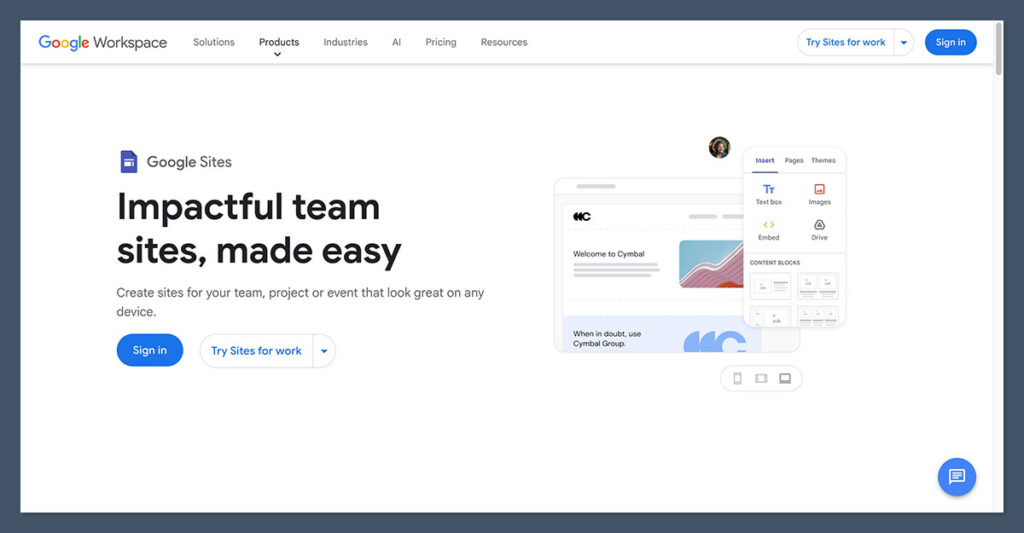
Google Sites, in contrast, provides a limited selection of clean, minimalist templates. While these templates appear tidy, their customization options are severely restricted. Users face limited layout choices, minimal control over typography and spacing, and a notable absence of a comprehensive theming system. Consequently, most Google Sites pages tend to exhibit a similar aesthetic, often described as generic. While this uniformity might be acceptable for internal wikis, it can be a significant limitation for brands aiming to cultivate trust and a distinct presence among paying customers.
The Verdict on Design and Templates: Shopify empowers users to build distinctive, professional online stores through its extensive theme store and code-level customization options. Google Sites offers a clean but generic look with very limited scope for personalization.
6. Best for Support: Shopify
When businesses encounter challenges or require assistance, robust support channels are critical. Shopify provides a comprehensive support system designed to assist merchants at all stages of their e-commerce journey.
Shopify Support
- 24/7 Live Chat: Merchants can access real-time support via live chat at any hour, ensuring prompt assistance for urgent issues.
- Extensive Documentation: Shopify maintains a vast library of help articles, guides, and tutorials covering a wide range of topics, from platform setup to advanced marketing strategies.
- Community Forums: A thriving community forum allows merchants to connect with other Shopify users, share knowledge, and seek advice.
- Email Support: Direct email support is also available for less time-sensitive inquiries.
- Phone Support: For critical issues, phone support options are typically available.
Google Sites Support
- Help Documentation: Google provides a comprehensive set of help articles and FAQs for Google Sites.
- Community Forums: Users can seek assistance and share information through Google’s community forums, though response times can vary.
- Limited Direct Support: For free users, direct, personalized support from Google is generally unavailable.
The Verdict on Support: Shopify offers superior support with its 24/7 live chat and extensive resources, backing its merchants around the clock. Free Google Sites users are primarily reliant on self-help documentation and community forums.
When Google Sites Is Actually the Right Choice
It is important to acknowledge that Google Sites was not designed to compete with dedicated e-commerce platforms like Shopify. There are specific scenarios where Google Sites genuinely serves as the more appropriate and effective tool:
- Internal Project Hubs: For teams needing a central location to share documents, track project progress, and collaborate on internal initiatives, Google Sites provides a simple, integrated solution.
- Classroom Websites: Educators can utilize Google Sites to create class pages, share assignments, post schedules, and facilitate communication with students and parents.
- Basic Informational Websites: For small businesses or individuals who need a simple online presence to display basic information, contact details, or a portfolio without any intention of selling online, Google Sites is a cost-effective and easy-to-manage option.
- Event Landing Pages: For one-off events, a simple Google Site can effectively serve as an informational hub with details, maps, and registration links.
If a user’s needs fall into any of these categories, Google Sites is free, quick to set up, and perfectly adequate. The moment online selling becomes a consideration, however, Google Sites ceases to be a viable option.
How We Test E-commerce Website Builders
The evaluation of website builders and e-commerce platforms, including Shopify and Google Sites, is conducted through a rigorous and structured research process. This methodology involves testing across seven key areas, with each area weighted according to its significance to users:
| Testing Area | Weighting | What We Assess |
|---|---|---|
| Sales Features | 40% | The e-commerce capabilities of each platform |
| Website Features | 15% | Quality and quantity of website features (e.g., SEO) |
| Help and Support | 12% | Support channels and resources available |
| Design Functionality | 10% | Templates and design options |
| User Experience | 10% | Ease of use and accessibility |
| Customer Score | 8% | Market performance and competitor standing |
| Value for Money | 5% | Pricing plans and overall value |
This comprehensive approach ensures that the insights and recommendations provided are based on genuine, first-hand experience with each platform.
Shopify vs. Google Sites: Our Winner
For any individual or business with aspirations of selling products online, Shopify is the definitive winner, and frankly, it wins by default. It provides a complete e-commerce ecosystem, featuring a native checkout process, over 100 payment gateway integrations, a conversion-optimized theme store, and an extensive app marketplace with over 12,000 applications to enhance store functionality. Crucially, Google Sites cannot process a single online transaction on its own.
However, this comparison ultimately hinges on aligning the appropriate tool with the specific objective. Google Sites excels as a free, remarkably easy-to-use builder for internal hubs, educational settings, and straightforward informational pages. For these purposes, it surpasses the need for a paid platform like Shopify. Some businesses even strategically utilize both: a Google Site for internal documentation and a Shopify store for revenue generation.
If the decision is between these two platforms for an online store, the choice is already clear. It is advisable to initiate with Shopify’s free trial, capitalize on introductory offers such as the $1 per month promotion for the initial three months, and reserve Google Sites for internal team wikis or non-commercial informational needs.
FAQs
Can you sell products on Google Sites?

Directly, no. Google Sites lacks built-in shopping cart, checkout, or payment processing capabilities. While it is possible to display products and link to external payment pages or embed third-party buy buttons (including those from Shopify), any actual transaction must occur on a separate platform.
Is Google Sites really free?
Yes, the website builder and hosting are entirely free with any Google account, and sites are hosted under a sites.google.com subdomain. To use a custom domain and access business-grade email and administrative controls, a Google Workspace subscription is required, starting at $7 per user per month with an annual commitment.
How much does Shopify cost?
Shopify’s primary plans range from $29 to $299 per month when billed annually ($39 to $399 billed monthly). A $5 per month Starter plan is available for social selling, and Shopify Plus caters to enterprise clients from approximately $2,300 per month. New users opting for annual plans can often secure their first three months for $1 per month.
Is Google Sites good for SEO?
Google Sites offers only basic SEO features. Pages are mobile-friendly, and simple meta information can be configured. However, it lacks structured data control, has very limited blogging capabilities, and does not provide the advanced content and optimization tools necessary for serious SEO efforts. Its ownership by Google does not confer any inherent ranking advantages.
Can I embed a Shopify store in Google Sites?
Yes, it is possible to embed Shopify’s functionality into Google Sites. The Shopify Buy Button channel generates embed code that can be pasted into a Google Sites page, allowing visitors to purchase products through Shopify’s checkout. This feature necessitates an active Shopify subscription, at which point most businesses find it more efficient to build their entire store on Shopify.
Which is better for a small business: Shopify or Google Sites?
The choice depends entirely on whether the business intends to sell online. If e-commerce is a primary goal, Shopify is the only viable option of the two. For businesses requiring only a simple informational presence and operating with no budget, Google Sites can suffice for free. However, for enhanced design and features at a modest cost, builders like Squarespace or GoDaddy may offer more polish.