While marketers meticulously craft compelling subject lines, optimize call-to-action buttons, and diligently A/B test preview text, the email footer often receives scant attention, frequently populated with recycled content. This oversight represents a significant missed opportunity, not only in terms of brand engagement but also, crucially, as a potential compliance risk. The email footer, despite its humble position at the bottom of a message, is perhaps the most consistent piece of real estate in every email communication, and one of the few parts subject to stringent legal regulations. Mastering its construction is paramount for safeguarding a business, cultivating subscriber trust, and consistently reinforcing brand identity with every send.
The Underestimated Power of the Footer in Digital Communications
The perception that email footers are merely legal necessities or an afterthought is a dangerous misconception in modern digital marketing. When designed with intent, the footer serves as a concise yet powerful conduit for information, offering recipients clarity on the sender’s identity, providing accessible contact avenues, and facilitating a straightforward exit strategy should they no longer wish to receive communications. This last point transcends mere good manners; it is a legal mandate enforced by comprehensive regulations globally, including the CAN-SPAM Act in the United States, Canada’s Anti-Spam Legislation (CASL), and the General Data Protection Regulation (GDPR) in the European Union.

Beyond the critical aspect of legal compliance, a meticulously constructed footer projects an image of professionalism and transparency. An email footer that prominently displays a legitimate physical address, a functional and easily discoverable unsubscribe link, and unequivocal sender information communicates to subscribers that they are interacting with a credible, responsible entity that respects their digital space and privacy. Conversely, the omission or obfuscation of these fundamental details can swiftly undermine an otherwise brilliantly executed email campaign, leading recipients to flag the message as spam, irrespective of its content quality. This act, driven by frustration and distrust, can severely damage a sender’s reputation and deliverability rates.
Navigating the Complex Regulatory Landscape: A Global Overview
The legal framework governing commercial email footers is multifaceted, with requirements varying by jurisdiction. However, several core elements consistently emerge as non-negotiable for any commercial electronic message. Failure to adhere to these can result in substantial penalties, underscoring the footer’s role as a critical line of defense.
-
The CAN-SPAM Act (Controlling the Assault of Non-Solicited Pornography and Marketing Act) in the United States: Enacted in 2003, CAN-SPAM sets national standards for commercial emails. Key footer requirements include:
- A Clear and Conspicuous Unsubscribe Mechanism: Recipients must be able to opt-out of future emails easily. The unsubscribe link must be functional for at least 30 days after the email is sent, and requests must be honored within 10 business days.
- Sender Identification: The email must clearly and accurately identify the person or business sending the message.
- A Valid Physical Postal Address: Commercial emails must include the sender’s valid physical postal address. This can be a current street address, a post office box registered with the U.S. Postal Service, or a private mailbox registered with a commercial mail receiving agency.
- Penalties: Each separate email in violation of CAN-SPAM is subject to penalties of up to $50,120, making non-compliance a significant financial risk for businesses.
-
Canada’s Anti-Spam Legislation (CASL): Often cited as one of the strictest anti-spam laws globally, CASL came into full effect between 2014 and 2017. Its requirements are more prescriptive, emphasizing consent:
- Express or Implied Consent: Senders must have explicit consent from recipients to send commercial electronic messages (CEMs).
- Sender Identification: The email must clearly identify the sender and, if different, the person on whose behalf the email is sent.
- Contact Information: The sender’s mailing address and either a phone number, email address, or web address must be included.
- Easy Unsubscribe Mechanism: An unsubscribe mechanism must be clearly and prominently set out and easily performed. Unsubscribe requests must be processed within 10 business days without any additional cost to the recipient.
- Penalties: CASL carries severe penalties, with fines up to CAD $1 million for individuals and CAD $10 million for organizations per violation.
-
General Data Protection Regulation (GDPR) in the European Union: Effective May 25, 2018, GDPR focuses on data privacy and protection for individuals within the EU and European Economic Area. While not specific to email footers, its principles heavily influence their content:
- Lawful Basis for Processing (Consent): Email marketing under GDPR typically requires explicit, unambiguous consent. The footer can remind recipients of this consent.
- Right to Erasure (Right to be Forgotten) and Right to Object: While the unsubscribe link directly addresses the right to object to direct marketing, the broader implications of GDPR necessitate clear links to privacy policies detailing data handling.
- Transparency: Senders must be transparent about who they are and how they use data.
- Penalties: GDPR fines are substantial, up to €20 million or 4% of global annual turnover, whichever is higher, for serious infringements.
A quick internal audit question for marketers should be: "If every element were stripped from our footer except the essential address and unsubscribe link, would we still be fully compliant with all applicable laws?" If the answer is anything but a resounding yes, there are critical elements missing.
Building Trust and Enhancing Brand Identity Beyond Compliance

Once the legal prerequisites are satisfied, the email footer transforms into a strategic asset for reinforcing brand identity and fostering deeper connections with subscribers. It’s an opportunity to extend the brand experience and offer added value.
- Brand Logo: Including the company logo in the footer reinforces brand recognition and visual consistency. Even at the bottom of the email, it serves as a subtle reminder of the sender.
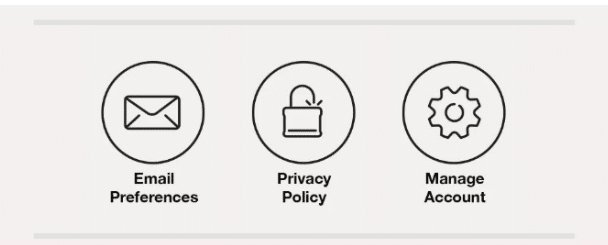
- Preference Center Link: Beyond a simple unsubscribe, a preference center allows subscribers to tailor the types of emails they receive (e.g., promotional, newsletters, updates) or adjust frequency, thereby reducing full opt-outs and enhancing user control. This is a powerful tool for retention.
- Social Media Links: Direct links to social media profiles (Facebook, Twitter, LinkedIn, Instagram, etc.) facilitate cross-channel engagement, allowing subscribers to connect with the brand on their preferred platforms and discover additional content.
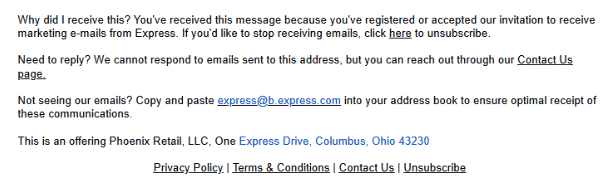
- Privacy Policy Link: A prominent link to the brand’s privacy policy is crucial for transparency, especially in the age of heightened data privacy concerns. It assures subscribers that their data is handled responsibly and in accordance with regulations.
- Contact Information: Providing multiple contact options—a general support email, phone number, or a link to a "Contact Us" page—demonstrates accessibility and a commitment to customer service.
- "Why You’re Receiving This Email" Statement: A short, clear statement reminding subscribers why they are receiving the email (e.g., "You are receiving this email because you subscribed to our newsletter on [date] or through [website]") significantly reduces spam complaints. Many spam reports stem from recipients simply forgetting they opted in.
- Copyright Information and Terms of Service: Standard legal disclaimers that protect intellectual property and outline user agreements.
For instance, an effective footer might integrate large, tappable buttons for key actions like "Update Preferences" or "Contact Support" before the smaller, legally mandated unsubscribe link and disclaimers. This approach prioritizes user experience and accessibility, acknowledging that a significant portion of emails are opened on mobile devices where small text and closely spaced links can be frustrating. Furthermore, reminding subscribers of their consent to receive marketing messages can pre-emptively address reasons for spam flagging.
Best Practices for an Optimized and Effective Email Footer
To truly leverage the footer’s potential, marketers must adopt a set of strategic best practices that prioritize clarity, usability, and long-term consistency.
- Keep it Clean and Concise: A cluttered footer crammed with an excessive number of links and disclaimers is counterproductive. It becomes difficult to read, especially on smaller mobile screens, and essential information can be overlooked. Prioritize the legally required elements, then judiciously add only a few high-value extras that genuinely benefit the subscriber or brand. The goal is clarity, not complexity.
- Ensure Prominent and Accessible Unsubscribe Links: Hiding the unsubscribe link is a self-defeating strategy. While it might temporarily prevent an opt-out, it inevitably leads to frustrated subscribers marking the email as spam. Spam complaints inflict far greater damage on sender reputation and deliverability than a straightforward unsubscribe. Make the link easy to find, clearly labeled, and functional. Data consistently shows that subscribers who can easily opt-out are less likely to report emails as spam, preserving sender reputation.
- Design for Mobile-First Readability and Interaction: With over half of all emails being opened on mobile devices, responsive design is non-negotiable for the footer. Text should remain legible without requiring zooming, and links or buttons must be sufficiently large and spaced apart to be accurately tapped by a finger. Poor mobile design in the footer can lead to accidental clicks or, worse, an inability to access critical links.
- Maintain Consistency Across All Campaigns: Employing a uniform footer format, including consistent fonts, colors, and layout across every email campaign, is crucial for brand recognition and building subscriber trust. This consistency helps establish the sender as a reliable and professional entity over time, contributing to a cohesive brand experience.
- Rigorously Test All Links: Broken unsubscribe links, dead social media icons, or outdated contact pages are common and entirely avoidable errors. Before any email send, especially following template updates or system changes, every link within the footer must be thoroughly tested to ensure it directs users to the correct, functional destination. A broken link can erode trust and frustrate subscribers, negating the positive impact of the rest of the email.
- Conduct Periodic Reviews and Updates: The digital landscape, including privacy regulations and business information, is dynamic. An address that was accurate two years ago, or a social media channel your company no longer actively uses, can quietly become a liability or a dead end for subscribers. Regular reviews, at least annually, are essential to ensure all footer information remains accurate, compliant, and relevant. This includes checking for new legal requirements or changes to existing ones.
The Cost of Neglect: Implications for Deliverability and Brand Reputation
The collective impact of neglecting the email footer extends far beyond mere inconvenience. A non-compliant or poorly designed footer can trigger a cascade of negative consequences:
- Legal Penalties: As detailed, fines for non-compliance with regulations like CAN-SPAM, CASL, and GDPR can be exorbitant, posing a significant financial threat to businesses of all sizes.
- Damaged Sender Reputation and Deliverability: Email service providers (ESPs) and internet service providers (ISPs) actively monitor sender behavior, including spam complaints and unsubscribe rates. A high volume of spam complaints, often driven by inaccessible unsubscribe options or confusing sender information, can severely damage a sender’s reputation, leading to lower deliverability rates, messages being routed to spam folders, or even IP blacklisting.
- Erosion of Customer Trust and Brand Loyalty: In an increasingly competitive digital marketplace, trust is a valuable currency. A footer that lacks transparency or functionality signals a lack of respect for the subscriber, diminishing trust and potentially leading to customer churn.
- Reduced Engagement: If subscribers perceive an email as unprofessional or untrustworthy due to a faulty footer, they are less likely to engage with future communications, impacting open rates, click-through rates, and ultimately, conversion metrics.
Conclusion: The Footer as a Strategic Pillar
The email footer, often relegated to an afterthought, carries an outsized responsibility within the realm of digital communication. It stands as a critical guardian of legal compliance, a fundamental builder of subscriber trust, and a consistent extension of the brand’s identity. Treating the footer with the same strategic intentionality and design rigor applied to the subject line or call-to-action is not merely a best practice; it is a strategic imperative.

By ensuring the footer is clean, compliant, mobile-friendly, and consistently updated, marketers can transform this often-overlooked section into a powerful asset. It actively works to protect the business from legal pitfalls, cultivates a loyal and engaged subscriber base, and reinforces a professional brand image with every single email sent. In an era where digital trust and data privacy are paramount, a well-executed email footer is indispensable for maintaining a healthy sender reputation and achieving long-term marketing success.