The decision of which point-of-sale (POS) system to adopt is a critical one for retailers, impacting everything from daily operations to long-term profitability. While Square, Shopify, and Clover are frequently cited as leading options, their fundamental differences in product design, sales channels, and pricing structures can create confusion for business owners. This article delves into a comprehensive comparison, analyzing their strengths and weaknesses across key areas such as software costs, processing rates, hardware options, contract terms, and customer support, to empower retailers in making an informed choice tailored to their specific business needs.
The current market for retail POS solutions is far from a monolithic entity. Square and Clover, for instance, originated as payment processing companies that subsequently developed their own POS software. In contrast, Shopify began as an e-commerce platform and later integrated POS functionalities. This foundational difference significantly influences their respective offerings. Furthermore, Clover distinguishes itself by being exclusively sold through a network of over 60 certified reseller partners, a stark contrast to Square and Shopify, which offer their products directly to consumers. This intermediary layer in Clover’s distribution model introduces variability in pricing, support, and contract terms that is not present with the other two providers.
A notable shift occurred in October 2025 when Square significantly revamped its product line, retiring approximately 18 vertical-specific plans in favor of three consolidated offerings. This strategic move has rendered many existing comparison guides outdated, as they continue to reference the previous Square product structure. Meanwhile, Clover’s pricing remains intrinsically linked to the specific reseller chosen, leading to a fragmented and less transparent cost structure. Understanding these underlying structural differences is paramount before evaluating individual features or advertised prices.
Key Takeaways
- Square: Stands out for its genuinely free software tier, transparent and uniform processing rates, and absence of long-term contracts, making it an accessible entry point for single-store retailers. Its recent consolidation of plans simplifies its offerings, enhancing predictability.
- Shopify: Emerges as the superior choice for businesses with a significant online sales component, offering seamless integration between e-commerce and in-person transactions. Its POS Pro offers robust multi-location inventory management at a competitive price point.
- Clover: Presents an opportunity for high-volume businesses to negotiate processing rates, potentially leading to cost savings. However, this benefit is often coupled with longer contract terms and a reliance on reseller relationships for support, introducing a layer of complexity and risk.
Clover vs. Square vs. Shopify: The Short Version
Before delving into the detailed analysis, a high-level overview of the core differentiators provides valuable context.
| Feature | Square | Shopify | Clover |
|---|---|---|---|
| Best For | In-person-first stores, no contract | Stores with significant online sales | High-volume stores seeking negotiated rates |
| Software Cost | Free ($0), Plus ($49/location), Premium ($149/location) | E-commerce plans ($39-$399) + POS Pro ($89/location) | ~$0-$105/month (depends on tier and reseller) |
| In-Person Rate | 2.6%-2.4% + 15¢ (tiered) | 2.4%-2.6% + 10¢ (tiered by plan) | Set by reseller; not published |
| Online Rate | 3.3%-2.9% + 30¢ (tiered) | Varies by plan (Shopify Payments) | Set by reseller (flat, tiered, or interchange-plus) |
| Third-Party Proc. Fee | None (Square is the processor) | 0.2%-2% (waived on Shopify Payments) | Not applicable (processing through reseller) |
| Hardware Range | Free reader to $899 Register | $49 reader to $349 POS Terminal, Tap to Pay | ~$49 to $1,899 (Station Duo) |
| Contract | Month-to-month | Month-to-month | Varies by reseller; often 36-48 month lease |
| Sold By | Direct | Direct | 60+ certified reseller partners |
| Multi-Location | Premium tier unlocks advanced features | POS Pro required for advanced features | No volume discount; each location is separate |
| Offline Payments | Cash/manual; card offline not confirmed | Cash/manual; card offline with admin activation | Cash/manual; card offline depends on reseller setup |
These Three Are Not the Same Kind of Product
The fundamental divergence in how these platforms are built and distributed is a critical starting point for any comparison. Square and Clover, rooted in payment processing, have developed POS software as an extension of their core services. Shopify, conversely, began with e-commerce and integrated a POS system to bridge the online and offline retail experience.
Clover’s reliance on a network of independent sales organizations (ISOs) and other resellers introduces a significant variable. These ISOs essentially purchase Fiserv’s (Clover’s parent company) platform wholesale and then price it at retail, leading to a diverse range of quotes and contract terms for what appears to be the same product. This model explains why merchants might receive vastly different pricing for identical hardware and why support quality can fluctuate depending on the reseller. While Fiserv’s directory lists approved partners, it offers little insight into the pricing disparities or the specific service levels offered by each. Consequently, with Square and Shopify, the advertised price is generally the price paid. With Clover, the quoted price is a starting point for negotiation, and the final terms can vary significantly based on the reseller’s approach and the merchant’s negotiation skills.
Before engaging with a Clover reseller, it is imperative to ask clarifying questions regarding their pricing structure, contract length, hardware ownership, and any associated fees. This due diligence is crucial to avoid unexpected costs and commitments.
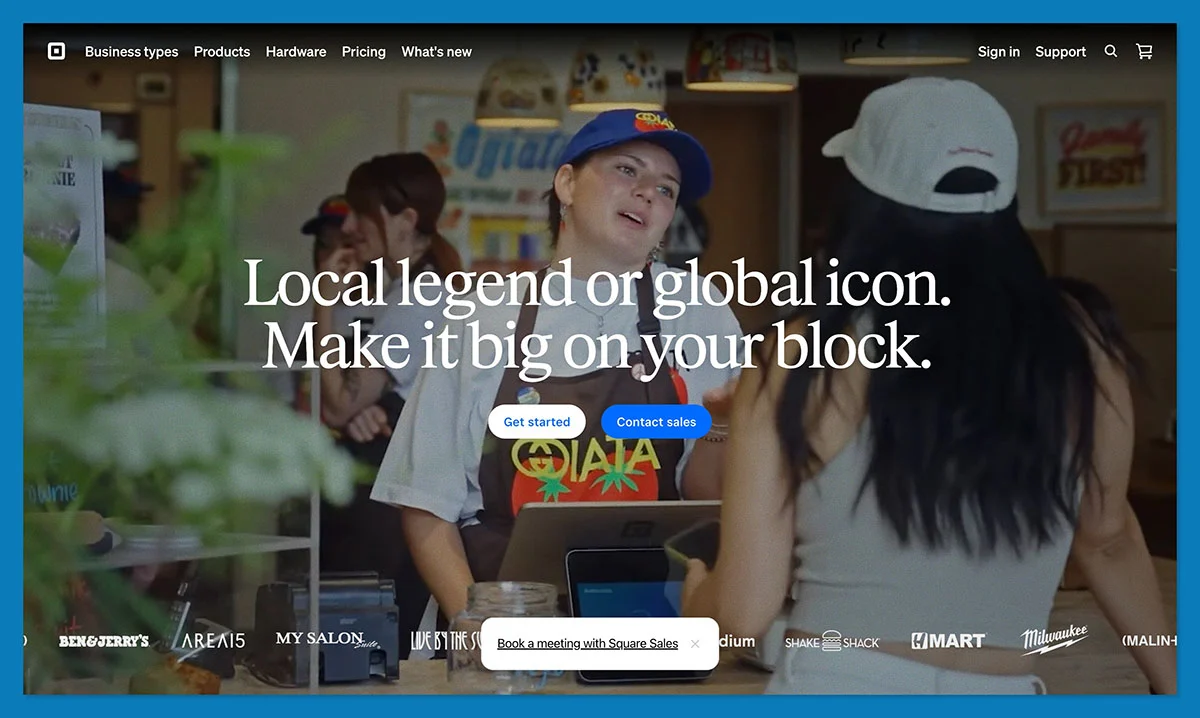
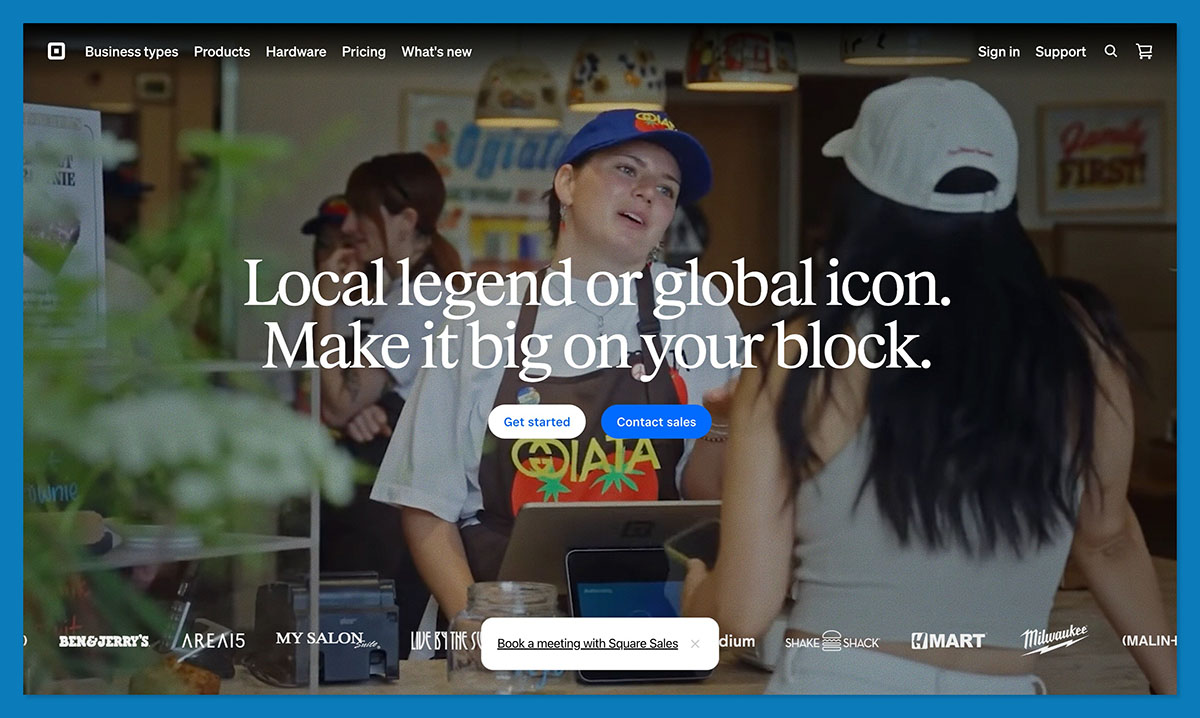
1. Best for Transparent, Predictable Pricing: Square
Square distinguishes itself by offering unparalleled pricing transparency. For single-store retailers looking to begin processing payments with minimal upfront commitment, Square’s free tier at $0 per month provides an immediate entry point. This plan includes essential features like item creation, discount application, refund processing, and basic reporting. The introduction of three unified plans—Free ($0), Plus ($49/location), and Premium ($149/location)—in October 2025 replaced a more complex system of vertical-specific plans, simplifying the decision-making process. The Plus tier adds crucial inventory management, vendor management, and cost of goods sold (COGS) reporting, while the Premium tier unlocks advanced features such as cross-location returns, transfer orders, and 24/7 customer support.
In contrast, Shopify’s pricing model involves layering an e-commerce plan, which ranges from $39 to $399 monthly, with its POS Pro offering at $89 per location. Shopify Plus merchants receive 20 POS Pro locations included before per-location fees apply, offering a scalable solution for larger enterprises.
Clover’s software costs are also variable, typically ranging from $0 to $105 per month, depending on the chosen tier and the reseller. However, the lack of standardized pricing makes it difficult to ascertain the precise cost without obtaining a direct quote. Restaurant-specific tiers also tend to be higher. A significant disadvantage for Clover in multi-location scenarios is the absence of volume discounts; each additional location necessitates a separate hardware purchase, subscription, and processing agreement.
For a single store, the monthly software expenses can be visualized as follows:
- Square: Free ($0)
- Shopify: $39 (e-commerce basic) + $89 (POS Pro) = $128
- Clover: ~$15 – $105+ (highly variable by reseller)
Square is the ideal choice for retailers who prioritize a clear, predictable monthly bill without the need for negotiation. However, businesses with substantial online sales that require a unified catalog and inventory management may find Shopify’s higher software cost justified by its integrated e-commerce capabilities. Clover’s negotiable rates offer potential savings, but this requires a willingness to engage in contract discussions.
2. Best for Processing Rates: Shopify, Narrowly
While software costs are a consideration, processing fees represent a significant ongoing expense for any retail business. Shopify Payments offers competitive in-person rates, typically ranging from 2.4% to 2.6% plus 10 cents, depending on the plan. Square’s rates are tiered: 2.6% + 15¢ on the Free plan, 2.5% + 15¢ on Plus, and 2.4% + 15¢ on Premium. Clover’s processing rates are entirely dictated by the reseller, making direct comparison challenging.
The historical evolution of Square’s rates is noteworthy. In early 2025, Square transitioned from 2.6% + 10¢ to 2.6% + 15¢ for new sellers, with existing merchants transitioning later in the year. This explains why some older comparison guides might cite different figures.
Shopify’s attractive rates are contingent on using Shopify Payments. If a merchant opts for a third-party processor, a surcharge is applied: 2% on Basic, 1% on Grow, 0.6% on Advanced, and 0.2% on Plus. This surcharge is waived entirely when using Shopify’s proprietary payment gateway.
For businesses processing predominantly in-person, Shopify’s 10-cent fixed fee can offer a slight advantage over Square’s 15-cent fee, even with similar percentage rates. However, the ability to negotiate rates with Clover resellers could lead to more significant savings for high-volume merchants.
3. Best for Hardware: Square
When it comes to hardware, Square provides a comprehensive range of options at predictable price points. This includes a free magstripe reader, the Square Stand for iPad ($149), and the Square Register ($799-$899), which is a fully integrated POS system. Both Square and Shopify now offer "Tap to Pay" functionality, allowing merchants to accept contactless payments directly on an unmodified iPhone or Android device at the standard in-person processing rate, eliminating the need for a separate reader. This feature is particularly beneficial for small businesses looking to minimize initial hardware investment.
Shopify offers a similar range, from a basic reader ($49) to the Shopify POS Terminal ($349), alongside its Tap to Pay feature. It’s important to note that Shopify discontinued the POS Go device for new U.S. sales in August 2024, though existing units will be supported until May 2027.
Clover’s hardware lineup is extensive, ranging from the Clover Go mobile reader ($49) to the high-end Clover Station Duo ($1,649-$1,899). While Clover devices are purpose-built and robust, their acquisition often involves longer-term commitments, as discussed later.
For retailers seeking clear hardware pricing and the flexibility to start with minimal investment, Square’s offerings are highly competitive. The Tap to Pay feature on both Square and Shopify significantly lowers the barrier to entry for mobile or small-scale retail operations.
4. Best for Staying Free to Leave: Anyone But Clover
The true cost of a POS system often extends beyond the initial purchase price and monthly fees, particularly when considering the ease of switching providers. This is where Clover presents a significant challenge. Clover devices are provisioned to Fiserv’s network and cannot be reprogrammed to work with a different payment processor. This means that if a retailer decides to switch from Clover, they must purchase entirely new hardware.
The implications of this are substantial. For instance, a Clover Station Duo purchased outright for approximately $1,899, with monthly software fees, could amount to over $4,957 over a 36-month period. If financed, the total cost could exceed $6,480. Lease agreements can further inflate these costs, with some exceeding $7,200 for the same equipment over three years. Merchant reports frequently detail instances of owing money on hardware even after attempting to switch processors, along with ongoing billing issues.
In stark contrast, both Square and Shopify operate on a month-to-month basis with no termination penalties. Retailers can switch providers without being locked into long-term hardware leases or facing significant exit fees. While Clover resellers may offer options to purchase hardware outright, mitigating some of these risks, the fundamental inability to port the hardware to another processor remains a significant drawback. Before committing to Clover, it is crucial to understand the ownership and resale value of the hardware, which is typically zero if switching processors.
5. Best for Inventory Across Locations: Shopify
For businesses operating multiple retail locations, robust inventory management is paramount. Shopify excels in this area with its POS Pro offering. It provides clearer and more cost-effective multi-location inventory management compared to Square. Shopify POS Pro enables inventory counts, purchase order management, low-stock alerts, and, crucially, returns and exchanges at any location, regardless of where the original sale occurred. The system also tracks stock movements between stores, with features like in-transit and ready-to-ship statuses, and allows for partial shipment acceptance without disrupting inventory counts.
Square’s Plus tier includes inventory and vendor management, but advanced cross-location features are reserved for the Premium tier. For a business with three locations, this could translate to a monthly cost of approximately $447 for Square Premium, versus $267 for Shopify POS Pro (plus a base e-commerce plan). Clover’s basic inventory management is included, but multi-location and advanced features typically require paid apps from its App Market, and without volume discounts, each location incurs separate costs.
Shopify’s integrated approach to inventory management is particularly beneficial for businesses that need to efficiently manage stock across multiple physical stores and potentially an online presence. Clover’s model of per-location independence may suit franchise models where each site operates autonomously, but for unified inventory control, Shopify presents a more streamlined and cost-effective solution.
6. Best for Selling Online Too: Shopify
The integration of online and in-person sales channels is no longer a luxury but a necessity for many retailers. Shopify stands out as the clear leader in this domain. As an e-commerce platform, Shopify POS is designed to seamlessly complement its online store functionalities. This means a single catalog, a unified customer database, and a consolidated inventory count serve both online and in-store transactions. Features like "buy online, pick up in-store" (BOPIS) and cross-channel returns are natively supported, providing a frictionless customer experience.
Square and Clover, primarily built with in-person sales in mind, require separate systems for online sales. This necessitates maintaining two distinct systems, often leading to more manual reconciliation and potential discrepancies. While Square offers a free online store, its integration with its POS is less sophisticated than Shopify’s. Clover can be adapted for online sales through third-party integrations, but it was not designed to be the central hub for omnichannel retail.
For any business that currently sells online or anticipates doing so in the near future, Shopify offers a significant advantage in terms of operational efficiency and customer experience. While acknowledging that some comparison content may be influenced by Shopify partnerships, the evidence strongly supports Shopify’s superiority in integrated omnichannel retail.
7. Best for Support and Day-to-Day Reliability: Square
Customer support and overall system reliability are crucial for smooth daily operations. Based on independent reviews from platforms like Capterra, Square generally garners higher satisfaction ratings for its retail-specific POS. Square for Retail holds an average of 4.7 out of 5 stars from nearly 500 reviews. Shopify POS, while strong, has a slightly lower rating of 4.6 out of 5 from a smaller sample size of 247 reviews, though the overall Shopify platform boasts a higher rating from a much larger user base. Clover, on the other hand, consistently receives lower ratings, with an average of 3.8 out of 5 from over 580 reviews.
Common merchant complaints across platforms include issues with payment processing, software glitches, and account freezes. For Clover, the support experience is directly tied to the reseller, leading to a variable level of responsiveness. A good reseller can provide excellent support, but a poor one can leave merchants stranded.
Both Square and Shopify offer offline payment processing capabilities, allowing businesses to continue accepting payments even without an internet connection. However, the specifics of offline card payment acceptance can vary, and merchants should verify these capabilities with their chosen provider.
Square’s slightly higher satisfaction scores and larger review base for its retail POS make it a marginally safer bet for consistent, day-to-day reliability and accessible support.
8. Best for High-Volume Stores Outgrowing Flat Rates: Clover
For businesses processing significant monthly volumes of card transactions, negotiating processing rates can yield substantial savings. Clover is the only platform among the three that realistically allows standard sellers to obtain interchange-plus pricing. Flat-rate pricing, used by Square and Shopify (when using Shopify Payments), charges a blended percentage for all card types. Interchange-plus pricing, however, passes through the card network’s actual wholesale rate plus a fixed markup from the processor. This model can be more cost-effective for merchants with a high mix of debit card transactions.
Industry analyses suggest that the tipping point for interchange-plus pricing to become more advantageous than flat-rate pricing is typically between $25,000 and $30,000 in monthly card volume. At $50,000 in monthly volume with a balanced in-person/online split, the potential savings from a negotiated interchange-plus deal can be significant.
While Clover offers this potential, it’s crucial to remember that the same reseller relationship that enables rate negotiation also carries the risk of unfavorable contract terms, such as lengthy leases and hidden fees. For very high-volume businesses processing over $250,000 annually, Square Pro (its enterprise tier) offers custom terms, hardware discounts, and dedicated account management. Similarly, Shopify Plus also provides opportunities for negotiating custom terms. Therefore, while Clover is a strong contender for high-volume merchants seeking customized rates, a thorough evaluation of the entire contract is essential.
What It Costs to Leave
The long-term financial implications of a POS system are heavily influenced by the ease of switching providers. This is where Clover’s restrictive hardware policy becomes a significant deterrent. As previously mentioned, Clover devices are locked to Fiserv’s network, rendering them useless with other processors. This means that switching from Clover necessitates the purchase of entirely new hardware, which can represent a substantial sunk cost, especially if the original hardware was leased.
While product catalogs and customer data can generally be exported as CSV files from all three platforms, historical sales data often proves difficult to migrate in a usable format to a new system. This underscores the importance of a well-defined exit strategy and understanding the long-term implications of any contract.

Before signing any agreement, retailers should ask:
- What hardware do I truly own?
- What are the terms of any hardware lease?
- What is the resale value of the hardware if I decide to switch processors?
For Clover, the answer to the last question is typically "nothing," highlighting the financial inflexibility associated with its hardware policy.
How These Comparisons Were Made
This comparison is based on publicly available pricing and plan terms in U.S. dollars, information from Square and Shopify’s help documentation, Fiserv’s reseller directory, independent merchant reviews on Capterra, and industry analysis of payment processing models. It is important to note that Clover’s pricing is inherently variable due to its reseller model, and all figures presented represent ranges derived from independent sources. Prices were current as of September 2026.
Conclusion
For the single-store retailer prioritizing ease of entry, predictable pricing, and no long-term contractual obligations, Square remains the safest and most accessible starting point. Its genuinely free software tier, published rates, and month-to-month terms offer unparalleled flexibility.
The path forward from this initial decision depends on business evolution:
- If online sales become a significant component, Shopify offers the most integrated and seamless experience.
- For high-volume businesses seeking to optimize processing costs, Clover presents an opportunity for negotiated interchange-plus rates, provided the risks associated with reseller contracts are carefully managed.
Ultimately, the cheapest monthly fee does not always equate to the most cost-effective business solution. On Clover, the contract terms and hardware policies often outweigh the advertised price. A thorough assessment of monthly card volume should be the primary driver in decision-making, as this single metric can have a more profound impact than any feature list.
Clover vs. Square vs. Shopify FAQs
Which is cheapest for a single retail store?
For a single retail store, Square is generally the cheapest to start with, offering a free plan at $0 per month with in-person processing rates of 2.6% plus 15 cents. Shopify requires an e-commerce plan starting at $39 per month, plus $89 for POS Pro. Clover’s costs vary significantly by reseller, but even its lower paid tiers typically start around $15 per month before hardware expenses.
Why do I get different Clover prices from different sellers?
Fiserv, the parent company of Clover, distributes its devices and software through over 60 certified reseller partners. Each reseller operates independently, setting its own markups, contract terms, and processing models on top of the core Fiserv platform. This decentralized sales structure is the primary reason why quotes for identical Clover hardware and software can differ by substantial amounts from one seller to another.
Can I keep my Clover hardware if I switch processors?
No, Clover hardware is provisioned to Fiserv’s proprietary network and cannot be reprogrammed for use with an alternative payment processor. This means that switching from Clover to another provider necessitates purchasing entirely new hardware. If the original Clover device was leased, payments on that lease typically continue irrespective of the switch.
Do I need a card reader to start?
Not necessarily with Square or Shopify. Both platforms offer "Tap to Pay" functionality, which allows merchants to accept contactless payments directly on an unmodified iPhone or Android device at the standard in-person processing rate, eliminating the need for a separate card reader. Clover does not currently offer a confirmed equivalent phone-only Tap to Pay option.
What does Shopify charge if I do not use Shopify Payments?
If a merchant chooses not to use Shopify Payments, they will incur a surcharge on top of their third-party gateway fees. This surcharge is 2% on the Basic e-commerce plan, 1% on Grow, 0.6% on Advanced, and 0.2% on Plus. This surcharge is entirely waived if the merchant utilizes Shopify Payments.
When is it worth negotiating an interchange-plus rate?
Negotiating an interchange-plus rate is generally considered beneficial for businesses processing around $25,000 to $30,000 or more in card volume per month, particularly if their transaction mix includes a significant number of debit cards. Below this volume threshold, the simplicity and competitive nature of flat-rate pricing often outweigh the potential savings of a negotiated rate. However, for businesses operating at higher volumes, a well-negotiated interchange-plus account through a Clover reseller can lead to substantial cost reductions.