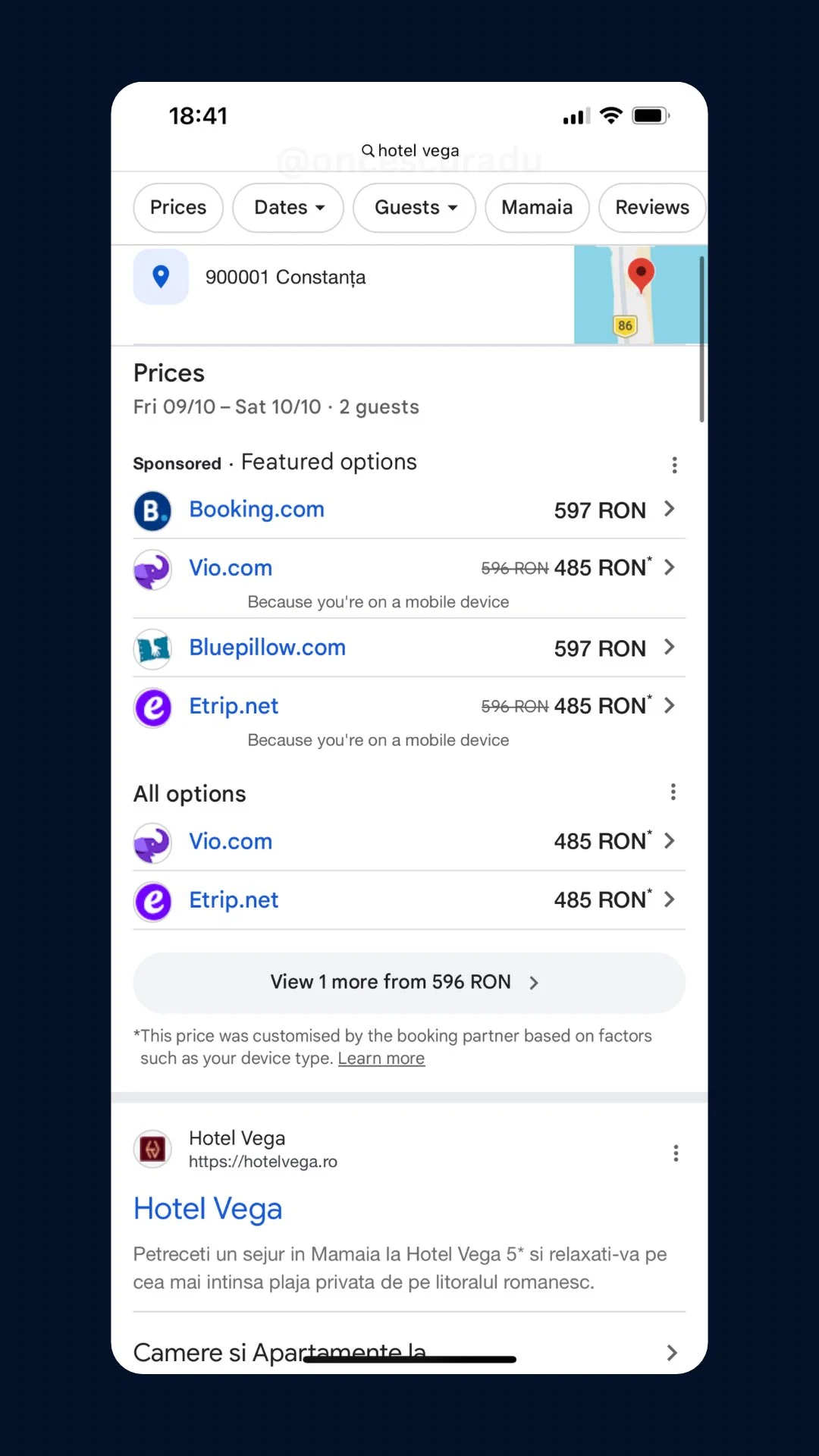
Google has begun displaying a new disclaimer within its booking search widgets in European Union (EU) regions, explicitly stating that listed prices are customized "based on factors such as your device type." This development, observed by Radu Oncescu and shared on X, marks a direct response to the transparency requirements stipulated by the EU’s Digital Markets Act (DMA), which aims to foster fairer competition and greater consumer protection in digital markets dominated by designated "gatekeeper" platforms. The integration of this disclosure into Google’s travel search interface signals a significant shift towards greater transparency in online pricing mechanisms, particularly for services facilitated by major digital platforms.
The Genesis of Transparency: Europe’s Digital Markets Act
The implementation of this disclaimer is a direct consequence of the Digital Markets Act (DMA), a landmark piece of legislation enacted by the European Union. The DMA, which officially came into full effect on March 7, 2024, is designed to curb the market power of large online platforms, known as "gatekeepers," by imposing a set of specific obligations and prohibitions. Google, given its dominant position across multiple digital services including search, operating systems, and advertising, has been formally designated as a gatekeeper alongside other tech giants like Apple, Meta, Amazon, and Microsoft.
The primary objective of the DMA is to ensure a level playing field for businesses and to provide consumers with more choices and fairer prices. Among its key provisions, the DMA mandates that gatekeepers must not self-preference their own services over those of third parties, must allow businesses to promote offers and conclude contracts directly with their customers, and critically, must provide greater transparency regarding data usage and algorithmic decision-making. The requirement for platforms to be more transparent about how prices are determined and presented falls squarely within these mandates, specifically addressing concerns about potential algorithmic price discrimination and information asymmetry between platforms, businesses, and consumers.
For online booking services, where dynamic pricing is a prevalent strategy, the DMA seeks to empower consumers with knowledge about how these prices are generated. The Act implicitly challenges the opacity often associated with personalized pricing models, pushing platforms to reveal, at least in part, the underlying logic. This move is part of a broader regulatory trend globally, where authorities are increasingly scrutinizing the algorithms that influence consumer choices and market dynamics.
Unpacking the Customization Disclaimer: "Device Type" and Beyond
The disclaimer, precisely worded as: "This price was customised by the booking partner based on factors such as your device type," appears directly beneath the price listings in the DMA-compliant booking widgets. While "device type" is explicitly mentioned, the original report correctly posits that other factors are almost certainly at play. These could logically include, but are not limited to:
- User Location: Geo-location data (derived from IP address, Wi-Fi, or GPS) is a primary factor in many dynamic pricing models. Prices for accommodations or flights can vary significantly based on the user’s perceived origin or destination, local market demand, and even the economic conditions of a specific region. A user searching from a high-income country might be presented with different pricing than someone searching from a lower-income country for the same service.
- Language Settings: The language preference of a user can sometimes be correlated with their geographical location or purchasing power, leading to different price displays.
- Browsing History and Demographics: While not explicitly stated, booking partners often leverage anonymized browsing history, past booking patterns, and inferred demographic data to tailor offers. This could involve showing higher prices to users who frequently book luxury travel or lower prices to those who consistently opt for budget options, aiming to maximize conversion or revenue per user.
- Time of Day/Week: Demand for travel services fluctuates hourly and daily. Prices are dynamically adjusted to reflect peak booking times or periods of low demand.
- Operating System: Beyond just "device type," the operating system (iOS vs. Android, Windows vs. macOS) could potentially be a factor if booking partners have observed different purchasing behaviors or average transaction values linked to specific OS environments.
- Search Query Specifics: The flexibility of search dates, the number of occupants, and the inclusion of additional services can all influence the base price and subsequent customizations.
The mention of "device type" is particularly intriguing. While it could simply be a proxy for other factors (e.g., mobile users might be perceived as more spontaneous or price-sensitive, or desktop users as more thorough in their comparison), it also opens up possibilities for specific optimization strategies. For instance, some booking partners might offer slightly different prices on mobile apps to encourage app downloads or mobile bookings, or to cater to different booking behaviors observed on various device interfaces. The lack of comprehensive detail beyond "such as your device type" leaves room for ongoing consumer and regulatory scrutiny regarding the full scope of customization factors.
A Chronology of Regulatory Scrutiny and Compliance
The journey to this disclaimer has been a protracted one, reflecting the complexity of regulating vast digital ecosystems:

- December 2020: The European Commission proposes the Digital Markets Act, recognizing the need to address the unchecked power of large online platforms.
- March 2022: The European Parliament and EU member states reach a political agreement on the DMA, signifying broad consensus on its objectives.
- November 2022: The DMA formally enters into force, initiating a period for companies to prepare for compliance.
- July 2023: The European Commission designates six gatekeepers, including Google’s parent company Alphabet, identifying 22 core platform services subject to DMA rules. This designation triggers a six-month window for gatekeepers to ensure full compliance.
- March 7, 2024: The DMA’s full compliance obligations come into effect. Gatekeepers are expected to have implemented the necessary changes to their services across the EU.
- Post-March 7, 2024: Following the effective date, Google begins rolling out updated interfaces and disclaimers in its EU search results, including the customized booking price notification.
- Late May 2024: Radu Oncescu publicly observes and documents the specific disclaimer regarding customized booking partner prices on Google’s EU search widgets, drawing attention to this specific manifestation of DMA compliance.
This timeline illustrates a deliberate, multi-year process by EU regulators to shape the digital marketplace, culminating in tangible changes to how consumers interact with major online services.
The Pervasive Nature of Dynamic Pricing and Supporting Data
Dynamic pricing is not a new phenomenon; it has been a cornerstone of revenue management in industries like airlines, hotels, and ride-sharing for decades. The internet, however, has enabled its application with unprecedented granularity and speed. Companies use sophisticated algorithms to adjust prices in real-time based on a multitude of factors, including supply and demand, competitor pricing, time of day, historical data, and increasingly, individual user characteristics.
Studies and reports consistently highlight the prevalence of dynamic pricing. For instance, a 2017 report by the Norwegian Consumer Council, "The Power of the Platforms," found evidence of personalized pricing practices across various online services, noting that consumers often pay different prices for the exact same product or service. While such practices are often framed by businesses as efficiency-enhancing (e.g., matching supply with demand, offering competitive rates), they raise significant consumer protection concerns regarding fairness, transparency, and the potential for discriminatory pricing.
Consumer sentiment towards personalized pricing is often mixed. While some consumers appreciate tailored offers that might result in discounts, a significant portion expresses discomfort or distrust when they discover they are paying a different price than others for the same item, especially if the reasons are opaque. Research by the Pew Research Center and others has shown that a majority of adults are concerned about how their personal data is used by companies, and this concern extends to how that data might influence the prices they are shown. The DMA’s disclaimer directly addresses this transparency gap, aiming to bridge the information asymmetry that has historically favored platforms and service providers.
Inferred Reactions and Official Stances
While no direct official statements specifically addressing this particular disclaimer have been issued, the reactions of various stakeholders can be logically inferred based on the DMA’s objectives and industry practices:
- Google (Alphabet): Google’s implementation of this disclaimer is a clear act of compliance with the DMA. Their implied stance would be one of commitment to fostering a fair and transparent digital ecosystem, working within the regulatory framework. They would likely emphasize that the customization itself is performed by their booking partners, and Google’s role is to facilitate the display of information and ensure partners adhere to necessary disclosures. This aligns with their broader efforts to adapt their services, such as search and advertising, to meet the stringent requirements of the DMA.
- Booking Partners (e.g., Online Travel Agencies, Hotels): For booking partners, dynamic pricing is a fundamental business strategy for revenue optimization. Their inferred reaction would be an acknowledgment of the new regulatory environment. While they might find the added transparency requirement an operational adjustment, they would likely adapt their systems to provide the necessary information to Google, ensuring their listings remain visible and compliant within the EU market. They would probably view this as a standardized disclosure for an existing, widely accepted business practice.
- EU Regulators (European Commission): The European Commission would view this disclaimer as a positive outcome and a validation of the DMA’s effectiveness. It demonstrates that gatekeepers are taking concrete steps to comply with the Act’s transparency provisions. This type of disclosure aligns perfectly with the DMA’s goal of empowering consumers with information, allowing them to make more informed decisions and potentially challenging instances of unfair pricing. Regulators would likely continue to monitor the specificity and clarity of such disclaimers to ensure they genuinely serve the consumer’s interest.
- Consumer Advocacy Groups: These groups would likely welcome the increased transparency as a step in the right direction. However, they might also push for even greater detail regarding the "factors such as your device type," arguing that a more comprehensive list of variables would provide consumers with a clearer understanding of how prices are truly personalized. They might also highlight the ongoing challenge for consumers to compare prices effectively when each search potentially yields a uniquely customized offer.
Broader Impact and Implications for the Digital Landscape
The introduction of Google’s customized booking price disclaimer carries significant implications across several dimensions:
- For Consumers: The most immediate impact is increased awareness. Consumers in the EU will now be explicitly informed that the prices they see may not be universal. This could lead to greater scrutiny of prices, encouraging users to compare across different devices, browsers, or even VPNs to see if prices change. It also raises broader questions about price discrimination and whether such customization always serves the consumer’s best interest. While transparency is a win, navigating a world of personalized prices remains complex.
- For Booking Partners: This change necessitates a review of how booking partners communicate their pricing strategies to platforms like Google. They may face increased pressure to be more transparent internally about the algorithms driving their dynamic pricing. It might also influence their overall pricing strategies, potentially leading to more cautious or standardized approaches in certain scenarios to avoid consumer backlash if price variations based on "device type" are perceived as unfair.
- For Google’s Ecosystem: This is a clear demonstration of the DMA’s tangible impact on Google’s core services. Google will likely continue to adapt its search results and other gatekeeper services in the EU to meet ongoing compliance requirements. This could involve similar disclaimers or changes in other areas where personalized or algorithmic content is presented. It also highlights the technical challenge of integrating such disclosures seamlessly without disrupting the user experience or overwhelming users with legalistic text.
- For the Digital Markets Act and Future Regulation: This serves as a concrete example of the DMA’s practical application and its immediate effects on how digital services operate. It reinforces the message that regulators are serious about reining in gatekeeper power and promoting fairness. This success could embolden other jurisdictions to pursue similar regulatory frameworks, potentially leading to a more fragmented and regulated global digital landscape, where platforms must tailor their services to different regional compliance standards. The DMA’s influence extends beyond competition, touching on consumer trust, data ethics, and algorithmic accountability.
- The Future of Algorithmic Transparency: The disclaimer contributes to a growing global conversation about algorithmic transparency. As artificial intelligence and machine learning become even more central to online services, the demand for understanding how these algorithms make decisions – from content recommendations to pricing – will only intensify. This move by Google, driven by the DMA, sets a precedent for what might become standard practice in disclosing algorithmic influences on consumer choices.
In conclusion, Google’s new disclaimer on customized booking partner prices in EU search widgets is more than a minor interface update; it is a direct and visible manifestation of the Digital Markets Act’s profound influence on the digital economy. It represents a significant step towards greater transparency in online pricing, challenging the long-standing opacity of dynamic pricing models and empowering consumers with crucial information. As regulators continue to enforce the DMA and other similar legislations globally, the digital marketplace is poised for an ongoing transformation, prioritizing fairness, competition, and consumer trust in an increasingly algorithm-driven world.