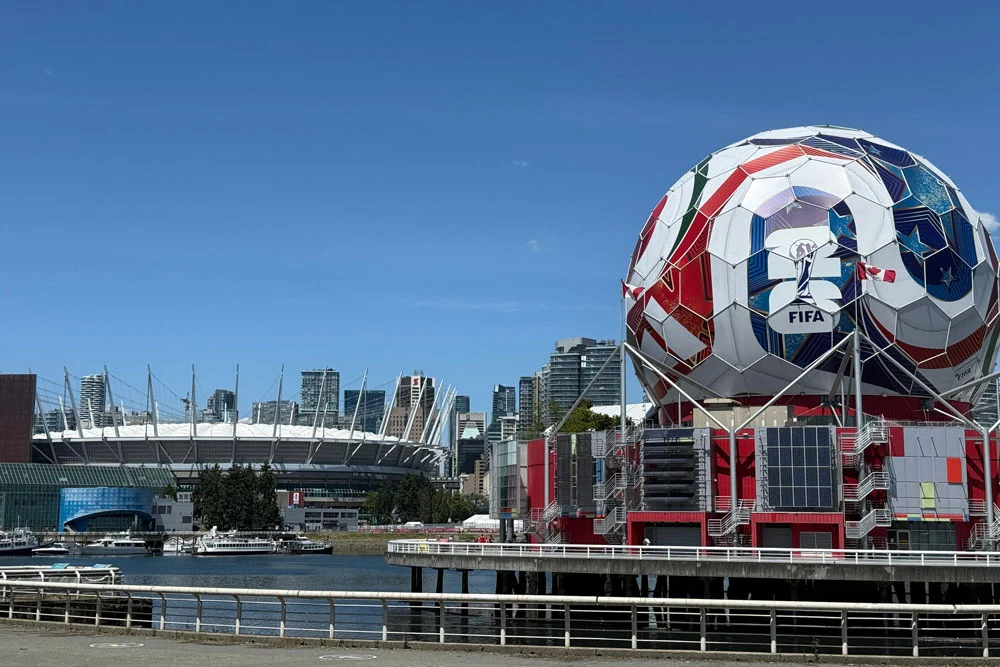
The 2026 FIFA World Cup, hosted across the United States, Mexico, and Canada, has transcended the boundaries of sport to become a global case study in resilience, strategy, and the unpredictable nature of competition. As the tournament progresses through its expanded 48-team format, the parallels between the pitch and the digital marketplace have become increasingly evident to industry analysts. For professionals in the affiliate marketing sector, the tournament serves as a high-stakes mirror reflecting the essential principles of modern performance marketing. From the logistical triumph of managing a tri-nation event to the tactical shifts seen in the Round of 16, the 2026 World Cup offers a roadmap for brands seeking to navigate an increasingly volatile global economy.
The 2026 World Cup: A Contextual Overview of a Landmark Event
The 23rd FIFA World Cup is a historic milestone, marking the first time the tournament has been hosted by three nations and the first to feature 48 competing teams. This expansion, while controversial during its initial proposal stages, has democratized the world stage, allowing nations like Curaçao and Norway to challenge the traditional hegemony of footballing giants. The tournament’s scale is unprecedented, with 104 matches played across 16 host cities, generating an estimated $11 billion in revenue for FIFA and contributing significantly to the GDP of the host regions.
For digital marketers, the environment surrounding the World Cup is a microcosm of the "attention economy." With billions of viewers tuning in via traditional broadcast and streaming platforms, the competition for consumer engagement has never been more intense. The arrival of the "Tartan Army"—Scotland’s loyal supporters—in North America, filling flights from London to Boston and beyond, exemplifies the passionate, niche-driven communities that affiliate marketers strive to tap into. This influx of fans represents a massive surge in travel, hospitality, and retail spending, much of which is driven by performance-based marketing channels.
Strategic Pillar 1: The Necessity of Diversified Teamwork
In both elite soccer and high-performance affiliate marketing, the reliance on a single "superstar" is a strategy fraught with risk. The 2026 tournament has provided stark evidence of this reality. Despite the individual brilliance of Luka Modrić, Croatia found themselves unable to overcome the collective tactical discipline of Portugal. Similarly, the legendary Cristiano Ronaldo, even in the twilight of his career, could not carry the Portuguese squad past a resilient Spanish side in the Round of 16. These outcomes underscore a fundamental truth: individual talent can win matches, but teamwork wins championships.
In the context of affiliate marketing, this principle translates to the diversification of the affiliate base. For over two decades, industry veterans have observed that the most successful affiliate programs are those that do not rely on a single "mega-affiliate" or a lone marketing channel. Relying exclusively on coupon sites or a handful of high-traffic influencers creates a single point of failure.
To protect revenue streams and ensure the quality of referrals, modern affiliate managers must build a "team" that includes:
- Content Creators: Bloggers and niche enthusiasts who build long-term trust and SEO value.
- Social Influencers: Partners who drive immediate engagement and brand awareness.
- Technology Partners: Affiliates providing cart-abandonment solutions or personalized recommendation engines.
- Loyalty and Reward Portals: Platforms that incentivize repeat purchases and customer retention.
A diversified program ensures that if one "player" (marketing channel) underperforms due to algorithm changes or market shifts, the rest of the team can sustain the program’s momentum.
Strategic Pillar 2: The Rise of the Underdog and Market Disruption
The 2026 World Cup will likely be remembered as the "Tournament of the Underdog." The Group Stage saw Curaçao, a debutant on the world stage, hold Ecuador to a shocking 0-0 draw, while Egypt stunned the world by leading 2-0 against the defending champions, Argentina, for the majority of their Round of 16 clash. These moments are not mere anomalies; they are the result of meticulous preparation and the refusal to be intimidated by established reputations.
This "underdog" phenomenon is a recurring theme in the history of performance marketing. A notable case study is the rise of Nectar Sleep. Entering the "mattress-in-a-box" market in early 2017, the brand faced entrenched competitors like Casper, Saatva, and Purple. Despite being the newcomer in a saturated market, Nectar Sleep utilized a sophisticated affiliate strategy to disrupt the industry. Within just one year and five days of its launch, the Nectar Sleep affiliate program ascended to the number one spot on the ShareASale network, surpassing thousands of established brands including Wayfair and Reebok.
The lesson for marketers is twofold: first, never underestimate a smaller competitor who possesses a lean, agile strategy; and second, being an underdog is an opportunity for disruption. By identifying gaps in the strategies of "giant" brands—such as neglected niche audiences or inefficient commission structures—smaller players can gain a significant foothold in the market.
Strategic Pillar 3: The Danger of Stagnation and the Need for Evolution
Perhaps the most sobering lesson from the 2026 World Cup is the fall of traditional powerhouses. Italy, a four-time champion, failed to qualify for the tournament entirely, a result that sent shockwaves through the sporting world. The Netherlands were eliminated by Morocco in the Round of 32, and Brazil, the perennial favorites, were knocked out by a surging Norway in the Round of 16. Norway’s success is particularly noteworthy, as the nation had not qualified for a World Cup in nearly three decades. Their advancement to the Quarterfinals is a testament to the power of modernization and long-term planning.
In affiliate marketing, the nature of the industry is inherently dynamic. The digital landscape is subject to constant shifts in consumer behavior, privacy regulations (such as the deprecation of third-party cookies), and search engine algorithms. What generated significant ROI five years ago may be obsolete today.
The failure of "legacy" brands often stems from resting on their laurels—assuming that past success guarantees future performance. To avoid this, affiliate professionals must treat education and adaptation as a continuous journey rather than a destination. This involves:
- Attending Industry Conferences: Events such as the Affiliate Summit in New York provide essential networking opportunities and insights into emerging technologies like AI-driven attribution.
- Monitoring Regulatory Changes: Staying ahead of FTC guidelines and international data privacy laws (GDPR/CCPA) is critical for program compliance.
- Investing in AdTech: Utilizing advanced tracking platforms that offer real-time data allows managers to pivot strategies before losses occur.
Chronology of Performance: Tracking the 2026 Trajectory
The timeline of the 2026 World Cup offers a parallel to the lifecycle of an affiliate marketing campaign:
- The Preparation Phase (2022-2025): Much like the years of qualification and stadium construction, affiliate programs require a foundation of robust tracking technology and recruitment of high-quality partners.
- The Launch (Group Stage): The initial phase where the strategy is tested against real-world variables. This is where "underdogs" like Curaçao proved their readiness.
- The Optimization Phase (Knockout Rounds): As the field narrows, teams—and marketers—must refine their tactics. The elimination of Brazil and the Netherlands serves as a reminder that even the best-laid plans require real-time adjustments.
- The Legacy Phase (Post-Final): The lessons learned during the tournament are integrated into future strategies, ensuring that the successes (and failures) of 2026 inform the campaigns of 2027 and beyond.
Data-Driven Insights: The Numbers Behind the Game
Data from the 2026 tournament reveals that the gap between "top-tier" and "mid-tier" nations is closing. Passing accuracy, distance covered, and tactical versatility have improved across the board, thanks to the democratization of sports analytics.
In the affiliate sector, a similar trend is visible. According to recent industry reports, the global affiliate marketing market is now valued at over $17 billion, with a compound annual growth rate (CAGR) of 10%. This growth is driven by the fact that 80% of brands now utilize affiliate marketing to drive sales, recognizing it as one of the most cost-effective marketing channels. The "Norway scenario"—where a long-absent player suddenly dominates—is increasingly common as data-driven tools become accessible to smaller agencies and independent affiliates.
Broader Implications and Official Industry Response
Market analysts and agency leaders have noted that the 2026 World Cup has redefined "global reach." AM Navigator, a leading affiliate management agency, has emphasized that the "dynamic" nature of the industry requires a mindset shift. "An agency is only as strong as the members on its teams," noted a representative from the firm. This sentiment is echoed by affiliate networks, which are increasingly focusing on "quality over quantity" in their recruitment efforts.
The broader implication is that the 2026 World Cup has signaled the end of the "set-it-and-forget-it" era of marketing. Whether on the grass in Mexico City or in the backend of a tracking platform, success in 2026 demands a combination of teamwork, respect for the competition, and an unrelenting commitment to evolution. As the tournament draws to its conclusion, the businesses that will thrive are those that have watched the drama unfold not just as fans, but as students of strategy.
The 2026 FIFA World Cup has proven that the field of play is level for those willing to adapt. In the world of affiliate marketing, as in soccer, the final whistle is never truly the end—it is merely the signal to begin preparing for the next season.