A recent observation into personalized email marketing, particularly focusing on birthday campaigns, has revealed a significant disparity between the potential and actual execution of these high-impact communications. Drawing from a unique case study involving an individual maintaining a separate "email birthday" for marketing purposes—akin to a monarch’s official birthday—over fifty brands worldwide sent celebratory messages. This experiment highlighted both exemplary instances of customer engagement and notable failures, providing a rich dataset for analyzing the efficacy of birthday emails in the broader customer journey. The findings underscore that while many brands collect valuable personal data, a substantial portion fails to leverage it, missing critical opportunities for connection and revenue generation.
The Power of Personalization: Beyond the Calendar Date
The collection of a customer’s date of birth represents a potent piece of personal data, offering mutual benefits when utilized strategically. For brands, this data is instrumental in enhancing life-stage segmentation and personalization efforts, allowing for more targeted and relevant communication. Beyond mere greetings, birthday data aids in predicting customer purchasing patterns, enabling businesses to tailor product recommendations and offers that resonate deeply. Critically, birthday messages consistently outperform generic marketing campaigns in terms of open and click-through rates, signaling a heightened level of customer engagement.
From the consumer perspective, birthday rewards are more than just transactional incentives; they are genuinely anticipated benefits. These can range from exclusive discounts and complimentary products to bonus loyalty points or access to age-restricted privileges. The simple act of receiving a personalized birthday message fosters a sense of being known and valued, deepening the emotional connection between the customer and the brand. In an increasingly commoditized marketplace, this emotional bond can be a significant differentiator, cultivating loyalty that transcends price competition.
However, the effectiveness of collecting such data hinges entirely on its active use. Data from Validity’s Intelligence Network reveals a concerning trend: despite providing birth dates to numerous brands, a significant number of expected birthday emails fail to materialize. In one recent year, out of 124 anticipated birthday emails for a single individual, only 43 (35%) were actually triggered. This glaring gap between data collection and data activation represents a missed opportunity for brands and risks eroding customer trust. Consumers implicitly expect that personal information shared will be used to enhance their experience; failing to do so not only wastes resources but can also lead to disengagement.
The Evolution of Personalized Marketing and Data Utilization
The journey towards sophisticated personalized marketing has been gradual, evolving from mass mailings to highly individualized digital communications. In the early days of email marketing, personalization was rudimentary, often limited to inserting a customer’s name. However, as data analytics capabilities advanced and consumer expectations for tailored experiences grew, brands began to recognize the strategic value of demographic and behavioral data. The advent of CRM systems and marketing automation platforms in the early 2000s provided the technological infrastructure to collect, store, and act upon granular customer data, including birth dates.
Initially, birthday campaigns were often simple, one-off messages. Over time, industry best practices began to emerge, advocating for more strategic approaches. The emphasis shifted from simply sending a message to crafting an experience, leveraging data to deliver relevant offers at opportune moments. This evolution was partly driven by the realization that customer retention is significantly more cost-effective than customer acquisition, making loyalty-building initiatives like birthday campaigns a high-ROI endeavor. The current landscape sees a push towards hyper-personalization, where data, context, and timing converge to create truly impactful interactions, yet the foundational element of simply using the collected data remains a hurdle for many.
Tactics of Engagement: A Spectrum of Birthday Approaches
Birthday email campaigns manifest in various forms, reflecting diverse brand strategies and customer value propositions. An analysis of numerous campaigns reveals distinct categories:
-
The Thoughtful Gesture: More prevalent among premium or luxury brands, this approach often prioritizes sentiment over direct transactional incentives. For high-net-worth clientele, the "gift" might be a personalized message, an exclusive content offering, or even a suggestion to consider a celebratory purchase from the brand’s latest collection. The underlying principle is that the thought and recognition itself constitute the value, rather than a steep discount.
-
The Ubiquitous Discount Offer: By far the most common tactic, birthday discounts typically feature a percentage off a purchase, often with a minimum spend requirement but frequently no upper limit. The success of this approach hinges on the generosity of the offer. A token discount may be perceived as insincere, failing to incentivize a purchase. Brands that offer substantial, genuinely appealing discounts tend to see better redemption rates and customer satisfaction.
-
The Culinary Incentive: Dining Discounts Dissected: Restaurant brands frequently leverage birthday marketing with offers like a complimentary dessert. However, these often come with the caveat of requiring an entrée purchase. A closer look at the effective discount reveals the true value proposition:
Restaurant Avg. Entrée Avg. Dessert Effective Discount Seasons 52 $28 $4–$9 12–24% Olive Garden $18.50 $12 ~39% Yard House $21 $10 ~32% Cheddar’s $18 $7.50 ~29% LongHorn Steakhouse $26 $11 ~30% Applebee’s $17 $6 ~26% When viewed through the lens of an effective discount on the total meal, these offers average around 30%, with Olive Garden standing out at approximately 39%. This demonstrates a clever strategy where the "free" item effectively drives higher-value purchases, creating a win-win for both the customer (perceived freebie, good discount) and the restaurant (increased average check size).
-
Orchestrating the Celebration: Multi-Touch Campaigns: The most effective birthday campaigns extend beyond a single email. Many brands provide a redemption window, often 30 days, to encourage usage. Best-in-class examples transform this into a strategic sequence. Calvin Klein, for instance, sends an advance warning, a message on the actual birthday, and a timely reminder, significantly increasing the likelihood of gift redemption. This multi-stage approach recognizes that customers may not act immediately and provides gentle nudges throughout the redemption period.
-
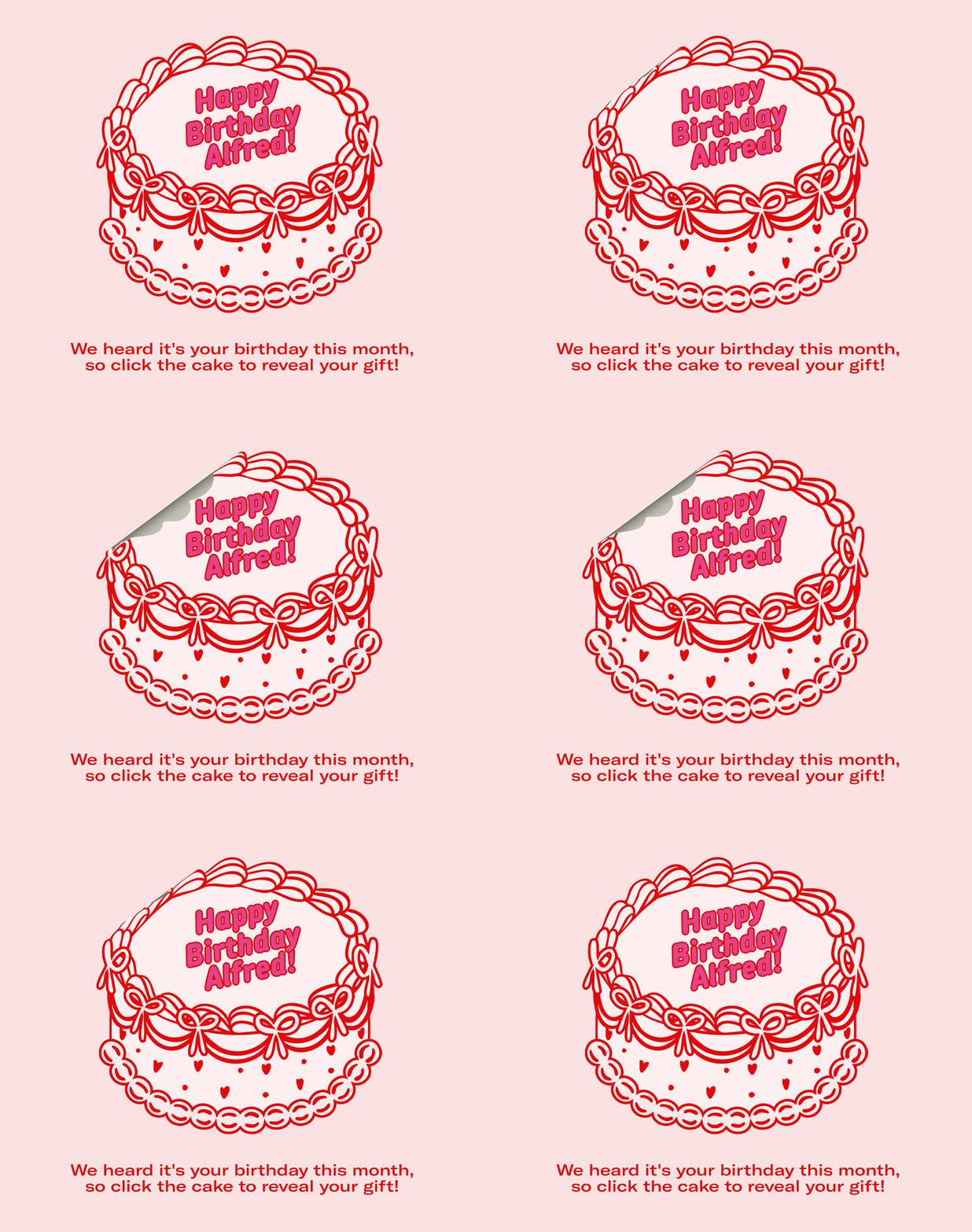
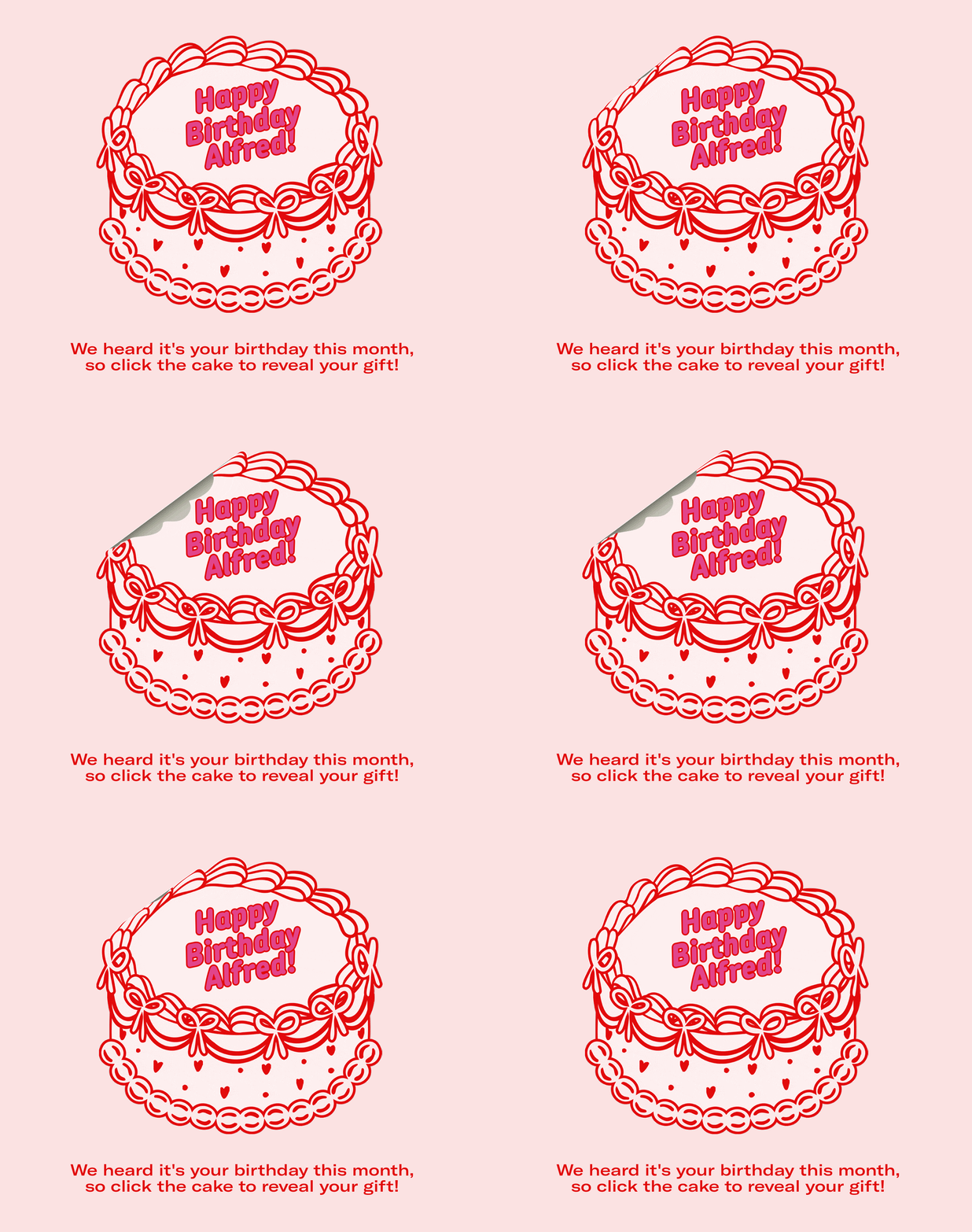
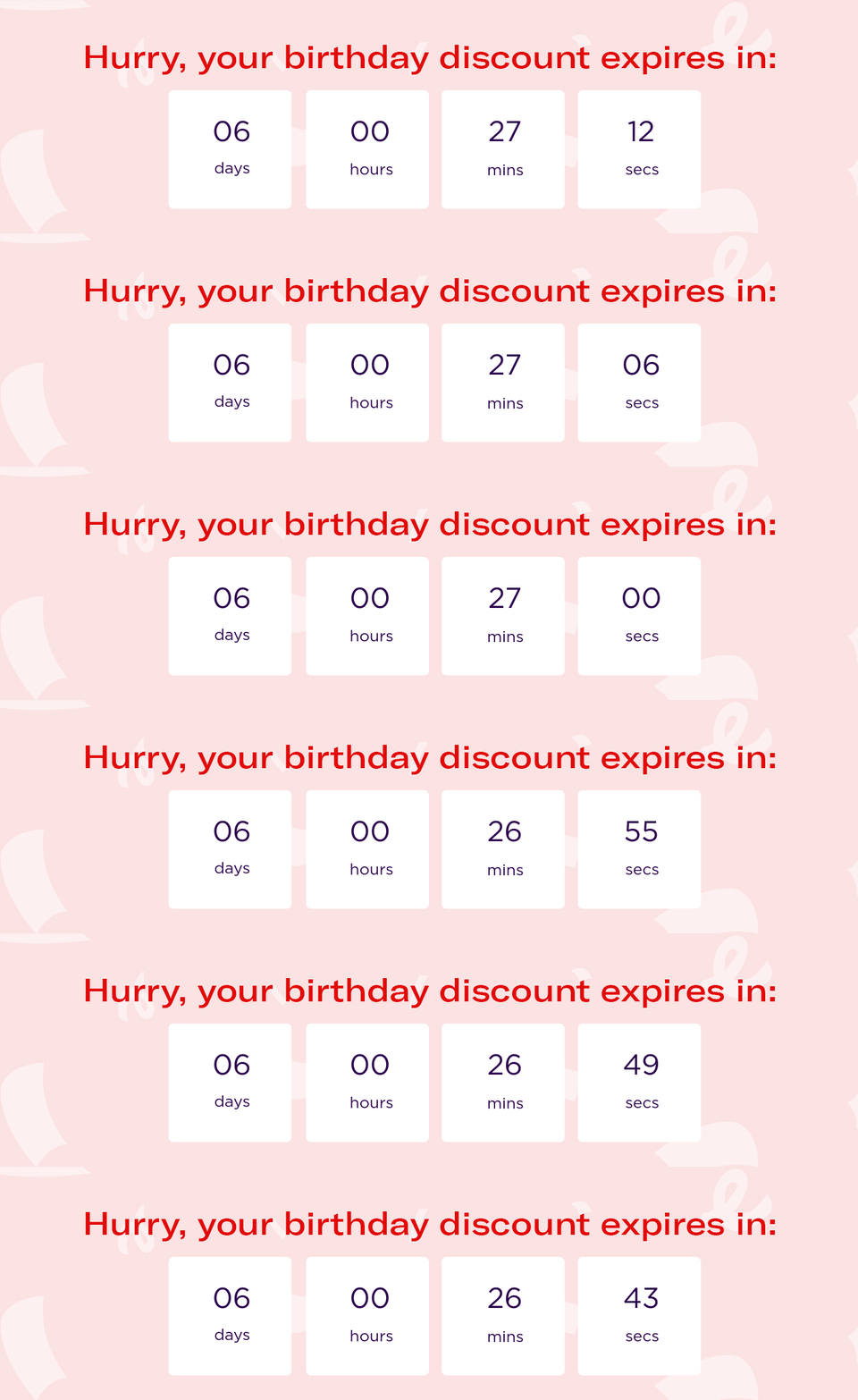
Leveraging Dynamic Content and Interactivity: Surprisingly, few brands fully exploit the interactive potential of birthday emails. Birthdays are inherently celebratory, making them ideal for engaging elements like flickering candle animations or "open your present" interactive features. Virgin Australia exemplifies this best practice: their on-the-day email features an animated cake that dynamically reveals the discount, while a follow-up email incorporates a countdown timer to instill urgency. Such dynamic elements not only capture attention but also enhance the celebratory feel, making the email more memorable and actionable.
Case Studies in Excellence: What Makes a Birthday Email Stand Out
Amidst the deluge of "here’s your birthday discount" emails, certain brands distinguish themselves through simplicity, generosity, and clear value proposition. Burger King emerged as a standout, offering a "free bday Whopper" with no minimum spend or additional conditions. This direct, no-strings-attached offer resonated strongly, embodying a genuine gesture of appreciation.
Other brands earning honorable mentions for their effective birthday campaigns include:
- Nike: Often provides exclusive early access to new products or unique experiences, aligning with their brand identity focused on aspiration and community. This type of offer appeals deeply to loyal customers who value brand engagement beyond just discounts.
- Dunkin’: Known for offering a free beverage on birthdays, a highly valued and frequently redeemed perk for their regular customer base. The simplicity and immediate gratification of this offer make it particularly effective.
- Target: Frequently delivers personalized discounts on categories the customer has previously shown interest in, demonstrating sophisticated data utilization to make the offer highly relevant and likely to convert.
These examples highlight that the most impactful birthday campaigns are not necessarily the most complex, but rather those that offer clear, valuable, and easily redeemable benefits that resonate with the customer’s relationship with the brand.
The Economic Imperative: Quantifying the ROI of Birthday Emails
The commercial impact of birthday email campaigns, particularly the discounts offered, warrants a detailed economic analysis. Across the surveyed campaigns, the average discount or its equivalent value stood at approximately 18%. While this might seem modest, especially for businesses operating on thin net margins (e.g., a restaurant at 4% net margin), viewing it purely as a cost overlooks its strategic investment potential in customer relationships.
The business case for investing in existing, active customers is robust and well-documented. Research from the Harvard Business Review indicates that acquiring a new customer can cost five times more than retaining an existing one. Further, Bain & Company found that a mere 5% increase in customer retention can lead to a profit boost of up to 75%. Reactivating dormant customers, while cheaper than new acquisition, still incurs significant costs and often yields lower success rates than maintaining strong, continuous engagement.
This context elevates the strategic importance of birthday emails. Experian’s Birthday Emails report provides compelling evidence: birthday emails generate a staggering 481% more transactions and 342% more revenue per email than standard promotional campaigns. This makes them one of the highest-performing touchpoints in the entire customer lifecycle. In contrast, research by Dotdigital on win-back emails, even those including an offer, shows redemption rates of just over 2%.
These statistics present a clear economic argument: proactive investment in customer relationships through high-engagement touchpoints like birthday emails is significantly more efficient and profitable than reactive attempts to win back disengaged customers. Brands routinely offer 25-40% discounts in win-back campaigns, often with limited success. Reallocating a fraction of this potential win-back budget to more generous, proactive birthday offers makes sound economic sense. By investing earlier, when customer engagement is naturally higher and the emotional connection stronger, brands can prevent disengagement altogether, making the case for prevention unequivocally strong.
Best Practices for Crafting Effective Birthday Email Campaigns
To maximize the impact of subscriber birthday emails, brands must move beyond perfunctory gestures and adopt a strategic, customer-centric approach. Getting it wrong—sending irrelevant messages, adding no value, or relying on outdated data—can be detrimental. Here are ten best practices for successful birthday email marketing:
- Prioritize Data Accuracy and Hygiene: The foundation of any successful personalized campaign is accurate data. Regularly cleanse and update customer birth dates. Implement robust data validation processes upon collection to prevent errors and ensure emails are sent at the correct time.
- Segment and Personalize Deeply: Beyond simply addressing the customer by name, leverage other demographic and behavioral data points (e.g., past purchases, preferences, loyalty status) to tailor the offer and message. A personalized offer on a favorite product category is far more effective than a generic discount.
- Offer Genuine and Appealing Value: Ensure the birthday reward is truly enticing. Whether it’s a generous discount, a free product with minimal conditions, or exclusive access, the offer should feel like a meaningful gift, not a token gesture.
- Implement Multi-Stage Campaigns: Optimize engagement by sending a sequence of emails. A typical sequence might include a pre-birthday "heads-up" email, a celebratory message on the actual day with the offer, and a reminder before the offer expires. This maximizes visibility and encourages action.
- Leverage Dynamic Content and Interactivity: Incorporate engaging elements such as animations (e.g., animated cakes, flickering candles), countdown timers, or interactive elements (e.g., "scratch-off" reveals) to make the email more exciting, memorable, and visually appealing.
- Ensure Mobile Responsiveness: A vast majority of emails are opened on mobile devices. Design birthday emails to be fully responsive and visually appealing across all screen sizes to ensure a seamless customer experience.
- Align with Brand Identity and Tone: The birthday message should be consistent with the brand’s overall voice and visual identity. A luxury brand’s birthday message will differ significantly from a fast-food chain’s, but both should authentically reflect their brand.
- Clearly State Terms and Conditions: Transparency is crucial. Clearly communicate any minimum spend requirements, redemption windows, exclusions, or steps required to claim the offer. Ambiguity can lead to frustration and a poor customer experience.
- Test and Optimize Continuously: Regularly A/B test different elements of the birthday campaign, including subject lines, call-to-action buttons, offer types, creative designs, and send times. Use insights from these tests to refine and improve campaign performance over time.
- Integrate with the Overall Customer Journey: Birthday emails should not operate in isolation. Integrate them thoughtfully into the broader customer relationship management strategy, ensuring they complement other touchpoints and contribute to a holistic and consistent brand experience.
The Broader Implications: Future of Relationship Marketing
The strategic execution of birthday email campaigns holds significant implications for the future of relationship marketing. As consumer expectations for personalized experiences continue to rise, brands that effectively leverage personal data to create meaningful interactions will gain a distinct competitive advantage. The failure to utilize collected data, as evidenced by low birthday email trigger rates, highlights a critical operational gap that must be addressed.
Beyond immediate transactional benefits, well-executed birthday emails contribute to building enduring customer loyalty, fostering brand advocacy, and increasing customer lifetime value. They serve as a powerful reminder that brands recognize and appreciate their customers as individuals, not just data points. In an era where data privacy is paramount, the ethical and effective use of personal information in initiatives like birthday marketing can reinforce trust and strengthen the brand-customer bond.
Ultimately, the commercial impact is clear: birthday emails, when done right, generate superior engagement, transactions, and revenue compared to generic campaigns. They represent a proactive investment in customer retention that far outweighs the cost and often limited success of reactive win-back strategies. Brands that embrace these principles and prioritize robust data management and personalized execution will not only celebrate their customers’ special days but also secure a stronger, more profitable position in the market. Platforms like Validity’s Intelligence Network offer AI-powered email intelligence, built on extensive data networks, to help brands create, manage, and protect accurate customer segments, ensuring these vital touchpoints are effectively delivered year-round.