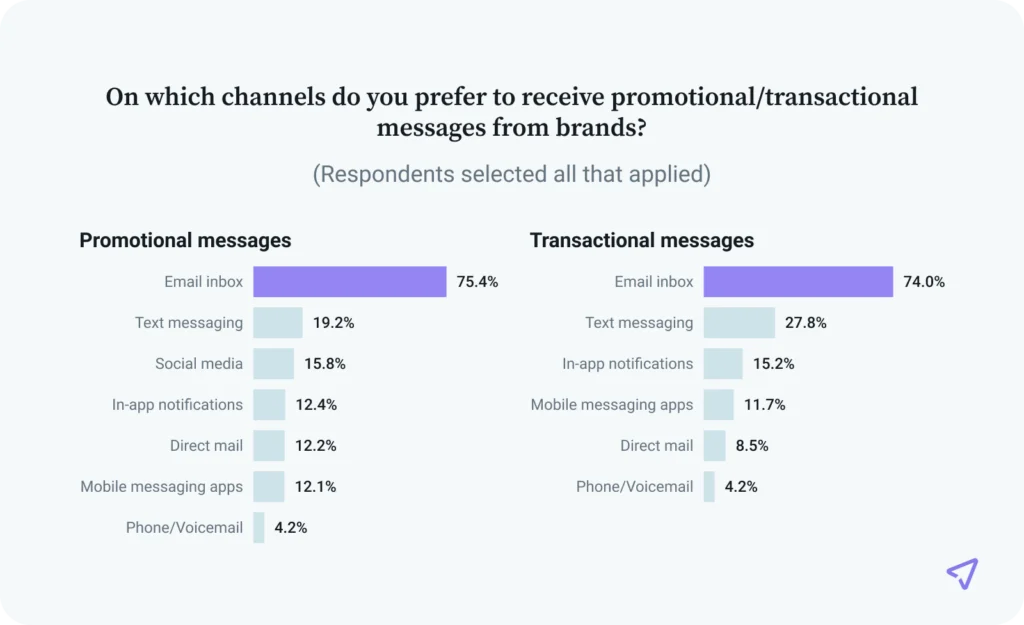
Email marketing continues to solidify its position as a cornerstone of digital commerce, demonstrating robust growth in engagement and delivering substantial returns for businesses. According to Omnisend’s comprehensive e-commerce marketing reports, email open rates are projected to climb from 26.6% in 2024 to an impressive 30.7% in 2025, underscoring the channel’s enduring popularity and effectiveness. This upward trend highlights email’s critical role in customer acquisition, retention, and revenue generation, especially when leveraged through strategically designed campaigns.
The Enduring Power of Email Marketing in E-commerce
In an increasingly fragmented digital landscape, email marketing offers a direct and permission-based line of communication with customers, fostering deeper relationships and driving measurable results. The latest data from Omnisend, drawn from its 2025 email dataset encompassing over 20 billion campaign emails sent by more than 27,000 brands, paints a clear picture: email is not just surviving but thriving. This sustained relevance is attributed to its versatility, allowing brands to execute a wide array of campaigns tailored to various customer journey touchpoints. From initial acquisition to long-term loyalty, email campaigns serve as a flexible and high-impact tool for fostering engagement and converting interest into sales.
Automated Campaigns: The New Frontier of Engagement and Conversion
While both scheduled and automated email campaigns play vital roles, Omnisend’s research reveals a significant disparity in their performance metrics, positioning automated campaigns as a superior driver of engagement and revenue. An email marketing campaign can be defined as a single email or a series of emails designed to achieve a specific objective, such as making a sale, securing a sign-up, or re-engaging a lapsed customer. These campaigns can be either scheduled (e.g., newsletters, seasonal sales) or triggered by customer actions (e.g., welcome emails, abandoned cart reminders).
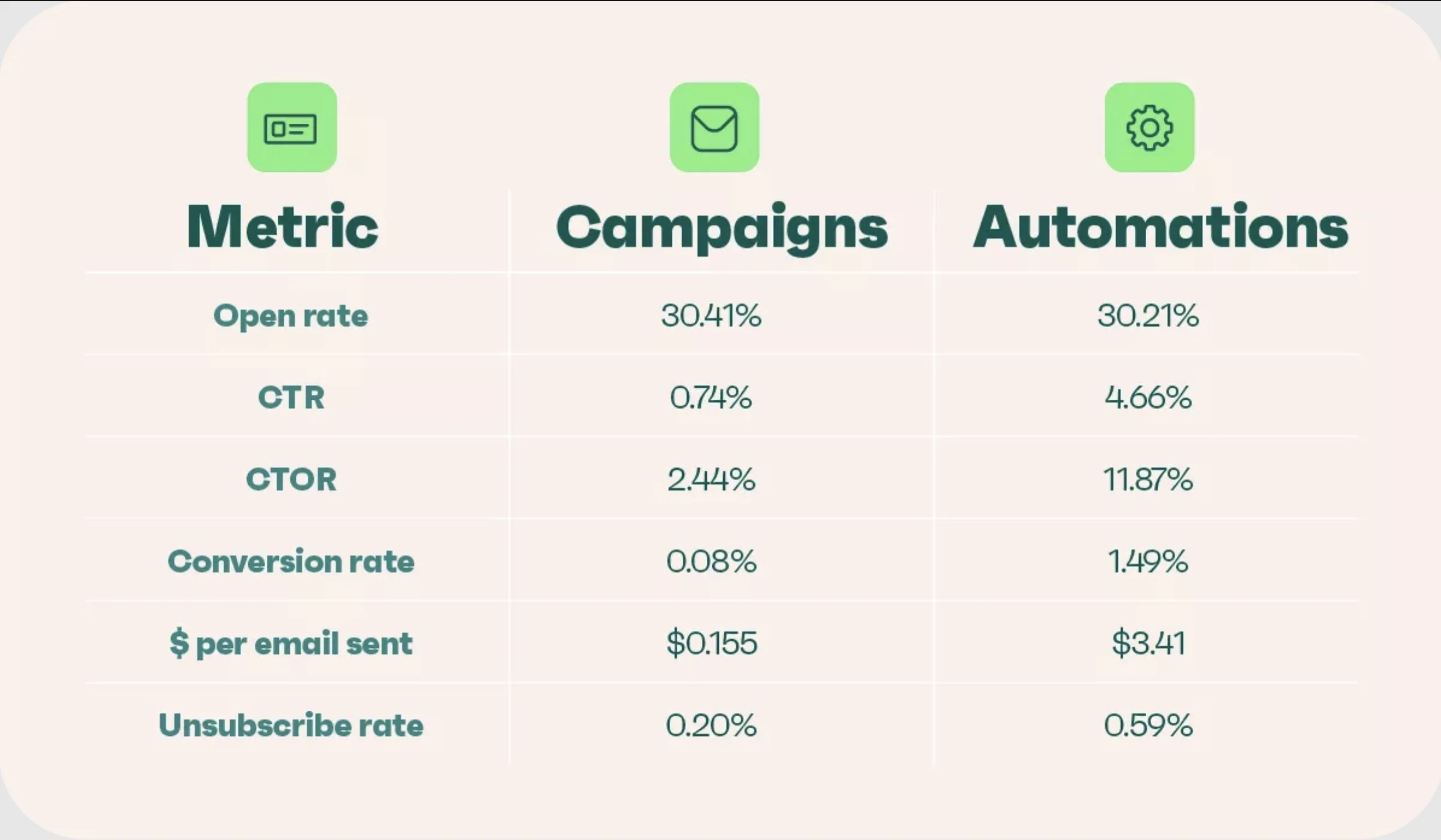
The 2025 Omnisend dataset emphatically demonstrates the power of automation:
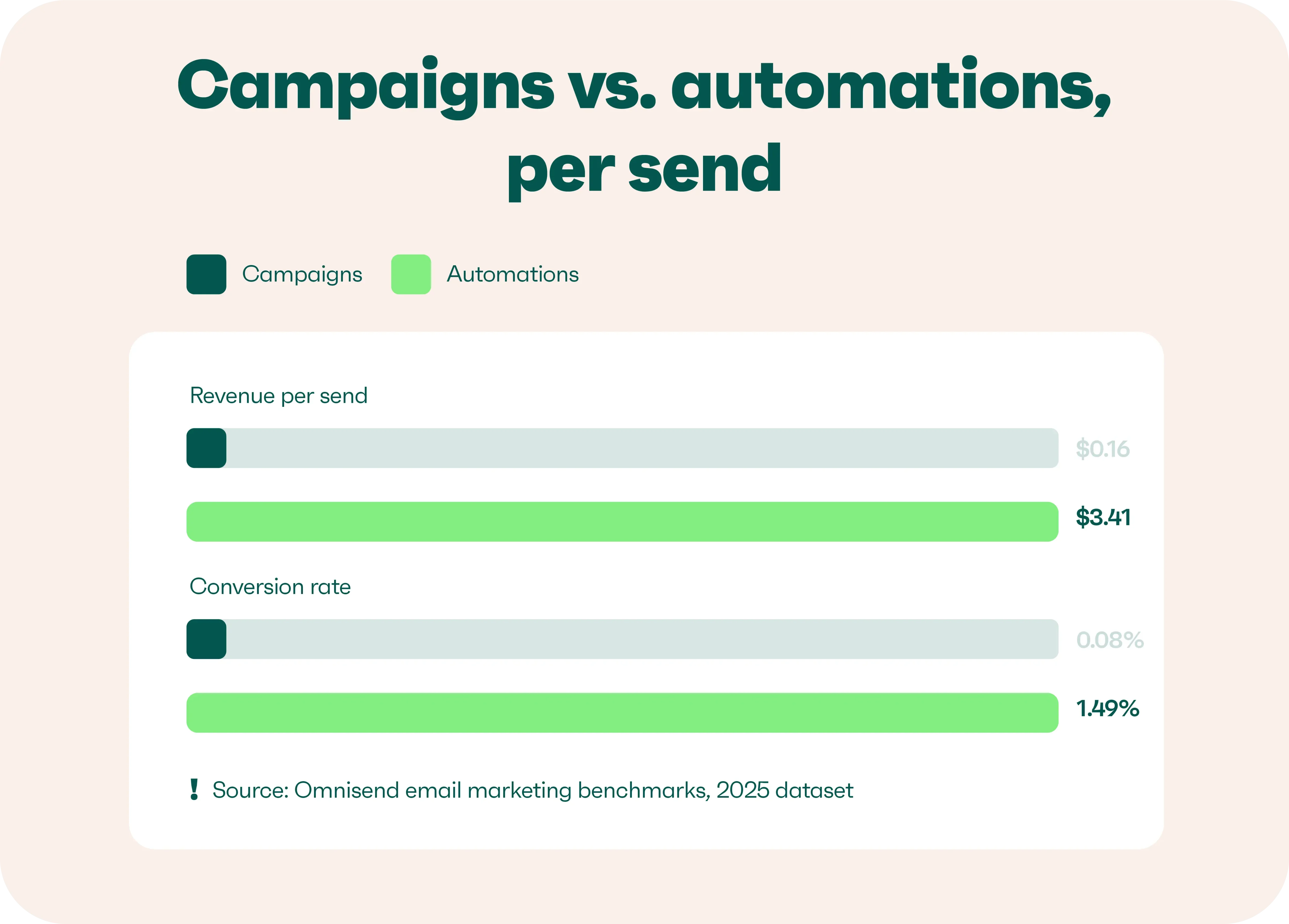
- Conversion Rate: Automated campaigns convert at 1.49%, starkly contrasting with regular campaigns at 0.08%.
- Click-Through Rate (CTR): Automations boast a CTR of 4.66% compared to 0.75% for scheduled campaigns.
- Revenue Per Send: Automated emails generate an average of $3.41 per send, significantly outperforming scheduled campaigns which yield $0.16 per send.
This compelling data from Omnisend’s extensive analysis, covering a vast array of e-commerce brands, underscores that automated campaigns connect with customers at precisely the right moment, responding to their immediate behaviors and intentions. This timeliness and relevance are key to their dramatically higher returns.
A Spectrum of Strategies: Understanding Campaign Types
Email marketing campaigns are broadly categorized into seven strategic areas, each serving distinct goals throughout the customer lifecycle. Most successful e-commerce brands integrate both scheduled broadcasts and behavior-based automated flows across these categories to maximize their reach and impact.
- Acquisition: Primarily focused on converting new subscribers into first-time buyers.
- Example: Welcome emails offering a discount code for the first purchase.
- Broadcasts and Promotions: Designed to drive immediate purchases or build anticipation.
- Examples: Promotional offers, seasonal sales (e.g., Black Friday Cyber Monday, Back to School), product launches, and regular newsletters providing value without a direct discount.
- Revenue Recovery: Aims to recapture lost sales opportunities.
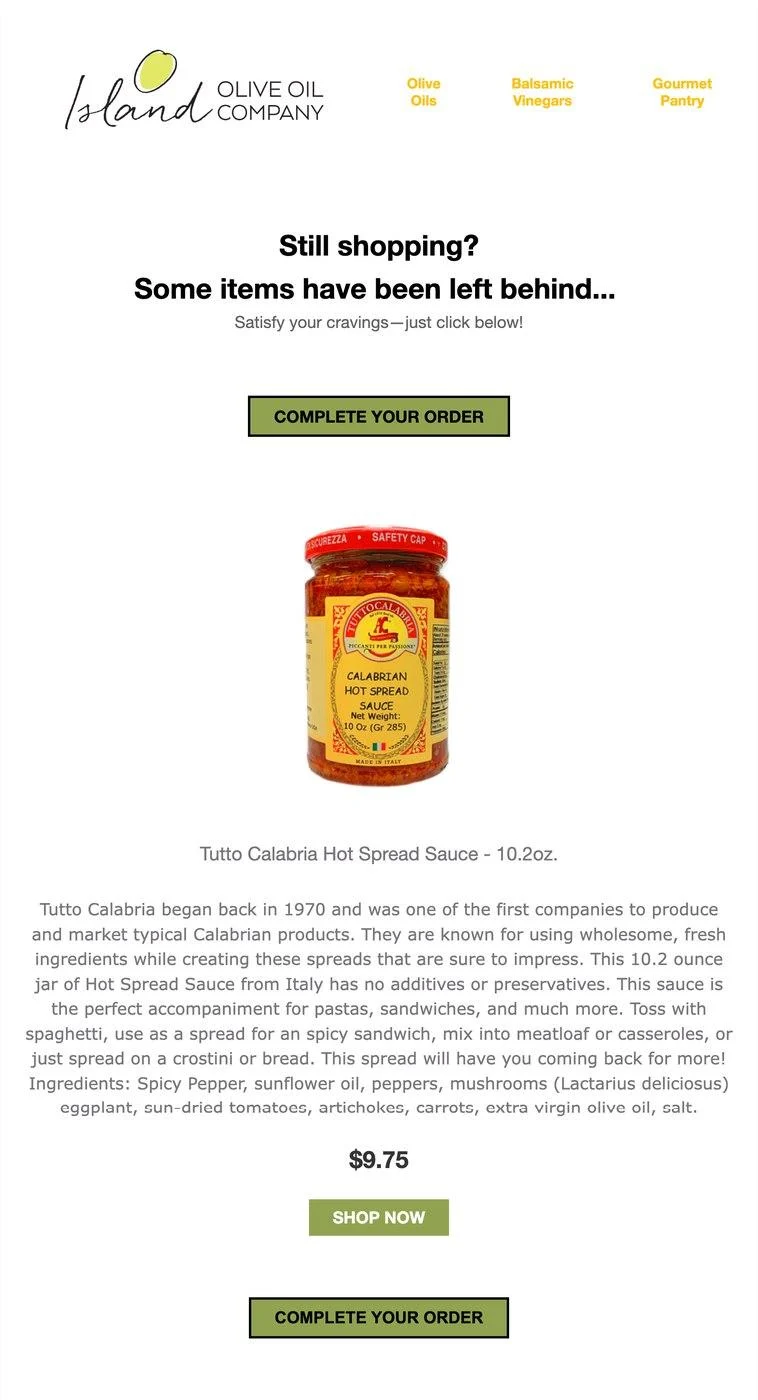
- Examples: Abandoned cart reminders, browse abandonment emails (for shoppers who viewed but didn’t add to cart), back-in-stock alerts, and price drop notifications for watched items.
- Consideration: Helps undecided customers make informed purchasing decisions.
- Examples: Product recommendation emails, quizzes or product finders (also gathering first-party data), and product comparison emails.
- Retention and Loyalty: Focuses on encouraging repeat purchases and fostering long-term customer relationships.
- Examples: Post-purchase cross-sell emails, loyalty or VIP program communications, birthday/anniversary gifts, and replenishment reminders for consumable products.
- Re-engagement and List Health: Targets inactive subscribers to revive interest or maintain list quality.
- Examples: Win-back campaigns for lapsed customers and sunset emails to remove unengaged profiles, thereby protecting deliverability.
- Feedback: Gathers valuable customer insights.
- Examples: Survey requests and product review solicitations.
The efficacy of automated campaigns within these categories is further illustrated by Omnisend’s 2026 report, which details average order values and revenue per email for various automated flows. Welcome emails, for instance, boast an average order value (AOV) of $315 and generate $6.30 per email, while birthday campaigns lead with an impressive AOV of $744, returning $4.37 per email. Even campaigns like ‘back in stock’ ($131 AOV, $8.46 revenue per email) and ‘abandoned cart’ ($168 AOV, $2.54 revenue per email) demonstrate significant financial impact. The report also highlights that nearly one in three clicks on an automated email ultimately results in a purchase, underscoring their potent conversion power.
Real-World Successes: Brands Leveraging Email Automation

Leading e-commerce brands are already harnessing the power of sophisticated email marketing platforms like Omnisend to achieve remarkable results. These verified success stories demonstrate the practical application and impact of well-executed campaigns:
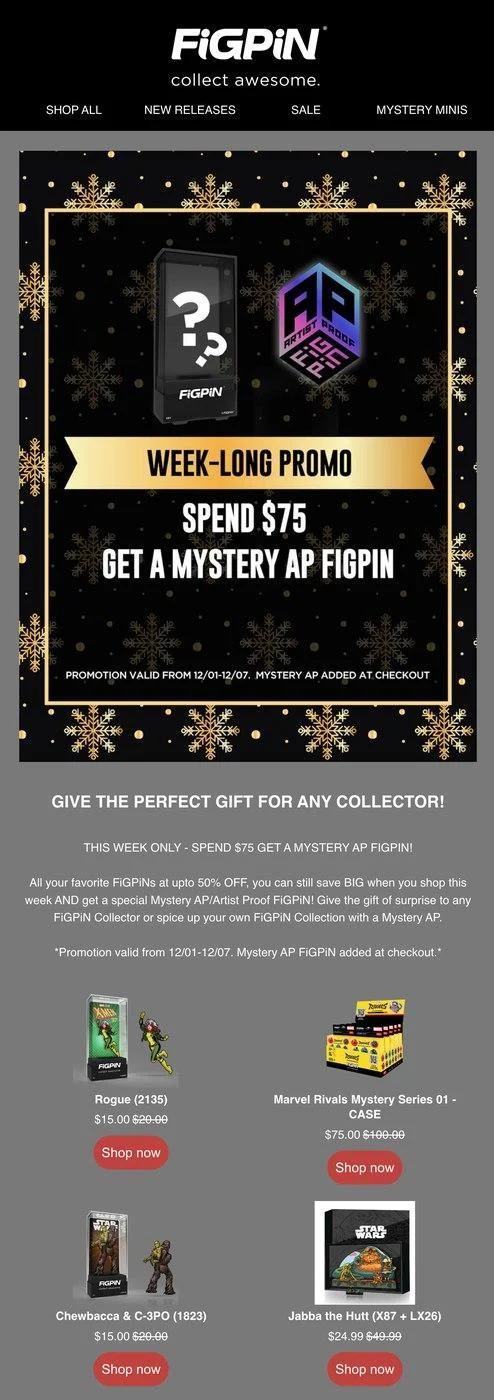
- FiGPiN (Promotional): By offering a mystery collectible with a $75 spend, FiGPiN successfully incentivized higher average order values. Their automated messages now drive 24% of email revenue from just 9% of sends, with an impressive 87% conversion rate for abandoned cart flows after migrating from Constant Contact.
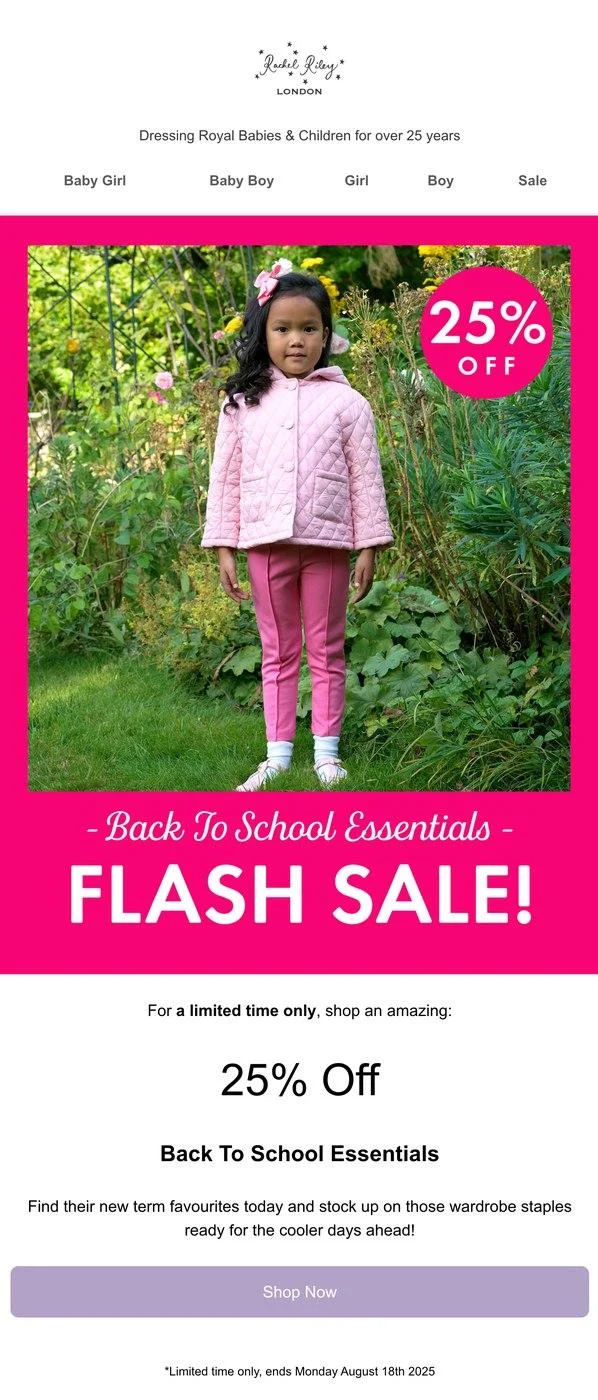
- Rachel Riley (Seasonal & Loyalty): This brand saw a 77% increase in BFCM 2024 revenue over 2023, with Omnisend attributing 48.1% of store revenue during that period. Their seasonal flash sales, with clear offers and deadlines, proved highly effective. They also leverage loyalty programs with simple, transparent earning and redemption structures.
- Naked & Famous (Product Launch): For complex product launches like their Kevlar-reinforced Japanese denim, Naked & Famous uses email to build anticipation with fixed release times. Their automations contribute 19.75% of email revenue from under 2% of sends, and resending campaigns to non-openers added 7.47% to campaign revenue after switching from Mailchimp.
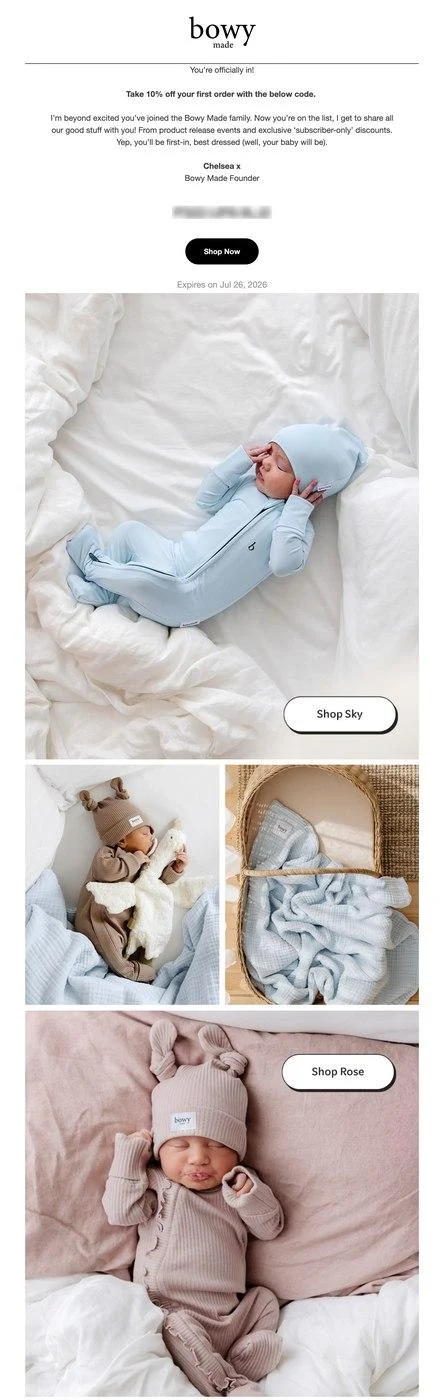
- Bowy Made (Welcome): This brand’s personalized welcome emails, delivering a promised 10% discount upfront, drive approximately 70% of their revenue from automations, achieving an average open rate of nearly 52%.
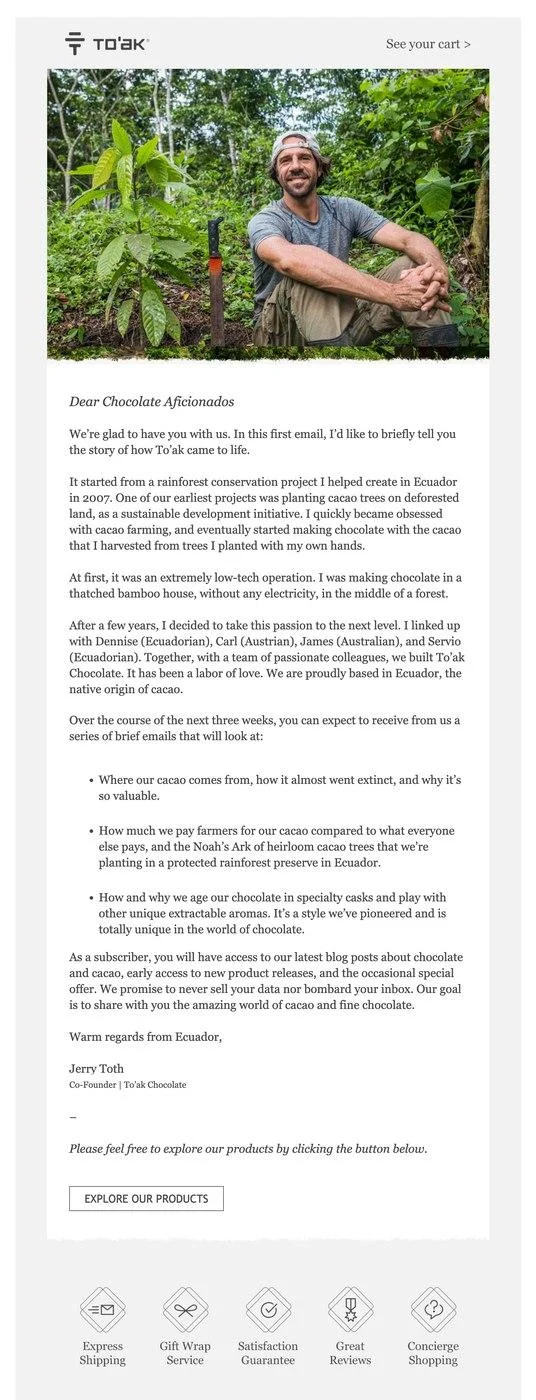
- To’ak (Brand-Story Welcome): For high-end products like fine chocolate, To’ak focuses on storytelling. Their welcome series, which delves into the founder’s origin story, grew email-generated revenue by 460%, with an 18% conversion rate for these initial emails.
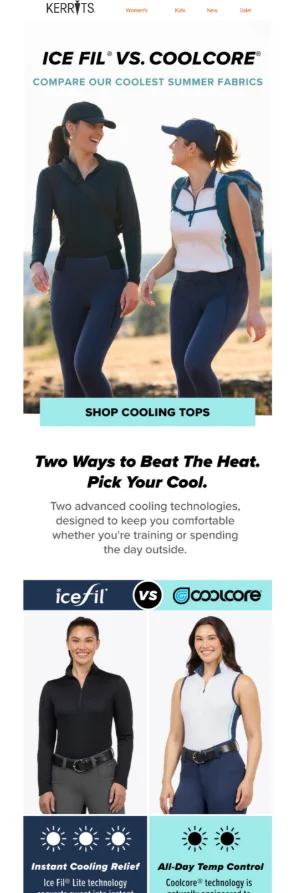
- Kerrits (Product Comparison): By comparing two cooling fabrics side-by-side, Kerrits helps undecided shoppers choose. This strategy, integrated into their broader email program, lifted revenue per email on promotional campaigns by 50%, with automations now driving 23% of email sales from under 4% of sends.
- Amundsen (Back in Stock): These targeted alerts for popular items like Chukka Shorts generate about 30% of their Omnisend-attributed sales through automations, proving the high intent of customers receiving these messages.
- Island Olive Oil (Cart Recovery): By displaying the exact abandoned item and its price with clear calls to action, Island Olive Oil’s automated emails, despite making up only 1.22% of sends, drive 39% of their email revenue.
- Snif (Win-back): A simple "Still interested?" subject line combined with product benefits and a "try-before-you-buy" option effectively re-engages prospects.
- DB Journey (Survey and Feedback): Offering an incentive like a $100 gift card for participation in a workshop effectively gathers valuable customer feedback, demonstrating a clear goal and benefit for the subscriber.
- Timberland (Birthday): A personalized 20% discount code as a birthday gift creates goodwill and encourages purchases.
These examples underscore that effective email marketing is not a one-size-fits-all approach but a dynamic interplay of personalized content, strategic timing, and robust automation.
Strategic Implementation: Building Effective Email Campaigns
Creating impactful email marketing campaigns requires a systematic approach, from initial planning to post-send analysis. Platforms like Omnisend streamline this process, offering tools for list management, campaign creation, and performance tracking.
1. Segmentation is Paramount: The foundation of effective email marketing is understanding your audience. Instead of broadcasting to everyone, segment your contact list. Common segments include new subscribers, active buyers, and quiet contacts. For a promotional campaign, targeting "recent buyers" ensures relevance. This involves setting filters based on purchase history, such as "placed order at least 1 time in the last 3 months." This precision prevents wasted sends and ensures messages resonate.
2. Campaign Creation and Configuration: Begin by defining your campaign’s purpose. For a promotional campaign, select "Email" as the campaign type, then input crucial details like the sender’s name and email address. Crucially, craft a compelling subject line and preheader text. Modern platforms often offer AI-powered tools to assist in generating these, enhancing their effectiveness.
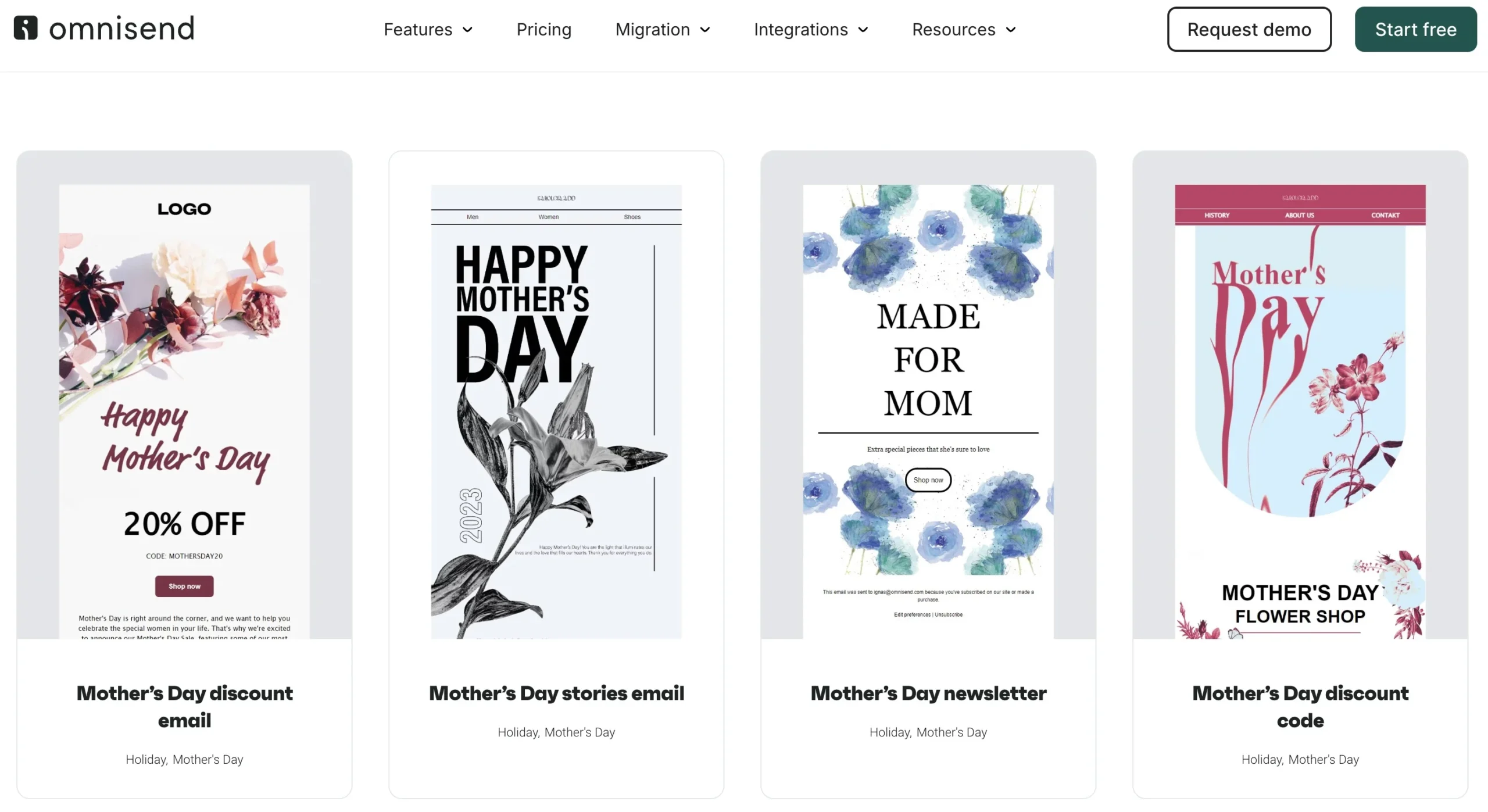
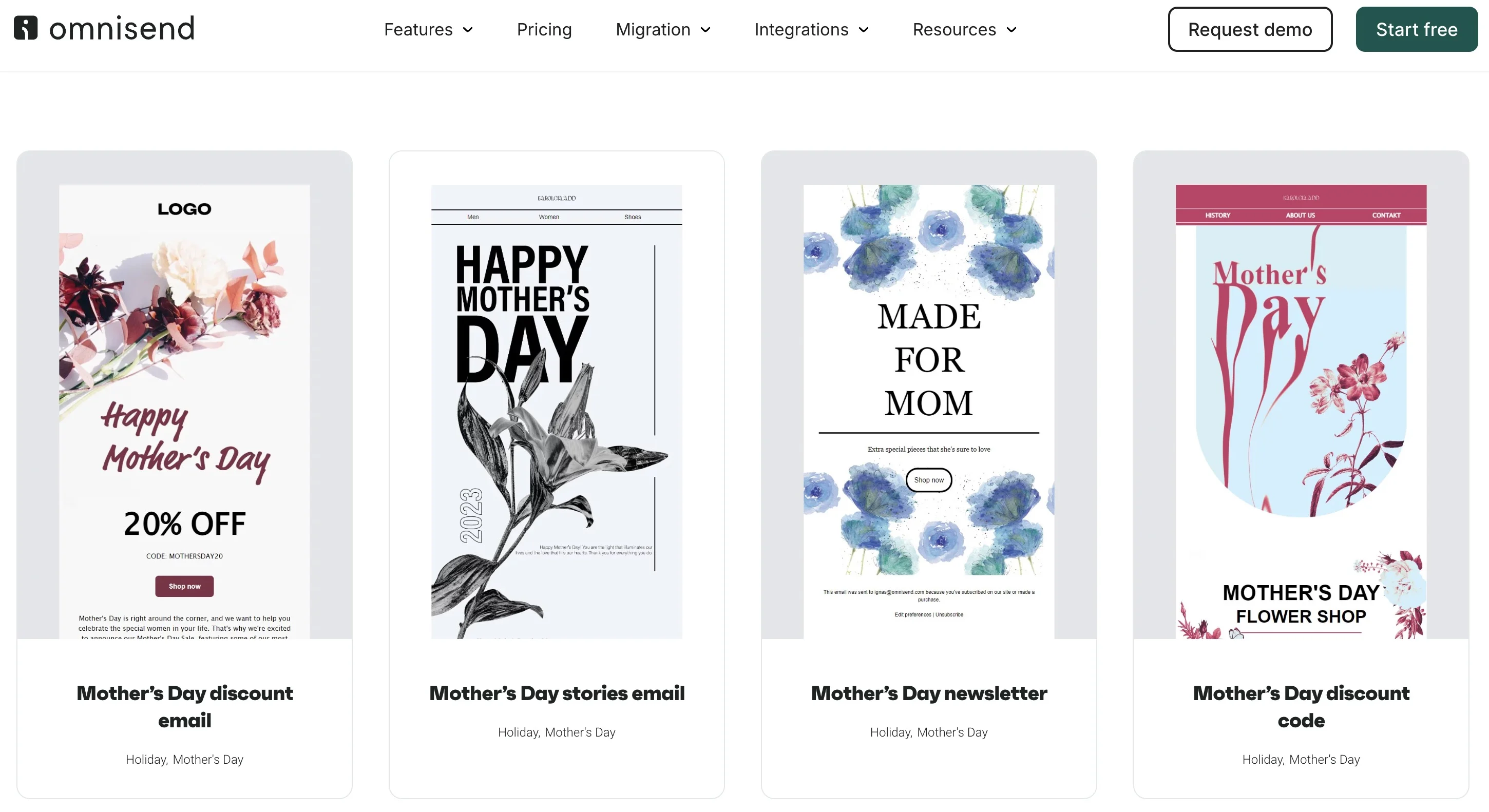
3. Designing Your Email Template: Utilizing pre-built, mobile-ready templates significantly reduces design time. Omnisend, for instance, offers a library filterable by goal and category. Brands can select a template close to their campaign type, customize it with brand colors and products, and integrate dynamic content. AI content tools within the editor can further assist in crafting engaging copy. Dynamic product elements, such as best-selling, recently added, or personalized recommendations based on browsing or purchase history, enhance relevance.
4. Targeting and Review: Once the email is designed, assign the campaign to your chosen segment (e.g., "Recent buyers"). Before scheduling, thoroughly review all campaign settings, including tracking (e.g., Google Analytics UTM parameters) and A/B testing options. Sending test emails to various clients (Gmail, Outlook) is critical to ensure proper formatting and deliverability.
5. Monitoring Your Email Metrics (Post-Send): The campaign’s journey doesn’t end with sending. Continuous monitoring of key metrics is essential for optimization. Omnisend’s reports provide comprehensive insights, including:
- Sales: Total sales, sales per recipient.
- Engagement: Open rate, click rate, click-through rate, unsubscribe rate.
- Deliverability: Delivered rate.
- Conversion: Conversion rate.
- Revenue: Revenue per email, average order value.
- Recipient Activity: Number of recipients, unique opens/clicks.
Analyzing these metrics, especially comparing similar campaigns over time, allows marketers to identify trends, understand what resonates with their audience, and refine future strategies.
Best Practices for Effective Email Marketing Campaigns
Beyond the technical steps, several best practices elevate email campaigns from merely functional to highly effective:
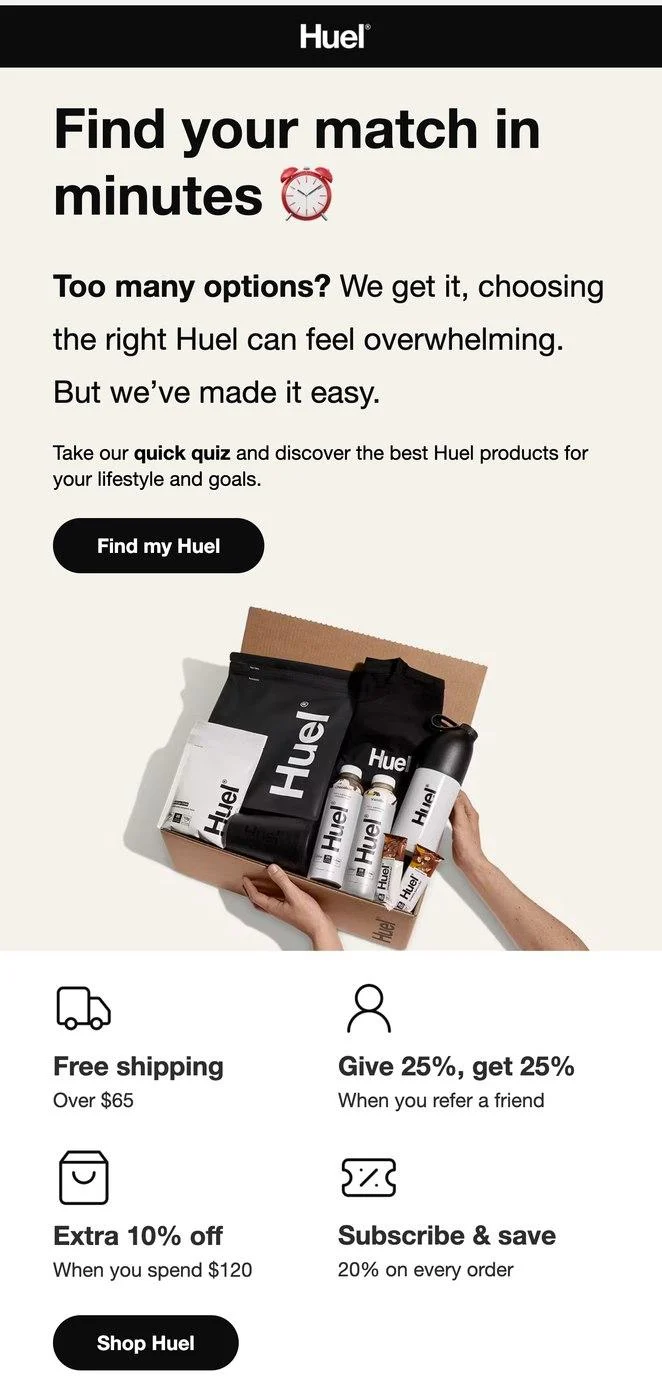
- Personalization Beyond the Name: True personalization involves product recommendations based on browsing history, past purchases, and demographic data, paired with subject lines that reflect individual interests.
- Actionable CTAs: Calls to action should be clear, concise, and convey immediate value (e.g., "Get your 20% discount" instead of "Click here"). Position them prominently.
- Mobile-First Design: Given that most emails are read on mobile devices, prioritize a simple, single-column layout with short paragraphs and clear buttons. Always preview across different email clients.
- Strategic Timing: While testing is crucial for individual audiences, general benchmarks suggest Tuesday (9 AM and 11 AM for opens/clicks) and Friday (7 AM for conversions) as strong sending days.
- Robust Deliverability Infrastructure: Sending from a branded domain, authenticating with SPF, DKIM, and DMARC, and warming up the domain are non-negotiable for ensuring emails reach the inbox.
- Clear Campaign Goals: Each campaign should have a singular, well-defined objective. Mixing asks dilutes impact.
- Resonating Content: Provide value before attempting a sale. A healthy mix of helpful content and promotional material keeps subscribers engaged.
- Proactive List Cleaning: Regularly remove inactive, invalid, and duplicate contacts to maintain list health, improve deliverability, and avoid unnecessary costs.
Navigating Pitfalls: Common Email Marketing Campaign Mistakes to Avoid
Even experienced marketers can fall prey to common errors that undermine campaign effectiveness:

- Spammy Subject Lines: Overly aggressive or sensational subject lines (e.g., "URGENT!!! Act NOW!!!!") are instantly recognized as spam by subscribers and email clients, leading to low open rates and damaged sender reputation. Clarity and value ("20% off your next purchase this week only") consistently outperform hyperbole.
- Ignoring Mobile Optimization: Failing to ensure emails render perfectly on mobile devices alienates a significant portion of your audience. Responsive templates are a necessity, and content should be designed for quick scanning on small screens.
- Lack of True Personalization: Generic mass emails feel impersonal. Beyond using a first name, leveraging segmentation and dynamic content to reflect individual behaviors and preferences fosters a stronger connection.
- Sending Too Frequently or Infrequently: Striking the right balance in email frequency is critical. Too many emails lead to unsubscribes, while too few can lead to disengagement. The ideal frequency varies by content type and audience, and should be informed by monitoring unsubscribe rates and open rates.
The Broader Impact: Maximizing Revenue with Integrated Strategies
The success stories of brands like Dukier underscore the transformative potential of a sophisticated email marketing strategy. Dukier, an Omnisend customer, attributed 45% of its email revenue to campaigns and 55% to automations, with campaign revenue specifically growing by 532% after implementing segmentation based on customer type and language. This demonstrates that campaigns are most effective when they are highly targeted and work in concert with automated flows, creating a holistic customer experience.
In conclusion, the data unequivocally points to email marketing’s continued vitality and growing importance in the e-commerce landscape. By embracing automation, leveraging robust segmentation, adhering to best practices, and avoiding common pitfalls, businesses can unlock significant revenue potential and cultivate lasting customer relationships. Investing in sophisticated platforms that provide comprehensive campaign, automation, and segmentation tools is no longer a luxury but a necessity for e-commerce brands aiming to thrive in a competitive digital economy.