In an era defined by escalating economic pressures and heightened performance expectations, demand generation professionals are confronting a stark reality: budgets are shrinking, demands are intensifying, and the efficacy of marketing efforts can no longer be measured by superficial metrics. This was the central theme resonating through a recent presentation at Hero Conf, where industry leaders convened to dissect the evolving landscape of demand generation. The palpable acknowledgment from in-house marketers in attendance underscored the pervasive nature of these challenges, transforming strategic planning into a daily battle for resource optimization and demonstrable impact.
The imperative for data-driven decision-making has never been more critical. In a competitive environment where every marketing pound must yield maximum return, the continuous analysis of campaign performance is not merely beneficial but essential for survival. The absence of such diligent scrutiny risks ceding valuable market share to competitors who are more attuned to the nuances of consumer behavior and market dynamics. Data, in this context, serves as an indispensable navigational tool, akin to a compass guiding marketers through the complexities of a challenging terrain. Advanced analytics platforms, such as Tableau, are instrumental in this process, providing crucial insights into campaign return on investment (ROI) and attribution models. Whether employing a last-touch or multi-touch attribution framework, these multifaceted views offer the clarity required for persistent campaign optimization, ensuring that resources are consistently directed toward the most impactful activities.
A fundamental aspect of this optimization involves identifying and prioritizing high-performing channels. For demand generation teams, particularly those focused on the upper echelons of the marketing funnel, Marketing Qualified Leads (MQLs) remain a paramount Key Performance Indicator (KPI). These metrics are not only vital for the marketing department but also serve as a crucial benchmark for the broader business. However, achieving sustainable growth necessitates a delicate equilibrium between proactive "push" strategies and reactive "pull" strategies, both of which play distinct yet complementary roles in attracting and engaging potential customers.
The complexity of B2B sales environments introduces an additional layer of consideration: Marketing Qualified Accounts (MQAs). In business-to-business transactions, purchasing decisions are rarely the purview of a single individual. Instead, they typically involve a complex decision-making unit comprising an average of nine to twelve stakeholders, each with their own priorities and influence. This reality fundamentally reshapes the traditional approach to lead generation.
The Outdated Paradigm of Single-Buyer Engagement
The notion that generating individual clicks on advertisements can directly translate into pipeline growth is a misconception. In the B2B realm, it is the collective engagement of entire accounts that drives pipeline development. This shift in focus is critical, as penetration within a buying group is paramount to closing deals. The consensus-driven nature of B2B purchasing means that decision-making units often defer engagement with sales development representatives (SDRs) until a collective agreement has been reached.
To navigate this intricate process effectively, the establishment of a clearly defined Ideal Customer Profile (ICP) is non-negotiable. For organizations lacking a robust ICP, the foundational step must be its development from the ground up. Assuming a typical buying group consists of approximately 15 to 20 stakeholders, the top-of-funnel strategy must evolve beyond mere lead generation. It must encompass a more holistic approach aimed at influencing and engaging the entire buying committee.

Key Pillars for Account-Centric Demand Generation:
- Account-Based Marketing (ABM) Integration: Tailoring marketing efforts to specific target accounts, understanding their unique needs, and delivering personalized experiences across multiple touchpoints.
- Intelligence Gathering and Signal Detection: Proactively identifying buying signals and intent data that indicate an account’s readiness to engage, allowing for timely and relevant outreach.
- Persona Mapping and Engagement: Developing a deep understanding of the various personas within a buying group and crafting content and campaigns that resonate with each individual’s role and concerns.
- Cross-Channel Orchestration: Ensuring a cohesive and integrated approach across all marketing channels, from digital advertising and content syndication to email nurturing and sales enablement, to reinforce key messages and build momentum.
The Critical Role of Attribution in Demonstrating Value
The ability to accurately attribute revenue and pipeline to specific marketing initiatives is no longer a strategic advantage but a fundamental requirement for budget justification. The adage "If you can’t show the pipeline, you lose your budget" rings true in today’s performance-driven landscape. To safeguard and expand marketing budgets, a willingness to adapt and reallocate resources is essential. This involves the strategic redirection of spend from underperforming campaigns or channels towards those that demonstrably deliver results. Such proactive optimization not only maximizes ROI but also cultivates credibility and confidence in the marketing strategy among leadership.
Evolving from Single Persona Focus to Comprehensive Buying Group Impact
A practical illustration of this strategic pivot can be observed in the evolution of demand generation efforts for specific technical personas. In an initial phase, a strong emphasis was placed on engaging a singular technical persona at the top of the funnel, supported by compelling content and effective click-through rates, which yielded a respectable flow of MQLs. However, a deeper analysis of pipeline progression revealed a concerning trend: deals were stagnating. While initial interest was evident, the absence of consensus among the broader buying group, the lack of engagement from budget owners, and the insufficient influence of key account stakeholders hampered deal closure.
To address this bottleneck, a strategic shift was implemented. Content syndication was leveraged as an initial mechanism to attract and engage a wider array of decision-making unit personas, including IT Leaders, CX Leaders, Digital Leaders, CISOs/CIOs, and Fraud Leaders. Upon capturing early signals of interest from these diverse roles, display advertising was activated. This was not merely a branding exercise but a sophisticated account-level nurture program designed to reinforce key messages and maintain engagement.
Complementing these efforts, focused LinkedIn campaigns were deployed to further elaborate on themes introduced through content syndication. Concurrently, Google Ads were strategically aligned to support the research efforts of these various stakeholders. The integration of AI-powered email campaigns further amplified personalization at scale, ensuring that the entire buying group remained engaged. This approach reinforced value propositions, shared relevant case studies, and highlighted use cases tailored to each persona’s specific needs and responsibilities. The outcome was a tangible shift from isolated MQLs to a cohesive buying committee momentum. When sales teams engaged with these accounts, they were not met with cold prospects but with educated, aligned, and receptive individuals ready for solution-oriented conversations and product demonstrations.
This integrated, company-wide motion underscores the power of coordinated, persona-led, and signal-driven account progression, culminating in a robust pipeline.

A Core Lesson from the Podium
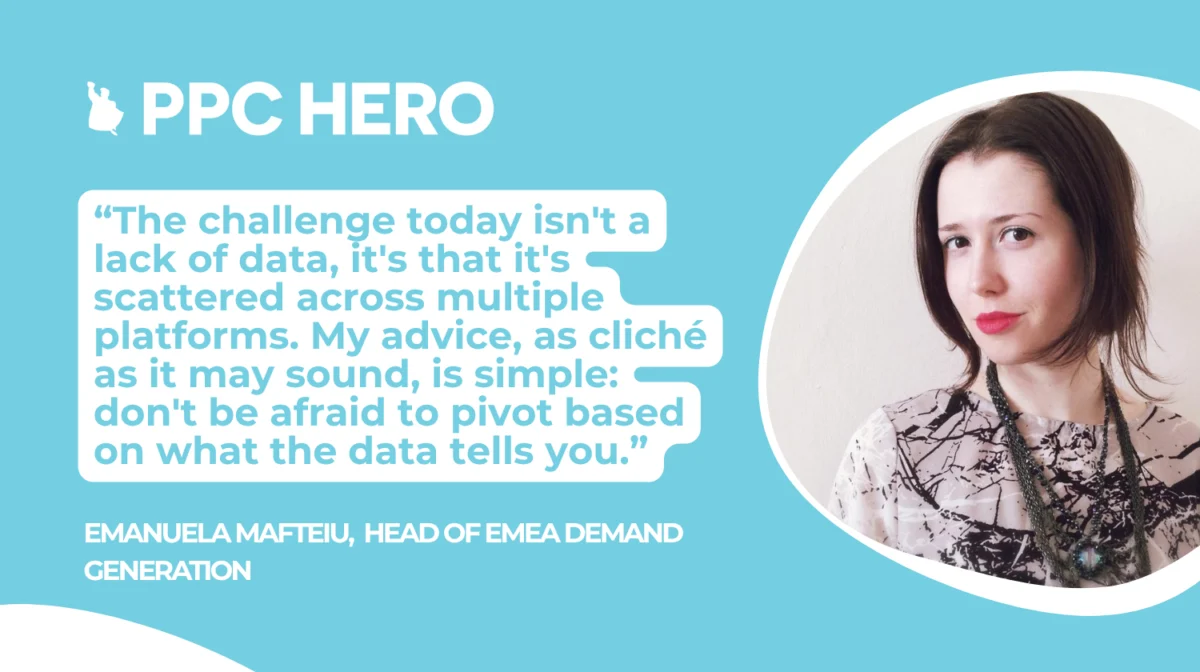
Following a presentation at Hero Conf, a common question posed to speakers centers on the elusive "secret sauce" to demand generation success. The reality, however, is far more grounded: consistent success stems from a disciplined and analytical approach to data. The current challenge is not a scarcity of data but its fragmentation across numerous platforms, creating a complex information ecosystem. The most pragmatic advice, though perhaps cliché, remains the most potent: embrace agility and be prepared to pivot based on the insights derived from data. This is not indicative of chaos but rather a manifestation of controlled adaptability.
In situations demanding rapid strategic adjustments, maximizing impact while minimizing expenditure is paramount. It is acknowledged that not all campaigns will achieve their intended outcomes, not every advertisement will reach the opportune audience at the precise moment, and the conversion cycle for an account can extend up to 365 days. Consequently, the adoption of dynamic budgeting is crucial. Marketers should not hesitate to reallocate funds from underperforming initiatives to those demonstrating superior performance.
The strategic sunsetting of ineffective campaigns, coupled with continuous A/B testing of what is working, forms the bedrock of efficient resource allocation. With an estimated 95% of the market not actively engaged in purchasing, there exists ample opportunity for experimentation. Bold creative, authentic messaging, and a deep understanding of the customer’s language are the cornerstones of amplified results.
Furthermore, maintaining close collaboration with sales teams is indispensable. Sales professionals often possess critical insights and contextual information that can significantly enhance the effectiveness and precision of marketing campaigns, providing the missing piece of the puzzle for truly impactful demand generation.
The implications of this evolving demand generation landscape are significant. Companies that successfully adapt to these new realities, prioritizing data-driven insights, account-level engagement, and agile resource allocation, will be best positioned to thrive in an increasingly competitive and cost-conscious market. Those that cling to outdated methodologies risk falling behind, unable to demonstrate clear ROI and secure the necessary resources to fuel growth. The future of demand generation lies in intelligent adaptation and a relentless pursuit of measurable impact.