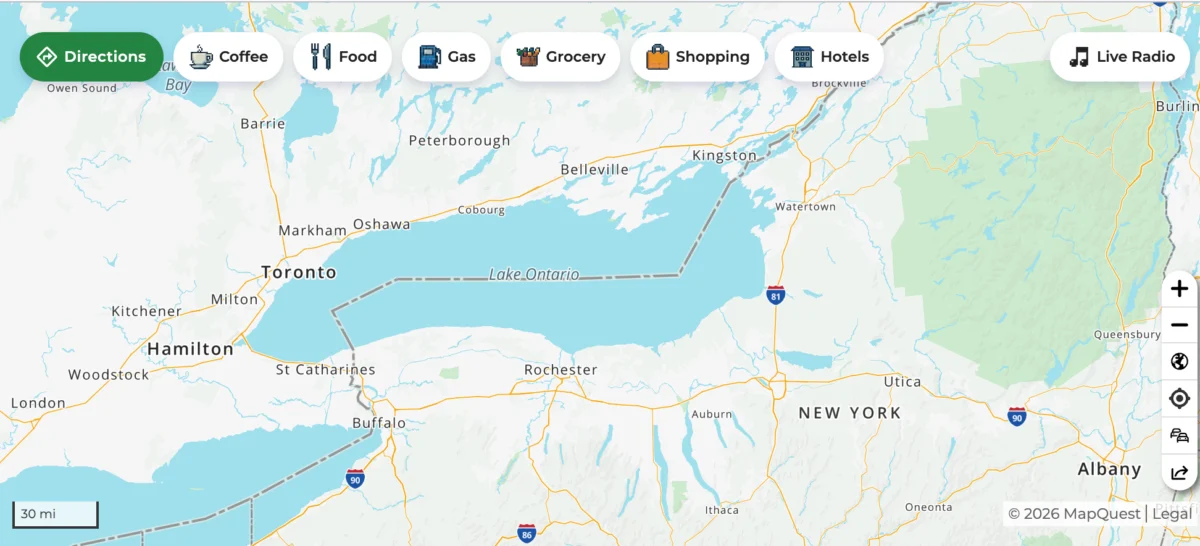
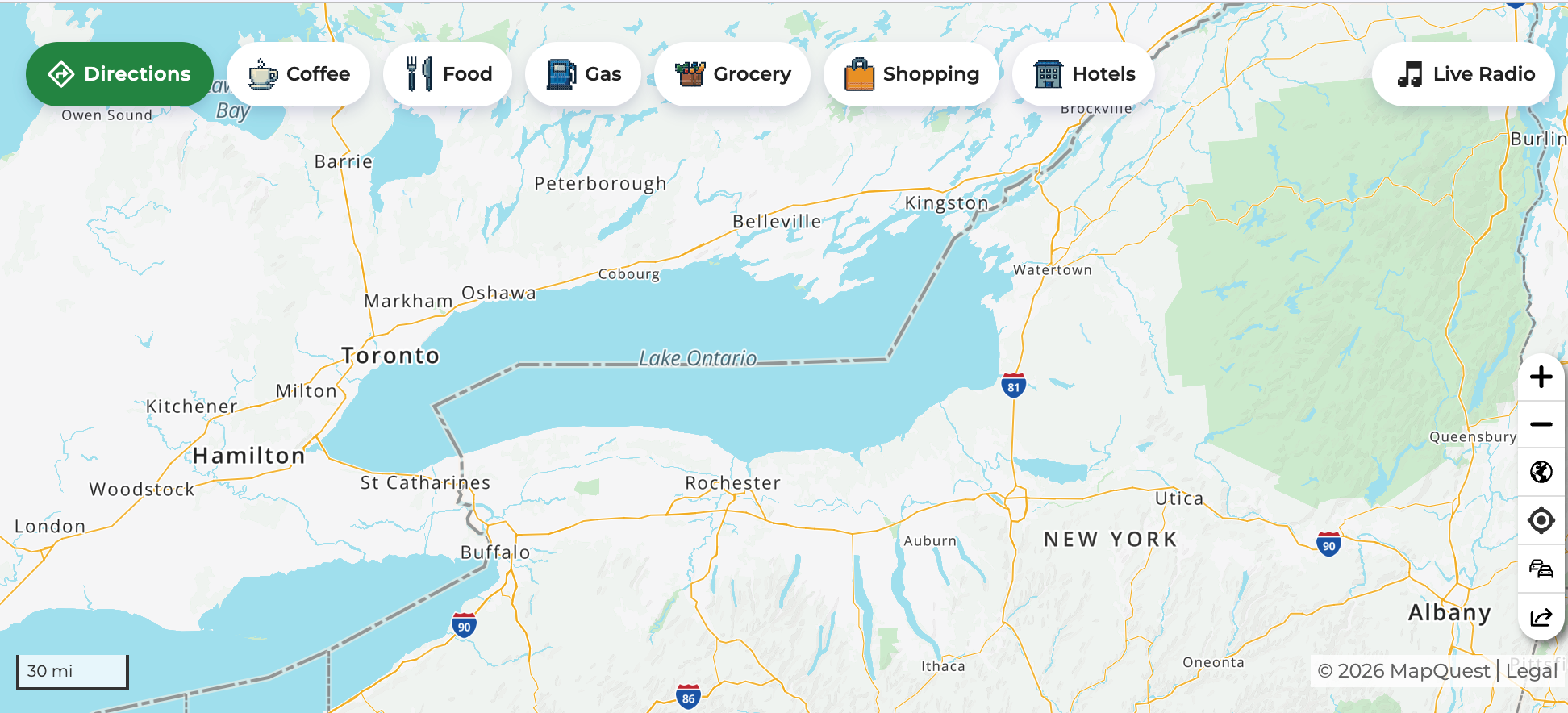
In a surprising shift within the digital mapping industry, MapQuest, the thirty-year-old pioneer of online navigation, secured the top position in the Apple App Store’s maps category on August 30, 2026. This resurgence, which saw the app climb to number eight overall across all categories, was triggered by a specific editorial decision regarding geographic nomenclature. While industry giants Apple Maps and Google Maps updated their platforms to reflect a federal executive order renaming Lake Ontario to "Lake America," MapQuest opted to retain the traditional name. This decision resulted in a download surge approximately 50 times the app’s standard rate, marking the brand’s most significant market movement since the early 2000s.
The incident highlights a growing tension between private technology platforms and government directives, particularly in an era of heightened political polarization. The renaming of Lake Ontario followed a period of intense trade negotiations and diplomatic friction between the United States and Canada. By positioning itself as a provider of "familiar names," MapQuest effectively tapped into a consumer base that is increasingly weary of corporate alignment with political shifts. This event serves as a focal point for a broader discussion on the current state of public relations, institutional communication at the United States Postal Service (USPS), and a recent national survey indicating a historic low in corporate credibility.
The MapQuest Resurgence: A Case Study in Strategic Neutrality
The return of MapQuest to the cultural and technological zeitgeist is rooted in a strategy of "geographic continuity." The brand’s decision to ignore the executive order renaming Lake Ontario was not its first foray into this specific type of brand positioning. Previously, when the administration redesignated the Gulf of Mexico as the "Gulf of America," MapQuest not only maintained the original name but also launched a digital tool at gulfof.mapquest.com. This tool allowed users to customize the name of the body of water on their personal interfaces, a move that combined utility with a subtle nod to user autonomy.
Following the Lake Ontario controversy, MapQuest expanded this tool to include the Great Lakes region. Doug Berger, General Manager of MapQuest, stated that the company’s approach was designed to be part of the public conversation without issuing an explicit political manifesto. The brand’s internal data suggests that hundreds of thousands of users responded to this "product-first" neutrality. According to recent consumer research from Adtaxi, approximately 42% of consumers prefer brands that remain neutral on political issues and focus primarily on the quality and reliability of their services.
However, the decision to maintain traditional naming conventions is not without risk. Brett Bruen, President of the Global Situation Room and a former U.S. diplomat, noted that the administration has applied "unprecedented pressure" on private companies to align with its policy preferences. While Apple and Google chose to comply with the executive order to avoid potential regulatory retribution, MapQuest’s defiance highlights a different risk-reward calculation. Bruen suggested that while compliance might offer short-term protection from government ire, it can erode long-term brand loyalty among a public that may view such changes as unnecessary or politically motivated.
USPS and the Challenge of Communicating During Legal Uncertainty
While MapQuest navigated the waters of geographic naming, the United States Postal Service (USPS) found itself at the center of a different communication crisis involving the upcoming midterm elections. On September 1, 2026, the USPS issued a formal statement regarding the development of a new Federal Ballot Mail Portal. The portal was designed to allow state election officials to manage absentee voter information under a recent executive order, but its implementation has been fraught with legal and technical hurdles.
A whistleblower report submitted to Senator Richard Blumenthal (D-Conn.) raised concerns that the technology for this portal was being deployed without sufficient testing. These concerns were compounded by a federal court order that blocked key segments of the administration’s mail-in voting directives. The USPS response—a statement saying it is "carefully reviewing" the concerns—reflects a strategy of "strategic non-responsiveness," according to some communications experts.
The agency’s communication focused on three primary pillars:
- Confirming that the portal remains voluntary for state election officials.
- Asserting that all current operations remain consistent with existing court orders.
- Reiterating the institutional pride of postal employees in supporting the democratic process.
John Guilfoil, Principal of John Guilfoil Public Relations, argued that the USPS’s vague language is a "carefully choreographed strategy" suited for a weakened media environment. In an era where newsrooms are often understaffed, vague statements can often satisfy a news cycle without committing an organization to a specific course of action or admitting liability. Guilfoil suggested that this trend toward strategic ambiguity is a response to the current political climate, where any definitive statement can be weaponized by opposing factions.
New Research: The Erosion of Corporate Credibility
The challenges faced by MapQuest and the USPS are occurring against a backdrop of declining public trust in corporate communications. A national survey conducted by the crisis communications firm Resonant Advisory Group and DHM Research indicates that the gap between corporate messaging and public belief is widening. The study found that only 5% of Americans find corporate statements to be "completely credible." Furthermore, 63% of respondents believe that crisis communications have become less believable over the past year.
The research identified four critical areas where corporate credibility is failing:
1. The Disconnect Between Profits and Personnel Actions
One of the most significant drivers of skepticism is the "profit-layoff paradox." When companies report record-breaking quarterly profits while simultaneously announcing large-scale layoffs, the public perceives a fundamental lack of accountability. Erik Moser, President of Resonant Advisory Group, noted that this disparity creates a "credibility debt" that makes it nearly impossible for a company to be believed during a genuine crisis.
2. The Language Gap and Technical Obfuscation
The survey revealed that a third of the American public approaches any corporate statement with "outright skepticism." This is often exacerbated by the use of overly complex language, legal jargon, and "corporate speak." Consumers are increasingly demanding that brands speak in plain, understandable English. When companies hide behind technicalities, they are seen as evasive rather than professional.
3. The Vulnerability of Brand Loyalists
Perhaps the most concerning finding for marketers is that credibility is eroding fastest among the audiences brands can least afford to lose: their loyal customers. The data suggests that even long-term supporters are beginning to question the authenticity of the brands they frequent, often due to perceived inconsistencies between a company’s stated values and its operational reality.
4. Internal vs. External Communication Misalignment
There is a growing trend where a company’s internal messaging to employees contradicts its external messaging to the public. In the age of social media and platform-based whistleblowing, these discrepancies are quickly exposed. When employees do not believe the narrative being sold to the public, the external message loses all structural integrity.
Implications for the Future of Public Relations
The convergence of the MapQuest success story, the USPS legal navigation, and the Resonant Advisory Group data suggests a pivotal moment for the PR industry. The "MapQuest Moment" demonstrates that there is a market for brands that prioritize consistency and user familiarity over political compliance. However, the broader data suggests that this may be an outlier in an environment where trust is difficult to build and easy to destroy.
Experts such as John Guilfoil are calling for a return to higher ethical standards within the industry. Guilfoil advocates for the adoption of standards set by the Public Relations and Communications Association (PRCA), the global governing body for the profession. He argues that the PR industry must hold itself accountable for "strategic non-responsiveness" and other tactics that contribute to the erosion of truth in the public sphere.
As the 2026 midterm elections approach and the "Lake America" controversy continues to play out in the courts and on digital maps, the primary takeaway for communicators is clear: credibility is a daily discipline, not a crisis-response tactic. Whether it is a mapping app choosing to keep a name or a federal agency responding to a whistleblower, the public is increasingly looking for transparency, simplicity, and a focus on fundamental operations. In a world where only 5% of the population fully trusts corporate statements, the most valuable asset a brand can possess is a reputation for saying what it means and doing what it says.