In an annual tradition that pits foresight against the unpredictable currents of the global economy, eCommerce leaders Bill D’Alessandro and [Author’s Name – assumed for article continuity] have unveiled their collective predictions for the trajectory of online commerce in 2026. This year’s forecast, which encompasses a wide array of topics from the pervasive influence of artificial intelligence in advertising to the shifting landscape of international trade policies and the viability of lifestyle-focused eCommerce brands, is framed with an unprecedented level of accountability. For the first time, the authors have committed to submitting their predictions to advanced AI models, Claude and Grok, at the close of 2026. The AI’s verdict will determine the "winner," who will be treated to a celebratory steak dinner, with the loser enduring the indignity of feeding the first bite. This high-stakes approach underscores the authors’ determination to move beyond self-graded assessments and embrace an objective evaluation of their forecasting acumen.
The predictions are segmented into two distinct sets, one from [Author’s Name] and the other from Bill D’Alessandro, offering dual perspectives on the forces shaping the eCommerce sector.
[Author’s Name]’s Projections: Navigating the AI Revolution and Shifting Economic Tides
[Author’s Name]’s outlook for 2026 is heavily influenced by the accelerating integration of Artificial Intelligence into various facets of online business, coupled with a pragmatic assessment of geopolitical and economic factors.
1. AI-Powered Advertising Will Achieve Telepathic Precision

The advent of AI, particularly in platforms like OpenAI, promises to revolutionize advertising targeting to a degree previously unimaginable. [Author’s Name] posits that by 2026, AI will not merely identify user interests but will possess an almost telepathic understanding of consumer psychology. This advanced capability will stem from AI’s ability to process vast datasets, including social media interactions, search histories, and even subtle indicators of emotional states. For instance, AI might infer a user’s anxieties about business partnerships or signs of burnout, leading to highly personalized and potentially intrusive advertising. This prediction is grounded in the current trajectory of AI development, where large language models are already demonstrating sophisticated understanding of human sentiment and intent. The implication for eCommerce businesses is clear: early adopters of AI-driven advertising platforms stand to gain a significant competitive advantage, capturing market share through hyper-targeted campaigns that resonate deeply with individual consumers. The challenge for marketers will be to balance this powerful targeting with ethical considerations and consumer privacy.
2. Tariffs on Chinese Goods Will Stabilize Between 30-50%
In the realm of international trade, [Author’s Name] anticipates a recalibration of tariffs on goods originating from China. The prediction is that these tariffs will settle within the 30% to 50% range, rather than escalating to higher levels. This forecast is informed by an analysis of current economic conditions and political responses. The author points to rising inflation and a softening economic growth outlook as key factors. Historically, market reactions, such as the bond market’s volatility earlier in the year, have prompted swift adjustments in trade policy. Given the existing economic fragility, the author suggests that political figures will be hesitant to impose further burdens on a struggling economy. This prediction implies a period of relative stability in the cost of goods imported from China, allowing eCommerce businesses to better plan their supply chains and pricing strategies, though the potential for continued trade friction remains.
3. The AI Bubble Will Not Burst in 2026
Countering prevailing skepticism, [Author’s Name] predicts that the current "AI bubble" will not burst in 2026. This assertion is supported by comparative market data. The NASDAQ’s current forward price-to-earnings (PE) ratio stands at approximately 27x, a figure significantly lower than the over 100x PE ratio observed during the dot-com bubble of the early 2000s. Furthermore, government investment in AI research and development is substantially higher, approximately five times that of the tech sector’s spending in 2000 when adjusted for inflation. These fundamental differences suggest that the current AI boom is underpinned by more robust economic and technological foundations, indicating sustained growth rather than an imminent collapse. This outlook suggests continued innovation and investment in AI technologies, with profound implications for businesses across all sectors, including eCommerce.
4. Major Platforms Will Introduce "Verified Human" Content Badges

The proliferation of AI-generated content, particularly on social media, is eroding user trust. [Author’s Name] observes that a significant portion of content, especially videos, now appears to be AI-generated. To combat this, the prediction is that major online platforms will begin testing "verified human" content badges. This initiative aims to restore authenticity and credibility to online discourse and content consumption. The introduction of such badges would empower users to distinguish between human-created and AI-generated material, fostering a more trustworthy digital environment. For eCommerce brands, this could mean a renewed emphasis on authentic content creation and influencer marketing that can be verifiably human.
5. Video and Audio Editing Will Be Largely Automated with 7/10 Quality
The automation of creative processes is set to accelerate, with video and audio editing poised to become largely automated with a quality level of approximately 7 out of 10. Tools like Descript are already demonstrating the feasibility of this advancement. By the end of 2026, it is anticipated that users will be able to input raw footage and provide AI with specific parameters, resulting in polished edits without the need for extensive manual work. This development will democratize content creation, enabling small businesses and individual entrepreneurs to produce professional-quality video and audio content at a fraction of the previous cost and time investment. This could lead to a surge in user-generated content and brand storytelling across all platforms.
Bill D’Alessandro’s Projections: Economic Divergence and AI-Driven Business Transformation
Bill D’Alessandro’s predictions offer a complementary perspective, focusing on macroeconomic trends and their direct impact on business strategy within the eCommerce landscape.
1. 2026 Will Be the Year of the K-Shaped Economy

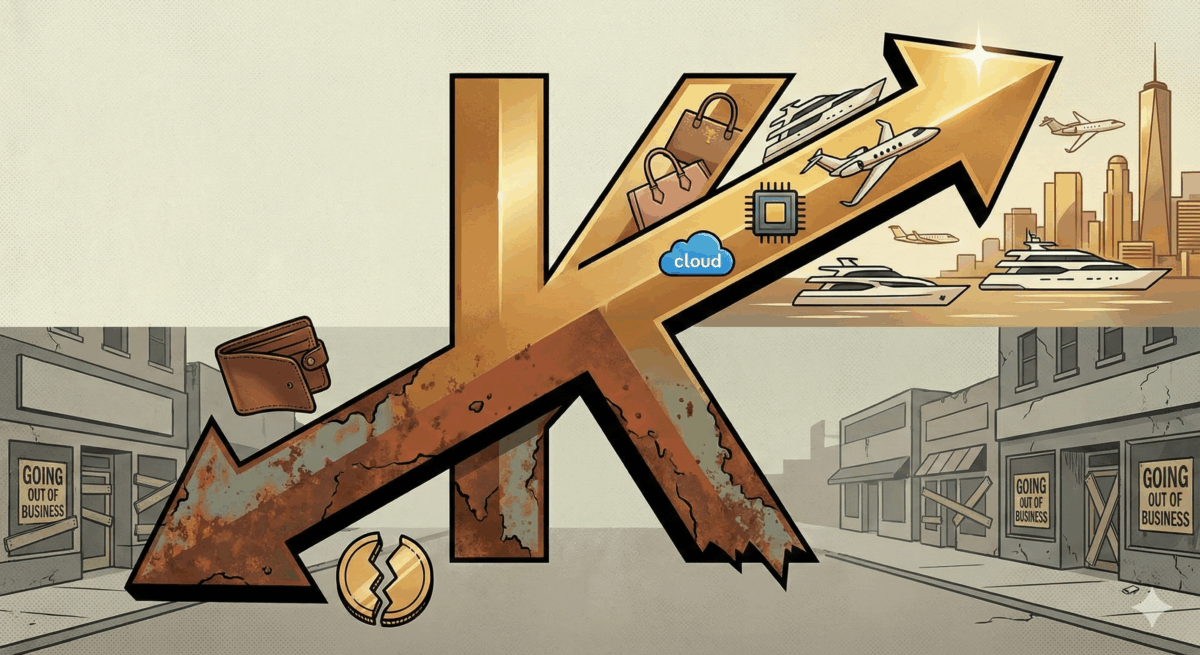
D’Alessandro foresees 2026 as the year of the "K-shaped economy," a phenomenon characterized by divergent economic trajectories for different segments of the population and market. He anticipates that large technology companies and "Mag 7" stocks will continue their upward trajectory, potentially increasing by another 20% or more. Conversely, the broader economy and the average consumer will face ongoing challenges. For eCommerce businesses, this bifurcation presents a strategic imperative: businesses must either cater to affluent consumers by moving "up-market" or focus on essential goods with highly competitive pricing to attract value-conscious shoppers. The middle ground, he warns, will become increasingly perilous. This prediction suggests a growing wealth gap and its direct influence on consumer spending patterns, forcing eCommerce brands to make clear strategic choices about their target demographics.
2. Inflation Will Persist Above 3% in 2026
Contrary to expectations of disinflation, D’Alessandro predicts that inflation will remain above 3% in 2026. His reasoning centers on a perceived lack of political will to curb government spending, which he believes will lead to continued deficit spending and, consequently, persistent inflation. He anticipates this inflationary environment to be a long-term trend, extending beyond 2026. This outlook has significant implications for business operations and investment strategies. Businesses and investors are advised to position themselves for a sustained period of elevated inflation, which could affect inventory management, pricing, and the real return on investments.
3. AI Will Completely Dominate Meta Ad Content Creation
D’Alessandro echoes the sentiment regarding AI’s transformative power, specifically predicting that AI will entirely take over the creation of content for Meta (Facebook and Instagram) advertisements. He has witnessed proof-of-concept pipelines capable of generating hundreds of novel ads daily. These AI systems are designed to analyze customer reviews, leverage brand assets, and generate static images and, increasingly, video content, which can then be directly launched via API. He believes that 2026 will mark the mainstream adoption of these AI-driven advertising workflows, enabling businesses to achieve unprecedented levels of ad campaign personalization and efficiency. This prediction suggests a significant shift in digital marketing, with AI becoming an indispensable tool for campaign execution.
4. The Lifestyle Brand Will Become Obsolete
In a stark assessment, D’Alessandro declares the "lifestyle brand is dead" for most eCommerce businesses. He contends that unless a brand possesses strong intellectual property protection or ranks among the top 5-10% in its niche, smaller eCommerce ventures (in the single-digit million revenue range) will struggle to survive. Larger competitors, equipped with advanced AI-powered operational capabilities, will possess the ability to outspend, out-test, and tolerate higher customer acquisition costs (CACs) than smaller players. This prediction highlights the increasing commoditization of many product categories and the growing dominance of data-driven, scalable business models in the eCommerce space. It suggests a consolidation of the market, favoring larger, technologically adept companies.
5. M&A Activity Will Surge at the High End and Decline at the Low End
The mergers and acquisitions (M&A) landscape in eCommerce is predicted to bifurcate. D’Alessandro anticipates a boom in deals exceeding $1 billion, with an expected 19% year-over-year increase, while transactions in the small and mid-size segments are projected to drop by 18%. This trend suggests that top-tier eCommerce businesses will continue to command premium valuations, attracting significant investment interest. Conversely, typical eCommerce brands will face difficulties in finding buyers or achieving favorable deal terms. This outlook indicates a market that is increasingly valuing scale, profitability, and strong market positioning, making it more challenging for smaller or less established brands to exit.
6. Bitcoin Will Experience Volatility, Ending Above $100K
In the cryptocurrency market, D’Alessandro forecasts that Bitcoin will experience a dip below $70,000 in the first half of 2026 before recovering to finish the year above $100,000. He identifies competing forces influencing Bitcoin’s price: a struggling consumer economy could dampen its appeal as a risk asset, while persistent inflation could bolster its standing as a digital store of value. The predicted volatility reflects these opposing pressures, with the inflation narrative ultimately driving a recovery and price appreciation in the latter half of the year. This prediction suggests that while cryptocurrency markets may remain volatile, underlying macroeconomic trends could favor Bitcoin’s long-term trajectory.
The comprehensive set of predictions from both authors offers a detailed and often provocative glimpse into the future of eCommerce. They underscore the profound impact of artificial intelligence, the enduring influence of macroeconomic factors, and the strategic imperatives that businesses must address to thrive in an increasingly complex and competitive digital marketplace. The commitment to an AI-driven verdict adds a novel layer of accountability, promising to provide valuable lessons regardless of the outcome. As businesses navigate the coming years, these forecasts serve as crucial benchmarks for strategic planning and adaptation.