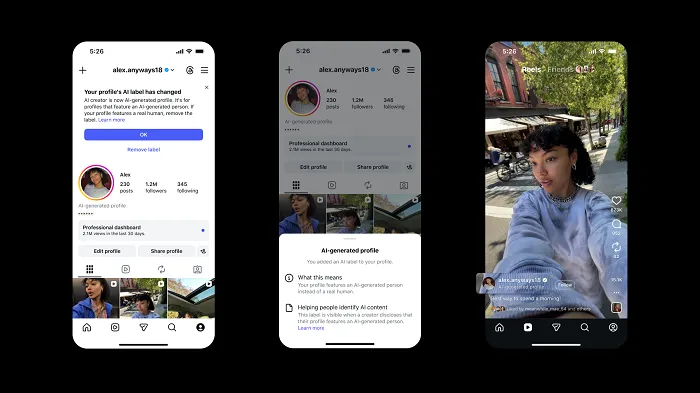
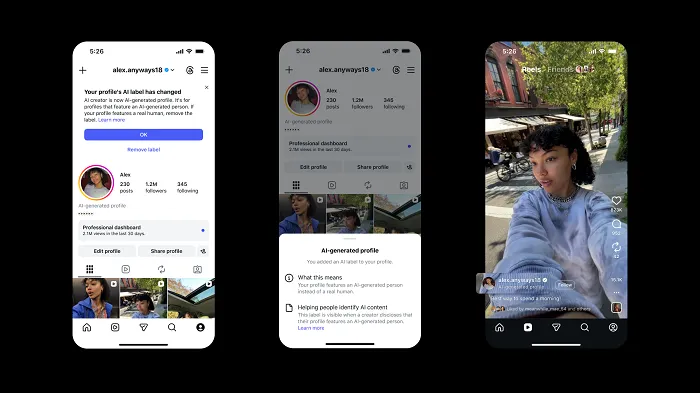
Instagram is implementing a significant revision to its artificial intelligence transparency labels for accounts, a move designed to enhance clarity for users and address growing concerns regarding the proliferation of AI-generated content. The social media giant, owned by Meta, is renaming its "AI creator" account labels, initially introduced in May, to "AI generated profile" labels. This update is part of a broader effort to ensure that users can clearly discern when they are interacting with non-human entities within the application, thereby fostering a more trustworthy and authentic online environment. The change is accompanied by an explicit description stating that "images posted by the account may feature AI-generated characters," a crucial detail intended to alleviate potential confusion and mitigate instances where users might inadvertently engage with synthetic personas.
This strategic adjustment by Instagram underscores a pivotal moment in the evolution of social media, as platforms grapple with the rapid advancements and pervasive integration of generative AI technologies. The core principle of social media, historically rooted in enabling human-to-human interaction and sharing, is increasingly challenged by the sophistication of AI that can mimic human communication and content creation with remarkable fidelity. By refining its disclosure mechanisms, Instagram aims to realign user expectations with the reality of content consumption in the age of artificial intelligence.
The Rise of Generative AI and Its Impact on Social Platforms
The past few years have witnessed an unprecedented surge in the capabilities and accessibility of generative AI. Tools like OpenAI’s DALL-E and Midjourney for image generation, along with large language models (LLMs) such as ChatGPT, have democratized the creation of highly realistic and compelling synthetic media. This technological revolution has profoundly impacted various sectors, including content creation, marketing, and communication, but has also introduced complex ethical and practical challenges for social media platforms.
Before the widespread adoption of these advanced tools, the presence of non-human entities on social media was largely confined to rudimentary bots used for automated tasks, often easily identifiable by their limited interaction patterns or repetitive content. However, modern generative AI can produce nuanced text, lifelike images, and even convincing video, making it increasingly difficult for average users to distinguish between human-created and AI-generated content. This blurring of lines has fueled concerns about misinformation, propaganda, identity deception, and the overall erosion of trust in digital interactions.
For platforms like Instagram, which thrive on visual storytelling and personal connection, the influx of sophisticated AI-generated profiles presents a unique dilemma. Users join these platforms to connect with real people, follow authentic creators, and engage with genuine expressions. When profiles appear human but are, in fact, entirely synthetic, it can lead to feelings of betrayal, frustration, and a diminished sense of community. This sentiment is precisely what Instagram’s revised policy seeks to address, as the company acknowledges user feedback indicating a strong dislike for profiles that deceptively present as human.
A Chronology of Meta’s AI Transparency Efforts
Meta, Instagram’s parent company, has been a significant player in AI research and development for years, with substantial investments in foundational AI models like Llama. However, the practical application of AI within its social platforms has been a delicate balancing act, navigating innovation with user safety and trust.
- Late 2023: Reports emerged indicating Meta’s internal discussions and potential plans to "unleash a range of AI bot personas" across its apps, including Facebook and Instagram. The purported goal was to boost user engagement by ensuring more replies and likes on posts, theoretically making users feel more "seen and heard." This ambitious vision, however, appears to have faced considerable internal and external skepticism, particularly amid a growing public discourse on the ethical implications of AI.
- May 2024: Instagram formally introduced its initial "AI creator" labels for accounts. This marked an early attempt to signal the nature of certain profiles to users. While a step towards transparency, the nomenclature itself proved somewhat ambiguous, leading to the current re-evaluation. The term "AI creator" could be interpreted in various ways, potentially implying that a human creator was using AI tools, rather than the profile itself being a wholly AI-generated entity.
- June 2024 (Current Update): Instagram announces the renaming of "AI creator" labels to "AI generated profile." This change is accompanied by a clearer descriptive text: "images posted by the account may feature AI-generated characters." This revision aims to eliminate ambiguity and provide a more direct, unequivocal disclosure. Crucially, the update also introduces a punitive measure: Instagram will "limit the reach of profiles that feature an AI-generated person but do not add this label," signaling a stricter enforcement posture.
This timeline illustrates an evolving understanding within Meta regarding the public’s perception and acceptance of AI-generated content. The shift from a potentially engagement-driven approach involving AI personas to a more cautious, transparency-focused strategy reflects a responsiveness to user sentiment and a recognition of the inherent social contract on these platforms.
Supporting Data and User Sentiment: The Demand for Authenticity
The move by Instagram is not an isolated incident but rather a reflection of broader trends and data points indicating a strong user preference for authenticity and transparency online. Surveys and anecdotal evidence consistently highlight public apprehension about interacting with unidentified AI.
- Trust Erosion: A 2023 study by Edelman found that trust in information from social media platforms continues to decline globally, exacerbated by concerns over misinformation and the proliferation of synthetic content. The ability to easily identify AI-generated profiles is seen as a crucial step in rebuilding and maintaining user trust.
- User Frustration: Internal research conducted by Instagram, cited in their official blog post regarding this update, explicitly states: "As generative AI becomes a bigger part of how people create, we’ve heard that people don’t like seeing a profile that seems human, only to find out later that the person featured is AI-generated. They want to know when a profile features an AI-generated person." This direct feedback from the user base serves as the primary impetus for the policy change.
- Ethical AI Demands: Industry reports from organizations like the World Economic Forum and various AI ethics institutes consistently advocate for clear labeling and provenance tracking for AI-generated content. Consumers are increasingly demanding ethical AI practices from tech companies, with transparency being a cornerstone.
- Growth of Synthetic Media: Projections suggest that by 2025, a significant percentage, potentially upwards of 10-15%, of all online content could be AI-generated. Without robust labeling mechanisms, navigating this content landscape would become increasingly challenging and prone to deception. This rapid growth necessitates proactive measures from platforms.
The collective weight of these observations underscores a clear societal demand for greater honesty and straightforwardness regarding AI’s role in digital interactions. Users want the agency to decide whether to engage with AI-generated content or personas, and this agency is contingent upon clear disclosure.
Official Responses and Justification

Instagram’s official communication regarding this update emphasizes its commitment to user experience and responsible AI deployment. The platform articulated that the change is designed to "better align with user expectations around AI disclosures." This phrasing highlights a direct response to user feedback and a desire to meet, rather than merely dictate, user preferences.
A spokesperson for Meta elaborated on the rationale, stating, "Our goal is to ensure that the authenticity of interactions on Instagram is preserved. When a profile explicitly states it features an AI-generated person, it empowers our community to engage with that content and profile with full awareness. This fosters a more transparent and ultimately more positive experience for everyone." The company’s emphasis on user empowerment and clarity suggests a recognition that merely having AI content is not the issue, but rather the lack of disclosure about it.
Furthermore, the decision to "limit the reach of profiles that feature an AI-generated person but do not add this label" signals a more proactive and enforcement-oriented approach. This isn’t just a suggestion for content creators; it’s a mandatory requirement with tangible consequences for non-compliance. By impacting reach, Instagram is effectively incentivizing adherence to its transparency guidelines, ensuring that the policy has teeth beyond mere recommendations. This aligns with broader corporate strategies at Meta to position itself as a leader in responsible AI development, a narrative that is increasingly important for public relations and regulatory engagement.
Broader Impact and Implications
The implications of Instagram’s revised AI transparency labels extend far beyond a simple name change, touching upon various facets of the digital ecosystem.
- For Users: The most immediate impact will be an enhanced ability to differentiate between human and AI-generated content. This increased clarity empowers users to make more informed decisions about who and what they follow, interact with, and trust. It could lead to a renewed sense of authenticity on the platform, potentially fostering deeper, more meaningful connections among human users. For those who wish to explore AI-generated content, the labels will provide clear guidance, while those who prefer human-centric interactions can more easily filter their experience.
- For AI Content Creators and Developers: This policy change imposes a clear mandate for transparency. Creators utilizing AI to generate personas or primary profile content will need to explicitly label their accounts to avoid reach limitations. This could drive innovation in transparent AI content creation, potentially leading to new best practices for disclosure that go beyond basic labels. It also places a greater responsibility on developers of AI tools to build in features that facilitate such disclosures.
- For Instagram and Meta:
- Reputation and Trust: By taking a firm stance on AI transparency, Instagram can bolster its reputation as a platform committed to user safety and ethical AI practices. This could help differentiate it from competitors and potentially mitigate future regulatory scrutiny, especially as governments worldwide develop stricter AI governance frameworks (e.g., the EU AI Act).
- Content Moderation Challenges: Implementing and enforcing this policy will require sophisticated AI detection capabilities to identify unlabeled AI-generated profiles. This adds another layer of complexity to Instagram’s already extensive content moderation efforts, necessitating continuous investment in advanced AI auditing tools.
- The "Social" Element Redefined: The policy implicitly reaffirms the value of human connection on social media. While AI-generated content will undoubtedly remain, the clear distinction helps preserve the core "social" aspect of these platforms. It could lead to a bifurcation of the user experience: one stream for engaging with human-verified content and another for exploring AI-generated creations, each with distinct expectations.
- Monetization Strategies: How AI-generated profiles are integrated into advertising and creator monetization models will be a critical consideration. Advertisers often seek authentic engagement with human audiences; clear labeling allows for better targeting and transparency for brands.
- The Future of Social Media: This move by Instagram is indicative of a broader industry trend towards greater transparency around AI. Other platforms like Pinterest have also introduced toggles to reduce AI content in feeds, and TikTok has guidelines for labeling AI-generated media. As AI technology continues to advance, the distinction between human and machine will become increasingly nuanced. Policies like Instagram’s are crucial steps in shaping a future where AI and human interaction can coexist on social media in a manner that is both innovative and trustworthy. The ongoing debate about what "social" truly means in an AI-infused world will likely continue, but these policies aim to provide a foundation of honesty from which those discussions can proceed.
In conclusion, Instagram’s pivot to more explicit "AI generated profile" labels and its commitment to limiting the reach of undisclosed synthetic accounts represent a significant evolution in its approach to artificial intelligence. This change reflects a deeper understanding of user expectations, a proactive response to growing concerns about authenticity, and a strategic effort to foster a more transparent and trustworthy digital environment. As generative AI becomes an even more integral part of the online experience, such measures will be essential in ensuring that social media platforms continue to serve their foundational purpose: connecting people.