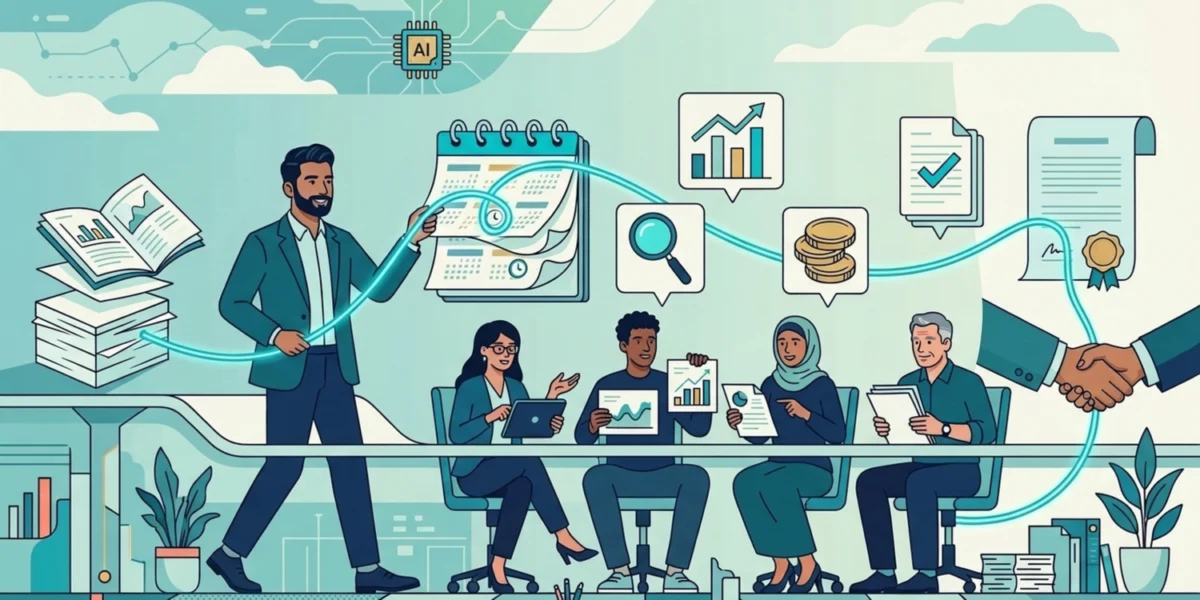
The persistent disconnect between academic degree completion and professional "applied readiness" has emerged as a systemic challenge across the global workforce, particularly within the fields of public relations, marketing, and communications. While universities have traditionally excelled at delivering theoretical frameworks and historical context, employers increasingly report a significant gap in the ability of new graduates to execute strategic tasks upon entry. To address this structural inefficiency, Spin Sucks has introduced a comprehensive university partnership program designed to overhaul the "front end" of professional education by prioritizing application-based learning over traditional content memorization. This initiative centers on the PESO Model©, an industry-standard framework, to ensure that graduating students possess the "application muscle" required to navigate real-world organizational constraints.
The Economic Reality of the Skills Gap
The "application gap" is rarely categorized as a failure of communication or marketing; rather, it is a functional deficit that manifests across nearly every industry. According to data from the National Association of Colleges and Employers (NACE), while a high percentage of students believe they are proficient in "career readiness" competencies, employers often rate those same graduates significantly lower in areas such as critical thinking and professional work ethic. This discrepancy creates a "hidden tax" for hiring organizations.
Typically, companies absorb the transition costs of a new hire during the first 30 to 90 days of employment. During this period, productivity is lowered as senior staff must divert time toward fundamental onboarding and the translation of theory into practice. In specialized fields like integrated communications, this "recalibration period" can extend up to six months. The Spin Sucks university partnership aims to mitigate these costs by producing graduates who can contribute strategically from their first week on the job. By shifting the focus from "what students can pass" to "what students can do," the program seeks to eliminate the "deer in headlights" phenomenon often seen when new professionals are tasked with their first high-stakes projects.
Evolution of the PESO Model in Academic Instruction
The PESO Model—an acronym for Paid, Earned, Shared, and Owned media—was originally developed by Gini Dietrich to provide a roadmap for integrated communications. Over the last decade, it has become the dominant framework for professionals seeking to break down silos between PR, advertising, and digital marketing. However, its integration into formal higher education has historically been fragmented.
The new curriculum sequence developed by Spin Sucks represents a chronological and pedagogical evolution of this model. It moves away from the "checkbox" mentality of learning, where completion of a module is equated with mastery. Instead, the curriculum utilizes "friction-based" learning, where students must engage with real-world data and organizational pushback. This methodology acknowledges a fundamental truth in adult learning: information retention is highest when concepts are applied to solve tangible problems rather than recited for an exam.
Structural Breakdown: The 100-400 Level Curriculum Sequence
The partnership provides a four-tier learning architecture that can be integrated into existing PR, advertising, and marketing programs. This sequence is designed to build cognitive complexity at each stage, moving from basic literacy to professional certification.
Level 100: Foundational Literacy
The entry level focuses on defining the four media types. Students learn the technical distinctions between paid, earned, shared, and owned media. At this stage, the objective is "literacy"—ensuring that the student can navigate the vocabulary of the industry. However, the curriculum intentionally stops short of strategic application to prevent the confusion of tactics with outcomes.
Level 200: Outcome-Based Analysis
In the 200-level course, the design shifts toward the specific "products" of each channel. The curriculum teaches that Owned media builds Authority, Earned media transfers Credibility, Shared media drives Discovery, and Paid media creates Growth. Students are required to select a real organization at the start of the term and conduct a comprehensive channel analysis. By the end of the course, they must deliver a judgment on where that organization is strong or weak, identifying missing connections between the four pillars.
Level 300: System Integration and Measurement
The 300-level focuses on the "system" as a whole. Over 18 weeks, students study how the four channels compound when integrated and how to measure success through outcomes rather than mere activity. A key component of this level is the PESO Model Maturity Ladder, a diagnostic tool used to assess an organization’s current stage of integrated media development. Students must defend their placement of a real-world company on this ladder using evidence-based visibility signals and measurement plans.
Level 400: Professional Certification
The sequence culminates in the PESO Model© Certification. At this level, students are no longer learning what the model is; they are building and running the "operating system." This stage provides the documentation of capability that hiring managers require. Graduates emerge with a portfolio of real organizational analyses, providing tangible evidence of their ability to think critically and diagnose complex media environments.
Pedagogical Shift: Friction as a Learning Tool
A central tenet of the Spin Sucks curriculum is the rejection of "passive" learning. In traditional academic settings, case studies often provide all necessary information within the reading material, leading to a "closed-loop" environment where the answer is predetermined. The partnership curriculum replaces this with "open-loop" assignments.
When a student is required to choose a real organization and analyze its actual social presence, media coverage, and content authority, they encounter "friction." The data may be messy, the social presence may be inconsistent, and the earned media might be non-existent. This friction forces the student to exercise professional judgment—a skill that cannot be transferred through a textbook. This approach aligns with modern instructional design theories which suggest that "doing" something that pushes back is the only way to build the "application muscle" necessary for the workplace.
Strategic Benefits for Higher Education Institutions
For university departments, the partnership serves as a significant differentiator in an increasingly competitive academic market. Advisory boards and accreditation reviewers frequently scrutinize programs for their "career readiness" metrics. By adopting a curriculum grounded in the most widely used integrated media framework in the industry, programs can demonstrate a direct link between classroom activities and employer needs.
Faculty members are provided with a "ready-made" architecture, including lesson structures, deliverables, and assessments. This allows educators to focus on mentorship and the nuances of the industry rather than the administrative burden of curriculum design. Furthermore, the program is designed to complement, not replace, existing coursework. It adds a layer of applied practice to the theoretical foundations already present in PR and marketing departments.
Industry Implications and Future Outlook
The launch of this partnership program comes at a time when the communications industry is undergoing rapid transformation. The rise of generative AI, the fragmentation of traditional media, and the increasing demand for measurable ROI have made the "generalist" role more difficult to fill. Employers are looking for "T-shaped" professionals—those who have a broad understanding of the entire media ecosystem (the top of the T) but deep, applied expertise in specific execution (the vertical bar of the T).
By standardizing the PESO Model within university curricula, Spin Sucks is effectively creating a common language for the next generation of communicators. This standardization benefits the industry at large by reducing the variance in skill sets among entry-level hires.
In the long term, the expansion of applied readiness into adjacent disciplines—such as corporate communications, internal relations, and digital advocacy—is expected. The design principle remains constant: the goal is to produce graduates who arrive at their first job knowing how to do the work, rather than graduates who merely know about the work.
Conclusion
The application gap is a solvable problem, but its resolution requires a deliberate shift in how academic and professional organizations collaborate. The Spin Sucks university partnership represents a proactive attempt to bridge this divide by embedding industry-standard strategic frameworks directly into the heart of the educational experience. As more institutions adopt application-based models, the "hidden tax" of onboarding is expected to decrease, leading to more resilient organizations and more capable, confident young professionals.
For department chairs and program directors, the transition toward applied readiness is no longer a pedagogical preference but a professional necessity. The move signals a new era in professional education where the diploma serves not just as a certificate of completion, but as a guarantee of capability.